Status 170
vsCapra
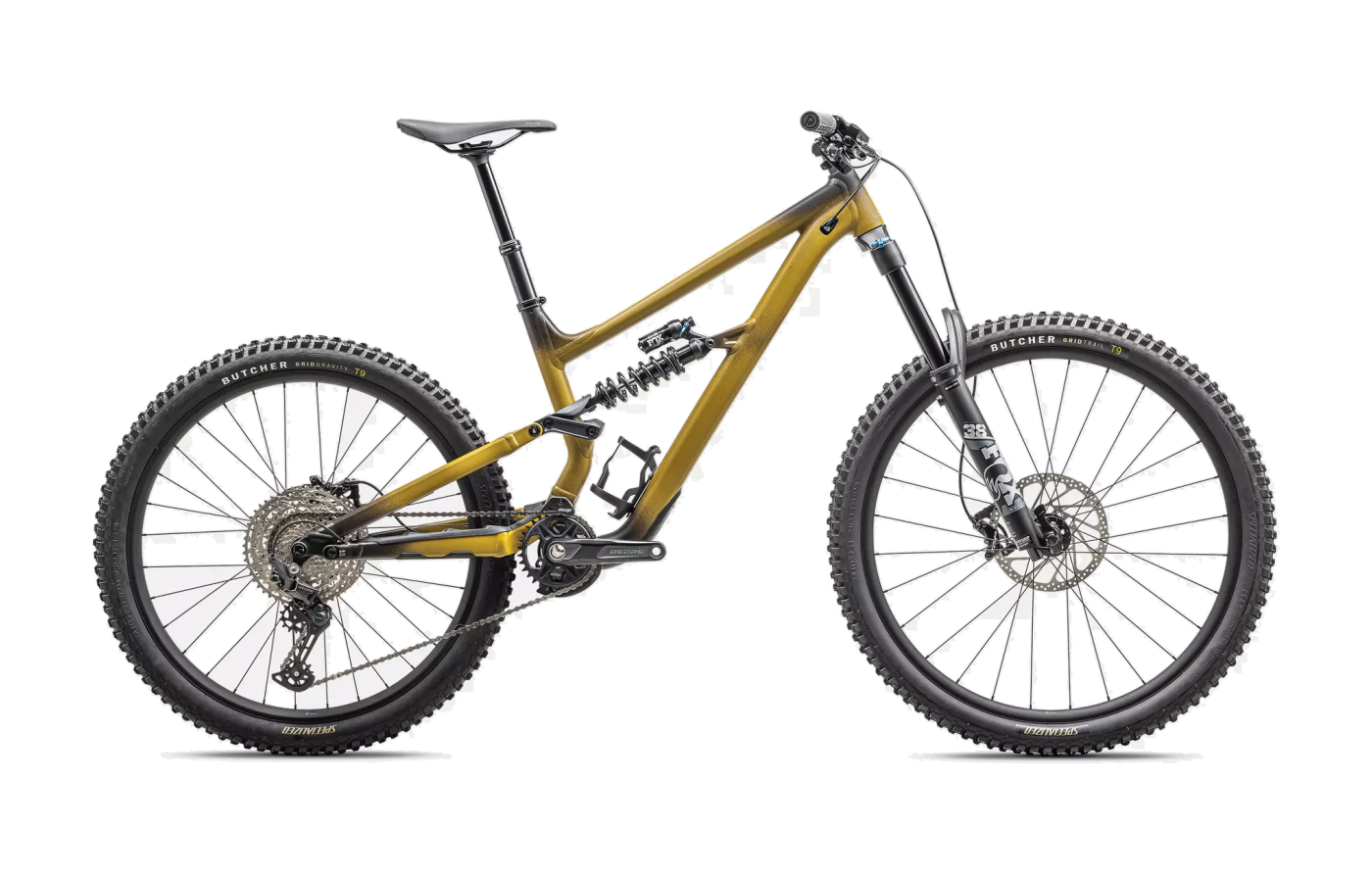
Two long-travel mullets, two attitudes.
The Status 170 is a raw alloy park sled built to be thrashed. The Capra is a refined enduro race tool that still lifts and laps.
Status 170
- Lowest entry price in the segment at $2,499 — modern long-travel mullet geometry and a Fox 38 Rhythm fork.
- Bombproof alloy chassis with a 25-year frame warranty, threaded BB, UDH, and external rear-brake routing option.
- Coil-friendly Horst link — reviewers describe the rear end as feeling deeper than its 170 mm travel suggests.
- Heavy at 17+ kg — the Status is widely described as sluggish on flat or mellow terrain.
- Alloy-only, no carbon option — the lineup tops out at a $4,499 dual-crown DH build, not a refined race bike.
Capra
- Pedals like a trail bike — the V4L suspension stays high in its travel and earned Pinkbike's fastest-bike timing.
- Carbon and alloy options from $2,999 to $6,299, including wireless SRAM Transmission on upper builds.
- Refined, ninja-quiet chassis with internal cable tunneling and asymmetric Side Wing — reviewers consistently call it eerily silent.
- Stock Maxxis EXO+ tires are widely panned as undersized for 170 mm enduro use; budget for casing upgrades.
- Long seat tubes and short stock droppers limit standover and movement on smaller frames.
Editor’s analysis
Both run 170 mm of travel and a mullet hoop on an aggressive geometry chart, but only one of them was built to pedal back to the top.
On paper the Specialized Status 170 and YT Capra look like cousins — 170 mm rear travel, mixed wheels, slack 63.5–64 degree head angles, steep 77 degree seat tubes. But spend a few minutes with the spec sheets and the philosophies separate fast. The Status is alloy-only, sold from $2,499 to $4,499, and the priciest build in the catalog ships with a dual-crown BoXXer. The Capra ladders from $2,999 alloy to a $6,299 Ultra Modulus carbon flagship with a Fox Factory 38 and AXS Transmission. One bike is a budget park weapon. The other is a privateer's enduro race bike that happens to do park days.
Geometry tells the same story. At their fit-picked sizes — S2 on the Specialized Status 170, L on the Capra — the Status sits 11 mm lower in stack (625 vs 636) and 19 mm shorter in reach (445 vs 464). Chainstays are nearly identical at 432 vs 433 mm; the Status's wheelbase is 22 mm shorter at 1221. In practice, the Status feels more sunken between the wheels with a tighter cockpit; the Capra is roomier and more centered, more willing to rotate under you in tight switchbacks. Reviewers consistently called the Capra a 'speedy all-rounder' and the Status a 'nimble hare' — different flavors of agile.
Suspension character diverges too. The Status runs a Horst-link with a coil-friendly tune that reviewers describe as supple, progressive, and most alive when gravity is doing the work. The Capra's V4L kinematic is the opposite — taut, mid-stroke supportive, sitting high in its travel until the final 25 percent of the stroke catches you on big hits. Pinkbike's timed testing literally clocked the Capra as the fastest bike in its cohort. The Status doesn't pretend to chase that — its stock pitch is 'lift-and-lap,' not 'winch-and-plummet.'
Put another way: the Specialized Status 170 is the bike you buy when you already own a trail bike and need a beater for chairlift days you don't want to pay for in carbon repair bills. The YT Capra is the bike you buy when you want one rig that can pedal a 3,000-foot enduro stage on Tuesday and rail park berms on Saturday.
Where the builds differ.
Comparing our editor's-pick builds side-by-side. Winners highlighted row-by-row — lower price and weight, and the better-spec component, each mark a point.
Build variants & pricing
Both platforms start near $2,500–3,000 with alloy frames and Shimano Deore. The Capra ladders to a $6,299 carbon flagship; the Status tops out at a $4,499 dual-crown park build.
Prices are current US MSRP. Specialized doesn't offer a carbon Status — if you want a refined race-spec frame, the Capra is the only way up. Conversely, the Status's $4,499 dual-crown DH build has no direct equivalent in the Capra lineup.
How they fit, how they steer.
Status 170 at S2, Capra at L — the fit-picked sizes for a 5'8" rider on each bike. The Capra is 11 mm taller in stack and 19 mm longer in reach; head angles are within half a degree (63.5 vs 64), chainstays nearly identical at 432 vs 433 mm.
Which size should I buy?
Specialized's S-Sizing decouples reach from seat tube length, so a 5'8" rider can pick S2 for a tighter cockpit or S3 for more stability. YT's traditional sizing is more locked-in.
→These are starting points. Flexibility, riding style, and preferred position all shift the answer — if you’re between sizes, a professional fit beats a chart.
What the magazines said.
Published reviews from trusted cycling outlets. Click through for the full write-up.
Which one should you buy?
If you want a cheap park sled to thrash and bring home dirty, get the Specialized Status 170. If you need one bike that races enduro and still does park days, get the YT Capra.
Status 170
If most of your days are lift-served, your bike spends summers in the back of a truck, and you'd rather replace tires than carbon, the Status 170 is unmatched at the price. The 25-year frame warranty and bombproof alloy chassis are insurance against the kind of riding that destroys nicer bikes.
Capra
If you're pedaling to your descents, want a refined chassis that stays quiet under power, and value an efficient suspension platform that still has a Get-Out-Of-Jail card for huge hits, the Capra is the more complete tool. The carbon option opens a real upgrade path the Status simply doesn't offer.
Questions buyers actually ask.
Short answers to the things we get emailed about most often.
01Which one actually pedals better?
The YT Capra, by a wide margin. Its V4L suspension delivers roughly 100% anti-squat at sag, and reviewers from BikeRadar to Pinkbike describe it as taut, drive-neutral, and 'punchier' than competitors like the Transition Spire. The Capra is regularly used for full enduro race days with multi-thousand-foot pedal stages.
The Status 170 is explicitly framed as a lift-and-lap bike. At 17+ kg with aggressive Butcher GRID Gravity tires, reviewers consistently call it 'sluggish' on flat ground and note that it 'wakes up' only when gravity does the work.
02How different is the geometry?
Less than the spec sheets suggest. At fit-picked sizes (Status S2 vs Capra L), the Capra has 11 mm more stack (636 vs 625), 19 mm more reach (464 vs 445), a half-degree steeper head angle (64 vs 63.5), and a 22 mm longer wheelbase (1243 vs 1221). Chainstays are within a millimeter at 432–433 mm.
In practice, the Status feels more sunken and the Capra feels more centered. Reviewers describe the Capra's reach as 'modest' compared to the current crop of super-enduro sleds — it's a more compact cockpit than its travel implies.
03What's the wheel-size situation?
The Specialized Status 170 is mullet-only — every build ships with a 29-inch front and 27.5-inch rear (the alloy ZERO build runs 27.5/26 specifically for shorter riders).
The YT Capra Mk III offers both full 29 and MX (mullet) configurations across the lineup. The 29er gets longer 438–443 mm chainstays and is widely regarded as the racier, more stable option; the MX is the playful one. Different rear-triangle parts handle the swap, so it's not a flip-chip job.
04Do either of these climb?
The Capra does, the Status less so. Both have steep ~77 degree seat tube angles that put the rider in a centered, weight-forward climbing position. But the Capra's V4L suspension is firmer in its mid-stroke and the bike is several kilos lighter than the Status (16.8 kg vs 17.3 kg on the entry alloy builds).
The Status 2 170 DH ($4,499) ships with a SRAM GX DH 7-speed drivetrain that reviewers explicitly describe as 'not for pedaling uphill.' If you need to climb, choose the standard $2,499 Status 2 170 with the 12-speed Deore.
05Which suspension is better?
Different, not better. The Status's Horst-link runs supple and progressive — multiple reviewers say the rear end 'feels deeper' than 170 mm and tracks the ground beautifully on rough terrain. The weak link, particularly on the DH build, is the entry-level RockShox BoXXer Base damping, which can blow through travel on consecutive hits.
The Capra's V4L sits higher in its travel with stronger mid-stroke support — Pinkbike timed it as the fastest bike in their cohort. Some lighter riders find the stock tune slightly underdamped for aggressive racing. Both reward fettling.
06Are these durable for hard park use?
Yes for the frames, with caveats on parts. The Status 170's M5 alloy chassis comes with a 25-year frame warranty and reviewers universally describe it as bombproof. The known weak spots are the SRAM Centerline rotors (warp under sustained heat — upgrade to HS2) and the older-pattern Butcher tire side knobs (can fold over on hardpack).
The Capra's Ultra Modulus carbon frame has had isolated reports of cracked chainstays and top-tube cosmetic cracks per Pinkbike's field test comments — generally covered under warranty, but YT warranty turnaround can stretch 3–6 months. The Maxxis EXO+ stock tires are universally panned for 170 mm duty.
07Can I get a carbon Status 170?
No. The Status 170 is alloy-only, by design. Specialized's pitch is that the Status is the 'anti-status symbol' — a no-frills gravity sled where the cost savings come from skipping carbon entirely. If you want a Specialized carbon enduro bike, you're looking at the Stumpjumper EVO or the Enduro instead.
The Capra offers two carbon tiers: High Modulus (HM) on the Core 3, and the lighter Ultra Modulus (UM) on the flagship Core 4.
08Where can I actually buy these?
The Specialized Status 170 is sold through Specialized's dealer network — most decent-sized cities have a Specialized-affiliated shop you can demo and buy from.
The YT Capra is direct-to-consumer. YT operates 'YT Mill' physical locations in select markets (US, Germany), but most buyers order online, assemble at home, and rely on local independent shops for service. UK and EU buyers should factor in shipping, bike-box fees, and customs duties — multiple reviewers flag these as adding £800+ to the listed price.
Similar bikes
If your priorities don’t map cleanly onto either of these, one of these adjacent bikes probably fits better.
Spire
If the Capra feels too compact, the Transition Spire is the longer-wheelbase 'big mountain' alternative — more stable in straight lines, more bike to muscle through tight switchbacks.
Compare →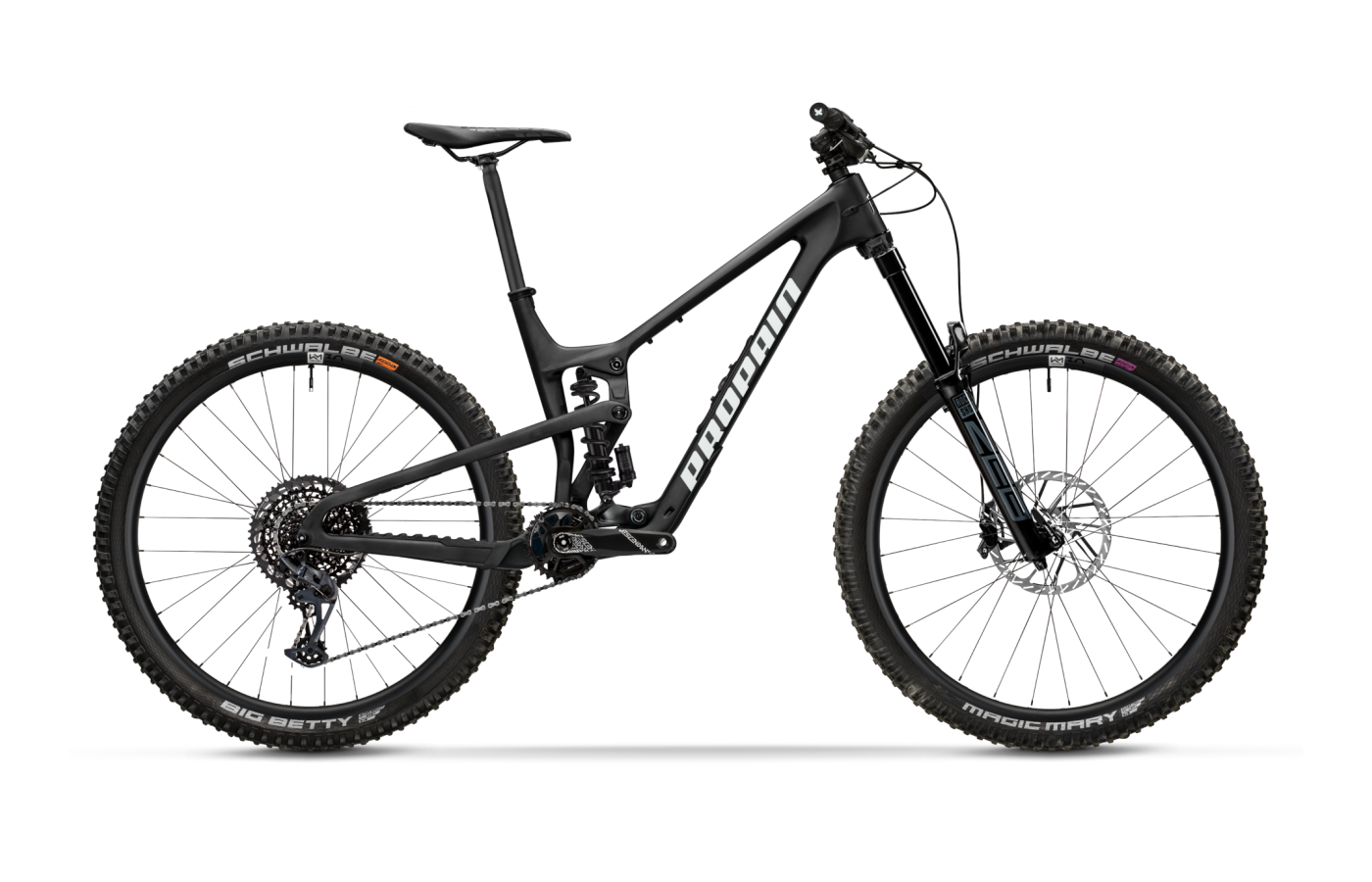
Spindrift
A direct freeride competitor that can be configured with up to 180 mm of rear travel and a dual-crown fork — closer in spirit to the Status DH build than the standard Capra.
Compare →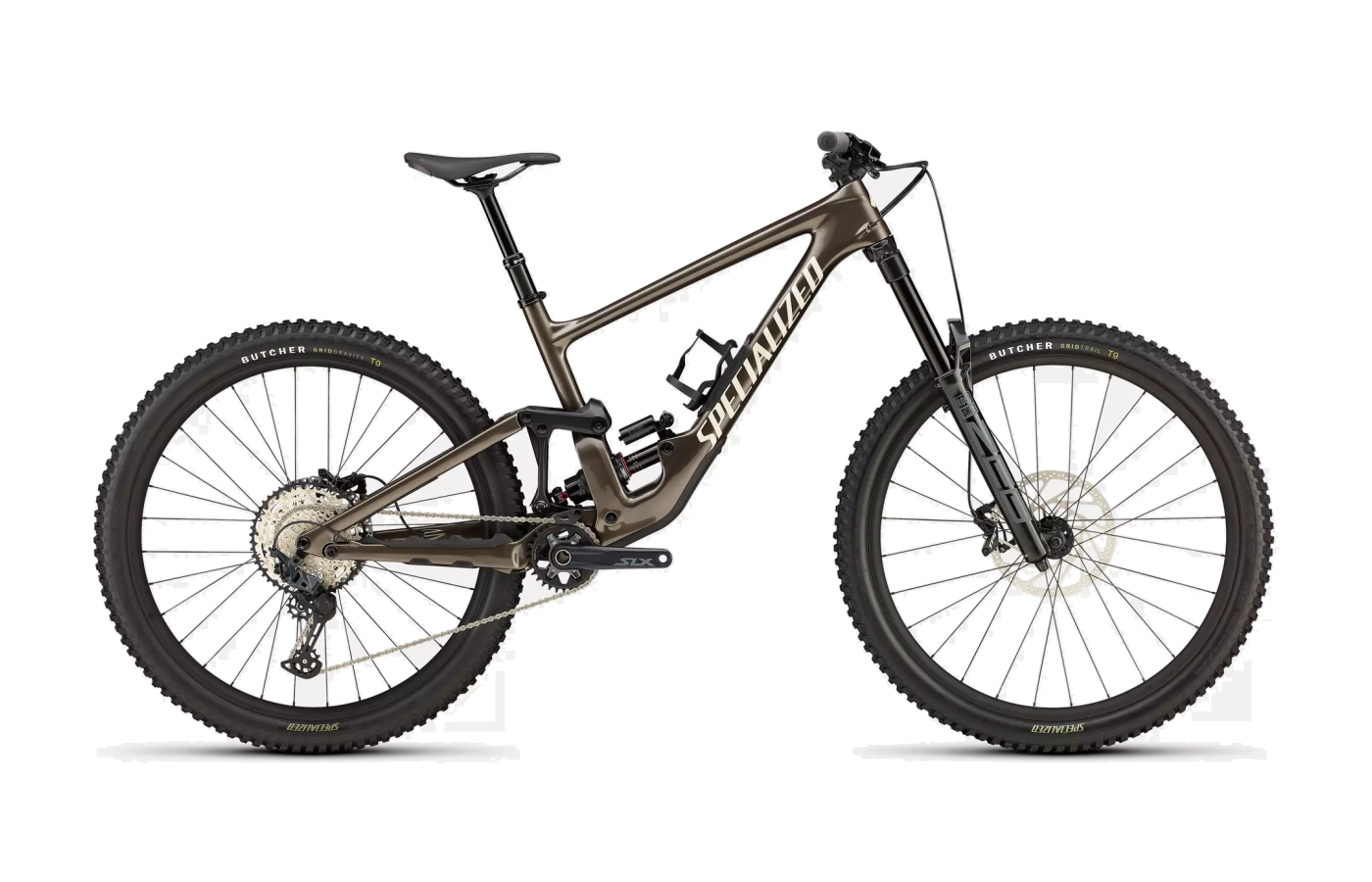
Enduro
If you want the Specialized name with a refined carbon race chassis instead of the raw alloy mullet Status, the Enduro is the platform that takes the brand into proper Capra territory.
Compare →