Patrol
vsCapra
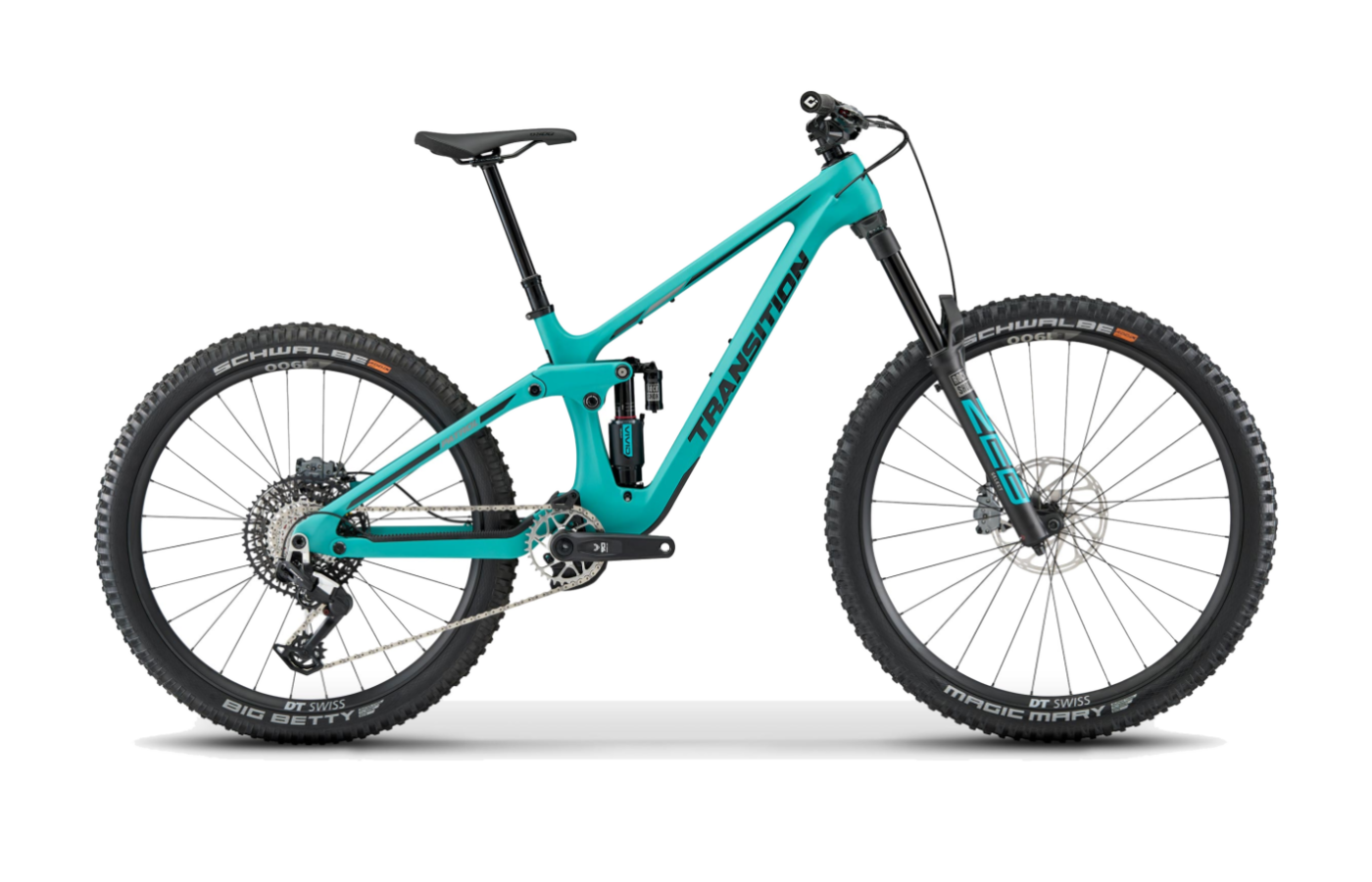
Two enduro bikes, two attitudes.
The Transition Patrol is the party machine that wants you steering with your hips. The YT Capra is the quiet, composed all-rounder that just wants to win the lap.
Patrol
- Genuinely playful — a 63.5-degree HTA paired with a low BB and a 27.5-inch rear wheel makes it one of the most poppable bikes in the segment.
- Steep 78.8-degree seat angle keeps the front wheel planted on technical climbs despite the slack front end.
- Mechanic-friendly frame — external rear brake routing, threaded BB, UDH, dual-crown-compatible head tube.
- Heavy by carbon enduro standards — 14.97 kg on the GX AXS Carbon in size Medium.
- Low bottom bracket means frequent crank strikes; many owners run the 'High' geo setting daily.
Capra
- Eerily quiet chassis — internal cable sleeves and rubber chainstay armor mean no rattles, even on rough descents.
- Composed at speed — the V4L suspension and 170 mm of rear travel hoover up square-edge hits without losing momentum.
- Direct-to-consumer pricing — the flagship Core 4 CF undercuts the Patrol GX AXS Carbon by $700 with comparable spec.
- Stock Continental Enduro-casing tires are widely regarded as too light for a 170 mm bike; expect to upgrade.
- DTC service model: no local dealer, and warranty turnaround has been a recurring community complaint.
Editor’s analysis
This isn't a question of which bike is better — it's a question of whether you want a bike that gives you feedback or one that takes the noise away.
On paper the Transition Patrol and YT Capra are both 160-170 mm carbon enduro bikes built around a mullet wheelset, both running SRAM GX AXS Transmission, both designed for the same kind of steep, loamy, party-pace terrain. Spend any time on the geometry and the meta-reviews and the philosophies pull apart fast.
The Patrol leans into the slack-and-rowdy end of the segment. A 63.5-degree head tube angle, a steep 78.8-degree effective seat tube angle on a medium, and a famously low bottom bracket — Transition designed it to rail corners, pop off everything, and let the rider 'steer with their hips.' Reviewers nearly all reach for words like 'freakishly boosty,' 'pilot not passenger,' and 'party machine.' The cost is real: the Patrol is loud underfoot, suspension feedback is intentional, and that low BB means crank strikes in chunky terrain even with the stock 165 mm arms.
The Capra picks the opposite trade. A half-degree steeper head angle (64), a slightly longer 464 mm reach in size Large versus the Patrol's 455 mm in Medium, and 170 mm of rear travel from YT's V4L linkage. The most repeated phrase across Capra reviews is 'eerily quiet' — internal cable sleeves, ribbed chainstay guard, no rattles. Pinkbike's timed Field Test had it as the fastest bike in its cohort despite reviewers describing the suspension as 'firmer' than competitors. It's the bike that hides the work it's doing.
Put another way: the Transition Patrol is what you ride when the goal is to have fun on the way down. The YT Capra is what you ride when the goal is to be at the bottom first.
Where the builds differ.
Comparing our editor's-pick builds side-by-side. Winners highlighted row-by-row — lower price and weight, and the better-spec component, each mark a point.
Build variants & pricing
Transition starts higher and tops out higher; YT starts under $3k and undercuts the Patrol at every comparable tier.
Prices are current US MSRP. The Patrol's full lineup runs $3,999 to $6,999 across two frame materials; the Capra runs $2,999 to $6,299 across three. The editor's-pick row pairs the GX AXS Transmission carbon flagship on each side, where the spec is closest to apples-to-apples.
How they fit, how they steer.
Both compared at their fit-recommended size. The Patrol MD has 9 mm less reach (455 vs 464) and sits 13 mm lower at the stack (623 vs 636), but runs a half-degree slacker head angle (63.5 vs 64) and a notably steeper seat tube (78.8 vs 77.4) — slacker descender, steeper climber.
Which size should I buy?
Size recommendations are anchored to stack, reach, and effective top tube. Both ranges overlap broadly in the middle; the Capra extends one size further at the tall end (XXL) while the Patrol stops at XL.
→These are starting points. Flexibility, riding style, and preferred position all shift the answer — if you’re between sizes, a professional fit beats a chart.
What the magazines said.
Published reviews from trusted cycling outlets. Click through for the full write-up.
Which one should you buy?
If you want a bike that rewards an active, playful style on steep loamy trails, get the Patrol. If you want one bike that goes fast everywhere and stays quiet doing it, get the Capra.
Patrol
If your favorite trails are steep, loamy, and full of side-hits, manuals, and slashed corners, the Patrol is the right tool. It rewards riders who push the bike around and don't mind the occasional crank strike in exchange for cornering that genuinely rails.
Capra
If you want one bike for bike-park laps on Saturday and a 3,000-foot alpine epic on Sunday, the Capra is hard to beat. The chassis is quiet, the suspension stays composed at speed, and YT's direct-to-consumer pricing puts wireless GX AXS in the box for $700 less than the Patrol equivalent.
Questions buyers actually ask.
Short answers to the things we get emailed about most often.
01Which one is faster on a timed enduro stage?
On the available timed-test data, the Capra. Pinkbike's Field Test recorded the Capra as the fastest bike in its cohort, while a separate Pinkbike Field Test of the Patrol noted it posted the slowest lap time despite feeling fast.
The gap isn't about travel — both bikes have plenty. It's about how each suspension platform handles repeated square-edge hits at speed. The Capra's V4L stays calm and maintains momentum; the Patrol's GiddyUp gives more trail feedback, which is fun but can outrun the 160 mm of travel in fast, chunky terrain.
02How much travel does each bike actually have?
Transition Patrol: 160 mm front and rear in stock trim, with a published option to run 170/170 by swapping to a 65 mm-stroke shock and a longer fork. The frame is also dual-crown-compatible.
YT Capra: the MX (mullet) version of the Mk III ships with 170 mm front and 170 mm rear out of the box. The full 29er version runs 165 mm rear / 170 mm front.
03Which climbs better?
Both bikes have steep effective seat tube angles that put you in a centered, comfortable climbing position — the Patrol at 78.8 degrees on a Medium, the Capra at 77.4 degrees on a Large. The Patrol is steeper on paper, which helps keep the front wheel planted on slow technical pitches.
That said, the Capra is the more efficient pedaler. V4L's anti-squat behavior keeps it 'drive-neutral' — many testers leave the climb switch open. The Patrol's GiddyUp linkage is also pedal-friendly, but the lower bottom bracket means more crank strikes when the climb gets technical, with several reviewers running the 'High' geo setting as a daily default.
04What about bottom bracket clearance?
This is one of the clearest character differences between the two bikes. The Patrol's bottom bracket is famously low — multiple reviewers, including Pinkbike's Mike Kazimer, called out frequent pedal strikes even with stock 165 mm cranks, and several owners eventually swap to 155 mm cranks to mitigate.
The Capra sits noticeably higher (measured at 342–350 mm depending on flip-chip position in third-party reviews). The trade-off is the Patrol's lower BB feels more locked-in mid-corner; the Capra's higher BB stays out of the rocks but feels a touch less planted in high-G turns.
05Are the frames as durable as they look?
Patrol: the carbon and alloy frames both come with a lifetime warranty and the brand has a strong reputation for parts availability — Transition even sells touch-up paint on its website. The most common long-term complaint is paint chipping; pivot bearings lack external rubber seals, so wet-climate owners report needing more frequent service.
Capra: robust on the surface — Ultra Modulus carbon, ribbed chainstay guard, bolt-on downtube shield. Long-term reports are mixed: there have been credible community reports of cracked chainstays and a high-profile incident where a top tube cracked under static rider load. YT covers these under warranty, but DTC turnaround has been a recurring complaint.
06Which has the better stock build for the money?
Looking at the editor's-pick row: the Patrol GX AXS Carbon at $6,999 ships with RockShox ZEB Ultimate / Vivid Ultimate suspension and a SRAM GX AXS Transmission. The Capra Core 4 CF at $6,299 ships with FOX 38 Float Factory / DHX2 Factory coil suspension, the same GX AXS Transmission, and a Renthal cockpit.
The Capra is $700 cheaper for what most reviewers consider an equal-or-better suspension package. The Patrol counters with external brake routing, dual-crown compatibility, and a local dealer network that the YT direct-to-consumer model can't match.
07Should I worry about the stock tires?
On both bikes, yes — for any aggressive use. The Patrol ships with Schwalbe Magic Mary / Big Betty in Super Trail casing; the Capra ships with Continental Kryptotal in Enduro casing. Reviewers across nearly every tested build called both choices too light for a true 170 mm enduro bike.
For bike-park days or rocky terrain, plan to upgrade to a heavier casing (DH or DoubleDown equivalent) within the first month.
08Which one is more upgrade-friendly?
Patrol wins here on serviceability. External rear brake routing, threaded bottom bracket, UDH dropout, and dual-crown fork compatibility mean the bike grows with the rider — many owners stroke the rear shock from 60 mm to 65 mm to push travel to 170 mm without buying a new frame.
Capra is also UDH-equipped and uses internal cable sleeves that simplify hose runs, but retains a press-fit BB92 bottom bracket — more specialized service, slightly more friction for home mechanics.
Similar bikes
If your priorities don’t map cleanly onto either of these, one of these adjacent bikes probably fits better.
Spire
If you love Transition's playful character but want a full 29er that handles fast, chunky terrain with more composure than the Patrol, the Spire is the logical step up — same DNA, more travel, more wheelbase.
Compare →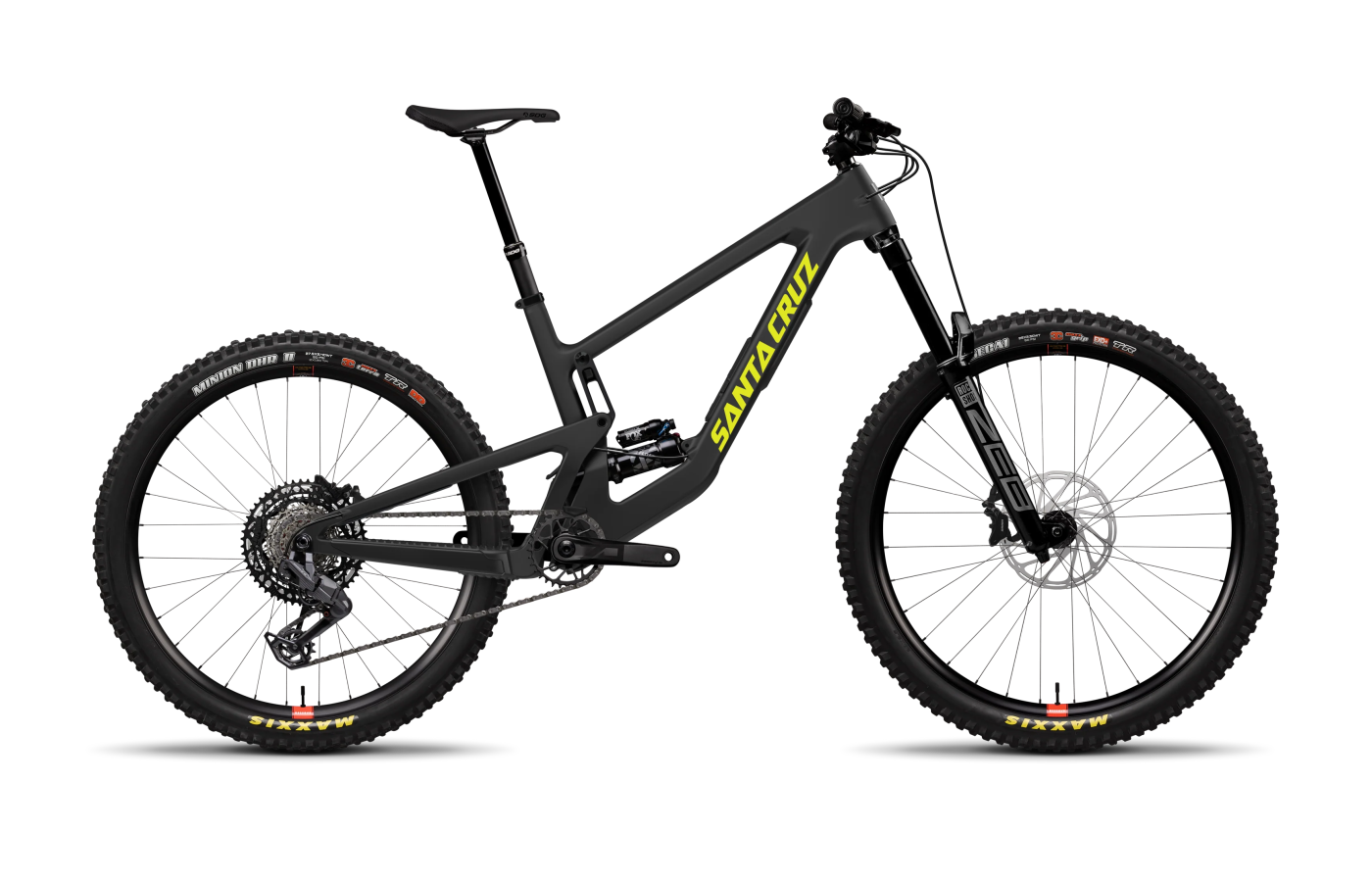
Nomad
The boutique mullet rival. The Nomad is praised for a more bottomless suspension feel than the Patrol — but you'll pay a significant Santa Cruz premium for the privilege.
Compare →
Status 170
A budget-focused mullet alternative for riders who want the Patrol's slack, low-slung party-bike vibe without the carbon price tag — Specialized's most aggressive geometry at the lowest price in the class.
Compare →