Marlin
vsProcaliber
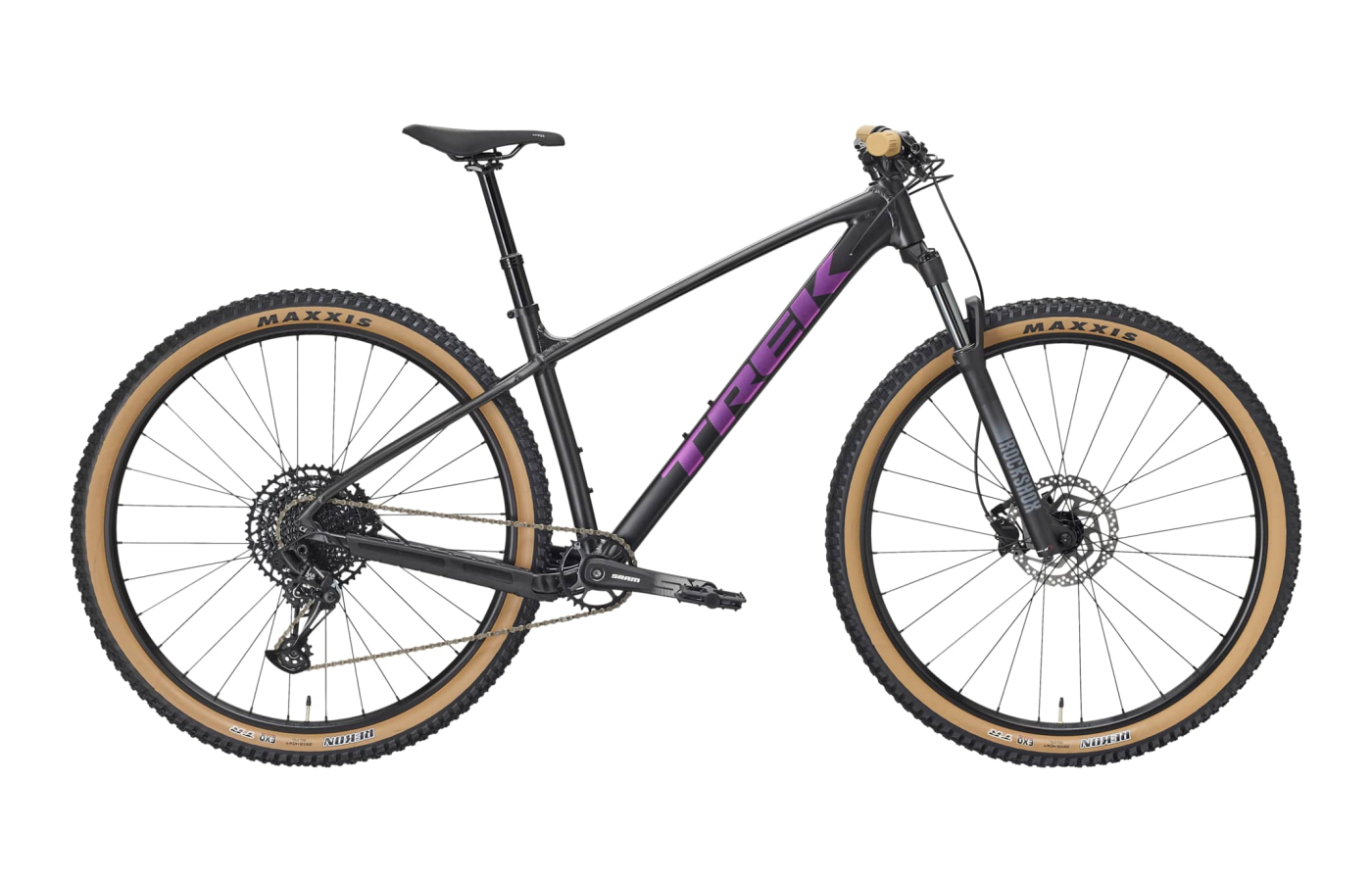
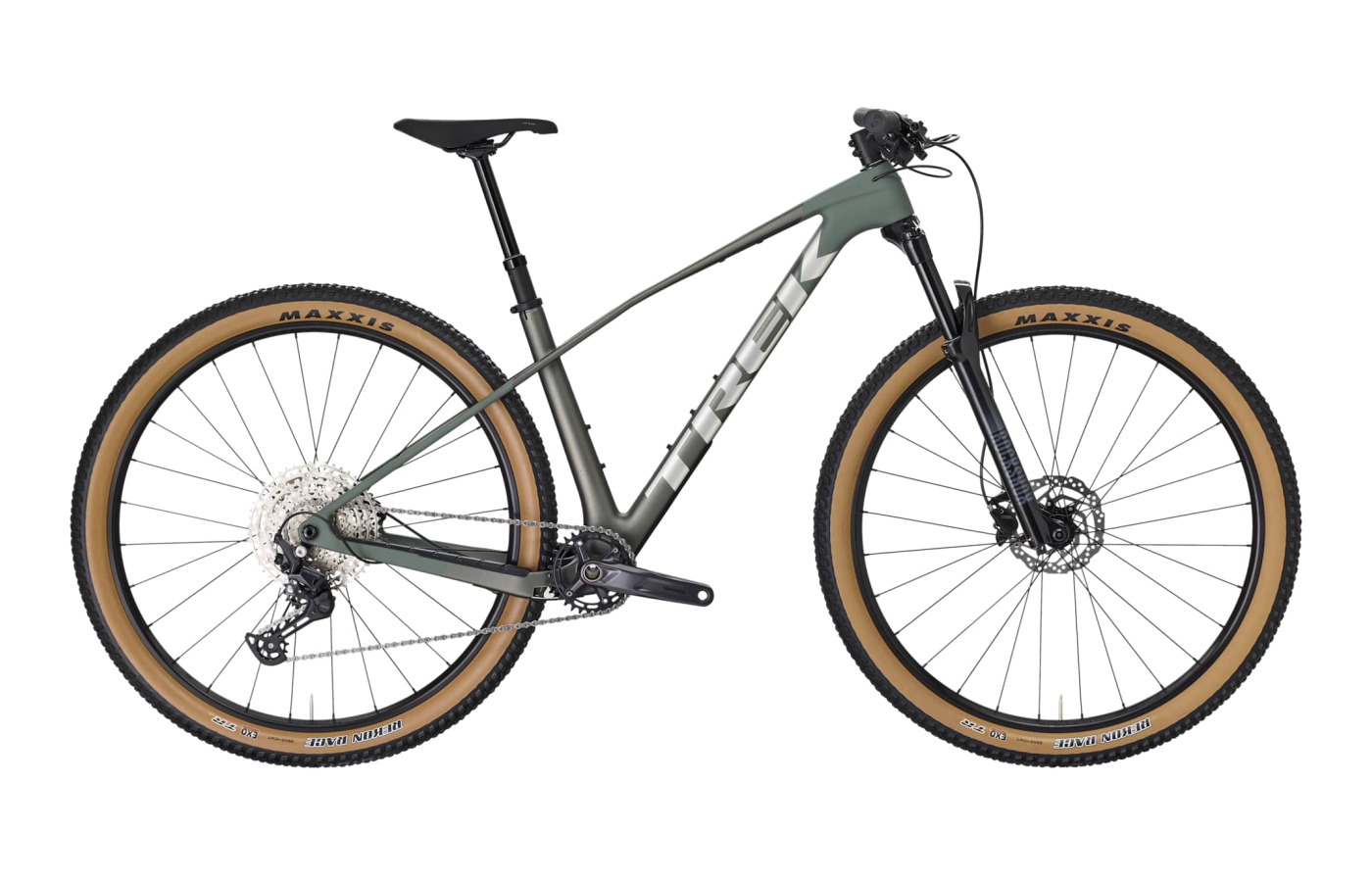
One Trek hardtail to learn on, one to race on.
The Marlin is the alloy do-everything starter hardtail. The Procaliber is the carbon XC race chassis — and Trek charges almost twice as much to say so.
Marlin
- Cheapest way into a modern Trek hardtail — the lineup starts at $629 and tops out at $1,399 for the Marlin 7.
- Versatile by design — rack, fender, and kickstand mounts make it a legitimate dual-duty commuter and trail bike.
- 25-year frame warranty — a long-term safety net rare in this price bracket.
- Heavy at 14.15 kg in size M — climbs feel like work.
- Quick-release/ThruSkew axles and a non-tapered head tube cap your upgrade path.
Procaliber
- OCLV Mountain Carbon frame on every build — the 9.5 uses the exact same chassis as the flagship 9.7.
- Race-ready 12.13 kg in size M (9.5) — roughly two kilograms lighter than the Marlin 7.
- 120 mm fork with modern Boost thru-axles front and rear, plus a UDH for easy derailleur swaps down the line.
- Price floor of $1,799 — no entry-level option exists on this platform.
- Low 309 mm bottom bracket invites pedal strikes in technical, rocky terrain.
Editor’s analysis
On paper they're both Trek 29ers with hardtail frames and Bontrager Kovee wheels. On the trail, they're not even pretending to do the same thing.
The Trek Marlin Gen 3 is the bike Trek sells to people buying their first real mountain bike. Alpha Silver aluminum, a 100 mm RockShox Judy fork, mounts for a rack and kickstand, prices that start at $629 and top out at $1,399 for the Marlin 7. It is loaded with the kind of features you don't notice until you need them — internal dropper routing, a fender-friendly frame, a 25-year frame warranty — and intentionally light on the kind of components a racer would scrutinize.
The Trek Procaliber Gen 3 picks the opposite end of the lineup. OCLV Mountain Carbon (Trek's top-tier layup, used identically across both Procaliber builds), 120 mm RockShox Judy Gold up front, the new structural IsoBow seatstay-flex frame, and a price floor of $1,799 for the alloy 6 — or $2,699 for the carbon 9.5. The Procaliber 9.5 hits the scales at 12.13 kg in size M; the Marlin 7 is 14.15 kg. That's two full kilograms separating them before you've turned a pedal.
Geometry tells the same story from a different angle. The Marlin runs a slacker 66.5-degree head tube, a 73.4-degree seat tube, and 438 mm chainstays — modern trail-hardtail numbers tuned to make beginners feel planted on descents. The Procaliber runs a steeper 67-degree head tube, shorter 435 mm chainstays in the ML, and a notably low 309 mm bottom bracket. It's tuned to corner hard, sprint out of the saddle, and reward riders who already know what they're doing.
Put the picks next to each other and the two-platform price gap is the headline: $1,399 Marlin 7 vs $2,699 Procaliber 9.5 — almost double for the carbon frame, the better fork, the lighter wheels, and a drivetrain (Shimano Deore M6100) that actually behaves like a race component. The Marlin is what you buy to discover whether you like mountain biking. The Procaliber is what you buy when you already know.
Where the builds differ.
Comparing our editor's-pick builds side-by-side. Winners highlighted row-by-row — lower price and weight, and the better-spec component, each mark a point.
Build variants & pricing
The Marlin spans $629 to $1,399 in alloy only. The Procaliber starts at $1,799 in alloy and tops out at $2,699 for the carbon 9.5 — there's no tier where the lineups directly meet.
We've picked the Marlin 7 against the Procaliber 9.5 to compare each platform at its strongest. The Procaliber's alloy 6 build exists at $1,799, but it would misrepresent the Procaliber's reason for being — the carbon frame is the whole point. Expect a ~$1,300 platform price gap as a result.
How they fit, how they steer.
Both at the size our fit algorithm picks for a 5'8" rider. The Marlin's 66.5° head tube is a half-degree slacker than the Procaliber's 67°, and reach is within 5 mm — but the Procaliber's 72° seat tube is significantly slacker than the Marlin's 73.4°, putting the racer further behind the bottom bracket.
Which size should I buy?
Trek runs an unusually deep size range on both bikes. The Marlin offers seven sizes (XS–XXL); the Procaliber stops at five (S–XL).
→These are starting points. Flexibility, riding style, and preferred position all shift the answer — if you’re between sizes, a professional fit beats a chart.
What the magazines said.
Published reviews from trusted cycling outlets. Click through for the full write-up.
Which one should you buy?
If this is your first real mountain bike, get the Marlin. If you already know you want to race XC, get the Procaliber.
Marlin
If you want one bike for green and blue trails, the occasional fire-road climb, and a school or grocery commute on the side, the Marlin 7 is the obvious answer. The 25-year frame warranty and rack mounts make it a low-risk first purchase you won't outgrow in a season.
Procaliber
If your local trails reward sprints, you ride three or more times a week, and you've already spent time on a hardtail, the Procaliber 9.5 is the platform to grow with. The OCLV frame, Boost thru-axles, and UDH mean every component is upgrade-friendly — buy the 9.5 today and chase the 9.7 spec a piece at a time.
Questions buyers actually ask.
Short answers to the things we get emailed about most often.
01How much faster is the Procaliber than the Marlin on a climb?
Significantly. The Procaliber 9.5 weighs 12.13 kg in size M; the Marlin 7 weighs 14.15 kg — a 2 kg gap, or about 14% of the Marlin's mass. On a 30-minute fire-road climb at threshold, that's roughly a minute of saved time for a 75 kg rider, before you account for the Procaliber's stiffer carbon frame and lighter wheels.
Add in the fact that the Procaliber's 120 mm RockShox Judy Gold has a firm hydraulic lockout (and the Marlin 7's Judy Silver has a softer TurnKey lockout), and the gap on smooth climbs grows further.
02Are these the same kind of bike?
Not really. Both are 29er hardtails from Trek, but that's where the similarity ends.
The Marlin is a recreational trail hardtail — Alpha Silver alloy frame, 100 mm fork, ThruSkew rear axle, mounts for a rack and kickstand. It's tuned to be approachable for new riders.
The Procaliber is a cross-country race hardtail — OCLV Mountain Carbon frame, 120 mm fork, full Boost thru-axles, IsoBow seatstay flex. It's tuned to be fast for trained riders.
If budget is the deciding factor and you don't race, the Marlin is the right pick by default.
03Can I upgrade the Marlin into something like the Procaliber?
Not really, and that's the honest answer. The Marlin frame uses a straight (non-tapered) 1 1/8-inch head tube and a 135x5 mm ThruSkew rear, which means upgrading to a modern fork with a tapered steerer requires a new headset, and most high-end aftermarket wheelsets — which assume Boost 148x12 mm thru-axle spacing — won't bolt up at all.
The Procaliber, by contrast, ships with a tapered head tube, full Boost thru-axles, UDH, and a standard 31.6 mm seat tube for dropper compatibility. It's specifically designed to be upgraded over time.
04What is IsoBow and does it actually work?
IsoBow is the structural feature on the Procaliber Gen 3 frame: the seatstays extend past the seat tube directly into the top tube, leaving a visible hole that allows the rear triangle to flex vertically. It replaces the mechanical IsoSpeed decoupler from the previous generation.
Reviewer consensus is that the effect is real but subtle. BikeRadar and others noted it took several rides to feel the difference, and that high-volume 2.4-inch tires do most of the comfort work. The bigger durability win is removing the IsoSpeed pivot — fewer bearings, no creaks, less to maintain.
05Is the Procaliber's bottom bracket really that low?
Yes — 309 mm of static BB height, which is low for a modern XC hardtail. On flowy, smooth XC tracks it makes the bike feel planted and aggressive in corners.
In rocky, technical terrain it becomes a liability. Multiple reviewers noted that pedal strikes on rocks and stumps are easy to incur, and one BikeRadar tester explicitly said it's "relatively easy to end up hitting the cranks." Time your pedal strokes in chunky terrain or expect to chew up some pedals.
06Why is the Procaliber's seat tube angle so much slacker than the Marlin's?
Because they're tuned for different rider positions. The Marlin runs a 73.4° effective seat tube angle, putting the rider relatively far forward over the cranks — comfortable for upright trail riding and tight switchback climbs.
The Procaliber runs a 72° effective seat tube angle in size ML (and only 71° on size M). That's a more traditional XC-race position with the saddle further behind the bottom bracket, optimized for seated power on long climbs. Some reviewers slide the saddle forward on the rails to compensate on technical ascents.
07Does the Marlin's quick-release front axle actually matter?
On a green or blue trail, you'll never notice. On harder terrain, you will.
Multiple reviewers — including BikeRadar and AMB — noted the Marlin's QR front end can feel "twangy" or "flexy" under hard cornering and braking loads, because the QR doesn't clamp the fork lowers as rigidly as a modern thru-axle. It's one of several signals that the Marlin is built for moderate trails, not aggressive descending.
The Procaliber 9.5 uses a 15 mm Maxle Stealth thru-axle up front and 148x12 mm Boost rear — both standard for a race-grade hardtail.
08Should I just buy the Procaliber 6 instead and save $900?
Maybe, but understand what you're giving up. The Procaliber 6 is $1,799 and uses an Alpha Platinum aluminum frame instead of OCLV carbon. You keep the modern geometry, the Boost thru-axles, the UDH, and the Shimano Deore drivetrain — but you give up the carbon frame's stiffness, the ~1.4 kg weight savings (size M is 13.56 kg vs 12.13 kg for the 9.5), and the IsoBow flex feature.
If you want the Procaliber's geometry and drivetrain on a budget, the 6 is reasonable. If the carbon frame is the main reason you're considering this platform, skip it and step up to the 9.5.
Similar bikes
If your priorities don’t map cleanly onto either of these, one of these adjacent bikes probably fits better.
Roscoe
Trek's burlier alloy hardtail — a 140 mm fork, true thru-axles, and a frame designed for actual trail abuse. If the Marlin feels too tame, this is where Trek expects you to step up.
Compare →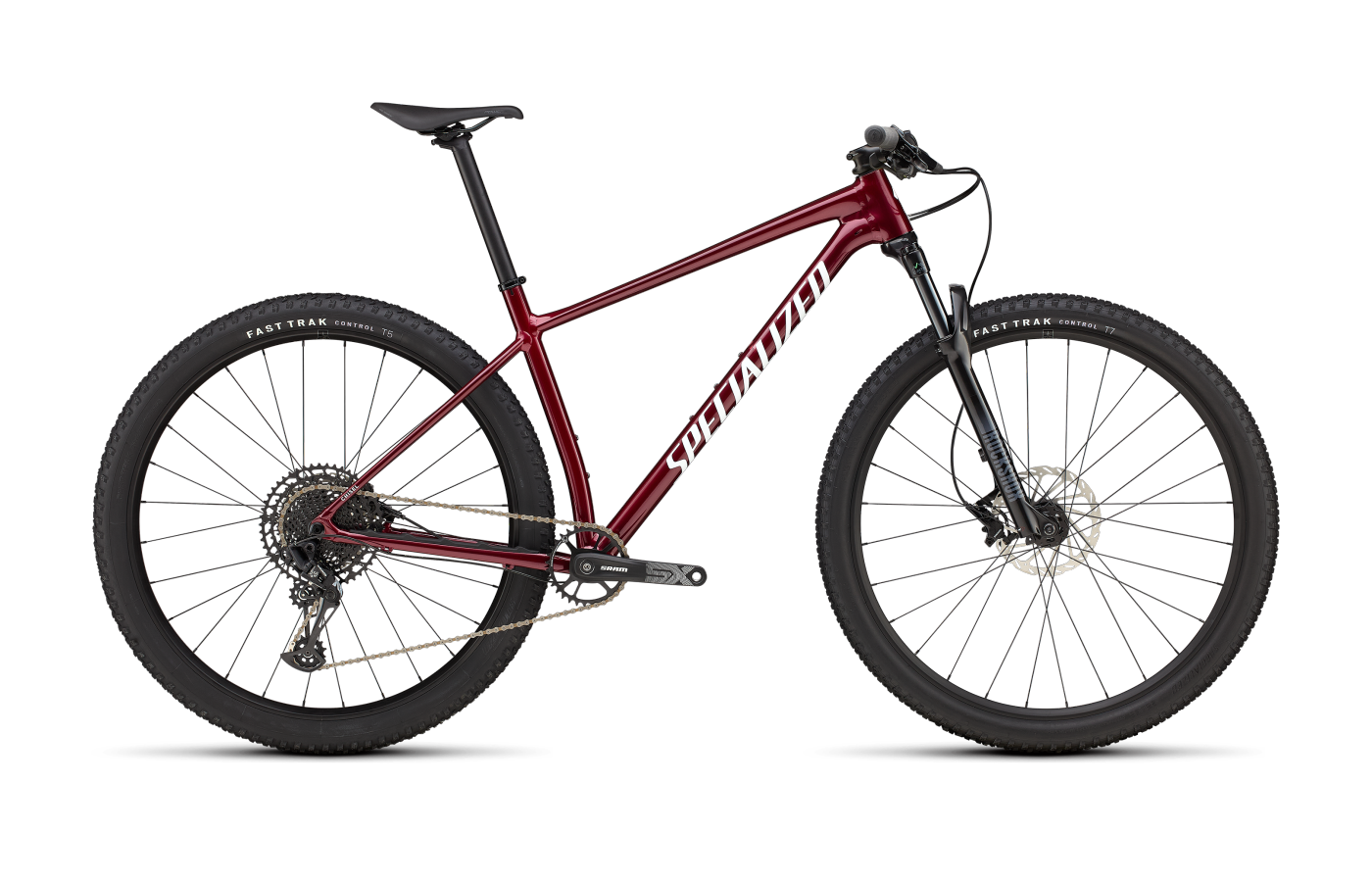
Chisel
Specialized's alloy XC hardtail aimed squarely at the Procaliber's customer minus the carbon premium. Race-oriented geometry, lightweight alloy chassis, and significantly cheaper.
Compare →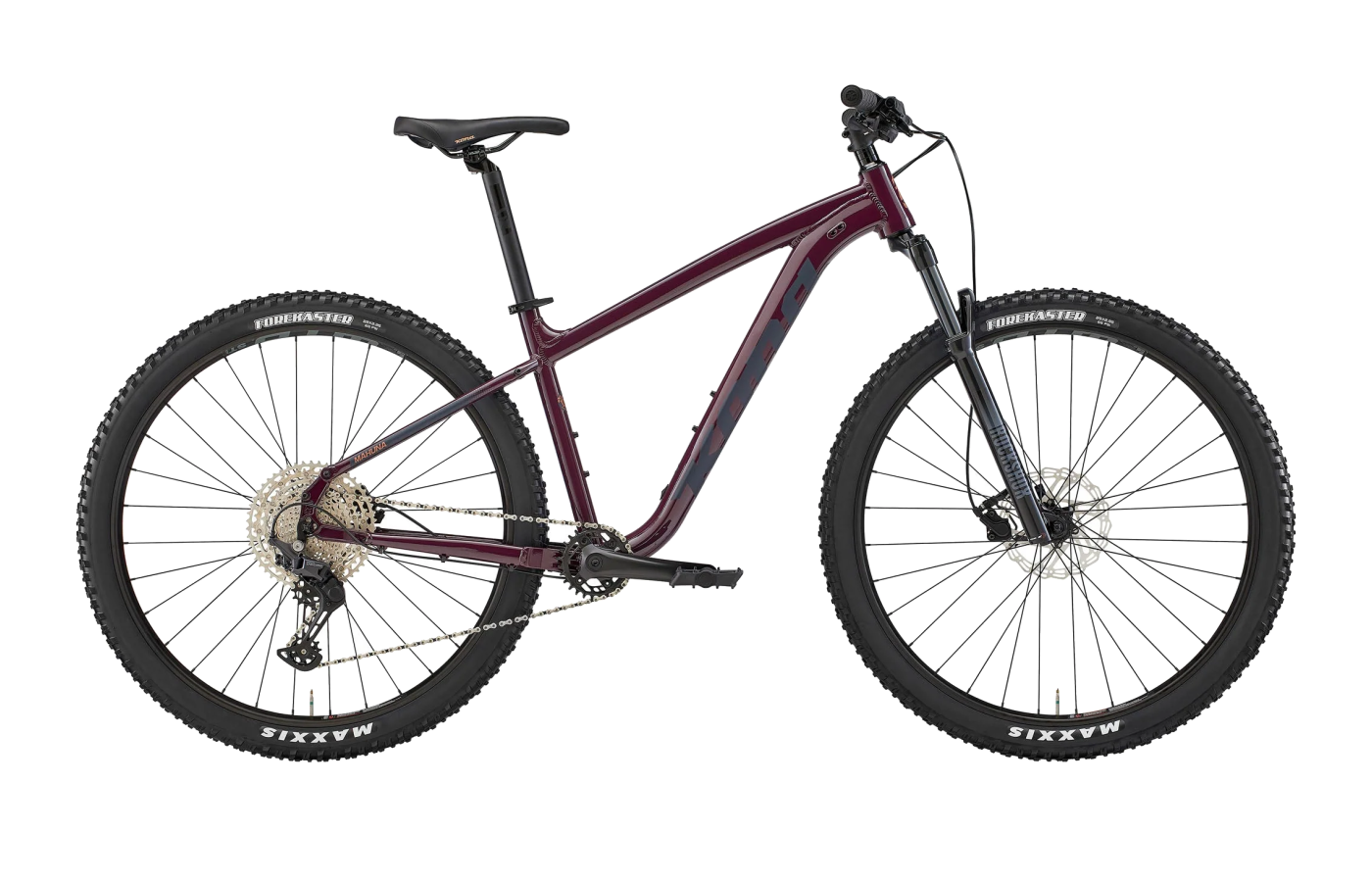
Mahuna
A long-time enthusiast favorite at the Marlin's price point — alloy, trail-oriented geometry, and a reputation for being more fun on technical descents than its budget would suggest.
Compare →