Procaliber
vsSupercaliber
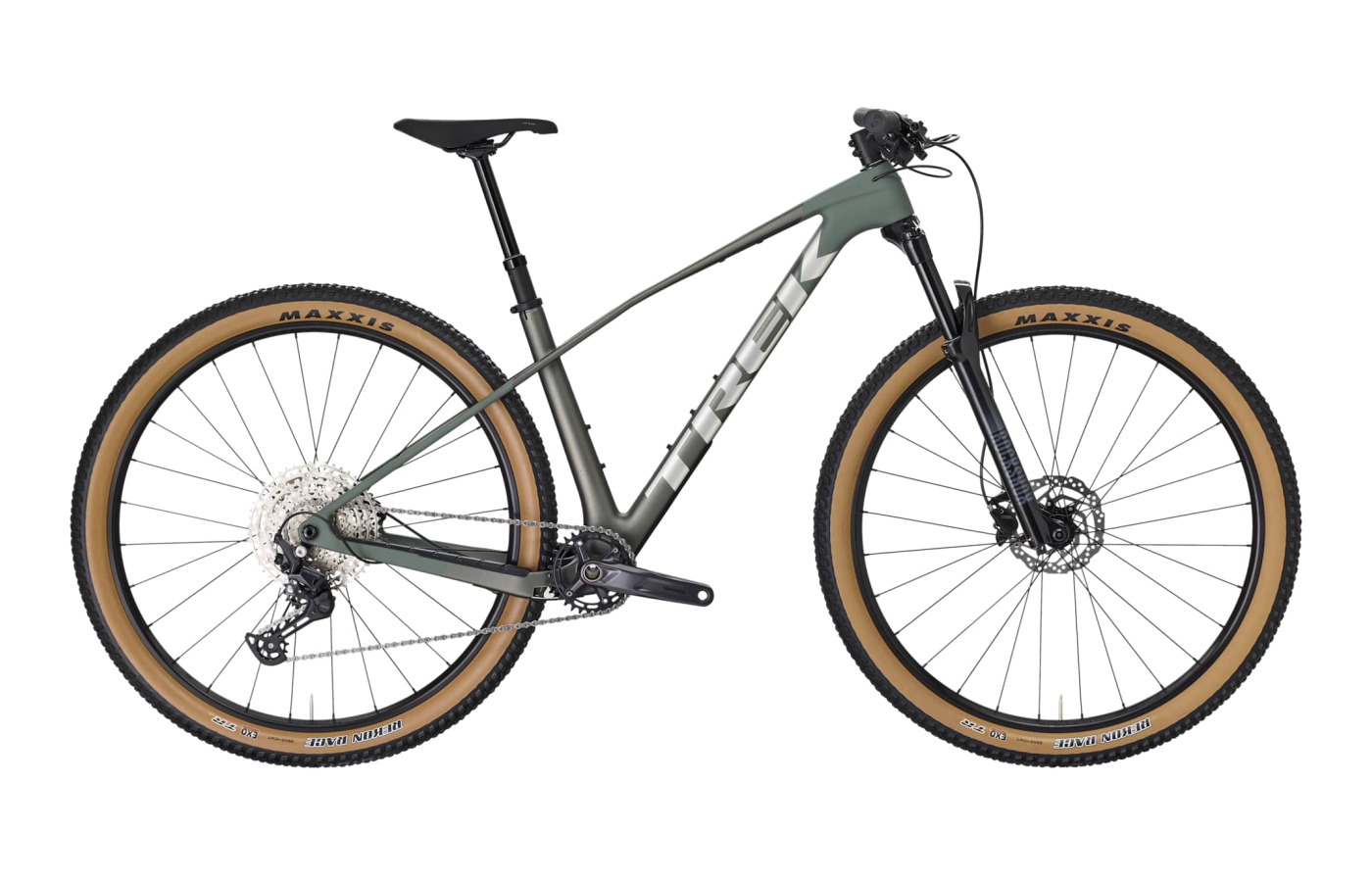
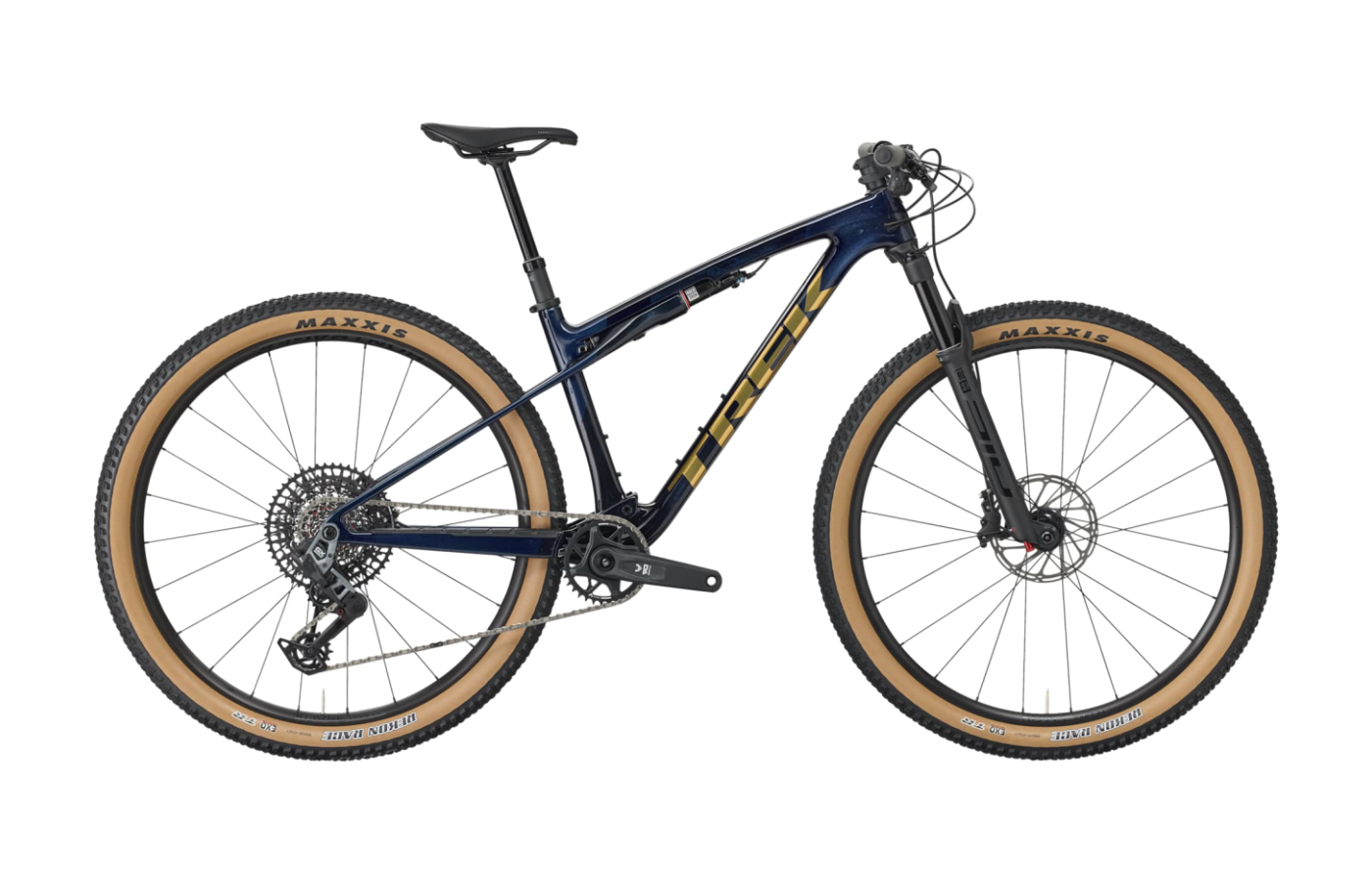
Hardtail simplicity vs. integrated suspension.
The Procaliber is Trek's modern XC hardtail with a flex-stay frame trick. The Supercaliber bolts a structural shock into the chassis for 80 mm of rear travel.
Procaliber
- Cheapest way into Trek's race carbon — $2,699 buys the same OCLV Mountain frame Trek uses across the lineup.
- Truly nimble at low speed — 430 mm chainstays and a 309 mm BB make tight switchbacks and flickable cornering effortless.
- Mechanically simple — no rear pivot, no shock service, no proprietary strut to maintain.
- IsoBow's vibration damping is subtle — most absorption comes from the 2.4-inch tires.
- Low BB means crank strikes on technical, rocky climbs.
Supercaliber
- 80 mm of rear travel without the weight penalty — SL builds undercut 12.2 kg; SLR builds dip below 10.3 kg.
- Hardtail-grade pedaling efficiency — high anti-squat and a structural shock make it feel like a rocket on smooth climbs.
- Stable at race speed — 37 mm longer wheelbase and a 7 mm-higher BB inspire confidence on chunky descents.
- Entry price near $4,800 — no sub-$3k option exists.
- IsoStrut needs ~10 hours of break-in and 100-hour service intervals; reports of factory under-lubrication.
Editor’s analysis
Same brand, same OCLV carbon, same 67-ish degree head angle — and a $4,000 gap that buys you 80 mm of rear travel and a different way of going fast.
On paper, both bikes share Trek's cross-country DNA: 29-inch wheels, 110–120 mm of fork, dropper posts standard, the same Mountain Carbon layup. The Trek Procaliber is the pure hardtail — pivot-free, mechanically simple, and now using a structural IsoBow that lets the seatstays flex into the top tube to take the worst edge off trail chatter. The Trek Supercaliber takes the opposite tack: it makes the rear shock a structural member of the frame, delivers 80 mm of travel, and weighs almost as little as the hardtail.
The Procaliber Gen 3 is the gateway. Trek uses one OCLV carbon frame across the entire lineup, so the $2,699 9.5 build gets the same chassis as a hypothetical top-tier model — even with budget Deore parts and a basic RockShox Judy fork. Reviewers describe it as the "quintessence of nimbleness" thanks to short 430 mm chainstays and a planted 309 mm bottom bracket. The IsoBow is subtle — most reviewers credit the 2.4-inch tires for the bulk of the absorption — and the bike rewards out-of-saddle aggression more than it forgives sloppy lines.
The Supercaliber Gen 2 is what you buy when 80 mm of rear travel actually changes your race. The RockShox-built SIDLuxe IsoStrut is described by testers as feeling like a hardtail until you hit a square-edged rock, then "skimming" over chatter that would have a Procaliber rider out of the saddle. Geometry is half a degree steeper at the head tube (67.5 vs 67) and the wheelbase is 37 mm longer at the compared sizes — more stable at speed, more deliberate in tight switchbacks. The cost: a starting price near $4,800, a more complex suspension to service, and a bedding-in window of roughly 10 hours before the strut feels truly supple.
Put another way: the Procaliber is the bike for the rider who wants race-grade carbon for under $3k and accepts that some impacts are part of the deal. The Supercaliber is for the racer who's already decided their podium ambitions need 80 mm of help on the descent.
Where the builds differ.
Comparing our editor's-pick builds side-by-side. Winners highlighted row-by-row — lower price and weight, and the better-spec component, each mark a point.
Build variants & pricing
The Procaliber tops out at $2,699; the Supercaliber starts $2,100 above that and climbs to $14,999 for the XX Flight Attendant flagship.
Prices are current US MSRP. Trek's two-frame split on the Supercaliber matters here: SL builds (9.6, 9.7) share the rear triangle and IsoStrut with the SLR but use a slightly heavier main frame with internal cable guides — a real durability win if you'll service the bike yourself.
How they fit, how they steer.
Both at size ML — fit-picked for a 173 cm rider on each bike. The Trek Procaliber sits 24 mm taller in stack (614 vs 590) and runs a half-degree slacker head angle (67 vs 67.5) — more upright and a touch more confidence-inspiring on steep chutes. Reach and chainstays are identical at 445 mm and 435 mm.
Which size should I buy?
Both ranges share an S–XL spread. Reach scales nearly identically, but the Supercaliber sits consistently lower in stack and longer in wheelbase at every size.
→These are starting points. Flexibility, riding style, and preferred position all shift the answer — if you’re between sizes, a professional fit beats a chart.
What the magazines said.
Published reviews from trusted cycling outlets. Click through for the full write-up.
Which one should you buy?
If you want race-grade Trek carbon under $3k and don't mind a hardtail's bumps, get the Procaliber. If you race technical XC and need 80 mm of travel without a weight penalty, get the Supercaliber.
Procaliber
If you're stepping up from an alloy hardtail and want a premium carbon chassis without a $5,000 entry fee, the Procaliber is the cheapest way in. It rewards aggressive seated climbing and flowy cornering, and the single-frame strategy means you can keep upgrading components against the same world-class frame for years.
Supercaliber
If your races include square-edged rocks, drops, and descents where a hardtail rider gets bucked, the Supercaliber's 80 mm of rear travel is the difference between staying on line and losing seconds. The IsoStrut keeps it pedaling like a hardtail; the geometry update keeps it composed when things get fast.
Questions buyers actually ask.
Short answers to the things we get emailed about most often.
01How much rear travel does each bike actually have?
The Trek Procaliber has zero rear travel — it's a hardtail. The IsoBow structural detail (the visible "hole" in the top tube) lets the seatstays flex slightly into the frame for vibration damping, but it's not suspension; reviewers describe it as a "slight dulling of hard impacts."
The Trek Supercaliber has 80 mm of rear travel via the IsoStrut, an integrated RockShox SIDLuxe shock that's a structural member of the frame. That's up from 60 mm on the Gen 1, and Trek pairs it with a 110 mm fork on the higher builds and a 120 mm fork on the entry-level SL 9.7 build.
02Which climbs faster on smooth terrain?
Effectively a tie, with an edge to the Supercaliber for most riders. Both have hardtail-grade pedaling response — the Supercaliber's high anti-squat and structural shock make it feel "like a rocket" out of the saddle, with one reviewer comparing the response to a lightweight eMTB.
The Procaliber wins outright if you're climbing on a fire road and prefer a true rigid platform — there's nothing to bob, lock out, or service. On rough or chunky climbs, the Supercaliber pulls ahead because the rear wheel keeps tracking instead of skipping.
03Which descends better?
The Trek Supercaliber, comfortably. 80 mm of rear travel and a longer wheelbase (37 mm longer at the compared ML size) make it noticeably more composed on chunky descents and small drops. Reviewers report it handles "drops from two or three wheel heights" without drama.
The Procaliber descends well for a hardtail, and its slightly slacker 67° head angle and lower bottom bracket help in fast corners — but anything beyond high-speed chatter will reach the limits of what a rigid rear end can absorb.
04Why is the Supercaliber so much more expensive?
Three reasons. First, the proprietary IsoStrut suspension is engineered jointly with RockShox and isn't sold on any other bike — the tooling and development cost is built into every frame. Second, the Supercaliber lineup skews higher up the component spectrum: even the cheapest build runs SRAM GX AXS T-Type, while the Procaliber tops out at Shimano Deore. Third, the Trek Supercaliber carries World Cup race-team pedigree — Jolanda Neff won Olympic gold on this platform, and that history is part of what you're paying for.
05Are both available in carbon at the entry-level builds?
Trek Procaliber: the $2,699 9.5 Gen 3 is full OCLV Mountain Carbon — Trek uses the same frame across every carbon build in the lineup, so even the cheapest carbon model has the same chassis as the top-tier ones. The $1,799 "6" build is alloy (Alpha Platinum Aluminum).
Trek Supercaliber: every build is carbon. The $4,799 SL 9.6 and the SL 9.7 builds use the SL frame with molded-in internal cable guides; the $8,999-and-up builds use the lighter SLR frame that omits the guides to save ~200 g.
06What's the maximum tire clearance?
Both frames officially clear up to 2.4 inches (61 mm) of tire — wide enough for any modern XC or down-country tire. Most builds on both bikes ship with 2.4-inch rubber out of the box.
The one exception worth flagging: the flagship Supercaliber SLR 9.9 XX Flight Attendant comes with 2.2-inch tires on the rear to save weight, and most reviewers recommend swapping to 2.4-inch immediately to unlock the frame's descending potential.
07How serviceable is the Supercaliber's IsoStrut?
More serviceable than the Gen 1, but still a proprietary part. The Gen 2 IsoStrut is built by RockShox and uses a 38 mm stanchion that shares bushings and seals with the Zeb enduro fork. Basic service is doable with a 4 mm hex key (no special Race Face BB tool required), and RockShox specifies a 100-hour air-can service interval.
Watch out for two known issues: factory under-lubrication can make the strut feel "stubborn" out of the box (reviewers recommend checking immediately), and there are isolated reports of damper leaks early in the service life. The Procaliber, with no rear shock, sidesteps all of this entirely.
08Which is the better long-term upgrade chassis?
The Procaliber, by a clear margin. The entry-level 9.5 frame is identical to whatever Trek would sell as a top-tier carbon build — drop in a SID fork, carbon wheels, and a wireless drivetrain over time and you end up with effectively a flagship bike. UDH, 31.6 mm dropper compatibility, and traditional cable routing make every upgrade easier.
The Supercaliber SL builds also share the rear triangle and IsoStrut with the SLR, so the SL 9.7 ($6,499) is a real foundation for upgrades. But going lighter eventually requires the SLR frame itself — there's a hard ceiling on how far an SL build can be transformed.
Similar bikes
If your priorities don’t map cleanly onto either of these, one of these adjacent bikes probably fits better.
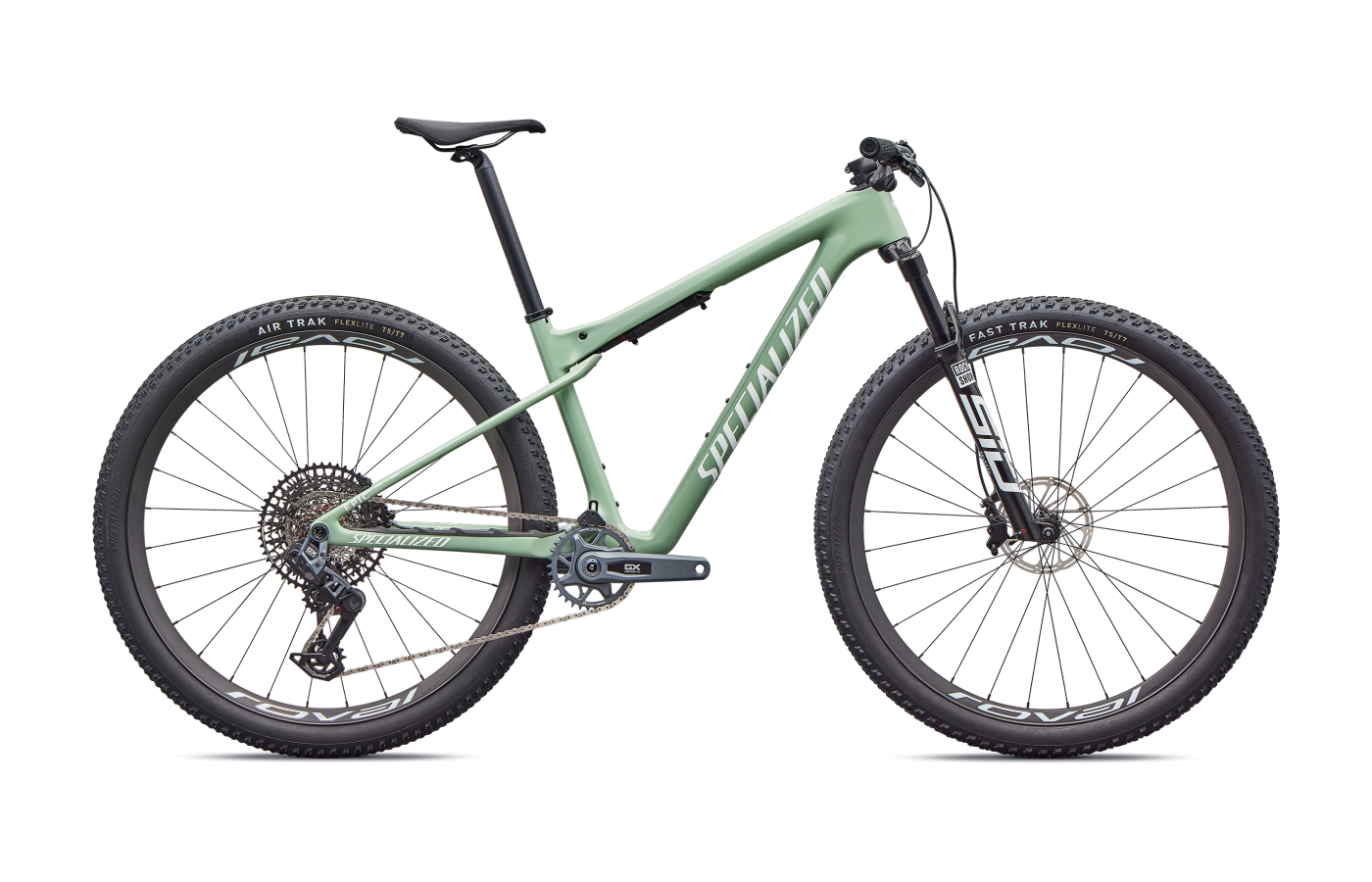
Epic World Cup
The most direct rival to the Supercaliber — Specialized's integrated-shock XC racer with the automated Brain damper that adjusts based on trail input. Same hybrid hardtail/full-suspension philosophy, different way of getting there.
Compare →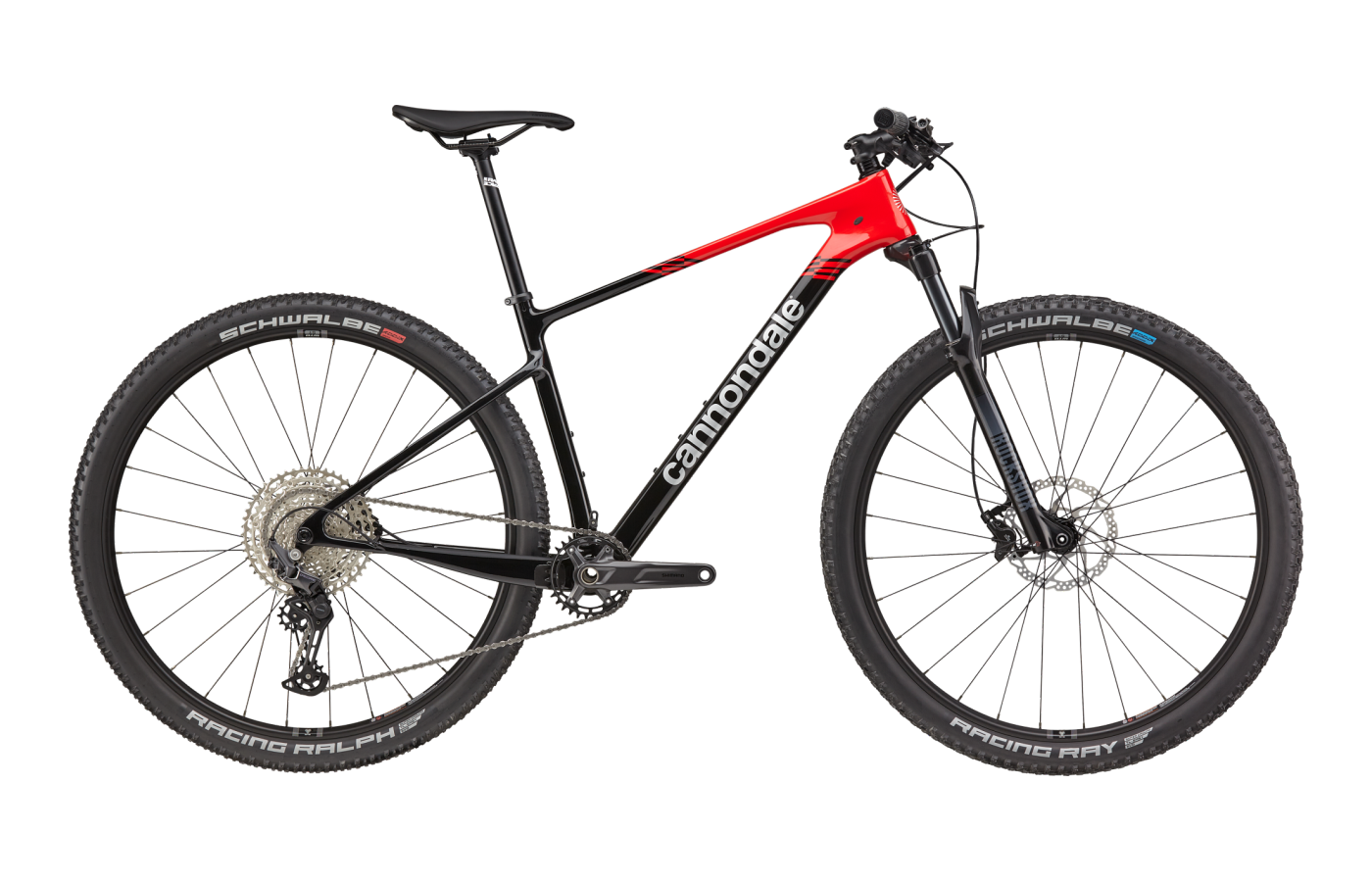
Scalpel HT
If you like the Procaliber's hardtail simplicity but want even more modern geometry, the Scalpel HT pushes the head angle to 66.5° and runs a uniquely compliant rear triangle for a softer-riding rigid frame.
Compare →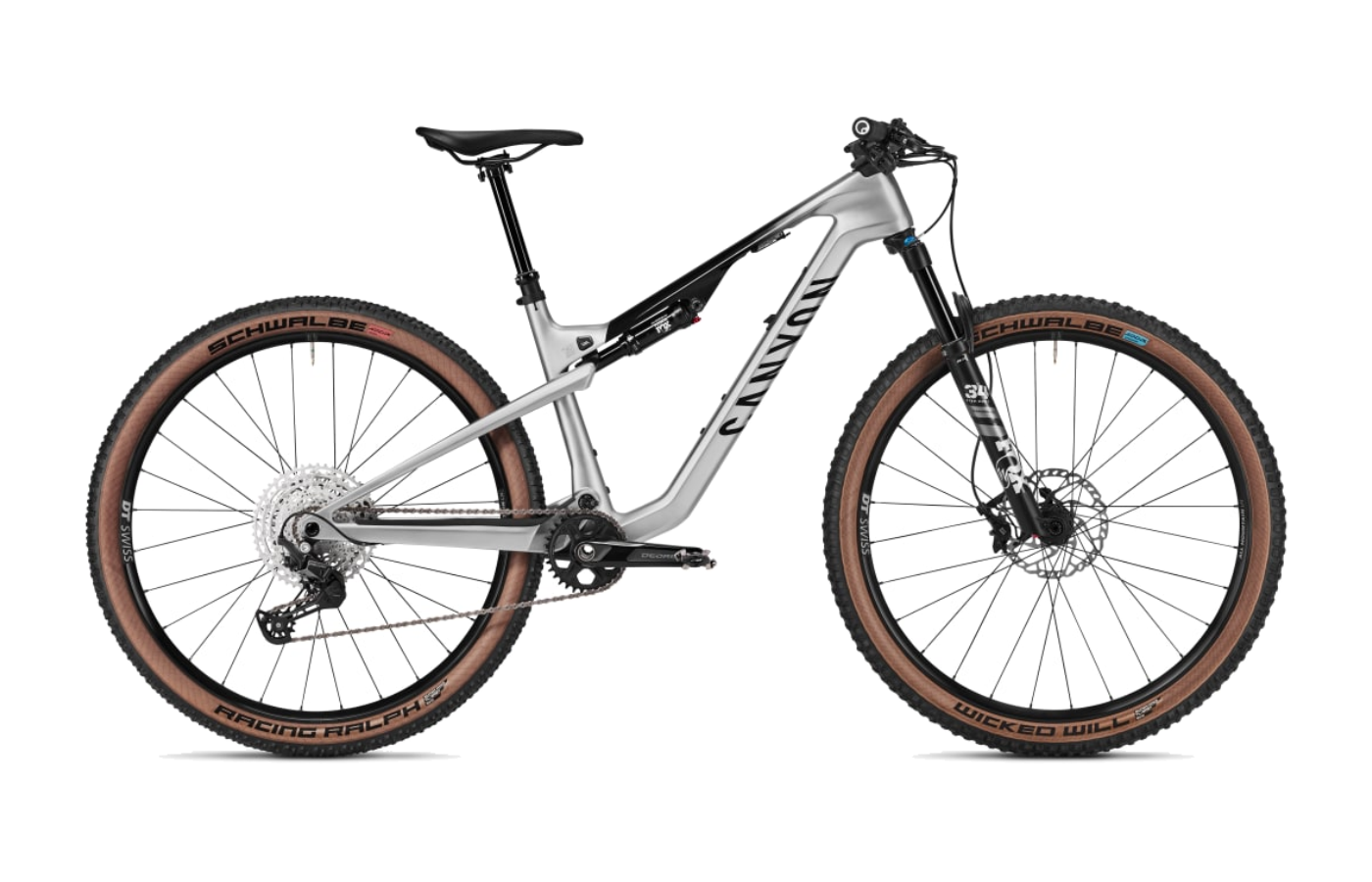
Lux Trail
For riders who find the Supercaliber's 80 mm too limiting, the Lux Trail offers 120 mm of travel with a marathon focus — more capable on technical terrain, often at a lower price.
Compare →