Oltre
vsMadone
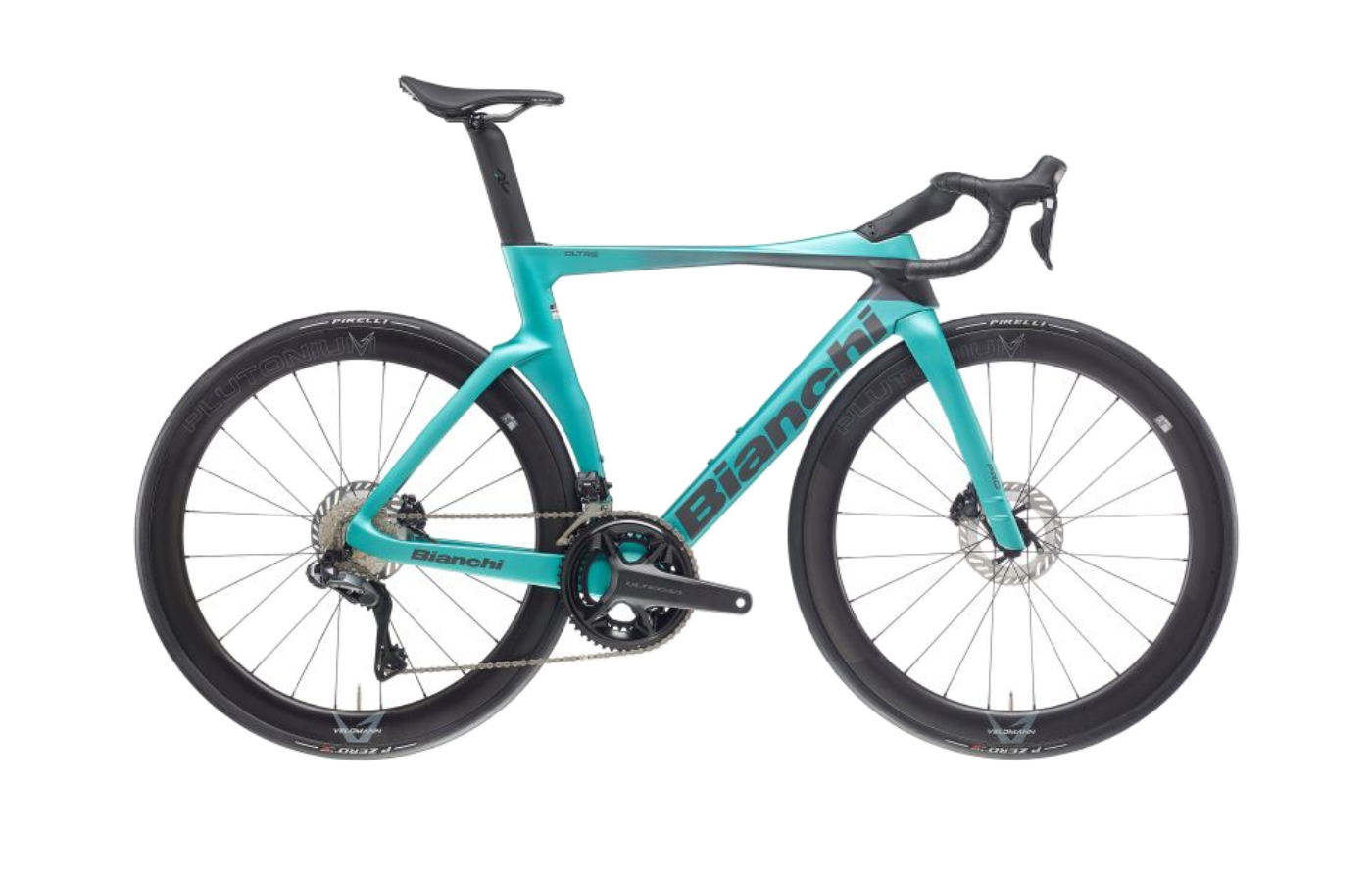
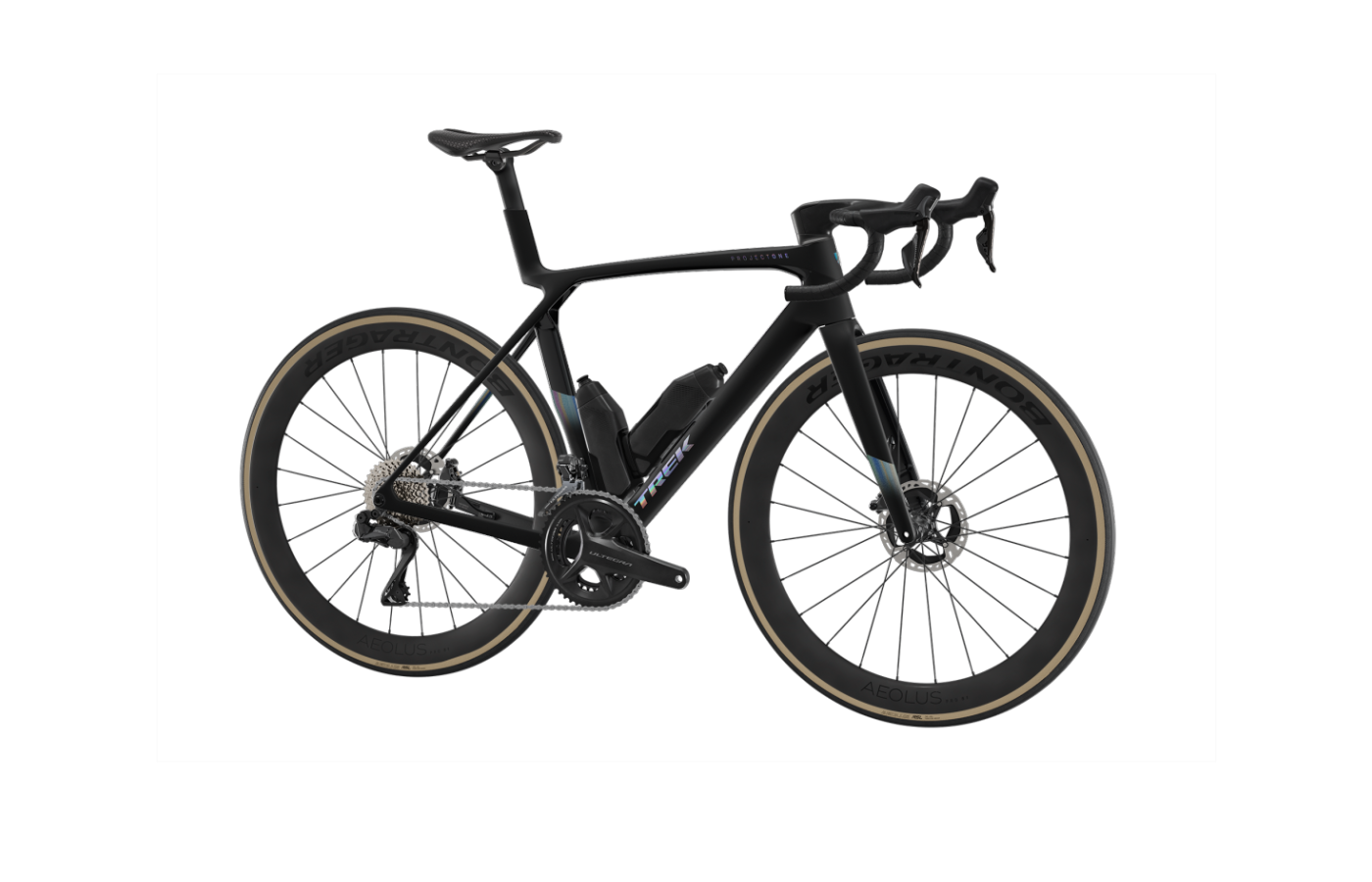
Two aero bikes, two attitudes.
The Bianchi Oltre is a hyperbike that refuses to apologize for its singular focus. The Trek Madone Gen 8 folds a climbing bike and an aero bike into one platform.
Oltre
- Race-bred stiffness — a seriously hefty bottom bracket and thick chainstays deliver "top-shelf" power transfer under hard efforts.
- Countervail damping weaves viscoelastic material into the carbon layup; reviewers confirm it "soaks up" road buzz without softening the race character.
- Signature aero styling — the head-tube deflectors and sculpted tubes look like nothing else on a group ride.
- Typical 55 cm weight of 8.0–8.3 kg is heavy for the segment and felt on long climbs.
- Extremely low 520 mm stack and short head tube demand an aggressive fit most riders need help dialing in.
Madone
- Sub-800 g frame weight — the SLR frame sheds 332 g versus Gen 7 and matches the outgoing Emonda for climbing.
- IsoFlow compliance claims an 80% bump in vertical flex over Gen 7; testers report endurance-bike smoothness on rough pavement.
- Accessible entry point — the SL 5 starts at $3,499 with 105 mechanical, something the Oltre simply doesn't offer.
- Aero RSL integrated cockpit is "stiff as a brick" — some testers report hand numbness past 80 miles.
- Toe overlap has been flagged on multiple sizes; the tight geometry limits low-speed technical riding.
Editor’s analysis
This isn't a battle of better specs. It's a question of whether you want one bike that does everything, or one bike that does one thing brilliantly.
On paper the Bianchi Oltre and Trek Madone Gen 8 are both pro-level aero-road race bikes, both with integrated cockpits, both capped at 32 mm tire clearance. Dig past that surface and they split hard. The Madone Gen 8 is Trek's consolidation move — the Emonda is gone, absorbed, and this one frame now tries to do both jobs. The Oltre is the opposite philosophy: one lane, sharpened to a razor.
Trek's pitch is the one-bike solution. A Madone SLR frame comes in around 765 g, close enough to the outgoing Emonda that Trek killed the climbing model outright. The IsoFlow seat-tube cutout delivers a claimed 80% bump in vertical compliance over the Gen 7, and reviewers routinely describe it as the most comfortable race bike Trek has ever made — endurance-bike smoothness on a sub-7 kg chassis that still sprints like a muscle car. The price range runs from $3,499 to $13,499, and the platform scales all the way down to 105 mechanical.
Bianchi's Oltre is unrepentantly a hyperbike. Countervail-damped Pro frame, UCI-defying air deflectors on the head tube, 8.0–8.3 kg typical weight for the 55 cm, and a stack so low (520 mm in size 550) that nearly every review insists on a professional fit. Reviewers call it "strictly a race bike," "a power bike for power riders," and one tester found it "uncomfortable and sluggish at times" on steep climbs. It starts at $6,100 and doesn't apologize for any of it.
Put another way: the Trek Madone is the bike that wants to own your whole garage. The Bianchi Oltre is the bike you buy when you already have a climbing bike and you want something that makes 40 km/h efforts feel reasonable.
Where the builds differ.
Comparing our editor's-pick builds side-by-side. Winners highlighted row-by-row — lower price and weight, and the better-spec component, each mark a point.
Build variants & pricing
The Oltre starts at $6,100 and runs past $25k. The Madone covers a much wider range — from $3,499 to $13,499 — and includes 105 mechanical and 105 Di2 builds the Bianchi lineup doesn't offer.
Prices are current US MSRP. The Oltre lineup has no mechanical-shifting or 105-tier builds — the cheapest Oltre costs nearly twice the cheapest Madone. If budget is tight, the Madone is the only conversation.
How they fit, how they steer.
At the fit-picked sizes — Oltre 570 and Madone M — the Bianchi sits 10 mm lower in stack (536 vs 546) but 18 mm longer in reach (402 vs 384). The Madone's 58 mm trail is also longer than the Oltre's more aggressive front-end numbers — a much more compact, upright posture overall.
Which size should I buy?
Size recommendations blend stack, reach, and effective top tube. The Oltre ranges small (470–590) on traditional numeric labels; the Madone uses six T-shirt sizes from XS to XL.
→These are starting points. Flexibility, riding style, and preferred position all shift the answer — if you’re between sizes, a professional fit beats a chart.
What the magazines said.
Published reviews from trusted cycling outlets. Click through for the full write-up.
Which one should you buy?
If you want one race bike for everything from Tuesday crits to Saturday climbing days, get the Madone. If you already own a climber and want a dedicated flat-road specialist, get the Oltre.
Oltre
If you live for breakaways, flat-road time trials, and group-ride attacks, the Oltre's stiffness and aero signature will reward the effort. The climbs will hurt more than they need to — but the flats will hurt the field.
Madone
If you want one race bike for climbs, sprints, crits, and century rides — and you care about long-ride comfort — the Madone Gen 8 is the easiest recommendation in this segment. Lighter than the Oltre, cheaper on the entry-level, and notably more compliant.
Questions buyers actually ask.
Short answers to the things we get emailed about most often.
01Which climbs better?
The Trek Madone, clearly. The SLR frameset weighs roughly 765 g — about the same as the outgoing Emonda — and tops out as a complete bike around 6.9–7.0 kg on the SLR 9. The Bianchi Oltre Pro typically comes in at 8.0–8.3 kg in a 55 cm, per reviews from Bicycling Australia and Competitive Cyclist. That's a full kilo of difference on the climbs.
Bianchi doesn't really contest this: reviewers consistently flag the Oltre as happier on flats and descents than steep gradients. If climbs are a regular part of your ride, the Madone's weight advantage is meaningful.
02Which is more comfortable over long rides?
The Madone, largely because of IsoFlow. Trek claims an 80% increase in vertical compliance over the Gen 7, and reviewers describe the bike as "extra smooth" — endurance-bike quiet on chip-seal and wooden bridges. The rear end filters buzz without softening the sprint.
The Oltre Pro has Bianchi's Countervail damping woven into the carbon layup, which reviewers confirm takes the edge off road vibration. But it's still "pretty firm" and "race-bike firm" — designed to reward hard efforts, not cruising. Over a century, most riders will feel fresher on the Madone.
03What's the maximum tire clearance?
Both bikes are officially rated to 32 mm. Some Madone reviewers report successfully fitting 35 mm or even 38 mm "all-road" tires, but that's off-spec. Neither bike is a gravel platform — for anything rougher than chip-seal, look at a Domane or an endurance bike.
04How aggressive is the fit on each bike?
The Oltre is aggressive by modern standards. Reviewers repeatedly call the stack "extremely low" and describe the riding posture as "low, compact and certainly at the more aggressive end of the scale" (Bicycling Australia). A professional fit isn't a suggestion — it's what every tester recommends.
The Madone sits taller and more neutral. Stack on size M is 546 mm versus 536 mm on the Oltre 570 — and with the Madone's shorter reach (384 vs 402 mm), the overall posture is noticeably less stretched. Riders who dislike a slammed front end will find the Madone much easier to fit.
05How do the drivetrains compare?
Both bikes are wireless/electronic-only at the frame level — neither accepts mechanical shifting on the top-tier Oltre RC/Pro or the Madone SLR. Both platforms offer Shimano Di2 and SRAM AXS builds from Ultegra/Force up to Dura-Ace/RED.
The Madone SL tier does support mechanical routing and offers a Shimano 105 mechanical build at $3,499. The Oltre has no 105 or mechanical option anywhere in its lineup.
06How user-friendly is long-term maintenance?
Advantage Madone. Trek moved the Gen 8 to a T47 threaded bottom bracket (much easier to live with than press-fit) and a Universal Derailleur Hanger (UDH) — so a replacement hanger is available at any UDH-compatible shop, not a proprietary part.
The Oltre uses a PressFit 86.5x41 bottom bracket, which Competitive Cyclist acknowledges "some people are concerned about" due to historical creaking issues. Modern manufacturing tolerances have largely addressed it, but home servicing remains harder than T47. Integrated cockpits on both bikes make hose-routing a shop job.
07Which is faster in a straight line?
This one is closer than the weights suggest. Bianchi claims a 17-watt saving at 50 km/h over the Oltre XR4, and the head-tube air deflectors (though UCI-illegal for racing) contribute real drag reduction. Trek claims the Gen 8 is 77 seconds per hour faster than the Emonda and marginally faster than the previous aero-focused Madone SLR — with the added trick of weighing 1+ kg less than the Oltre.
Raw drag numbers probably still favor the Oltre on pure flat ground at race pace. But the Madone's lighter weight closes the gap on rolling terrain, and both bikes are genuinely within a few watts of each other in typical group-ride conditions.
08What about warranty?
Both platforms come with lifetime frame warranties to the original owner. Trek's warranty program is specifically called out by bike fitters and reviewers as "best in the business," including documented cases of frame replacements under the lifetime coverage. Bianchi's warranty support is standard for the industry — solid, but less universally praised.
Similar bikes
If your priorities don’t map cleanly onto either of these, one of these adjacent bikes probably fits better.
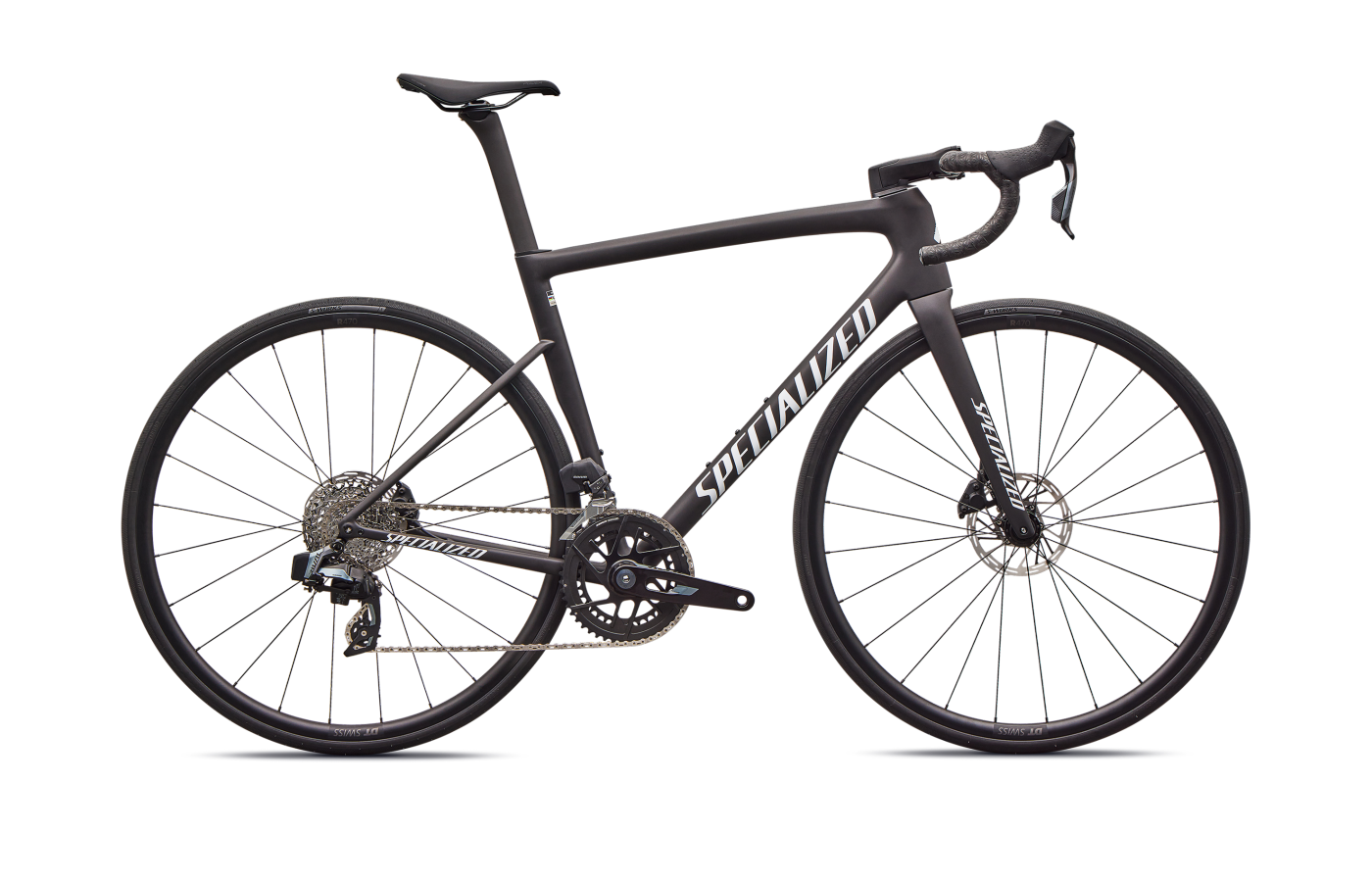
Tarmac
The most direct cross-shop for the Madone — Specialized's one-bike-does-it-all answer, with similar weight and a proven race pedigree across climbs, crits, and classics.
Compare →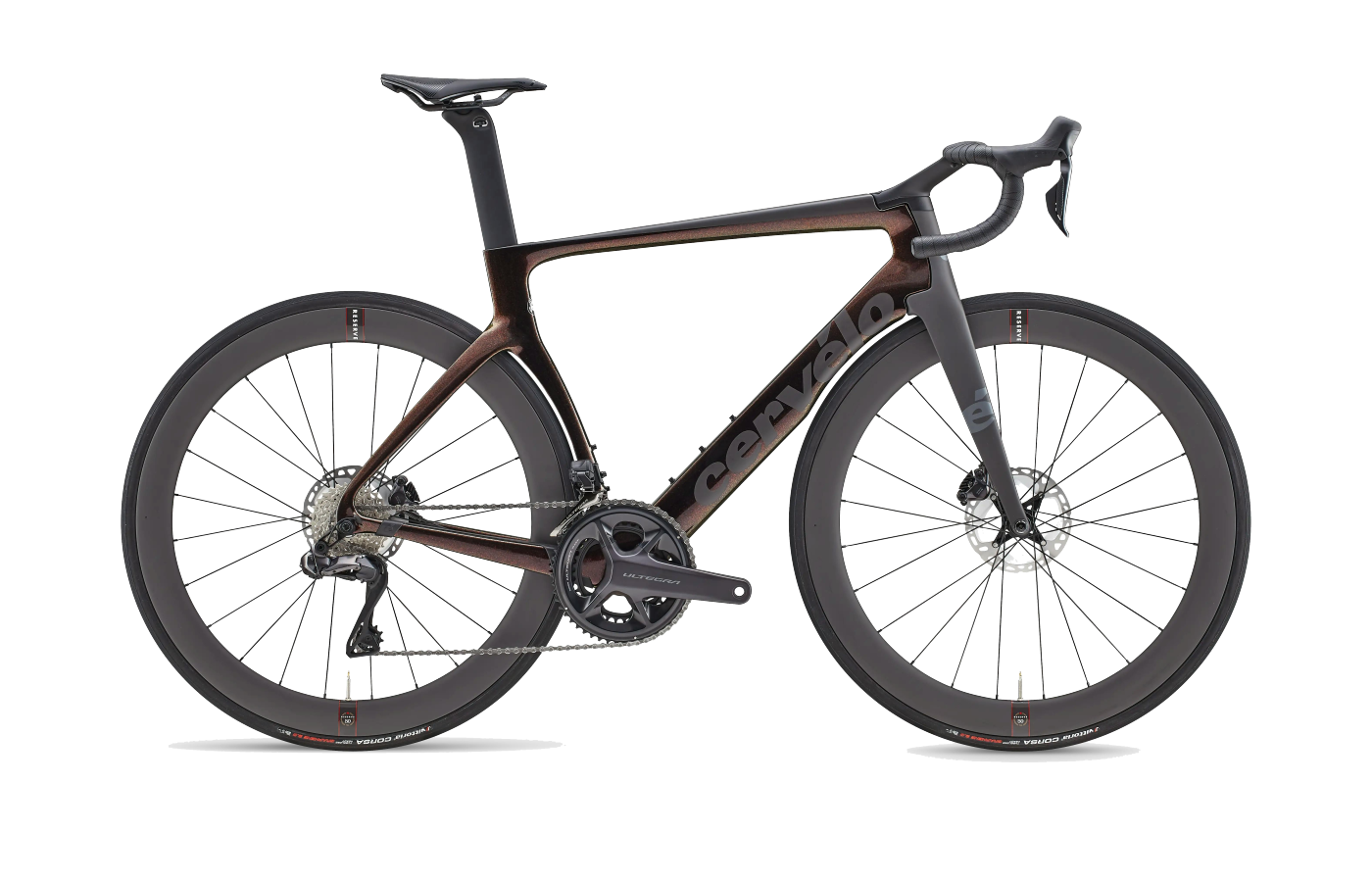
S5
If the Oltre's aero-specialist focus still isn't sharp enough, the S5's V-stem and fully committed aero system push further in that direction — at a similarly steep price floor.
Compare →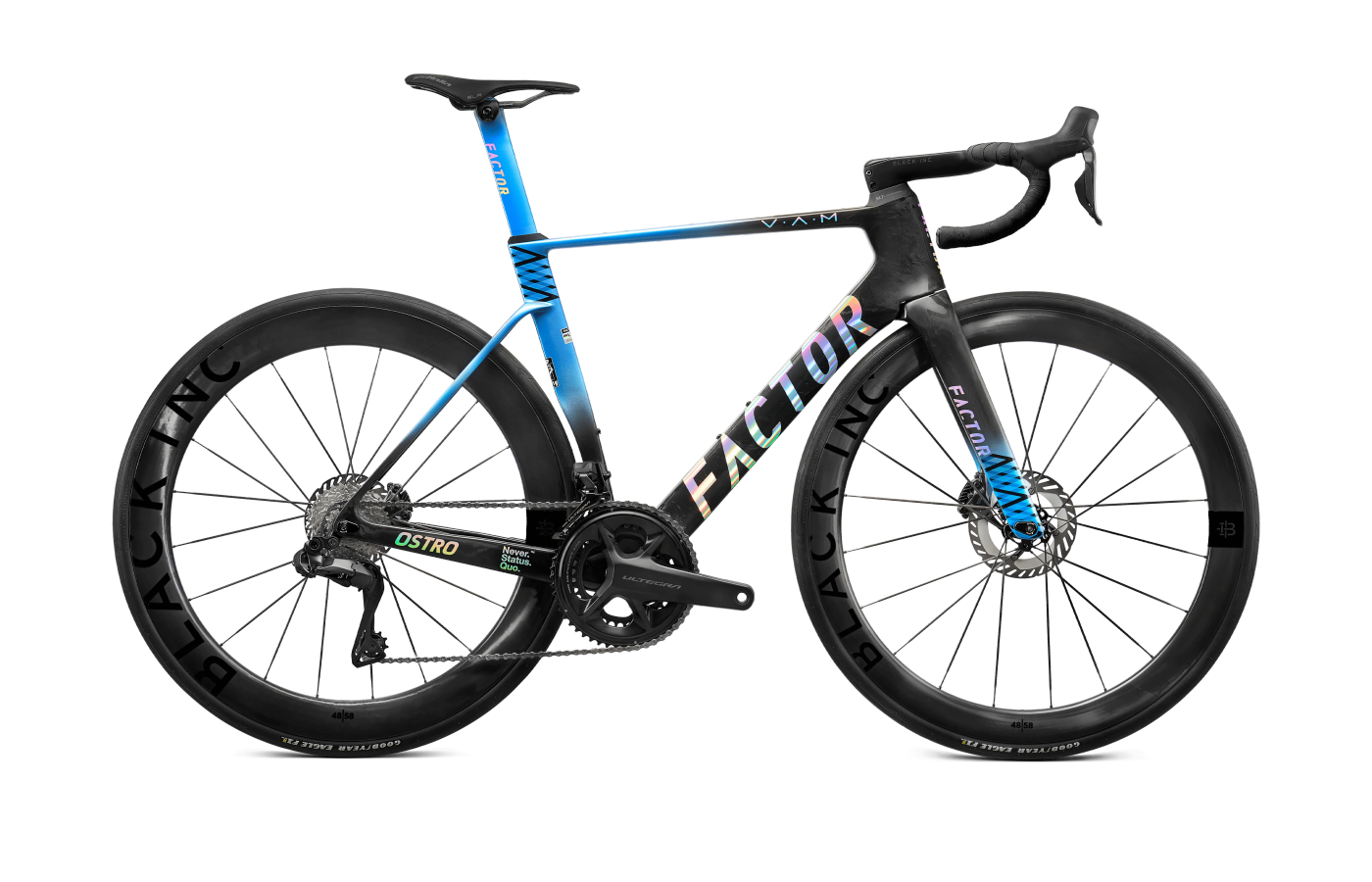
Ostro VAM
Another all-rounder that splits the difference between aero and lightweight — often called snappier in sprints than the Madone, with a firmer rear end that trades some compliance for directness.
Compare →