CAAD13
vsSynapse
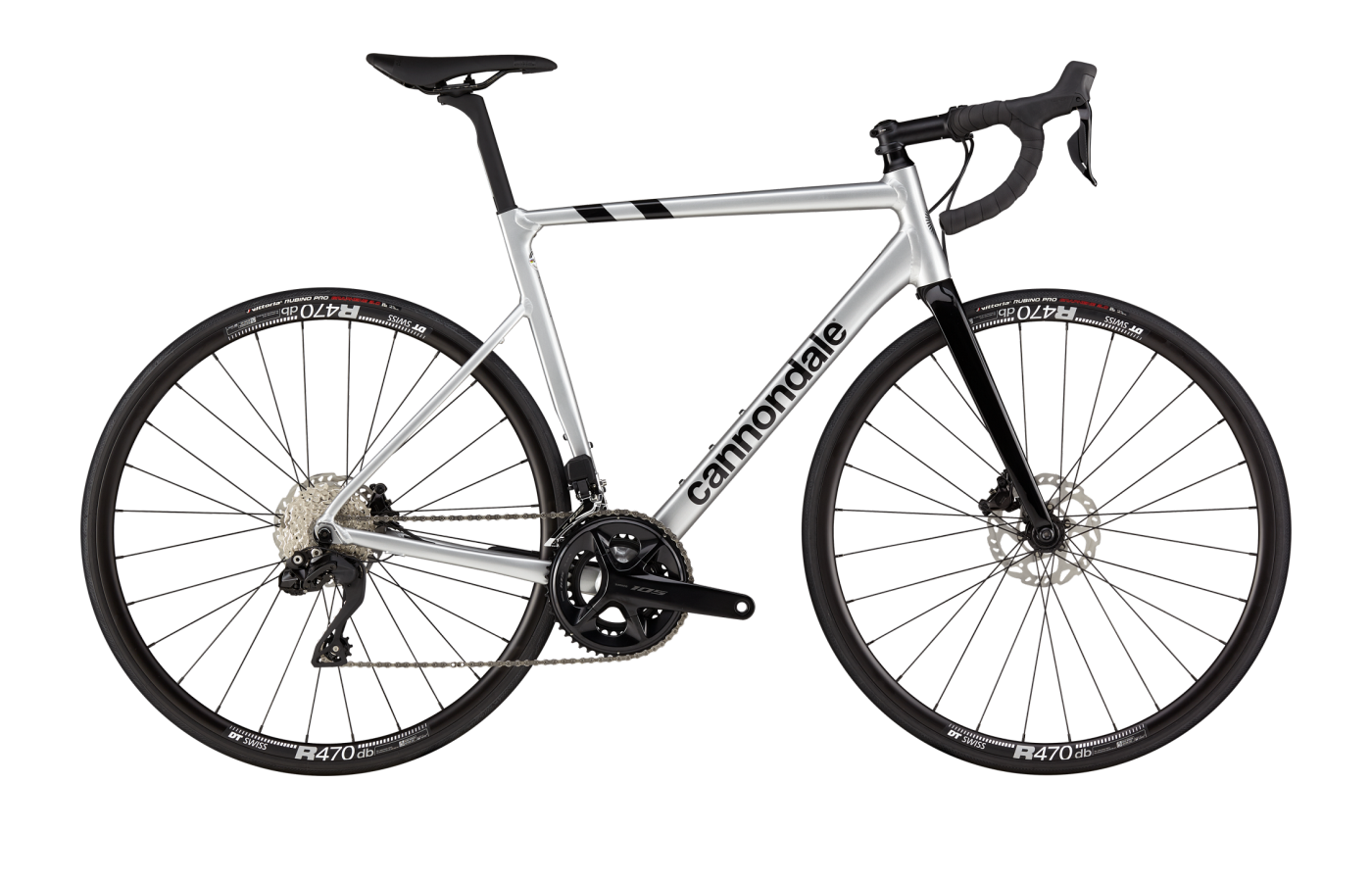
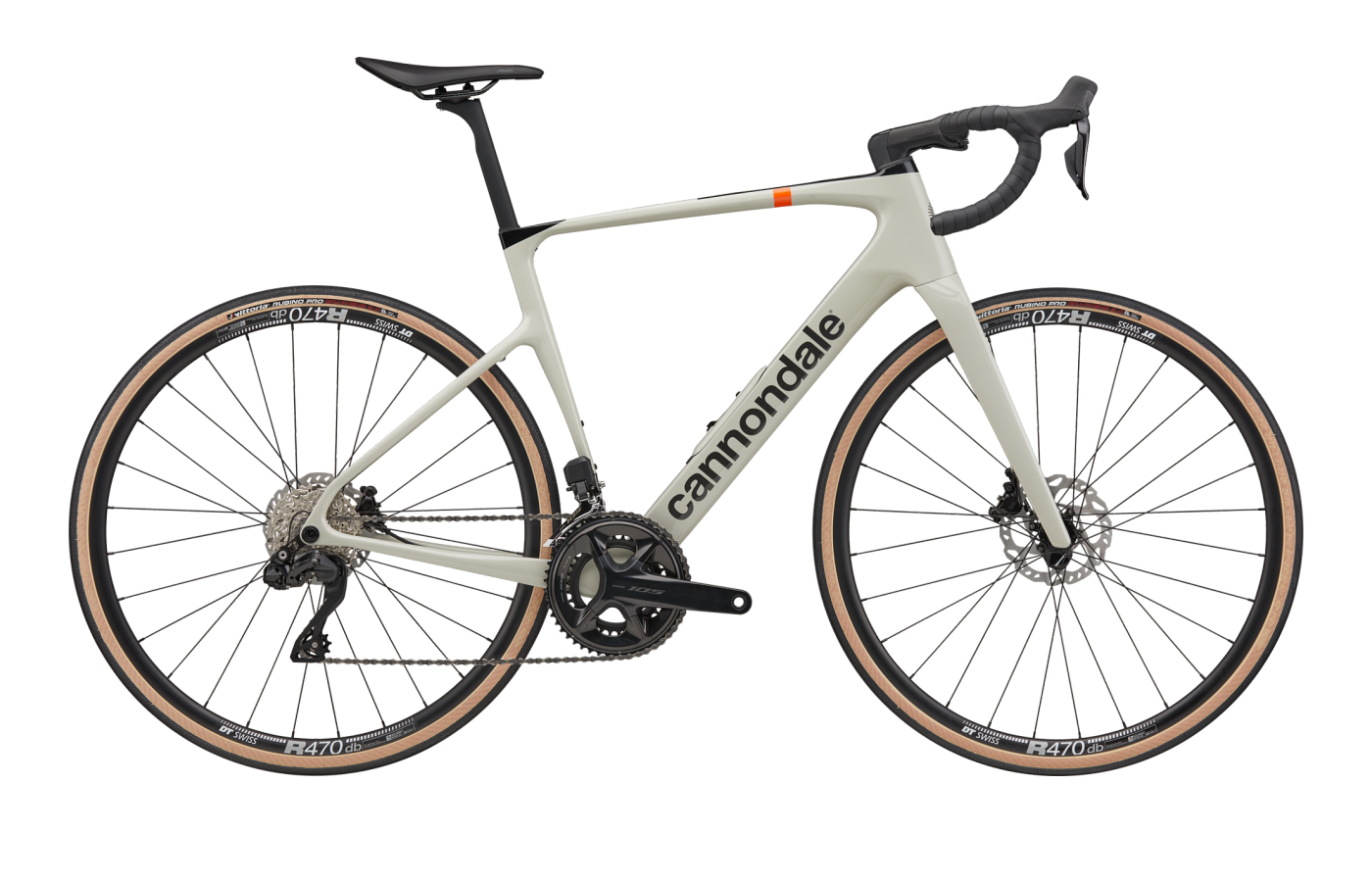
Same brand, opposite missions.
The CAAD13 is Cannondale's race-hardened aluminum holdout. The Synapse is its tech-loaded carbon endurance flagship — and the two barely overlap.
CAAD13
- Aluminum value — $2,300 entry, $3,700 for 105 Di2. No carbon endurance bike comes close at this spec.
- SuperSix Evo geometry in alloy — short 408 mm chainstays, 58 mm trail, snappy and crit-ready.
- Crash-resilient frame — alloy tubes survive the kind of contact that totals a carbon frame.
- Tire clearance capped at 30 mm — no light-gravel ambitions.
- BB30a press-fit bottom bracket has a known long-term creak record.
Synapse
- 42 mm tire clearance (48 mm fork) — closer to a gravel bike than an endurance road bike of five years ago.
- Integrated SmartSense — one downtube battery powers Garmin Varia radar, lights, and AXS shifting on equipped builds.
- 20% more frame compliance vs. the previous Synapse, with downtube storage and threaded BSA bottom bracket.
- Carbon-only premium starts around $3,200 — alloy builds exist but skip most of the tech.
- Longer wheelbase and more trail give up some agility for stability — racier riders may find it sedate.
Editor’s analysis
One bike picks lanes — fast, alloy, criterium-bred. The other refuses to pick any — carbon, composed, and built for the long way home.
On paper, both are Cannondale road bikes with similar 71.2 / 71.3-degree head tube angles. In practice, they answer entirely different questions. The Cannondale CAAD13 is the modern descendant of a 40-year aluminum lineage — SmartForm C1 alloy, dropped seatstays, BallisTec carbon fork, geometry borrowed straight from the SuperSix Evo. It tops out at $3,700 for a 105 Di2 build, and the entire range fits in two builds.
The Cannondale Synapse, in its sixth generation, is Cannondale's modern endurance flagship — full carbon, integrated downtube storage, an optional SmartSense battery powering radar, lights, and AXS shifting from a single port. It scales from $1,299 alloy up to a $16,499 LAB71 with Reserve carbon wheels and 13-speed Red XPLR. Thirteen builds, from CUES to Red.
The geometry tells the same story. At a size 54, the CAAD13 sits 555 mm tall with 384 mm reach and 408 mm chainstays — short, snappy, race-shaped. The Synapse 54 measures 570 mm stack, 381 mm reach, and 425 mm chainstays. The wheelbase grows from 1008 mm on the CAAD13 to 1026 mm on the Synapse — about 18 mm more straight-line confidence, less twitch when you flick it. Trail goes from 58 mm to 61 mm, slowing the steering by a perceptible amount.
Tire clearance is the other tell. The CAAD13 maxes at 30 mm — enough for fast tarmac, not much else. The Synapse takes 42 mm in the rear and 48 mm in the fork, which puts it on the edge of light gravel territory. If your roads are smooth and your sprints are short, the CAAD13 is the more honest race tool. If your roads are broken, your rides are long, or you want one bike that does pavement plus the occasional dirt detour, the Synapse is the more complete platform — at roughly twice the price.
Where the builds differ.
Comparing our editor's-pick builds side-by-side. Winners highlighted row-by-row — lower price and weight, and the better-spec component, each mark a point.
Build variants & pricing
The CAAD13 ships in just two builds, both 105. The Synapse spans 13 builds across alloy, carbon, and Hi-MOD frames — from $1,299 to $16,499.
Editor's picks compare like-for-like at Shimano 105 Di2 — the CAAD13 105 Di2 ($3,700) against the Synapse Carbon 4 ($4,199). The Synapse jumps to carbon and adds tubeless-ready 32 mm tires for the $499 difference; the CAAD13 keeps the alloy frame and 25 mm tires.
How they fit, how they steer.
Sized for a 5'8" rider, the fit algorithm picks the CAAD13 in 54 and the Synapse in 51 — the Synapse runs longer per size label. At those sizes, stack lands 5 mm lower on the Synapse (550 vs 555 mm) and reach is 6 mm shorter; trail is 3 mm longer and chainstays 17 mm longer.
Which size should I buy?
Both bikes use numeric size labels but with different conventions — the CAAD13's 54 is the closest match to the Synapse's 51 for the same rider.
→These are starting points. Flexibility, riding style, and preferred position all shift the answer — if you’re between sizes, a professional fit beats a chart.
What the magazines said.
Published reviews from trusted cycling outlets. Click through for the full write-up.
Which one should you buy?
If you want a sharp alloy race bike for under $4,000, get the CAAD13. If you want a do-everything carbon endurance bike with safety tech baked in, get the Synapse.
CAAD13
If criteriums, fast group rides, and the occasional winter beater all need to fit in one bike, this is the play. The 105 Di2 build at $3,700 buys you electronic shifting on a frame whose geometry came straight off the SuperSix Evo — for less than half what a comparable carbon endurance bike costs.
Synapse
If your weekends mean four-hour rides on imperfect tarmac, the Synapse's 20% extra compliance, 42 mm tire clearance, and SmartSense integration genuinely move the bar. Stable, comfortable, tech-forward — built for the long haul, not the bunch sprint.
Questions buyers actually ask.
Short answers to the things we get emailed about most often.
01Which is faster on smooth pavement?
It depends on the build, but lean CAAD13 at the same price. The CAAD13 frame is lighter and stiffer per dollar; reviewers consistently describe it as 'lively,' 'springy,' and 'point-and-shoot.' Cannondale also claims a 30% drag reduction over the CAAD12, putting it in the conversation aero-wise.
That said, a Synapse Carbon 2 SmartSense or higher, with Reserve 42/49 wheels, will outroll a stock CAAD13 on alloy DT Swiss R470s — it's the wheels doing the work as much as the frame.
02Which is more comfortable on rough roads?
The Synapse, by a clear margin. Cannondale claims a 20% improvement in frame compliance over the previous Synapse, and reviewers back it up — words like 'sublime,' 'cossets the rider,' and 'oblivious to road surfaces' come up repeatedly.
The Synapse also runs 32 mm tubeless-ready tires stock (versus 25–28 mm on the CAAD13) and clears up to 42 mm. That tire-volume gap alone accounts for most of the felt difference. The CAAD13 is comfortable for an aluminum bike — but it isn't trying to be a Synapse.
03What's the maximum tire clearance?
CAAD13: 30 mm officially. Most reviewers run a true 28 mm comfortably; some report squeezing in a 32 mm.
Synapse: 42 mm in the frame, 48 mm in the fork. Stock 32 mm Vittoria Corsa or Rubino tires often measure 35 mm on the wide Reserve rims that ship on higher builds. The Synapse can credibly handle hardpack dirt and chip seal that the CAAD13 cannot.
04Does the Synapse really need SmartSense?
No — it's a feature on specific builds (Carbon 2 SmartSense, Carbon 3 SmartSense, Carbon 1, LAB71), not all of them. Builds without SmartSense (Carbon 2, Carbon 4, Carbon 5, the alloy 1/2/3) are SmartSense-compatible but ship without the battery, lights, and radar.
If you already use a Garmin Varia and prefer separate components, save the money. If you want the integrated single-battery setup that powers shifting, lights, and radar from one USB-C port, pick a SmartSense build.
05Is the CAAD13's BB30a a real long-term problem?
Worth knowing about. The press-fit BB30a bottom bracket has a documented history of creaking — multiple long-term Cannondale owners and reviewers have flagged it. Some bikes go years without issue; others develop noise within months and need a Wheels Manufacturing or Praxis converter to a threaded interface (~$80).
The Synapse Gen 6 moved to a threaded BSA 68 mm bottom bracket precisely because of this — universal, serviceable, no creak debate. If long-term, low-fuss ownership matters, that's a real point in the Synapse's column.
06Can the Synapse replace a gravel bike?
Partially, yes. With 42 mm tire clearance and the same Proportional Response geometry tuning Cannondale uses on the SuperX gravel bike, the Synapse handles hardpack dirt, light gravel, and chip-sealed back roads without complaint.
It is not a singletrack or chunky-gravel bike — there's no dropper post compatibility, the gearing is road-oriented (50/34 on most builds), and the bars are road drop, not flared gravel. For 'paved roads with the occasional dirt connector,' yes. For dedicated gravel events, get a SuperX or a Topstone.
07Which holds resale value better?
Carbon endurance bikes generally depreciate more slowly than aluminum race bikes on the used market — the Synapse's audience is broader and the platform is newer (Gen 6 just launched in 2025). The CAAD13 has been on sale since 2020, which means more used inventory and steeper depreciation curves.
That said, both are mainstream Cannondale models with solid parts catalogs and dealer support. Neither is a bad resale bet.
08What warranty do they come with?
Both frames come with Cannondale's lifetime frame warranty to the original owner against manufacturing defects. Cannondale also offers crash-replacement pricing for damaged frames, typically 30-50% off a new frame, though terms vary by region and dealer.
Similar bikes
If your priorities don’t map cleanly onto either of these, one of these adjacent bikes probably fits better.
Allez Sprint
The CAAD13's most direct rival — Specialized's premium aluminum race bike, stiffer and more aggressive than the Cannondale. The pick if you want pure crit weapon and don't mind a harsher ride.
Compare →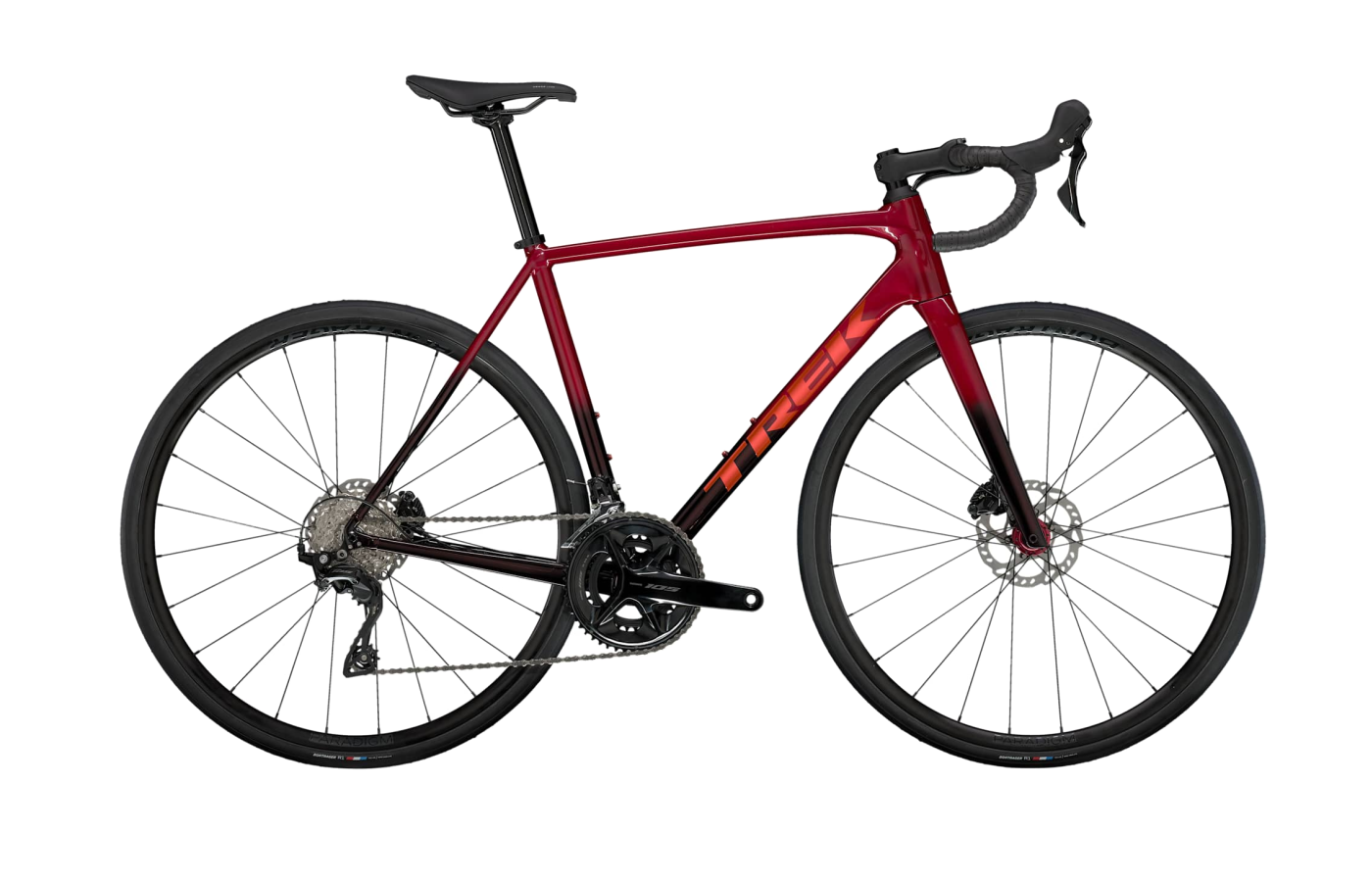
Emonda ALR
Trek's high-end aluminum race bike, with Invisible Weld technology that hides the seams the CAAD13 famously shows off. Cleaner aesthetics, similar performance, comparable price.
Compare →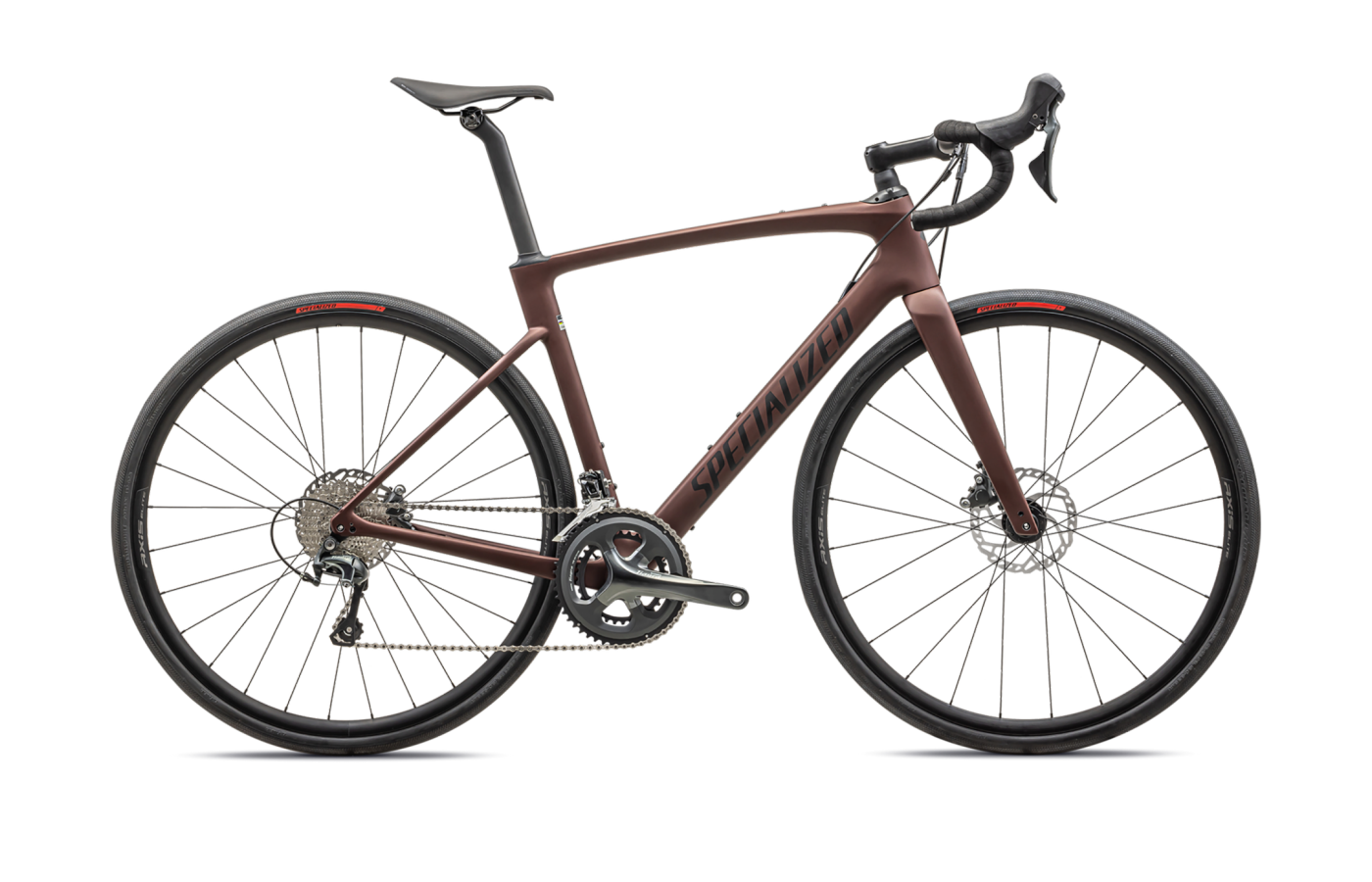
Roubaix
If even the Synapse feels too firm, the Roubaix's Future Shock head-tube suspension takes endurance comfort a step further — at the cost of weight and front-end feel.
Compare →