Aeroad
vsUltimate
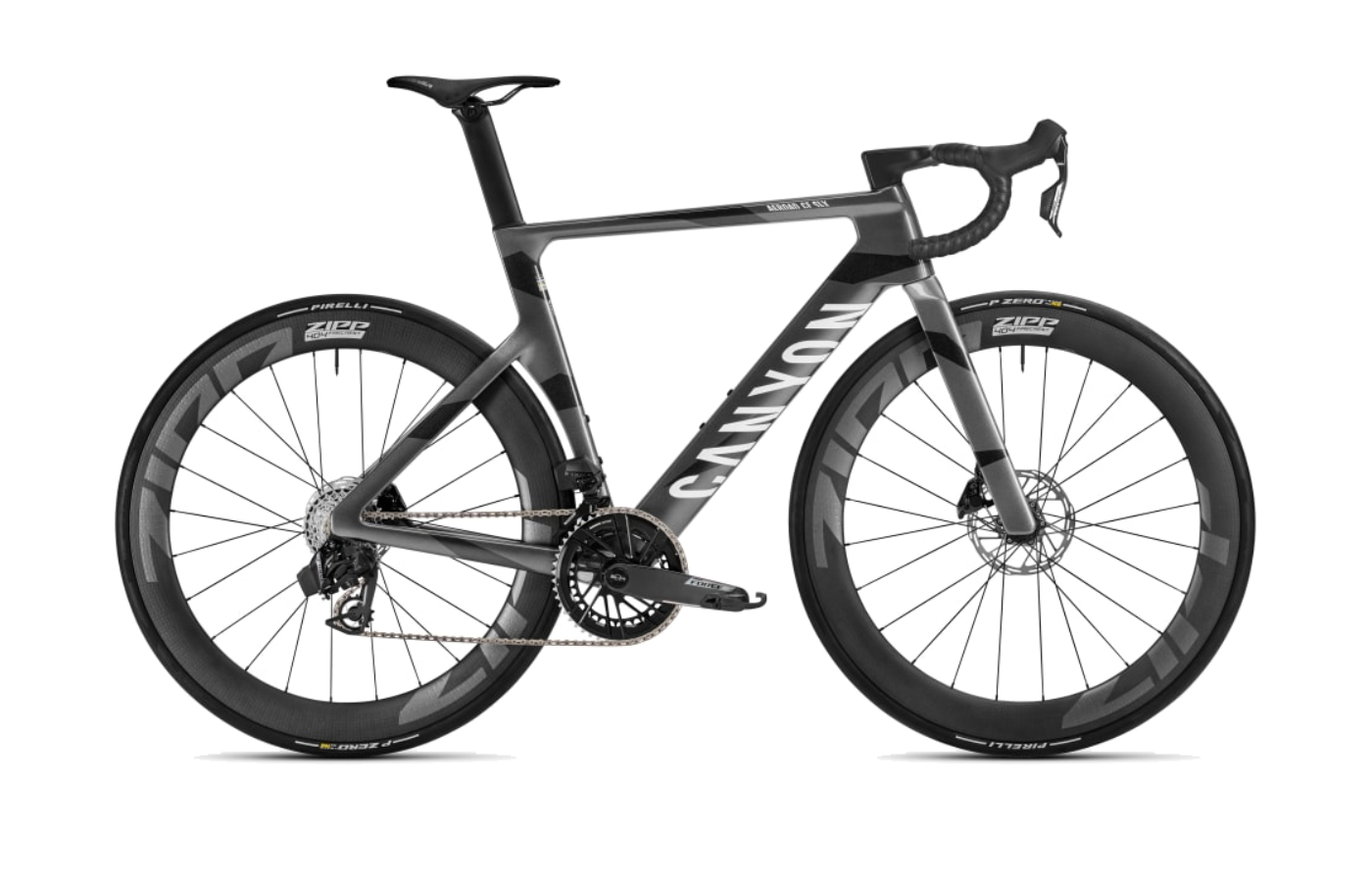
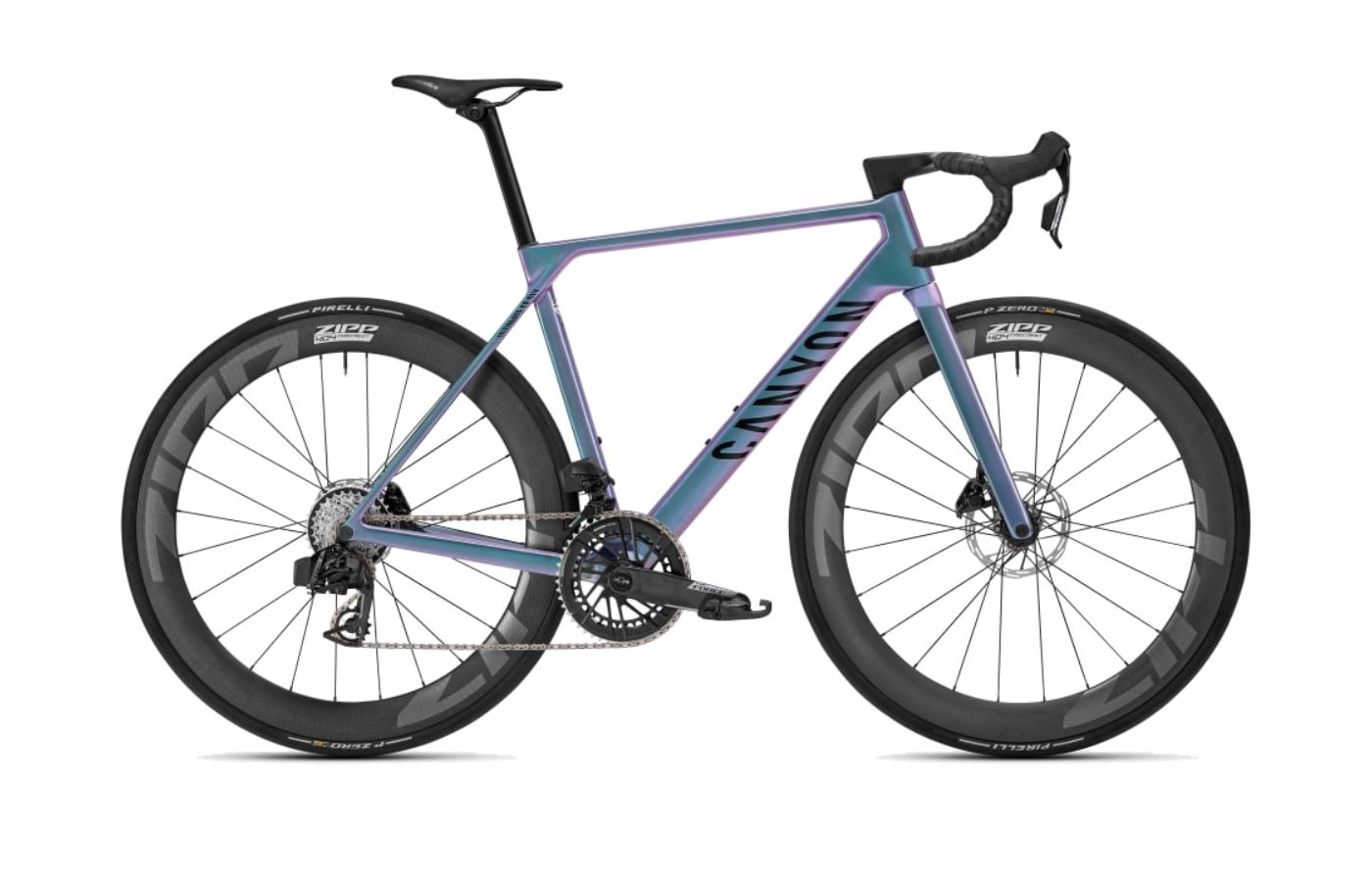
One brand, two specialists.
The Aeroad is Canyon's wind-cheating speed merchant. The Ultimate is the lightweight all-rounder built to dance uphill.
Aeroad
- Measurably faster on flats — deeper tubes, deeper wheels, and the optional aero drops claim 14 W at 45 km/h.
- Stiff, planted at high speed — reviewers report confidence at 50+ mph descents thanks to the beefier front end.
- 32 mm tire clearance — more than most aero rivals, requested by Mathieu van der Poel for the cobbled classics.
- Roughly 700–900 g heavier complete than the Ultimate at equivalent build tier.
- Stock 25 mm front tire on top builds is widely flagged as harsh — most reviewers swap to 28 mm.
Ultimate
- Sub-6.4 kg complete builds at the CFR level — "insatiable" on climbs per Granfondo's testing.
- Lower entry price starting at $2,899 — over $2k cheaper than the Aeroad's floor.
- Slightly wider tire clearance (33 mm vs. 32 mm) and lighter wheels in stock trim, helping low-speed agility.
- Loses ground above 35–40 km/h vs. the Aeroad — particularly on the shallow-wheel CFR Di2 build.
- Less stable than the Aeroad on long high-speed descents; thinner tubes feel more nervous in crosswinds.
Editor’s analysis
Canyon refuses the do-it-all bike. They build two — and tell you to pick a side.
On paper the Canyon Aeroad and Canyon Ultimate share more than they let on. Identical Sport Pro geometry, identical reach and stack at every size, the same CP0048 cockpit at the mid-tier, the same direct-to-consumer price advantage. Canyon could have merged them years ago — Specialized did it with the Tarmac, Trek did it with the Madone. Canyon refused.
The Aeroad is the speed specialist. Tube shapes are deeper, the bottom bracket is beefier, the stock wheels are 50–58 mm. Canyon's claim of 14 watts saved at 45 km/h with the optional aero drops is what the bike is built around. Reviewers consistently describe it as "unstoppable" on flats and "in its element" once you crest 30 km/h. The frame is around 960 g for the CFR, and complete top builds land at 7.0–7.2 kg — light for an aero bike, but not light.
The Canyon Ultimate is the climber's tool. Same head tube angle (72.8 at size S), same chainstays (410 mm), same wheelbase within a millimeter — but the CFR frame drops to a claimed 780 g, and complete builds touch 6.26 kg. Canyon's own aero numbers admit it: 5 watts saved with a rider at 45 km/h, vs. measurably more on the Aeroad. The Ultimate trades wind-tunnel watts for grams, and on a 30-minute climb that 700–900 g delta is real time.
The cleanest way to think about it: if your hard rides average 35 km/h and up — flat group rides, crits, town-line sprints — the Canyon Aeroad's aero system will pull you forward. If your hard rides are punctuated by 5–10% gradients and you care how a bike feels at 18 km/h going up, the Canyon Ultimate is the sharper tool. Same fit. Same brand. Different mountain.
Where the builds differ.
Comparing our editor's-pick builds side-by-side. Winners highlighted row-by-row — lower price and weight, and the better-spec component, each mark a point.
Build variants & pricing
The Ultimate spans nearly $7,600 of range; the Aeroad starts $2,200 higher and tops out a touch above. Both reach Dura-Ace and Red AXS at the CFR level.
Prices are current US MSRP. Canyon does not offer an entry-level alloy or sub-$5k build on the Aeroad — if you want into the platform under that floor, the Ultimate CF 7 at $2,899 is the only door. Direct-to-consumer means no demo rides, so know your fit before ordering.
How they fit, how they steer.
Both at size S — Canyon unified the Sport Pro geometry across the two platforms. Reach (390 mm), stack (539 mm), head tube angle (72.8), chainstays (410 mm), and wheelbase (within 1 mm) are effectively identical. Handling differences come from frame stiffness, tube shapes, and stock wheel depth — not from the geometry chart.
Which size should I buy?
Canyon's size charts overlap exactly across the two bikes — pick the same letter on both. Both ranges run from 2XS to 2XL.
→These are starting points. Flexibility, riding style, and preferred position all shift the answer — if you’re between sizes, a professional fit beats a chart.
What the magazines said.
Published reviews from trusted cycling outlets. Click through for the full write-up.
Which one should you buy?
If you race flats and chase town-line sprints, get the Aeroad. If you hunt climbs and care about every gram, get the Ultimate.
Aeroad
If most of your hard riding sits above 35 km/h — group rides, crits, breakaways, sprints — the Aeroad's deeper tubes and deeper wheels measurably pull you along. The Pace Bar's optional aero drops claw back another 14 watts. Climbs are capable, not class-leading.
Ultimate
If your weekend is alpine passes, KOMs, and gradients that bite, the Ultimate's sub-780 g CFR frame is one of the lightest race platforms you can buy. It accelerates instantly, dances through switchbacks, and starts $2,200 cheaper than the Aeroad — without giving up Canyon's stiffness or fit.
Questions buyers actually ask.
Short answers to the things we get emailed about most often.
01Which is faster on flat roads?
The Canyon Aeroad, by Canyon's own numbers. The Aeroad's frame and deeper-profile cockpit are claimed to save roughly 1.6 W over the previous Aeroad at 45 km/h, with the optional Pace Bar aero drops adding another claimed 14 W. The Ultimate's aero gains are real but smaller — Canyon claims 10 W at the frameset level (5 W with a rider) at 45 km/h vs. its Gen 4 predecessor.
Below about 30 km/h the gap effectively closes. Above 40 km/h, the Aeroad is the noticeably faster bike.
02Which climbs better?
The Canyon Ultimate, decisively. The Ultimate CFR frame is claimed at 780 g vs. the Aeroad CFR's ~960 g. Complete-build weights bear it out: reviewers report Ultimate CFRs as low as 6.26–6.39 kg, vs. Aeroad CFRs at 7.0–7.2 kg.
That 700–900 g delta is roughly 1% of a 75 kg system, which translates to about 10 seconds on a 30-minute climb — and a much more noticeable feel at low speed and out of the saddle. Granfondo described the Ultimate as "insatiable" on climbs; the Aeroad is "capable" but "requires more input" on long alpine passes.
03How different is the geometry, really?
Almost identical. Canyon deliberately unified the Sport Pro geometry across both platforms so pro riders can swap bikes between flat and mountain stages without changing their fit. At size S, both are 539 mm stack, 390 mm reach, 72.8 head tube angle, 410 mm chainstays, and a wheelbase within 1 mm.
Differences in handling come from frame stiffness and tube shape, not numbers. The Aeroad feels heavier-steering and more planted; the Ultimate feels more reactive at low speed.
04What's the maximum tire clearance?
Aeroad: 32 mm officially — wide for an aero bike, requested by Mathieu van der Poel for the spring classics.
Ultimate: 33 mm officially — a hair wider, in keeping with the all-rounder positioning.
Neither is a gravel bike, but both will run a true 30 mm tire comfortably. Several reviewers explicitly recommend swapping the Aeroad's stock 25 mm front to 28 mm or wider for any real-world road that isn't fresh tarmac.
05Which has a better cockpit?
Both editor's-pick builds ship with Canyon's CP0048 integrated aero carbon cockpit, with 50 mm width and 20 mm height adjustment.
The Aeroad gets the additional Pace Bar trick: interchangeable drops, including the optional narrower aero drops that Canyon claims save 14 W at 45 km/h. You can swap drops without bleeding the brakes. Older Ultimate builds use the CP0018 Aerocockpit, which lacks the modular drop swap — worth checking the build sheet on the specific bike you're buying.
06Why does Canyon sell two bikes that fit identically?
Because Canyon is one of the only major brands that hasn't merged its aero and lightweight platforms. Specialized rolled the old Venge into the Tarmac SL8. Trek replaced the Emonda by making the new Madone lighter. Canyon kept both — and unified the fit so pro teams can hand riders the right tool per stage.
The upshot: you get to pick the specialist instead of the compromise. You also have to know which side you're on.
07How much cheaper is the Ultimate at the entry level?
Significantly. The Ultimate range starts at $2,899 for the CF 7 with mechanical Shimano 105 12-speed. The Aeroad's cheapest build is the CF SLX 7 Di2 at $5,099 — Canyon doesn't offer a non-CF SLX or sub-Di2 version of the Aeroad.
If your budget is under about $5k, the Ultimate is the only Canyon road race option. Both platforms reach Dura-Ace Di2 and SRAM Red AXS at the CFR level around $10.5k.
08Which is more durable and easier to live with?
Both share the single Torx T25 bolt standard Canyon adopted across recent generations — even the thru-axle hides a T25 bit, which reviewers consistently praise as a home-mechanic win.
The Gen 4 Aeroad specifically addressed Gen 3 durability complaints (handlebar recall, seatpost issues) with a reinforced layup, hermetically sealed headset bearings, a titanium crown race, and a more conventional two-bolt seat clamp. The Gen 5 Ultimate hasn't had the same problem history, and shares the unified bolt standard. Both come with a lifetime frame warranty to the original owner.
Similar bikes
If your priorities don’t map cleanly onto either of these, one of these adjacent bikes probably fits better.
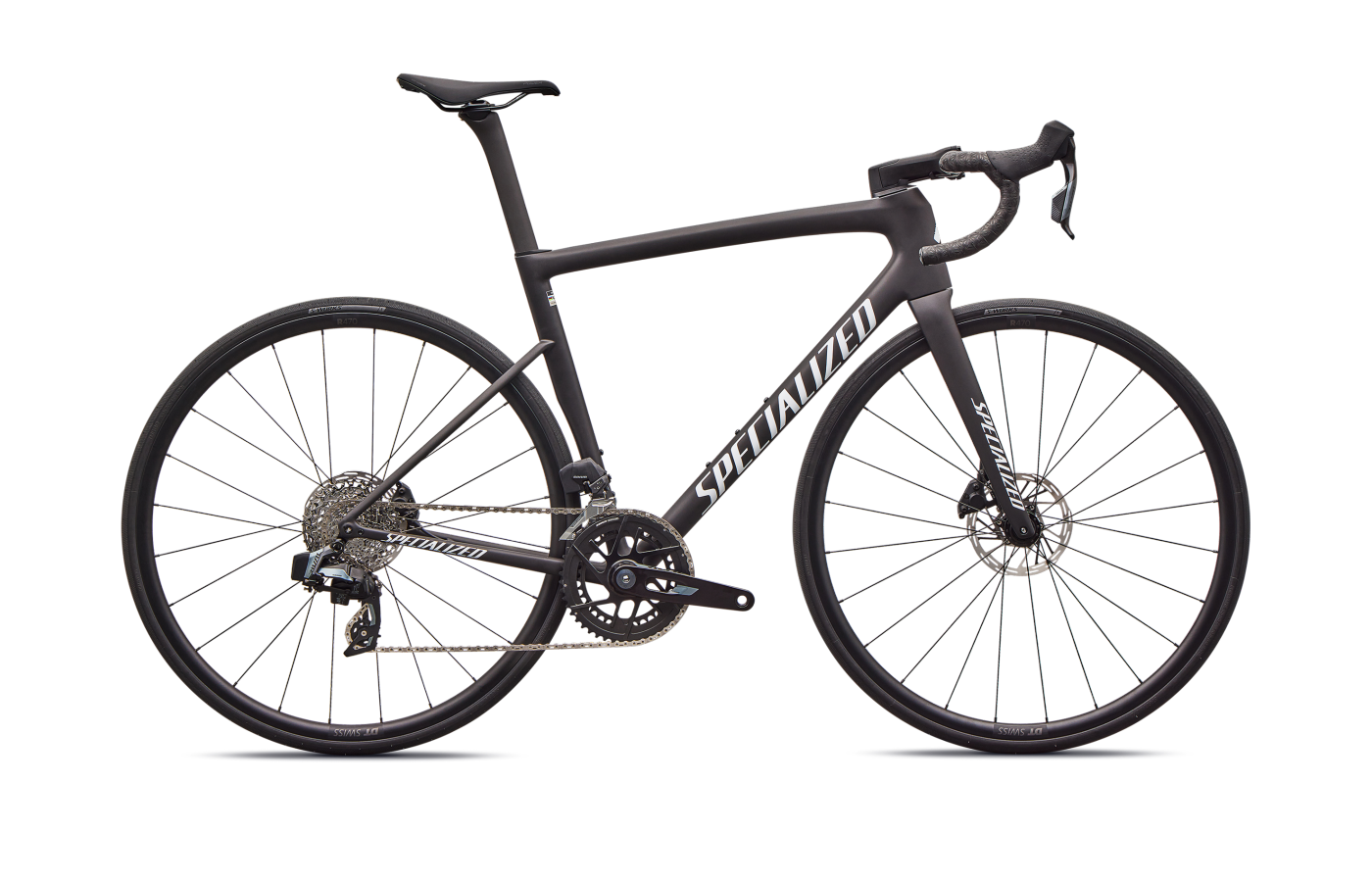
Tarmac
The Specialized Tarmac is the bike Canyon refuses to build — one frame that splits the difference between aero and lightweight. You pay a premium for the convenience, but you only buy one bike.
Compare →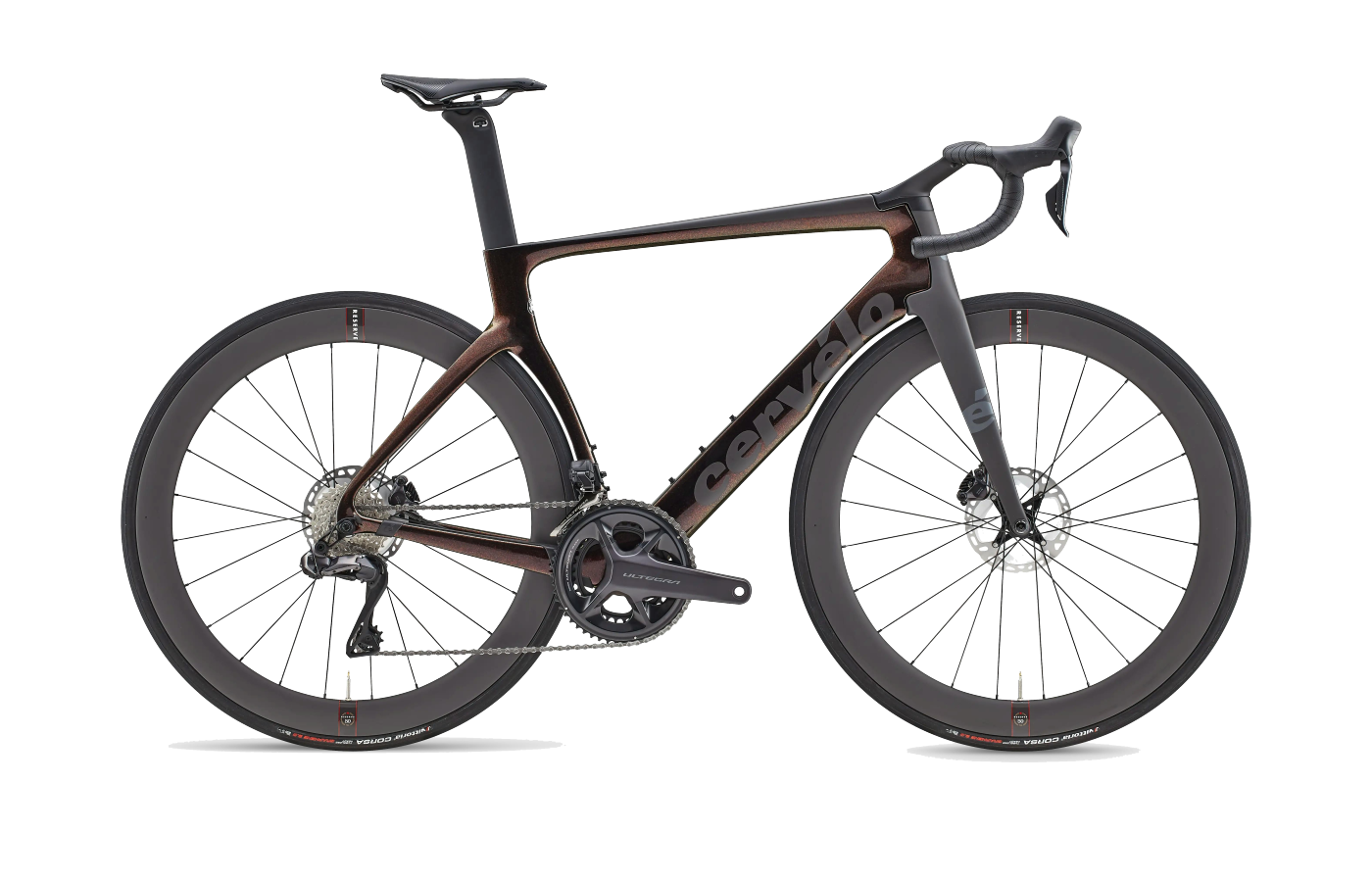
S5
If the Aeroad isn't aggressive enough, the Cervelo S5's V-stem cockpit and deeper tube shapes are the genre's most committed aero design. Sharper, harder to live with, and noticeably pricier.
Compare →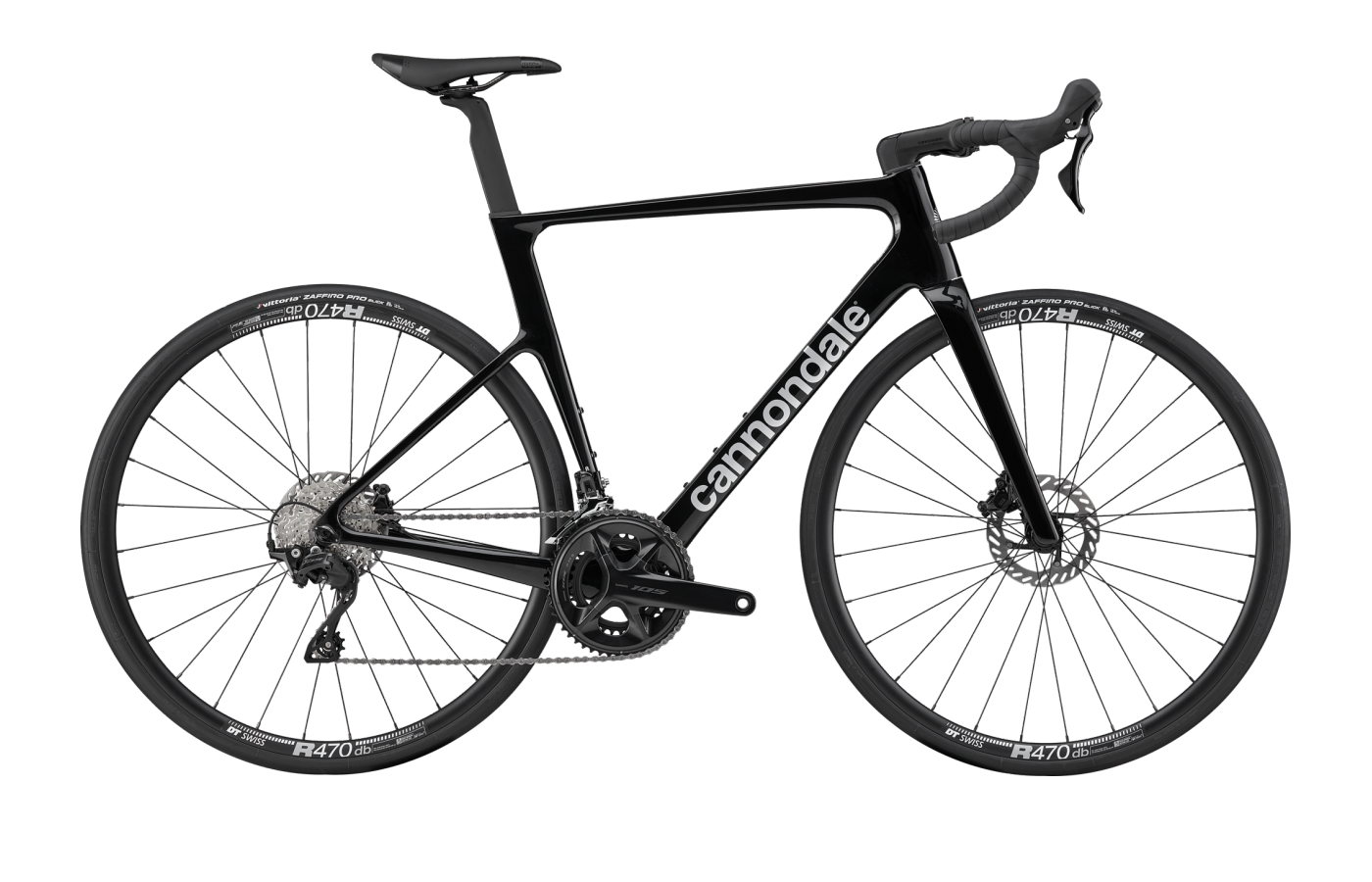
SuperSix EVO
The Cannondale SuperSix EVO is the closest direct rival to the Ultimate — comparable weight, slightly more compliance, but the integrated cable system makes home-mechanic work harder than Canyon's T25 standard.
Compare →