Grizl
vsLibre
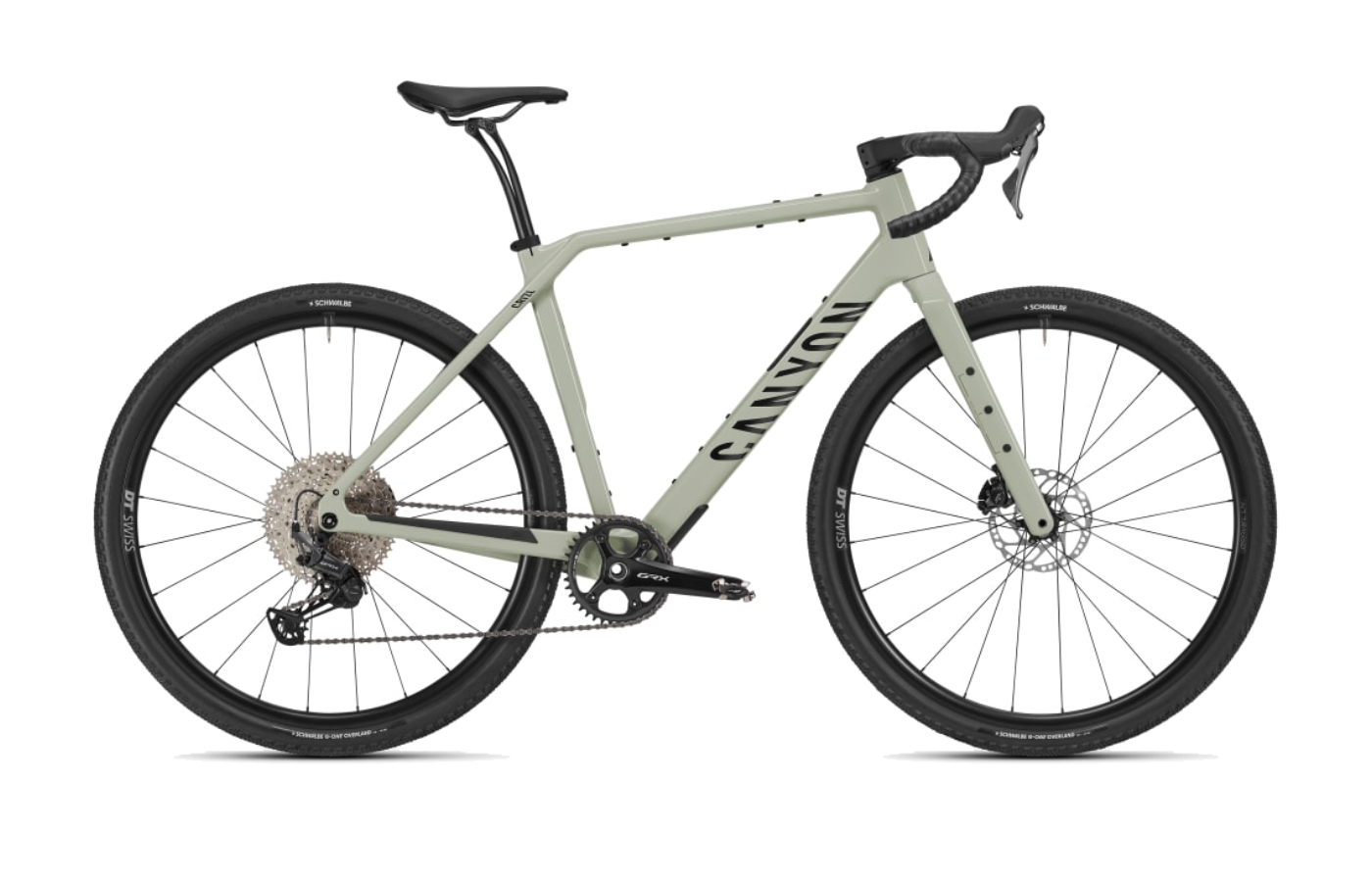
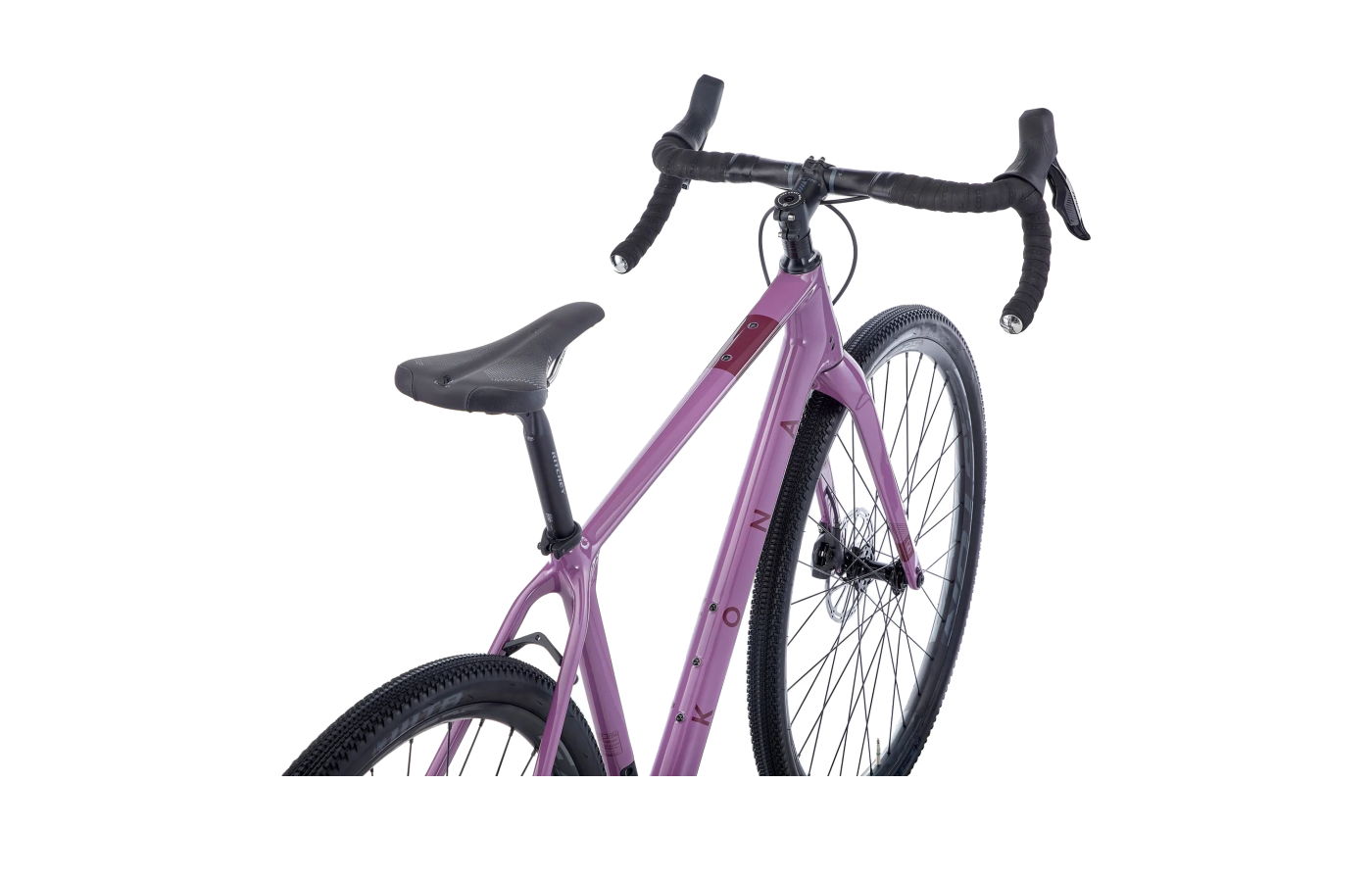
Two takes on what gravel is for.
The Canyon Grizl is a kitchen-sink adventure rig with 54 mm tires and built-in lights. The Kona Libre is a stripped-back fast-gravel bike that just wants to go.
Grizl
- 54 mm tire clearance — class-leading rubber capacity, and big enough for tame singletrack on a high-volume tire.
- VCLS leaf-spring seatpost with 20 mm of vertical compliance — universally praised for taking the edge off washboard.
- Five-build range from $1,799 — the cheapest way into the platform, with carbon options starting at $2,599.
- Proprietary Full Mounty cockpit limits stem and bar-bag adjustability.
- Stable geometry can feel 'wafty' and slow-steering on tight, low-speed corners.
Libre
- Snappy, race-leaning geometry — 435 mm chainstays and a 74.5-degree seat tube put you over the cranks for hard efforts.
- Standard, serviceable parts — 27.2 mm seatpost, Ritchey two-piece cockpit, UDH dropout, no proprietary integration.
- Lifetime frame warranty to the original owner — Kona stands behind the carbon long-term.
- Only two builds in the lineup — no mid-tier carbon option between the $2,099 alloy Base and the $4,399 CR.
- 50 mm tire clearance trails the Grizl by 4 mm and rules out the chunkiest singletrack.
Editor’s analysis
One bike grew rounder and more capable. The other got lighter and meaner. They share a category but barely a brief.
The 2026 Canyon Grizl and the 2025 Kona Libre G2 both sit in the mid-priced gravel bracket, both run 1x drivetrains, both ship with 45 mm tires. From there they diverge fast. Canyon's latest Grizl leans hard into adventure — slacker geometry, 54 mm tire clearance, a 20 mm-compliance VCLS leaf-spring seatpost, and on the top builds a SON dynamo and integrated Lupine lighting system that Bikepacking.com flatly calls 'a love letter to bikepacking.' Kona did the opposite: shaved fork mounts, shortened the chainstays to 435 mm, steepened the seat tube, and rebranded the once-cushy Libre as a 'lighter, faster, snappier' all-rounder.
The numbers tell the same story. At our fit-picked sizes — Grizl S, Libre 50 — the Kona sits 9 mm taller and 12 mm shorter in reach, with a 0.25-degree slacker head tube and a steeper 74.5-degree seat angle. Translation: the Libre puts you a touch more upright over the cranks, while the Grizl stretches you out for descending stability. Both run identical 435 mm chainstays at this size, but the Grizl's wheelbase is just 4 mm longer — closer than you'd guess from the marketing.
Where they really separate is integration. The Canyon Grizl is a system: proprietary Cockpit CP0050, a humpbacked top tube optimized for frame bags, and on the high-end Escape builds, a wired ECLIPS dynamo, buffer battery, and lights. Kona went the opposite direction — a standard 27.2 mm seatpost, a normal Ritchey two-piece cockpit, fully guided internal cable routing, and a removable brake bridge for fender installation. Reviewers at Bike Magazine call the Libre 'easy to live with.' Reviewers at The Radavist call the Grizl a 'Labrador.' Both are accurate.
Put simply: if your gravel is loaded multi-day routes, washboard, and the occasional tame singletrack, the Canyon Grizl wants the job. If it's the Tuesday group ride, a Saturday solo century on mixed surface, and maybe a local gravel race, the Kona Libre is the sharper tool — and it's a real tool, not a softened mountain bike.
Where the builds differ.
Comparing our editor's-pick builds side-by-side. Winners highlighted row-by-row — lower price and weight, and the better-spec component, each mark a point.
Build variants & pricing
Canyon spans five builds from $1,799 to $4,699. Kona offers just two — a $2,099 alloy Base and the $4,399 carbon CR — with no mid-tier between them.
Tier parity isn't possible here: the Libre's only carbon build runs SRAM Apex AXS electronic, while every Grizl ships with mechanical drivetrains. We picked the mid-tier Grizl CF 7 ESC (carbon, Shimano GRX 12-speed, $3,399) against the lone-carbon Libre CR ($4,399) — same frame material, different shifting paradigms. Prices are current US MSRP.
How they fit, how they steer.
Canyon S vs Kona 50 — the fit-picked sizes for a 5'8" rider on each bike. The Libre sits 9 mm taller in stack and 12 mm shorter in reach, with a 1-degree steeper seat tube — a more upright-but-centered position. Chainstays are identical at 435 mm; the Grizl's wheelbase is 4 mm longer.
Which size should I buy?
Sizes recommended via stack, reach, and effective top tube. The Grizl runs eight sizes from 3XS to 2XL; the Libre offers six numeric sizes from 48 to 58.
→These are starting points. Flexibility, riding style, and preferred position all shift the answer — if you’re between sizes, a professional fit beats a chart.
What the magazines said.
Published reviews from trusted cycling outlets. Click through for the full write-up.
Which one should you buy?
If your gravel involves bags, lights, and singletrack detours, get the Grizl. If it's group rides, races, and graded fire roads, get the Libre.
Grizl
Long, loaded days where you'd rather steamroll than dance. The 54 mm tire clearance, VCLS seatpost, and (on Escape builds) the ECLIPS dynamo system turn the Grizl into a self-sufficient rig that's at home on technical descents and chunky fire roads. Don't expect it to feel sharp on the Tuesday-night ride.
Libre
If most of your riding is mixed-surface centuries, group rides, and the occasional gravel race, the updated Libre G2 is the sharper, simpler tool. Standard parts, standard cockpit, lifetime carbon warranty — and a geometry that finally rewards aggressive riding. It won't replace a mountain bike on chunky singletrack, but it wasn't trying to.
Questions buyers actually ask.
Short answers to the things we get emailed about most often.
01Which has more tire clearance?
The Canyon Grizl by 4 mm — 54 mm officially, versus 50 mm on the Kona Libre G2. Both ship with 45 mm tires, but the Grizl's extra room lets you go up to a true 2.1" gravel tire for tame singletrack, while the Libre tops out around 50 mm if you skip fenders.
If you're choosing between them on tire size alone, the Grizl is the more capable rough-stuff platform — but a 50 mm tire is plenty for the vast majority of gravel riding.
02Which climbs better?
The Kona Libre G2 has the edge for snappy, out-of-the-saddle climbing. Its steeper 74.5-degree seat tube angle (at our compared size 50) puts the rider more directly over the bottom bracket, and reviewers at Bike Magazine and The Radavist consistently describe it as 'eager to go up' and 'frothing for the task.' Mark Wilson at GearJunkie called its responsiveness on big climbs 'a dream' even loaded with bikepacking gear.
The Grizl isn't sluggish — Flow Mountain Bike calls it 'efficient and responsive under power' — but its slacker, more relaxed geometry and stable focus mean it doesn't have the same eagerness on punchy efforts. On long, sustained, loaded climbs the Grizl's stability becomes the asset.
03Can either of these handle singletrack?
Both can, with caveats.
The Grizl is the more capable of the two on technical terrain — Flow Mountain Bike says it 'shines' on singletrack, feeling 'remarkably composed' through corners and roots. The 54 mm clearance lets you run high-volume rubber, and on the Rift builds, a 40 mm DT Swiss F132 One suspension fork takes it further still.
The Libre holds its own on what Bike Magazine calls 'rowdy singletrack' — its short 435 mm chainstays and stable geometry make it surprisingly capable — but it gets out of its depth sooner on chunky, loose, or sandy terrain. Neither is a mountain bike replacement.
04What about bikepacking — which is the better adventure rig?
The Canyon Grizl, decisively. It's purpose-built for it: copious mounts, a humpbacked top tube optimized for frame-bag space, integrated rack systems, and on the Escape builds, the ECLIPS system — a SON dynamo, 3,500 mAh Lupine buffer battery, and integrated lights with USB-C charging. Bikepacking.com estimates that ECLIPS hardware alone would cost over $1,200 to assemble aftermarket.
The Libre G2 can be loaded — Mark Wilson did 168 miles over two days on it — but Kona stripped some fork mounts in the G2 update and the bike is positioned more squarely as a fast all-rounder than a touring platform.
05How do the cockpits compare?
Canyon Grizl: the proprietary Canyon CP0050 one-piece carbon cockpit on the carbon builds, or the Full Mounty cockpit on top-tier Escape builds. Both look clean and integrate cable routing well, but stem length and bar width are fixed and aftermarket bar-bag fit can be limited.
Kona Libre: standard Ritchey 4-Axis 44 Comp stem and Butano Comp Internal bar — a normal two-piece setup. You can swap stem length, change bar width, and fit any bar bag without fuss. If serviceability matters, the Libre wins this one.
06What's the warranty story?
Both frames carry a lifetime warranty against manufacturing defects to the original owner. Kona explicitly confirms this in their published spec; Canyon offers the same on their carbon frames. Both also offer crash-replacement programs, though terms vary.
One note specific to the Libre G2: Kona will void the warranty if you fit a suspension fork to the Libre CR — the geometry isn't suspension-corrected. If you want a Kona gravel bike with front suspension, the Ouroboros is the model designed for it.
07Can I run a 2x drivetrain on either?
Kona Libre G2: yes — Kona explicitly designed the frame to be 2x compatible, and the alloy Base build ships with a 2x Shimano Cues groupset.
Canyon Grizl: the carbon CF builds are 1x-only — that 54 mm tire clearance came at the cost of front-derailleur space. The aluminum Grizl AL frame retains 2x compatibility (the $2,099 Grizl 7 RAW ships with a 2x GRX RX610 setup), but if you want the carbon platform, you're committing to 1x.
08Which is the better value?
It depends on what you're after.
Per-spec, Canyon's DTC pricing wins. Off.road.cc compared a £2,499 Grizl CF 7 directly against a £3,000 Specialized Diverge Sport Carbon and called the Grizl 'a lot of value in a space where bikes are quickly becoming out of reach.' If you want a turnkey adventure bike with high-end integration (the $4,699 ECLIPS build is the standout here), Canyon is hard to beat.
For range and simplicity, Kona's pitch is different. Two builds, both straightforward — a $2,099 alloy Base or a $4,399 carbon CR with wireless electronic shifting. CX Magazine notes the Apex AXS shifters and brakes 'feel no different than... Red and Force AXS' — you're getting wireless 1x at a price point where most carbon competitors still ship mechanical.
Similar bikes
If your priorities don’t map cleanly onto either of these, one of these adjacent bikes probably fits better.
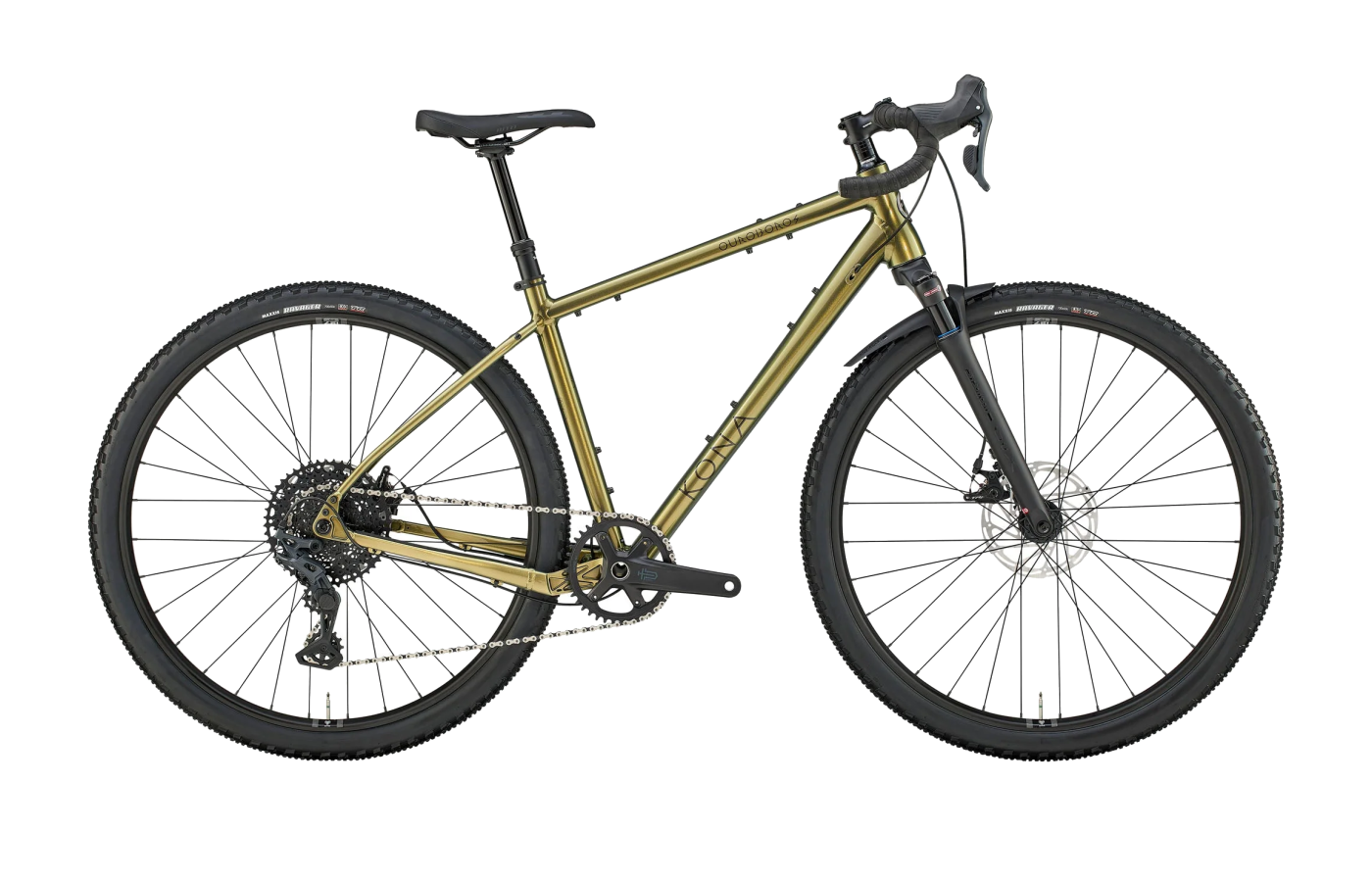
Ouroboros
If you like the Libre's character but want the rough-stuff capability the G2 deliberately stripped out — Kona's Ouroboros adds a suspension fork and bigger tire clearance for trail-grade gravel.
Compare →
Grail
Same Canyon DTC value, sharper edge — the Grail is the race-focused gravel bike with aero tubing and snappier reflexes than the bikepacking-leaning Grizl.
Compare →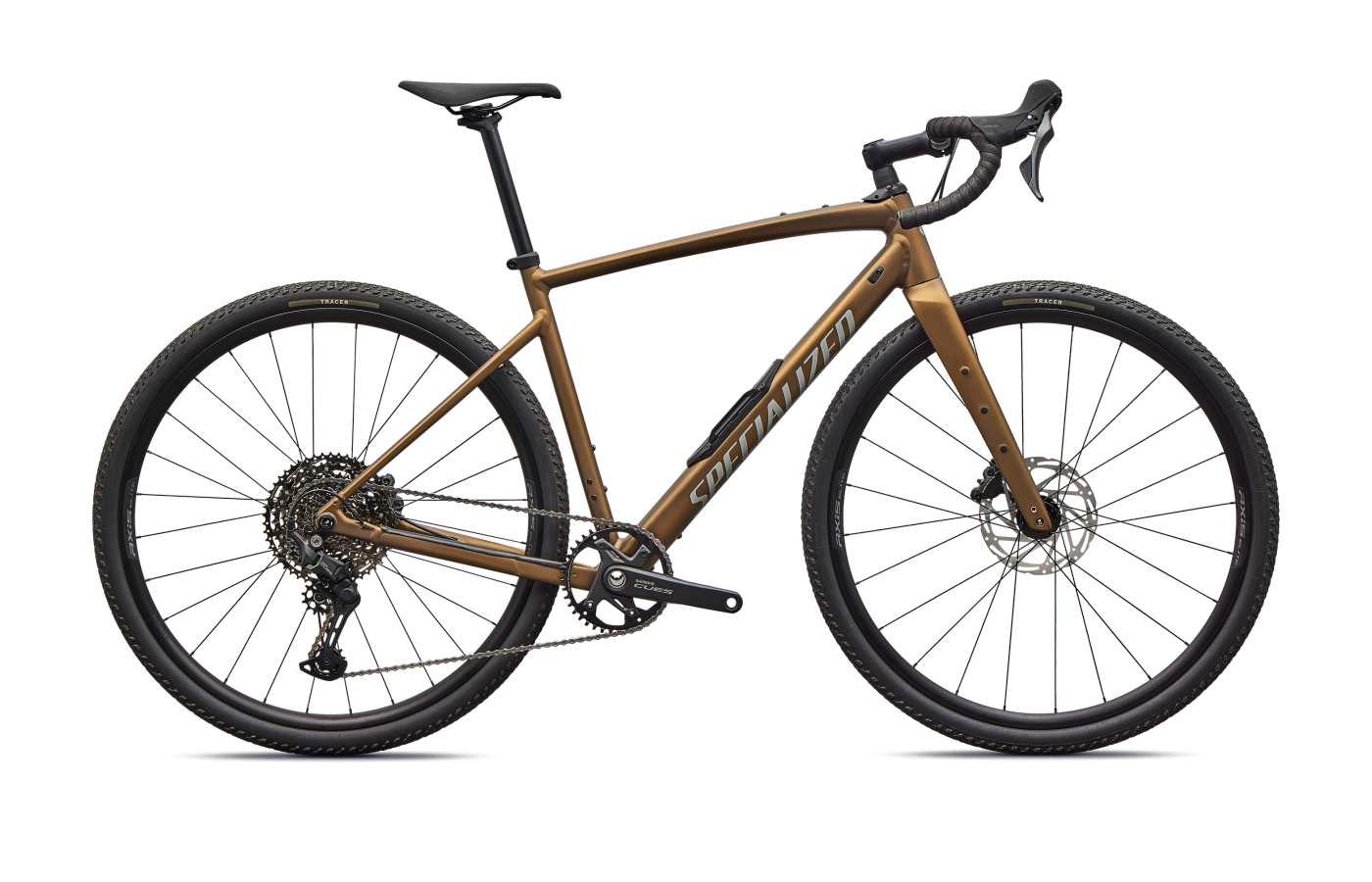
Diverge
Specialized's all-comers gravel bike with the Future Shock front-end suspension — similar adventure brief to the Grizl, usually at a meaningful price premium.
Compare →