Grizl
vsStigmata
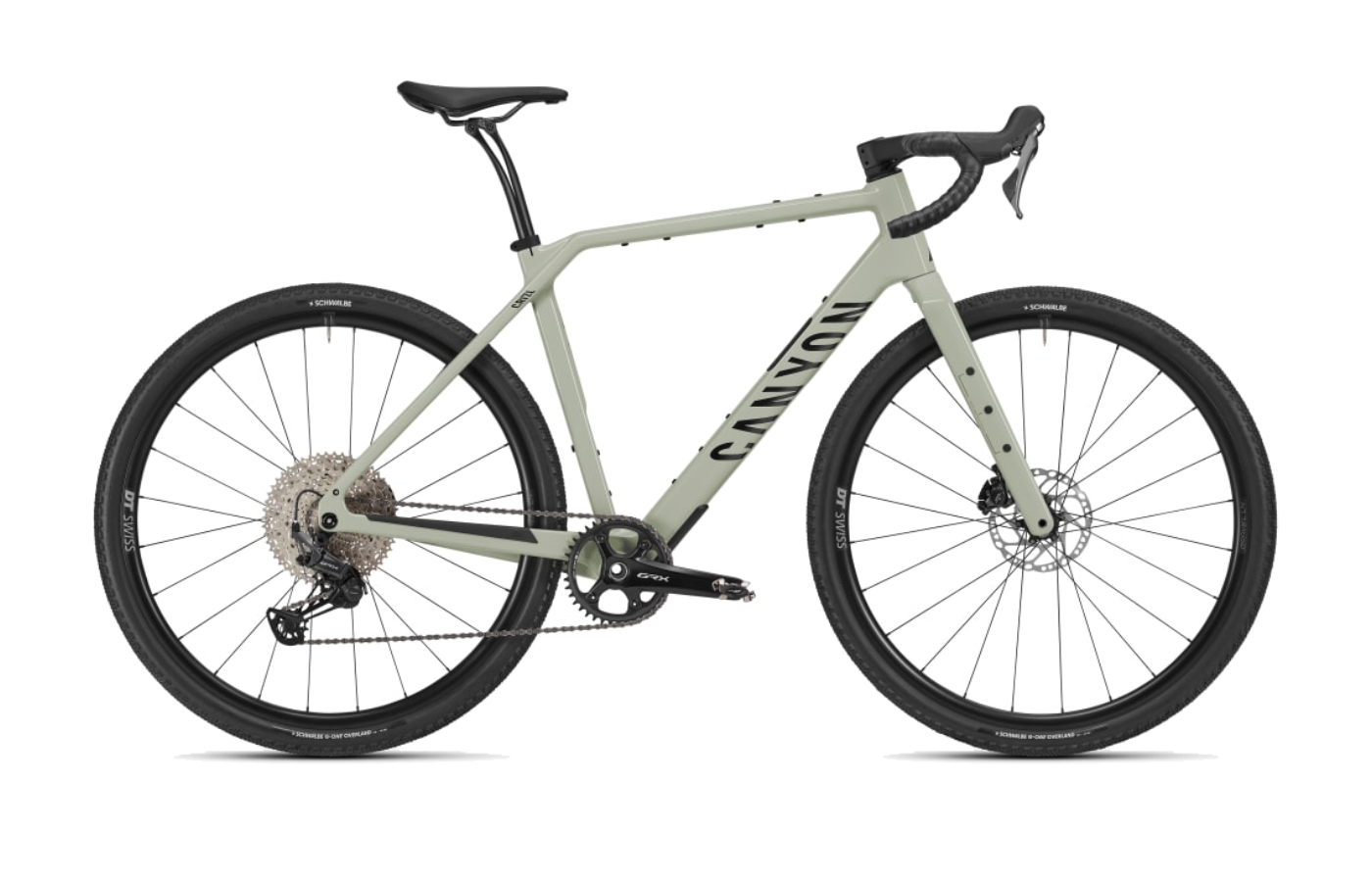
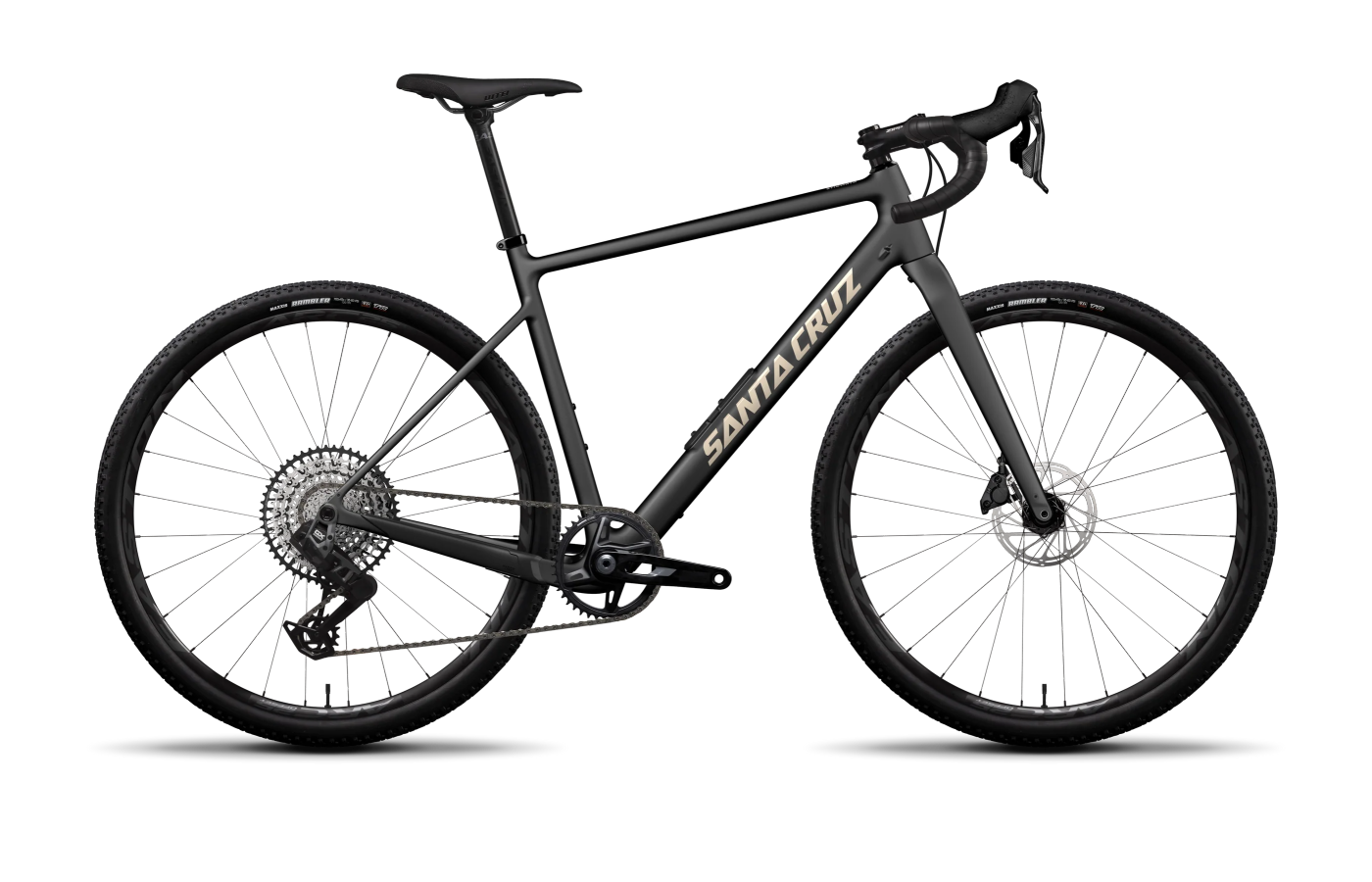
Two gravel philosophies, drawn to opposite poles.
The Grizl is Canyon's integrated adventure rig built around self-sufficiency. The Stigmata is Santa Cruz's drop-bar hardtail built around singletrack.
Grizl
- Massive 54 mm tire clearance — wider than most 2.1" XC tires, with generous mud and debris room.
- DTC value — carbon builds from $2,599, and an integrated ECLIPS dynamo/lighting system on the top build.
- VCLS 2.0 compliance seatpost — ~20 mm of leaf-spring flex that takes the sting out of a stout carbon frame.
- Stability-biased handling feels slow and "boat-like" at low speeds or in tight, playful terrain.
- Press-fit bottom bracket and Full Mounty integrated cockpit limit long-term adjustability and aftermarket choice.
Stigmata
- Slack 69.5-degree HTA — unmatched descending composure, with geometry reviewers call "future of gravel."
- Suspension-corrected frame — bolt on a 40 mm RockShox Rudy without breaking the geometry design intent.
- Mechanic-friendly standards — threaded 68 mm BB, 27.2 mm round post, UDH, external routing. Easy to live with for a decade.
- Price floor starts at $4,149 — no alloy or sub-$4k option exists.
- 120–130 g heavier frame than the previous gen and "as aero as a Jeep" — pavement speed isn't its strength.
Editor’s analysis
This isn't fast vs. slow. It's where you want to be fast — loaded on a three-day bikepack, or unloaded on a rocky descent you probably shouldn't be riding on drop bars.
Canyon and Santa Cruz both bet big on gravel going off-road, but they bet different ways. The Canyon Grizl clears a massive 54 mm tire, ships with the VCLS 2.0 leaf-spring seatpost, and on the top Escape builds adds an integrated dynamo/lighting/USB-C system called ECLIPS. Bikepacking.com estimates that system alone would cost $1,200+ to assemble aftermarket. It's a direct-to-consumer platform designed around self-sufficiency, not lap times.
The Santa Cruz Stigmata picks a different fight. Santa Cruz dropped the head tube angle to 69.5 degrees — slacker than many XC mountain bikes from a few years ago — paired it with a stubby 70 mm stem, and suspension-corrected the frame for a 40 mm travel fork. Escape Collective confirmed Santa Cruz intentionally reduced frame stiffness by 10–12 percent vs. the Gen 3 for compliance. The result is what reviewers openly call a "trail surfer" or "drop-bar hardtail" — Keegan Swenson won Unbound 200 on one, but it's equally at home on chunky singletrack.
Geometry splits the difference cleanly. The Grizl runs 71-degree head angles across most sizes with 435 mm chainstays for stability under load; the Stigmata runs 69.5 degrees everywhere with shorter 423 mm stays to stay snappy. Both use a long-reach, short-stem philosophy, but the Stigmata takes it further. Loaded with 15 kg of bikepacking gear, the Grizl feels planted; unloaded on a technical descent, the Stigmata feels like it bends time.
The value math matters too. The Grizl starts at $1,799 for an alloy build and tops out at $4,699 with ECLIPS — Canyon's DTC model delivers carbon frames and dynamo integration at prices the Stigmata simply won't touch. The Stigmata starts at $4,149 (Apex mechanical) and climbs to $7,549. You're paying for CC carbon on every frame, a lifetime warranty on the frame and Reserve rims, and a mechanic-friendly spec list — threaded BB, 27.2 mm round post, external routing. One bike is a bargain adventure platform. The other is a premium forever-bike.
Where the builds differ.
Comparing our editor's-pick builds side-by-side. Winners highlighted row-by-row — lower price and weight, and the better-spec component, each mark a point.
Build variants & pricing
Canyon starts thousands lower and tops out below where Santa Cruz begins — real platform pricing, not a typo.
Prices are current US MSRP. Grizl runs $1,799–$4,699 across alloy and carbon builds; Stigmata runs $4,149–$7,549 and is CC carbon only. If your budget is under $4k, the Stigmata isn't an option — shop the Grizl AL builds.
How they fit, how they steer.
Grizl S and Stigmata SM are the fit-picked sizes for a 5'8" rider. The Stigmata runs a 1.75-degree slacker head tube (69.5 vs. 70.25), 12 mm shorter chainstays (423 vs. 435), and lower stack (564 vs. 556 — near-identical) with slightly shorter reach (390 vs. 397).
Which size should I buy?
Size recommendations are based on stack, reach, and effective top tube. The Grizl offers a wider range (2XS–2XL, 8 sizes) than the Stigmata (XS–XXL, 6 sizes).
→These are starting points. Flexibility, riding style, and preferred position all shift the answer — if you’re between sizes, a professional fit beats a chart.
What the magazines said.
Published reviews from trusted cycling outlets. Click through for the full write-up.
Which one should you buy?
If you're loading bags for three days in the woods, get the Grizl. If you're riding drop bars on terrain that has no business being gravel, get the Stigmata.
Grizl
If your rides involve panniers, dynamo lights, and mixed surfaces measured in days rather than hours, the Grizl is a purpose-built tool. The VCLS post and 54 mm clearance soak up rough dirt; ECLIPS eliminates battery anxiety; DTC pricing leaves budget for the rest of the kit.
Stigmata
If you'd rather take a drop-bar bike on singletrack than a mountain bike on gravel, the Stigmata is built for it. Slack geometry, suspension-corrected frame, CC carbon everywhere, lifetime warranty, and a spec list a home mechanic will love.
Questions buyers actually ask.
Short answers to the things we get emailed about most often.
01Which clears a bigger tire?
The Canyon Grizl, by a meaningful margin. Officially 54 mm (2.1") vs. the Stigmata's 50 mm in a 1x setup. That's the difference between fitting a true XC-lite tire and topping out at a wide gravel tread.
In practice, both run 45 mm tires stock (Schwalbe G-One on the Grizl, Maxxis Rambler on the Stigmata), which is the sweet spot for mixed-surface riding. But if you want to drop a 2.1" Pathfinder or similar into your gravel bike for a particularly rocky route, only the Grizl can do it.
02Which handles better on technical descents?
The Santa Cruz Stigmata. Its 69.5-degree head tube angle is 1.75–2.25 degrees slacker than the Grizl's across comparable sizes, and the 70 mm stem keeps steering quick despite the slack geometry. Reviewers consistently describe it as "effortlessly stable in chunk" and a "trail surfer" — one tester at Velo reported their fastest descending times ever on the bike.
The Grizl is stable too — 440 mm chainstays and a longer wheelbase keep it "planted but predictable" — but its character is composed, not aggressive. The Stigmata actively invites you to ride terrain you shouldn't; the Grizl wants you to arrive in one piece.
03Can I add suspension to either?
Santa Cruz designed the Stigmata around a 40 mm fork. The frame is suspension-corrected for a 430 mm axle-to-crown height, so you can buy a rigid build and bolt on a RockShox Rudy Ultimate XPLR later without breaking the geometry. Two of the stock builds ship with one.
Canyon offers a DT Swiss F132 One 40 mm fork on Rift models — a different, less widely reviewed fork. Reviewers note service intervals are short (around 50 hours), which matters if your priority is ultra-remote bikepacking where you can't just swing by a shop.
04Which is better for loaded bikepacking?
The Canyon Grizl, by design. It's got copious frame mounts, custom racks, the FidLock half-frame bag, and on Escape builds the ECLIPS integrated dynamo/lighting/USB-C charging system. Bikepacking.com called ECLIPS "a love letter to bikepacking" and priced it at $1,200+ if assembled from parts.
The Stigmata can carry gear — strap-on bags work fine, and the Glovebox internal storage holds tools — but it doesn't have dedicated rack mounts. For a multi-day trip where you're hauling 15+ kg of gear, the Grizl is the purpose-built tool.
05Which is easier to service at home?
The Stigmata, clearly. It uses a standard 68 mm threaded BSA bottom bracket, a 27.2 mm round seatpost with an external collar, UDH derailleur hanger, and internal cable routing that bypasses the headset entirely — you can swap stems and bars without bleeding brakes.
The Grizl uses a press-fit BB (Canyon defends this for stiffness), runs hoses through the headset on higher builds, and the top CF 8 Escape ships with the Full Mounty one-piece cockpit that severely limits fit adjustments. Velo and Just Ride Bikes flagged this as a real ownership concern on long-term reviews.
06Is the Grizl actually faster than the Stigmata for racing?
Depends entirely on the course. On a smooth, fast gravel race like Belgian Waffle Ride or SBT GRVL, neither bike is ideal — you'd want the sibling Canyon Grail or a Specialized Crux. Keegan Swenson famously won Unbound 200 on a Stigmata, so it absolutely races, but it's choosing composure over aerodynamics.
The Grizl is heavier, upright, and has a Full Mounty cockpit that's explicitly not aero — reviewers describe it as "mile munching," not racing. Both platforms are adventure-biased; for speed, look elsewhere.
07How does the warranty compare?
Santa Cruz: lifetime on both the frame and Reserve carbon rims, transferable to the original owner. That's industry-leading and is a real part of what you're paying for at the $4k+ price floor.
Canyon: 6 years on carbon frames and Canyon-branded wheels, with a discounted crash-replacement program. Solid but noticeably shorter. Canyon's DTC model also means no local dealer for warranty service — you ship the bike back, which some owners find frustrating.
08What's the weight difference?
Closer than you'd think. The Stigmata in its Force AXS RSV rigid build lands around 8.68 kg (19.1 lb) per Santa Cruz. The Grizl CF 8 Di2 tested by Flow Mountain Bike came in at 10.57 kg with racks, or roughly 9.9 kg stripped based on Canyon's claimed frame weight of 1,110 g.
Rigid Stigmatas can dip under 8 kg; suspension-equipped versions with a Rudy fork push 10.4 kg (23 lb). So the weight gap is real but not dramatic — and it's swamped by the stable-vs-snappy character difference, which is where these bikes actually separate.
Similar bikes
If your priorities don’t map cleanly onto either of these, one of these adjacent bikes probably fits better.

Grail
Canyon's dedicated gravel racer — faster, tighter geometry, and Canyon's signature DTC pricing. If you like the Grizl's value but want to chase a podium instead of a sunset, the Grail is the other half of Canyon's gravel split.
Compare →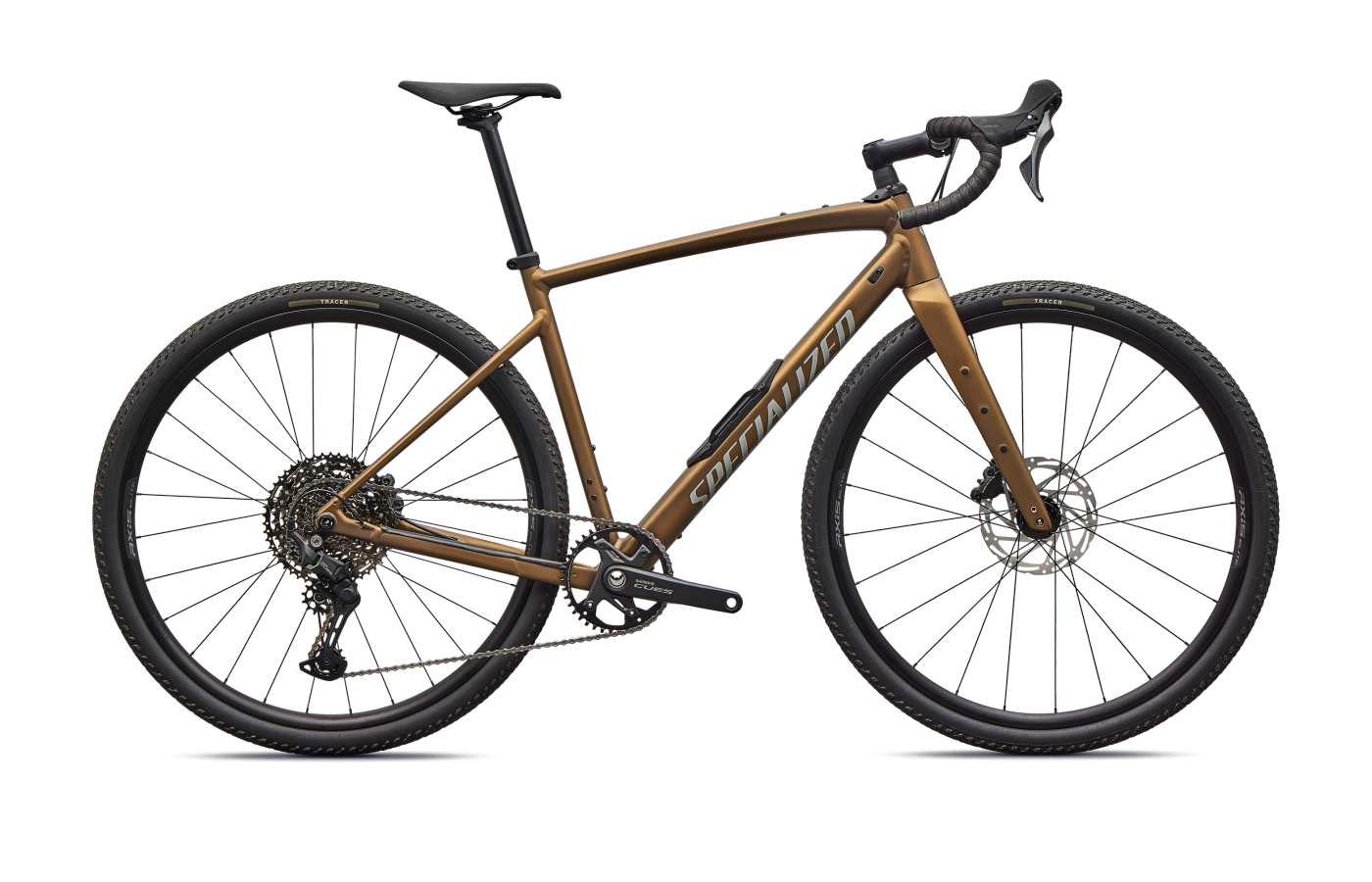
Diverge
Specialized's do-it-all gravel bike with the Future Shock head-tube suspension for a more road-feeling compliance. Splits the difference between the Grizl's adventure bias and the Stigmata's off-road aggression, with a mainstream dealer network both DTC brands lack.
Compare →Szepter
A direct-to-consumer option that out-MTB's even the Stigmata — standard 40 mm suspension fork, dropper post, and mountain bike DNA from YT. If you want progressive gravel geometry at Canyon-like prices, this is the closest analog.
Compare →