Grizl
vsSzepter
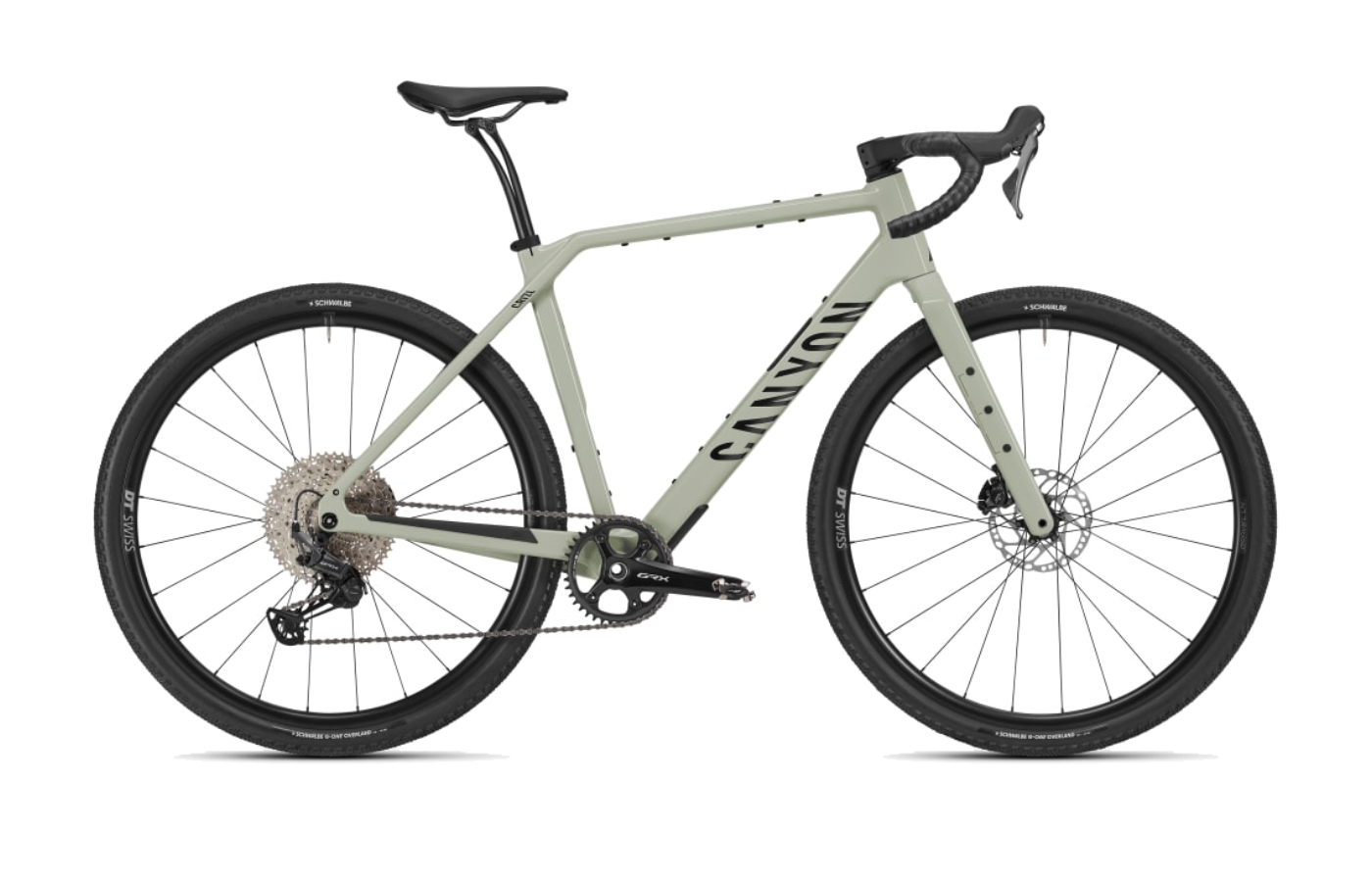
Adventure rig vs. drop-bar trail slayer.
Canyon's Grizl is a load-it-up, ride-it-forever bikepacking platform. YT's Szepter is a mountain biker's gravel bike with a real suspension fork.
Grizl
- Massive 54 mm tire clearance — biggest in the segment, fits true 2.1" MTB rubber for serious off-road comfort.
- Built for loaded touring with frame-bag mounts, custom rack system, downtube storage, and ECLIPS dynamo charging on top builds.
- S15 VCLS seatpost — Canyon's leaf-spring post is universally praised for ~20 mm of vertical compliance without robbing pedaling efficiency.
- Stable geometry feels like a 'boat' at low speed — it gives up agility for confidence.
- DTC support is a known weak spot if something goes wrong post-purchase.
Szepter
- 40 mm RockShox/Suntour suspension fork — erases washboard and high-frequency chatter that fatigue your hands on rigid forks.
- ASTM 3 frame certification — officially rated for rough trails and small jumps, rare in the gravel category.
- Steep 74.3° seat tube angle puts you forward over the bottom bracket for traction on steep, greasy climbs.
- 45 mm tire clearance and 9 kg+ weight make it a poor fit for long-distance road or smooth-gravel events.
- Suspension fork and dropper post add long-term service cost a rigid gravel bike doesn't have.
Editor’s analysis
Both call themselves gravel bikes. Only one of them was actually designed by people who race gravel — the other was built by mountain bikers who got bored.
On paper, the Canyon Grizl and YT Szepter look like they live in the same neighborhood — carbon adventure gravel, $1,800–$4,700, GRX or AXS, ~10 kg. Spend ten minutes with the geometry chart and the divergence is obvious. The Grizl is a long-day touring rig with stable steering, 54 mm tire clearance, and racks/mounts everywhere. The Szepter is a drop-bar trail bike with a 40 mm RockShox suspension fork, a dropper post, and an ASTM 3 rating that means YT will warranty it after small jumps.
The Grizl plays the comfort-and-cargo game harder than almost anything in the segment. Canyon's S15 VCLS leaf-spring seatpost is the most-praised compliance device in gravel; the new 54 mm clearance opens the door to 2.1" mountain bike rubber if you want it; and the top-end Escape builds bolt on Canyon's ECLIPS dynamo system — a SON hub, 3,500 mAh battery, and Lupine lights with USB-C charging baked in. Bikepacking.com called the integrated package alone worth $1,200+ if you tried to assemble it aftermarket. This is the bike for crossing a continent.
The Szepter ignores all of that and chases the descent. The 69.3° head tube angle is a full degree slacker than the Grizl, the SRAM Reverb AXS dropper drops you into the drops on switchbacks, and the 180 mm front rotor is borrowed straight from MTB. Even the Core 2 build runs an SR Suntour GVX 32 fork with 40 mm of travel — gravel race bikes do not have suspension forks. Reviewers from BikeRadar and OutdoorGearLab called the Szepter a 'trail slayer' that 'uproots all ideas of what a gravel bike should be.'
Put another way: the Canyon Grizl is the bike you buy when you want to ride 200 miles a day for a week. The YT Szepter is the bike you buy when you want to take a drop-bar bike onto your local enduro trail and giggle the whole way down.
Where the builds differ.
Comparing our editor's-pick builds side-by-side. Winners highlighted row-by-row — lower price and weight, and the better-spec component, each mark a point.
Build variants & pricing
Both lineups span ~$3k. Tier-matched picks here: GRX RX822 mechanical 1x on a full carbon frame, the sweet spot of both ranges.
Prices are current US MSRP and exclude shipping (both are direct-to-consumer). Canyon offers an aluminum entry point at $1,799 that YT does not match; YT's top SRAM Force AXS Core 4 build at $4,499 throws in suspension, a dropper, and electronic shifting that no Grizl build replicates.
How they fit, how they steer.
Both at size S — the fit-picked size for a 5'8" rider. The Szepter sits 12 mm taller, 13 mm shorter in reach, and runs a full degree slacker at the head tube (69.3° vs 70.25°) — it's the more upright, more descent-biased of the two.
Which size should I buy?
Size recommendations from stack, reach, and effective top tube. The Grizl's range runs from 3XS up to 2XL; the Szepter spans S to XXL only — shorter riders skew toward the Canyon.
→These are starting points. Flexibility, riding style, and preferred position all shift the answer — if you’re between sizes, a professional fit beats a chart.
What the magazines said.
Published reviews from trusted cycling outlets. Click through for the full write-up.
Which one should you buy?
If you want one bike for long, loaded adventures and dirt-road touring, get the Grizl. If you want a drop-bar bike for your local singletrack, get the Szepter.
Grizl
If your big rides are measured in days and not hours — bikepacking, dirt touring, or just one bike that happily takes you down a forest service road for ten hours — the Grizl is hard to beat. The cargo capacity, ECLIPS charging on top builds, and the most generous tire clearance in the category make it a genuinely self-sufficient platform.
Szepter
If you already own a mountain bike and want a drop-bar version of it, the Szepter is the most committed option in the category. Suspension fork, dropper post, ASTM 3 frame, and 180 mm front rotor — it's set up to take terrain that would terrify a gravel race bike. Just don't expect it to win a road sprint home.
Questions buyers actually ask.
Short answers to the things we get emailed about most often.
01Which is more comfortable on rough terrain?
It depends on the kind of rough. The YT Szepter's 40 mm RockShox Rudy XPLR fork (40 mm SR Suntour GVX 32 on the Core 2) actively damps high-frequency chatter and washboard — your hands and shoulders feel the difference on long, rocky descents.
The Canyon Grizl plays a different game: 54 mm of tire clearance lets you run 2.1" MTB rubber, and the S15 VCLS leaf-spring seatpost adds ~20 mm of vertical compliance at the saddle. For all-day seated comfort on dirt roads, that combination is excellent. For technical descents at speed, the Szepter's actual suspension wins.
02What's the maximum tire clearance?
Canyon Grizl: 54 mm officially on both frame and fork — among the most generous in the gravel category. That comfortably fits 2.1" mountain bike tires if you want maximum cushion.
YT Szepter: 45 mm officially. Most builds ship with WTB Resolute 42c. The Szepter is not designed to swallow MTB tires — its suspension fork is doing the volume-equivalent work.
03Which climbs better?
On smooth pavement and fire roads, neither bike is a featherweight — both Grizl CF builds and the Szepter sit around 9.8–10.9 kg. The Grizl climbs slightly more efficiently in stock trim because it has no suspension fork robbing energy and runs a one-piece carbon cockpit on most CF builds.
On steep, technical, traction-limited climbs, the Szepter wins thanks to its steep 74.3° seat tube angle, which puts you forward over the bottom bracket — reviewers consistently called it 'sit-and-spin' geometry that finds traction where rigid gravel bikes spin out.
04Do I really need a suspension fork on a gravel bike?
If your riding looks like dirt roads, smooth doubletrack, and the occasional easy singletrack — no, a rigid carbon fork plus a 45 mm tire is plenty. The Grizl is exactly that bike.
If your gravel rides routinely include rocky descents, root-laden singletrack, or anything you'd consider 'underbiking,' a 40 mm fork like the Szepter's changes the experience meaningfully. Reviewers were nearly unanimous that the suspension does more for ride quality than the modest travel number suggests.
05Which one for bikepacking?
The Canyon Grizl, by a wide margin. Canyon designed the new platform around carrying gear: triple mounts on the fork legs, frame-bag-friendly main triangle, downtube storage compartment, and a custom rack system. The top CF 8 Escape ECLIPS ($4,699) adds a SON dynamo hub and a 3,500 mAh battery for off-grid charging.
The Szepter has bottle and accessory mounts, but the suspension fork, dropper post, and lower tire clearance make it a much less natural choice for self-supported multi-day rides.
06How serviceable are they if something goes wrong?
Both are direct-to-consumer, so neither has a dealer network you can roll into. The Grizl uses semi-integrated cable routing through the headset top cap — clean to look at, but headset bearing service or a stem swap takes longer than on a fully external setup.
The Szepter explicitly avoids fully integrated routing — Velo and Cycling News both called this 'mechanic-friendly.' The trade-off: the suspension fork and Reverb dropper need periodic air-spring and damper service that the Grizl simply doesn't require.
07Can shorter riders fit either bike?
Yes — the Grizl has the wider range, going all the way down to a 3XS (512 mm stack, 372 mm reach). It's one of the few high-end gravel platforms that genuinely fits sub-5'4" riders without compromise.
The Szepter starts at S (568 mm stack, 384 mm reach), which fits riders down to about 5'5". If you're shorter than that, the Canyon is essentially the only one of these two in the conversation.
08What warranty do they come with?
Canyon offers a six-year frame warranty on the Grizl CF (and on the new GR30 CF carbon wheels), plus crash-replacement pricing.
YT offers a five-year frame warranty on the Szepter. The Szepter's ASTM 3 certification means small jumps are explicitly covered use — that's not the case on most gravel frames, so for the underbiking crowd it's worth knowing.
Similar bikes
If your priorities don’t map cleanly onto either of these, one of these adjacent bikes probably fits better.
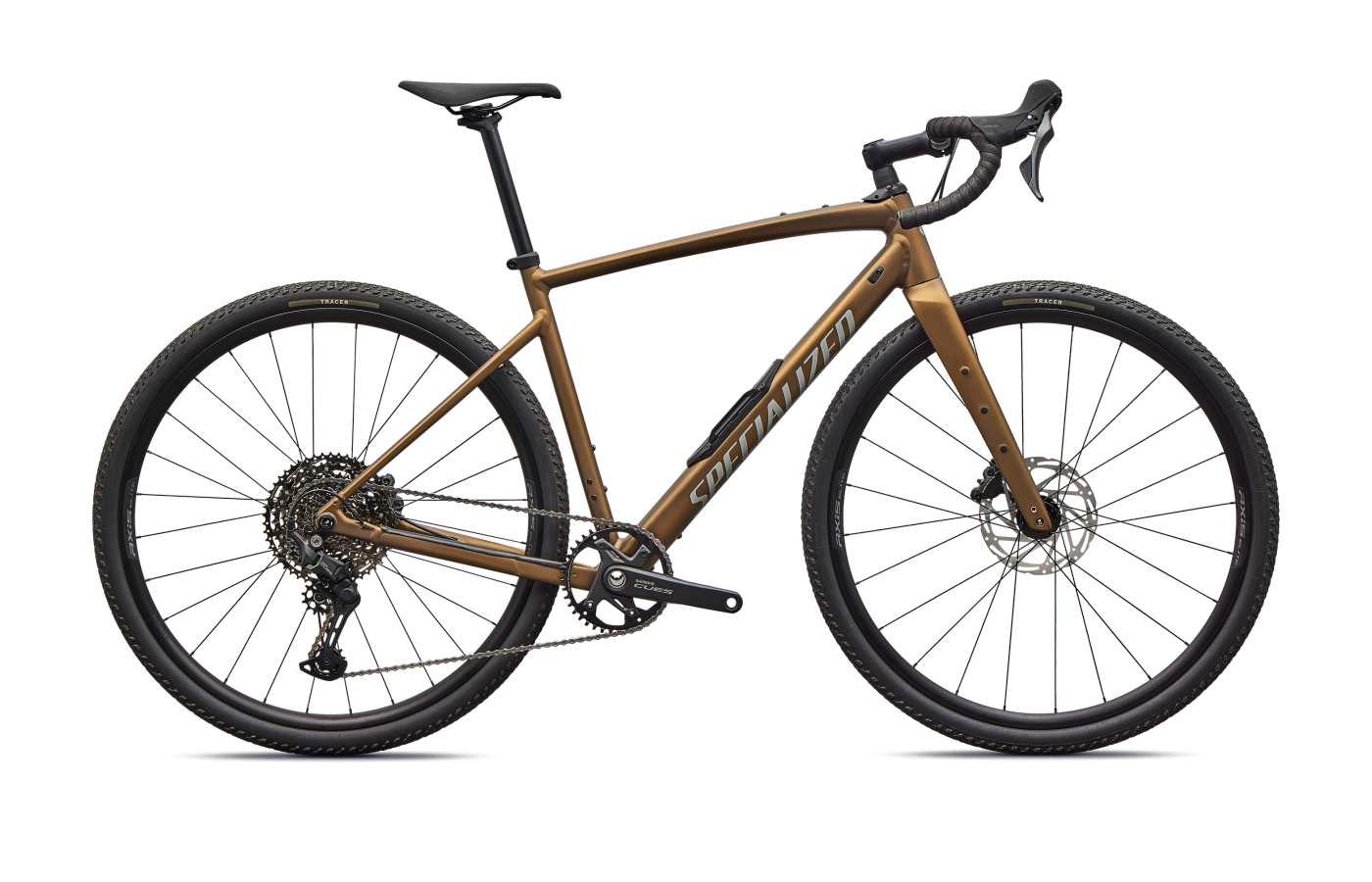
Diverge
Specialized's gravel flagship splits the difference: the Future Shock 3.0 in the head tube delivers ~20 mm of cushion at the bars without a full fork's weight or service overhead. Lighter than the Szepter, racier than the Grizl.
Compare →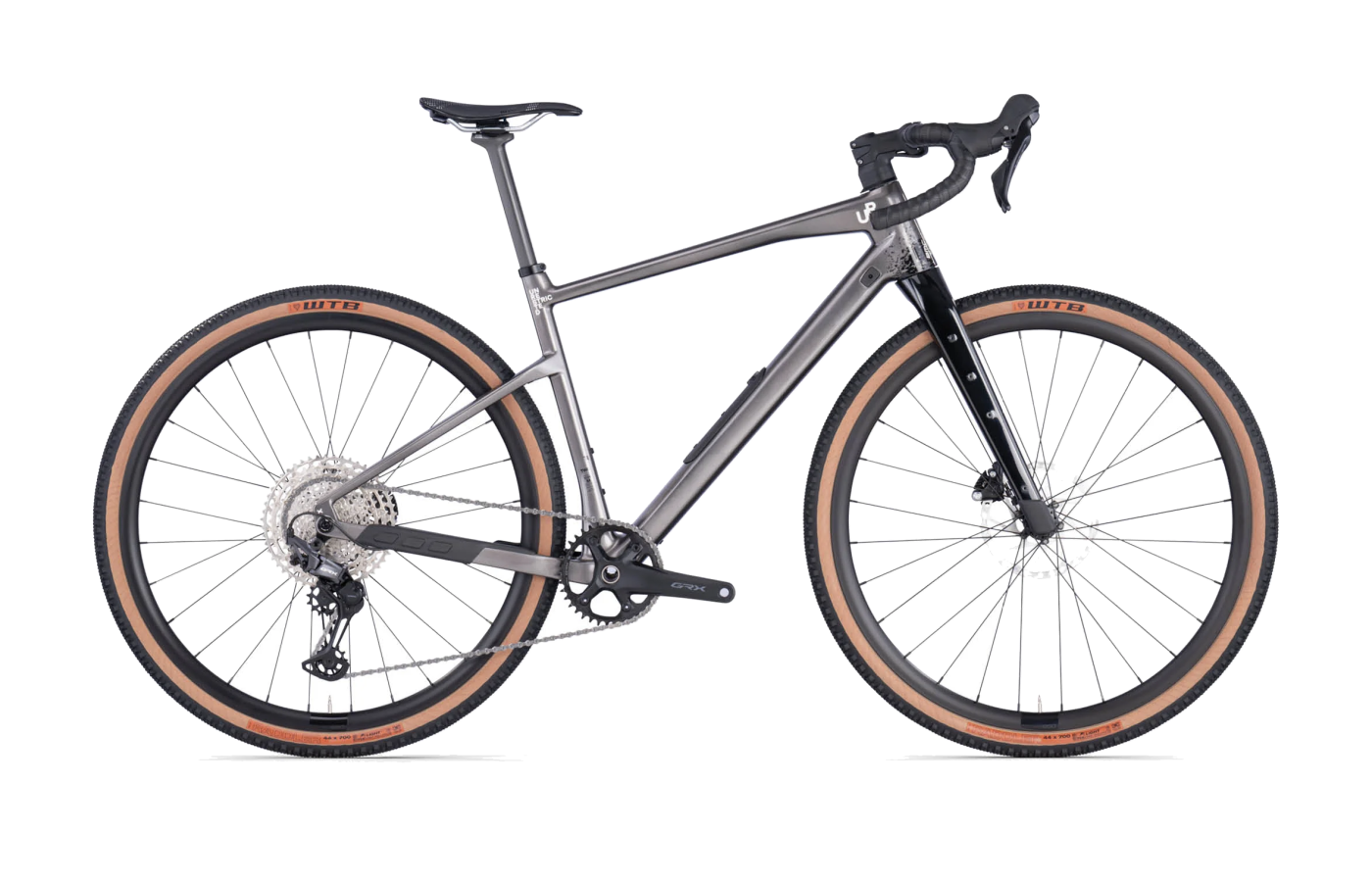
URS
BMC URS chases the same MTB-geo philosophy as the Szepter — short stem, slack front — but adds a soft-tail elastomer in the rear triangle for subtle compliance instead of a suspension fork. Quieter, lighter, and a touch less capable on truly rough descents.
Compare →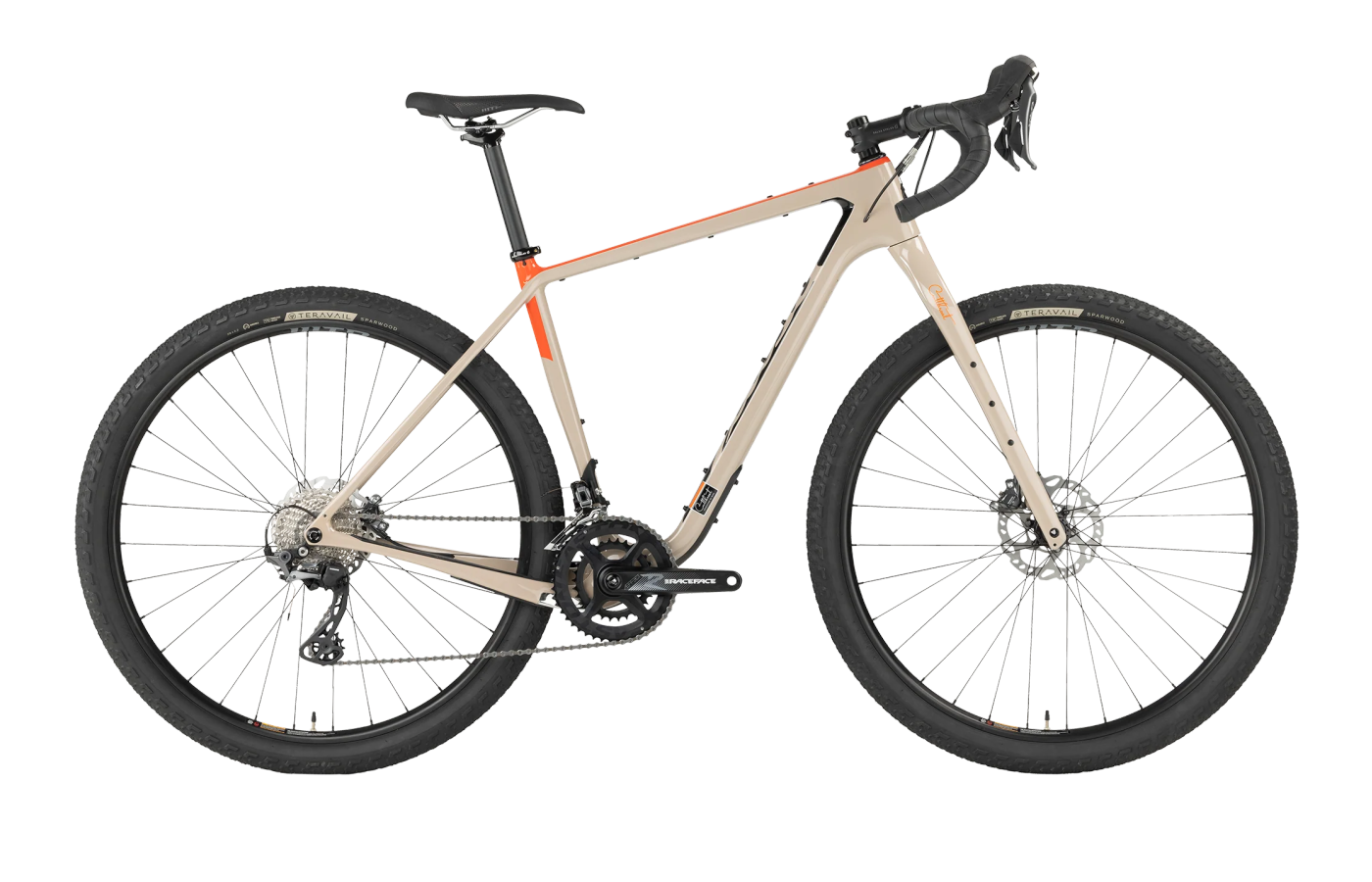
Cutthroat
The Salsa Cutthroat is the purpose-built ultra-bikepacking rig — designed around the Tour Divide route, with cargo capacity and aero-tuned geometry for self-supported epics. The most direct competitor to the Grizl Escape if dynamo charging matters less to you.
Compare →