Lux Trail
vsEpic Evo
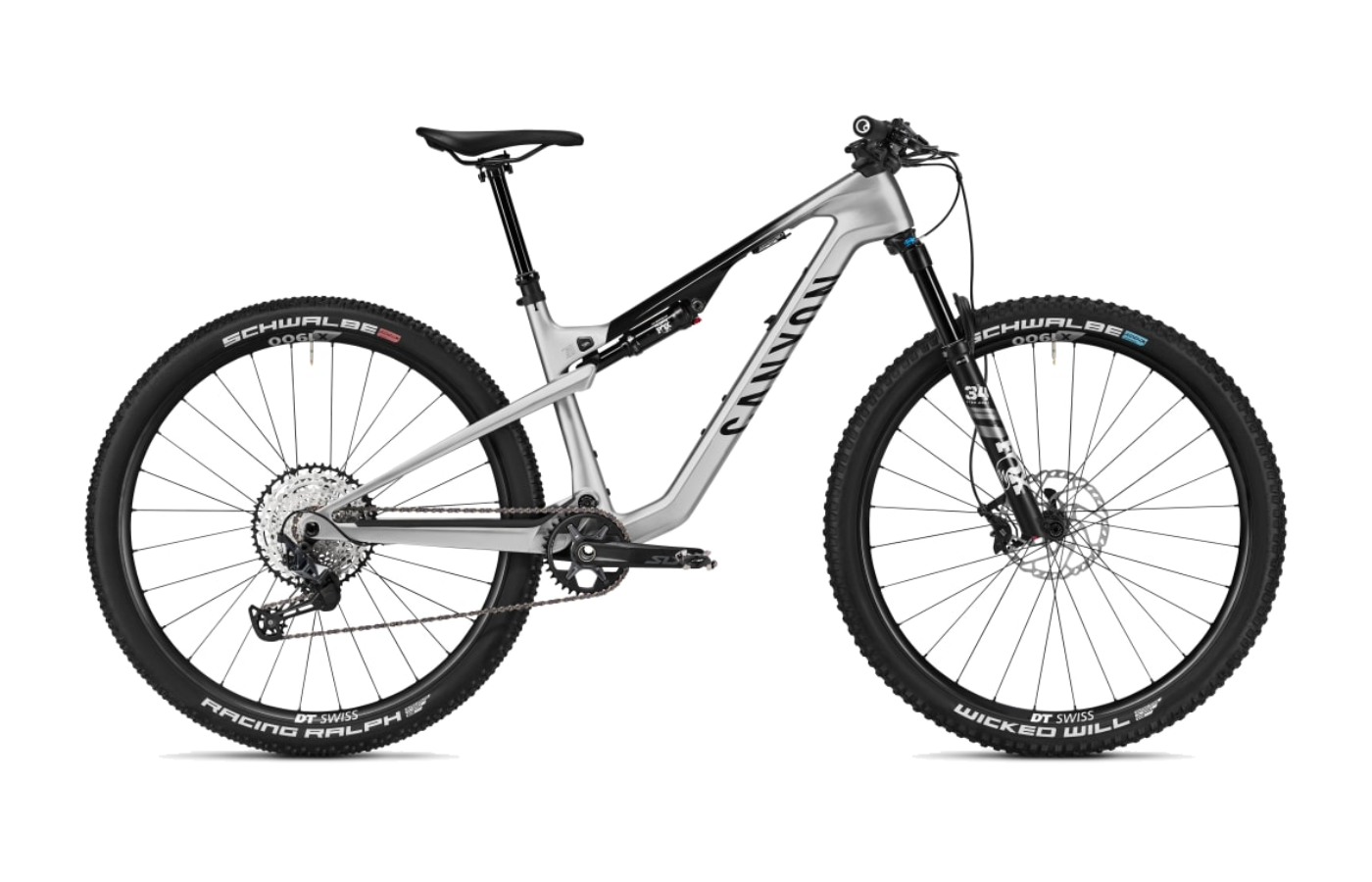
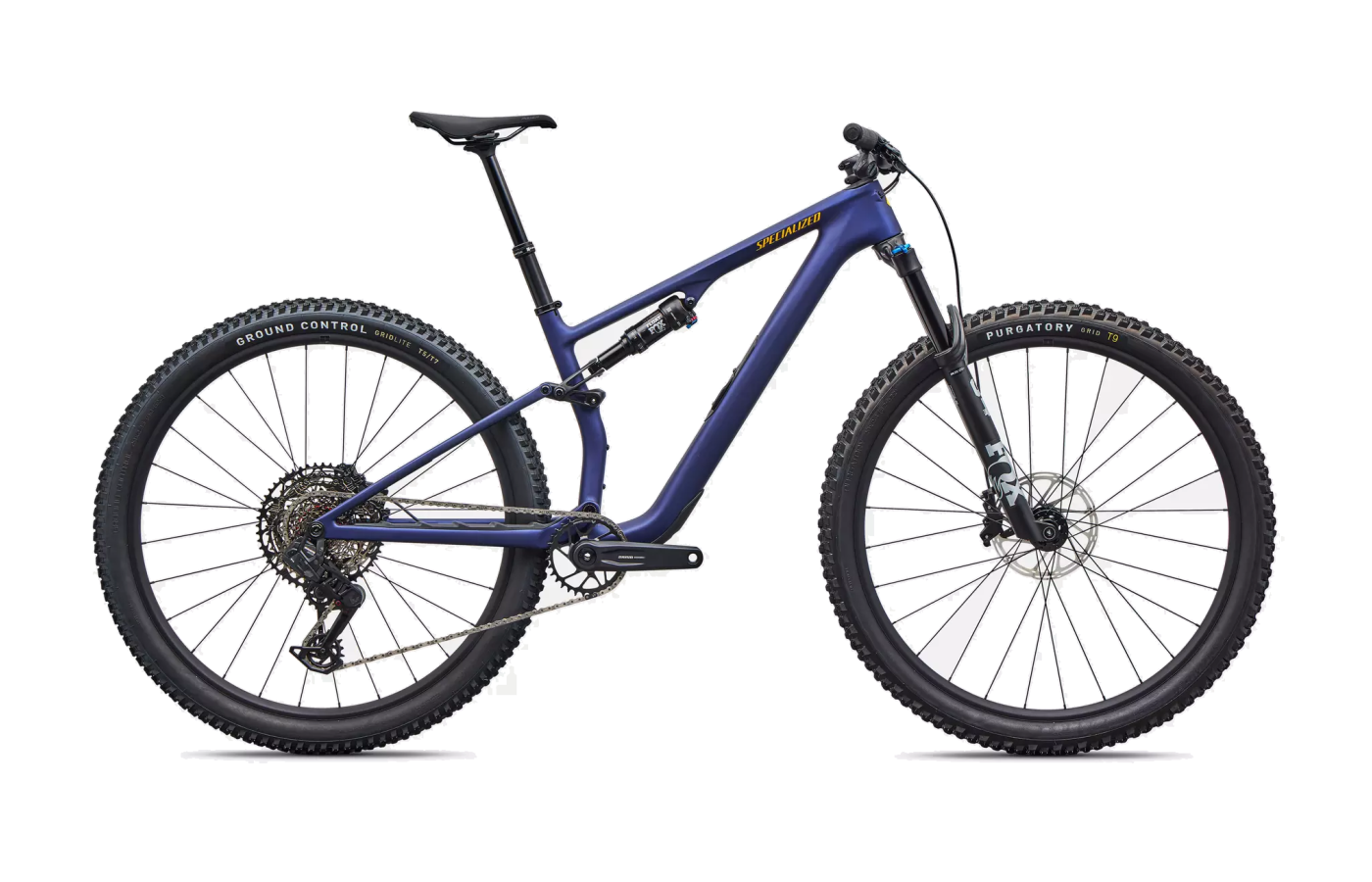
An XC bike that grew teeth, vs. a trail bike that lost weight.
The Canyon Lux Trail is a race frame with trail manners bolted on. The Epic Evo is a trail bike that still climbs like a racer.
Lux Trail
- Best carbon-frame value under $4k — a full-carbon frame, Fox Performance Elite suspension, and DT Swiss wheels for $3,499.
- Light and urgent — the CFR build comes in at 11.28 kg confirmed; mid-builds still climb like an XC bike.
- Two bottles + integrated SWAT-style storage across all sizes, plus an integrated multi-tool under the top tube.
- Conservative 67-degree head angle limits descending confidence on truly steep terrain.
- Through-headset cable routing makes headset-bearing and brake-bleed work expensive — and the storage door has been reported to leak.
Epic Evo
- Genuine trail-bike geometry — a 65.4-degree head angle and 130 mm Fox 34 fork that punches into double-black terrain.
- SRAM Code brakes across the range — gravity-bike stoppers on every build, including the $4,399 Comp.
- SWAT 4.0 downtube storage with an aluminum lever and proper rubber seal — the segment's most refined integrated storage.
- Price floor of $4,399 — no entry-level carbon build, and the S-Works pushes $14k.
- Firm, digressive shock tune feels harsh at slow speeds and rewards aggressive riders only — not a couch on the climbs.
Editor’s analysis
Same 120 mm of rear travel, same 29ers, same 435 mm chainstays — and almost nothing else in common.
On paper these two land in the same downcountry bracket. Both run carbon front triangles, both pair a 120 mm rear with a 130-ish mm fork, both share a 435 mm chainstay across every size. But ride them back-to-back and the philosophies pull apart fast — one bike is built around an XC race chassis, the other around a trail chassis that happens to be light.
The Canyon Lux Trail wears its XC heritage on its sleeve. A 67-degree head tube angle and 76-degree seat tube put the rider forward and over the bottom bracket; reviewers from Flow and Bike-test call it whippy, urgent, eager to slice corners. Pinkbike's tester flagged the trade-off — high-speed stability is "rather low" compared to slacker peers, and on steep, gnarly stuff the front wheel can tuck. It's the bike for the rider who'd rather pedal one more lap than session one more rock garden.
The Specialized Epic Evo runs the math in reverse. The head tube slackens to 65.4 degrees, the fork stretches to 130 mm, and Specialized specs SRAM Code brakes — gravity-bike stoppers — across the entire range. Singletracks called it a "Peter Pan" bike that learned everything from the gravity sleds in the shed. Blister flagged the cost: a stiff, high-strung chassis that demands an active pilot and can feel harsh at low speeds. The reward is a 12-something-kg bike that survives double-black descents.
Then there's price. Canyon's full Lux Trail line tops out at $3,499. Specialized's Epic Evo line starts at $4,399. There is no overlap. If you're cross-shopping these on price you can't — the Lux Trail is the only carbon downcountry option below $4k, and the Epic Evo is the only one with real trail-bike geometry. Pick the bike, then pick the budget.
Where the builds differ.
Comparing our editor's-pick builds side-by-side. Winners highlighted row-by-row — lower price and weight, and the better-spec component, each mark a point.
Build variants & pricing
The two lineups don't overlap on price. The Lux Trail tops out where the Epic Evo starts.
Editor's picks are tier-matched as closely as the lineups allow — the Lux Trail CF 7 SLX ($3,499) against the Epic Evo Comp ($4,399, SRAM S-1000 AXS). Canyon doesn't sell an Epic-Evo-money build; Specialized doesn't sell a Lux-Trail-money build. The $900 gap is real, and so is the spec gap that comes with it.
How they fit, how they steer.
Both at size M. The Lux Trail puts you in a longer, lower, more forward XC posture — 460 mm reach, 598 mm stack, 76-degree seat tube. The Epic Evo is shorter and taller (445/601) with a 75-degree seat tube and a head angle nearly 2 degrees slacker (65.4 vs 67) — built to descend, not to time-trial.
Which size should I buy?
Size recommendations are based on stack, reach, and effective top tube. The Canyon's reach jumps a full 20 mm between sizes; the Epic Evo's progression is similar but starts shorter at the small end.
→These are starting points. Flexibility, riding style, and preferred position all shift the answer — if you’re between sizes, a professional fit beats a chart.
What the magazines said.
Published reviews from trusted cycling outlets. Click through for the full write-up.
Which one should you buy?
If you ride to cover ground fast, get the Lux Trail. If you ride to descend hard on a light bike, get the Epic Evo.
Lux Trail
If your weekends are flowy singletrack, marathon courses, or just "how far can I go before lunch?" — the Lux Trail is the tool. It's light, urgent, efficient, and the only modern carbon downcountry bike under $4k. Just don't expect it to bail you out on steep, chunky descents.
Epic Evo
If you want one bike that can win an XC race on Saturday and survive a double-black on Sunday, the Epic Evo is currently the benchmark. The 130 mm fork, slack head angle, and Code brakes mean you can ride trails that have no business being ridden on 120 mm of rear travel.
Questions buyers actually ask.
Short answers to the things we get emailed about most often.
01Which is faster on the climbs?
The Canyon Lux Trail, by a meaningful margin. It's lighter (the CFR tops out around 11.28 kg confirmed; the mid-tier Epic Evo Comp comes in at 12.54 kg in size M), it has a steeper 76-degree seat tube that puts you more directly over the bottom bracket, and the suspension platform is tuned for marathon-pace pedaling.
The Epic Evo isn't slow up — Specialized's Ride Dynamics shock tune is firm off the top, so it pedals well — but the extra weight and the slacker front end show up on long, steep climbs.
02Which is more capable on technical descents?
The Specialized Epic Evo, by a wide margin. Its 65.4-degree head tube angle (in low-shock setting) and 130 mm Fox 34 fork are real trail-bike numbers — Singletracks reported it survived double-black trails in Bellingham. SRAM Code brakes (typically a gravity-bike spec) come on every build, even the $4,399 Comp.
The Lux Trail's 67-degree head angle is on the conservative side for a modern downcountry bike. MBR specifically called out that the front wheel can tuck on very steep descents. It's capable on flowy and chattery trail, less so on the truly steep and rocky.
03How much travel does each actually have?
Canyon Lux Trail: 115 mm rear / 120 mm fork (claimed). Note: MBR's long-term review measured the rear at closer to 105 mm in practice — Canyon's stroke math runs short.
Specialized Epic Evo: 120 mm rear / 130 mm fork. The extra 10 mm up front matters more than it sounds — that's where most of the descending confidence comes from.
Neither is a true trail bike on paper, but the Epic Evo's geometry and parts spec push it well past its travel numbers.
04Why is there no Lux Trail in the same price bracket as the Epic Evo Pro or S-Works?
Canyon caps the Lux Trail line at $3,499 in the US. The brand sells higher-spec CFR builds in Europe and Australia (Fox Factory, XTR, carbon wheels — up to roughly €8,499 / AUD $12,849), but those configurations don't currently land in the US lineup.
If you want a flagship-spec downcountry bike from Canyon in the US, you're looking at the Spectral, Neuron, or one of the e-bikes — not the Lux Trail.
05How does the in-frame storage compare?
Both bikes have downtube storage, but the execution differs. Specialized's SWAT 4.0 is the segment benchmark — an aluminum lever, a proper rubber seal, and reviewers report it stays clean even in wet conditions.
Canyon's first-generation integrated storage on the Lux Trail has been less successful in long-term testing. MBR reported the door warping out of shape and letting water in over a 12-month test — and the frame reinforcement around it adds roughly 500 g.
06Which is harder to maintain?
The Canyon, mostly because of the through-headset cable routing. Headset bearings live in the cable path, so replacing them or bleeding brakes means partially dropping the cockpit. Reviewers across Flow, Pinkbike, and MBR have flagged it as a real ownership cost.
The Epic Evo Comp, Expert, and Pro route cables through traditional ports behind the head tube — significantly easier to service. Only the S-Works Epic 8 routes through the headset. Both bikes have the easier-to-service threaded BSA bottom bracket.
07Can I race XC on the Epic Evo?
Yes — Specialized actually shares the same carbon frame between the standard Epic 8 and the Epic Evo. The Evo bumps the fork from 120 mm to 130 mm, swaps in burlier tires, and adds SRAM Code brakes, but the underlying chassis is identical.
If you want the trail capability but with race-trim parts (lighter wheels, faster tires, 120 mm fork), Specialized makes that swap easy via the standard Epic 8 build.
08What sizes do they offer?
Both run XS, S, M, L, XL with 29" wheels at every size. The Lux Trail's reach goes 412–500 mm; the Epic Evo runs 385–495 mm — slightly shorter at the small end and slightly shorter at the top. For a 5'8" / 173 cm rider, both bikes' fit algorithms recommend size M, with reach landing at 460 mm (Canyon) vs 445 mm (Specialized) and stack within 3 mm of each other.
Similar bikes
If your priorities don’t map cleanly onto either of these, one of these adjacent bikes probably fits better.
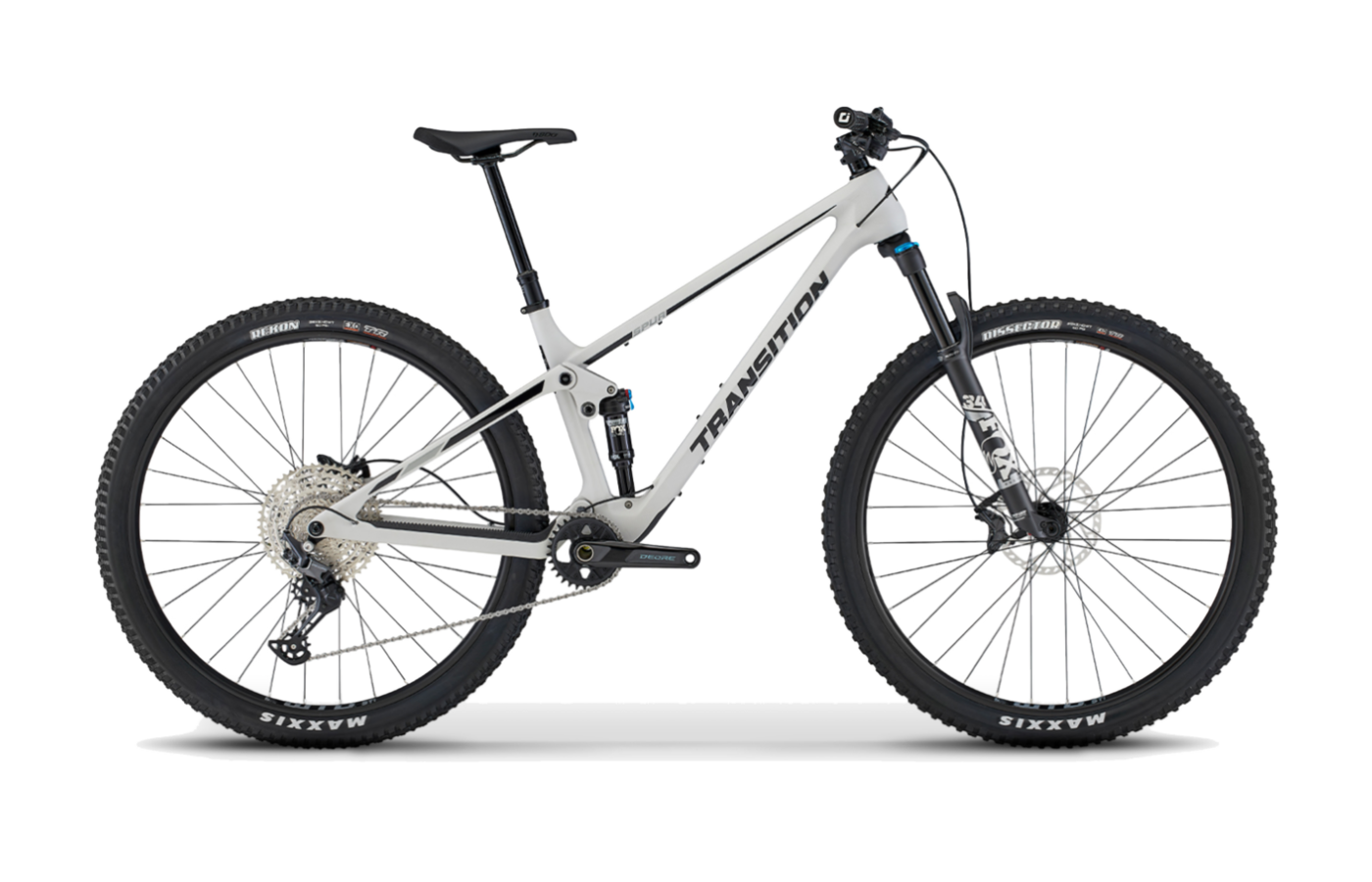
Spur
The original benchmark for this category — a 120/120 mm carbon trail bike that pioneered the "XC efficiency, trail capability" formula. If the Epic Evo's price floor scares you off but you want the same downcountry character, the Spur is the alternate.
Compare →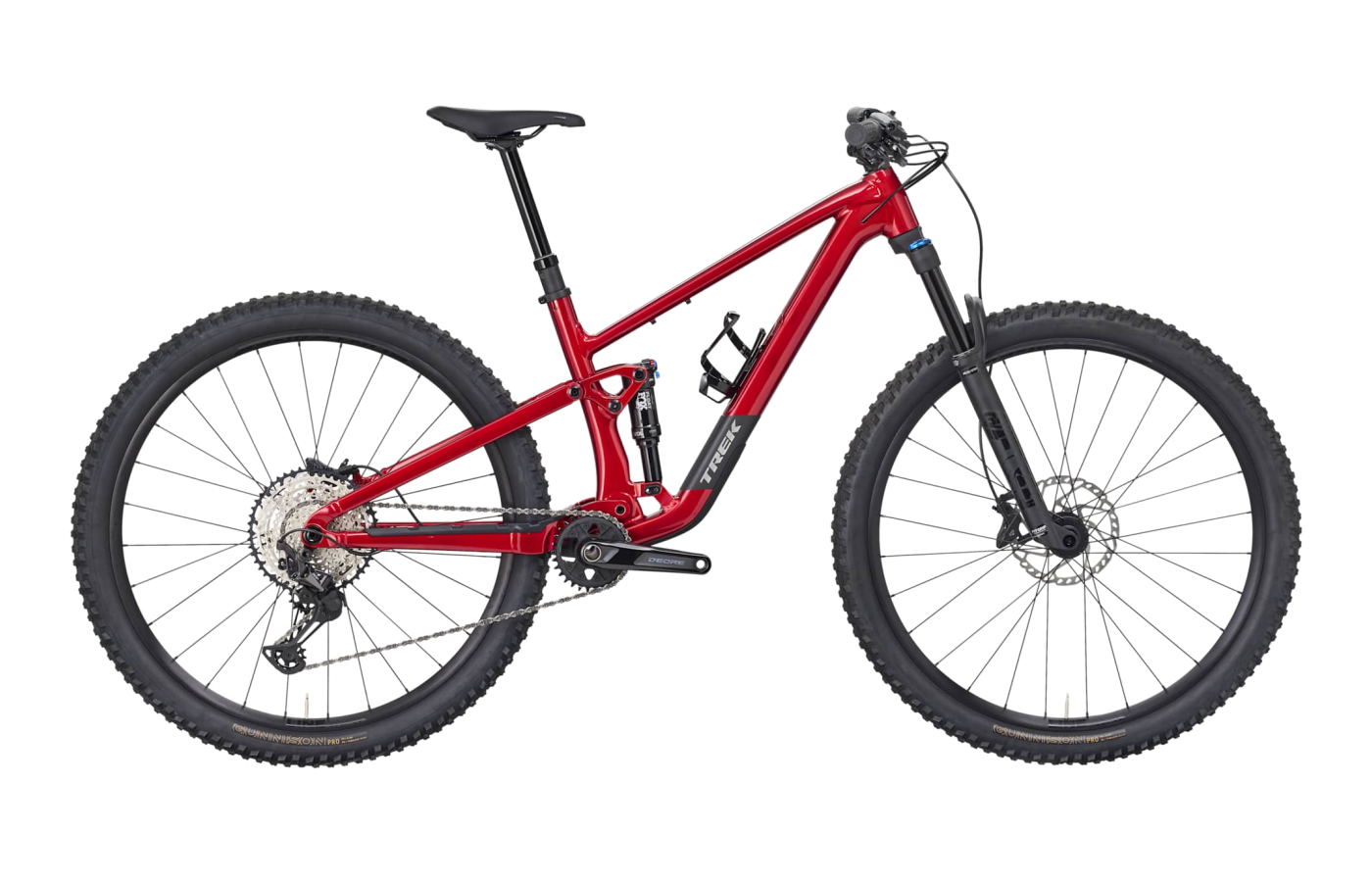
Top Fuel
Trek's 120/130 mm answer in the same bracket — share the Epic Evo's philosophy but with Trek's IsoStrut rear shock and a more upright trail position. Worth a look if you have a Trek dealer nearby and want the easier-to-service routing.
Compare →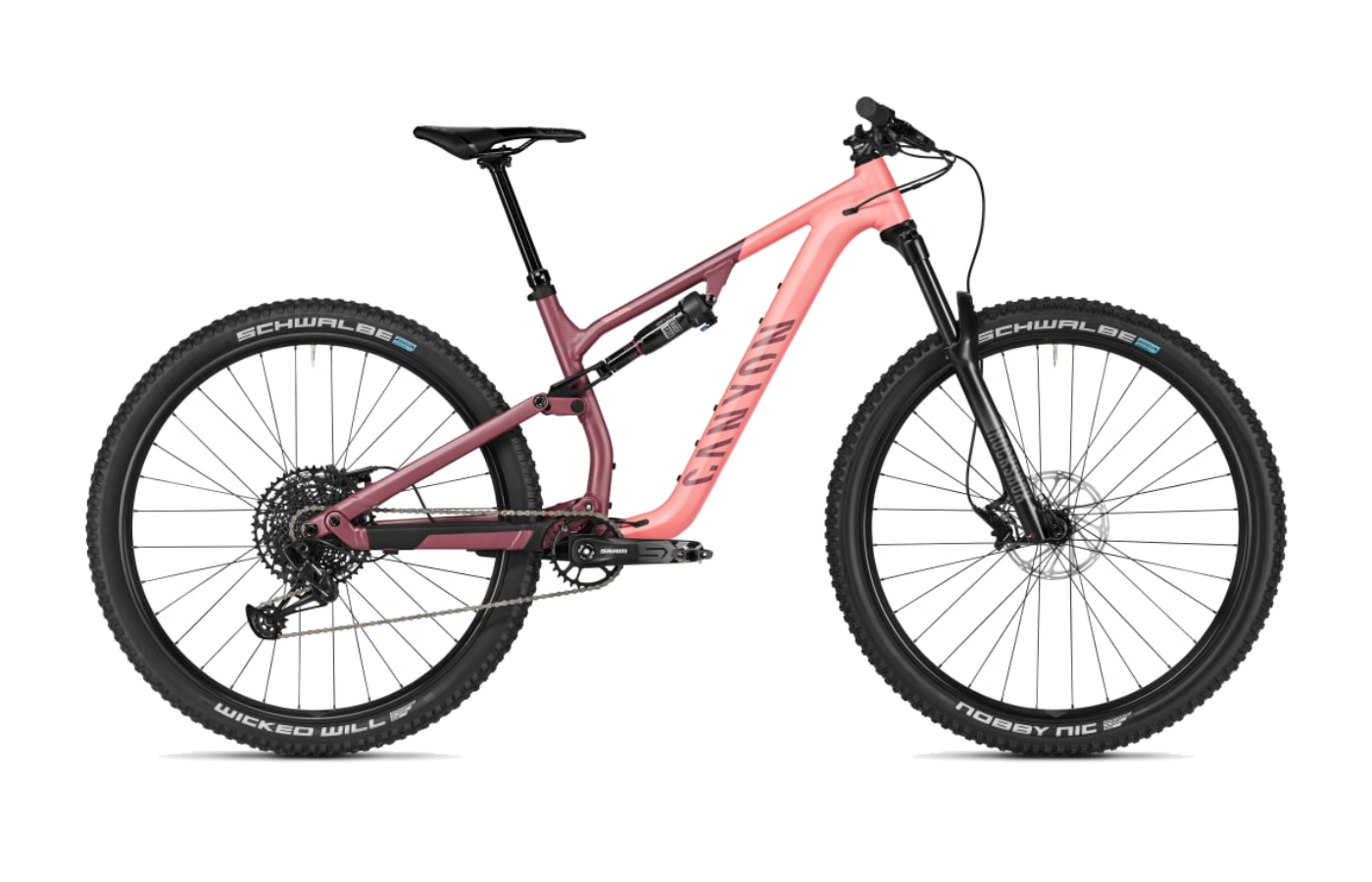
Neuron
If the Lux Trail looks great except for the descending limits, Canyon's Neuron is the next step up — 130 mm of travel, slacker geometry, more burly parts spec, similar direct-to-consumer pricing. Heavier, but more capable.
Compare →