Lux Trail
vsSupercaliber
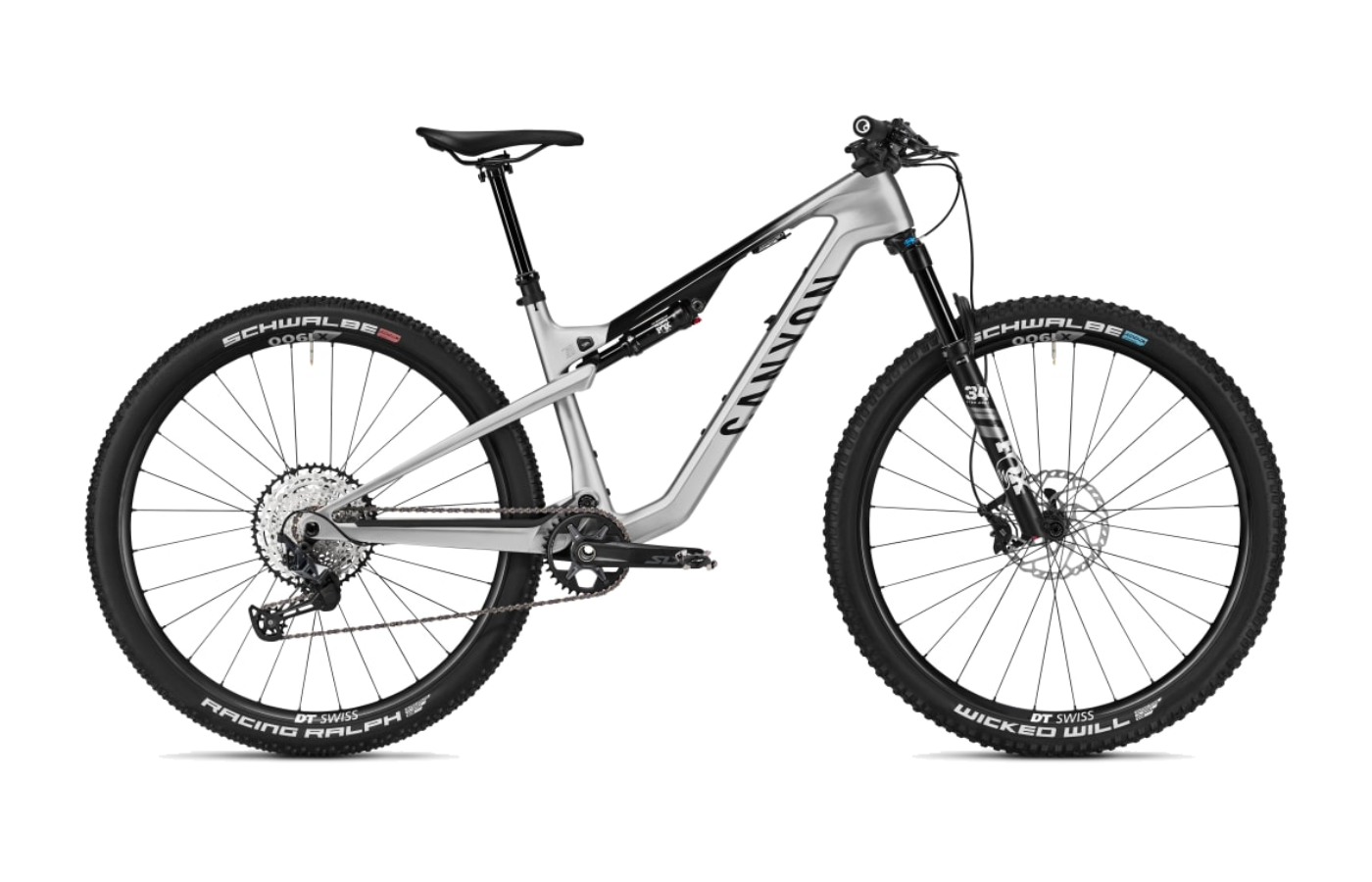
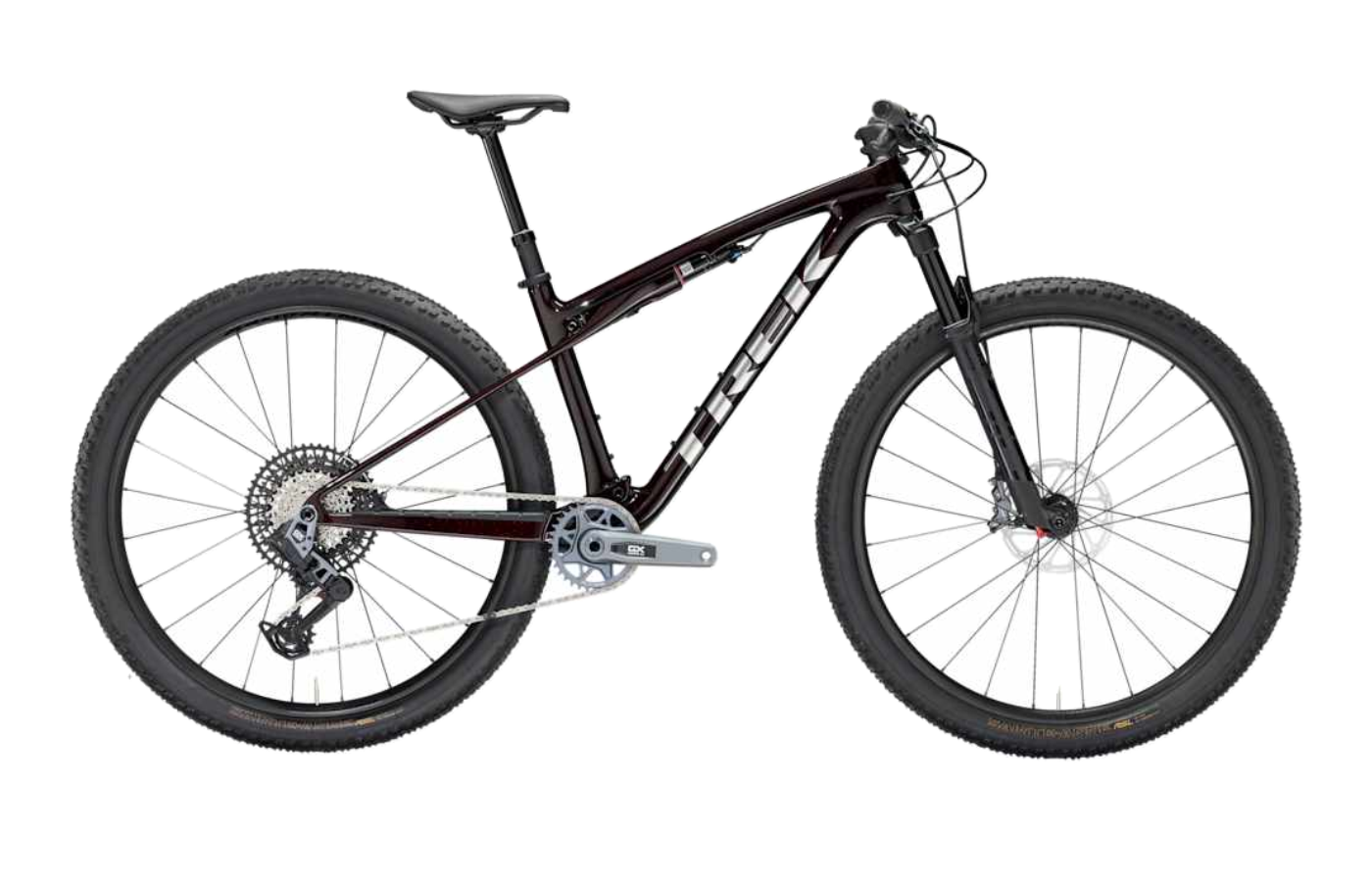
Two short-travel 29ers, two completely different missions.
The Lux Trail is a 120/115 mm downcountry bike priced like a hardtail. The Supercaliber is an 80 mm World Cup weapon priced like a superbike.
Lux Trail
- Genuinely cheap for the spec — a full carbon frame, Fox 34 SC, and Shimano SLX for $3,499.
- More travel, more capability — 115/120 mm and a 67-degree HTA make it a real downcountry bike, not a glorified XC racer.
- Built for self-sufficient days — internal frame storage, integrated tool, room for two full bottles on every size.
- Through-headset cable routing makes basic shop work expensive and painful.
- Internal storage door is a known weak point — reviewers report warping and water ingress over time.
Supercaliber
- Hardtail-fast under power — the IsoStrut and high anti-squat give an "e-bike-like" pedal response on climbs and sprints.
- Newly capable geometry — 67.5-degree HTA, 110 mm fork, dropper standard on every build, even the cheapest.
- Conventional cable routing — Trek skipped the through-headset trend, so headset and brake service stays normal.
- Floor price ($4,799) is above the Lux Trail's ceiling, and the SL 9.6 entry build is heavy and underspecced.
- 80 mm of rear travel runs out fast — bottoming on chunky terrain is described as "harsh and metallic."
Editor’s analysis
One was built to win World Cups. The other was built to ride them — then keep going for another four hours.
On paper these are both XC-adjacent carbon full-suspension 29ers with a 67-ish head angle and 435 mm chainstays. In practice they share almost nothing else. The Trek Supercaliber runs 80 mm rear / 110 mm front through the IsoStrut — a structural shock that doubles as part of the frame. The Canyon Lux Trail runs 115 mm rear / 120 mm front through a conventional flex-stay layout, with a Fox 34 Stepcast up front instead of the Supercaliber's lower-leg SID SL.
Translation: the Supercaliber is what the World Cup grew into when 60 mm of travel ran out. The Lux Trail is what XC turned into when riders decided racing wasn't the only point. Reviewers describe the Trek's pedal response as "ego-boosting" and "telepathic," close enough to a hardtail that the lockout often goes unused. The Lux Trail's rear end gets called "slingshot"-y and "lush," and its 67-degree head angle paired with a 76-degree seat tube angle puts it closer to a baby trail bike than a race bike.
Price tells the same story from the other end. The Lux Trail tops out at $3,499 in the US for a CF 7 with full Shimano SLX and Fox Performance suspension. The Supercaliber starts at $4,799 — for the spec-light SL 9.6 — and runs to $14,999 for the SLR 9.9 XX Flight Attendant. There is essentially zero price overlap between the two ranges. You are not cross-shopping these on price; you are choosing what kind of bike you want.
The Lux Trail is the bike you buy when you want one bike for marathons, big backcountry days, and the occasional rowdy descent. The Supercaliber is the bike you buy when you have a number plate on the bars and the start gun is what wakes you up.
Where the builds differ.
Comparing our editor's-pick builds side-by-side. Winners highlighted row-by-row — lower price and weight, and the better-spec component, each mark a point.
Build variants & pricing
The Canyon range tops out at $3,499. The Trek range starts at $4,799. There is no overlap — pick by mission, then by what you can spend.
The editor's-pick pairing here is the Canyon CF 7 ($3,499, Shimano SLX) against the Trek SL 9.7 GX AXS T-Type ($6,249, GX AXS Transmission) — the closest mid-tier match the two lineups offer. Trek doesn't sell anything below $4,799, and Canyon doesn't sell anything above $3,499 in the US — that ~$2,750 gap is real, not an artifact of how we picked.
How they fit, how they steer.
Compared at the fit-picked size on each side: M Canyon vs ML Trek. Reach lands within 10 mm (Canyon 460, Trek 450), but the Canyon sits 8 mm taller in the stack and runs a noticeably steeper 76-degree seat tube vs the Trek's 71. Head angles are within half a degree.
Which size should I buy?
Sizing is the trickier picker here — the Trek uses a five-size range with an extra ML between M and L; the Canyon uses a conventional XS–XL. Pick by reach and effective top tube, not the letter on the sticker.
→These are starting points. Flexibility, riding style, and preferred position all shift the answer — if you’re between sizes, a professional fit beats a chart.
What the magazines said.
Published reviews from trusted cycling outlets. Click through for the full write-up.
Which one should you buy?
If you want a versatile downcountry bike for big days and don't care about a number plate, get the Lux Trail. If you race XC and the clock is the point, get the Supercaliber.
Lux Trail
If your idea of a good Saturday is a 4–6 hour backcountry loop with one bottle in the cage and a tool tucked under the top tube, this is the bike. It climbs efficiently, descends with more confidence than its 115 mm of travel suggests, and costs less than half what a flagship Supercaliber does.
Supercaliber
If you have a race license, a power meter habit, and a starting line in your near future, the Supercaliber is the sharper instrument. The IsoStrut delivers near-hardtail efficiency without the spine-jolt, and the new geometry makes it actually descend like a 2024 XC bike instead of a 2019 one.
Questions buyers actually ask.
Short answers to the things we get emailed about most often.
01Which is faster on a typical XC course?
The Trek Supercaliber, almost without question. Multiple reviewers (Escape Collective, BikeRadar, Flow) describe the pedal response as the most efficient in the category — "ridiculous urgency" and an "e-bike-like" sensation on accelerations. The IsoStrut's high anti-squat keeps the bike sitting high in its 80 mm of travel and translates pedal input into forward motion with very little wallow.
The Lux Trail is no slouch — it's still under 12 kg in CFR trim — but the 115 mm of rear travel and conventional linkage move more under power. On a marathon-distance course full of long climbs and rolling fire roads, the gap shrinks. On a punchy, World Cup-style XCO lap, the Trek wins.
02Which descends better?
The Lux Trail, on most terrain. It has 35 mm more rear travel (115 vs 80), a slightly slacker head angle (67° vs 67.5°), and a fork (Fox 34 SC) with bigger stanchions than the Trek's SID SL on the equivalently-priced builds. Reviewers describe it as a "mini trail bike" that handles real chunk surprisingly well.
The Supercaliber is much-improved over Gen 1 — 17 mm longer wheelbase, slacker HTA, dropper standard — but it remains an 80 mm race bike. Reviewers note that bottoming through the travel feels "harsh and metallic," and the bike will remind you of its XC roots if you point it at anything truly rocky.
03How much rear travel does each one actually have?
Lux Trail: 115 mm claimed, though MBR's long-term test measured closer to 105 mm in practice.
Supercaliber: 80 mm via the IsoStrut. That's a 20 mm bump from Gen 1's 60 mm but still well below the Lux Trail. Note that the IsoStrut is a structural shock — it functions as a load-bearing part of the frame — so the feel is different from a conventional linkage at the same travel number.
04What's the price gap and why is it so big?
It's real and it's structural. The Lux Trail in the US sells from $3,299 to $3,499 — only the CF 6 and CF 7 builds are offered here. The Supercaliber sells from $4,799 (SL 9.6) to $14,999 (SLR 9.9 XX Flight Attendant Gen 2). The Lux Trail's ceiling is below the Supercaliber's floor.
The gap has two drivers. First, Canyon is direct-to-consumer, which strips out roughly 30% of the retail markup that goes to dealers. Second, Trek positions the Supercaliber as a flagship racing tool — there's no Deore-equipped "value" build because Trek doesn't believe World Cup buyers want one.
05Is the IsoStrut a maintenance headache?
Less than it used to be. RockShox now manufactures the IsoStrut for Gen 2, and it uses a 38 mm stanchion that shares bushings and seals with the Zeb enduro fork — common parts. Basic service no longer needs the proprietary Race Face BB tool the Gen 1 required.
Two caveats. First, Flow Mountain Bike and Guy Kesteven both reported that their IsoStruts arrived under-lubed from the factory and felt harsh until they were pulled apart and re-greased — budget for ~10 hours of break-in or a proactive service. Second, the air can wants service every 100 hours, double a standard SIDLuxe but still more than a typical fork.
06What about the Canyon's headset cable routing?
It's a real downside if you do your own work. Cables run through the headset, which means a routine bearing replacement requires partially disconnecting the brakes and shifters. PinkBike and MBR both flag it as a long-term ownership cost — both for shop labor and for premature bearing wear from water ingress.
The Supercaliber went the other way and kept conventional internal routing. Multiple reviewers (Mountain Bike Action, Flow) called this out as a refreshingly sane choice, given how many brands have moved the other direction.
07Can I race the Lux Trail?
You can — riders do. But you'll be giving up roughly 1–2 kg of bike weight and some pedaling efficiency to anyone on a Supercaliber, Lux World Cup, or Epic World Cup. The Lux Trail's purpose is marathon and downcountry, not 90-minute XCO laps. If you race XC seriously, Canyon's own Lux World Cup is the right tool — a 100 mm pure race bike that's roughly a kilo lighter.
08What warranty does each come with?
Both frames carry a lifetime warranty to the original owner against manufacturing defects. Trek explicitly markets a 25-year frame guarantee on top of that.
Real-world support is more variable. Trek's dealer network means warranty claims and crash replacements are handled in person at any local Trek shop. Canyon is direct-to-consumer, so claims go through a remote support process — reviewer anecdotes are mixed, with some reporting smooth crash-replacement experiences and others frustrated by the lack of local support.
Similar bikes
If your priorities don’t map cleanly onto either of these, one of these adjacent bikes probably fits better.
Epic World Cup
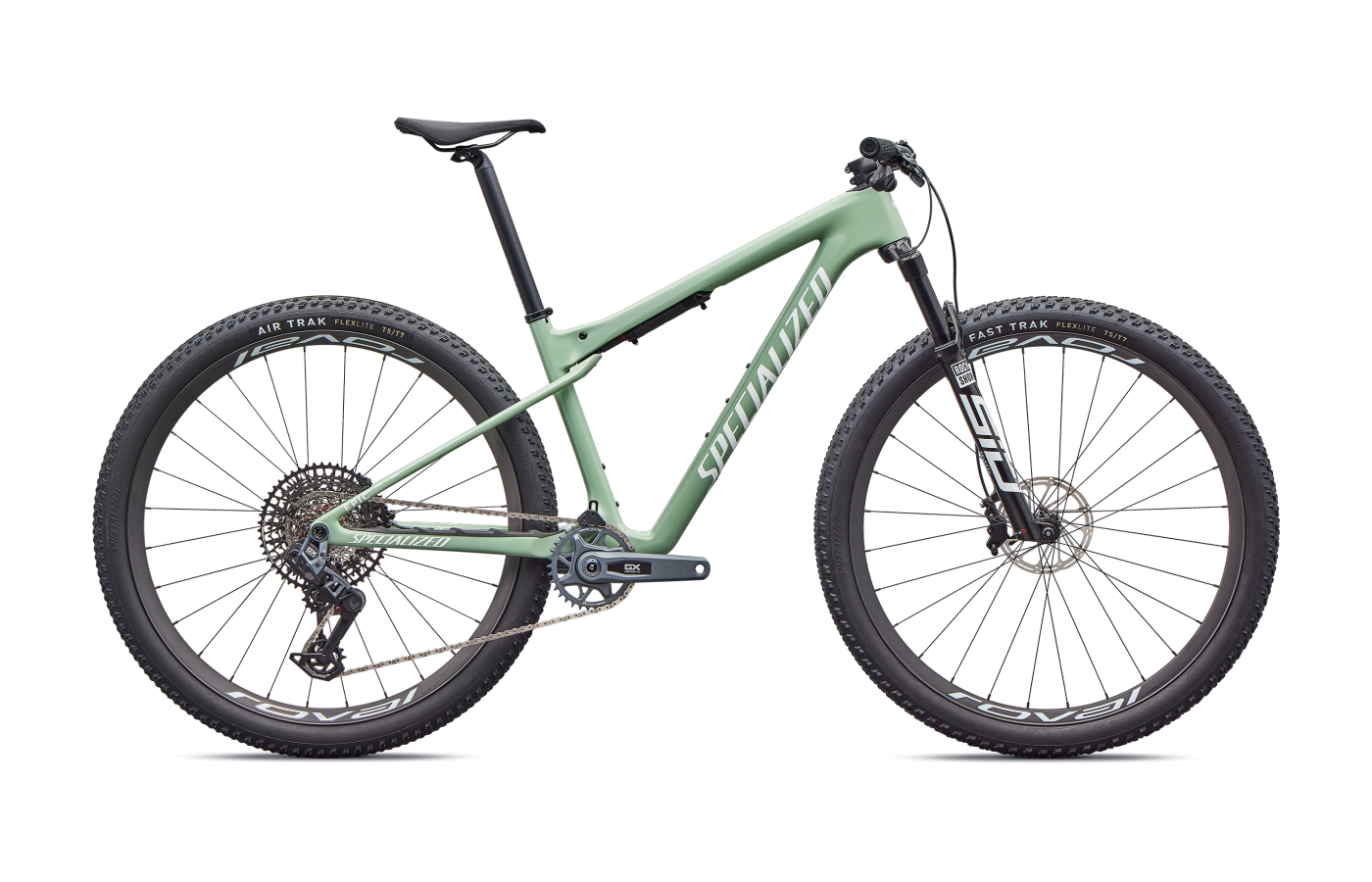
The Supercaliber's most direct rival. Same 120 mm fork / sub-100 mm rear template, but Specialized uses an automated Brain damper instead of a manual lockout — set-and-forget vs. push-the-button.
Compare →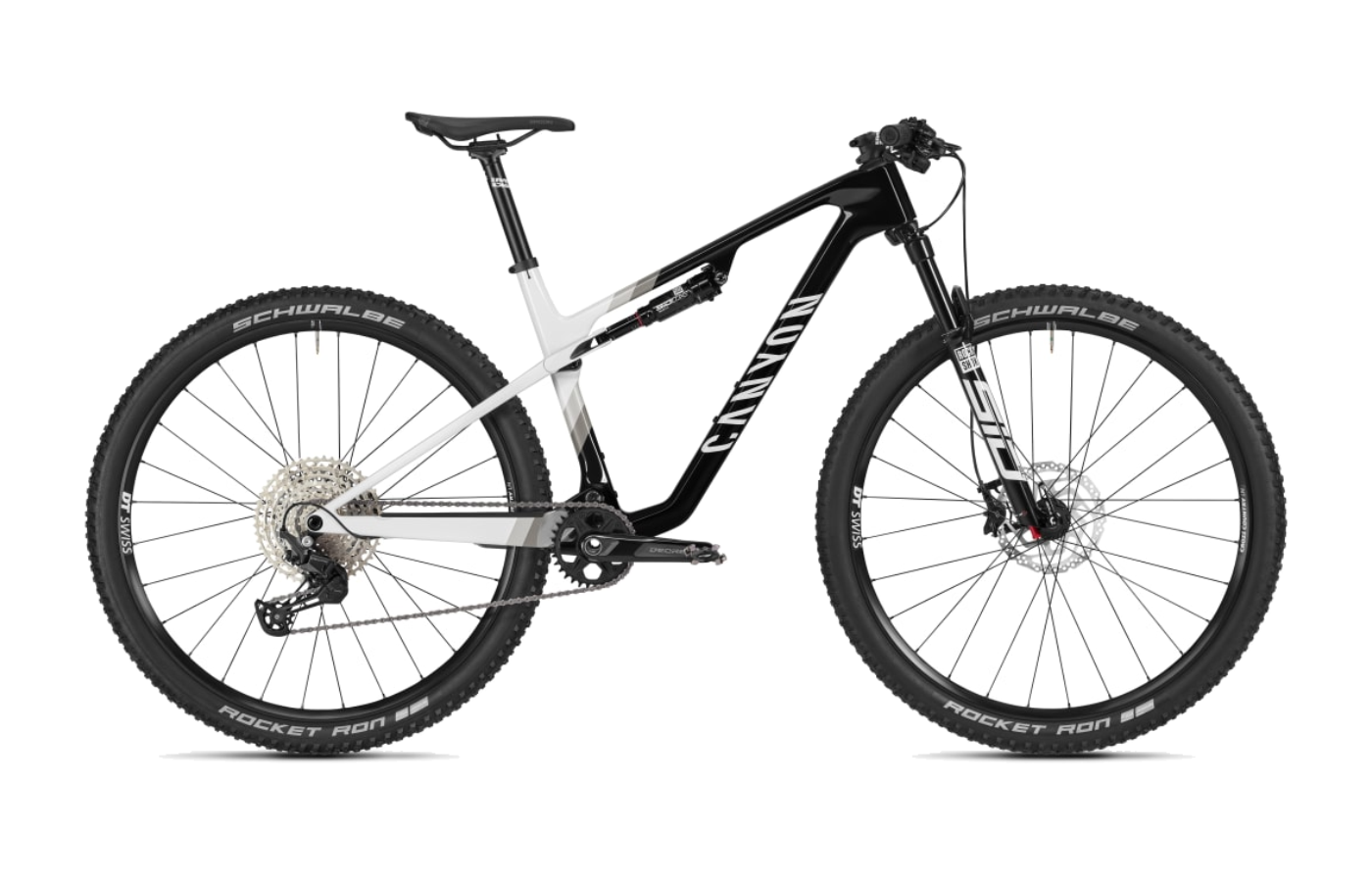
Lux World Cup
Canyon's pure-bred 100 mm XC race bike — over a kilogram lighter than the Lux Trail and aimed squarely at the start line. If the Lux Trail looks too trail-leaning for you, this is the same brand's racier answer.
Compare →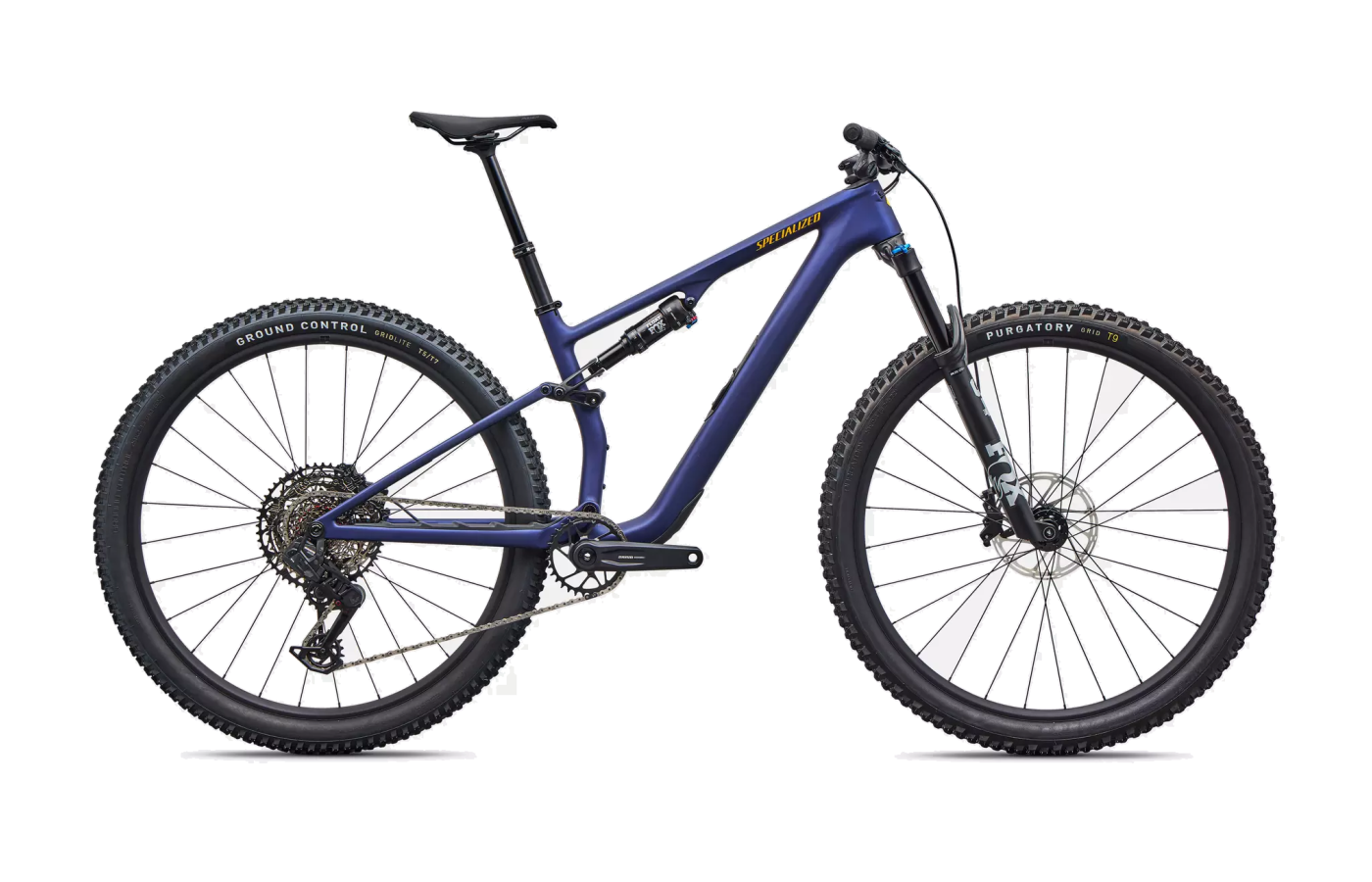
Epic Evo
Reviewers' usual benchmark for the downcountry category. Lighter than the Lux Trail with more capable geometry than the Supercaliber — the bike to shop against if you can't decide between race and trail.
Compare →