Aspero
vsWarbird
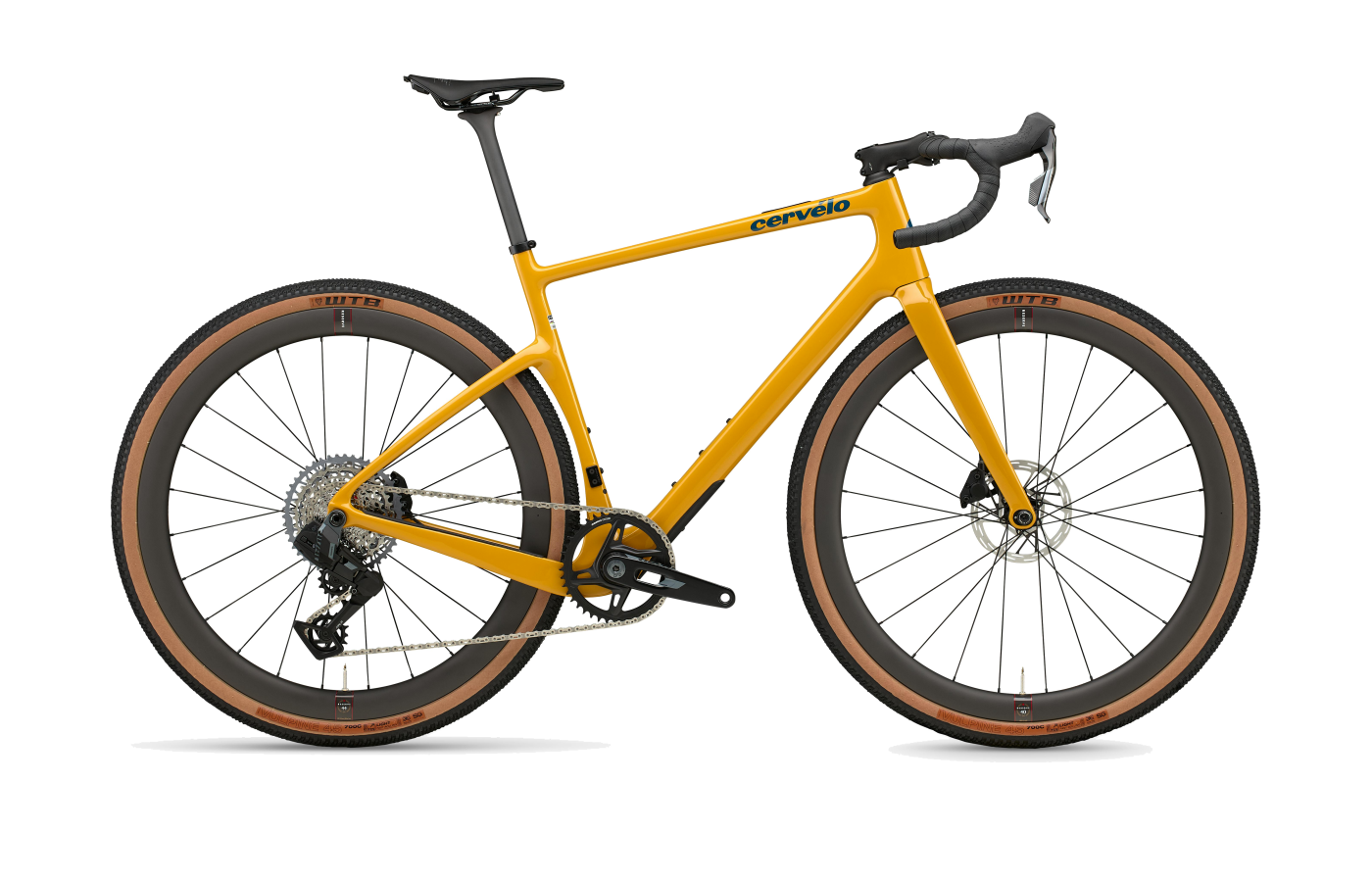
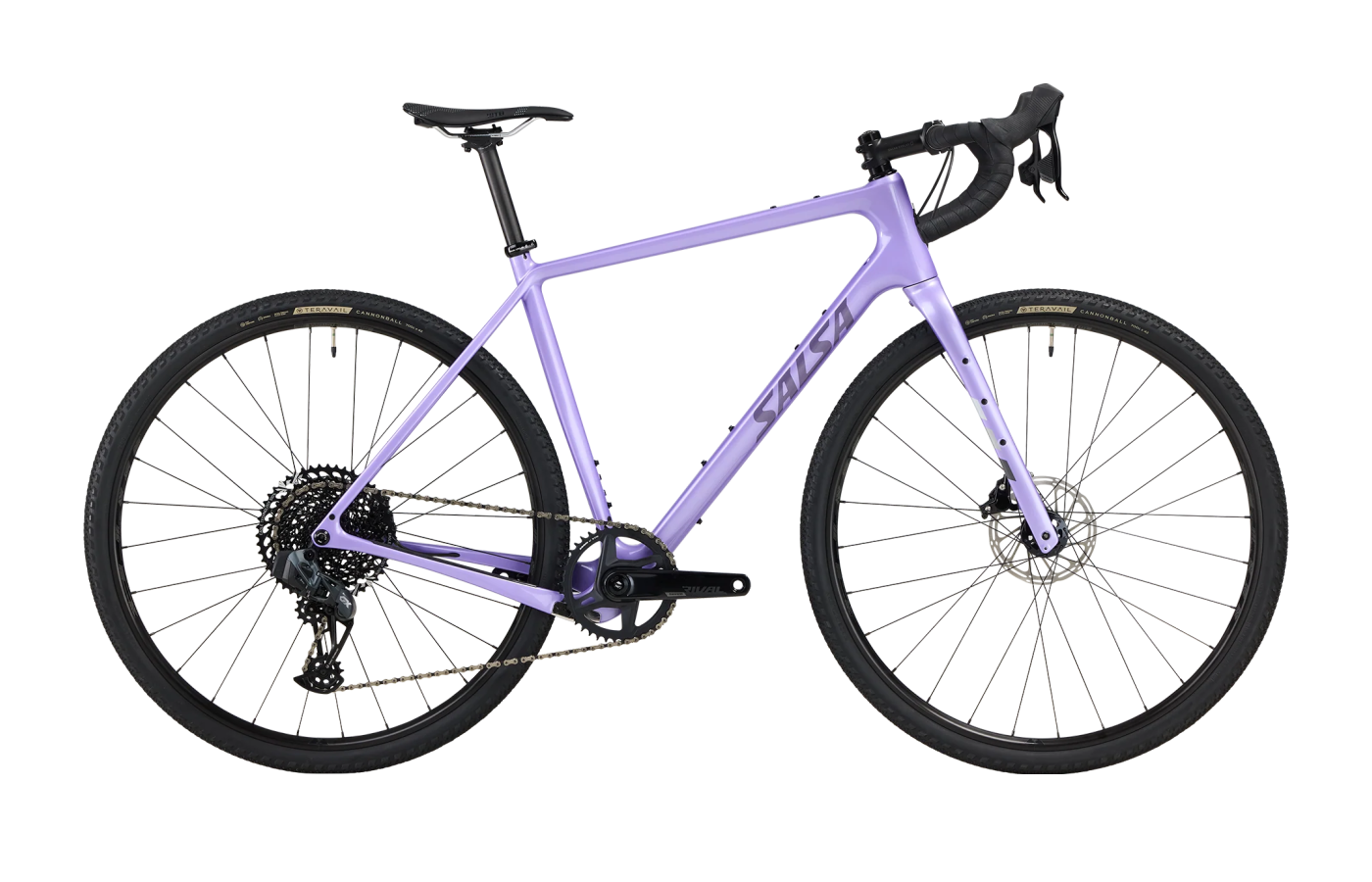
Two race-day gravel bikes, two definitions of fast.
The Cervelo Aspero is the road-racer's gravel bike — twitchy, slammed, allergic to mounts. The Salsa Warbird is the all-day endurance racer built around stability and stuff to bolt onto.
Aspero
- Sharp, road-bike handling — 72-degree HTA, 425 mm chainstays, low stack. It corners and accelerates like a race bike.
- Refined ride for a race frame — second-gen layup drops front stiffness 10% and the dropped seat stays calm rear chatter.
- Reserve carbon wheels mid-spec — even the Rival AXS build comes with Reserve 40|44 hoops, which reviewers rate above competitors at the price.
- Minimalist mounts — no fender mounts, no third bottle cage, no bikepacking-friendly utility.
- Slammed riding position rewards flexibility; less forgiving for long, upright endurance days.
Warbird
- Class 5 VRS comfort — the bowed seat stays meaningfully damp washboard and reduce fatigue on multi-hour rides.
- Long-haul utility — three bottle mounts on 56cm and up, fender mounts, top-tube and triple-fork mounts, dropper-ready seatpost.
- Stable, planted geometry — 70.75-degree HTA and 1,038 mm wheelbase (56cm) hold a line on rough descents.
- Complete builds spec mid-tier hubs, saddles, and finishing kit for the price — multiple reviewers recommend buying the frameset.
- Slacker steering can feel sedate at low speeds and around tight switchbacks.
Editor’s analysis
Both wear the gravel-race label. Only one of them wants to be a road bike when it grows up.
The Cervelo Aspero and Salsa Warbird both market themselves as gravel race bikes, and both will happily turn up at Unbound or BWR. But spend a minute on the geometry charts and the ride philosophies pull apart hard. The Aspero runs a 72-degree head tube with 425 mm chainstays — almost identical numbers to a modern endurance road bike. The Warbird sits at 70.75 degrees with 430 mm chainstays and a longer wheelbase. One steers like a race bike. The other plants like a tourer.
The Aspero is what happens when Cervelo asks the R-Series engineers to make a gravel bike. It's lower, it's lighter (a sub-9 kg Apex AXS build vs. ~9.5 kg for the equivalent Warbird), and it ditches everything that doesn't make it faster. No fender mounts. No third bottle cage. A semi-integrated cockpit that exists for aero and aesthetics. Reviewers consistently praise the second-gen frame for cutting front-end stiffness 10% and softening the rear via dropped seat stays — but the bike still wants to be ridden in a road position. Wheel flop shows up at slow speeds. The 72-degree head angle isn't apologetic.
The Salsa Warbird picks the opposite lane. The Class 5 VRS rear triangle (bowed seat stays, flattened chainstays) is a passive suspension system that meaningfully damps long-day chatter — Cycling Weekly, Bikepacking, and Bicycling all describe it as supple in a way the Aspero isn't. Pair that with a relaxed front end, three bottle mounts on bigger sizes, fender mounts, dropper-post-ready internal routing, and a Waxwing fork with triple mounts — and you have a bike built for 200-mile days where comfort compounds. The downside reviewers flag is value: the complete builds tend to spec mid-tier hubs and saddles for the money, which is why Cycling Weekly's tester ended up recommending the bare frameset.
Put bluntly: the Aspero is the bike you buy if your gravel race is a 60-mile road race that happens to be on dirt. The Warbird is the bike you buy if your race is twelve hours long and ends with you bivvy-camping at the finish line.
Where the builds differ.
Comparing our editor's-pick builds side-by-side. Winners highlighted row-by-row — lower price and weight, and the better-spec component, each mark a point.
Build variants & pricing
Both lineups span roughly $3.5k–$7k. The Aspero starts a touch higher and tops out with a Shimano GRX Di2 flagship; the Warbird tops out with SRAM Force AXS Wide.
Prices are current US MSRP. We picked the SRAM Rival builds on each side as the apples-to-apples Editor's Pick — same drivetrain tier, prices within $100. Both platforms also offer Apex/GRX 600-tier builds in the mid-$3k range if budget is tight.
How they fit, how they steer.
Sized for a 5'8" rider, the Aspero lands at a 54 (555 mm stack, 388 mm reach) and the Warbird at a 56 (584.85 mm stack, 381 mm reach). The Warbird sits ~30 mm taller and 7 mm shorter — a noticeably more upright, endurance-shaped fit.
Which size should I buy?
Sizing labels differ — Aspero uses traditional cm (48–61), Warbird uses ranges (49cm–61cm). Pick by stack and reach, not the number on the seat tube.
→These are starting points. Flexibility, riding style, and preferred position all shift the answer — if you’re between sizes, a professional fit beats a chart.
What the magazines said.
Published reviews from trusted cycling outlets. Click through for the full write-up.
Which one should you buy?
If your gravel ride is fast, dry, and under five hours, get the Aspero. If it's all day and unpredictable, get the Warbird.
Aspero
If you spend most weekends chasing KOMs on hard-packed fire roads and you want one bike that handles like the road bike you already own, the Aspero is the obvious answer. Flexibility helps — the slammed position is part of the package.
Warbird
If your idea of a good day is twelve hours of mixed-surface riding with a frame bag full of snacks, the Warbird's stability, VRS compliance, and mounts pay off mile after mile. It's also the one to buy as a frameset and build to taste.
Questions buyers actually ask.
Short answers to the things we get emailed about most often.
01Which is faster on hard-packed gravel?
The Cervelo Aspero, in most conditions. It's lighter (the Apex AXS build measures ~8.6–8.77 kg vs. ~9.2 kg for the Rival AXS Warbird), runs slightly slimmer aero tube shapes, and has 5 mm shorter chainstays for a snappier acceleration feel. Cervelo also claims a small 4.2 W aero gain over the previous Aspero from internal routing and frontal-area tweaks.
On longer, rougher courses where comfort and tire choice dominate over absolute frame speed, the gap narrows — and the Warbird's VRS compliance can reduce fatigue enough to make up the difference.
02Which is more comfortable on long rides?
The Salsa Warbird, comfortably. Its Class 5 VRS rear triangle uses bowed, vertically-flexing seat stays and flattened chainstays as a passive suspension system — Bikepacking, Cycling Weekly, and Bicycling all describe it as noticeably supple over washboard.
The Aspero's second-gen frame did soften meaningfully (Cervelo dropped front-end stiffness 10% and exposed more of the 27.2 mm seatpost), but reviewers still describe it as firm and race-focused. The taller stack on the Warbird also lets you sit more upright, which compounds the comfort advantage on multi-hour days.
03What's the maximum tire clearance?
Cervelo Aspero: 45 mm (700c) or ~47–48 mm (650b), per Cervelo. Reviewers note the rear clearance is tight when running 45s, so true 42–44 mm tires are the practical sweet spot.
Salsa Warbird: 45 mm (700c) or up to 2.1" (650b). The Warbird is genuinely designed around dual wheel sizes and reviewers regularly run 47 mm 650b WTB Byways.
On paper they're a tie. In practice the Warbird is the more flexible choice if you actually want to swap between wheel sizes.
04Can I bikepack on either of these?
Both can carry a frame bag, but only the Warbird is designed for it. It has three bottle mounts on the 56cm and up, top-tube mounts, fender mounts, triple mounts on the Waxwing fork legs, and an internal dynamo routing option.
The Aspero is deliberately stripped — no fender mounts, no third bottle cage, no bikepacking provisions beyond a top-tube mount. Cervelo's tagline is literally "haul ass, not luggage." If you're loading the bike for a multi-day trip, you're either fighting the Aspero or accepting a lot of strap-on bags.
05Is the SRAM Rival AXS build a good pick on each?
Yes — and it's the most apples-to-apples comparison the two lineups offer. The Aspero Rival XPLR AXS ($5,800) and Warbird C Rival GX AXS ($5,699) sit within $100 of each other, both are wireless AXS, and both upgrade meaningfully over the cheaper builds.
The Aspero gets you Reserve 40|44 carbon wheels at this tier — a notable spec advantage that reviewers consistently call out. The Warbird stays on alloy WTB Speedterra hoops at this price, which is part of why some testers recommend the Warbird as a frameset-plus-custom-build instead.
06What about the Force AXS builds at the top?
The Warbird tops out at the C Force AXS Wide ($6,999), a true SRAM Force AXS build with WTB CZR carbon wheels and a Salsa Cowbell carbon bar.
The Aspero's flagship is GRX RX825 Di2 ($7,050) — Shimano's electronic gravel groupset, paired with Reserve 40|44 carbon wheels and the AB09 carbon cockpit. There is no Force AXS build in the current Aspero lineup.
If you specifically want SRAM Force AXS, the Warbird is your only option of the two. If you want electronic Shimano, only the Aspero offers it.
07Are these dropper-post compatible?
Both use a standard 27.2 mm round seatpost, so a dropper is mechanically possible on either. The Warbird is internally routed for dropper-post compatibility on 1x or Di2 builds — Salsa designed it in.
The Aspero can take a dropper too, but the routing isn't optimized for it and it's outside Cervelo's intended use case. If running a dropper matters, the Warbird is the friendlier platform.
08Which holds up better for race-day reliability?
Both moved to threaded T47-style bottom brackets in this generation — Cervelo's asymmetric T47a, Salsa's standard T47 — which reviewers across both bikes praise as far more durable and serviceable than the press-fit standards they replaced.
Both use SRAM's UDH (Universal Derailleur Hanger) on AXS builds, so a bent hanger at a remote race is fixable from any well-stocked shop. Frame protection is well thought out on both: the Aspero ships with a downtube guard and chainstay rubber, the Warbird with internal cable routing that keeps grime off the lines.
No significant warranty data either way in our sources — both brands offer standard frame warranties to the original owner.
Similar bikes
If your priorities don’t map cleanly onto either of these, one of these adjacent bikes probably fits better.
Crux
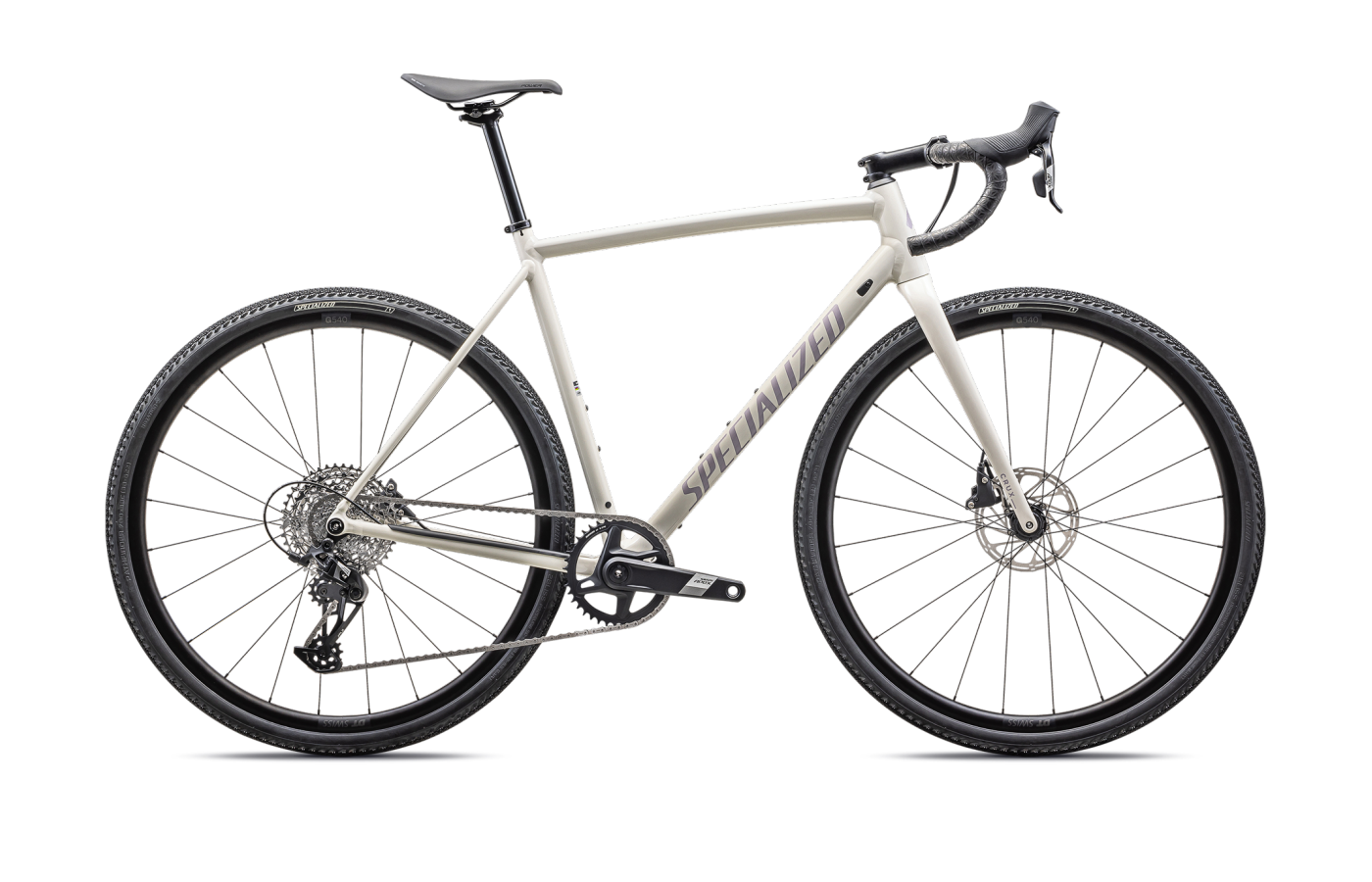
The Specialized Crux is the lightest pure-race gravel frame on the market — even more stripped-down than the Aspero, with a S-Works Tarmac-derived layup. If you want the Aspero's road-bike DNA but lighter, this is it.
Compare →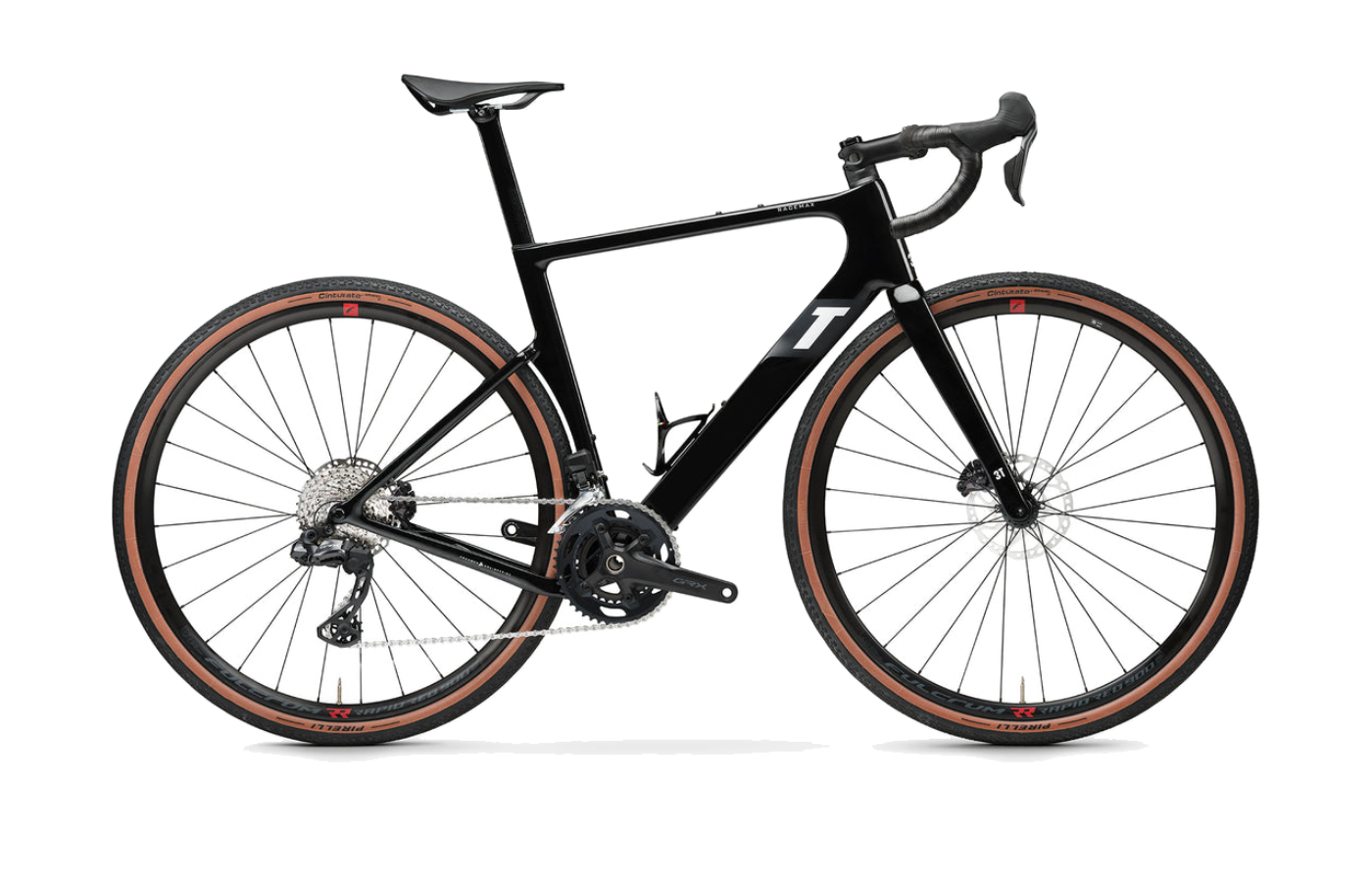
RaceMax
The 3T RaceMax Boost takes the Aspero's speed-first philosophy and adds an aero-tubed frame and integrated cockpit. The most road-like gravel bike in production — best on smooth, fast courses.
Compare →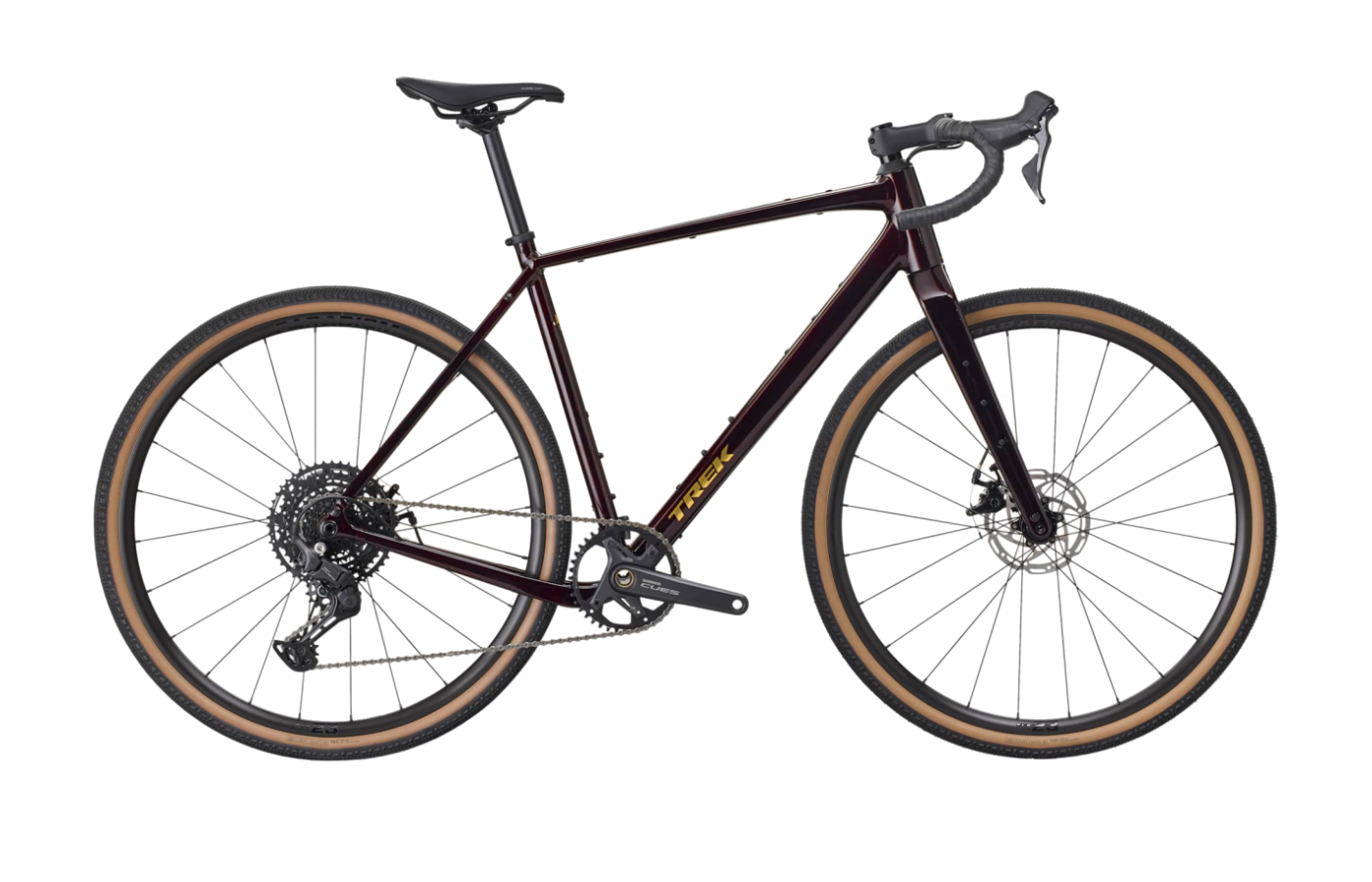
Checkpoint
The Trek Checkpoint covers the same all-day-comfort ground as the Warbird, swapping VRS for an IsoSpeed decoupler and adding even more cargo capacity. A direct alternative if Salsa's value math doesn't work for you.
Compare →