Soloist
vsTarmac
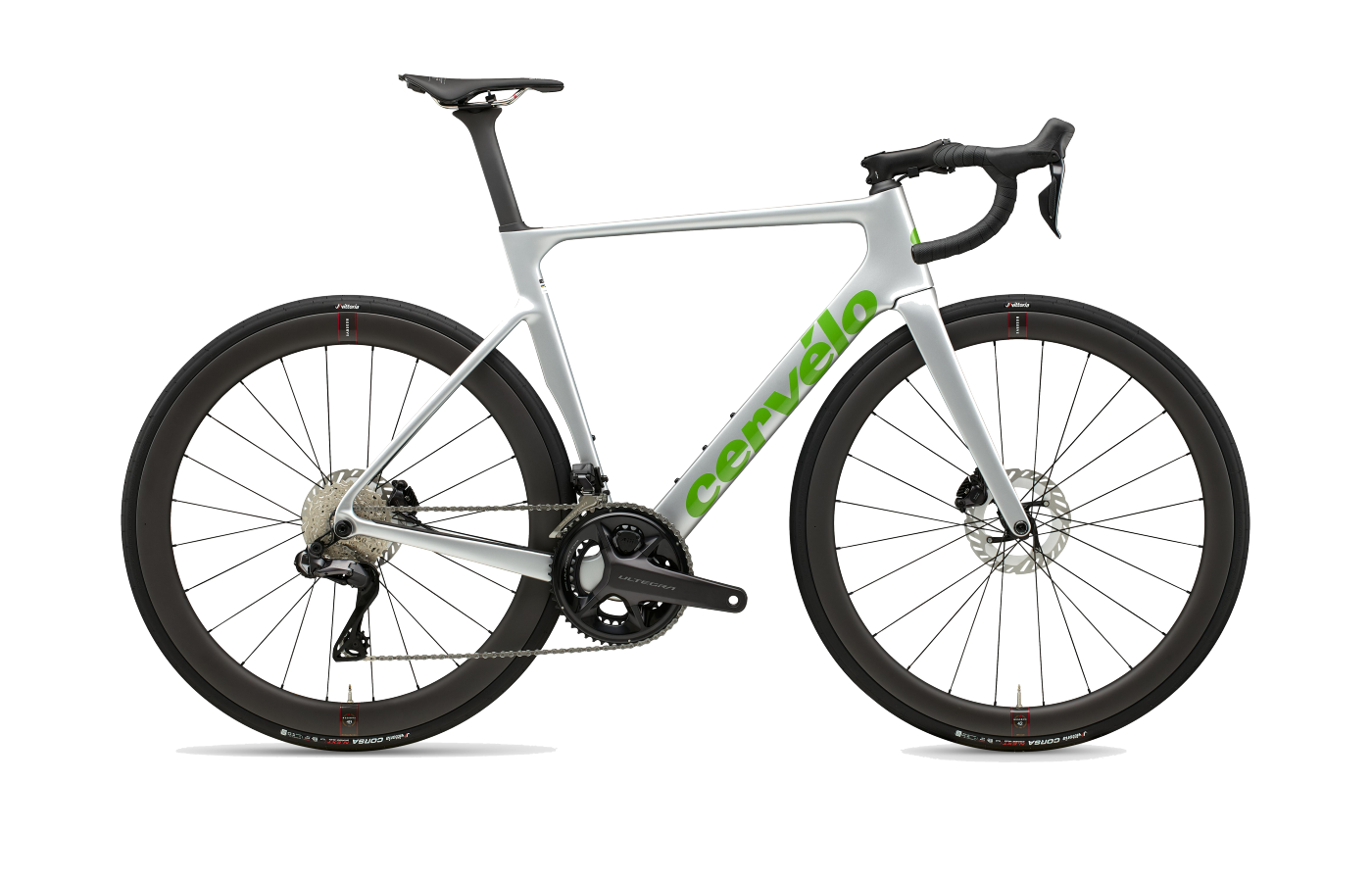
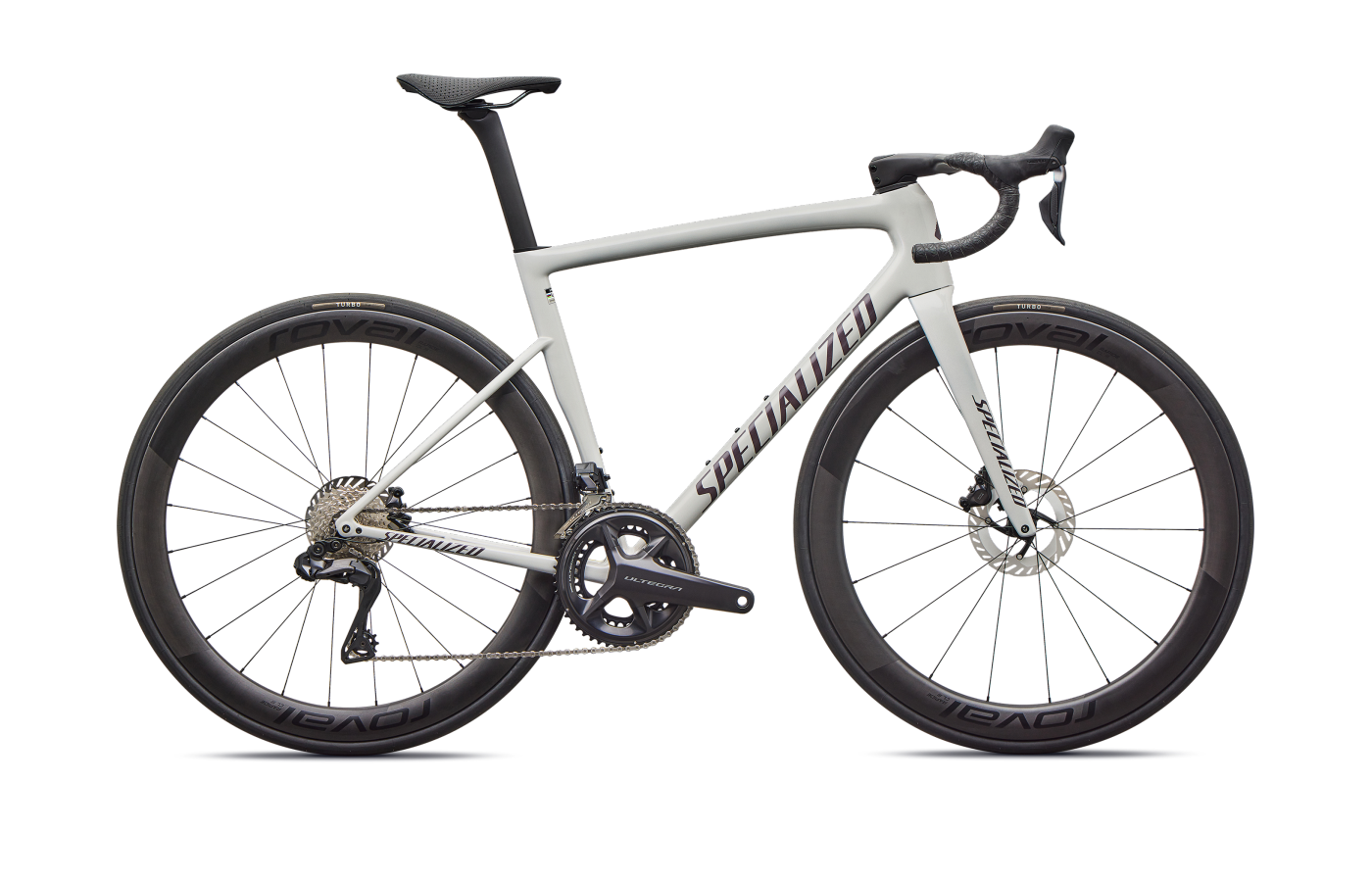
The privateer's pragmatist vs. the WorldTour benchmark.
The Soloist gives every rider the same WorldTour frame at half the ceiling. The Tarmac SL8 sets the all-rounder bar — and prices accordingly.
Soloist
- Same frame, every build — the $3,900 105 spec rides the same WorldTour chassis as the $7,600 flagship.
- Wider tire clearance (34 mm) than the Tarmac, opening up rougher tarmac and light gravel detours.
- Mechanic-friendly — under-stem cable routing and a T47 threaded BB make fit changes a 30-minute job, not a brake bleed.
- Lags pure aero rivals above 40 km/h — Granfondo specifically calls out the gap to the Aeroad and S5.
- Reports of BB and headset creak across multiple long-term reviews (Velo, Cyclist UK, Granfondo).
Tarmac
- Telepathic handling — reviewers across Cyclingnews, Bicycling, and BikeRadar single out the front-end precision as class-leading.
- Aero-bike fast — Specialized claims 209 W at 45 km/h, putting it within 4 W of the Cervélo S5 in published wind-tunnel numbers.
- Sub-7 kg in S-Works trim (claimed 6.67 kg at size 56) — among the lightest aero-capable race bikes you can buy.
- 32 mm tire clearance — narrower than the Soloist and most modern competitors.
- Integrated Roval Rapide cockpit on Pro/S-Works builds is fixed-size — swapping stem length is a ~$600 aftermarket buy.
Editor’s analysis
Both want to be the only race bike you own — they just disagree on who the rider with one race bike actually is.
Cervélo built the Soloist to sit between the all-aero S5 and the climbing-focused R5, then made one decision that defines the whole platform: every Soloist build, from the $3,900 105 spec to the $7,600 Force AXS 1, gets the same frame. Buy the cheapest one and you're riding the same chassis as the rider who paid double. The Tarmac SL8 splits its frames — FACT 12r on the $13,499 S-Works, FACT 10r on the Pro and Expert builds — and the cheapest complete bike still costs $4,699.
On geometry, these two are within a millimeter of each other at size 54. Both run 410 mm chainstays. The Soloist has 540 mm of stack to the Tarmac's 544; reach is 383 vs 384. Head tube angle is 73° on both. The Tarmac's trail is 0.7 mm longer (58 vs 57.3 mm), so on paper the Soloist's steering is a touch quicker, but neither rider is going to feel that without back-to-back laps. The character difference here isn't geometry — it's intent.
The Specialized Tarmac SL8 is the bike pros are racing right now. Reviewers at Cyclingnews called the handling "telepathic." Specialized claims 209 W to hold 45 km/h — within 4 W of a Cervélo S5. The frame is light enough (685 g claimed for S-Works; 780 g for the Pro/Expert FACT 10r) that the bike comes in under 7 kg in S-Works trim, and the Aethos-derived rear triangle gives it more compliance than the SL7. The catch: the integrated Roval Rapide cockpit on top builds locks you into stock stem lengths, and replacing it later runs ~$600 plus labor.
The Cervélo Soloist trades that last 5% of WorldTour sharpness for things you'll actually notice. 34 mm tire clearance vs the Tarmac's 32. Semi-integrated cables that run under the stem instead of through it, so a fit change doesn't mean a brake bleed. A T47 threaded bottom bracket. The Reserve 40/44 wheels on most builds are widely cited as the best stock wheelset at this price. The Soloist is heavier (~7.5 kg in Ultegra Di2 trim vs ~7.25 kg for an SL8 Pro) and reviewers note it lags pure aero bikes above 40 km/h — but it costs less and you can actually live with it.
Where the builds differ.
Comparing our editor's-pick builds side-by-side. Winners highlighted row-by-row — lower price and weight, and the better-spec component, each mark a point.
Build variants & pricing
The Soloist tops out where the Tarmac's middle starts. Same Ultegra Di2 spec, ~$1,150 cheaper on the Cervélo.
Prices are current US MSRP. Cervélo uses the same frame across every Soloist build — the $3,900 105 model is the cheapest path onto a WorldTour-grade chassis in this comparison. Specialized splits its lineup into FACT 12r (S-Works) and FACT 10r (Pro/Expert), so the $4,699 SL8 Comp gets a different (slightly heavier) frame than the $13,499 S-Works.
How they fit, how they steer.
At size 54 the two are within a millimeter on stack and reach. Both share a 73° head tube and 410 mm chainstays. The Soloist's trail is 0.7 mm shorter — quick-handling on paper, indistinguishable in the real world.
Which size should I buy?
Size recommendations based on stack, reach, and effective top tube. Both ranges overlap closely in the middle; the Tarmac extends one size smaller (44) than the Soloist's 48.
→These are starting points. Flexibility, riding style, and preferred position all shift the answer — if you’re between sizes, a professional fit beats a chart.
What the magazines said.
Published reviews from trusted cycling outlets. Click through for the full write-up.
Which one should you buy?
If you want a privateer-friendly race bike you can travel with and work on yourself, get the Soloist. If you want the current WorldTour benchmark and have the budget, get the Tarmac SL8.
Soloist
If you race weekends, travel to events, and would rather change your own stem than book a brake bleed every fit tweak — this is the smart pick. The Reserve wheels and 34 mm tire clearance are stock-spec wins; the same frame on every build means the $3,900 entry point is genuinely the same chassis as the $7,600.
Tarmac
If you want the bike that's currently winning WorldTour stages on every parcours — climb, sprint, time trial — and you can stomach the price ladder, the Tarmac SL8 is the one. The handling is consensus class-leading; it climbs lighter than the Soloist and holds 45 km/h within a few watts of dedicated aero bikes.
Questions buyers actually ask.
Short answers to the things we get emailed about most often.
01Which is faster on flat roads?
The Tarmac SL8, by a small margin. Specialized's published wind-tunnel numbers put the SL8 at 209 W to hold 45 km/h — within 4 W of the Cervélo S5 (205 W). The Soloist sits between the S5 and the lighter R5 in Cervélo's range, and reviewers (Granfondo, Velo) note it lags the S5 by ~190 g of equivalent drag.
In practical terms, on a flat 40 km TT effort the Tarmac is probably worth 15–25 seconds over the Soloist for a 250 W rider. At social-ride pace below 30 km/h, the gap collapses to nothing you'll feel.
02Which climbs better?
The Tarmac SL8, on weight alone. The S-Works frame claims 685 g (size 56), and complete bikes come in around 6.67 kg in top trim. Reviewed Soloist builds typically weigh 7.5–8.1 kg depending on spec.
For a 70 kg rider that's roughly 1% of system weight, which translates to ~10–15 seconds on a 30-minute climb. The Soloist isn't a bad climber — Cyclist's tester praised its power transfer in the Austrian Alps — but reviewers (Granfondo, Cyclonline) consistently note it can't quite match dedicated lightweights like the Tarmac S-Works on sustained ascents.
03What's the maximum tire clearance?
Cervélo Soloist: 34 mm officially. The Reserve wheels run 23 mm internal width, so a 28–30 mm tire often measures 30–31 mm on-bike.
Specialized Tarmac SL8: 32 mm officially. Stock builds ship with 26 or 28 mm S-Works Turbo tires that most reviewers immediately swap for 28–30 mm rubber.
Neither is a gravel bike, but the Soloist's 2 mm extra clearance is meaningful if you ride chip-seal or want occasional dirt-road exploration.
04Is the Soloist really the same frame across every build?
Yes. Cervélo confirms the same carbon layup is used on every Soloist build, from the $3,900 mechanical 105 model to the $7,600 Force AXS 1. Road.cc and BikeRadar both highlight this as a value standout — "even your entry-level bike has a WorldTour quality frameset," per road.cc — and it's a deliberate contrast to how Specialized splits the Tarmac into two carbon grades (FACT 12r on S-Works, FACT 10r on Pro and Expert).
05How serviceable are the cockpits?
The Soloist uses a semi-integrated system: hoses run under the stem rather than through the steerer. Swapping stem length or bar width is a roughly 30-minute job that doesn't require a brake bleed. Multiple reviewers (Velo, Cyclist UK, BikeRadar) call this out as a major ownership advantage.
The Tarmac SL8 Pro and S-Works use a one-piece Roval Rapide integrated cockpit. Stem length is fixed at purchase; changing it later means buying a new unit (~$600) plus labor. The SL8 Expert gets a two-piece cockpit, which is less aero but standard-fit and easy to swap.
06Do they accept mechanical shifting?
Yes — the Soloist does. Cervélo specifically engineered it to retain compatibility with mechanical drivetrains, and the $3,900 entry build ships with mechanical Shimano 105.
The Tarmac SL8 is electronic-only in its current builds — the cheapest spec is the $4,699 SL8 Comp with SRAM Rival eTap AXS. The frame's clean internal routing isn't designed for mechanical cable runs.
07Any known reliability issues?
On the Soloist, multiple reviewers (Velo, Cyclist UK, Granfondo) report creaks from the BBRight T47 bottom bracket and headset. Other long-term testers (In The Know Cycling, ~3,000 miles) report no issues, suggesting it's setup-dependent rather than universal.
On the Tarmac SL8, the most common gripe is the stock 26 mm S-Works Turbo tires being extremely tight on the rims — multiple reviewers (David Arthur, Chris Horner) flag roadside-puncture difficulty. Specialized addressed an SL7-era fork-steerer compression-ring issue on the SL8.
08Which is the smarter buy at the same price?
At the same out-the-door spend, the Soloist usually comes with a tier-better groupset or a tier-better wheelset. The Soloist Ultegra Di2 at $7,350 is the closest match to the Tarmac SL8 Pro Ultegra Di2 at $8,499 — same drivetrain, same shifting, $1,150 cheaper. For that delta you're paying for the Tarmac's sharper handling, lower frame weight, and the integrated Roval cockpit. Whether that's worth $1,150 depends on whether you actually race.
Similar bikes
If your priorities don’t map cleanly onto either of these, one of these adjacent bikes probably fits better.
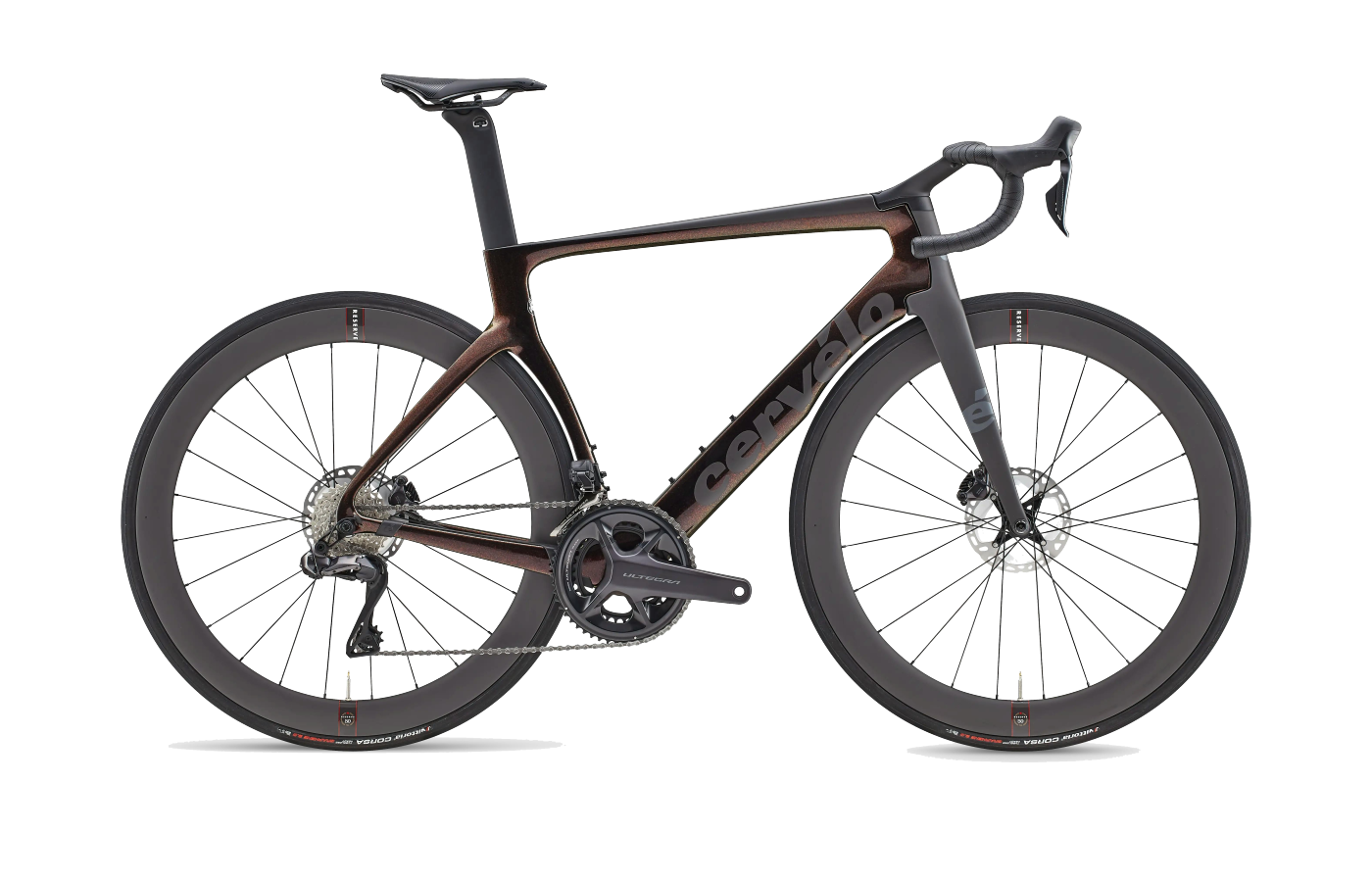
S5
If you find the Soloist isn't aggressive enough, the S5 is the pure aero monster the Soloist borrows its DNA from — deeper tubes, full integration, none of the mechanic-friendly compromises.
Compare →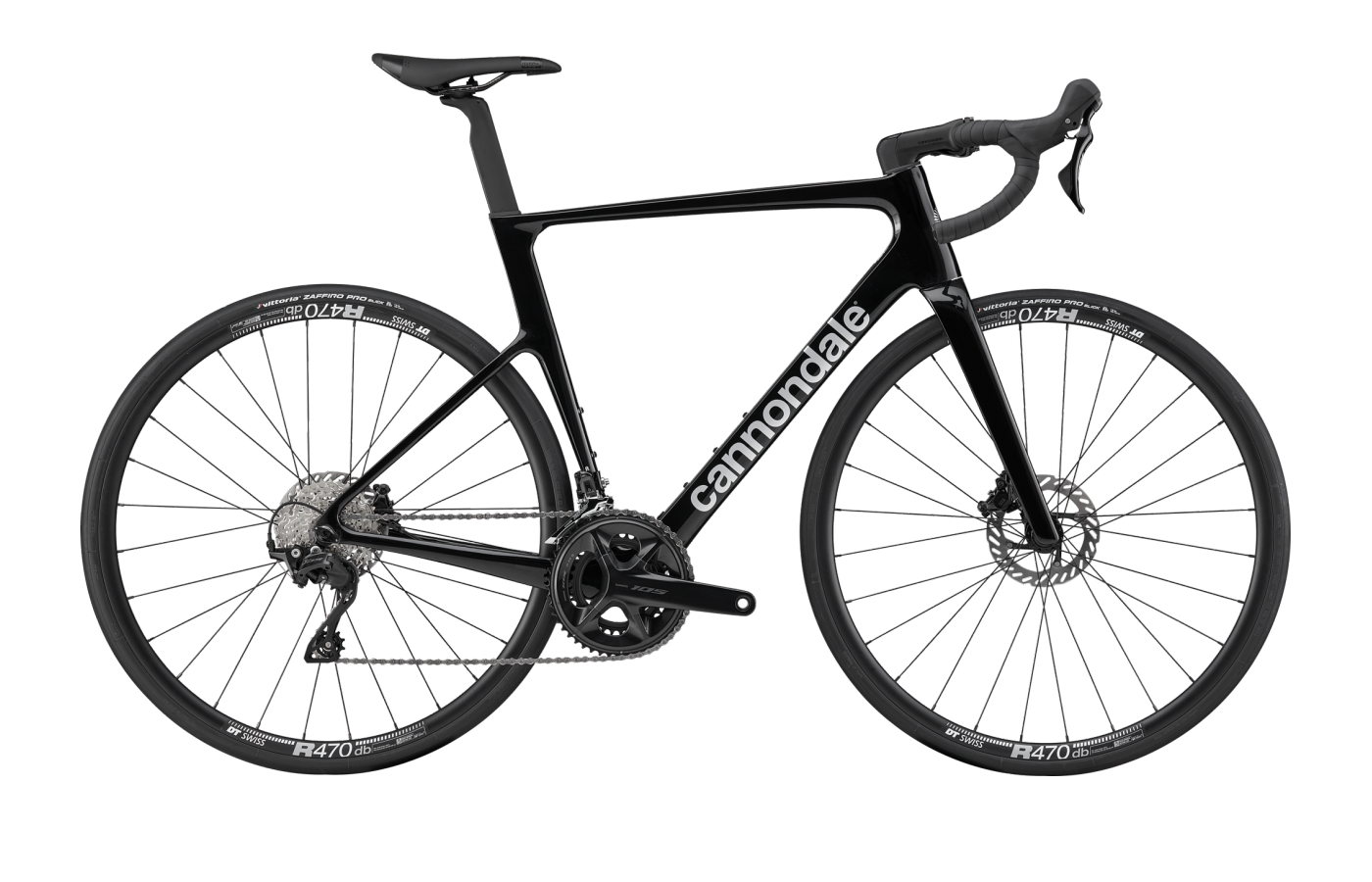
SuperSix EVO
Cannondale's answer to the Tarmac SL8 in the same all-rounder bracket — claimed lighter than the SL8 Pro on the spec sheet and usually a few hundred dollars less at matched tiers.
Compare →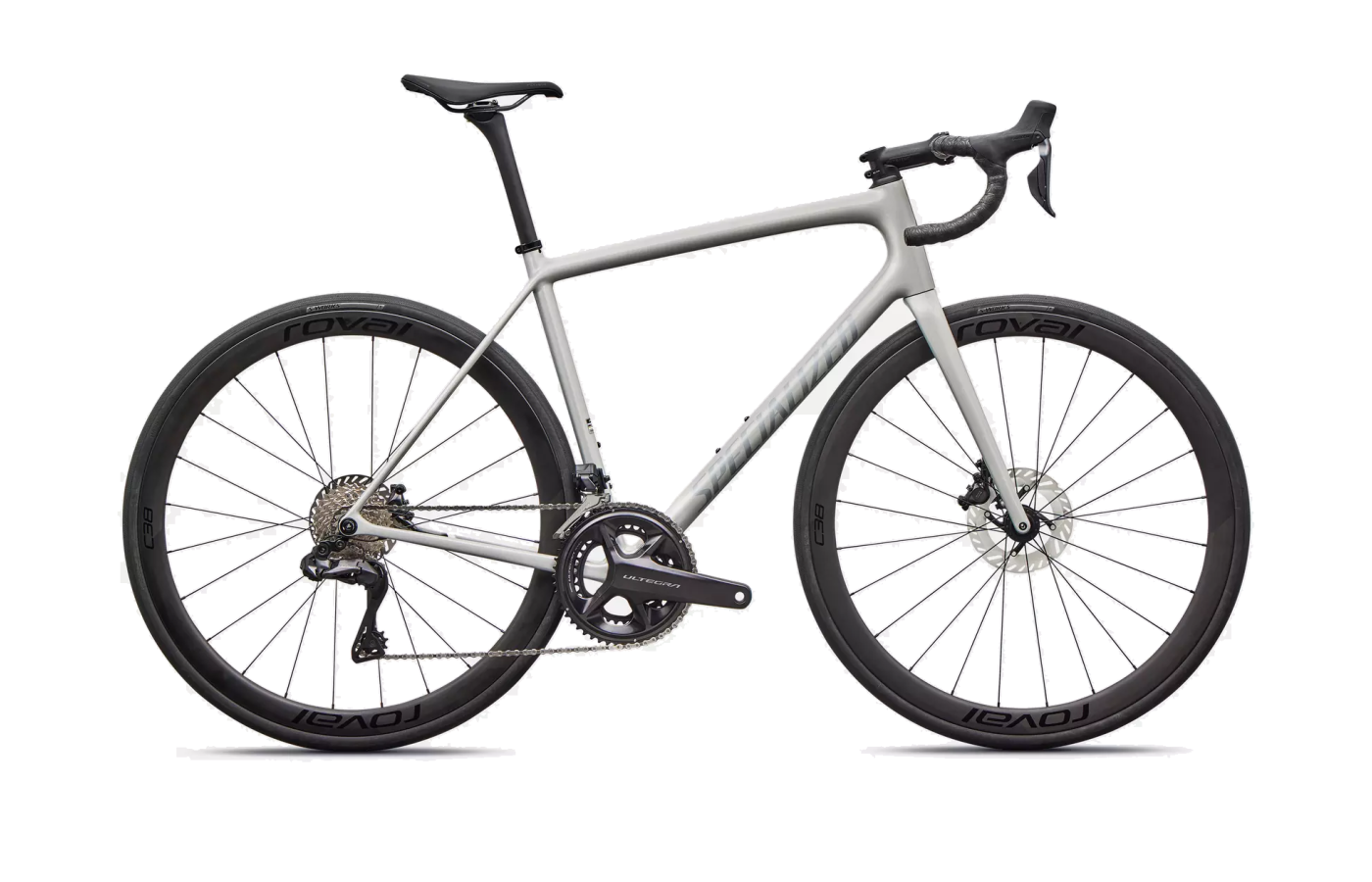
Aethos
Specialized's anti-aero counterpoint — round tubes, no integration, sub-6 kg in flagship trim. If you'll trade watts for grams and ride mostly uphill, this is the Tarmac you want.
Compare →