V4Rs
vsTarmac
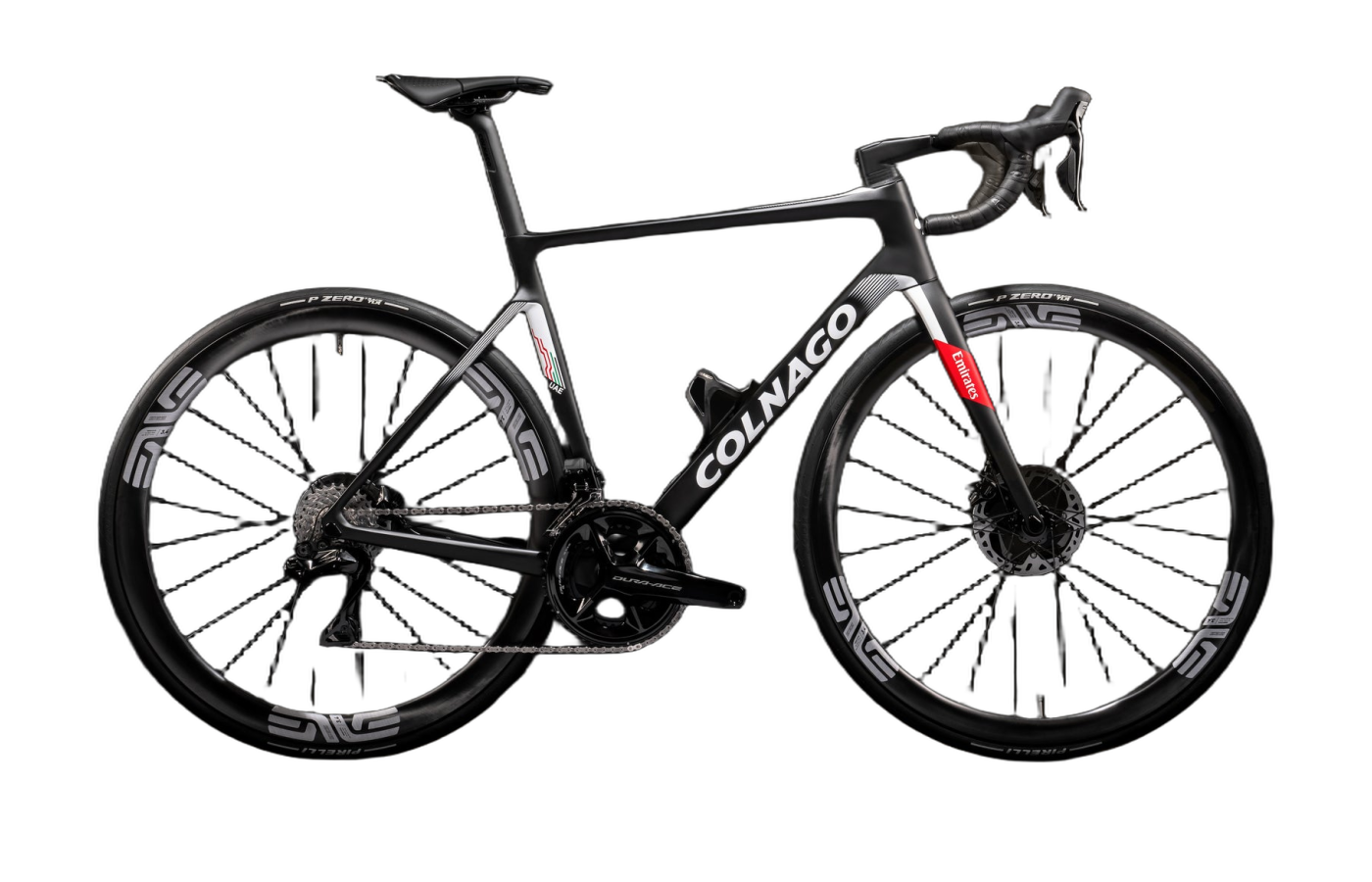
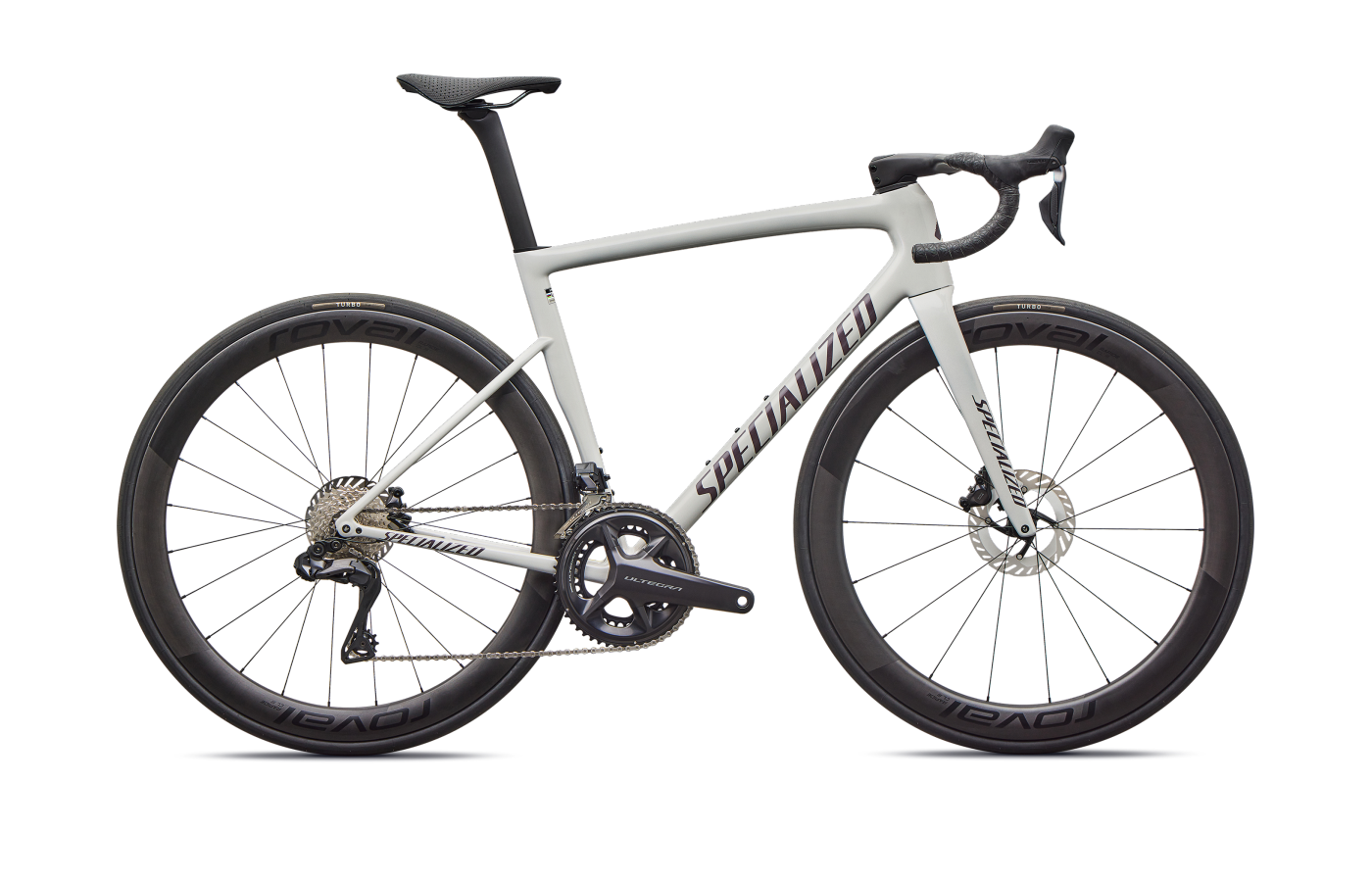
An Italian thoroughbred against a Californian stat-stuffer.
The V4Rs is Pogacar's race weapon — stiff, stable at speed, expensive. The Tarmac is the all-rounder benchmark, lighter and starting at half the price.
V4Rs
- Pro-level stiffness — Road.cc rated power transfer and sprinting 9/10; reviewers call it the most responsive race bike they've tested in years.
- Surefooted at high speed — the slacker head angle and longer trail make descending its standout feature, 'unerringly poised' per BikeRadar.
- T47 threaded BB and 'lifetime' headset — rare maintenance-friendly choices on a fully integrated race frame.
- Aggressive geometry and stiff ride are 'too focused for many amateur riders' (BikeRadar) — most reviewers say it under-delivers below race pace.
- Price floor of $7,000 with no entry-level build; the cheapest spec is roughly the same money as a mid-tier Tarmac.
Tarmac
- Lighter frame — claimed 685 g for the S-Works (FACT 12r), 780 g for the Pro/Expert (FACT 10r), both undercutting the V4Rs.
- All-rounder ride — Specialized claims a 6% comfort improvement over the SL7 plus aero gains on par with the dedicated Venge it replaced.
- Wide build range — SL8 Comp at $4,699 puts the platform in reach long before any V4Rs build is on the table.
- Stock 26 mm S-Works Turbo tires are universally panned as 'lifeless' and too narrow — most riders should plan an immediate swap to 28–30 mm.
- The integrated Roval Rapide cockpit on Pro/S-Works trims is expensive to change post-purchase if your fit isn't dialed.
Editor’s analysis
Both have abandoned the climb-vs-aero binary, but they reach the all-rounder destination from very different starting points.
The V4Rs is the monocoque pro-facing counterpart to Colnago's lugged C-series — built first and foremost for Tadej Pogacar to win Grand Tours. Reviewers describe it as one of the stiffest race frames on the market, with Colnago claiming a 4% jump in sprint stiffness over the V3Rs. That rigidity translates directly into power — Road.cc rated its acceleration and sprinting 9/10 — but it also means the V4Rs only really comes alive when you're pinned. Cycling News's verdict was blunt: it 'needs to be ridden at pro speeds to be enjoyed.'
The Tarmac SL8 takes the opposite approach. The S-Works frame drops to a claimed 685 g (size 56), Specialized killed off the dedicated Venge aero bike to claim the SL8 is faster and lighter than anything in their catalog, and the geometry is the same race fit they've refined since the SL7. Where the V4Rs is a single-purpose tool, the Tarmac is engineered to win a Saturday crit and then carry you through a 100-mile Sunday gran fondo without battering you.
The fit data tells the same story. At the sizes that fit a 5'8" rider — V4Rs 485, Tarmac 54 — the V4Rs runs a 71.5-degree head tube against the Tarmac's 73.0. That's a substantial 1.5-degree gap that lengthens the V4Rs's trail figure and stabilizes it at 50 mph descents, while the Tarmac stays nimble and reactive in the low-speed cornering that defines crit racing and twisty club rides. Chainstays are 408 mm on the V4Rs vs 410 mm on the Tarmac — both short and snappy, with the Colnago a hair tighter.
Put another way: the V4Rs is the bike you buy when you race and you want pro-level pedigree on every climb and descent. The Tarmac is the bike you buy when you want one race bike that doesn't punish you on the days you're not racing — at a price floor that starts $2,300 below the cheapest V4Rs.
Where the builds differ.
Comparing our editor's-pick builds side-by-side. Winners highlighted row-by-row — lower price and weight, and the better-spec component, each mark a point.
Build variants & pricing
The V4Rs lineup is short and pricey ($7k–$12.5k); the Tarmac spans nearly $9k from Comp to S-Works, with multiple Force AXS and Ultegra Di2 builds in the middle.
Editor's picks tier-matched at Shimano Ultegra Di2 — Colnago at $8,500, Tarmac SL8 Pro at $8,499. Prices are current US MSRP; international pricing varies. Colnago does not offer a 105 or Rival-grade V4Rs.
How they fit, how they steer.
Sized 485 (Colnago) and 54 (Specialized). The Tarmac sits 5 mm taller in the stack with effectively identical reach, but its 73.0-degree head angle is 1.5 degrees steeper than the V4Rs's 71.5 — that's the source of the Tarmac's nimble feel and the V4Rs's high-speed stability.
Which size should I buy?
Size recommendations are based on stack, reach, and effective top tube. Colnago uses numeric millimeter sizes; Specialized uses traditional 44–61 sizing. Both ranges overlap closely in the middle.
→These are starting points. Flexibility, riding style, and preferred position all shift the answer — if you’re between sizes, a professional fit beats a chart.
What the magazines said.
Published reviews from trusted cycling outlets. Click through for the full write-up.
Which one should you buy?
If you race hard and live for descents, get the V4Rs. If you want one bike for everything from crits to centuries, get the Tarmac.
V4Rs
If your weekly riding is structured around intervals, races, and fast group rides — and you want pro-level pedigree under you — the V4Rs delivers stiffness, descending confidence, and a Tour-winning palmares. Just know it under-delivers at endurance pace.
Tarmac
If you want one bike that does crits, climbs, centuries, and the occasional rough back road — and a tier of build choice that scales from $4.7k to $13.5k — the Tarmac is still the benchmark. Lighter, cheaper, more versatile.
Questions buyers actually ask.
Short answers to the things we get emailed about most often.
01Which is lighter?
The Tarmac SL8, by a meaningful margin. Specialized claims 685 g for the S-Works frame (size 56, FACT 12r) and 780 g for the Pro/Expert FACT 10r — both well under the Colnago V4Rs's published 798 g unpainted frame weight (size 485).
In complete-bike trim, S-Works builds come in around 6.6–6.8 kg, while reviewers consistently weighed V4Rs builds at 7.15–7.24 kg. That's roughly 400–600 g of bike weight, which on a 30-minute climb at 4 W/kg equals somewhere in the neighborhood of 8–12 seconds for a 70 kg rider.
02Which descends better?
The V4Rs, by reviewer consensus. Its 71.5-degree head tube angle (size 485) is notably slacker than the Tarmac's 73.0 (size 54), producing a longer trail figure that BikeRadar calls 'unerringly poised' and Road.cc describes as the bike's 'favourite feature' on long, fast descents.
The Tarmac is no slouch — Bicycling found it 'unflinched' at 50 mph — but it leans nimble rather than planted. The trade-off: the V4Rs feels 'a little dulled' (Cycling News) on tight low-speed corners; the Tarmac is sharper there.
03What's the maximum tire clearance?
Colnago V4Rs: 30 mm officially per Colnago, though several reviewers (and Colnago's own marketing) cite 32 mm with current builds.
Specialized Tarmac SL8: 32 mm officially.
Neither is an all-road or gravel bike. Builds on both sides ship with 26 or 28 mm tires from the factory. If you want clearance for chip-seal back roads or occasional dirt, the Tarmac edges it — but only just.
04Which is the smarter tier-matched pick?
Our editor's picks tier-match at Shimano Ultegra Di2: the V4Rs Shimano Ultegra Di2 12s at $8,500 vs the Tarmac SL8 Pro Ultegra Di2 at $8,499. Same drivetrain tier, near-identical price, both electronic. That keeps the spec comparison apples-to-apples.
Go one tier up and you're looking at the V4Rs Dura-Ace Di2 ($12,000) vs the S-Works Tarmac SL8 ($13,499) — same story, different price band.
05Do both come with a power meter?
Most Tarmac SL8 builds — including S-Works, Pro, and Expert — ship with a power meter as standard (4iiii on Shimano, Quarq on SRAM). The V4Rs is less consistent: power meter inclusion varies by build and region, and reviewers (Cyclist Magazine in particular) called out the included Dura-Ace power meter as a notable value add specifically because it isn't always there.
If bundled power matters to your purchase calculus, the Tarmac is the safer pick.
06How serviceable are the integrated cockpits?
Both use one-piece integrated cockpits with internal cable routing — the Colnago CC.01 on the V4Rs and the Roval Rapide on Pro/S-Works Tarmacs. Changing stem length on either means buying a new unit and re-bleeding hoses.
The V4Rs has one practical edge: its CC.01 mounts to a round steerer, so swapping to a standard two-piece bar and stem is straightforward if the integrated fit is wrong. The Roval Rapide on the Tarmac is harder to abandon — Cyclingnews called the lack of pre-purchase customization a 'pain' and several reviewers flagged $600+ stem swaps as a real cost.
07Why is the V4Rs so much more expensive?
Two reasons. First, Colnago has no entry-level build — the cheapest V4Rs is $7,000 (Force eTAP AXS), and the lineup tops out at $12,500. Specialized scales the SL8 from $4,699 (Comp) to $13,499 (S-Works), so there's a real budget on-ramp.
Second, the V4Rs commands a 'premium badge' (Road.cc) — the Italian heritage and Pogacar association are part of what you're paying for. Reviewers are unanimous that the Tarmac delivers more bike per dollar at every comparable price point; the V4Rs sells on character and pedigree.
08Which has the more aggressive race fit?
Closer than you'd think. At the fit-picked sizes for a 5'8" rider, the V4Rs (485) has a 539 mm stack and 383 mm reach. The Tarmac (54) has a 544 mm stack and 384 mm reach. The Colnago is 5 mm lower; reach is effectively identical.
The handling character differs more than the fit numbers. The V4Rs's slacker 71.5-degree head angle plus longer 591 mm front-center make it feel planted at speed; the Tarmac's steeper 73.0-degree angle and shorter front-center make it feel quicker and more reactive. Both demand decent core strength and flexibility for long days in the drops.
Similar bikes
If your priorities don’t map cleanly onto either of these, one of these adjacent bikes probably fits better.
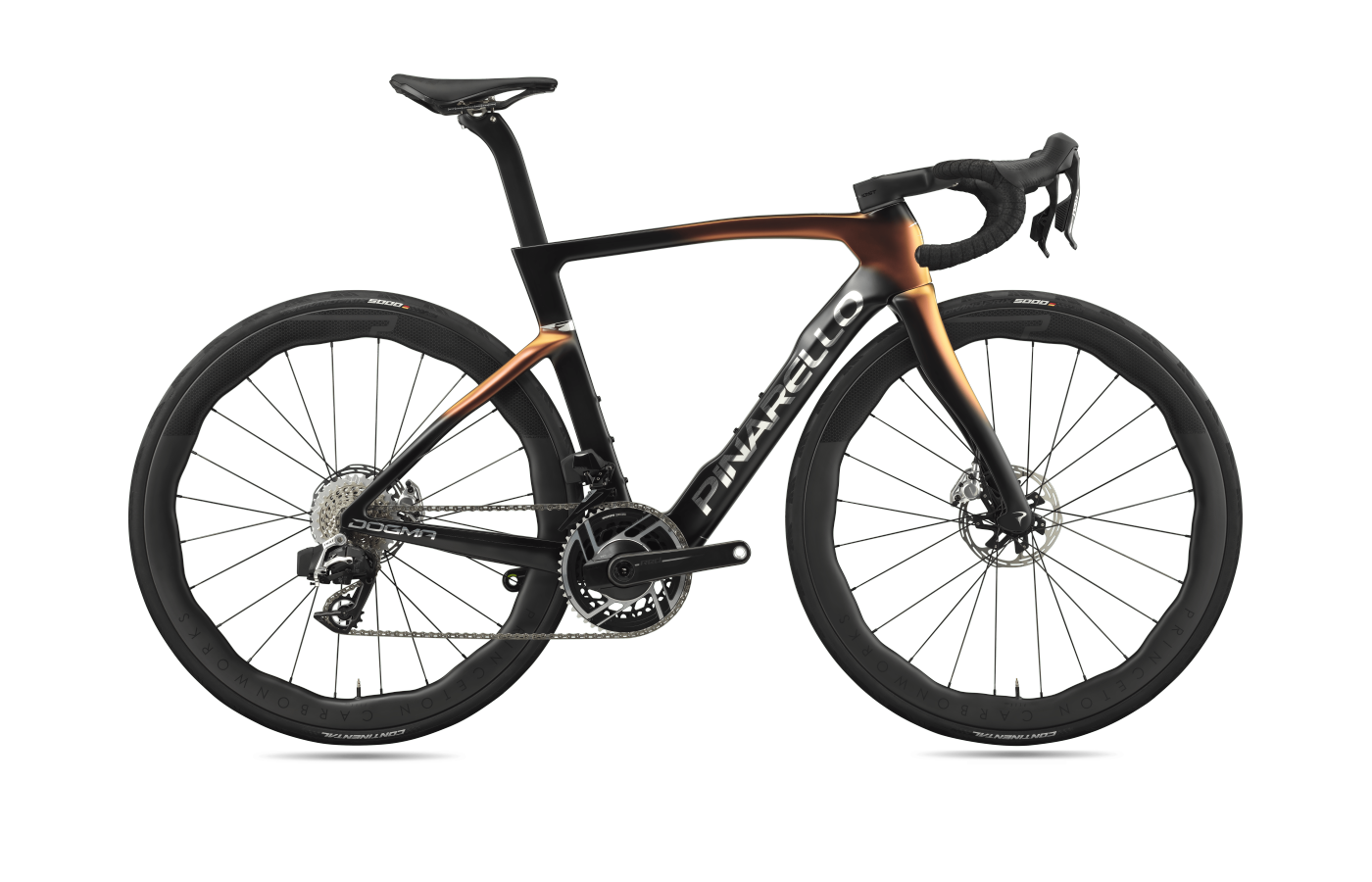
Dogma F
The other high-prestige Italian. Pinarello takes the same balanced-monocoque path as the V4Rs — no separate climb and aero models — at an even higher price. If the V4Rs's pedigree appeals but you want a different team replica.
Compare →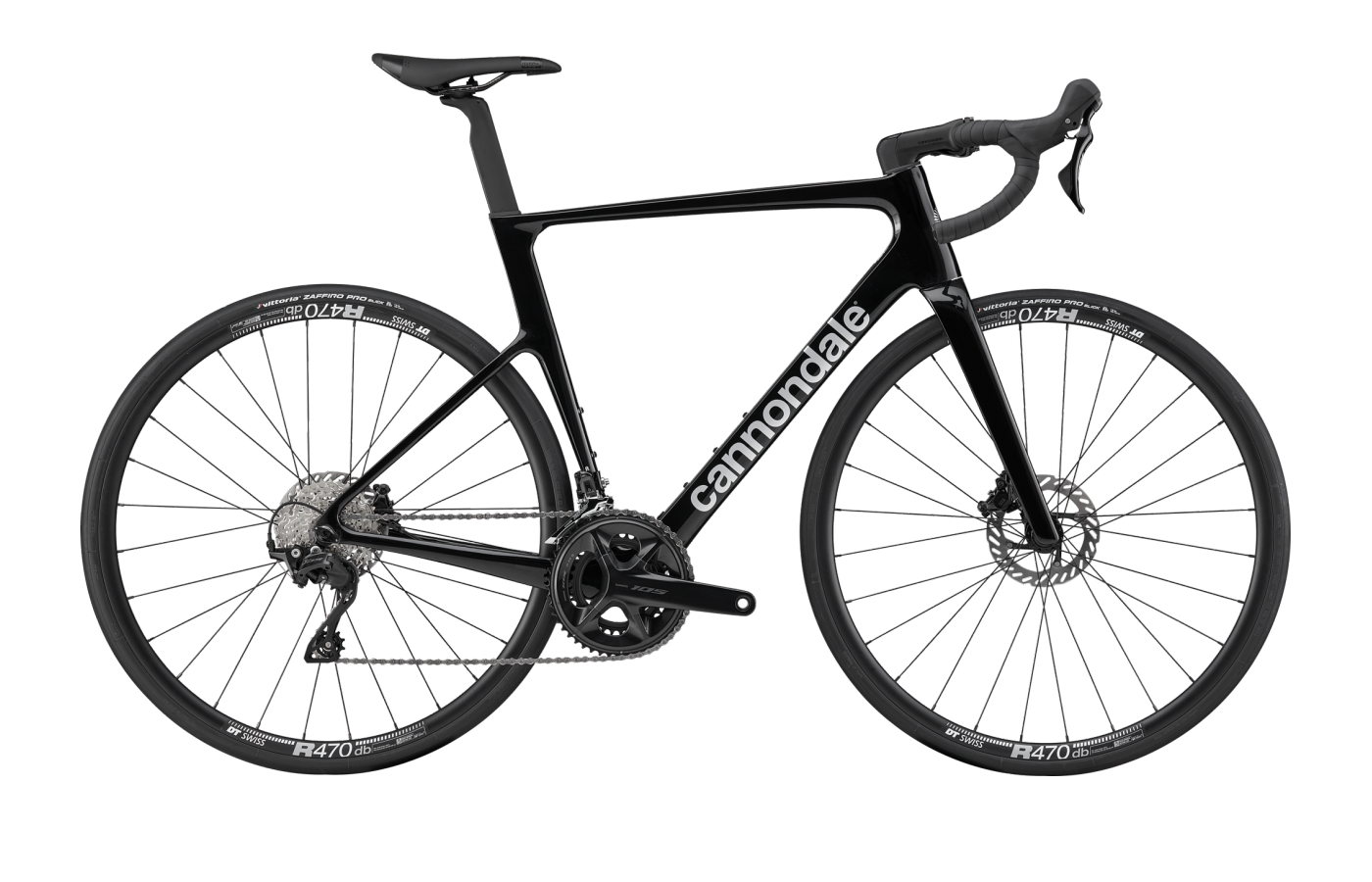
SuperSix EVO
The most direct Tarmac rival. Cannondale's all-rounder is often called slightly stiffer and more aggressive than the SL8, with a similar weight target — and a frameset price that's notably more accessible.
Compare →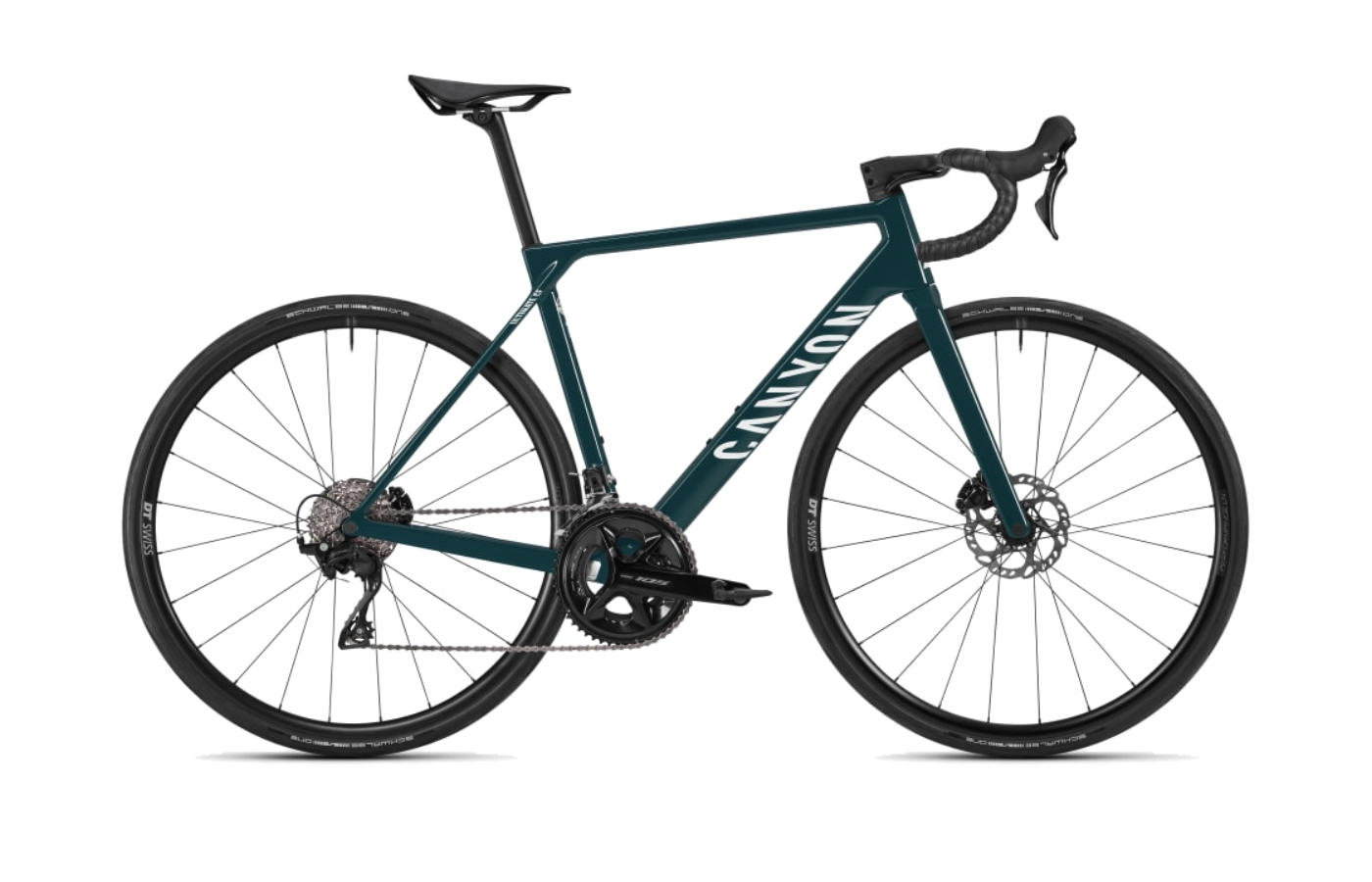
Ultimate
Same all-rounder philosophy as the Tarmac at roughly direct-to-consumer prices. The Canyon catch is no local dealer and no demo — best if you already know your fit.
Compare →