Y1Rs
vsTarmac
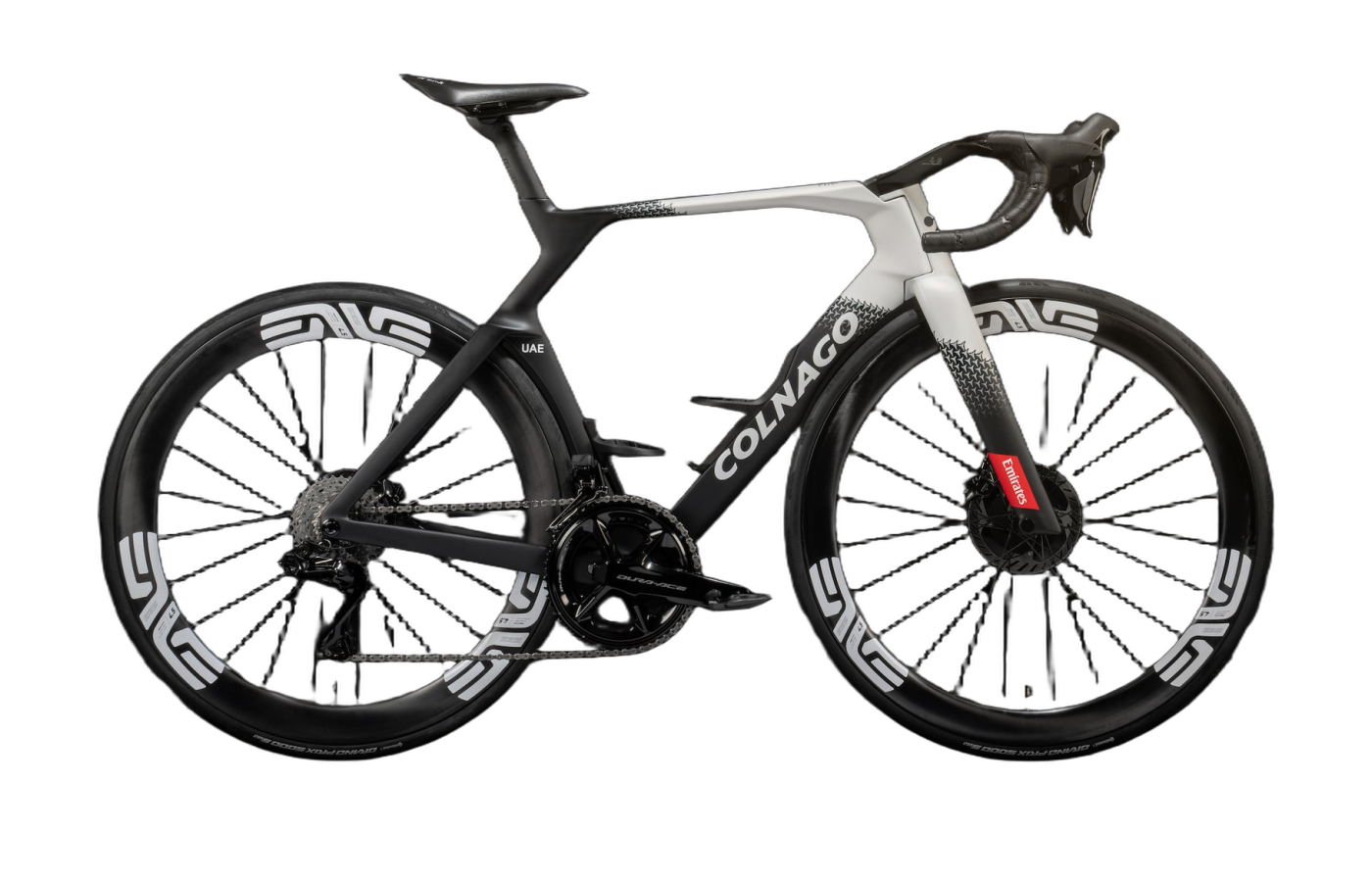
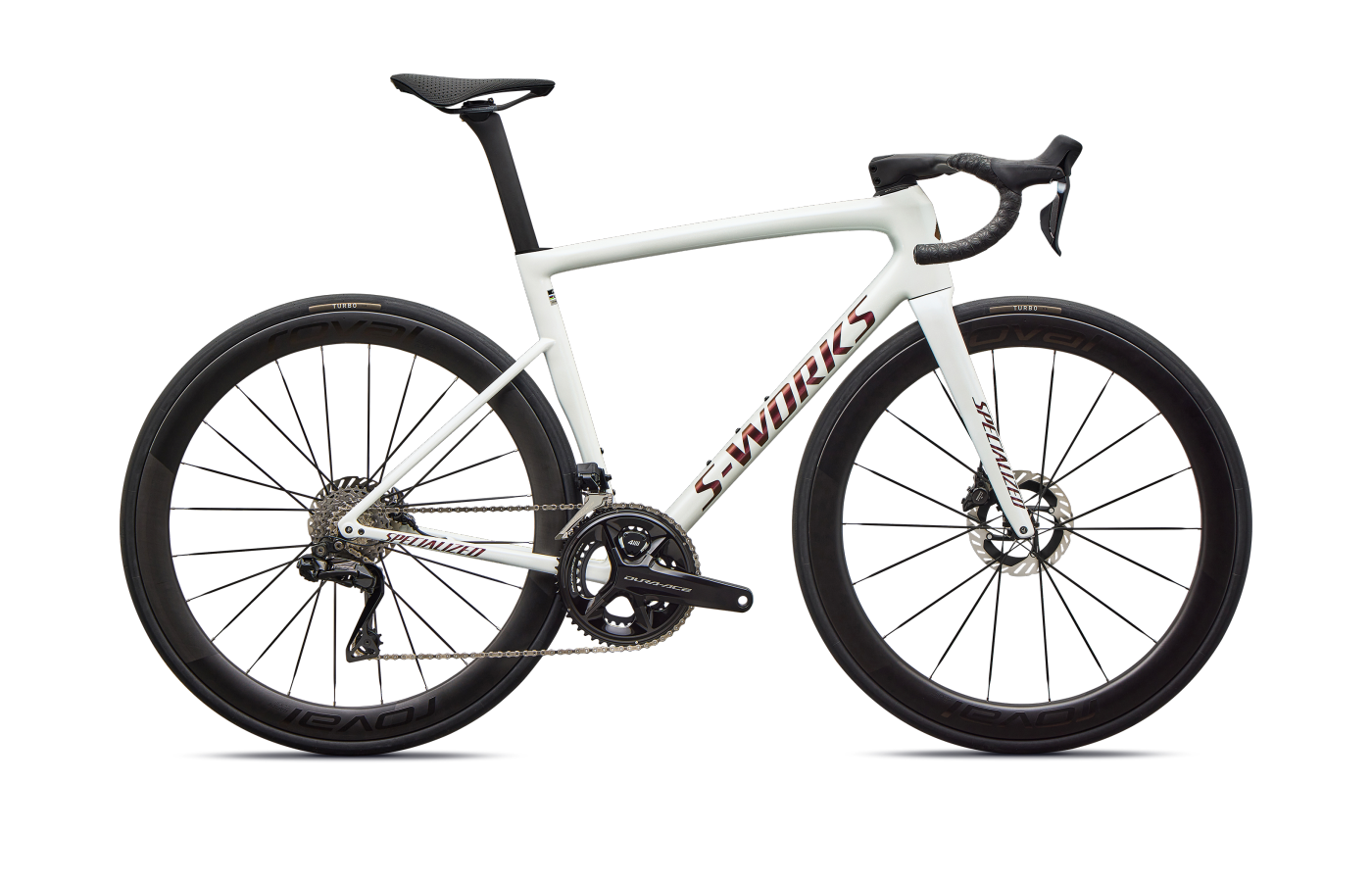
An exotic aero specialist meets the all-rounder benchmark.
The Y1Rs is a $17k WorldTour halo built for breakaways. The Tarmac SL8 is the bike everyone else races — lighter, cheaper, and ruthlessly versatile.
Y1Rs
- Among the fastest aero frames tested — Cyclingnews wind-tunnel CdA puts it just behind the Cervélo S5 and ahead of most of the field.
- Improved agility over previous Colnagos — 0.5° steeper HTA, 2.5 mm less trail, and 10 mm shorter front-center than the V5Rs.
- Halo-bike presence — Y-shaped cockpit, bayonet fork, and Pogačar's race wins make it the most distinctive silhouette in the segment.
- Stratospheric price (from $16,250) without a power meter on Dura-Ace builds.
- Soft front-end feedback under hard braking and full sprints — reviewers describe a perceived disconnect between rear and front stiffness.
Tarmac
- Lighter complete bike — the S-Works SL8 frame is a claimed 685 g (size 56), with complete S-Works builds at 6.67 kg.
- Power meter standard on every build — 4iiii or Quarq comes stock from Comp through S-Works.
- Wide build range from $4,699 — SL8 Comp, Expert, Pro, and S-Works all share the same race geometry.
- Stock 26 mm S-Works Turbo tires are universally panned and almost everyone swaps to 28–30 mm.
- Integrated Roval Rapide cockpit on S-Works/Pro builds limits stem-length adjustments — a ~$450 swap if your fit doesn't match stock.
Editor’s analysis
One bike was designed to win Tour stages for Tadej Pogačar. The other was designed to win you, the actual customer, over.
Both of these are Dura-Ace Di2 race bikes with deep carbon wheels and integrated cockpits, and on a paint-by-numbers spec sheet they look like rivals. They aren't. The Y1Rs is Colnago's first proper aero bike since 2017, built around a UAE Team Emirates brief and priced like an exotic. The Tarmac SL8 is the calculated result of merging the lightweight Aethos and the aero Venge into a single platform that has to sell at every tier from $4,699 to $13,499.
The Y1Rs is the sharper aero tool above 35 km/h. Cyclingnews wind-tunnel data put it just behind the Cervélo S5 at the front of the aero pack, and GCN measured it consistently 0.2 km/h faster than Colnago's own V5Rs at 400 watts. It also goes harder on the wallet — dearer than its WorldTour rivals, often without a power meter on Dura-Ace builds, and frequently shipping with stock Vision wheels you'll want to upgrade. Reviewers were near-unanimous that it's a pro-only proposition.
The Tarmac SL8 wins almost everywhere else. Complete S-Works builds come in around 7.18 kg vs roughly 7.2–7.7 kg for tested Y1Rs builds, the geometry is the SL7's race-proven 73.5° / 410 mm-stay package that reviewers consistently call "telepathic," and the bike is competitive with dedicated aero rigs in the tunnel — 209 W at 45 km/h vs the S5's 205 W. You also get a power meter as standard at every tier, which the Y1Rs doesn't manage at $17k.
Where the Y1Rs has the edge is character. The Y-shaped cockpit, the bayonet fork, the silhouette — it's a bike that announces itself before it moves. Reviewers praised its "darting agility" and aero composure on flowing descents, while flagging a softer front end under hard braking and sprints. The Tarmac doesn't have that drama, and that's the point: it's the bike you buy when you want to go fast everywhere, not the bike you buy when you want to be Pogačar.
Where the builds differ.
Comparing our editor's-pick builds side-by-side. Winners highlighted row-by-row — lower price and weight, and the better-spec component, each mark a point.
Build variants & pricing
Both platforms compared on Dura-Ace Di2 trim. The Y1Rs only sells in flagship-tier builds; the Tarmac SL8 spans Comp through S-Works.
Prices are current US MSRP. Colnago does not offer a mid-tier Ultegra Di2, Force AXS, or 105 build on the Y1Rs — the cheapest way onto the platform is the SRAM Red AXS build at $16,250. If your budget is below $13k, the Tarmac SL8 is the only one of these two you can buy.
How they fit, how they steer.
Y1Rs in size M vs Tarmac in 54 — the fit-picked sizes for each. The Colnago sits 4 mm lower in stack with 2 mm more reach, and runs 2 mm shorter chainstays (408 vs 410) at the same 73° head tube angle.
Which size should I buy?
Size recommendations based on stack, reach, and effective top tube. The Tarmac offers a much wider size range (44 through 61); the Y1Rs covers XS through L only.
→These are starting points. Flexibility, riding style, and preferred position all shift the answer — if you’re between sizes, a professional fit beats a chart.
What the magazines said.
Published reviews from trusted cycling outlets. Click through for the full write-up.
Which one should you buy?
If you want the most exotic aero bike in the WorldTour and money is not the constraint, get the Y1Rs. For everyone else, the Tarmac SL8 is the better bike.
Y1Rs
If you want a bike that stops conversation at the cafe, ride to the rhythm of breakaway watts on flat-to-rolling roads, and treat $17k as the entry fee to a piece of WorldTour hardware — this is the only bike on the market that hits all three. Just don't expect it to make sense on a spreadsheet.
Tarmac
If you want one race bike to cover crits, gran fondos, climbing days, and group rides — with a power meter standard, a build for every budget from $4.7k up, and handling that reviewers consistently call the segment benchmark — the SL8 is the obvious pick. It's the rare flagship that's also the smart buy.
Questions buyers actually ask.
Short answers to the things we get emailed about most often.
01Which is faster on flat roads?
The Y1Rs, marginally. Cyclingnews' wind-tunnel test put the Colnago at a CdA of 0.3363 m² with a rider at 40 km/h — right behind the Cervélo S5 and Factor Prototype, and ahead of most of the aero field. The Tarmac SL8 needs about 209 W at 45 km/h vs the S5's 205 W in the same external tests, so the Y1Rs likely sits a watt or two off the Tarmac at race speed.
In practice the gap is small enough that wheel choice and tire pressure matter more. Stock Y1Rs builds with Vision SC45 wheels give back a chunk of the advantage; the version Pogačar rides uses ENVE SES 4.5s.
02Which climbs better?
The Tarmac SL8. The S-Works frame is a claimed 685 g (size 56), and complete S-Works builds come in around 6.67–7.18 kg vs the Y1Rs at 7.2 kg in size M (and 7.68–7.89 kg as tested in size 56). GCN estimated that on Alpe d'Huez at Pogačar's pace, the lighter V5Rs would be about 20 seconds faster than the Y1Rs — the Tarmac SL8 is closer in weight to the V5Rs than the Y1Rs is.
Reviewers also consistently describe the SL8 as "dancing uphill," while the Y1Rs is acknowledged as a flat-to-rolling specialist that feels heavier when the road tips up.
03What's the maximum tire clearance?
Both frames are officially rated to 32 mm. Reviewers note the Y1Rs is comfortable at 30 mm and would benefit from running closer to the max for its preferred firm-pavement use case. The Tarmac SL8 happily fits a true 30 mm tire and most riders swap the stock 26 mm S-Works Turbos for 28–30 mm immediately.
Neither is a gravel bike. For chip-seal and rougher, look at a Roubaix or Aspero.
04Do these come with power meters?
Tarmac SL8: yes, every build. Comp and Expert ship with SRAM Rival or Force E1 power meters; Pro and S-Works come with Quarq (SRAM) or 4iiii (Shimano) units stock.
Colnago Y1Rs: not on the Dura-Ace build. Reviewers flagged this as one of the bike's most criticized omissions at its price point — the standard Dura-Ace build ships without a power meter, while bikes costing a third as much include one. The Campagnolo and SRAM Red builds also don't include one as standard.
05How serviceable are the integrated cockpits?
The Y1Rs CC.Y1 cockpit is a unique Y-shape — distinctive but polarizing. Reviewers flagged that the wide center section can hit your thighs during hard efforts, that the lack of a crossbar limits hand positions on the tops, and that the bayonet fork combined with this cockpit is part of what gives the front end its softer feel.
The Tarmac's Roval Rapide one-piece cockpit (on Pro/S-Works) routes hoses internally and changing stem length means buying a new ~$450 unit. The Expert and Comp builds run a two-piece bar and stem instead, which is less aero but much friendlier to fit changes.
06Why is the Y1Rs so much more expensive?
Three reasons. First, scarcity — production is small and demand from UAE-team replica buyers keeps prices high. Second, Colnago positions the Y1Rs as a halo product rather than a volume seller, so there's no Ultegra/105 trickle-down to amortize the platform. Third, frankly, the Italian-prestige tax: the Y1Rs costs more than a Cervélo S5 or S-Works Tarmac with comparable parts.
Reviewers were blunt that the Y1Rs is "not a consumer bike" and that you could buy a top-spec S-Works Tarmac SL8 with change to spare for the price of the Colnago.
07Are they both compatible with mechanical shifting?
No. Both frames are wireless/electronic-only — they lack the cable stops and internal routing for mechanical derailleurs. Available builds are Dura-Ace Di2, Ultegra Di2 (Tarmac only), SRAM Red AXS, SRAM Force/Rival AXS (Tarmac only), and Campagnolo Super Record WRL (Y1Rs only).
08Which holds its resale value better?
The Y1Rs, almost certainly. Production is tiny, the silhouette is unmistakable, and Pogačar's race wins keep demand strong on the used market. Tarmac SL8s are common enough that depreciation tracks the broader S-Works pattern — 30–40% over three years on the used market.
That said, the Y1Rs's higher floor means you're tying up far more capital up-front. A used S-Works Tarmac SL8 in good condition is one of the best-value ways to get into a current-generation race bike.
Similar bikes
If your priorities don’t map cleanly onto either of these, one of these adjacent bikes probably fits better.
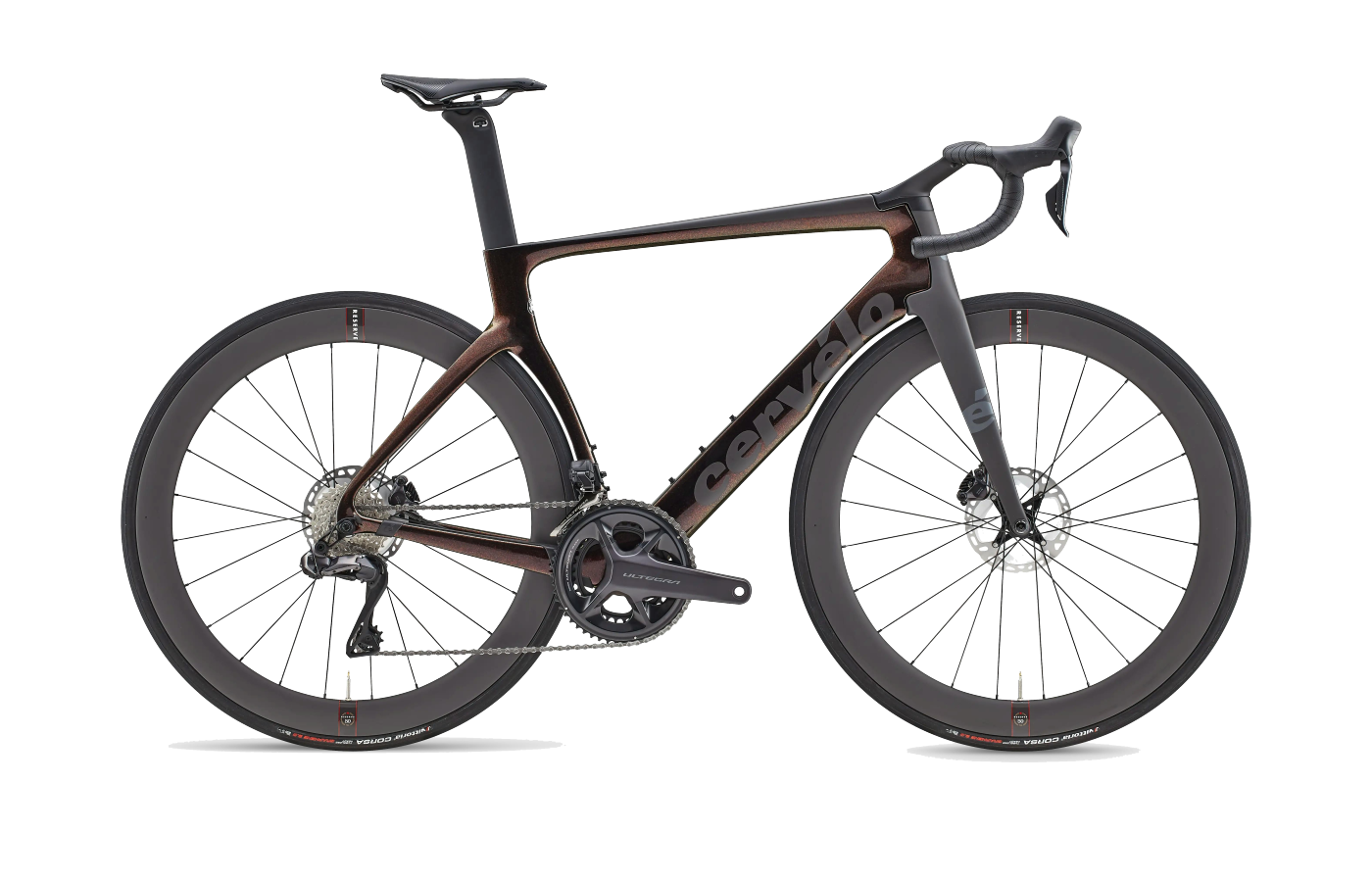
S5
The Y1Rs's closest aero rival — a measurably stiffer, sprinter-focused platform with the most-integrated cockpit in the segment, and several thousand dollars cheaper at the top trim.
Compare →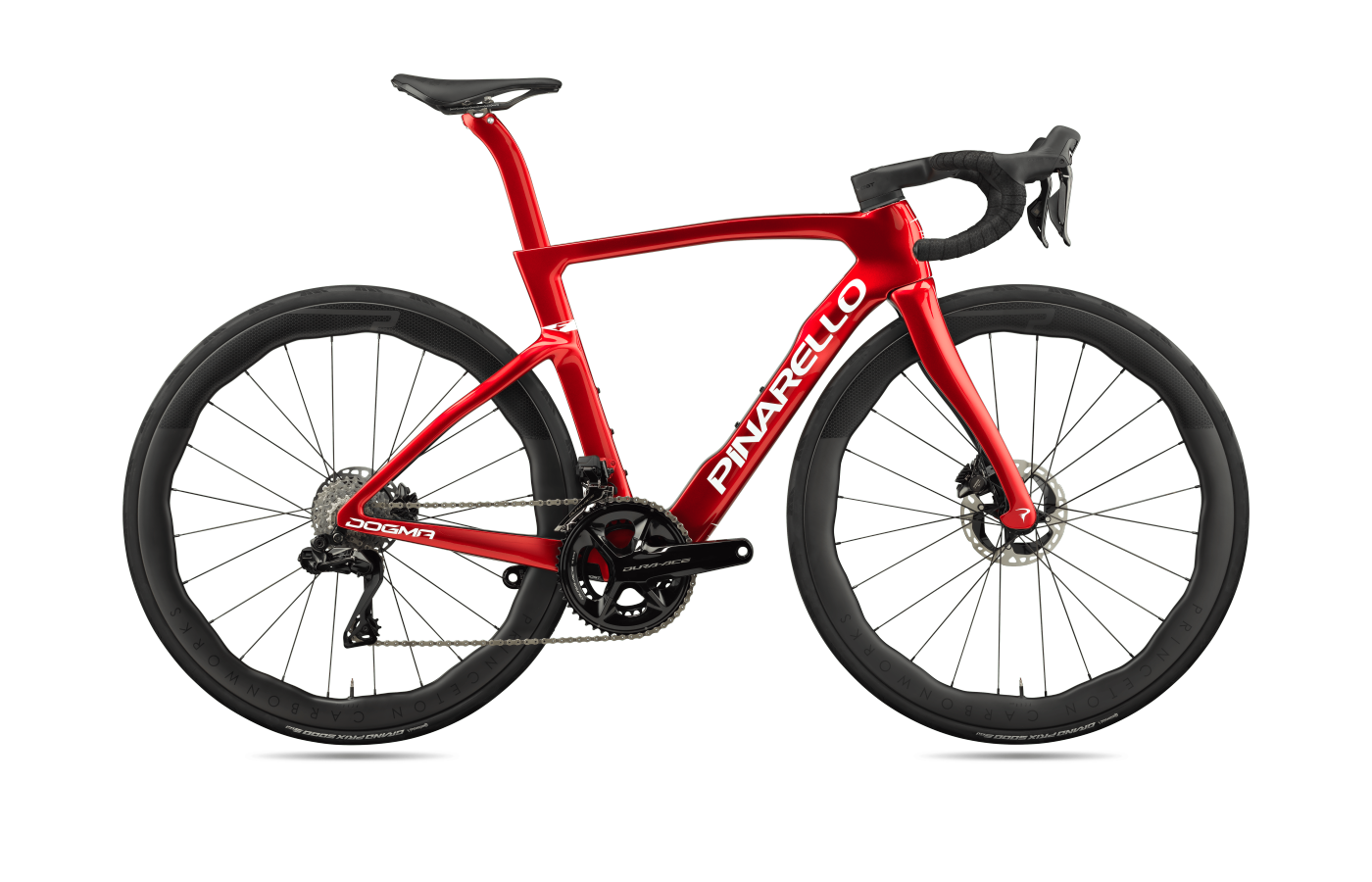
Dogma F
Italian heritage and WorldTour pedigree without the Y1Rs's polarizing silhouette — the Dogma F is the more conservative way to spend $15k on a halo bike.
Compare →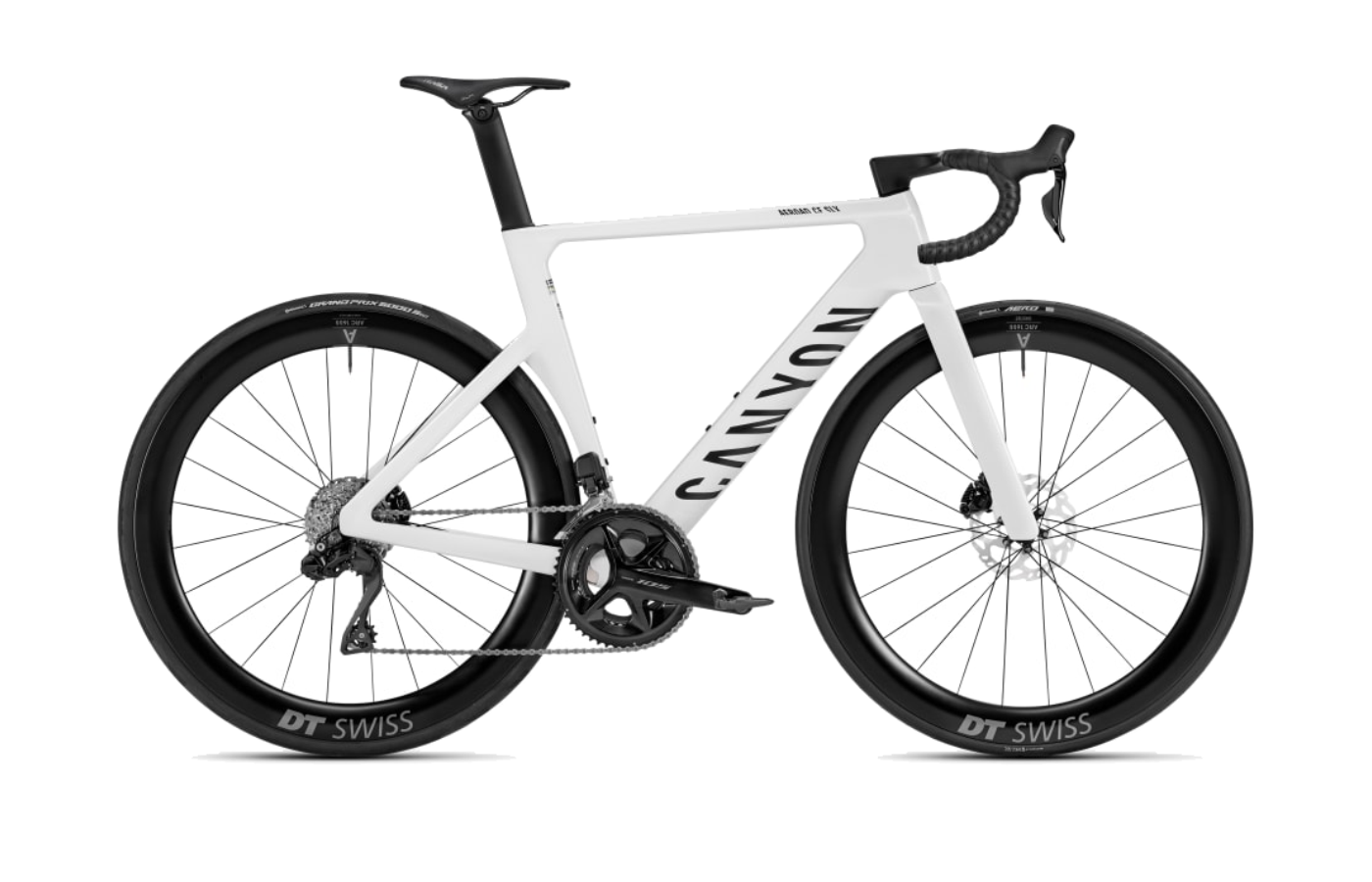
Aeroad
Aeroad delivers near-identical aero performance to the Y1Rs at roughly a third of the price. The catch is direct-to-consumer fit risk — no dealer demos, no in-person sizing.
Compare →