Y1Rs
vsMadone
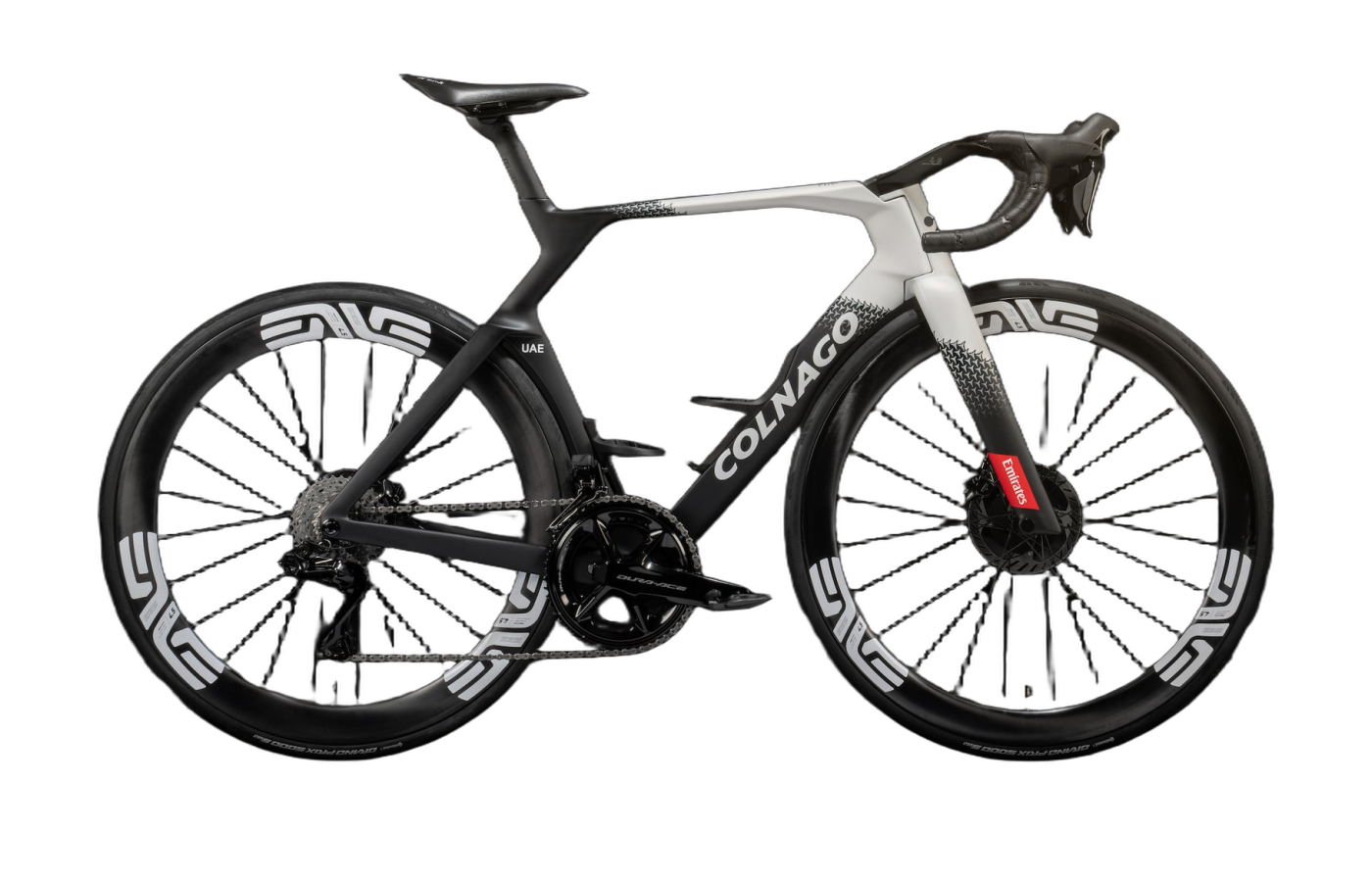
Two aero superbikes, two very different audiences.
The Y1Rs is a pro-team halo built around Pogacar. The Madone Gen 8 is the do-everything race bike that absorbed Trek's climbing platform.
Y1Rs
- Top-tier aero — Cyclingnews' wind tunnel put it just behind the Factor Prototype and Cervelo S5 at 40 km/h.
- Sharper than any prior Colnago — half-degree steeper HTA, 2.5 mm lower trail, 10 mm shorter front-center than the V-series.
- Pogacar's bike, literally — pro-only pedigree, multiple WorldTour wins in 2025.
- Starts at $16,250 — no mid-tier or budget builds, period.
- Front-end flex and assembly quirks (missing Di2 grommet, mandatory seatpost cut) make ownership painful without a team mechanic.
Madone
- True one-bike-quiver — matches the old Emonda's frame weight (~765 g) while staying in the aero conversation.
- Genuinely compliant — IsoFlow seat tube delivers a claimed 80% more vertical compliance over Gen 7, with reviewers reporting endurance-bike comfort on rough roads.
- Power meter standard on every SRAM AXS build — a $500-1k value the Y1Rs doesn't include even at $17k.
- Aero RSL integrated cockpit is 'stiff as a brick'; reviewers reported hand numbness past 80 miles.
- Toe overlap and proprietary RSL bottle complaints recur across reviews — small niggles on a bike this expensive.
Editor’s analysis
Both win at the WorldTour. Only one of them is built to be lived with by a normal human.
The Colnago Y1Rs and Trek Madone Gen 8 are both 2025 aero-road flagships, both UCI-legal, both fast in the wind tunnel. Beyond that the philosophies barely overlap. Colnago built the Y1Rs for UAE Team Emirates-XRG first and consumers a distant second. Trek built the Madone Gen 8 to replace two bikes — the old Madone and the Emonda — with one frame that climbs as well as it cuts wind.
Numbers tell most of the story. The Y1Rs starts at $16,250 and tops out at $17,100. The Madone starts at $3,499 (the SL 5) and reaches $13,499 for the flagship SLR 9 AXS. The Trek's full-carbon entry point undercuts the Colnago's cheapest build by nearly $13k. At the top, even an apples-to-apples Red AXS pairing — Y1Rs Red eTAP AXS at $16,250, Madone SLR 9 AXS at $13,499 — leaves a $2,750 gap, with the Trek throwing in a stock power meter.
On the road, the split sharpens. Cyclingnews put the Y1Rs in the same aero bracket as the Cervelo S5, behind only the Factor Prototype. GCN clocked it 0.2 km/h faster than the V5Rs at 400 W. But multiple reviewers flagged a disconnect between rear-end and front-end stiffness, with the bayonet fork called 'not sufficiently well reinforced for high loads' and one tester reporting a speed wobble under hard braking. The Madone, meanwhile, is the bike testers compared to a 'muscle car' — stiff bottom bracket, planted in crosswinds, with IsoFlow giving a claimed 80% more vertical compliance than Gen 7.
The verdict the reviewers keep landing on is that the Y1Rs is a race-team weapon that most consumers shouldn't try to live with — missing grommets, mandatory seatpost cutting, no power meter at $17k. The Madone Gen 8 is the bike Trek built for the rest of us. If you race for a salary, the Colnago's quirks are a non-issue. If you don't, the Madone wins on every axis except scarcity.
Where the builds differ.
Comparing our editor's-pick builds side-by-side. Winners highlighted row-by-row — lower price and weight, and the better-spec component, each mark a point.
Build variants & pricing
Three Y1Rs builds clustered in a $850 window at the top of the market. Nine Madone builds spanning $10k from entry-level SL to flagship SLR.
Tier parity here meant matching SRAM Red on both sides — the Y1Rs has no mid-tier. The Madone Red AXS build still comes in $2,750 cheaper and includes a power meter; the Y1Rs Red AXS does not. If your budget is under $16k, the Y1Rs simply isn't an option.
How they fit, how they steer.
Both at size M. The Y1Rs sits 6 mm lower in stack with 2 mm more reach — slightly more aggressive position. Trail is within 0.5 mm; chainstays 2 mm shorter on the Colnago.
Which size should I buy?
Size suggestions are based on stack, reach, and effective top tube. The Madone's 'T-shirt' sizing (XS-XL plus ML) gives finer steps in the middle of the range than the Colnago's four sizes.
→These are starting points. Flexibility, riding style, and preferred position all shift the answer — if you’re between sizes, a professional fit beats a chart.
What the magazines said.
Published reviews from trusted cycling outlets. Click through for the full write-up.
Which one should you buy?
If you race for a paid team or a six-figure hobby budget, get the Colnago Y1Rs. For everyone else, the Trek Madone is the more complete, more livable race bike at half the price.
Y1Rs
If you're shopping at the top of the market, want what UAE rides, and have either the budget or the mechanics to absorb its quirks — this is one of the fastest aero bikes on the planet on flat and rolling terrain. Just know what you're signing up for.
Madone
If you want one bike that climbs, sprints, and holds 35 km/h in a paceline — and you'd rather spend $13.5k than $17k for the same SRAM Red groupset — the Madone Gen 8 is the more complete weapon. Power meter included.
Questions buyers actually ask.
Short answers to the things we get emailed about most often.
01Which is faster on flat roads?
Roughly equal at the top, with the Colnago Y1Rs holding a small edge in published wind-tunnel data. Cyclingnews placed the Y1Rs just behind the Factor Prototype and the Cervelo S5 at 40 km/h, with a CdA of 0.3363 m² including a rider. GCN's testing showed it needs roughly 395 W to hold 50 km/h in the tunnel.
The Madone Gen 8 is in the same bracket — Trek claims it exceeds the Gen 7 Madone's aero performance by 0.1 W at 22 mph and gets faster as speed climbs. Real-world: head-to-head on flat tarmac, you'd be hard-pressed to feel a difference between them.
02Which climbs better?
The Trek Madone Gen 8, comfortably. The SLR 9 AXS frame hits ~765 g — within 40 grams of the discontinued Emonda — and the complete bike comes in around 7.0 kg. The Y1Rs weighs 7.2 kg in size M with Dura-Ace and ENVE 4.5s, and reviewers tested examples as heavy as 7.68–7.89 kg with deeper wheels.
GCN's estimate: on a climb like Alpe d'Huez at Pogacar's pace, the lighter V5Rs would be ~20 seconds faster than the Y1Rs. The Madone closes more of that gap, while still matching the Y1Rs in the wind.
03What's the maximum tire clearance?
Both list 32 mm officially. Reviewers have fit larger tires on the Madone (some report 35 mm or even 38 mm physically clearing), but Trek's spec sheet stops at 32 mm.
The Y1Rs is also 32 mm officially, with reviewers noting it 'would do better with the 30 mm tyre clearance maxed out' for ride quality. Neither bike is built for gravel — for rough chip-seal or worse, look at a Domane or Endurace.
04Do both come with a power meter?
Only the Madone does, and only on its SRAM AXS builds. Every Madone SRAM Red AXS, Force AXS, and Rival AXS spec ships with a stock power meter — Velo specifically called this out as a value-add that eliminates the need for an immediate post-purchase upgrade.
The Y1Rs does not include a power meter on its standard Dura-Ace, Super Record, or Red AXS builds. At $17,100 retail, this was singled out by multiple reviewers as the single most surprising omission on the spec sheet.
05How serviceable are these bikes for an at-home mechanic?
The Madone is the friendlier of the two. It uses a T47 threaded bottom bracket (better than press-fit for long-term quiet operation), a Universal Derailleur Hanger (cheap, in stock at most shops), and a saddle clamp that allows independent angle and fore/aft adjustment.
The Y1Rs is candidly not designed for home maintenance. Cyclingnews described it as 'hard to live with if you aren't a WorldTour pro' — the seatpost has to be cut to size at install (with potential for carbon-on-carbon creaking if mis-cut), one tester found the Di2 wire exit port had no grommet and required electrical tape, and Colnago's recommended fix for an over-tightened headset set screw involves a torch.
06Can I get either one with mechanical shifting?
No. Both frames are wireless/electronic-only — the cable routing and stops for mechanical derailleurs aren't there. If you want Shimano 105 mechanical or Campagnolo cable-shift, neither of these is your bike.
07How does the build range compare?
Wildly different. The Madone spans 9 builds from $3,499 (SL 5, Shimano 105) to $13,499 (SLR 9 AXS, Red AXS) — entry, mid, and flagship are all available, with the SL 6 at $5,299 widely cited as the smart-money pick.
The Y1Rs has just 3 builds, all clustered between $16,250 and $17,100, all on flagship groupsets (Super Record, Dura-Ace, Red AXS). There is no Ultegra or Force-tier Y1Rs. If your budget is under $16k, the Madone is the only option in this comparison.
08What about warranty and resale?
Trek offers a lifetime frame warranty to the original owner — Cyclefit called it 'best in the business,' citing a documented case of a cracked Gen 6 frame being replaced with a new Gen 8 SLR.
Colnago offers a multi-year frame warranty (terms vary by region), but the Y1Rs' limited production volume and exclusivity have historically helped Colnago superbikes hold value better than mainstream brands. Both depreciate fastest in year one — buying a one-season-old example second-hand is often the best value entry point on either platform.
Similar bikes
If your priorities don’t map cleanly onto either of these, one of these adjacent bikes probably fits better.
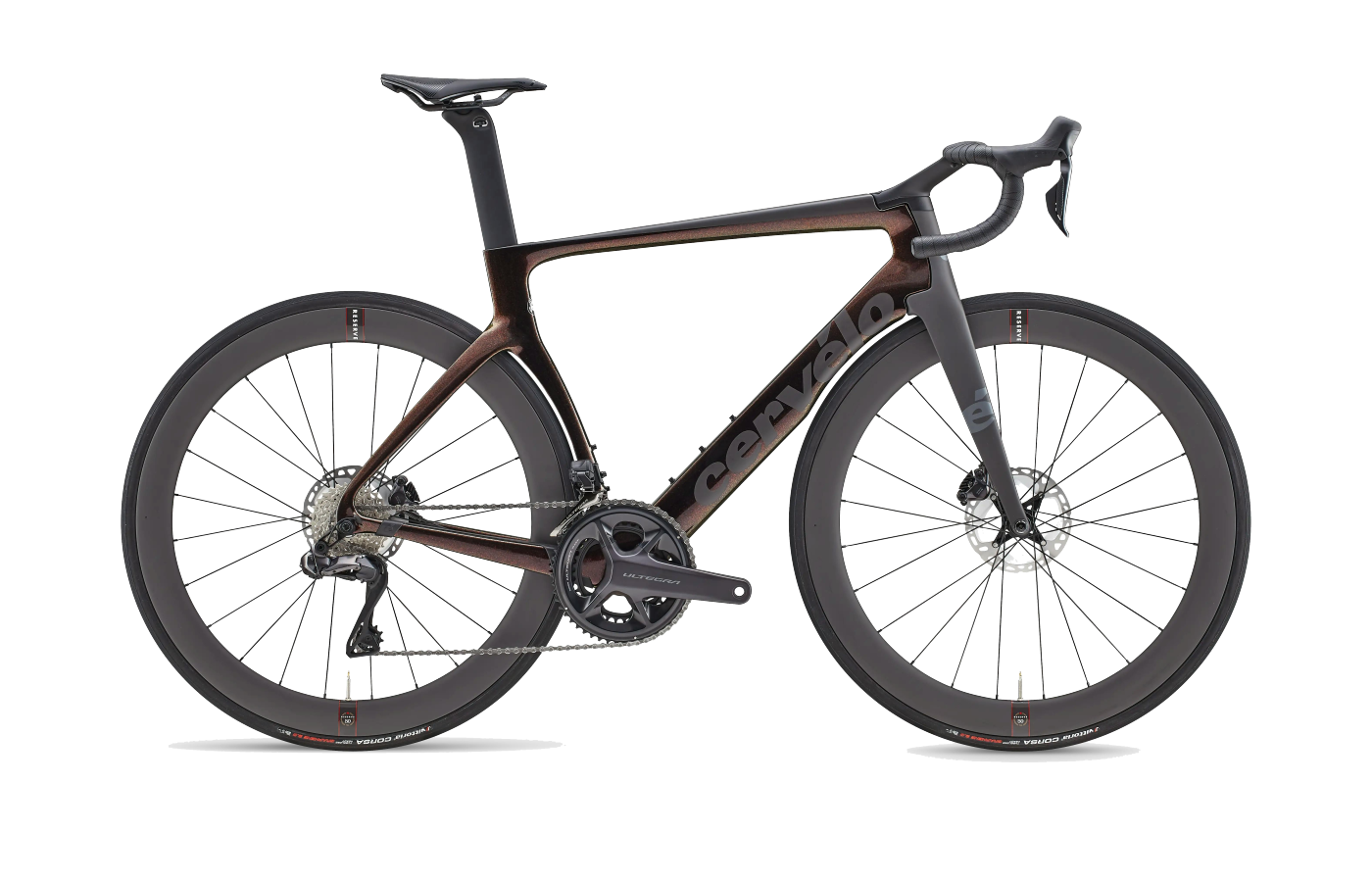
S5
The S5 is the bike reviewers benchmark the Y1Rs against — same WorldTour aero bracket, similar uncompromising stiffness, but with cleaner build quality and meaningfully better value for the same Red AXS build.
Compare →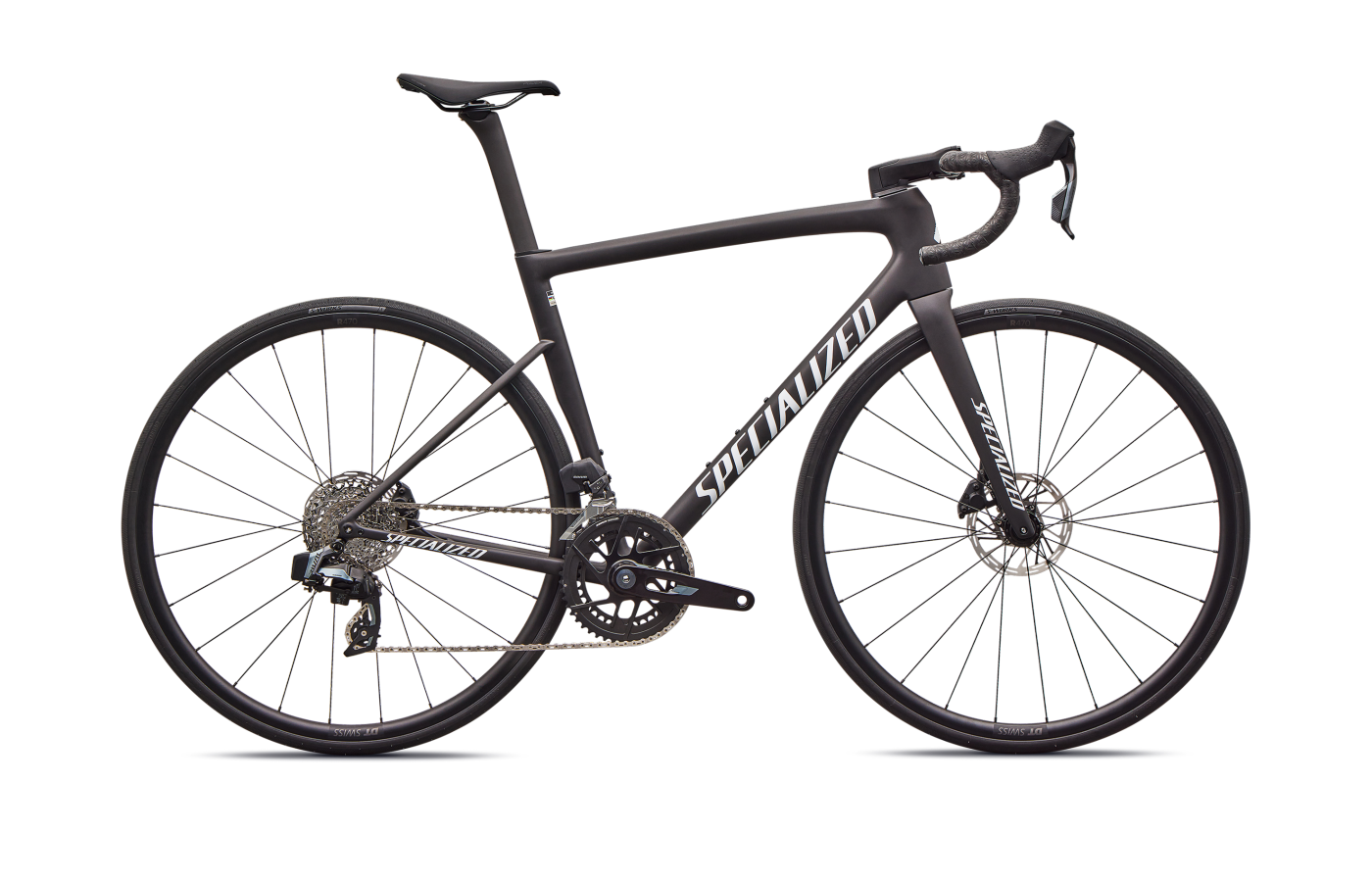
Tarmac
The do-everything race bike that beat Trek to the all-conditions punch — lighter than the Madone, takes 32 mm tires, and starts $5k below the SLR 9. The most natural cross-shop for the Madone.
Compare →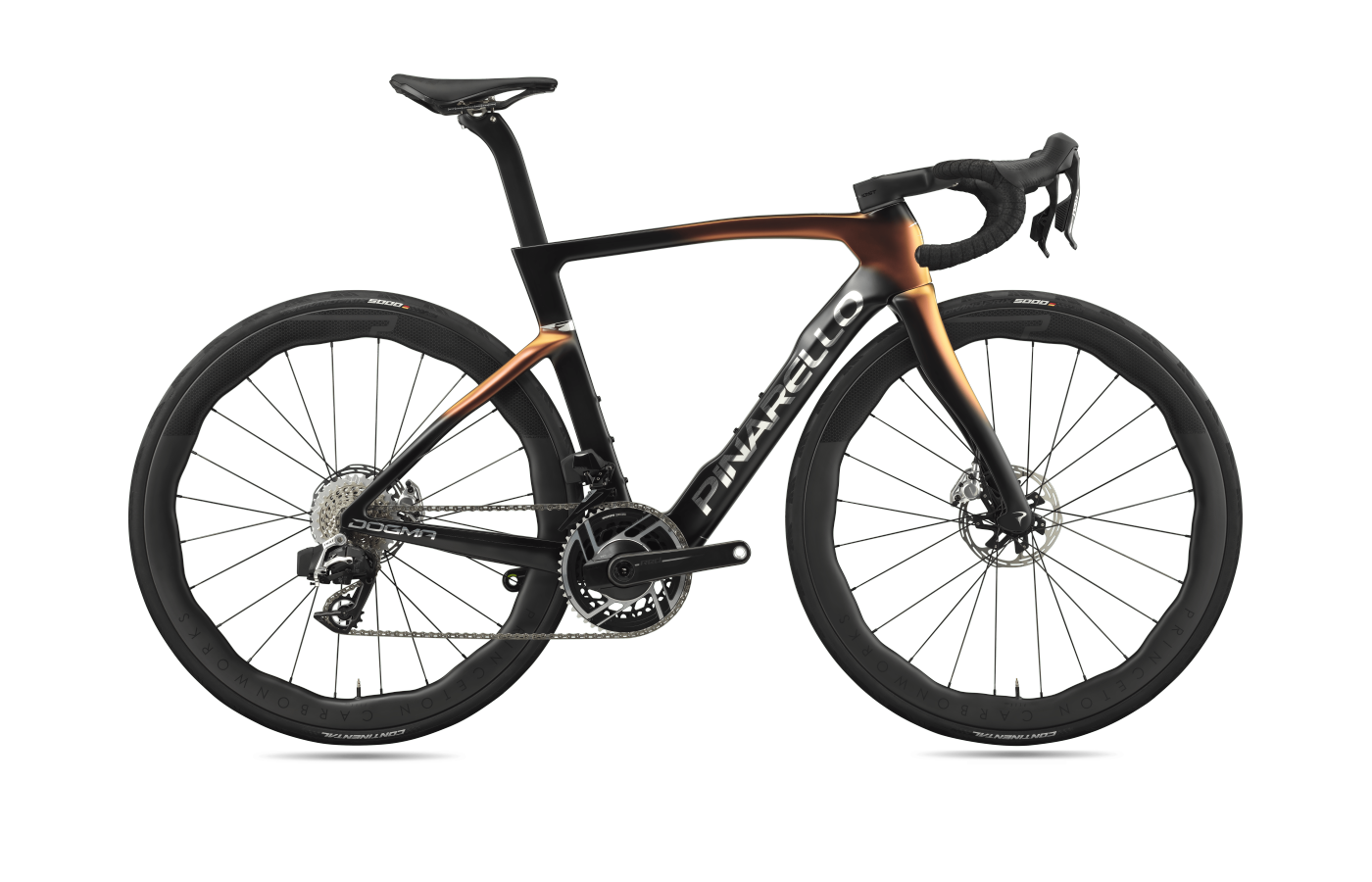
Dogma F
If you want Italian aero pedigree without the Y1Rs' ownership headaches — Pinarello's flagship gets you exotic looks, balanced handling, and a more livable cockpit at a (still steep) price below the Colnago.
Compare →