Ripley
vsTrailcat LT
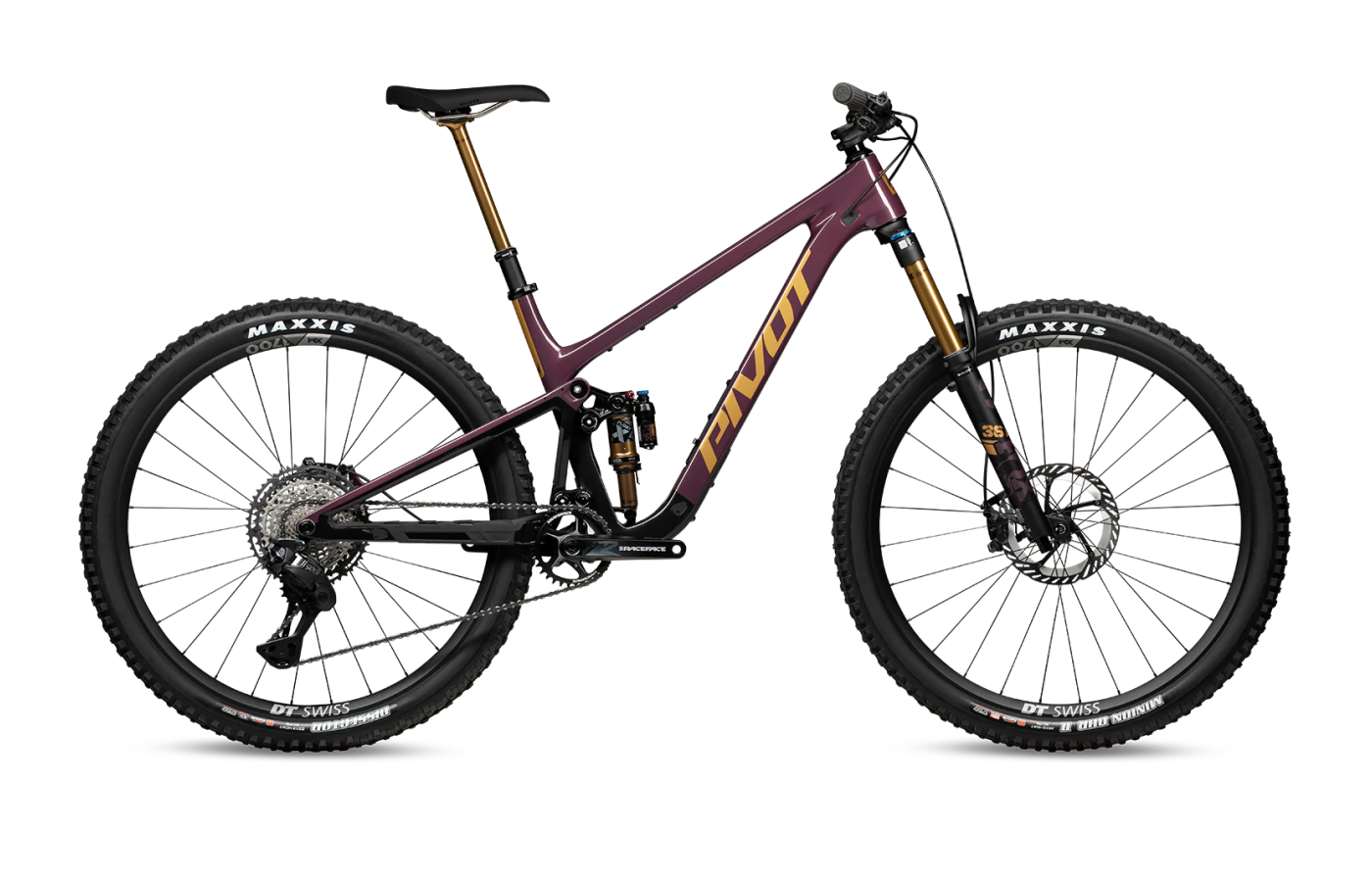
Two short-travel trail bikes, two flavors of fast.
The Ripley V5 trades downcountry pedigree for Ripmo-derived stiffness and composure. The Trailcat LT keeps the wheelbase tight and the chassis loud, daring you to ride it harder.
Ripley
- Composure beyond its travel — Ripmo-derived stiffness lets it shrug off chunder that would rattle a normal 130 mm bike.
- Lower entry price — starts at $4,999 for the Deore build, well under the Trailcat LT's $6,499 floor.
- Ripmo conversion path — same front triangle and swingarm, so a fork/shock/linkage swap turns it into a longer-travel bike.
- Slightly heavier than the V4 it replaces — reviewers report ~29–31 lb on size MD/XL.
- Fox 34 fork can feel flexy for bigger or harder-charging riders who'd prefer a 36.
Trailcat LT
- Stiffer, more responsive chassis — Super Boost rear and short 431 mm chainstays make it pop and pump like a smaller bike.
- More fork than the Ripley — ships with a Fox 36 (150 mm) on every build, vs. the Ripley's 34 (140 mm).
- DW-link efficiency on climbs — reviewers call it "nearly solid" under power, with minimal pedal-induced bob.
- Higher floor — the cheapest Trailcat LT is $1,500 above the cheapest Ripley.
- Super Boost 157 rear locks you into a narrower aftermarket wheel ecosystem; press-fit BB drew creak complaints in long-term testing.
Editor’s analysis
Both brands took their mid-travel trail bikes and made them tougher — but they ended up with very different kinds of tougher.
On paper, the Ibis Ripley V5 and the Pivot Trailcat LT live in the same neighborhood: 130-ish mm rear, 140–150 mm front, 29-inch wheels, DW-link suspension, premium carbon, mid-five-figure builds. Both share a frame platform with a longer-travel sibling — the Ripley with the Ripmo, the Trailcat LT with the shorter-travel Trailcat SL — and both pitch themselves as a one-bike-quiver for riders who want to climb and descend with the same machine.
The Ibis Ripley gets there by borrowing weight and stiffness from above. Its front triangle and swingarm are shared with the Ripmo, the head angle is now 64.9 degrees, and it runs 130 mm rear / 140 mm front. The result, per nearly every reviewer who's ridden it, is a bike that feels "bigger and beefier" than its travel suggests — composed at speed, plush over square edges, and surprisingly happy on terrain you'd normally take a 150 mm bike onto.
The Pivot Trailcat LT picks the opposite approach. More travel (135 mm rear, 150 mm front Fox 36) but a much tighter rear end — 431 mm chainstays on a small or medium, vs. 436 mm on the Ripley's medium — and the Super Boost 157 mm rear hub spacing that Pivot uses to wring extra torsional stiffness out of the chassis. Reviewers describe it as "snappy," "feedback-rich," and "engaging," with a 65.3-degree head angle that's slightly steeper than the Ibis. It's a bike built to be pumped and pushed, not pointed and ridden.
Put another way: the Ripley is the bike that quietly does more than you ask of it. The Trailcat LT is the bike that asks more of you in return.
Where the builds differ.
Comparing our editor's-pick builds side-by-side. Winners highlighted row-by-row — lower price and weight, and the better-spec component, each mark a point.
Build variants & pricing
Both span a wide range. The Ripley starts $1,500 lower and tops out $2,000 lower; the Trailcat LT's lineup skews premium, with two flagship builds north of $11k.
Editor's picks are matched at Shimano XT Di2 — the same drivetrain on both sides — to make the spec comparison apples-to-apples. The Trailcat LT carries a $1,750 premium at this tier, mostly chassis: Fox 36 instead of Fox 34, Super Boost rear, and Pivot's full carbon Phoenix cockpit.
How they fit, how they steer.
Ibis MD vs Pivot SM — the fit-picked sizes for a 5'8" rider on each bike, and notably similar in reach (460 mm vs 430 mm) once you account for Ibis's longer reach numbers across the size run. The Trailcat sits a degree slacker in the seat tube (75.6° vs 76.9°) and has a 5 mm shorter chainstay; the Ripley's head angle is 0.4° slacker (64.9° vs 65.3°).
Which size should I buy?
Size suggestions blend stack, reach, and effective top tube. Ibis runs longer through the size range, so riders between sizes often size down on the Ripley and up on the Trailcat.
→These are starting points. Flexibility, riding style, and preferred position all shift the answer — if you’re between sizes, a professional fit beats a chart.
What the magazines said.
Published reviews from trusted cycling outlets. Click through for the full write-up.
Which one should you buy?
If you want a quiet, composed bike that punches above its travel, get the Ripley. If you want a high-energy chassis that rewards an active rider, get the Trailcat LT.
Ripley
If you're chasing a do-everything trail bike that climbs efficiently, descends with composure beyond its 130 mm of travel, and gives you a future upgrade path to a bigger Ripmo, the Ripley V5 is the safer, lower-priced, and quieter choice. It's the bike you forget you're on.
Trailcat LT
If you live for tight, technical climbs and descents that reward sharp inputs — Sedona-style ledge gardens, pumpy flow trails, fast switchbacks — the Trailcat LT's stiffer chassis and shorter rear end give you more to push against. Just don't expect it to do the work for you.
Questions buyers actually ask.
Short answers to the things we get emailed about most often.
01Which has more suspension travel?
The Trailcat LT by a small margin: 135 mm rear / 150 mm front Fox 36, vs. the Ripley V5's 130 mm rear / 140 mm front Fox 34. That's 5 mm more rear travel and a noticeably stouter fork on the Pivot.
In practice the gap feels bigger than the numbers because the Fox 36's 36 mm stanchions are markedly stiffer than the 34's, especially for heavier or harder-charging riders — a complaint several Ripley reviewers raised about the 34 on rougher terrain.
02Which climbs better?
Both are excellent climbers thanks to DW-link suspension that stays high in its travel under power. Reviewers describe the Trailcat LT's platform as "nearly solid" under pedaling, and the Ripley as a "bat out of hell" on smoother ascents.
The Ripley has a slight edge on long, seated grinds — its 76.9° seat tube angle (size MD) keeps the rider more forward than the Trailcat's 75.6°. Several Trailcat reviewers noted the front end can wander on the steepest climbs, especially after swapping to a shorter stem.
For short, technical, ledge-y climbs, the Trailcat's tighter rear end and stiffer chassis tip back the other way.
03Which descends better?
It depends on the descent. The Ripley V5 is the more composed bike at speed in straight-line chunder — its longer wheelbase, slacker 64.9° head angle, and Ripmo-derived chassis stiffness make it feel "planted" and "calm at pace," per reviewers like The Radavist and 99 Spokes.
The Trailcat LT is the more engaging bike on technical, low-to-mid-speed terrain. Its 431 mm chainstays and stiffer Super Boost rear make it pop, pump, and corner with more direct feedback — but off-road.cc explicitly notes the shorter wheelbase "can hinder stability when the going gets tough."
Neither is a true enduro bike. For sustained steep descents, both will tap out before a 160 mm bike.
04How do the geometries compare for a 5'8" rider?
The fit algorithm puts a 173 cm (5'8") rider on the Ibis MD (460 mm reach, 619 mm stack) and the Pivot SM (430 mm reach, 618 mm stack). Note that those land in different size labels but at almost identical stack — Ibis simply runs longer in reach across its size range.
If you prefer a longer, more stretched-out cockpit, the Ibis MD is the move. If you want a tighter, more upright fit, the Pivot SM gets you there. Both bikes also offer the next size up if you want more reach.
05Are the frames upgradeable to longer-travel platforms?
Both bikes share architecture with a longer-travel sibling, but the conversion paths are very different.
The Ripley V5 shares its front triangle and swingarm with the Ripmo. A fork, shock, and linkage swap takes you from 130/140 mm to the Ripmo's 145/160 mm. Multiple reviewers (Duffy Rides, 99 Spokes) flag this as a meaningful long-term value add.
The Trailcat LT can theoretically convert to the shorter-travel Trailcat SL by swapping rocker link, lower link, fork, and shock. But Pivot has explicitly stated they will not sell conversion kits — Jeff Kendall-Weed quotes them as saying "adopt the one you want and plan to stick with it." Treat the LT as a one-way pick.
06What about wheel and component compatibility?
The Ripley V5 uses standard 148 mm Boost rear hub spacing and a threaded bottom bracket — broad aftermarket compatibility and easy service.
The Trailcat LT uses Super Boost 157 mm rear and a press-fit bottom bracket. Super Boost meaningfully limits aftermarket wheel options (most premium wheelsets are 148 Boost), and reviewers reported the press-fit BB developing a creak in long-term testing.
If you swap parts between bikes or value easy service, the Ibis is the friendlier platform.
07Which is the better value?
Strictly on price-per-spec, the Ripley V5 wins at the entry tier — its $4,999 Deore build undercuts the cheapest Trailcat LT ($6,499) by $1,500 with a comparable Fox Float chassis.
At the matched XT Di2 tier (our editor's picks), the Ripley XT is $7,249 and the Trailcat Pro XT Di2 is $8,999. The $1,750 Pivot premium buys a Fox 36 (vs. 34), the Super Boost rear, and a full Phoenix Team carbon cockpit.
Whether that gap is worth it depends on how much you value the Trailcat's chassis stiffness and the bigger fork. For most riders who'll never push the 34's limits, the Ripley delivers more bike per dollar.
08What warranty do they come with?
Both brands offer lifetime frame warranties to the original owner — Ibis has long had one, and Pivot extended its lifetime warranty to all bikes sold after January 1, 2024. Both also offer crash-replacement pricing on damaged frames.
Similar bikes
If your priorities don’t map cleanly onto either of these, one of these adjacent bikes probably fits better.
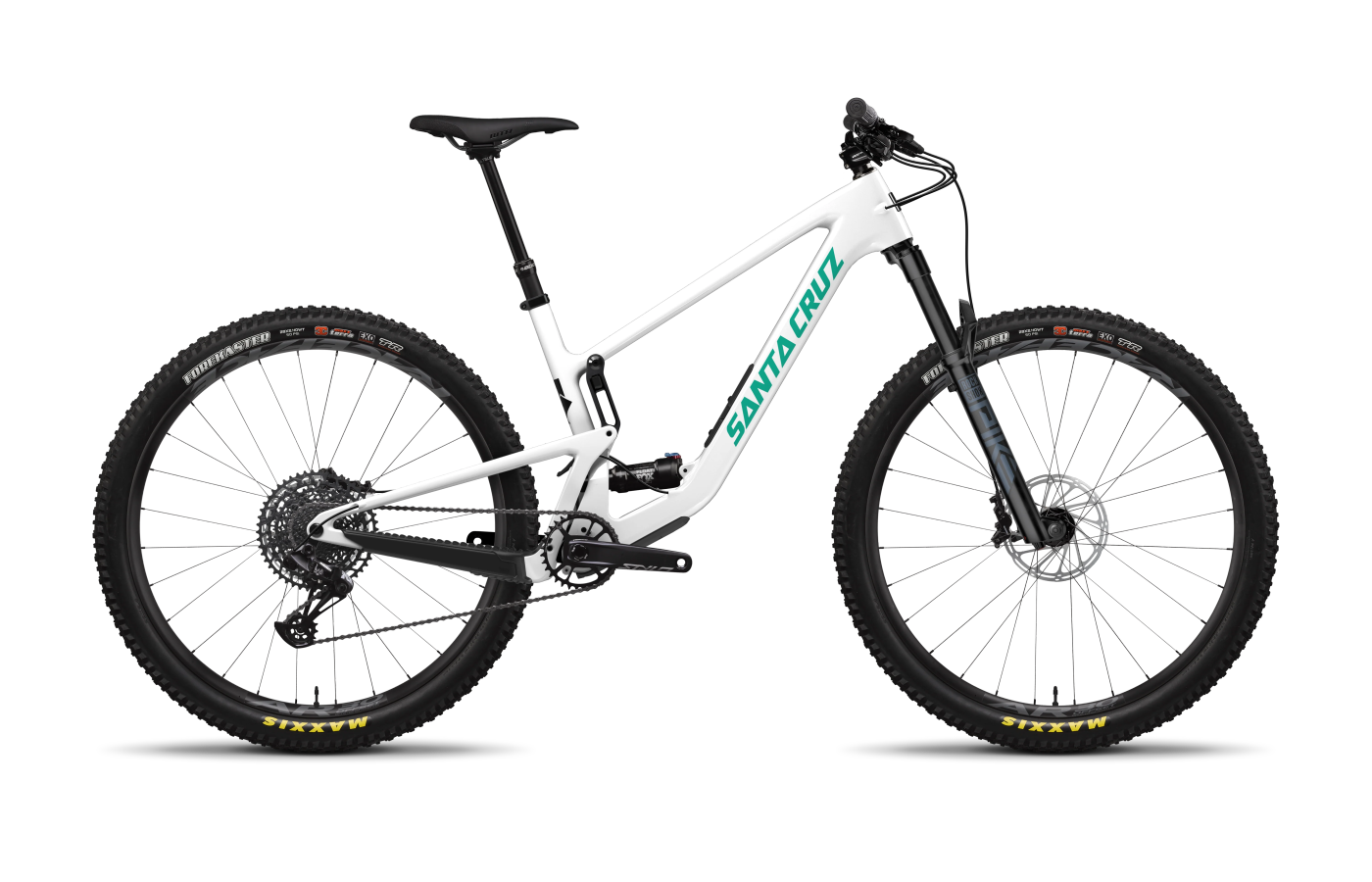
Tallboy
The Tallboy is the perennial Ripley rival — similarly plush rear end via Santa Cruz's VPP linkage, with a slightly more gravity-focused tune. Worth a look if the Ripley's character appeals but you want a different suspension feel.
Compare →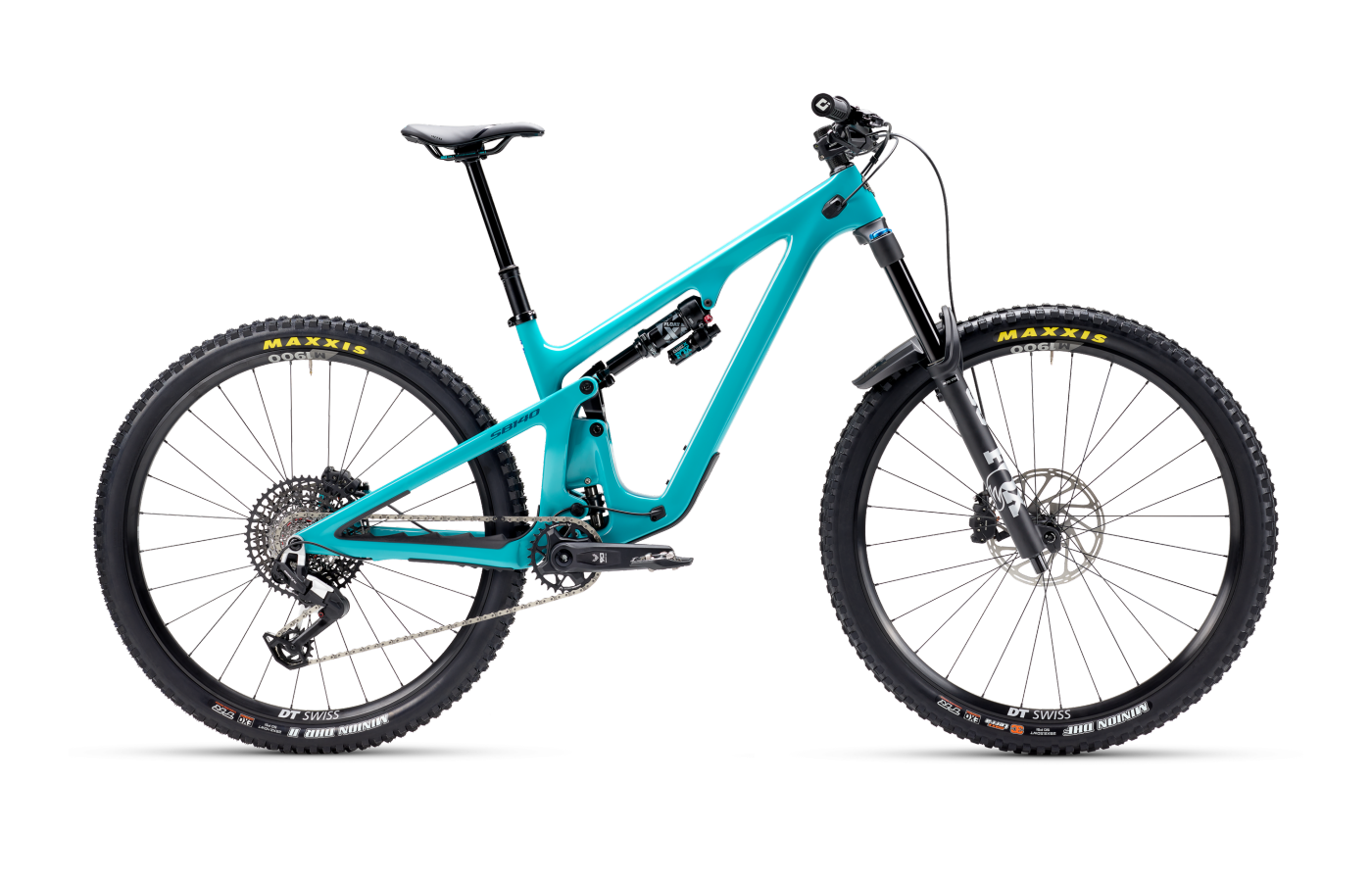
SB140
Yeti's mid-travel trail bike and the closest direct shopping cross-reference for the Trailcat LT. Switch Infinity linkage instead of DW-link, similar 130/150 travel bracket, and a reputation for technical-climbing efficiency.
Compare →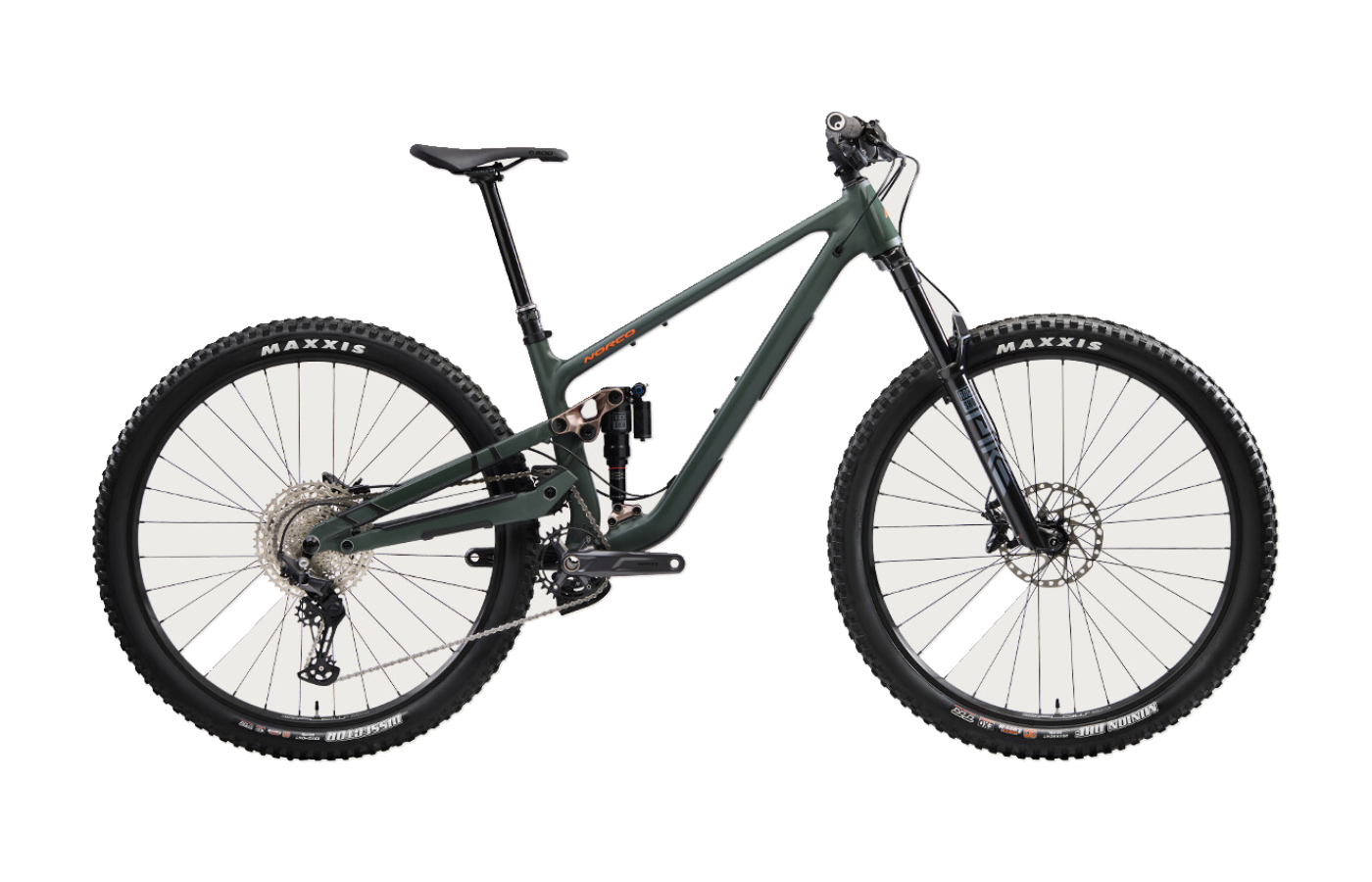
Optic
If you want even more descending capability without going full enduro, the Optic's high-pivot rear end eats square-edged hits better than either bike here — at the cost of some climbing snap and pedaling efficiency.
Compare →