Ripmo
vsProcess 153
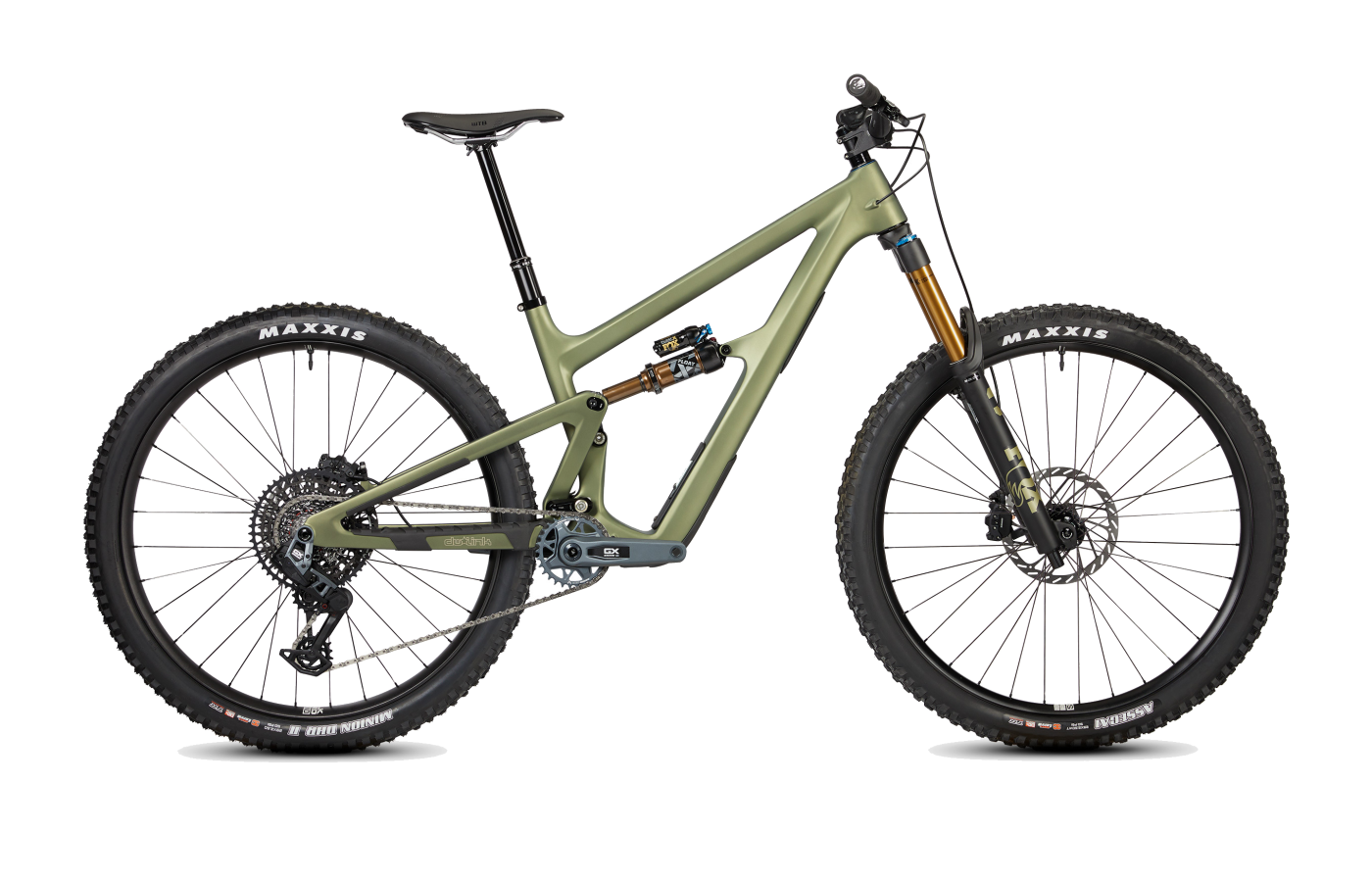
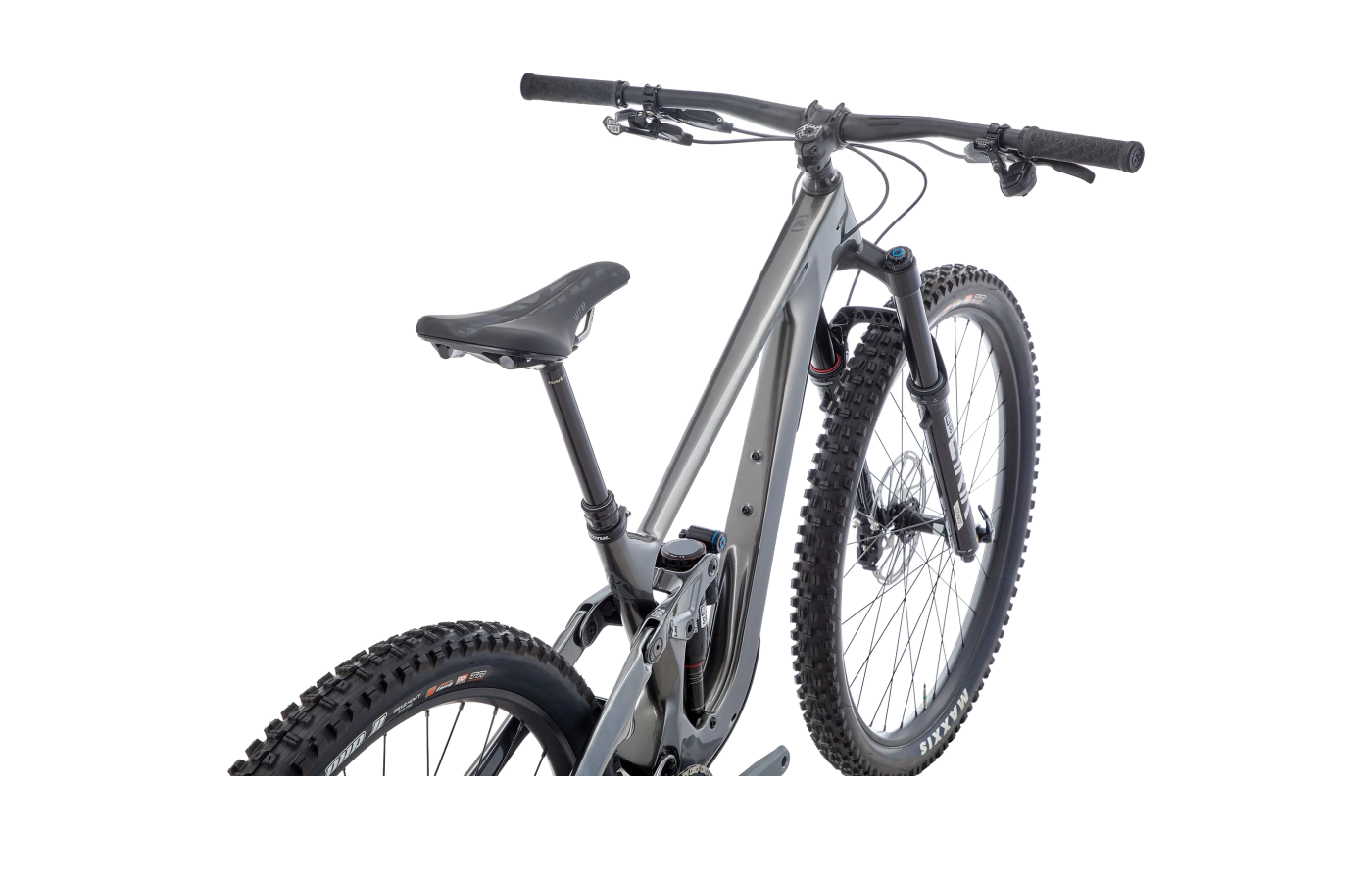
Two 150-ish trail bikes, two very different price tags.
The Ibis Ripmo V3 is the boutique DW-Link benchmark. The Kona Process 153 is the working-class carbon bike that does most of the same job for $2,700 less.
Ripmo
- Best-in-class climber — DW-Link delivers a firm, traction-rich pedaling platform that reviewers consistently rank among the best in the 150 mm category.
- Size-specific everything — chainstays, BB heights, seat tube angles and shock tunes all change across the five sizes, not just reach and stack.
- Premium frame details — internal storage with Cotopaxi pouches, threaded BB, IGUS lower-link bushings under a lifetime warranty, UDH compatibility.
- Price floor sits $2,600 above the Kona's — the Ripmo lineup starts at $5,199 vs $2,599 for the alloy Process G3.
- A minority of reviewers (notably Pinkbike) found the suspension "busy" or "fluttery" in chunky high-speed terrain — not a unanimous win.
Process 153
- Aggressive value — the carbon CR/DL build with Lyrik Ultimate, Super Deluxe Ultimate, and GX AXS Transmission lands at $5,099 — most rivals charge a thousand more for the same suspension.
- Snappy, playful handling — short 435 mm chainstays and modest 1,215 mm wheelbase (size M) make it nimble in tight, technical terrain.
- Detail-driven frame — fully guided internal routing, torque specs printed on every fitting, integrated mounts, mullet flip chip.
- Stock SRAM G2 RSC brakes are universally panned for a bike of this capability — budget for a Code or Maven upgrade.
- Fixed 435 mm chainstays across all sizes mean tall riders get a relatively short rear end that can feel jittery at speed.
Editor’s analysis
Same head angle, same fork, near-identical reach — and a $2,700 gap that the spec sheet, not the geometry, has to justify.
On paper, the Ibis Ripmo and Kona Process 153 are almost twins. Both run a 64.5-degree head angle, a 160 mm fork, and 150-ish mm of rear travel (Ripmo 150, Process 153). At the fit-picked sizes for a 5'8" rider — Ripmo MD, Process 153 M — reach is within a millimeter (456 vs 455), chainstays are an identical 435 mm, wheelbase is within 4 mm. The two bikes are aiming at the same trail.
Where they diverge is in pedigree and price. The Ibis Ripmo V3 is the latest revision of one of the most reviewed all-mountain bikes of the last seven years. DW-Link suspension, size-specific chainstays and bottom-bracket heights, internal frame storage with Cotopaxi-collab pouches, IGUS lower-link bushings under a lifetime warranty. Reviewers consistently call it one of the best climbing bikes in its travel class — a "hoverbike" on chunky climbs, in The Radavist's phrasing — with a poppy, lively descending personality.
The Kona Process 153 G3 is the comeback story. Bought back by Kona's original founders after a rough Kent Outdoors stint, the new G3 keeps the geometry the brand was already ahead of the curve on (steep STA, short chainstays, modern reach) and finally adds a carbon frame. Reviews call it "predictable, rewarding, and sharp" — a hot-hatchback feel rather than a monster truck. The Pacific Northwest pedigree shows up in the build: a Kona DH Carbon front triangle, RockShox Lyrik Ultimate up front, fully guided internal routing, torque specs printed on every fitting.
The Ripmo costs more and earns most of it back: more refined platform, deeper reviewer consensus, more dialed details. The Process 153 doesn't try to win that fight — it offers 90% of the geometry and capability for substantially less, with a frame that universal reviewer agreement says is genuinely durable. If you want the benchmark and the polish, buy the Ibis. If you want the geometry and the suspension and don't need the badge, buy the Kona.
Where the builds differ.
Comparing our editor's-pick builds side-by-side. Winners highlighted row-by-row — lower price and weight, and the better-spec component, each mark a point.
Build variants & pricing
Both lineups span roughly $2,500 of range, but the Ripmo starts where the Process tops out — Ibis has no entry-level alloy build to match Kona's $2,599 floor.
Prices are current US MSRP. The editor's-pick builds — Ripmo GX Transmission ($7,799) and Process 153 CR/DL ($5,099) — share the same SRAM GX AXS Transmission drivetrain and Fox/RockShox premium suspension tiers, making the spec table a fair apples-to-apples view of where each platform spends its money.
How they fit, how they steer.
MD Ripmo vs M Process 153 — the fit-picked sizes for a 5'8" rider on each bike. Reach (456 vs 455), HTA (64.5° both), and chainstay (435 mm both) are essentially identical. The Ripmo sits 7 mm taller in stack; the Process is 0.4° steeper in seat tube angle.
Which size should I buy?
Both lineups overlap closely. The Ripmo's MD-XM split gives more granular sizing in the middle; the Kona uses a simpler S/M/L/XL spread.
→These are starting points. Flexibility, riding style, and preferred position all shift the answer — if you’re between sizes, a professional fit beats a chart.
What the magazines said.
Published reviews from trusted cycling outlets. Click through for the full write-up.
Which one should you buy?
If the platform pedigree and frame details matter, get the Ripmo. If you want the same geometry and suspension for a thousand dollars less, get the Process 153.
Ripmo
If you want the most refined 150 mm trail-bike platform on the market and you're willing to pay for the polish — DW-Link climbing, size-specific everything, the best frame details in the segment — the Ripmo is the benchmark for a reason.
Process 153
If you want serious carbon trail-bike capability without the boutique markup, the Process 153 CR/DL puts a Lyrik Ultimate, Super Deluxe Ultimate, and GX AXS Transmission on a quiet, tight-feeling frame for $5,099. Plan on a brake upgrade and ride happy.
Questions buyers actually ask.
Short answers to the things we get emailed about most often.
01Which one climbs better?
The Ibis Ripmo V3, by reviewer consensus. The DW-Link platform is one of the most efficient in the 150 mm category — multiple reviewers (Awesomemtb, Enduro MTB, NSMB, The Radavist) describe it as injecting forward momentum into every pedal stroke and rivaling shorter-travel trail bikes for climbing energy.
The Process 153 is a surprisingly efficient climber for its travel — the Rocker independent system minimizes pedal bob well and the 76.9° effective STA puts you in a good position — but a couple of reviewers noted the single-pivot suspension can sit deep in its travel on long technical climbs.
02How different is the geometry, really?
At the fit-picked sizes for a 5'8" rider, almost identical:
- HTA: 64.5° both
- Reach: Ripmo MD 456 mm, Process M 455 mm
- Chainstay: 435 mm both
- Wheelbase: Ripmo 1,219 mm, Process 1,215 mm
- Stack: Ripmo 622 mm, Process 615 mm (Ripmo 7 mm taller)
- Effective STA: Ripmo 76.5°, Process 76.9°
If you sized them up by spec sheet alone, you'd struggle to tell them apart. The differences are in suspension feel and componentry, not numbers.
03Is the price gap worth it?
It depends on what you value. The editor's-pick Ripmo (GX Transmission build) is $7,799; the Process 153 CR/DL is $5,099 — a $2,700 gap.
The Ripmo's premium buys you: DW-Link suspension (genuinely better-reviewed for climbing), Fox Factory 36 GRIP X2 + Float X (vs. RockShox Lyrik Ultimate + Super Deluxe Ultimate — both excellent, but Fox Factory carries a price premium), size-specific everything, internal frame storage, and lifetime IGUS bushing warranty.
The Process 153 buys you: nearly the same geometry, the same drivetrain tier, premium suspension that reviewers also rave about, and a frame Kona's reputation says will last. For a lot of riders, that's enough.
04What about brakes?
Brakes are the Process 153's most consistent reviewer complaint. The CR/DL ships with SRAM G2 RSC brakes, which Pinkbike, NSMB, Blister, and The Loam Wolf all call underpowered for the bike. Pinkbike was bluntest: "do not belong on a bike with a 160 mm fork and a 64.5° head angle." Plan on swapping to SRAM Code, Maven, or Shimano XT 4-piston — call it $400-500 of effectively-mandatory upgrade cost on top of the sticker price.
The Ripmo GX Transmission build avoids this trap — Ibis specs the Ripmo's brakes appropriately for the bike's intended use, and brakes don't appear on any reviewer complaint list.
05Can I run a mullet (mixed-wheel) setup on either?
Yes, both. The Ripmo has a flip chip for MX compatibility — Ibis even ships the smaller sizes (S, M) with a 27.5 rear wheel stock to keep the geometry balanced for shorter riders.
The Process 153 also has a flip chip; FullCycleOttawa measured a 5 mm increase in rear travel (to ~158 mm) when running it in mullet mode. NSMB found the bike felt slightly more jittery in mullet on chunky descents — your mileage may vary.
06How are both for tire clearance?
Ripmo V3: officially clears up to 29x2.6, listed as 63.5 mm of tire width capacity. Stock builds run 29x2.5 Maxxis Assegai/DHR II in EXO+ casing.
Process 153: Kona doesn't publish a max width, but stock builds run 29x2.5 Assegai front / 29x2.4 DHR II rear (EXO+ on the CR/DL). Reviewers haven't reported clearance issues with the stock setup.
Neither is a plus-tire bike; both are dialed for modern 2.4-2.5 inch trail tires.
07Which holds up better long-term?
Both have well-reviewed frames. Ibis backs the IGUS lower-link bushings with a lifetime replacement warranty — a strong signal of confidence — and reviewers consistently call out the threaded BB, internal routing tunnels, and clean cable management as long-term durability wins.
Kona's carbon DH frame is widely described as "bulletproof," with thoughtful touches like torque specs printed directly on every fitting and headset/BB/shock dimensions printed on the seat tube. One Blister note: the shock pocket can collect mud in wet conditions, which may shorten bushing life if you ride in slop without rinsing.
Both use UDH and have full-guide internal routing. Realistically, frame durability is a wash.
08Who's each bike for?
Ripmo V3: the rider who wants the most refined platform in the 150 mm trail-bike category, prioritizes climbing efficiency, and is willing to pay for the polish. Strong choice for long pedally days, varied terrain, and anyone who values size-specific geometry.
Process 153: the rider who wants real carbon-trail-bike capability without the boutique markup. Best for riders comfortable doing a brake upgrade in year one, who like a snappy and engaged feel, and who don't need a particular badge to feel good about their bike.
Similar bikes
If your priorities don’t map cleanly onto either of these, one of these adjacent bikes probably fits better.
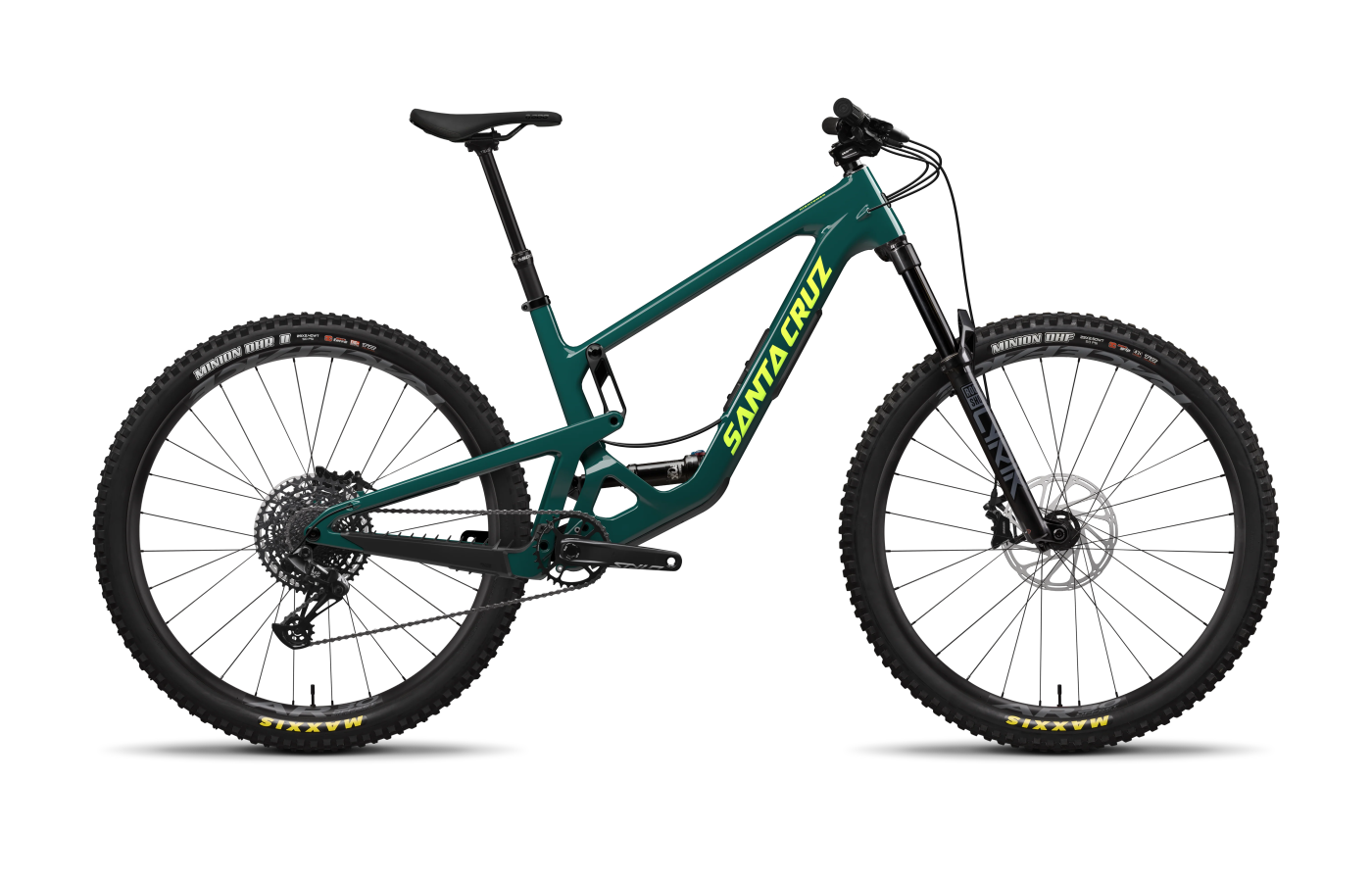
Hightower
Another DW-Link all-mountain bike with a near-identical mission to the Ripmo. Reviewers tend to call it slightly more planted and a touch less playful — worth a look if the Ripmo's poppy character sounds like more bike than you want.
Compare →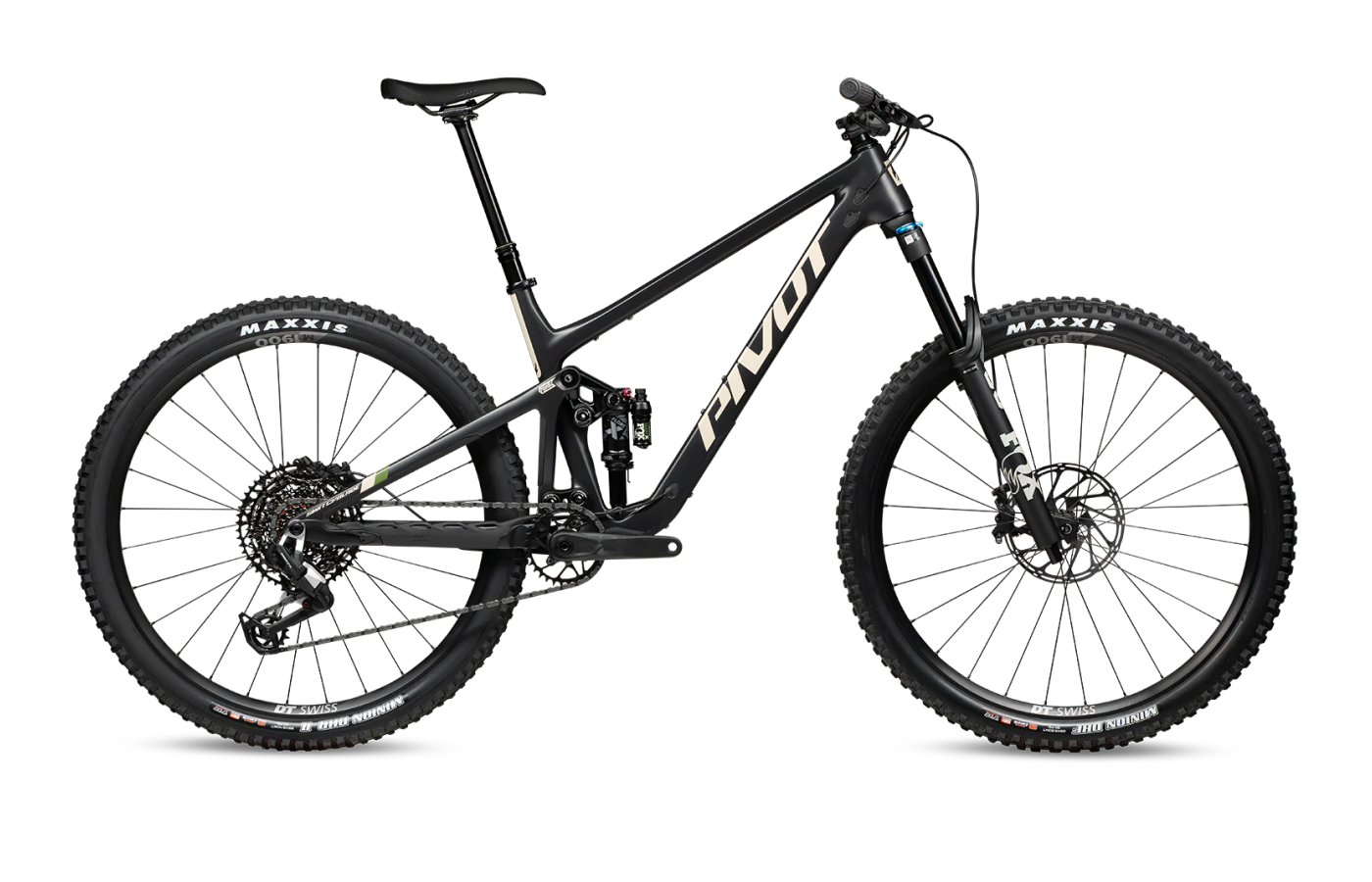
Switchblade
Pivot's DW-Link entry — known for exceptional torsional stiffness and aggressive suspension support. Sharper and more demanding than the Ripmo, with a price tag to match the boutique brief.
Compare →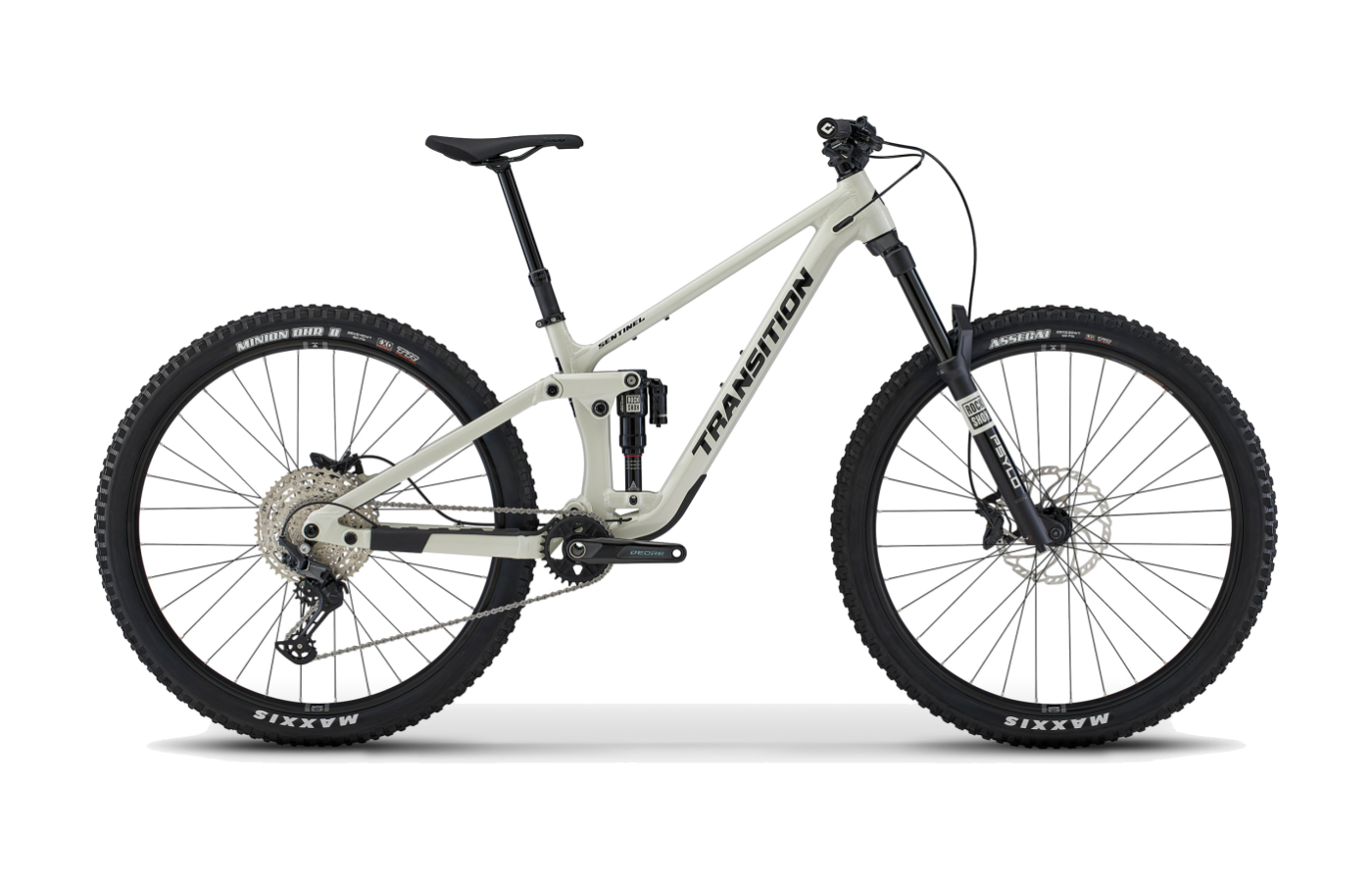
Sentinel
Transition's longer, slacker take on the same travel bracket. Less playful, more ground-hugging, and substantially more composed at speed — pick this if descending is the priority and the Ripmo or Process feel a touch nervous on the gnarliest stuff.
Compare →