Fire Mountain
vsMarlin
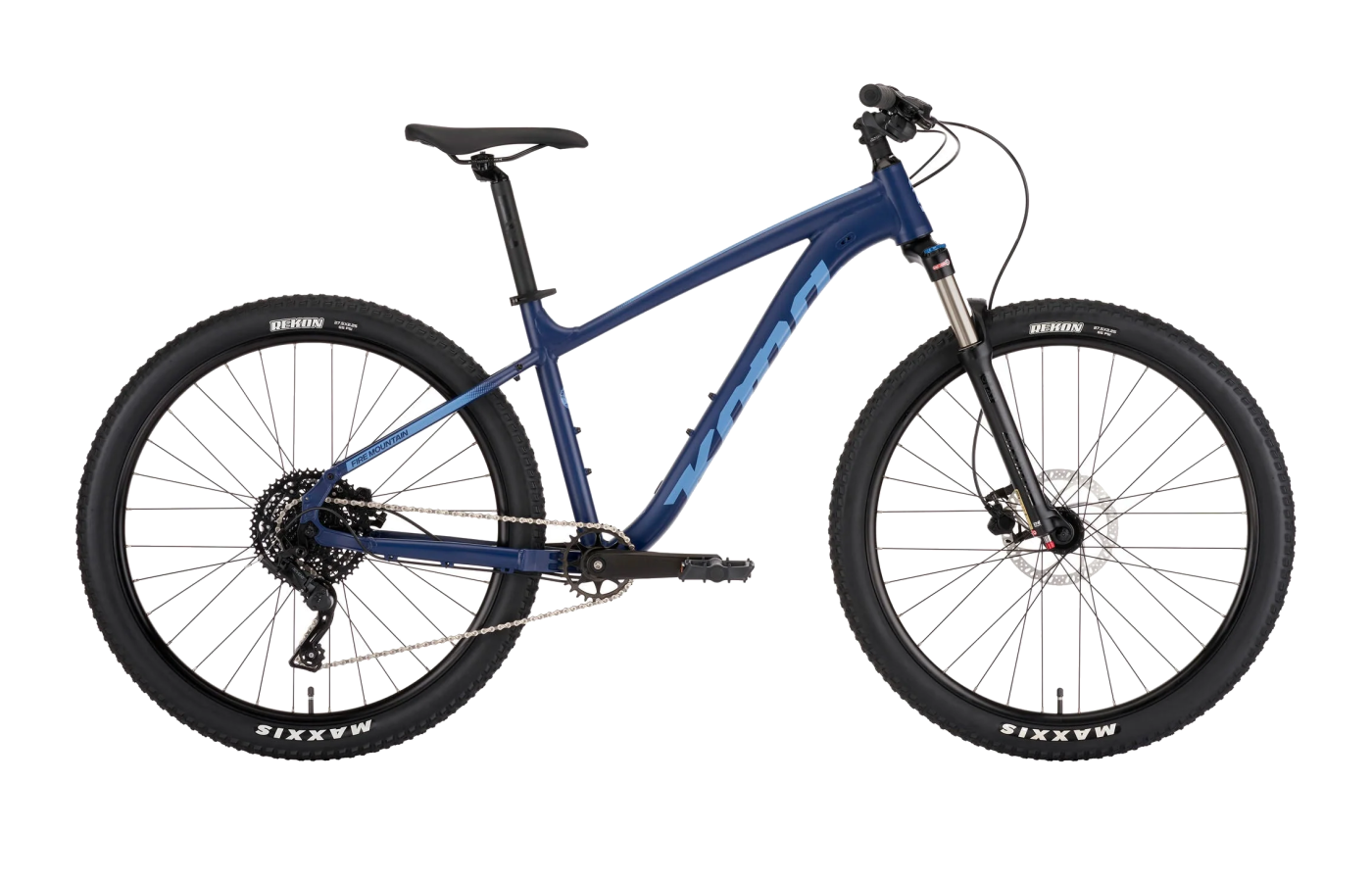
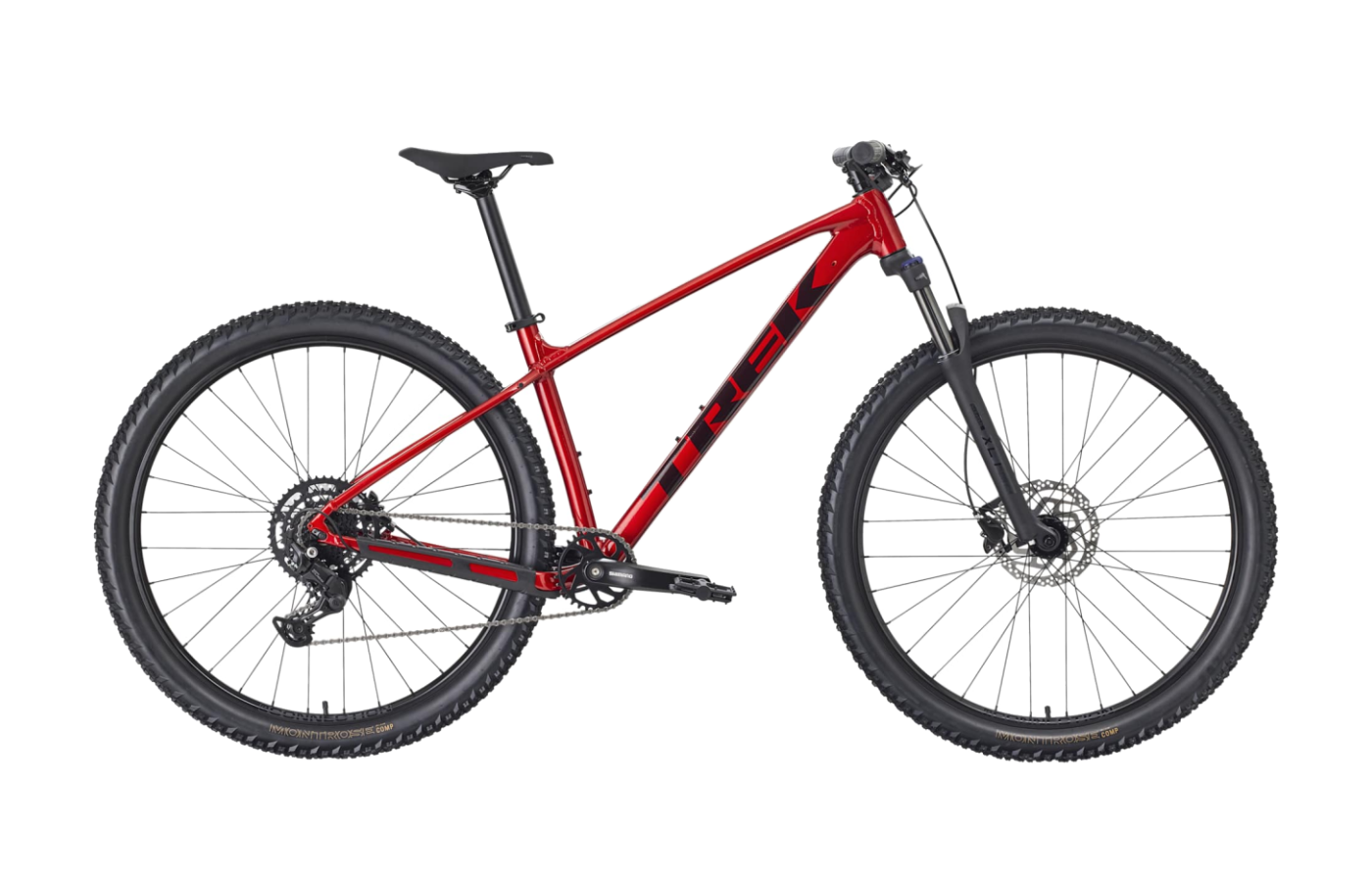
Two entry-level hardtails, two trail philosophies.
The Fire Mountain is Kona's one-and-done budget hardtail. The Marlin Gen 3 is a four-build ladder from commuter to trail-ready.
Fire Mountain
- One-decision pricing — a single $749 build with a clutch-equipped microSHIFT Advent 1x9 drivetrain and Tektro hydraulic brakes.
- Steeper climbing posture — a 75-degree seat tube angle (vs. Marlin's 73.4) keeps weight over the bottom bracket on grinds.
- Agile handling — a 68-degree head tube and 1,139 mm wheelbase (size M) feel quicker in tight singletrack than the slacker Marlin.
- No upgrade path within the lineup — if you outgrow it, you're bike shopping again.
- Coil fork only; no air-sprung option even at the top.
Marlin
- Build ladder — four trims from $629 to $1,399 let you pick how much bike you actually need.
- Modern trail geometry — a 66.5-degree head tube and 2.4" tire clearance make descents feel composed at entry-level prices.
- Trek warranty — reviewers repeatedly cite the lifetime frame warranty as the strongest long-term argument for the platform.
- Quick-release axles front and rear limit high-end wheel upgrades — the frame has a ceiling.
- Straight (non-tapered) 44 mm head tube means a fork upgrade also means a headset swap.
Editor’s analysis
Same price bracket, same category — but one is a single punch and the other is a range-wide bet on modern trail geometry.
On the surface, the Kona Fire Mountain and Trek Marlin Gen 3 are after the same rider: someone spending under $1,500 on their first real mountain bike. Both run aluminum frames, 100 mm coil forks at the bottom of the range, hydraulic disc brakes on the builds that matter, and rack/kickstand mounts that say "yes, this can also commute."
The Fire Mountain is one build at $749 — a microSHIFT Advent 1x9 drivetrain, an SR Suntour XCR fork, and a steeper 68-degree head tube angle that reviewers describe as agile and confidence-inspiring on green and blue singletrack. Kona's bet: one well-picked spec, no decisions. If you want a Fire Mountain, you want the Fire Mountain.
The Marlin Gen 3 plays the opposite game. Trek stretched the lineup from $629 (Marlin 4, 3x7 Shimano Tourney) to $1,399 (Marlin 7, SRAM SX Eagle 1x12, RockShox Judy Silver air fork, TranzX dropper). The whole range shares a new 66.5-degree head tube angle and a longer reach that reviewers repeatedly call "trail-ready" — a three-degree slacker jump from Gen 2. That slackness is the whole pitch: the Marlin now wants the descents.
Put another way: the Fire Mountain is the bike you buy when you want the singletrack-and-greenway compromise at the lowest defensible price. The Marlin is the bike you buy when you want a ladder — start at $629, upgrade at $849 or $1,399 depending on how deep the hobby goes.
Where the builds differ.
Comparing our editor's-pick builds side-by-side. Winners highlighted row-by-row — lower price and weight, and the better-spec component, each mark a point.
Build variants & pricing
The Fire Mountain ships as a single $749 build. The Marlin Gen 3 stretches from $629 to $1,399 across four trims.
Prices are current US MSRP. We've picked the Marlin 5 Gen 3 here because it's the closest apples-to-apples match for the Fire Mountain on price and fork type — both run coil forks and hydraulic disc brakes. The Marlin 7 ($1,399) is a meaningfully different bike: air fork, 12-speed SRAM, dropper post.
How they fit, how they steer.
Both at size M. The Kona sits 10 mm lower in stack (599 vs. 609 mm) with an identical 440 mm reach, but the story is the head tube angle — 68 degrees on the Fire Mountain vs. 66.5 on the Marlin. That 1.5-degree gap is the whole philosophy.
Which size should I buy?
Size recommendations are based on stack, reach, and effective top tube. The Marlin's sizing range is wider (XS through XXL) and covers taller riders the Kona simply doesn't.
→These are starting points. Flexibility, riding style, and preferred position all shift the answer — if you’re between sizes, a professional fit beats a chart.
What the magazines said.
Published reviews from trusted cycling outlets. Click through for the full write-up.
Which one should you buy?
If you want one clean budget hardtail and don't plan to upgrade, get the Fire Mountain. If you want a trail-geometry platform with room to climb the Marlin ladder, get the Marlin.
Fire Mountain
If you want a single, no-overthinking budget hardtail for green and blue singletrack, gravel paths, and the occasional commute — the Fire Mountain nails the brief. Steeper seat angle, 1x9 with a clutch, hydraulic brakes. Done.
Marlin
If you think you'll get hooked and want a platform that already has slack trail geometry baked in — and a build ladder you can step up within — the Marlin Gen 3 is the safer long-term pick. The 66.5-degree head tube is the headline; the lifetime warranty is the closer.
Questions buyers actually ask.
Short answers to the things we get emailed about most often.
01Which bike handles descents better?
The Trek Marlin Gen 3, by design. Its 66.5-degree head tube angle is a full 1.5 degrees slacker than the Fire Mountain's 68 degrees, which pushes the front wheel out ahead and stabilizes the bike on steep or fast descents. Reviewers of the Marlin repeatedly describe the front end as "calmer" and "planted" on light trails.
The Fire Mountain's steeper front end is quicker at low speeds but feels more nervous pointed downhill — a classic XC trade-off.
02Which is better for climbing?
The Kona Fire Mountain has the steeper seat tube angle — 75 degrees vs. 73.4 on the Marlin. That 1.6-degree difference puts the rider more directly over the bottom bracket, which reviewers note translates to a more efficient climbing position on sustained grinds.
The Marlin's 74-degree effective angle is still a meaningful improvement over Gen 2, but some reviewers note taller riders still slide the saddle forward on technical climbs.
03What's the build-for-build price match?
The Fire Mountain is $749 as a single build. The closest Marlin in price is the Marlin 5 Gen 3 at $849 — both run SR Suntour coil forks with hydraulic lockouts and hydraulic disc brakes. That's the apples-to-apples pairing.
The Marlin 7 at $1,399 is a different conversation: RockShox Judy Silver air fork, SRAM SX Eagle 1x12, TranzX dropper post. If your budget is near $1,400 and you want more bike, step up to the Marlin 7 — or look at the Trek Roscoe instead.
04What's the tire clearance on each?
Fire Mountain: ships with WTB Trail Boss or Maxxis Rekon 2.25" tires on 27.5" wheels (size M); clearance is modest and built around that stock width.
Marlin Gen 3: cleared for 2.4" tires on 29" wheels (size M and up), which is the most commonly praised upgrade in reviews — the high-volume Maxxis Ardent or Rekon 2.4 is cited as a real comfort and grip upgrade. Trek explicitly dropped the driveside chainstay to make room.
05Which has better brakes?
Both use hydraulic discs, and both work. The Fire Mountain ships with Tektro HD-M275, which one reviewer called "excellent braking power and control in all weather conditions." The Marlin 5 Gen 3 ships with hydraulic discs as well (Trek has pushed hydraulic-equipped builds down to the $849 trim), which reviewers flagged as a genuine safety win at this price.
The Marlin 4 at $629 is the exception — worth noting if you're looking at the cheapest trim.
06Can I upgrade either of these later?
The Marlin's upgrade ceiling is real but limited. The frame is internally routed for a dropper post and can accept a 120 mm fork. But reviewers consistently flag two limits: the front and rear axles are quick-release (not thru-axle), which limits aftermarket wheel choice; and the head tube is straight 44 mm, so a tapered-steerer fork upgrade also requires a new headset.
The Fire Mountain has similar axle constraints and a tapered head tube (a feature Kona actually calls out as a value add), but with only one build in the lineup, upgrades are really about swapping wheels, fork, or drivetrain — not stepping up trims.
07What's the warranty on each?
Trek offers a lifetime frame warranty on the Marlin to the original owner — reviewers consistently cite this as the Marlin's single strongest long-term argument.
Kona offers a limited lifetime warranty on the frame as well. Both cover manufacturing defects, not crash damage or normal wear.
08Which is the better all-day comfort bike?
Reviewer consensus says both lean comfort-first for their category. The Fire Mountain's "relaxed geometry" and comfortable saddle were both flagged as reducing fatigue on longer rides. The Marlin is called a "versatile commuter" and "adept commuting companion" with a sporty-but-upright position that handles all-day tours.
At 14.9 kg (Marlin 5) to 15.1 kg claimed for the Marlin lineup, neither is light — but neither is a climbing specialist.
Similar bikes
If your priorities don’t map cleanly onto either of these, one of these adjacent bikes probably fits better.
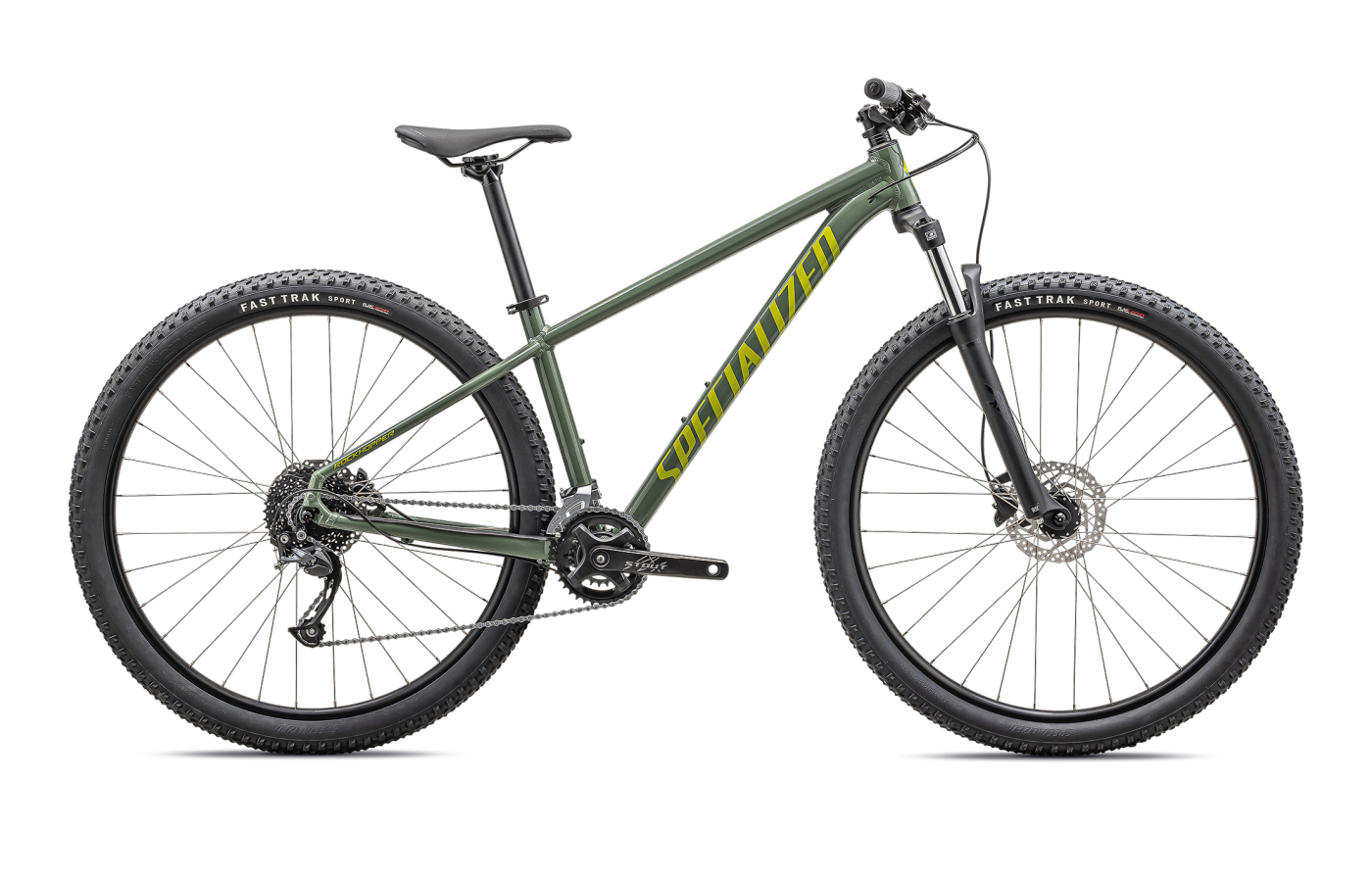
Rockhopper
The Rockhopper is the other benchmark budget hardtail — a well-rounded, dealer-backed platform that tends to match or undercut both the Fire Mountain and the entry-level Marlin on price. If you want a third quote, this is it.
Compare →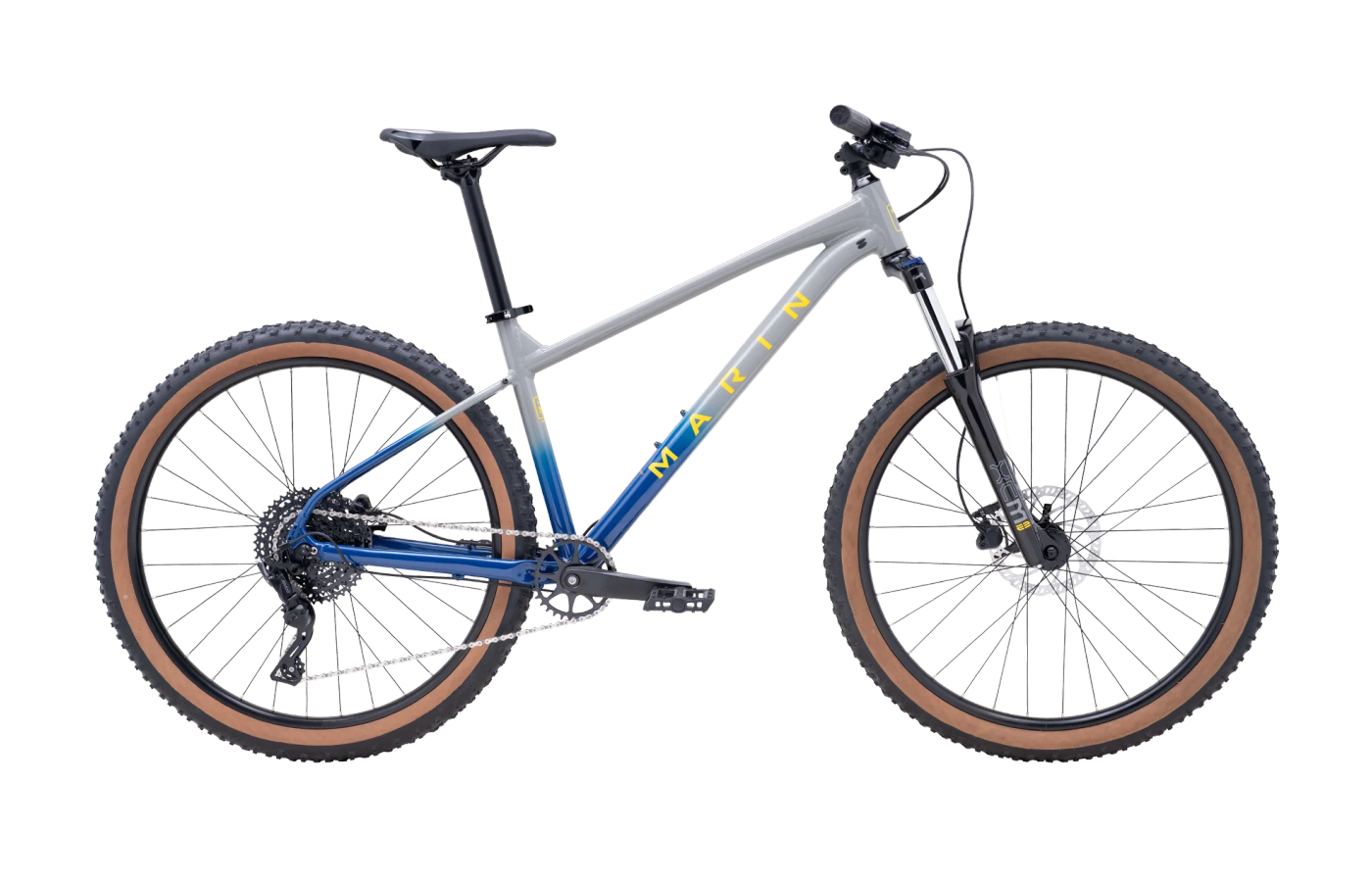
Bobcat Trail
Marin's Bobcat Trail leans slightly more trail-oriented than the Fire Mountain with similar value-per-dollar specs. A good pick if you like the Kona's simplicity but want a touch more descent-ready geometry.
Compare →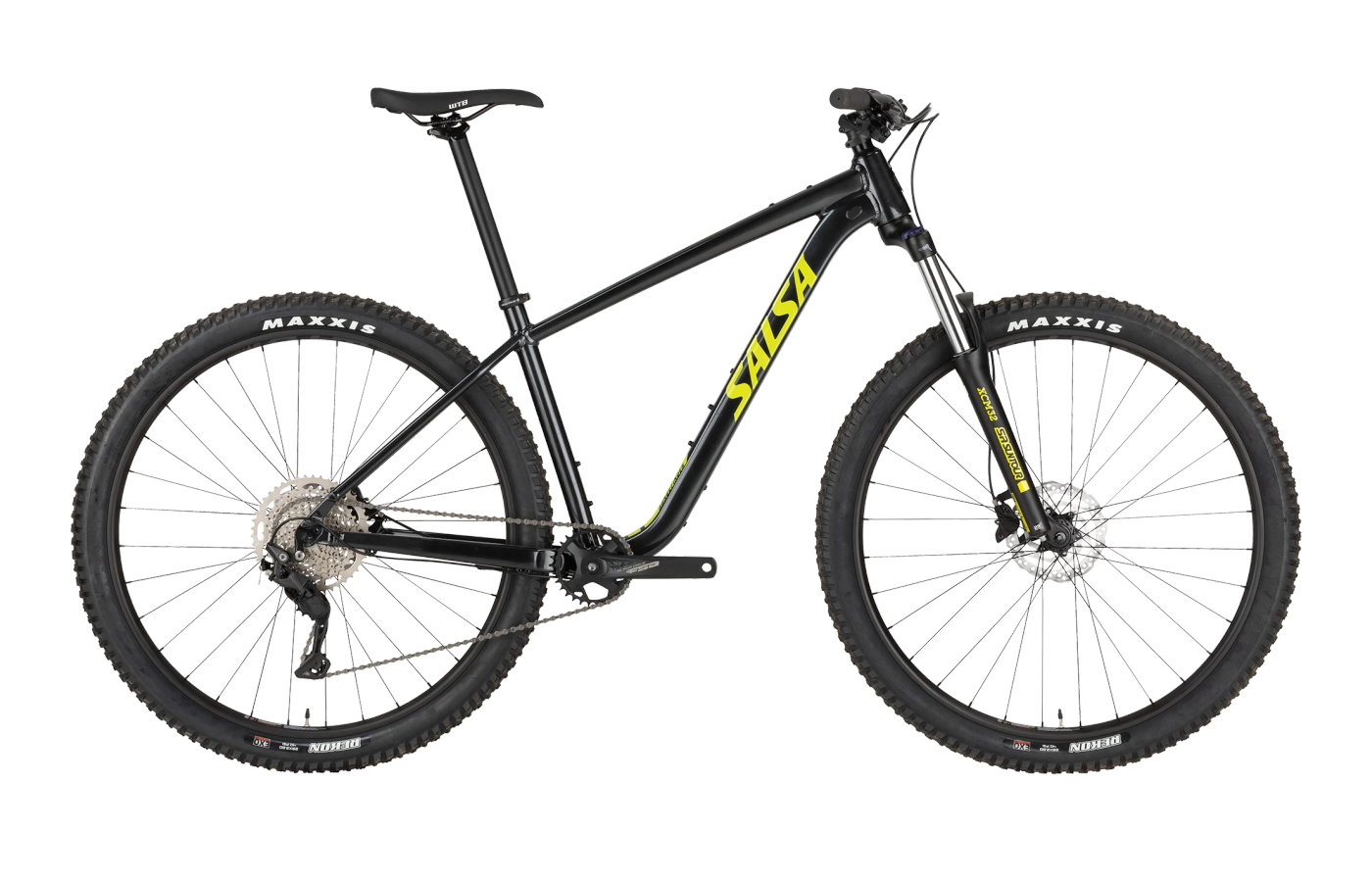
Rangefinder
The Salsa Rangefinder trades some of the Marlin's dealer polish for more aggressive trail geometry and typically burlier components — a better fit if you already know you want to push toward tougher singletrack and bikepacking.
Compare →