Switchblade
vsTrailcat LT
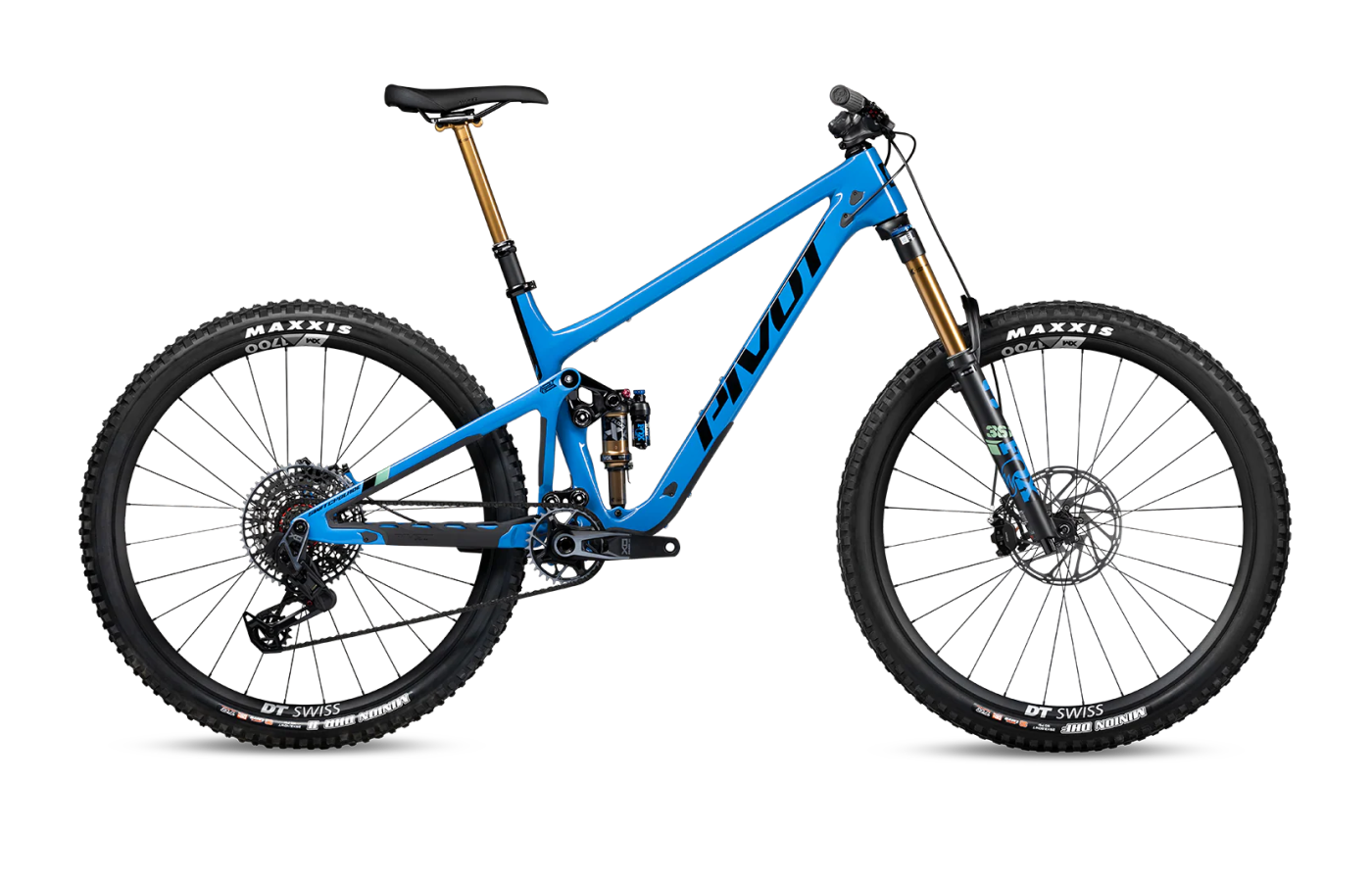
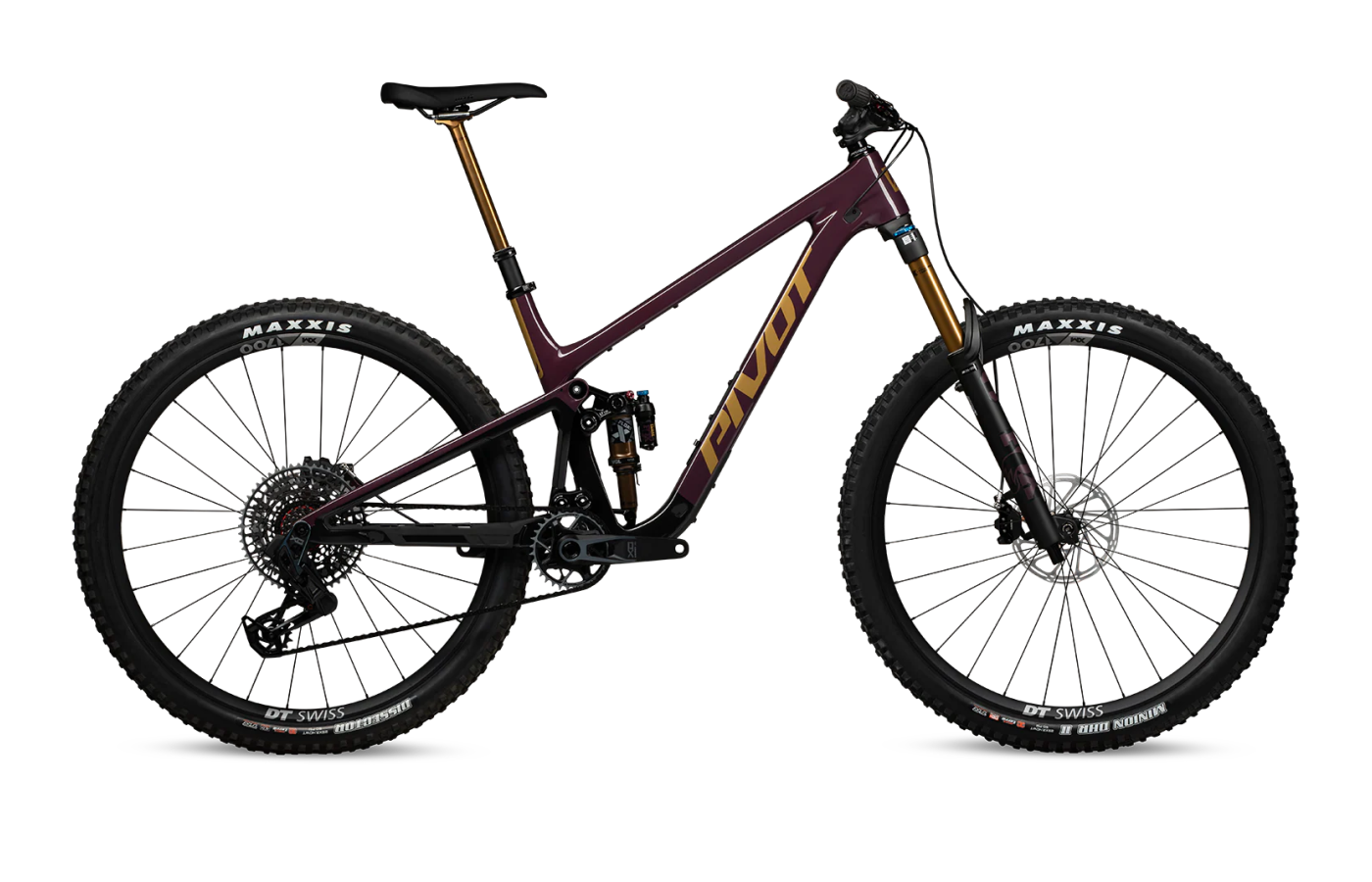
Same brand, same DW-Link, different appetites.
The Switchblade V3 is Pivot's do-it-all all-mountain bike. The Trailcat LT is the lighter, snappier mid-travel pick that punches above its travel.
Switchblade
- More travel, more fork — 142 mm rear / 160 mm front handles park laps and steeper, chunkier descents the Trailcat LT will eventually feel out of depth on.
- Steeper effective seat angle (76° vs. 75.6°) puts you in a more comfortable seated climbing position, especially on long sustained grades.
- Higher BB (29 mm drop) gives more pedal clearance on rocky tech climbs — fewer strike-induced stalls at the back of the pack.
- Heavier and less responsive than the Trailcat LT — overkill if your rides never push past flowy trail singletrack.
- No downtube storage; the Trailcat LT's Toolshed compartment makes it the easier choice for self-supported all-day rides.
Trailcat LT
- Lighter, snappier feel — a 135 mm rear / 150 mm fork chassis that reviewers say generates speed by pumping and rewards an active, responsive style.
- Excellent suspension tune — Kendall-Weed called the dw-link feel "more effective than the 142 on the Switchblade," with abundant grip and surprising small-bump compliance.
- Toolshed downtube storage and a longer 210 mm dropper option make it the more modern, self-sufficient cockpit out of the two.
- Slacker 75.6° seat angle plus a shorter aftermarket stem can lift the front end on very steep climbs.
- Reserved wheelbase trades high-speed plowing composure — off-road.cc warned it "can hinder stability when the going gets tough."
Editor’s analysis
Both wear Pivot badges, both run DW-Link, both come in the same priciest-first lineup. The question is how much bike you actually need under you.
On paper the gap looks small: the Pivot Switchblade gives you 142 mm rear / 160 mm fork, the Trailcat LT gives you 135 mm rear / 150 mm fork. Seven millimeters of rear travel and ten up front sounds like rounding error. It isn't. Pivot tunes these two as different bikes — the Switchblade is the all-mountain hammer that can take bike-park laps without flinching; the Trailcat LT is the responsive, efficient mid-travel bike Pivot built to bridge the gap to the cross-country Mach 4 SL.
Geometry tells the same story in a quieter voice. Head angles are almost identical (65.2° on the Switchblade, 65.3° on the Trailcat LT), and chainstays are within 1–2 mm at every size. But the Switchblade carries more reach size-for-size (440 vs. 430 mm at SM), a steeper 76° effective seat angle (vs. 75.6°), and sits 5 mm higher at the bottom bracket — 29 mm BB drop vs. 34 mm. Translation: the Switchblade is a touch more upright on the climb, the Trailcat LT sits lower and more in-the-bike on the descent, with the trade-off of more pedal-strike risk if you run long cranks.
Suspension is where reviewers diverge most. The Switchblade V3's longer lower link and rearward axle path were tuned for square-edge composure — Pinkbike, Singletracks, and Vital all called out a calmer, more planted feel at speed than the V2. The Trailcat LT's shock tune is, in Jeff Kendall-Weed's words, the "best-feeling suspension on a stock Pivot bike," and he found it "more effective than the 142 on the Switchblade" despite less travel. So the Switchblade gives you more travel and a heavier-duty fork; the Trailcat LT gives you a lighter, more responsive ride that smaller riders and high-cadence climbers will probably prefer.
Put another way: the Pivot Switchblade is the bike you buy if your local rides include genuine chunk, the occasional shuttle, and you want one trail bike that can do park days. The Pivot Trailcat LT is the bike you buy if most of your rides are pedal-up, trail-grade descents and you'd rather have a livelier, lighter-feeling chassis than ten extra millimeters of squish you'll rarely use.
Where the builds differ.
Comparing our editor's-pick builds side-by-side. Winners highlighted row-by-row — lower price and weight, and the better-spec component, each mark a point.
Build variants & pricing
Both lineups span ~$5,300 from base to flagship, with matching $6,499 entry points and near-identical drivetrain tiers at every step.
Editor's picks are the Pro X0 Eagle Transmission on each side ($8,999 Switchblade, $9,199 Trailcat LT) — same drivetrain, same brakes, same wheels, same cockpit, so the comparison is genuinely apples-to-apples. Prices are current US MSRP.
How they fit, how they steer.
Both at size SM. The Switchblade SM has 10 mm more reach (440 vs. 430), 9 mm more stack, and a 16 mm longer wheelbase. Chainstays are identical at 431 mm — that's where the playful character on both bikes comes from.
Which size should I buy?
Sizing is conservative on both — the Switchblade runs slightly longer in reach at every size, so riders between sizes may end up on different labels across the two bikes.
→These are starting points. Flexibility, riding style, and preferred position all shift the answer — if you’re between sizes, a professional fit beats a chart.
What the magazines said.
Published reviews from trusted cycling outlets. Click through for the full write-up.
Which one should you buy?
If your trails include real chunk or you want one bike that can do park laps, get the Switchblade. If most of your riding is pedal-and-flow and you want a livelier, lighter-feeling ride, get the Trailcat LT.
Switchblade
If you ride genuinely rough terrain — rock gardens, technical descents, the occasional shuttle or park day — and want a single trail bike that doesn't run out of suspension when things get serious, the Switchblade V3 is still the benchmark in Pivot's lineup. Reviewers consistently call out the V3's improved high-speed composure as the meaningful upgrade.
Trailcat LT
If your rides are mostly pedal-up, flow-down, and you'd rather have a lighter, snappier bike than a few extra millimeters of travel, the Trailcat LT is the better pick. Pivot tuned it as the modern replacement for the Trail 429 — efficient on the climbs, playful in the corners, and surprisingly composed for 135 mm of rear travel.
Questions buyers actually ask.
Short answers to the things we get emailed about most often.
01Which one descends better?
The Switchblade, in genuinely rough terrain. The 160 mm Fox 36 fork (vs. 150 mm on the Trailcat LT), 7 mm more rear travel, and the V3's revised lower link with a more rearward axle path were specifically tuned for high-speed composure. Reviewers consistently described it as feeling "more planted" and "point-and-shoot" through chunk.
The Trailcat LT punches above its travel numbers thanks to its shock tune — Jeff Kendall-Weed even called the suspension "more effective than the 142 on the Switchblade" — but off-road.cc noted the shorter wheelbase "can hinder stability when the going gets tough." On smooth flow trails the gap is negligible. On rocky, fast descents the Switchblade is the clearly more capable bike.
02Which one climbs better?
Both climb very well — DW-Link is famously efficient under pedaling load, and reviewers said both bikes feel "nearly solid" when you put power down.
The Switchblade has the slight edge for sustained seated climbs because of its steeper 76° effective seat angle (vs. 75.6° on the Trailcat LT) and 5 mm higher bottom bracket — that's less front-end lift on steep grades, less pedal-strike risk on technical climbs.
The Trailcat LT is lighter-feeling and snappier on accelerations, and Kendall-Weed found it "more comfortable and more competent on steeper climbs" than Pivot's lighter Shuttle SL. But off-road.cc warned that the 75.6° seat angle paired with a shorter aftermarket stem could lift the front wheel on the steepest pitches.
03How different is the geometry, really?
Less than the marketing suggests, but enough to feel. Head angles are within 0.1° (65.2° vs. 65.3°). Chainstays are within 1–2 mm at every size — both run 431 mm at SM/MD.
The meaningful differences: the Switchblade carries about 10 mm more reach size-for-size (440 vs. 430 at SM, 480 vs. 475 at LG), a 0.4° steeper seat angle, and sits 5 mm higher at the BB (29 mm drop vs. 34 mm). The Trailcat LT is shorter, lower, and slightly more relaxed at the seat — a setup tuned for nimble responsiveness rather than high-speed composure.
04Do they share parts and platforms?
Both run Pivot's DW-Link suspension, both use Super Boost+ 12 x 157 mm rear hub spacing, and both ship with the same Phoenix-branded cockpit components and similar Fox 36 forks (different travel). Drivetrain and brake options at each price tier line up almost identically — the Pro X0 build on each side, for example, is spec-for-spec the same SRAM X0 AXS Transmission groupset and SRAM Maven Silver brakes on DT Swiss XM1700 wheels.
What you can't do is convert one frame into the other. Off-road.cc speculated that swapping the rocker link, lower link, fork, and shock would let you cross-shop, but Kendall-Weed clarified that Pivot does not sell conversion kits and "it's not an easy task" — pick the one you want and stick with it.
05What about the press-fit BB and Super Boost?
Both share the same two long-running Pivot platform choices and the same trade-offs. The press-fit BB is precision-machined and well-executed, but multiple long-term tests (Blister, Flow, off-road.cc) reported eventual creak issues that needed servicing — that's industry-typical for press-fit, not a Pivot-specific defect.
Super Boost+ 12 x 157 mm rear spacing improves rear-triangle stiffness and chainline geometry, but it limits aftermarket wheel and hub compatibility — if you swap wheels between bikes or hunt second-hand wheelsets, you'll have fewer options than a 148 mm Boost bike. Both flaws are real, both are manageable, and neither is unique to one of these models.
06Can I run a mullet (mixed-wheel) setup?
Yes on both. The Switchblade has a flip chip at the lower link that compensates for a 27.5" rear wheel and keeps the geometry sensible. The Trailcat LT is similarly mullet-compatible.
Reviewers universally recommend dropping crank length when you mullet either bike — 175 mm cranks plus a lower BB plus a smaller rear wheel = pedal strikes. Most testers ran 170 mm or even 165 mm cranks in mullet trim. Pivot's Flow Mountain Bike long-term test ran a mullet setup for nine months without major complaints once the cranks were swapped.
07Which has the better warranty?
Both carry Pivot's lifetime frame warranty for bikes sold after January 1, 2024 — Pivot updated their warranty policy across the lineup that year. So a current-model Switchblade V3 and a Trailcat LT both come with the same lifetime coverage to the original owner against manufacturing defects.
Pivot also runs a crash-replacement program for both, with discounted replacement frame pricing for owners who damage a frame outside warranty terms.
08What sizes are these compared at, and why?
Both at size SM, picked by our fit algorithm against a default 173 cm (5'8") rider on each bike's stack/reach/effective top tube. Both Pivots size conservatively — the Switchblade SM lands a 173 cm rider with a 440 mm reach and 627 mm stack; the Trailcat LT SM is 430 / 618.
For taller or shorter riders the picks shift, but the comparison stays roughly proportional — the Switchblade tends to run about 10 mm longer in reach at every size, so riders between sizes on one bike may not be between sizes on the other.
Similar bikes
If your priorities don’t map cleanly onto either of these, one of these adjacent bikes probably fits better.
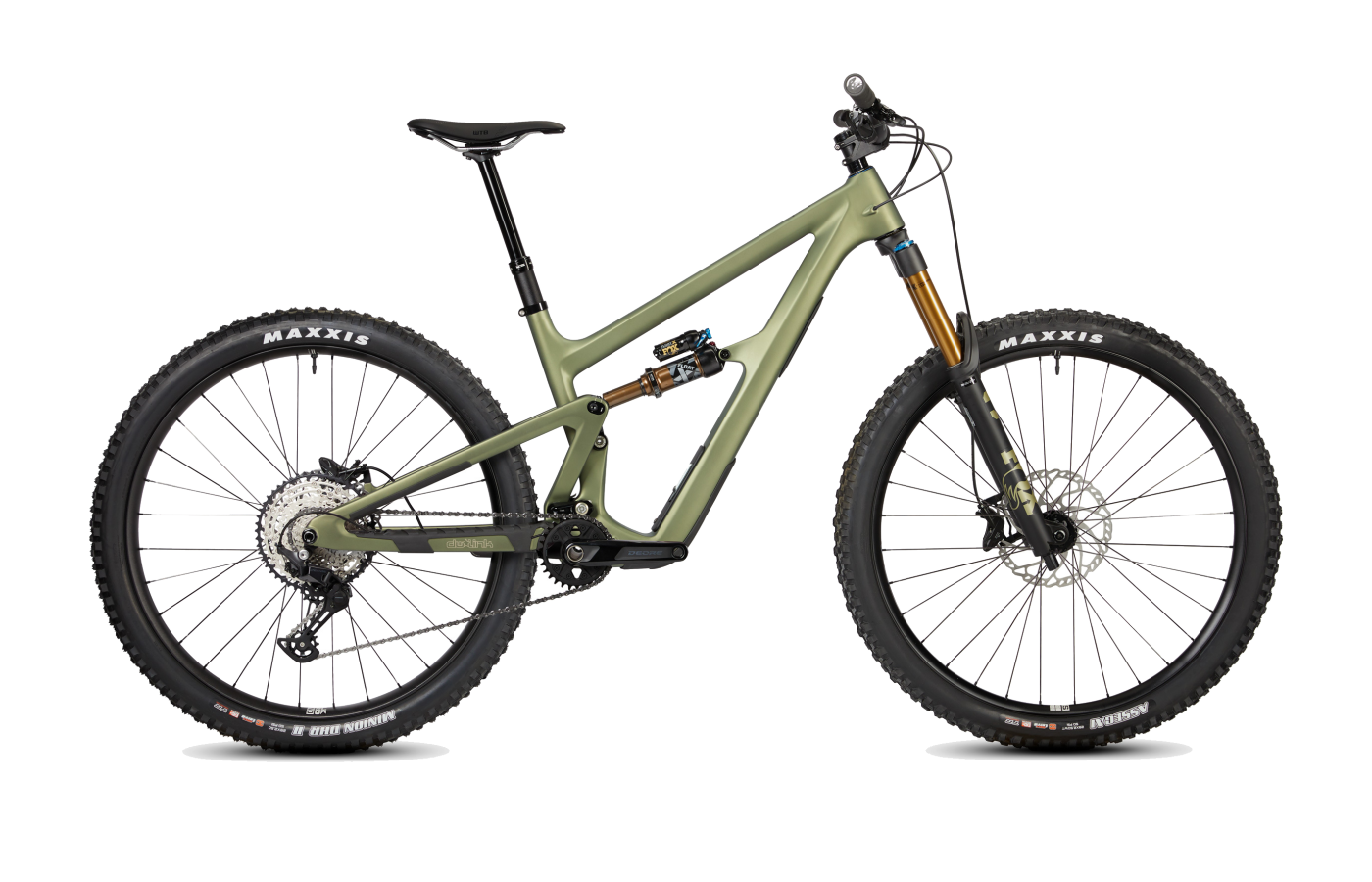
Ripmo
Another DW-Link bike, with more rear travel (147 mm) and a more enduro-leaning posture than the Switchblade. Worth a look if you'd push the Switchblade's envelope harder and want even more descending capability.
Compare →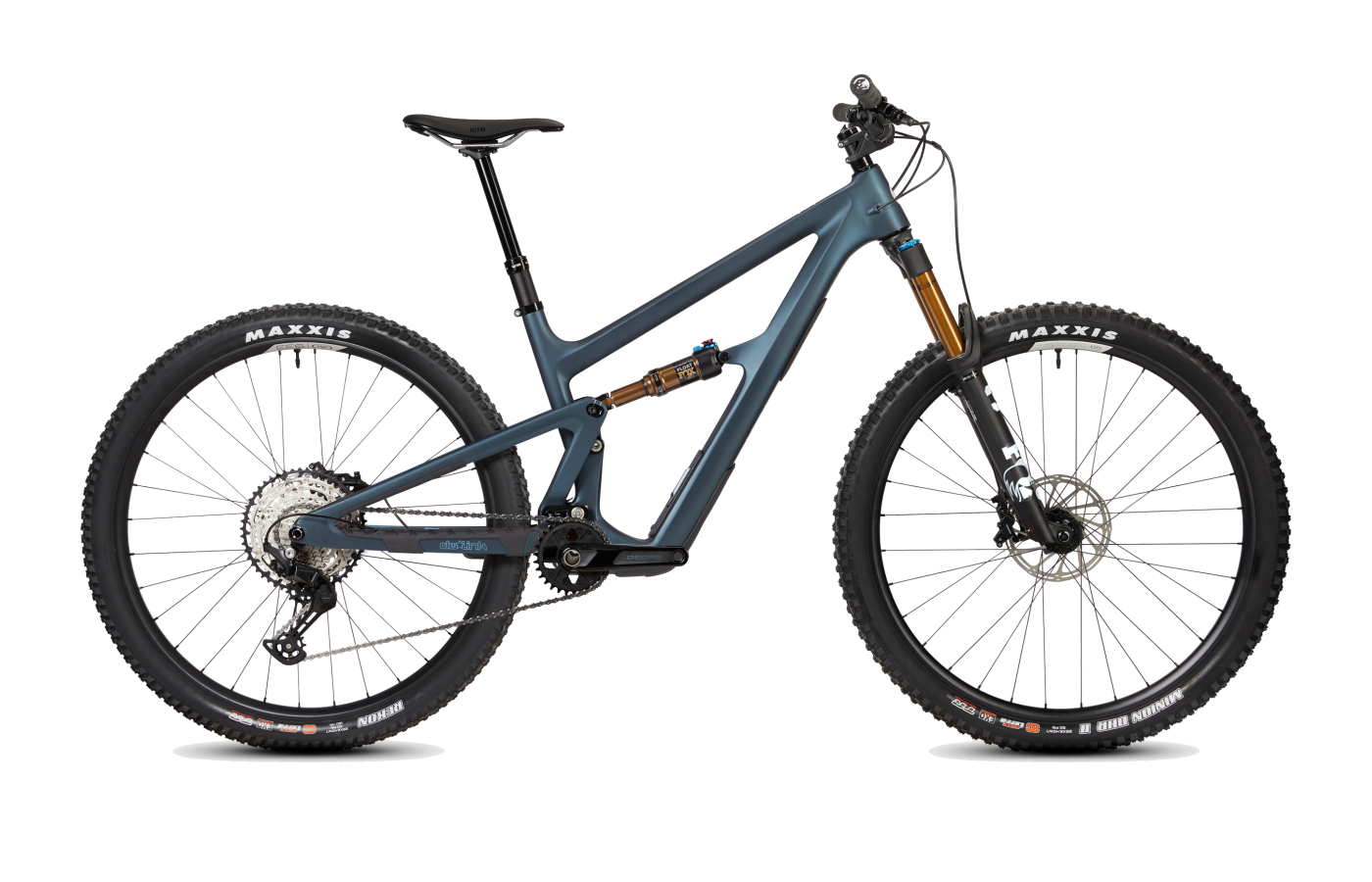
Ripley
The lighter, shorter-travel Ibis is the closest analog to the Trailcat LT — same DW-Link feel, same playful-and-efficient brief, often at a friendlier price than Pivot.
Compare →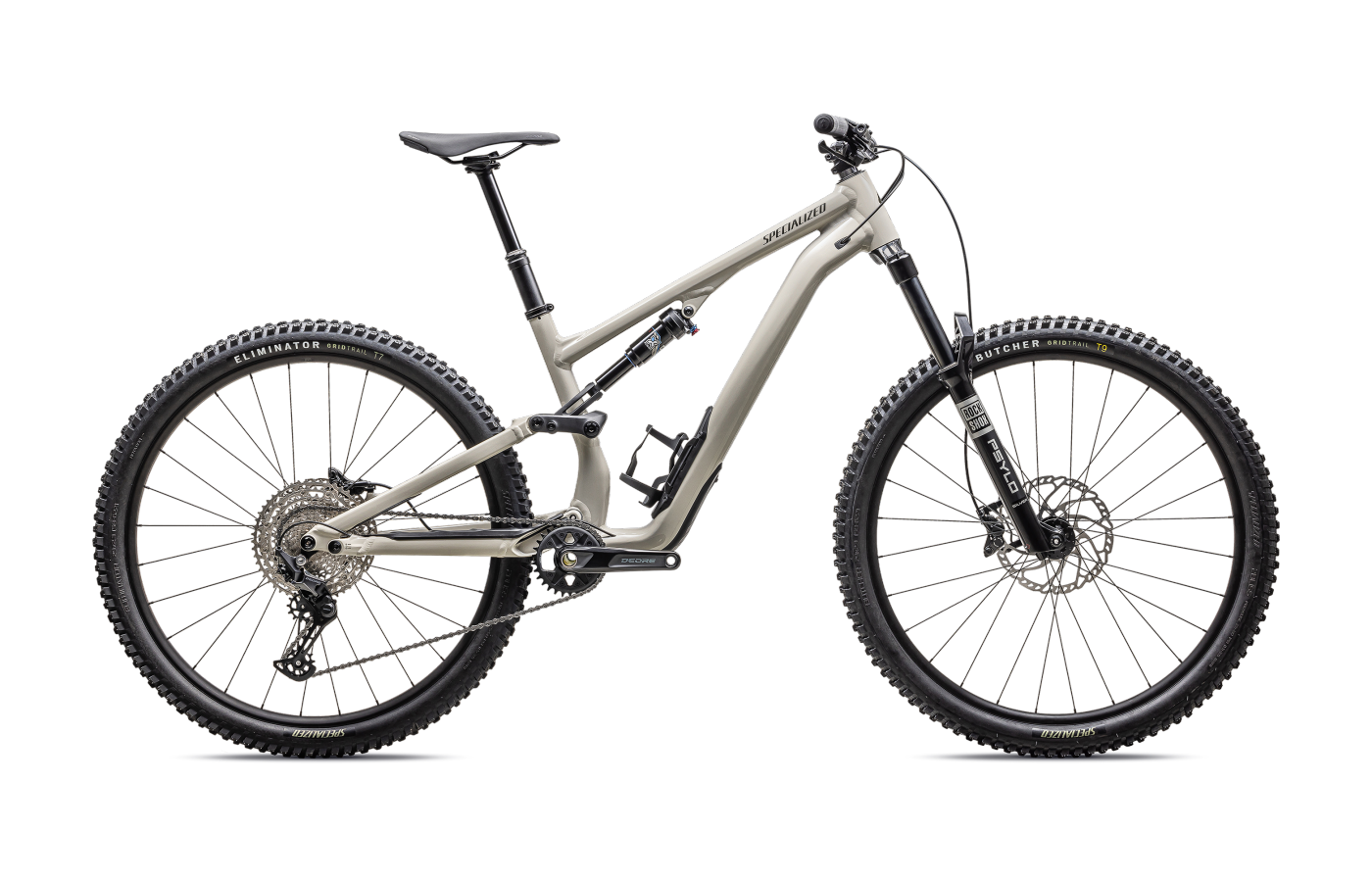
Stumpjumper
Specialized's classic do-it-all trail bike — similar travel bracket to the Switchblade, much wider dealer network, and a more generous build range at the entry-level end of the lineup.
Compare →