Trailcat LT
vsStumpjumper
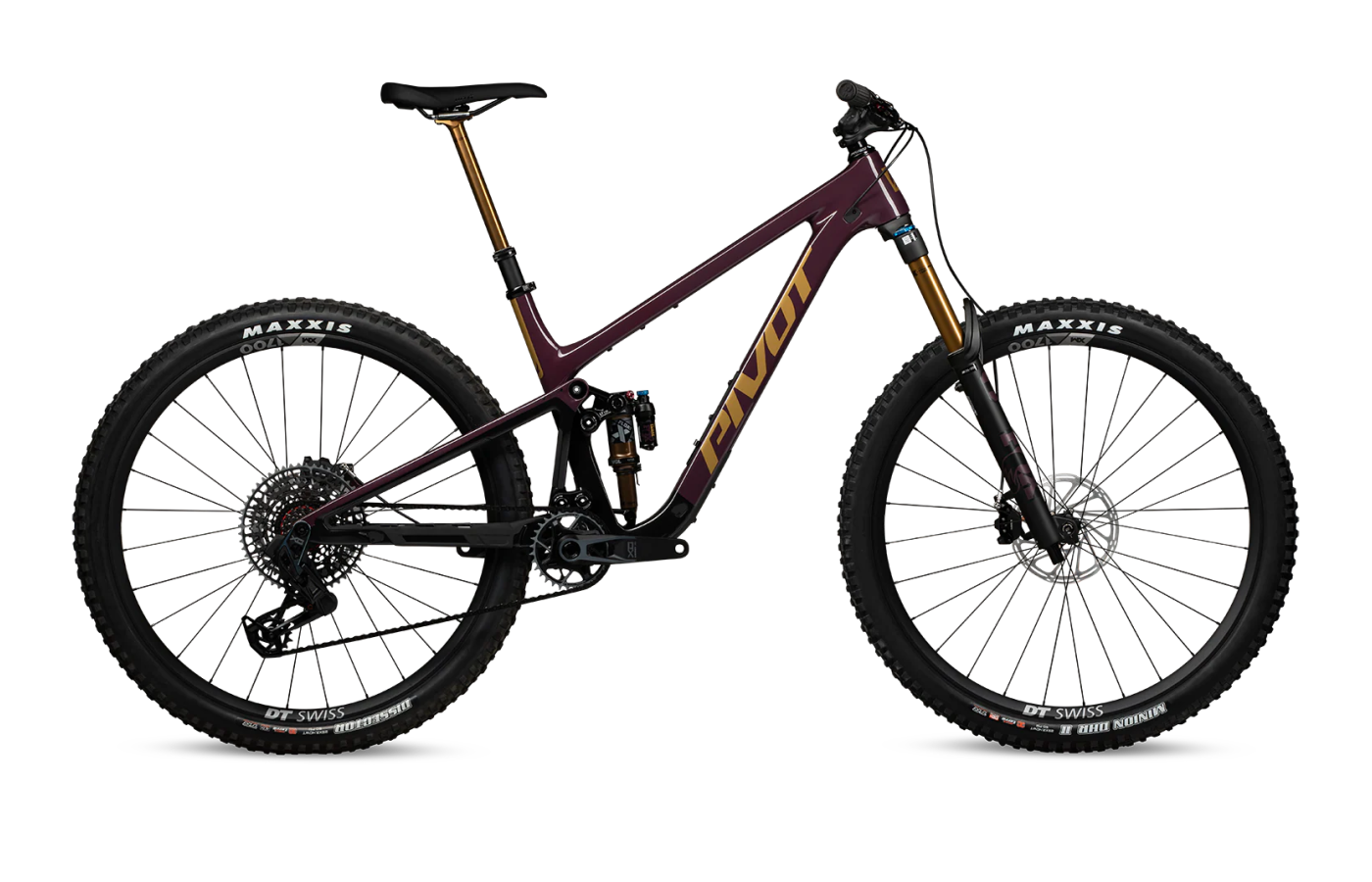
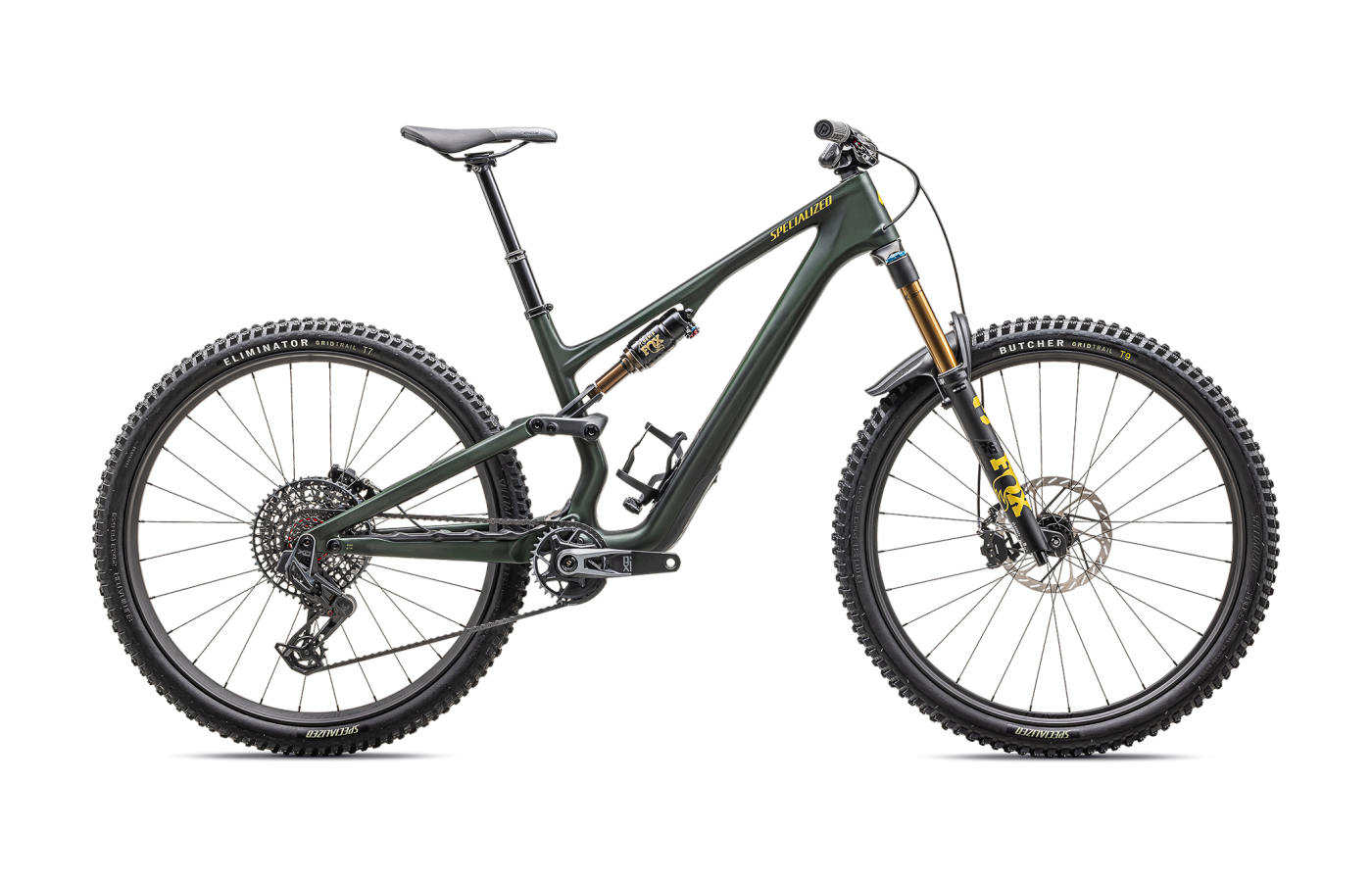
Two trail bikes, two suspension philosophies.
The Trailcat LT is a snappy 135 mm dw-link rig that punches above its travel. The Stumpjumper 15 is a 145 mm GENIE-shock platform built to do everything.
Trailcat LT
- Snappier pedaling platform — dw-link is 'nearly solid' under power, no climb switch needed.
- Lively, engaging cornering — short 431 mm chainstays and Super Boost stiffness reward active riders.
- Lifetime frame warranty on bikes sold after January 1, 2024.
- Premium-only pricing — entry is $6,499, no sub-$5k option.
- Press-fit BB and Super Boost rear end limit wheel/component flexibility.
Stumpjumper
- More travel for less — 145 mm rear at $2,999 entry, and the GENIE shock punches above its number.
- Adjustable geometry — headset cups and flip chip let one frame cover trail to bike-park duties.
- Threaded BB and SWAT storage — lower-maintenance basics with genuinely useful in-frame storage.
- Carbon frames are wireless-only — no mechanical or Shimano electronic option.
- Proprietary GENIE shock raises long-term parts-availability questions.
Editor’s analysis
Same trail-bike bracket, very different intentions — one is a playful precision tool, the other a do-it-all chameleon.
On paper these are both mid-travel 29ers in the trail bracket, both running 150 mm forks, both built around modern carbon platforms. But spend any time with the geometry and the suspension philosophies and the lanes diverge fast.
The Pivot Trailcat LT is the lighter, sharper instrument. It runs 135 mm of rear travel through Pivot's dw-link, which reviewers describe as 'nearly solid' under pedaling — the kind of platform that climbs like a shorter-travel bike but, per Jeff Kendall-Weed, 'fools the rider into thinking that it's packing more travel on tap than it suggests.' Geometry is conservative-modern: 65.3-degree head tube angle, a tight 431 mm chainstay on a small/medium, and a Super Boost rear end that off-road.cc says delivers a 'feedback-rich and engaging ride, especially in the corners.'
The Specialized Stumpjumper 15 is the broader-spectrum bike. It carries 145 mm rear and 150 mm front, sits on a slacker 64.5-degree head tube angle, and runs the proprietary Fox GENIE shock — a dual-chamber air spring that's 'hyper-sensitive' for the first 70% of travel, then ramps hard to prevent bottom-out. Reviewers consistently flag it as the more adjustable, more capable-when-things-get-rough bike, with adjustable headset cups and a flip chip that can swing it from mile-muncher to bike-park ripper.
Put another way: the Trailcat LT is the bike you buy when you want to feel the trail and pump it for speed. The Stumpjumper is the bike you buy when you want one bike to handle the easy days, the techy climbs, and the bike-park weekend without complaining.
Where the builds differ.
Comparing our editor's-pick builds side-by-side. Winners highlighted row-by-row — lower price and weight, and the better-spec component, each mark a point.
Build variants & pricing
Pivot starts at $6,499 and tops out at $11,999. Specialized covers a much wider $2,999–$11,999 range, with alloy and carbon options.
Prices are current US MSRP. The Pivot has no alloy frame and no sub-$6k build; if budget is the deciding factor, the Stumpjumper is the only one of the two with a real entry-level option.
How they fit, how they steer.
Compared at Pivot SM and Stumpjumper S3 — the fit-picked sizes for a 5'8" rider on each. The Stumpjumper sits 9 mm taller in stack with 20 mm more reach and a head tube angle a full 0.8 degrees slacker; the Pivot has a steeper front end and a 36 mm shorter wheelbase, so it lives up to its livelier reputation.
Which size should I buy?
Size recommendations based on stack, reach, and effective top tube. The Specialized lineup steps in 25 mm reach increments across six sizes; Pivot uses XS–XL with bigger jumps between sizes.
→These are starting points. Flexibility, riding style, and preferred position all shift the answer — if you’re between sizes, a professional fit beats a chart.
What the magazines said.
Published reviews from trusted cycling outlets. Click through for the full write-up.
Which one should you buy?
If you want a snappy, efficient trail bike that rewards active riding, get the Trailcat LT. If you want one bike to cover everything from mellow loops to bike-park laps, get the Stumpjumper 15.
Trailcat LT
If your idea of a trail bike is one that pumps, jumps, and accelerates the moment you stand on the pedals — and you'd rather generate speed than mash through chunder — the Trailcat LT is the sharper tool. The dw-link suspension keeps you efficient on the climbs, and the short rear end keeps things lively on the way down.
Stumpjumper
If you want one bike for techy climbs, weekend epics, the occasional bike-park day, and a budget that doesn't start at $6.5k, the Stumpjumper 15 is hard to argue against. Adjustable geometry, longer travel, the GENIE shock's broad tunability, and a build ladder that starts at $2,999.
Questions buyers actually ask.
Short answers to the things we get emailed about most often.
01Which is the better climber?
Both climb well, but in different ways. The Pivot Trailcat LT uses a dw-link platform that off-road.cc calls 'nearly solid' under pedaling — it transfers power cleanly without much climb-switch fiddling, and it's the lighter bike. Jeff Kendall-Weed found the LT 'more comfortable and more competent on steeper climbs' than the shorter-travel Trailcat SL.
The Stumpjumper 15 climbs on traction, not just efficiency. The GENIE shock's supple first 70% of stroke keeps the rear wheel glued to roots and rocks on technical climbs, which reviewers consistently flag as a standout. On smoother fire-road grinds, some testers found it 'a touch too soft' and used the climb switch to firm it up. Steeper effective seat angle (76.5–77 degrees vs. Pivot's 75.6) keeps you more centered over the bottom bracket on long ascents.
02How much suspension travel does each have?
Trailcat LT: 135 mm rear / 150 mm front (Fox 36).
Stumpjumper 15: 145 mm rear / 150 mm front (Fox 36 on most builds; the Coil/Alloy build runs a 160 mm Fox 38).
That 10 mm rear-travel gap matters less in practice than the suspension platforms — the Trailcat's dw-link feels efficient and engaged, while the Stumpjumper's GENIE shock is plusher up top and ramps hard at the end. Reviewers of both bikes say each one rides bigger than its travel number suggests.
03Which is more capable on rough descents?
The Stumpjumper 15 has the edge when speeds and impacts get bigger. Its head tube angle is 64.5 degrees vs. the Pivot's 65.3, and the GENIE shock's progressive ramp-up means reviewers report 'never being able to hit full travel' even on hucks-to-flat. With adjustable headset cups, you can slacken it further for bike-park use.
The Trailcat LT is composed but not a plow. Off-road.cc notes that its 'reserved wheelbase' boosts agility but 'can hinder stability when the going gets tough.' It's a bike for active riders who want to pick lines, not point-and-shoot through the gnarliest terrain.
04What's the deal with Specialized's GENIE shock?
The GENIE is a Fox-built, Specialized-spec shock with a dual-chamber air spring. The first 70% of travel uses a large air volume for a 'coil-like' feel — supple, traction-rich. After that, a 'GENIE band' closes off the outer chamber, drastically increasing progression to prevent bottom-out. Riders can add up to four bands to firm up the mid-stroke if they want a sportier feel.
It's well-reviewed but proprietary — the frame accepts a standard 210x55 mm shock, so you can swap it out, but the kinematics are tuned for the GENIE. Some buyers worry about long-term parts availability; Specialized says it uses mostly standard Fox internals and one extra seal.
05Can the carbon Stumpjumper run a mechanical drivetrain?
No. All carbon Stumpjumper 15 frames are wireless-only — there's no internal cable routing for a mechanical derailleur. If you want a Shimano XT mechanical or any cable-shift setup on a Stumpjumper, you have to buy an alloy frame.
The Pivot Trailcat LT has no such restriction. The lineup includes Shimano XT Di2, SRAM AXS Transmission, and even a SRAM Eagle 90 mechanical build, so Shimano fans and mechanical-shift loyalists have an option.
06How do the geometries compare?
Comparing fit-picked sizes (Pivot SM and Stumpjumper S3 for a 5'8" rider):
- Reach: Pivot 430 mm, Specialized 450 mm (+20 mm).
- Stack: Pivot 618 mm, Specialized 627 mm (+9 mm).
- Head tube angle: Pivot 65.3°, Specialized 64.5° (Specialized is 0.8° slacker).
- Seat tube angle: Pivot 75.6°, Specialized 77° (Specialized is steeper for climbing).
- Chainstay: Pivot 431 mm, Specialized 435 mm.
- Wheelbase: Pivot 1177 mm, Specialized 1213 mm (+36 mm).
The Stumpjumper is the longer, slacker, more descent-biased bike at the same rider height. The Pivot is shorter and more upright, which feeds its livelier handling but gives up some high-speed composure.
07What about frame storage and standards?
Both have in-frame downtube storage. The Stumpjumper's SWAT 4.0 is a long-running Specialized feature and reviewers consistently call it best-in-class — easy to use, well-sealed, rattle-free. The Pivot Toolshed is newer and includes a flippable door for bottle-cage height adjustment.
On standards, the Stumpjumper uses a threaded BB and standard 148 mm Boost rear spacing. The Trailcat LT uses a press-fit BB and Super Boost (157 mm) rear — the press-fit drew some criticism in off-road.cc's testing for developing a creak, and the Super Boost limits wheel compatibility (and is, per off-road.cc, 'a little redundant on a bike of this travel').
08What warranty do they come with?
Both come with lifetime frame warranties to the original owner against manufacturing defects. Pivot's lifetime warranty applies to bikes sold after January 1, 2024 — a recent improvement. Specialized also includes lifetime pivot bearing replacement on the Stumpjumper, which is a nice bonus on a four-bar suspension bike.
Similar bikes
If your priorities don’t map cleanly onto either of these, one of these adjacent bikes probably fits better.
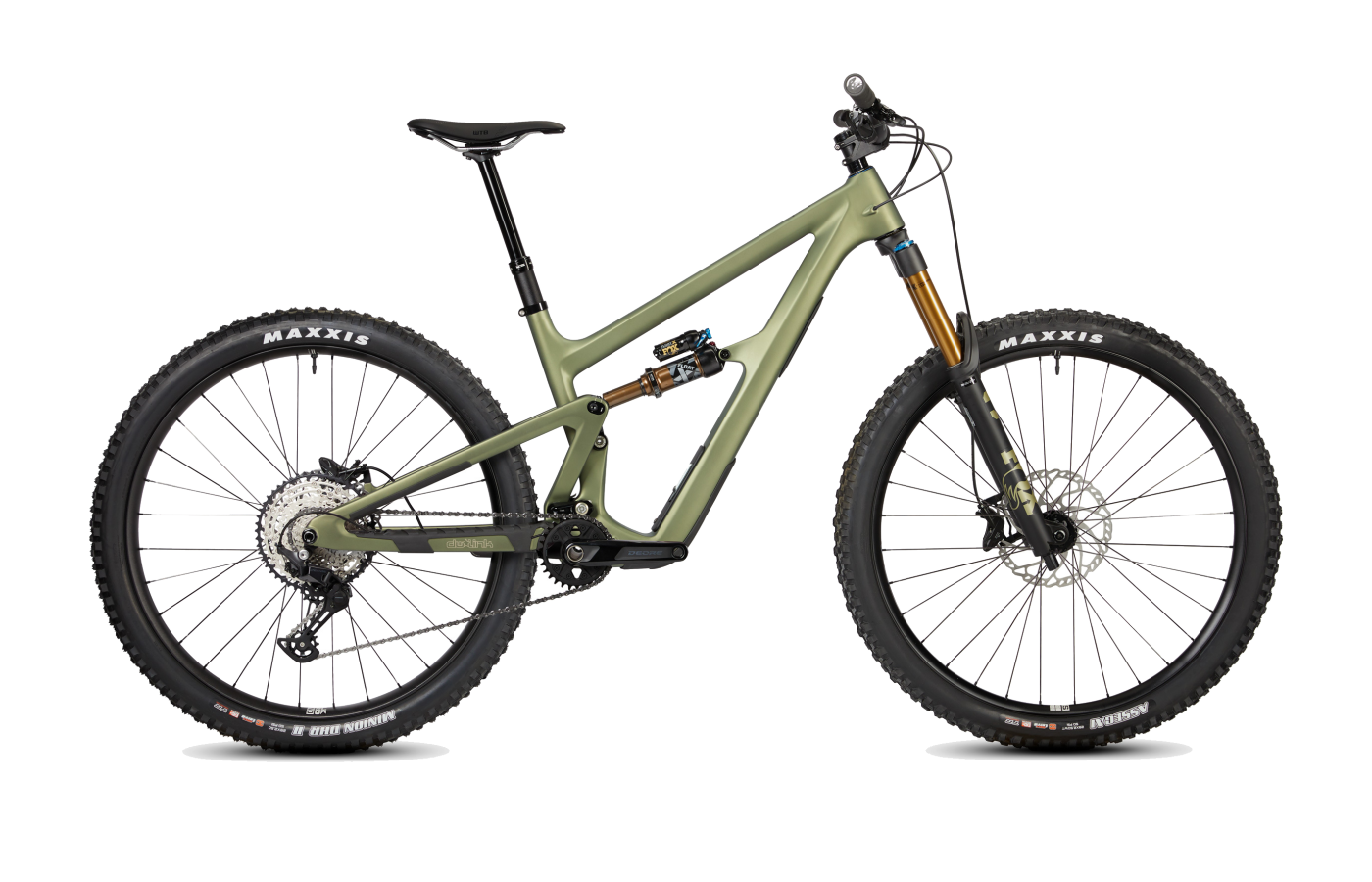
Ripmo
The mid-travel benchmark — 147 mm rear with longer-travel-bike capability and Ibis's no-nonsense build philosophy. If you want a Trailcat LT-style ride with a touch more travel and a more relaxed price, this is the obvious cross-shop.
Compare →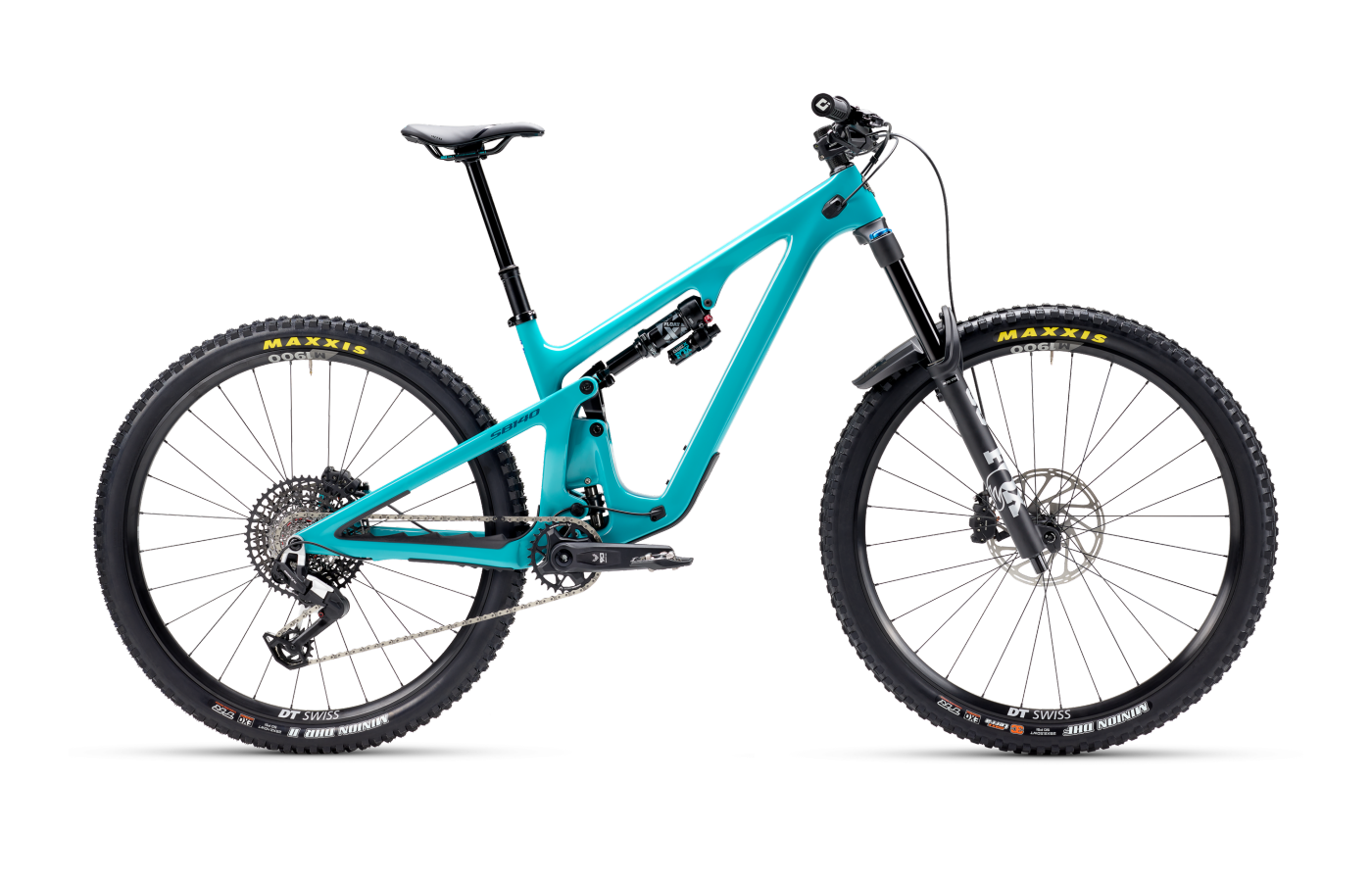
SB140
Yeti's take on the same trail-bike bracket, with a Switch Infinity suspension that's known for sharp pedaling and crisp small-bump compliance. A direct competitor to both bikes here, and the one buyers also cross-shop most often.
Compare →
Fuel EX
Trek's do-everything trail bike, with a Mino Link flip chip and adjustable geometry that mirrors the Stumpjumper's spirit. Often a quieter pick than the Specialized but with a comparable everyman trail-bike character.
Compare →