Falcn RS
vsTarmac
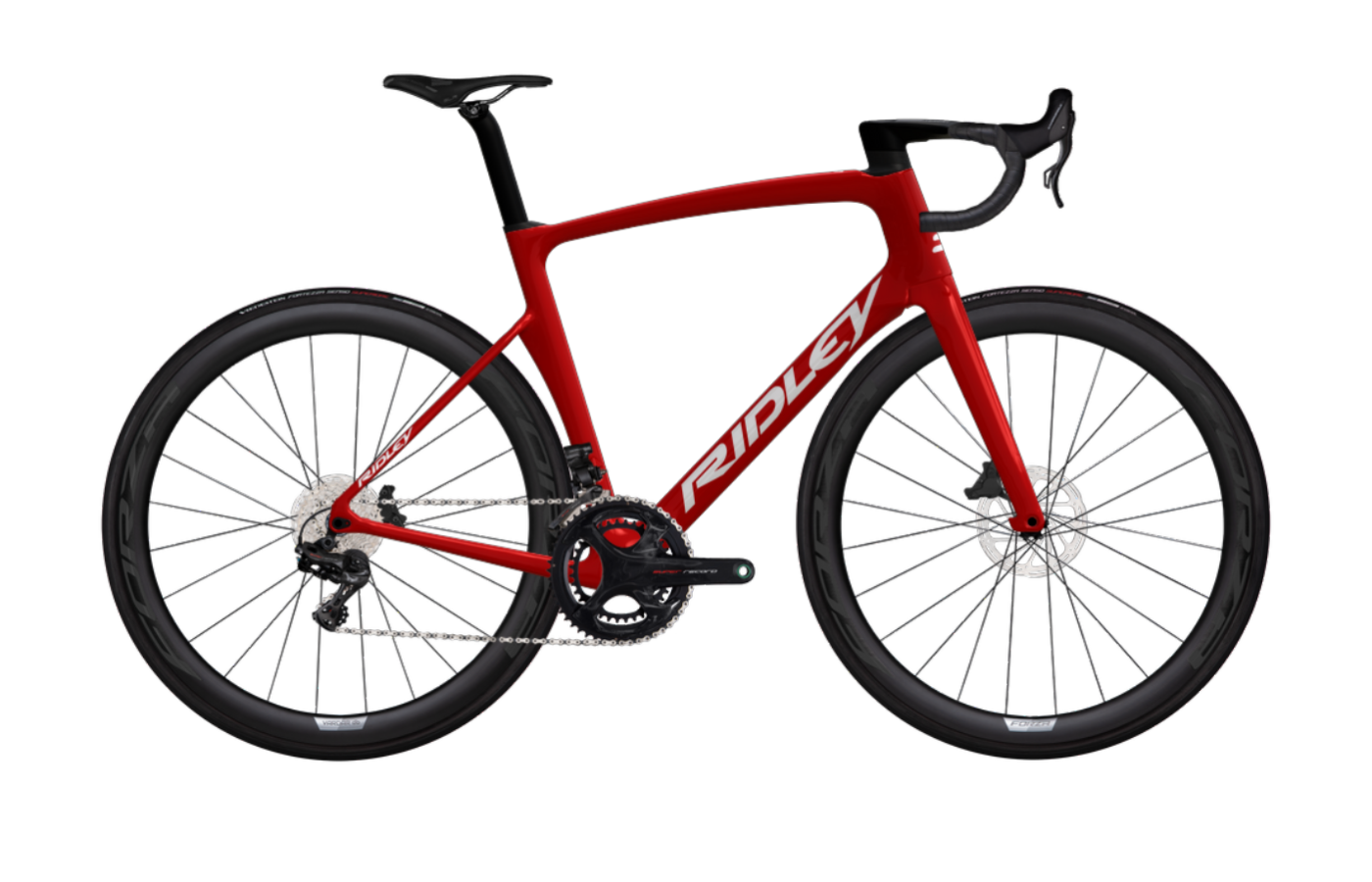
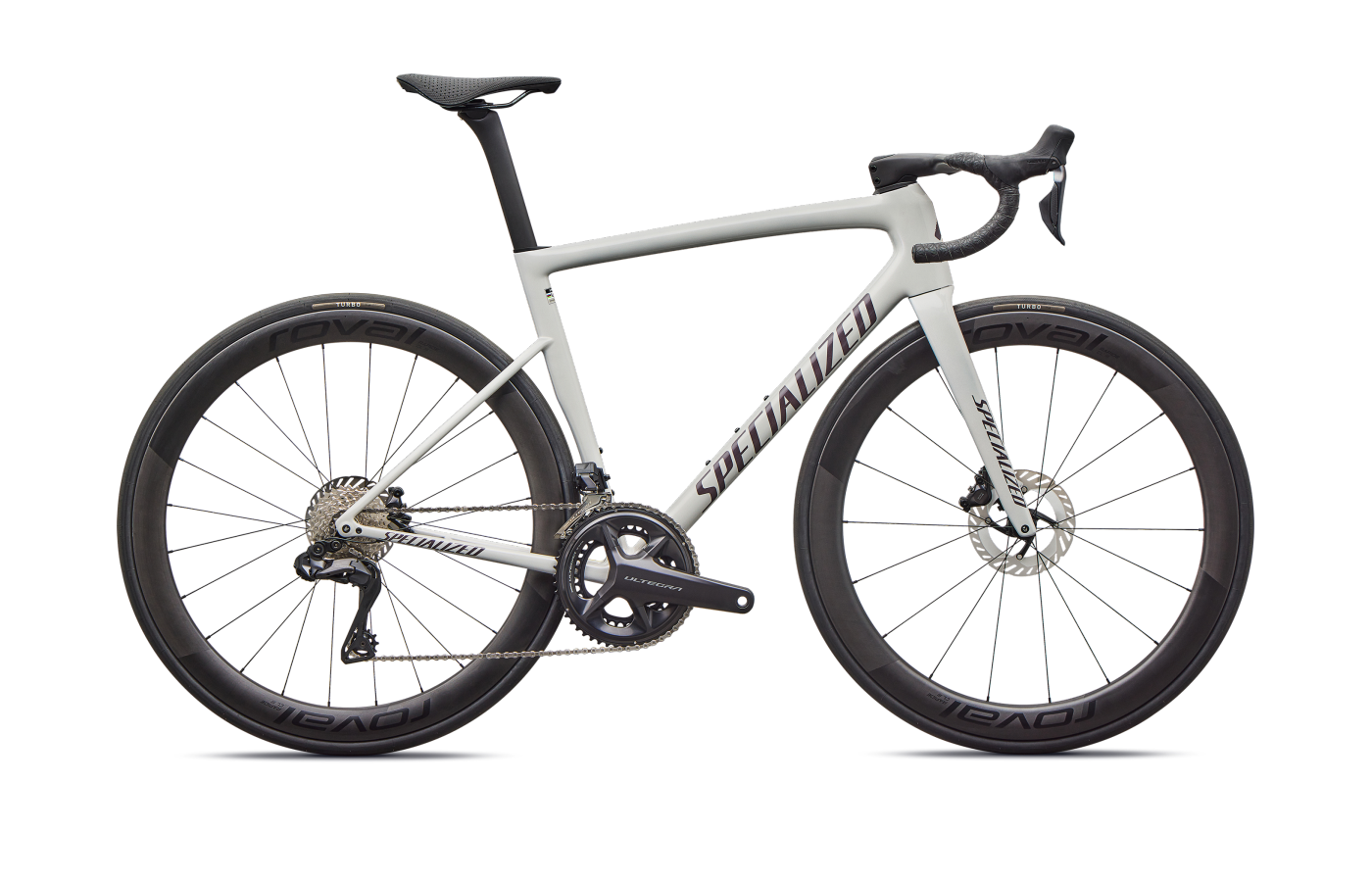
Two all-rounders, two geometry philosophies.
The Tarmac SL8 is the polished benchmark — compliant, balanced, endlessly specced. The Falcn RS sits lower and longer, a sharper-edged racer with room for wider rubber.
Falcn RS
- More aggressive geometry — 530 mm stack / 388 mm reach in size S, a full 14 mm lower than the equivalent Tarmac.
- Category-leading tire clearance at 34 mm, versus 32 mm on the Tarmac — real room for rough roads or light gravel.
- Top-tier carbon across the range — every Ridley Falcn RS build uses Aero-To-Weight Ultra HM carbon, no stepped-down frame grade.
- Front end is race-stiff — reviewers consistently flag it as harsher than the Tarmac.
- No power meter stock and lineup starts high — Ridley offers no entry-level sub-$5k option.
Tarmac
- Broadest build range in the segment — twelve builds from $4,699 to $13,499, with power meters standard from the Expert up.
- The more compliant ride — Specialized claims 6% more saddle compliance than the SL7, and reviewers uniformly confirm it.
- Lightest S-Works frame in the category at a claimed 685 g (size 56), with complete S-Works builds down to 6.67 kg.
- Tire clearance capped at 32 mm — 2 mm tighter than the Ridley.
- Mid-tier builds drop to FACT 10r carbon (not the S-Works 12r), so the top frame is a price-gated upgrade.
Editor’s analysis
On paper, both are aero-light all-rounders. In the cockpit, the Falcn RS is the angrier bike — and that's either the feature or the deal-breaker.
The Specialized Tarmac SL8 is what most buyers in this segment are implicitly comparing against. WorldTour pedigree, a 685 g S-Works FACT 12r frame (780 g on the Pro and Expert's FACT 10r), a 32 mm tire ceiling, and Specialized's claim of being only 4 W off a pure aero bike like the Cervélo S5 at 45 km/h. The ride is the balanced one — reviewers across Rouleur, BikeRadar, and Cyclingnews describe it as fast but not punishing, with a rear triangle that Specialized claims is 6% more compliant than the SL7.
The Ridley Falcn RS attacks the same all-rounder brief from a harder angle. A size Small runs 530 mm stack / 388 mm reach — a full 14 mm lower than the fit-picked 54 Tarmac at the same reach. Add a 73° head tube, 407 mm chainstays, and a wider 34 mm tire clearance, and you get a bike Escape Collective called "unwavering in its harshness" at the front end but Cyclist praised for "category benchmark tyre clearance." It's a race bike first, a Sunday bike second.
Stack is where these two diverge most. On the fit-picked sizes for a 5'8" rider, the Falcn RS is 14 mm lower with 4 mm more reach, 3 mm shorter stays, and a slightly slacker 73.5° seat angle. Every number on the Ridley pushes you into a longer, more hunkered racing position; every number on the Tarmac softens it. Both are stiff, but reviewers consistently flag Specialized's frame as the more compliant — especially through the saddle.
The other fault line is build strategy. Specialized offers the Tarmac across twelve builds from $4,699 (SL8 Comp, Rival AXS) to $13,499 (S-Works), with power meters standard from the Expert up and mid-tier builds on FACT 10r. Ridley runs a tighter lineup of five builds on a single carbon grade (Aero-To-Weight Ultra HM), no power meter stock, and a press-fit BB86 where Specialized uses a threaded BSA. If you want a platform that scales down, the Tarmac wins. If you want the top frame at mid-tier build pricing, the Falcn RS is the angle.
Where the builds differ.
Comparing our editor's-pick builds side-by-side. Winners highlighted row-by-row — lower price and weight, and the better-spec component, each mark a point.
Build variants & pricing
Specialized runs twelve builds across an $8,800 spread. Ridley offers five builds, all on the same top-grade carbon — no cheap entry point.
Editor's picks match on groupset (Shimano Ultegra Di2) for an apples-to-apples comparison. Note the frame-grade asymmetry: every Falcn RS build is on Ridley's top Aero-To-Weight Ultra HM carbon, while the Tarmac SL8 Pro drops to FACT 10r (S-Works uses the 685 g FACT 12r). Ridley US pricing isn't currently published in our catalog — check the configurator for live numbers.
How they fit, how they steer.
Fit-picked for a default 5'8" rider: Ridley's size S versus Tarmac's 54. Same 73° head angle, but the Falcn RS sits 14 mm lower with 4 mm more reach and 3 mm shorter chainstays — a noticeably more aggressive cockpit.
Which size should I buy?
Both ranges overlap in the middle. Tarmac goes smaller (a 44) and larger (a 61); Ridley covers XXS through XL.
→These are starting points. Flexibility, riding style, and preferred position all shift the answer — if you’re between sizes, a professional fit beats a chart.
What the magazines said.
Published reviews from trusted cycling outlets. Click through for the full write-up.
Which one should you buy?
If you want the most polished, most-available all-rounder, get the Tarmac. If you want a lower, longer, harder-edged racer with more tire room, get the Falcn RS.
Falcn RS
If you pin numbers, live in the drops, and want every mm of position stacked toward aero — the Falcn RS delivers. The 34 mm tire clearance means you can still ride a rough lane without switching bikes, but don't mistake it for a Sunday cruiser.
Tarmac
If you want one bike for group rides, events, climbs, and the occasional race — with real build-range flexibility and a frame that won't beat you up — the Tarmac remains the benchmark. Mid-tier builds give up 95 g of frame vs S-Works, but they're still sub-800 g.
Questions buyers actually ask.
Short answers to the things we get emailed about most often.
01Which has the more aggressive fit?
The Ridley Falcn RS, clearly. At the fit-picked sizes for a 5'8" rider (size S on the Ridley, 54 on the Tarmac), the Falcn RS runs a 530 mm stack vs 544 mm on the Tarmac — 14 mm lower — with 4 mm more reach (388 vs 384). Head tube angles match at 73°, but the Ridley's longer, lower position and 3 mm shorter chainstays push you further over the front wheel.
BikeRadar described the Falcn RS as pitching the rider "firmly over the bottom bracket." The Tarmac's geometry is race-grade but notably more accommodating to a non-pro.
02What's the tire clearance on each?
Ridley Falcn RS: 34 mm, stock-specced with 700x30c Continental GP 5000S.
Specialized Tarmac SL8: 32 mm, stock-specced with 700x26c S-Works Turbo on most builds.
The 2 mm clearance gap sounds small but shapes real-world use — the Ridley handles a light-gravel detour or a cobbled sector more comfortably. Reviewers also near-universally recommend swapping the Tarmac's 26 mm stock tires for 28–30 mm rubber to unlock the frame's compliance.
03Which climbs better?
Likely the Tarmac on steep sustained climbs, thanks to the lighter S-Works frame (685 g claimed vs 825 g for the Falcn RS, both size M). Complete S-Works builds come in from 6.67 kg; Ridley doesn't publish a complete-bike weight in our data, but the frame gap alone is ~140 g.
That said, the Falcn RS is frequently praised for punchy out-of-saddle acceleration and an efficient pedaling platform. On rolling terrain, the gap is small. On a 30-minute sustained climb, the Tarmac's weight advantage starts to show.
04Does either come with a power meter?
Tarmac SL8: yes, from the Expert build ($6,999) upward — SRAM Force/Rival E1 or Shimano dual-sided 4iiii on Ultegra/Dura-Ace spec.
Falcn RS: no. Across all five builds, Ridley does not ship a stock power meter — you'll add one aftermarket. Reviewers at Escape Collective and Road.cc flagged this as a value miss relative to competitors in the same price bracket.
05Threaded or press-fit bottom bracket?
Tarmac SL8: BSA threaded — reviewers uniformly cite this as a durability and maintenance win.
Falcn RS: press-fit BB86. Ridley argues it delivers the best stiffness-to-weight ratio when tolerances are held tightly, and test bikes have reportedly run silently. But if you strongly prefer threaded (simpler service, far less likely to creak), the Tarmac is the pick.
06How serviceable are the integrated cockpits?
Both ship with one-piece integrated cockpits that complicate hose bleeds and front-end service. Neither is friendly to home mechanics.
The Forza Nimbus Pro on the Ridley is particularly criticized for limited sizing — Cyclist flagged only four stem-length/bar-width combinations, forcing fit compromises for some riders. The Roval Rapide cockpit on S-Works and Pro Tarmacs is similar in build but offers a broader range of sizes. Mid-tier Tarmac builds (Expert, Comp) ship with a two-piece bar/stem instead, which many reviewers actually prefer for fit flexibility.
07Can either take a front derailleur for a 2x setup?
Both are designed for 2x and 1x. The Falcn RS uses a removable front derailleur hanger — cleanly 1x-ready if that's your drivetrain. Stock builds across both platforms run 2x (Shimano 52/36 or SRAM 48/35).
08Which holds resale better?
The Tarmac has the deeper used market — wider dealer network, much higher production volume, clearer year-over-year benchmarks on sites like The Pro's Closet. That typically translates to faster sales at predictable prices.
The Falcn RS is lower-volume and less common second-hand, which can cut both ways: fewer buyers, but also less price compression. Ridley's online configurator with custom paint options can actually preserve value for unique builds. No hard resale data in our dataset, so treat this as directional.
Similar bikes
If your priorities don’t map cleanly onto either of these, one of these adjacent bikes probably fits better.
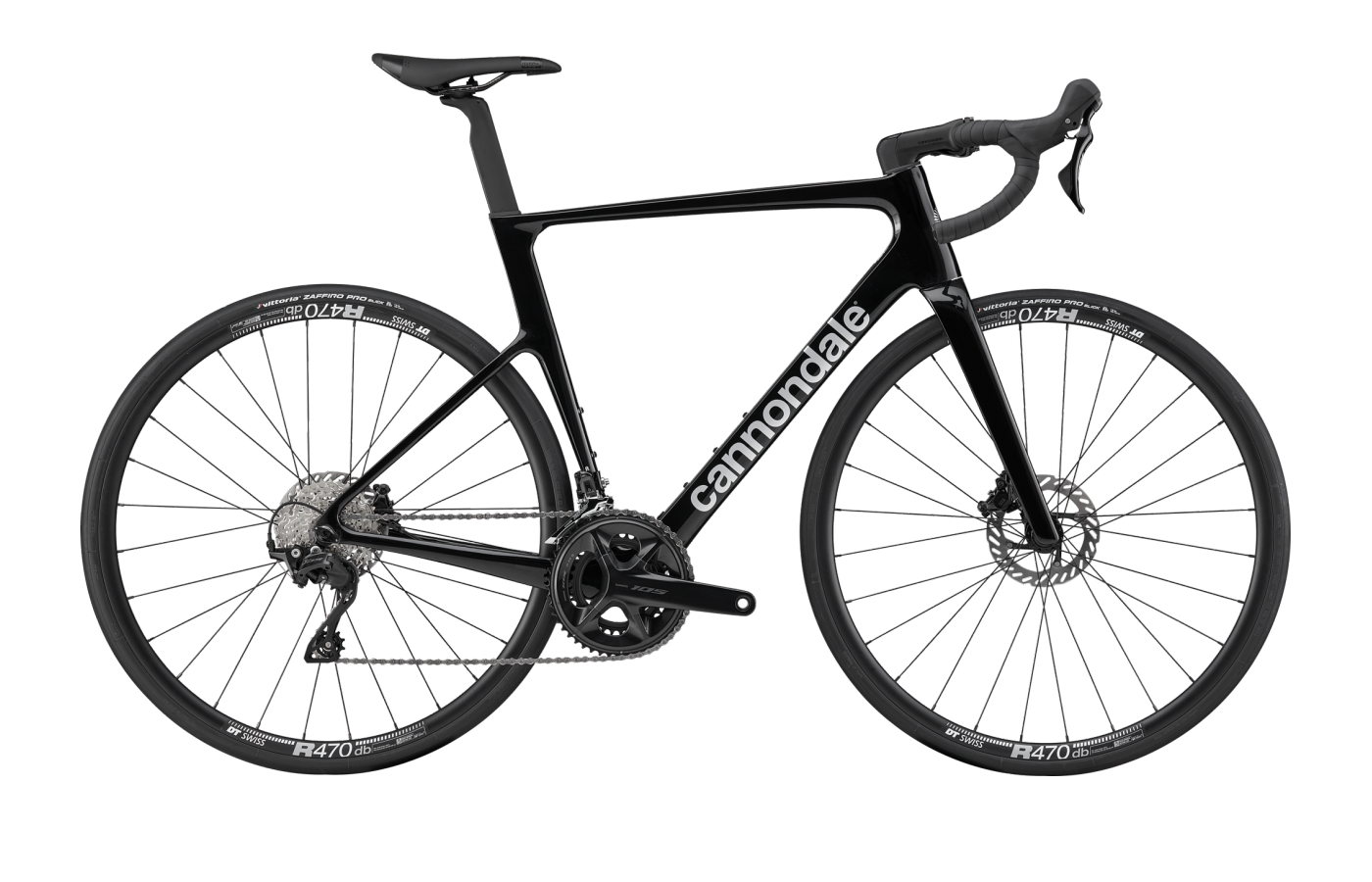
SuperSix EVO
The other benchmark aero-light all-rounder. The Cannondale SuperSix EVO sits closer to the Tarmac in demeanor — balanced, polished, confidence-inspiring — and often undercuts it on price.
Compare →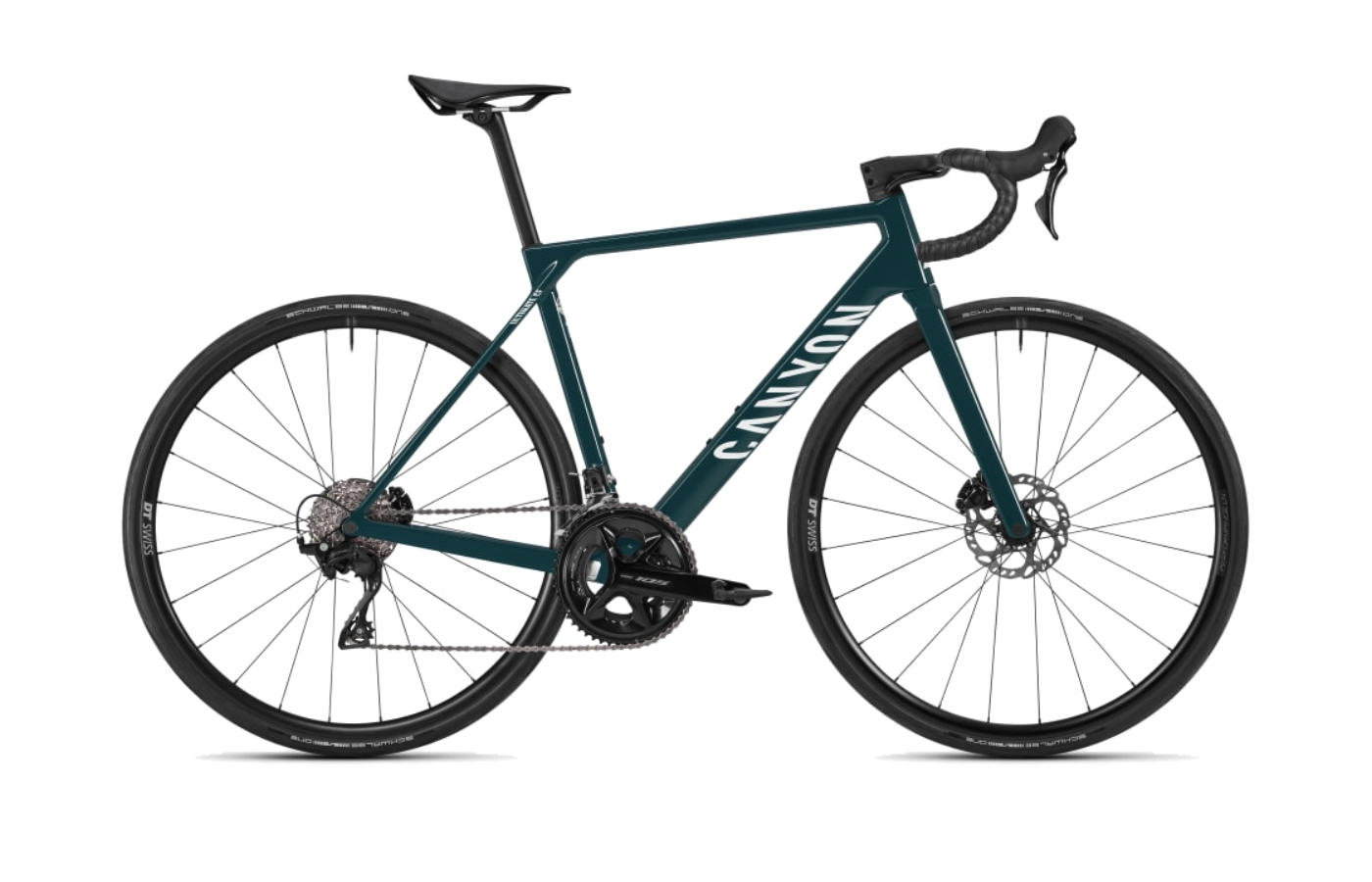
Ultimate
Direct-to-consumer pricing makes the Canyon Ultimate the value play in this bracket. Performance punches well above what the number on the invoice suggests.
Compare →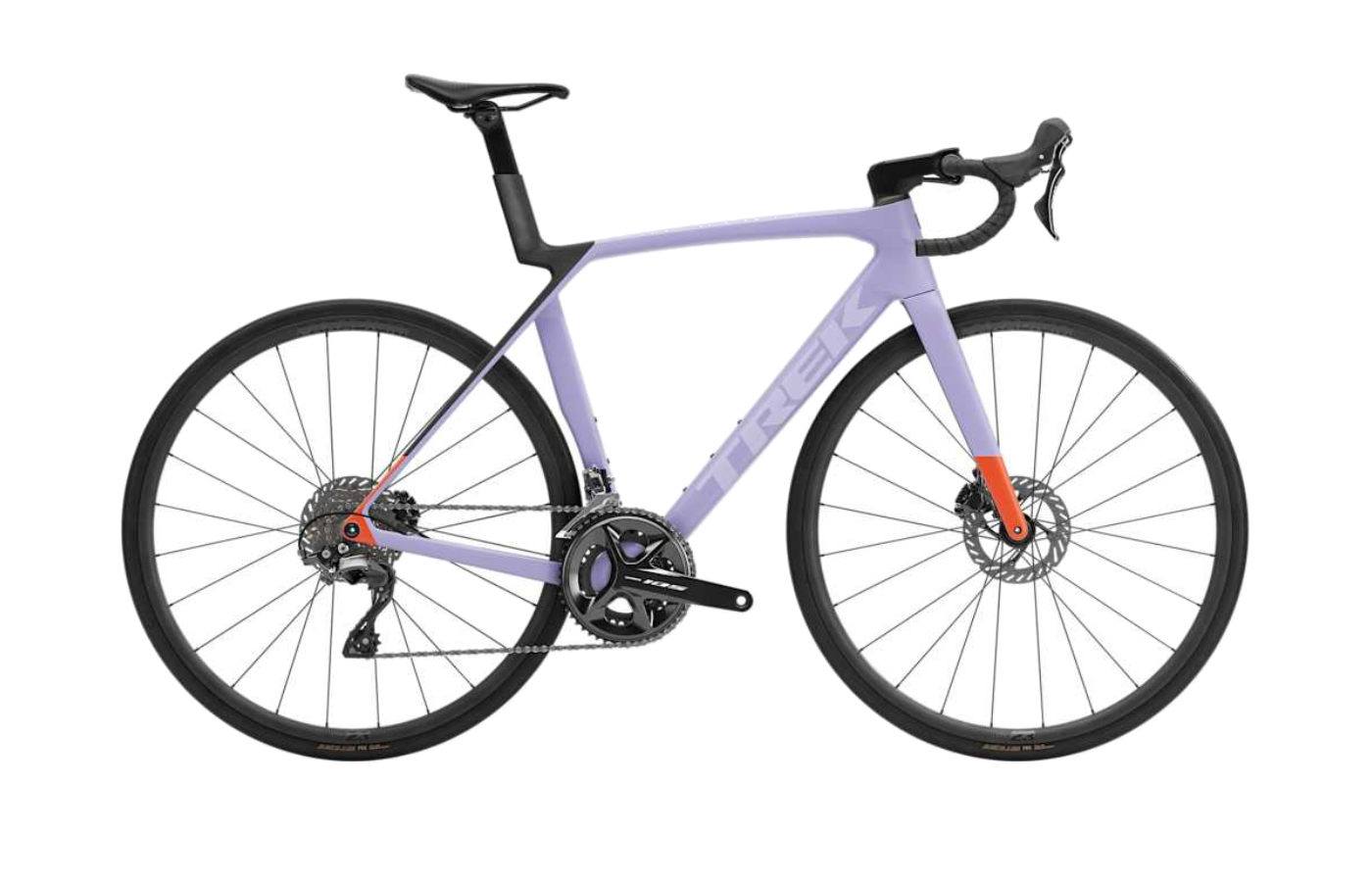
Madone
If the Falcn RS's low front end appeals but you want more compliance, the Trek Madone's IsoFlow system splits the difference — aero-first, but less uncompromising than either bike here.
Compare →