Cutthroat
vsStormchaser
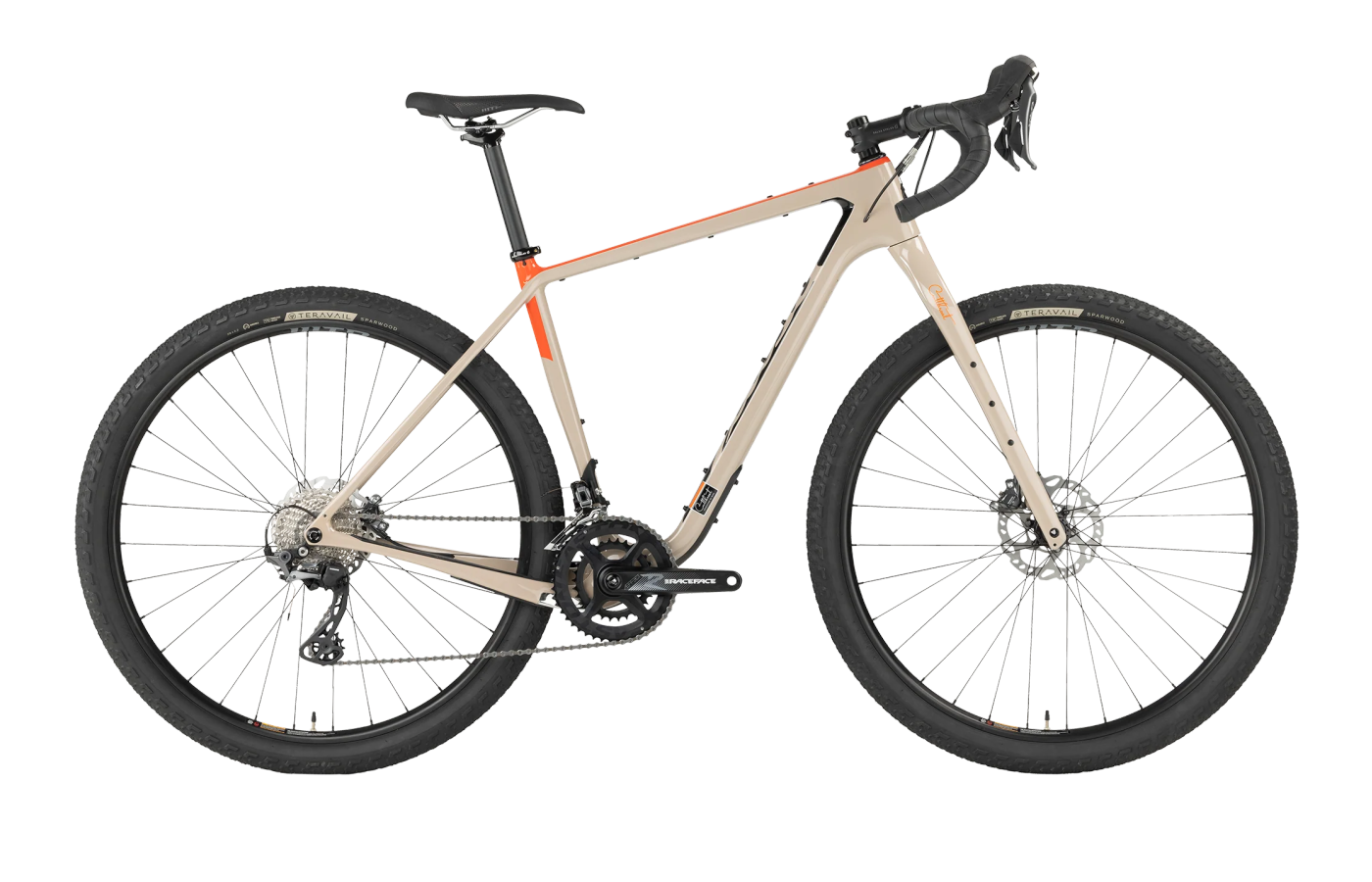
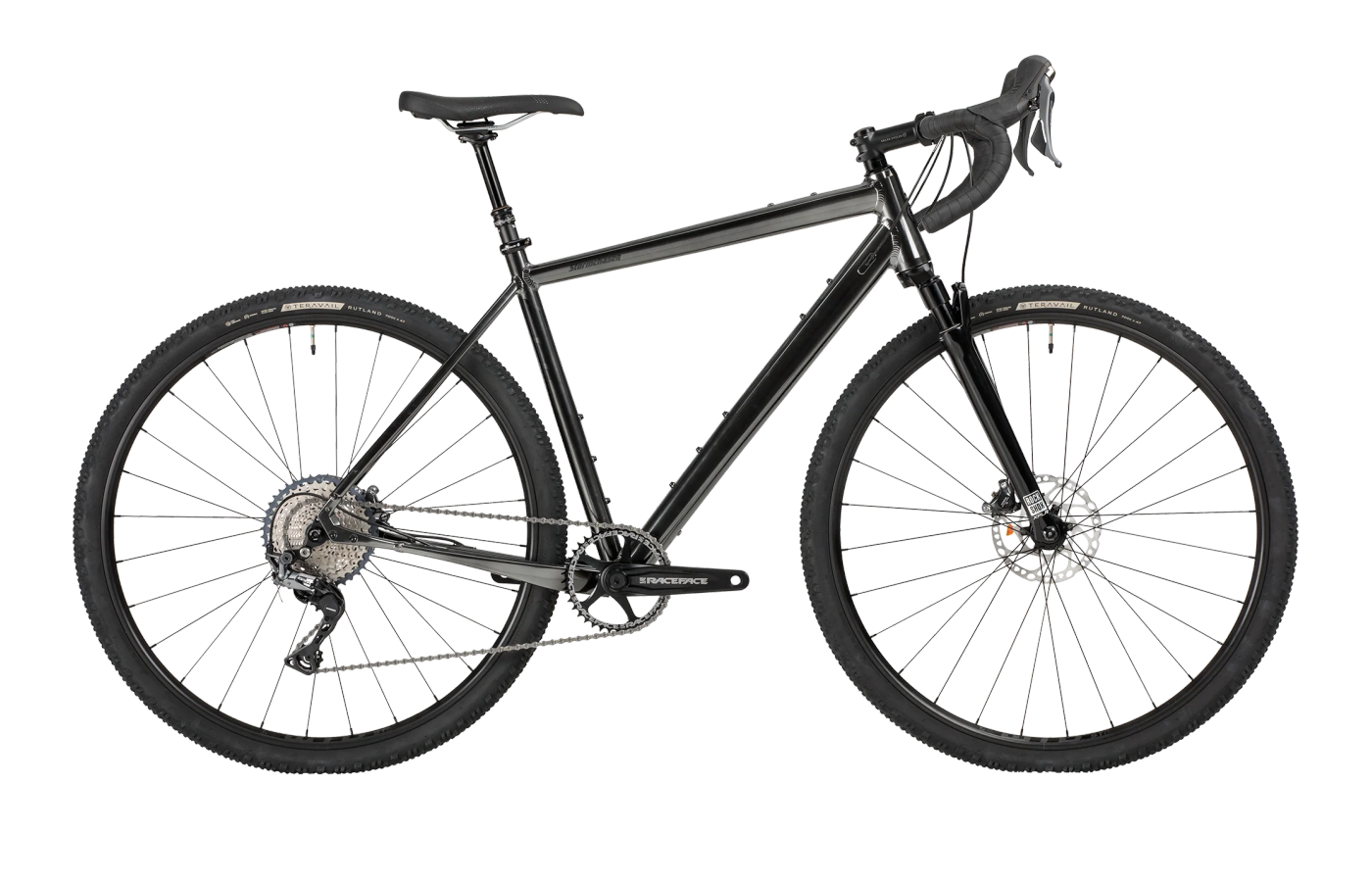
Same Salsa adventure DNA, opposite tools.
The Cutthroat is a carbon Tour Divide racer with 29x2.4" clearance. The Stormchaser is an aluminum single-speed mud fighter built to survive what derailleurs can't.
Cutthroat
- 29x2.4" tire clearance — mountain-bike rollover that no normal gravel bike matches.
- Class 5 VRS compliance in frame and the V2 fork (32% more compliant than the original) for all-day comfort.
- Suspension-corrected fork — accepts a 100 mm 29er suspension fork without altering geometry.
- Press-fit BB92 bottom bracket — known for creak risk, though most reviewers report no issues.
- Long wheelbase and slack geometry feel ponderous in tight, slow corners.
Stormchaser
- Single-speed simplicity with Alternator dropouts — bulletproof drivetrain for mud, slop, and remote events.
- Tough alloy chassis — hydroformed 6066-T6 frame stays planted at 30 mph across loose gravel.
- Massive mud clearance (50 mm) plus full bikepacking fixtures and an attainable price floor.
- Carbon-blade fork is unusually rigid — hands and arms take a beating on stutter bumps.
- Aggressive low-stack fit (587 mm at 56) is hard to soften without drastic stem changes.
Editor’s analysis
One bike was designed to swallow the Continental Divide whole; the other was designed so the weather couldn't stop it.
The Salsa Cutthroat and the Salsa Stormchaser share a brand, a Cowchipper handlebar, and roughly the same 69-degree head angle — and almost nothing else. The Cutthroat is high-modulus carbon, suspension-corrected, with massive 29-inch wheels and clearance for 2.4" tires. The Stormchaser is hydroformed 6066-T6 aluminum, single-speed by default, with 50 mm of tire room and a fork stiff enough that reviewers literally swap the wheels to soften it.
The Cutthroat is the more universal bike. It's a drop-bar mountain bike in disguise — Bicycling called it a "drop bar ultra-endurance mountain bike," and Bikepacking.com pointed out the fork is suspension-corrected for a 100 mm 29er suspension fork, which no normal gravel bike is. The Cowchipper bars sit on a tall stack (619 mm at size 56) for an upright endurance posture, and the Class 5 VRS rear triangle plus the V2 fork (claimed 32% more compliant than the original) absorb chatter the Stormchaser will pass straight to your hands.
The Stormchaser is the more single-minded one. Its mission is gravel events that turn biblical — Mid South red clay, Trans Iowa mud, the kind of conditions where a derailleur is a liability. Salsa's Alternator dropouts let you tension a single-speed chain or bolt on a derailleur hanger later. The frame is stout, the fork is brutally rigid (Guitar Ted at Ridinggravel called it "possibly the stiffest fork I have ever ridden on a gravel bike"), and the geometry is racier — a low 587 mm stack at size 56, nose-down/butt-up positioning straight from the Warbird playbook.
Put another way: the Cutthroat is the bike you buy to ride the Tour Divide. The Stormchaser is the bike you buy to win the local single-speed gravel category in February. Both are Salsa adventure bikes; only one is trying to be your only bike.
Where the builds differ.
Comparing our editor's-pick builds side-by-side. Winners highlighted row-by-row — lower price and weight, and the better-spec component, each mark a point.
Build variants & pricing
Cutthroat runs five carbon builds from $3,499 to $7,999. Stormchaser runs three aluminum builds from $1,799 to $3,549 — the only one with a suspension fork is the GRX 810 1x SUS.
Prices are current US MSRP. The Stormchaser tops out where the Cutthroat begins — there is no carbon Stormchaser and no single-speed Cutthroat. If you want the simplicity-and-mud playbook, the Stormchaser is the only Salsa that delivers it.
How they fit, how they steer.
Both at 56 cm, the fit-picked size for a 5'8" rider on each bike. The Cutthroat sits 33 mm taller in the stack (619 vs 587 mm) for an upright endurance posture; the Stormchaser is slammed and racy. Chainstays differ too: 445 mm on the Cutthroat for cargo stability, 435 mm on the Stormchaser for snap out of the saddle.
Which size should I buy?
Size recommendations from stack, reach, and effective top tube. The Stormchaser's size labels include half-sizes (52.5, 54.5, 57.5) — useful for tuning fit between the Cutthroat's coarser 2 cm jumps.
→These are starting points. Flexibility, riding style, and preferred position all shift the answer — if you’re between sizes, a professional fit beats a chart.
What the magazines said.
Published reviews from trusted cycling outlets. Click through for the full write-up.
Which one should you buy?
If you want one bike for bikepacking, gravel, and light singletrack, get the Cutthroat. If you want a bulletproof single-speed mud weapon, get the Stormchaser.
Cutthroat
If your idea of fun is loading a frame bag and disappearing for three days on chunky gravel and double-track, this is the benchmark. The 29x2.4" clearance, suspension-corrected fork, and 20+ mounting points are purpose-built for it.
Stormchaser
If you race gravel events that turn into mud pits and want a chassis that simply will not stop, the Stormchaser delivers. Single-speed by default, geared by option, and aggressively priced for an alloy adventure platform.
Questions buyers actually ask.
Short answers to the things we get emailed about most often.
01Which has more tire clearance?
The Salsa Cutthroat, by a wide margin. Officially it accepts up to 29 x 2.4" tires, and Bikepacking.com reports the V2 fork has visible room for as much as 2.8". Stock builds ship with Teravail Sparwood 29 x 2.2" rubber.
The Stormchaser maxes out at 700c x 50 mm (or 650B x 47 mm). Salsa ships it with Teravail Rutland 700c x 47 mm tires on the GRX 810 build. That's huge for a traditional gravel chassis but well short of what the Cutthroat will swallow.
02Can either bike run a suspension fork?
Yes for the Cutthroat. The carbon frame is suspension-corrected with a 483 mm axle-to-crown fork length, designed to accept a 100 mm 29er suspension fork without altering the geometry. Several reviewers confirmed this directly.
The Stormchaser GRX 810 1x SUS ships with a RockShox Rudy XPLR Base short-travel gravel suspension fork (40 mm). That's a different category of fork — not a 29er MTB unit, but a purpose-built gravel damper for the head-end chatter Guitar Ted called out.
03Why a single-speed gravel bike at all?
Because derailleurs and mud don't get along. The Stormchaser is built for events like Mid South and Trans Iowa, where red clay and slop chew through gear-driven drivetrains. A single-speed has nothing to clog, snap, or shift mid-mash.
Salsa's Alternator dropouts let you tension a single-speed chain without an eccentric BB, and Bike Perfect noted they "never shifted or slipped" under hard pedaling. They also accept an optional derailleur hanger if you want to convert to 1x geared later.
04Which climbs better?
It depends on the load. The Cutthroat is more efficient in the long run — Granfondo called it "one of the most efficient bikes on test once you're up to speed," and the steep 74.25-degree seat tube angle (at size 56) puts you in a strong seated position for sustained climbing. Bicycling reported bagging a Strava QOM on a 4.5-mile, 4.8% grade despite the bike's heavier all-purpose build.
The Stormchaser climbs surprisingly well for a single-speed — Bike Perfect was "consistently startled" at what they could grind up in a 34x16 — but the fixed gear ratio caps your range. On a long, varied climb, the Cutthroat's wide gearing wins.
05How aggressive is the fit difference?
Significant. At size 56, the Cutthroat stacks to 619 mm with 385 mm reach — an upright, endurance-friendly posture meant for long days. The Stormchaser stacks to 587 mm with 374 mm reach — about 32 mm lower at the bars.
Guitar Ted at Ridinggravel described the Stormchaser fit as "nose down/butt in the air when seated" and noted there isn't much steerer tube to work with for raising the bars. If you have hip-flexor or lower-back issues, the Cutthroat is the more forgiving bike.
06What about the press-fit bottom bracket on the Cutthroat?
It's BB92 press-fit — a recurring point of debate. GearJunkie, Bicycling, and Road.cc all note a preference for threaded BBs because press-fit can creak and is more involved to service.
Salsa defends the choice as necessary for the Cutthroat's tire clearance, chainstay length, and pedaling stiffness. Bikepacking.com reported no issues over 1,400+ miles on both V1 and V2 frames, suggesting Salsa's tolerances have caught up. The Stormchaser sidesteps the debate entirely with a simpler aluminum BB shell.
07Are these the only two Salsa adventure bikes worth comparing?
No — Salsa has a deep adventure lineup. The Warbird is the geared carbon gravel racer the Stormchaser is based on. The Fargo is the steel, more touring-flavored ancestor of the Cutthroat. The Timberjack is a proper hardtail mountain bike if you find yourself pushing the Cutthroat past its drop-bar limits.
If you want something between these two — gravel-bike clearances with carbon weight savings — the Warbird is the natural pick. The Cutthroat-vs-Stormchaser question only makes sense if you've already decided you want one specific extreme.
08What warranty do they carry?
Salsa's standard policy: lifetime frame warranty on carbon, steel, and titanium frames to the original owner. The Stormchaser's aluminum frame carries a 3-year warranty, which Bike Perfect noted is shorter than Salsa's other materials.
For a bike designed to be ridden in the worst conditions imaginable, three years on the chassis is something to factor in if you plan to keep it for a decade. The Cutthroat's carbon frame is covered for life under the same conditions.
Similar bikes
If your priorities don’t map cleanly onto either of these, one of these adjacent bikes probably fits better.
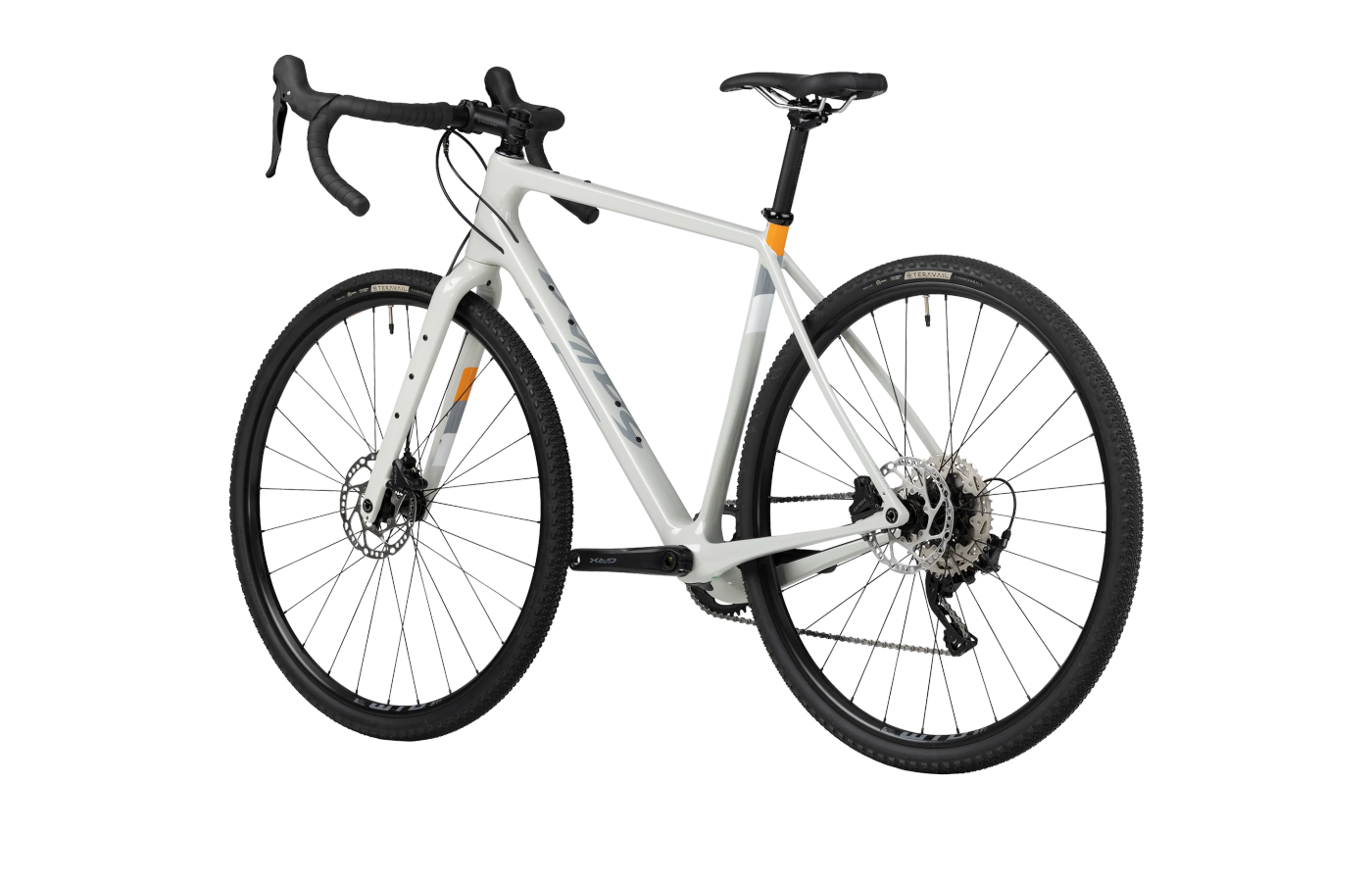
Warbird
The geared carbon cousin to the Stormchaser. Same Warbird DNA and racy posture, but with a carbon frame and a full drivetrain — the natural pick if you want Stormchaser handling without the single-speed commitment.
Compare →
Fargo
The steel-framed predecessor to the Cutthroat. Heavier and less race-oriented, but adds chromoly compliance and a more classical touring feel for riders who'd trade speed for character.
Compare →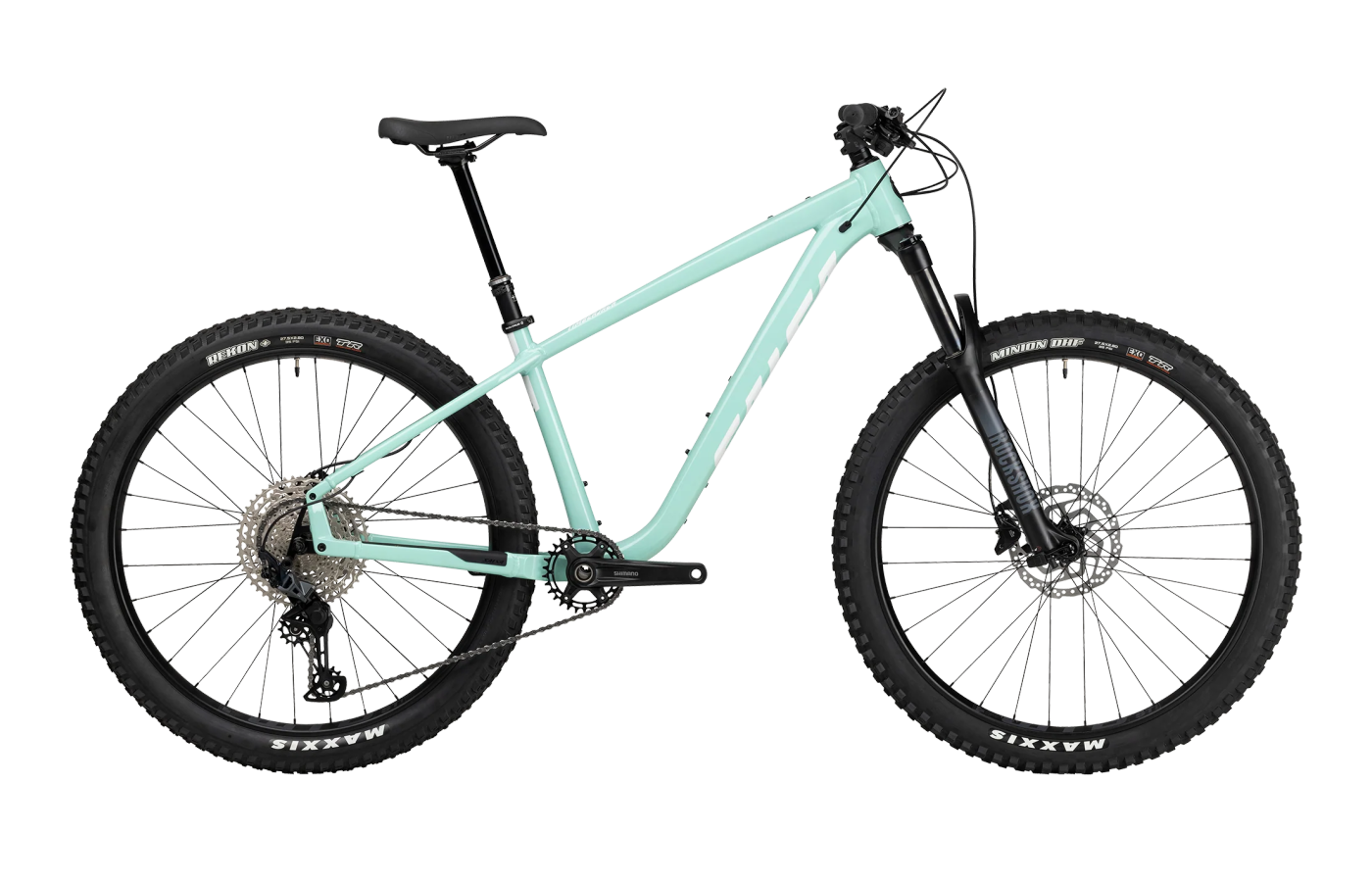
Timberjack
If you push the Cutthroat past its drop-bar limits, the Timberjack is a proper aluminum hardtail — flat bars, bikepacking-ready, and built for technical singletrack the Cutthroat won't quite handle.
Compare →