Rangefinder
vsTimberjack
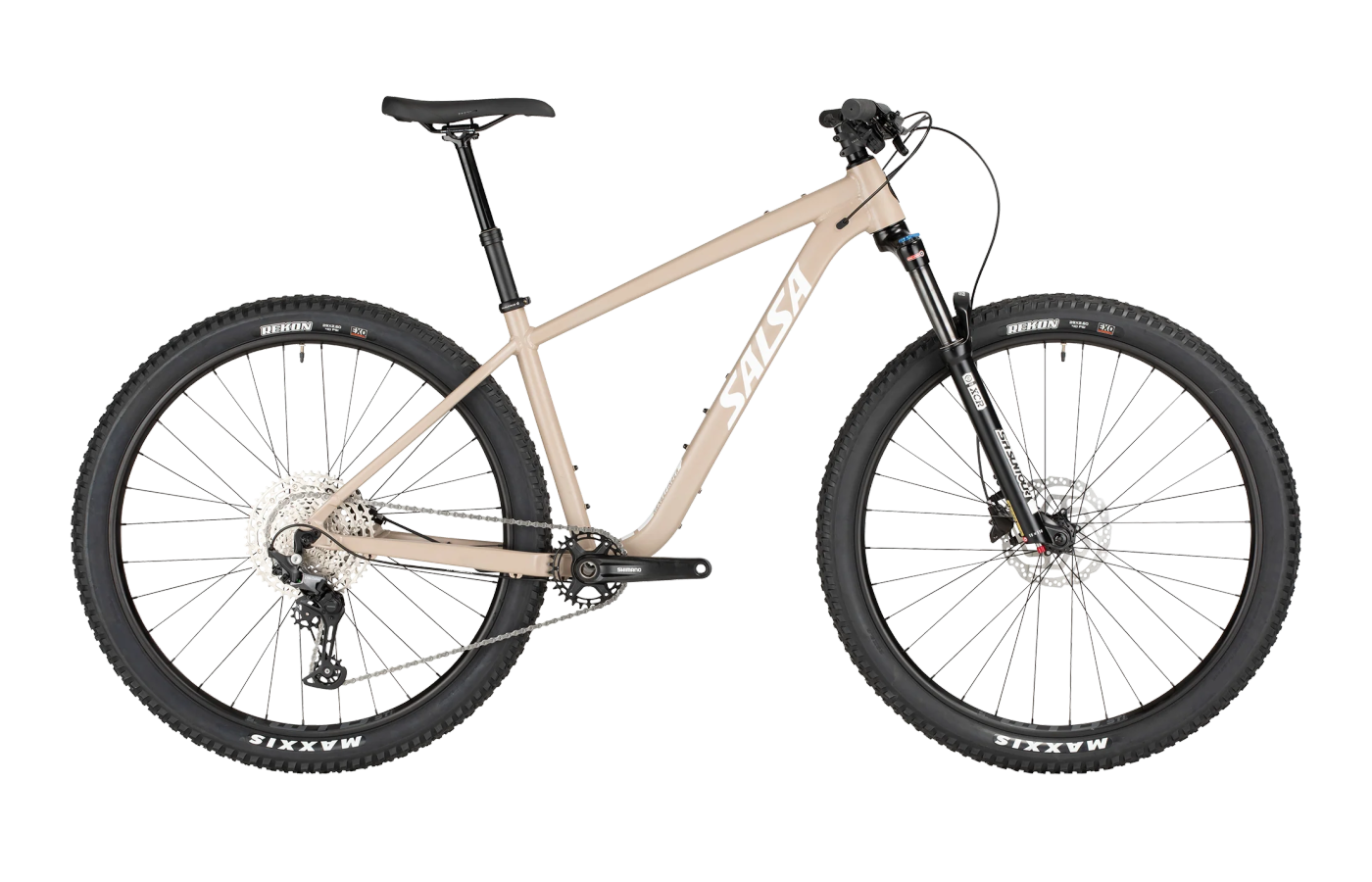
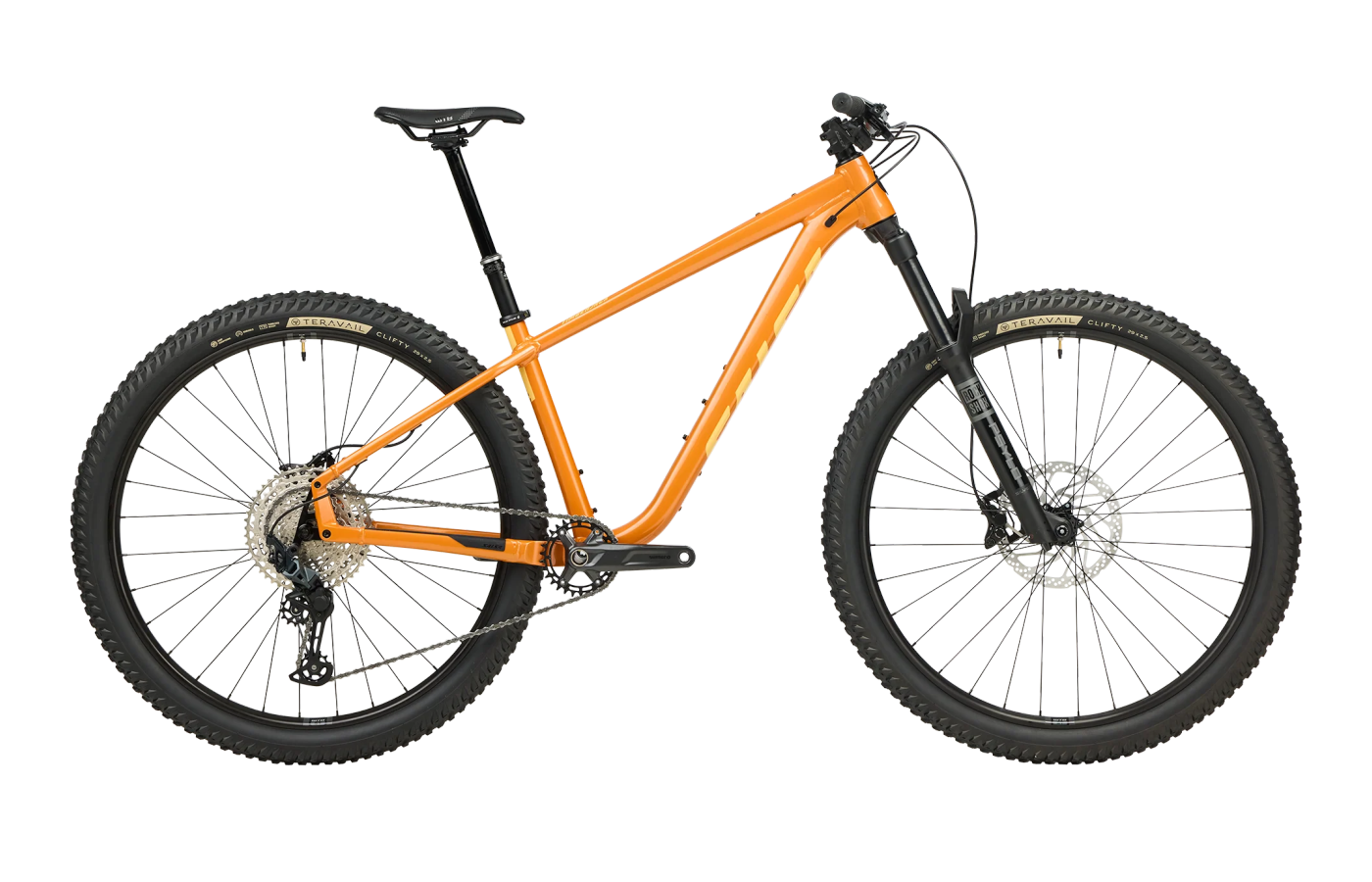
Same brand, two trail philosophies.
The Rangefinder is the budget-first hardtail that gets you onto singletrack. The Timberjack V2 is the modern, slack hardtail built to actually rip it.
Rangefinder
- Real budget entry point — builds start at $649 with a dropper post included on most models, which is rare in this bracket.
- Versatile mounting layout — two bottle cages, top tube bag, downtube utility, and rear rack mounts make it a legit bikepacking platform.
- Easy-going geometry with a 68.6 degree head tube and stable 439 mm chainstays — predictable and confidence-building for newer riders.
- Basic SR Suntour 120 mm fork feels underspec'd on rough or technical descents.
- Wire-bead Maxxis Rekon tires on lower builds aren't tubeless ready — extra spend to convert.
Timberjack
- Modern trail geometry — 66.4 degree head tube, 75.1 degree seat tube, and adjustable 420 to 437 mm chainstays via the Alternator 2.0 dropouts.
- Better suspension across the lineup — 130 to 140 mm RockShox or Marzocchi Z2 forks instead of the Rangefinder's basic SR Suntour units.
- Tubeless-ready wheelsets and 12 x 148 mm rear thru-axle across every build — closer to a current trail-bike standard.
- Aluminum frame is noticeably stiff on long, rough trails — some reviewers ask for a carbon bar to take the edge off.
- Stock RockShox 35 forks on the lower builds get overwhelmed on bigger hits, and Pinkbike's test bike showed bushing play out of the box.
Editor’s analysis
Both wear the Salsa badge and both bolt every bag mount you could ask for — but one is a confidence-builder and the other is a charger.
Salsa's lineup positions these two right next to each other on the page, which makes the price gap easy to underestimate. The Rangefinder starts at $649 and tops out at $1,599. The Timberjack starts at $1,364 and runs to $2,199. That extra money buys two real things: a more aggressive frame and a meaningful bump in component tier.
On geometry, the gap is louder than the spec sheets suggest. At the same Medium size, the Rangefinder runs a 68.6 degree head tube and 439 mm chainstays — sane, neutral, predictable. The Timberjack drops the head tube to 66.4 degrees, stretches reach by about 9 mm, steepens the seat tube to 75.1 degrees, and shortens chainstays to 420 mm (adjustable to 437 via the Alternator 2.0 dropouts). That is a genuinely modern trail bike on top, not a refresh.
Suspension follows the same pattern. The Rangefinder runs 120 mm of basic SR Suntour fork across the lineup — XCM coil at the bottom, XCR air at the top. Functional, upgradable, never confidence-inspiring on rough stuff. The Timberjack ships 130 mm RockShox or Marzocchi Z2 forks on most builds, and the SLX 29 jumps to a 140 mm RockShox Psylo Silver RC. Reviewers consistently say the stock forks become the limiter on a Timberjack — but the limiter is much further out than on a Rangefinder.
The honest framing: the Rangefinder is a great first real mountain bike or a bikepacking rig with skills-progression headroom. The Timberjack V2 is the bike you buy when you already know you want to ride steep, rough trails and your only question is how much suspension to bolt to the front.
Where the builds differ.
Comparing our editor's-pick builds side-by-side. Winners highlighted row-by-row — lower price and weight, and the better-spec component, each mark a point.
Build variants & pricing
The Rangefinder spans $649 to $1,599. The Timberjack starts where the Rangefinder ends and runs to $2,199 — the lineups barely overlap.
Prices are current US MSRP. The editor's-pick comparison is the Rangefinder Deore 12 29 ($1,599) against the Timberjack SLX 29 ($1,899) — both 12-speed Shimano-equipped 29ers and the closest apples-to-apples pairing across two lineups built for different price brackets.
How they fit, how they steer.
Both at Medium — the fit-picked size for a 5'8" rider on each bike. The Timberjack sits 3.6 mm lower in stack, runs 9.2 mm more reach, slackens the head tube by 2.2 degrees, and shortens chainstays by 19 mm. That's a meaningfully more aggressive front end on the Timberjack, with a more agile rear end to match.
Which size should I buy?
Size picks are based on stack, reach, and effective top tube. The two ranges overlap closely in the middle of the run; both go from XS to XL.
→These are starting points. Flexibility, riding style, and preferred position all shift the answer — if you’re between sizes, a professional fit beats a chart.
What the magazines said.
Published reviews from trusted cycling outlets. Click through for the full write-up.
Which one should you buy?
If you're getting into mountain biking or want a bikepacking-friendly hardtail under $1,600, get the Rangefinder. If you want a modern, slack hardtail that can actually charge technical singletrack, get the Timberjack.
Rangefinder
If your trails are flowy, your weekends include fire roads and overnight bikepacking, and your budget caps at the mid-four-figures, the Rangefinder is hard to beat. It's stable, dependable, and leaves room for upgrades as your skills grow.
Timberjack
If you want one hardtail that can handle rowdy descents, technical climbs, and the occasional bikepacking trip without compromise, the Timberjack V2's modern geometry and better suspension earn the price gap. It's a 'do-it-all' bike that genuinely does it all.
Questions buyers actually ask.
Short answers to the things we get emailed about most often.
01How much travel does each bike have?
The Rangefinder runs 120 mm of front travel across the entire lineup — SR Suntour XCM coil on the lower builds, XCR air on the higher ones.
The Timberjack runs 130 mm on most builds (RockShox 35 Gold/Silver or Marzocchi Z2) and steps up to 140 mm on the SLX 29 with the RockShox Psylo Silver RC. Salsa explicitly states the frame is approved for forks up to 150 mm without voiding the warranty.
Both are hardtails — no rear travel.
02Which bike is more capable on technical trails?
The Timberjack, by a clear margin. Its 66.4 degree head tube, longer reach, and shorter 420 mm chainstays put it in modern-trail-bike territory. Reviewers consistently describe it as wanting to charge — Pinkbike, Hardtail Party, and Bikepacking.com all call out its descending confidence.
The Rangefinder's 68.6 degree head tube and 439 mm chainstays are deliberately neutral. It's stable and confidence-building, but as one reviewer put it, on steep descents you'll be 'wishing for a slacker headtube and more suspension travel.'
03Can I bikepack on either of these?
Yes — both are designed for it. Both share Salsa's adventure-ready frame layout: two bottle cage mounts, a top tube bag mount, downtube utility mounts, and rear rack compatibility (the Timberjack uses a Rack-Lock collar).
The Rangefinder is the more budget-friendly bikepacking choice and benefits from the more relaxed, upright geometry on long all-day rides. The Timberjack carries loads well too, though some reviewers note its frame stiffness gets fatiguing on multi-day rough-terrain trips and suggest a taller-rise bar.
04Why does the Timberjack cost so much more?
Three reasons. First, the frame: the Timberjack V2's modern, longer/lower/slacker geometry is engineered for harder use, with a stiffer chassis and approved fork range up to 150 mm. Second, the suspension: 130 to 140 mm RockShox or Marzocchi forks instead of the Rangefinder's basic SR Suntour units. Third, the spec: SLX/XT 12-speed drivetrains, tubeless-ready Maxxis Minion DHF / Rekon tires, 12 x 148 mm thru-axle rear, and 4-piston brakes on higher builds.
At the editor's-pick comparison, you're paying a $300 premium ($1,599 vs $1,899) for the Timberjack SLX 29's better fork, geometry, and tubeless setup.
05What about wheel size — 27.5+ or 29?
Both bikes ship in both. 27.5+ (with 2.8 inch tires) gets you a more playful, easier-to-flick ride — better for tighter trails and riders who like to jump.
29 (with 2.6 inch tires) rolls over rough stuff more easily and carries speed better — better for longer rides, faster trails, and bikepacking.
Reviewers consistently default to 29 unless the rider is shorter or specifically prefers a flickable feel. Both Salsa frames take both sizes; on the Timberjack, the Alternator 2.0 dropouts make swapping straightforward.
06Are the tires tubeless ready out of the box?
Rangefinder: No. Most builds ship with wire-bead Maxxis Rekon tires that aren't tubeless compatible. Going tubeless means buying new tires — typical cost $120 to $160 for a pair.
Timberjack: Yes. Every build ships with tubeless-ready tires (Maxxis Minion DHF / Rekon EXO TR or Teravail Clifty Durable on the SLX 29), and the SLX 29 even includes WTB rim strips, tape, valves, and 8 oz of sealant in the box.
This is one of the cleanest examples of where the price gap actually buys you something.
07Which one should a brand-new mountain biker pick?
The Rangefinder, almost without exception. It's cheaper, more forgiving, less twitchy on the descents that newer riders are still building skills for, and the dropper-post inclusion across most builds means you're not adding a $200 upgrade right away.
The Timberjack's modern geometry is genuinely fun, but it's tuned for a rider who already knows what they want to do with it. Grow into the Rangefinder for a season; if you're still hungry, the Timberjack will still be there.
08Are the chainstays really adjustable on the Timberjack?
Yes — the Alternator 2.0 dropouts give you a two-position chainstay length: 420 mm or 437 mm. The short setting is more flickable and playful for berms and jumps; the long setting is more stable for climbing, descending, and loaded bikepacking.
One note: it's a fixed two-position system (not a continuous slide), and running it as a single-speed requires separate dropout plates. Reviewers generally call it a small step backward from the older rotating design but still useful.
The Rangefinder has fixed 439 mm chainstays — no adjustment.
Similar bikes
If your priorities don’t map cleanly onto either of these, one of these adjacent bikes probably fits better.
Roscoe
The most direct Rangefinder cross-shop. Trek's entry-level trail hardtail hits a similar price and capability bracket, with broader dealer support if you'd rather buy from a shop than direct.
Compare →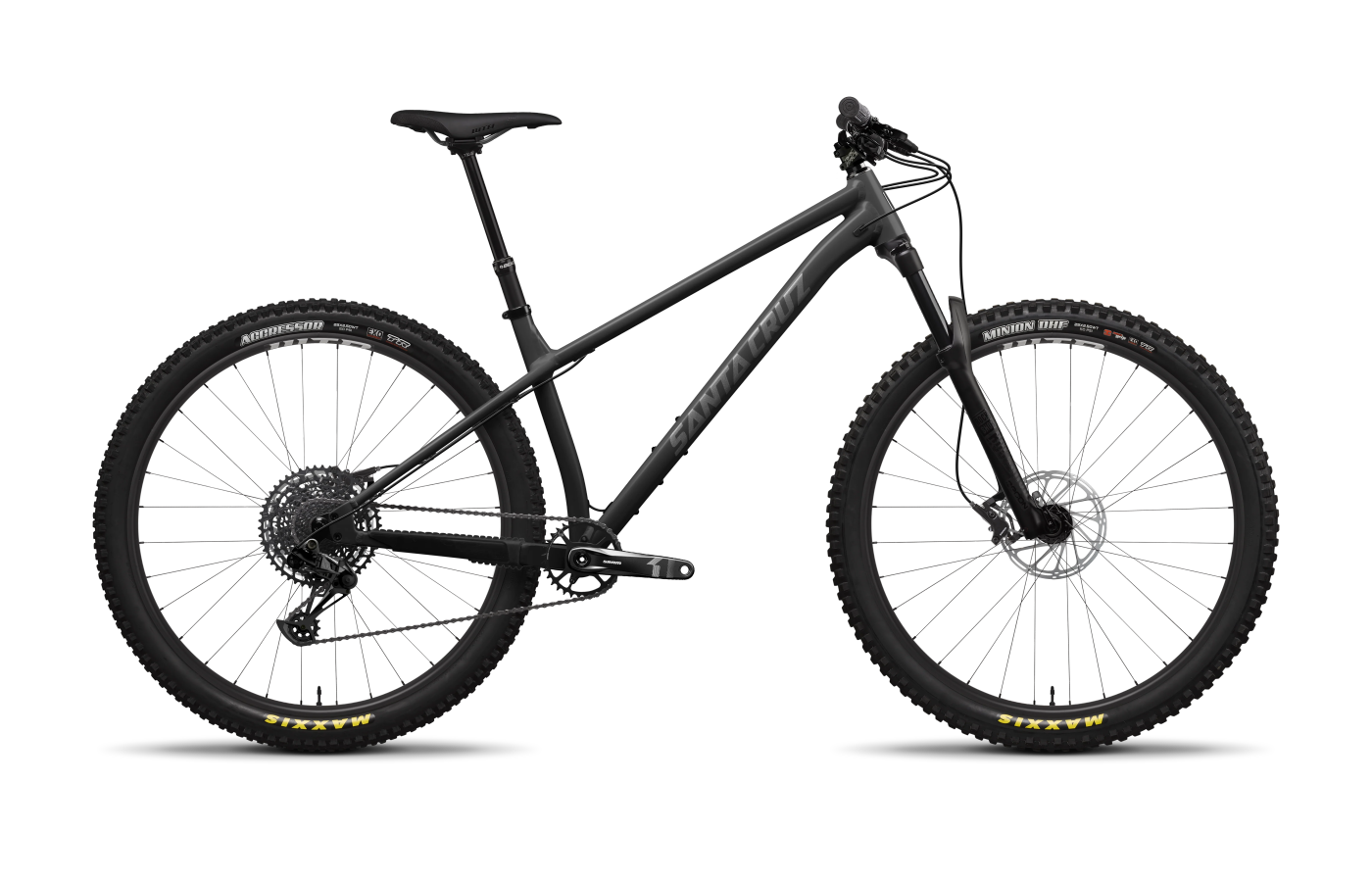
Chameleon
The Timberjack's natural rival. The Chameleon is the bikepacking-and-shred hardtail several reviewers explicitly compared the Timberjack against — slightly more compliant frame, similar modern geometry.
Compare →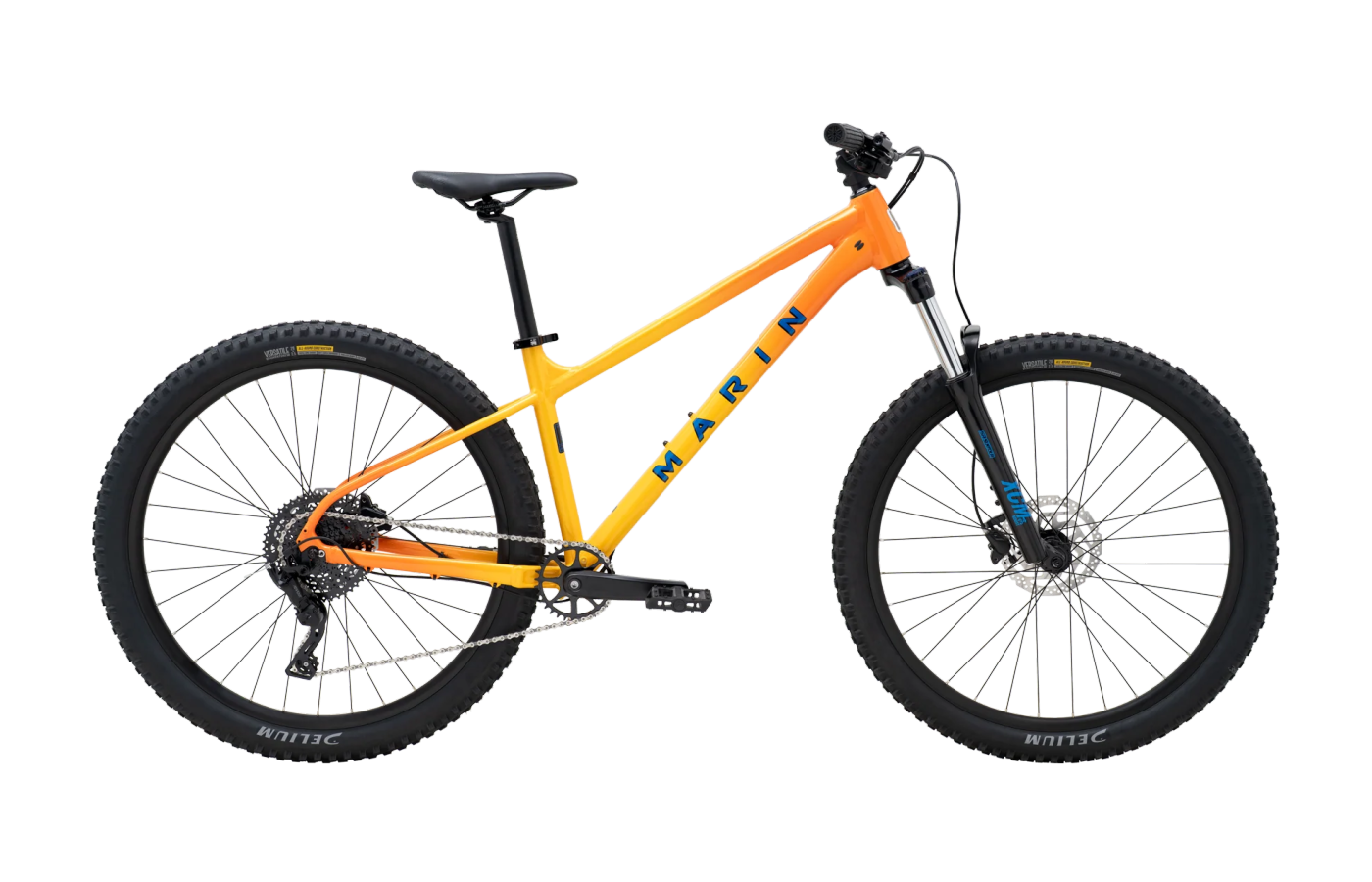
San Quentin
More aggressive than either Salsa, the San Quentin leans harder into the rowdy-descender side of the hardtail spectrum. Worth a look if your trails skew steep and you don't need bikepacking mounts.
Compare →