Warroad
vsRoubaix
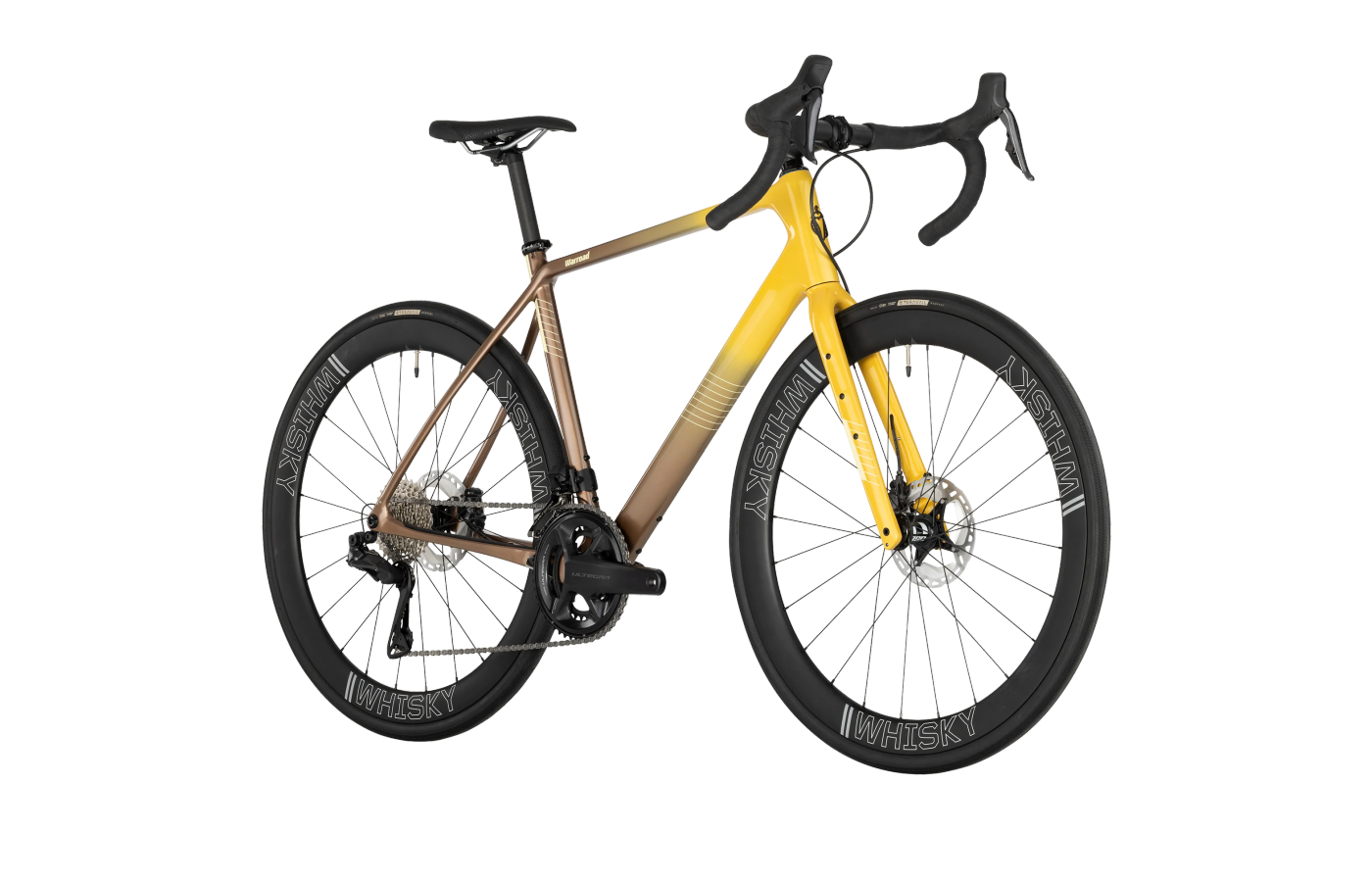
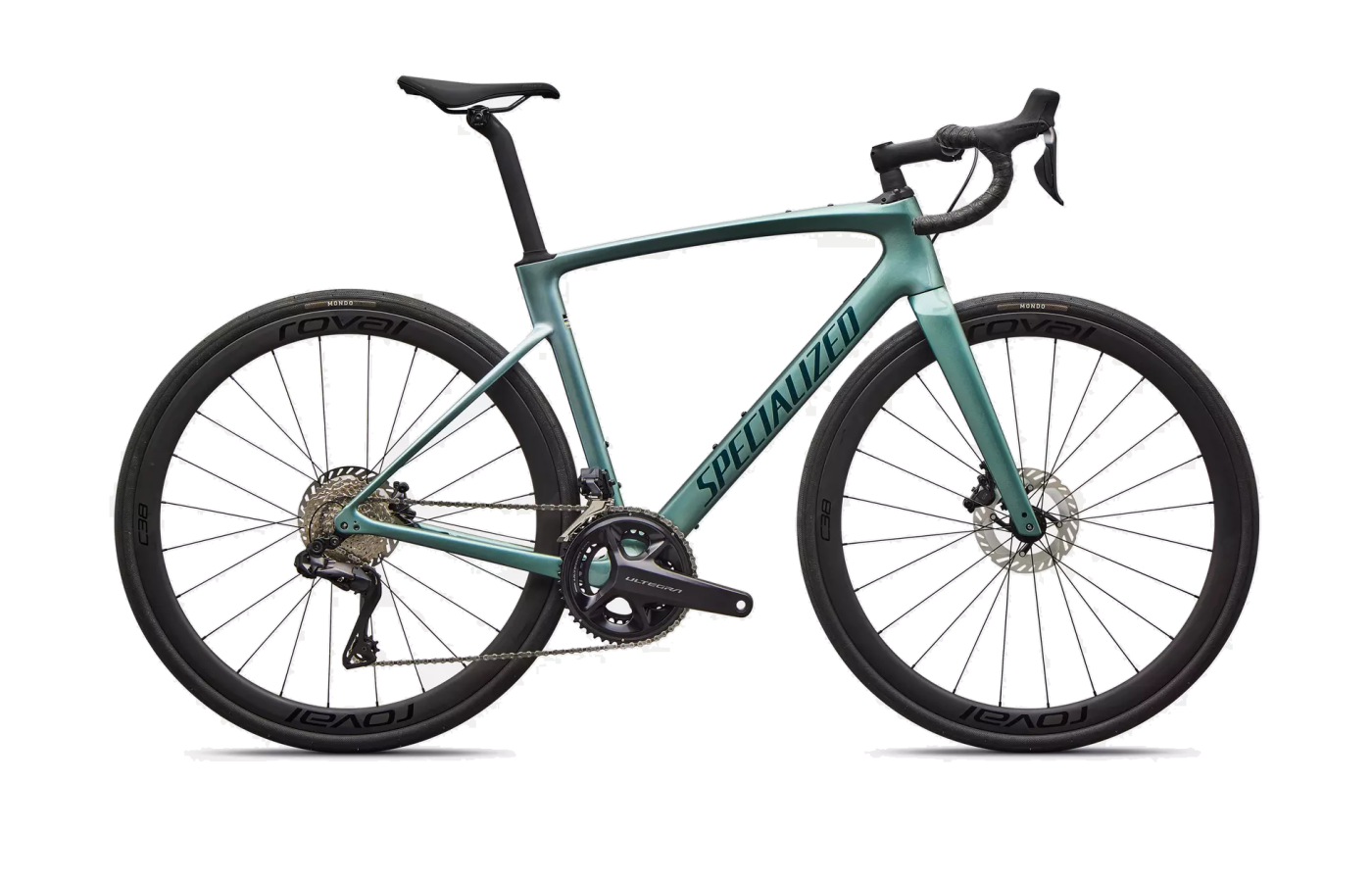
Two roads to comfort, two engineering bets.
The Warroad gets there with passive carbon flex and a 650b option. The Roubaix bolts a 20 mm suspension cartridge into the steerer and calls it endurance road.
Warroad
- Two bikes in one wheelset swap — 700c for road, 650b with 47 mm rubber for actual gravel. No suspension to service.
- Bikepacking-ready — 3–4 bottle mounts, top-tube and fork mounts, full mudguard compatibility, optional rear rack mount.
- Carbon entry point under $2k — the C 105 build at $1,999 is the cheapest way into the platform.
- Lineup tops out at Ultegra Di2 ($4,619) — no Force AXS, Red, or Dura-Ace builds available.
- Class 5 VRS seatstays are passive — the 700c setup feels nervous on broken tarmac compared to the Roubaix's active suspension.
Roubaix
- Future Shock 3.0 — 20 mm of steerer-tube travel reviewers consistently call 'game-changing' on rough roads.
- 40 mm tire clearance (measured) lets the SL8 double as a light gravel bike — a major update from the previous Roubaix.
- Full lineup ladder — Tiagra at $2,799, 105 Di2, Ultegra Di2, Force AXS, all the way to S-Works Dura-Ace at $12,499.
- Future Shock adds ~200 g, raises the front end, and limits how low you can position the bars.
- Hidden expander bolt for the Pavé seatpost is widely described as 'finicky' — multiple reviewers reported it dropping into the seat tube.
Editor’s analysis
Both bikes promise the same thing — all-day comfort on imperfect roads — and arrive there from completely different directions.
Salsa Warroad and Specialized Roubaix occupy the same shelf at your local shop: carbon endurance bikes pitched at riders who would rather finish a century smiling than win a crit. Look at the geometry alone and they're nearly twins at the fit-picked sizes — within a millimeter on stack and reach. But the engineering bets behind that comfort could not be more different.
The Salsa Warroad is the analog answer. Salsa's Class 5 VRS seatstays — those exaggerated, bowed tubes — flex passively to take the sting out of rough surfaces, and the bike accepts both 700c (up to 35 mm) and 650b (up to 47 mm) wheelsets. Run it with 650b and big rubber and reviewers describe a 'nimble, playful, go-anywhere sporty SUV.' Run 700c and 32s and it's a conventional endurance road bike that gets a touch nervous when the tarmac gets bad. One frame, two personalities, no moving parts.
The Specialized Roubaix takes the opposite bet. The Future Shock 3.0 cartridge gives 20 mm of axial travel at the steerer, a Pavé seatpost flexes ~18 mm at the rear, and tire clearance has grown to 40 mm measured. The result, in the words of nearly every reviewer who's ridden it, is 'stupidly smooth' — bumps that would launch you off another bike disappear into the cartridge. The cost is added weight (~200 g for the Future Shock), an awkward-looking front end, and a stack height you can't lower past a certain point.
The cleanest way to think about it: the Warroad is the bike you buy if you want one carbon frame that handles dirt road shortcuts and bikepacking trips with a wheel swap. The Roubaix is the bike you buy if your local roads are wrecked and you want to feel none of it.
Price ranges tell the same story from another angle. The Warroad spans $1,999–$4,619 — Salsa never goes higher than Ultegra Di2. The Roubaix spans $2,799–$12,499 with a full ladder all the way to S-Works Dura-Ace. If you want a halo build, only Specialized sells you one.
Where the builds differ.
Comparing our editor's-pick builds side-by-side. Winners highlighted row-by-row — lower price and weight, and the better-spec component, each mark a point.
Build variants & pricing
The Salsa Warroad tops out at Ultegra Di2 for $4,619. The Specialized Roubaix starts near there and climbs to $12,499 S-Works Dura-Ace — six builds priced above where Salsa stops.
Prices are current US MSRP. Editor's picks are matched at Shimano Ultegra Di2 / FACT 10R-equivalent carbon for an apples-to-apples spec comparison; Salsa doesn't sell anything higher, and the Roubaix Expert is the closest Ultegra Di2 build above it.
How they fit, how they steer.
Sizes are within a millimeter on stack (584 vs 585) and reach (381 vs 381) — fit is essentially identical. The Roubaix runs a steeper 72.3° head tube vs the Warroad's 71°, with 5 mm longer chainstays and a 4 mm tighter trail figure (61 mm).
Which size should I buy?
Size recommendations based on stack, reach, and effective top tube. The Warroad's range extends one size smaller; the Roubaix offers a slightly more aggressive 61 cm at the top end.
→These are starting points. Flexibility, riding style, and preferred position all shift the answer — if you’re between sizes, a professional fit beats a chart.
What the magazines said.
Published reviews from trusted cycling outlets. Click through for the full write-up.
Which one should you buy?
If you want one carbon bike that does road and real gravel with a wheel swap, get the Warroad. If you want the smoothest road bike on the market and your roads are bad, get the Roubaix.
Warroad
If you split your riding between paved roads and dirt-road shortcuts, want bikepacking mounts, and like the idea of a 650b conversion for true gravel days, the Warroad is the more honest tool. It also costs less to get into — $1,999 buys a carbon 105 build.
Roubaix
If your priority is comfort on long road days and your local roads are chewed up, the Future Shock genuinely changes what you can ride without fatigue. The 40 mm clearance handles light gravel — but this is a road bike first, not a 650b convertible.
Questions buyers actually ask.
Short answers to the things we get emailed about most often.
01Which is more comfortable on rough roads?
The Specialized Roubaix, decisively, on chewed-up tarmac. The Future Shock 3.0 cartridge gives 20 mm of axial travel at the steerer, and reviewers across Cycling Weekly, Escape Collective, and Road.cc all describe it as 'erasing most common road impacts.' The Pavé seatpost adds ~18 mm of rearward flex.
The Warroad relies on passive flex from its Class 5 VRS seatstays — effective and praised as 'plusher than many carbon bikes,' but it's still a static frame. On genuinely broken pavement at speed, the Roubaix's active suspension is in another category.
02Which is better for gravel?
The Salsa Warroad, if you're serious about it. The Warroad accepts 650b wheels with up to 47 mm tires, transforming it into what Advntr called a 'nimble, playful, go-anywhere sporty SUV.' Reviewers ran it down quasi-MTB trails without drama.
The Roubaix SL8 caps at 40 mm (measured) on 700c only — fine for light gravel and dirt-road detours, but not a 47 mm convertible. If your idea of gravel is a chunky forest road, the Warroad is the right tool.
03What's the maximum tire clearance on each?
Salsa Warroad: 35 mm officially on 700c (one reviewer fit a 38 mm but warned the fork is the limiting factor). 47 mm on 650b — the maximum, with little extra room.
Specialized Roubaix SL8: 38 mm officially on 700c; multiple reviewers measured 40 mm in real-world fit. 35 mm with full mudguards installed. 700c only — no 650b option.
04How do the build lineups compare?
Salsa Warroad: four builds, $1,999 to $4,619. Tops out at Shimano Ultegra Di2 or SRAM Rival AXS — no Force, no Red, no Dura-Ace.
Specialized Roubaix SL8: fifteen builds spanning $2,799 (Tiagra) to $12,499 (S-Works Dura-Ace Di2 or Red AXS). Full ladder through 105, 105 Di2, Rival AXS, Ultegra Di2, Force AXS, and the flagship tier.
If you want a halo build, only Specialized sells one. If you want a sub-$2k carbon endurance bike, only Salsa does.
05How does the Future Shock affect climbing?
Most reviewers report minimal pedal bob at typical climbing efforts — the Future Shock is laterally solid, so out-of-saddle sway doesn't activate it the way you might expect. Cycling Weekly's heavier reviewer (90+ kg) noted some bob with the default spring; swapping to a firmer coil (a 5-minute job) fixed it.
The S-Works and Pro models get the 3.3 cartridge with on-the-fly damping adjustment — firm it up for climbs, soften it for descents. The Expert and Comp get the 3.2 with fixed hydraulic damping but interchangeable springs.
06Can either bike fit a dropper post?
The Warroad has internal routing prepped for a dropper — Salsa explicitly designed for it, an unusual feature on an endurance road frame.
The Roubaix doesn't ship with dropper-specific routing, and the Pavé seatpost's compliance design isn't compatible with a dropper anyway. If a dropper matters to you, the Warroad is the only option here.
07Which is easier to live with mechanically?
Both use a threaded bottom bracket — the Roubaix runs BSA, the Warroad uses Pressfit BB86. Threaded is the long-term winner; reviewers prefer it on the Roubaix.
The Roubaix's hidden seatpost expander bolt has a reputation as 'finicky' — Cycling Weekly and others reported the bolt dropping into the seat tube during adjustments. The Warroad uses a conventional external clamp. The Roubaix's Future Shock requires a proprietary tool for headset preload, and contains seals that benefit from periodic service. The Warroad has nothing of the kind to worry about.
08What kind of warranty do they come with?
Both frames carry a lifetime frame warranty to the original owner against manufacturing defects. Specialized additionally provides a separate two-year warranty on the Future Shock cartridge and has committed to producing replacement Future Shocks for five years after the last bike using each version is built. Both brands offer crash-replacement pricing on damaged frames.
Similar bikes
If your priorities don’t map cleanly onto either of these, one of these adjacent bikes probably fits better.
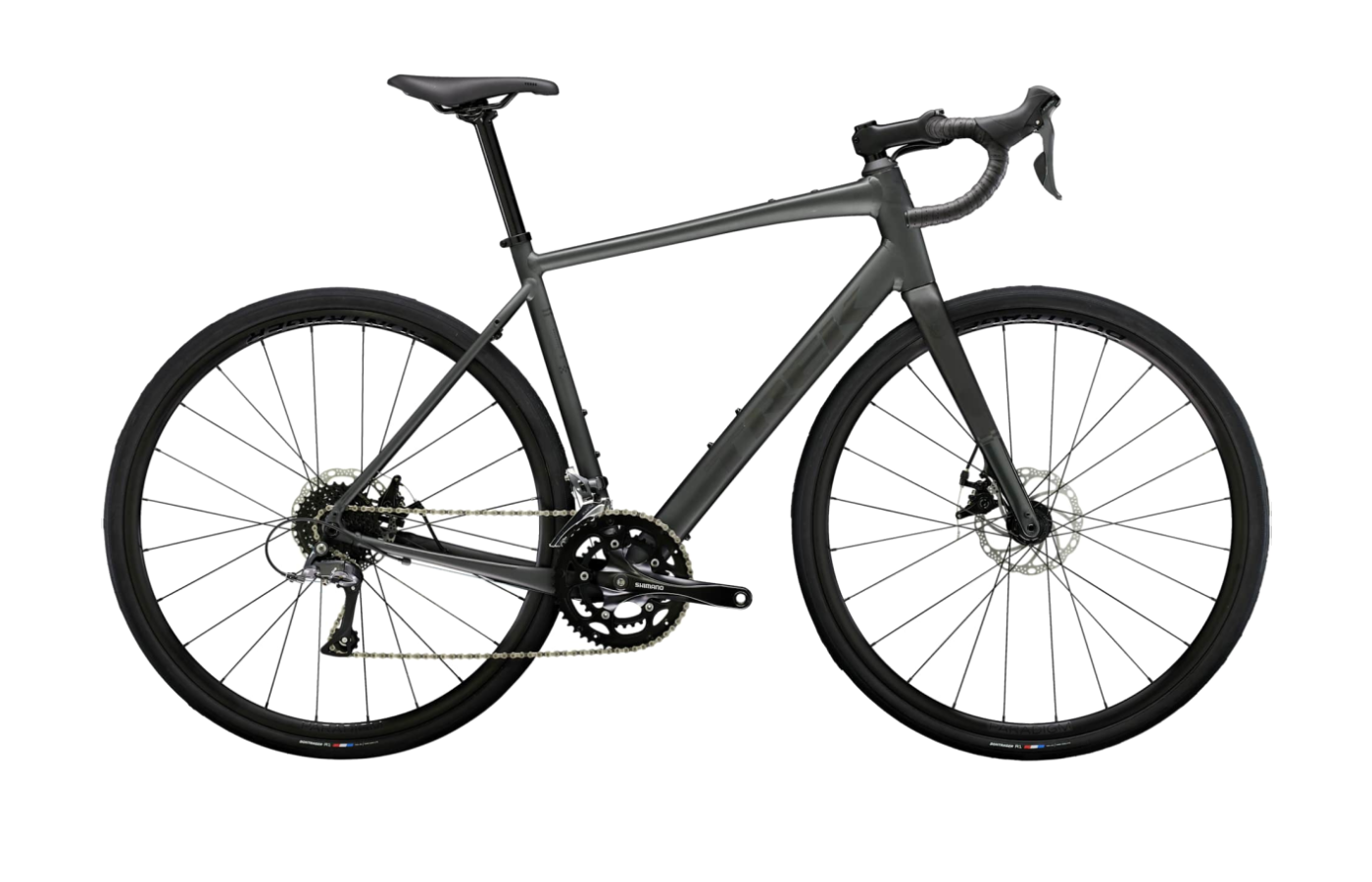
Domane
The Roubaix's most direct rival — Trek's IsoSpeed decoupler does at the rear what the Future Shock does at the front, with no proprietary cartridge to service. If you want active compliance without the steerer-tube complexity, this is the obvious cross-shop.
Compare →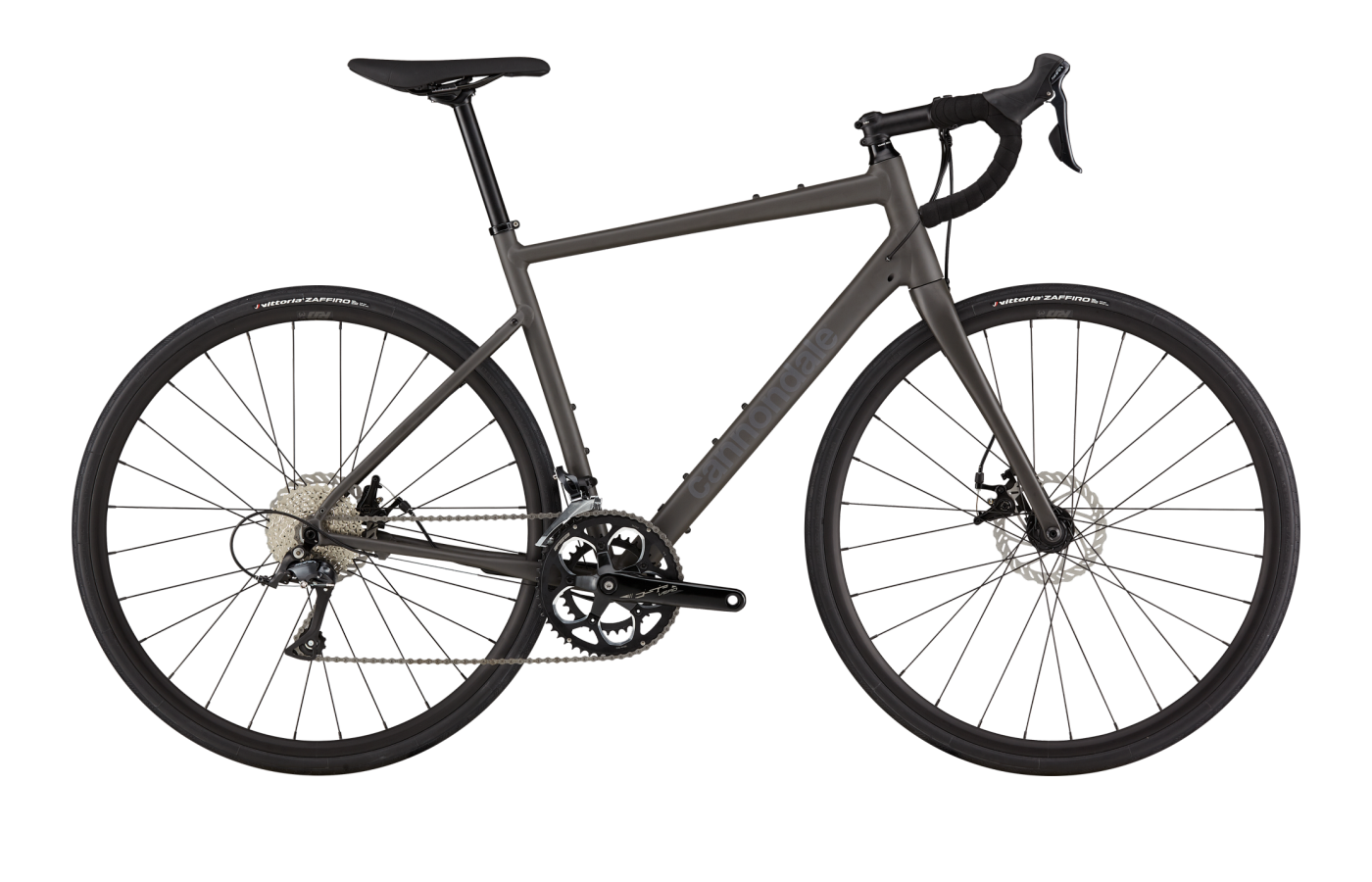
Synapse
Cannondale's endurance staple — passive frame compliance, generous tire clearance, and a quieter aesthetic than either of these two. If you want the Roubaix philosophy without the visible suspension hardware, the Synapse is the cleanest version of the idea.
Compare →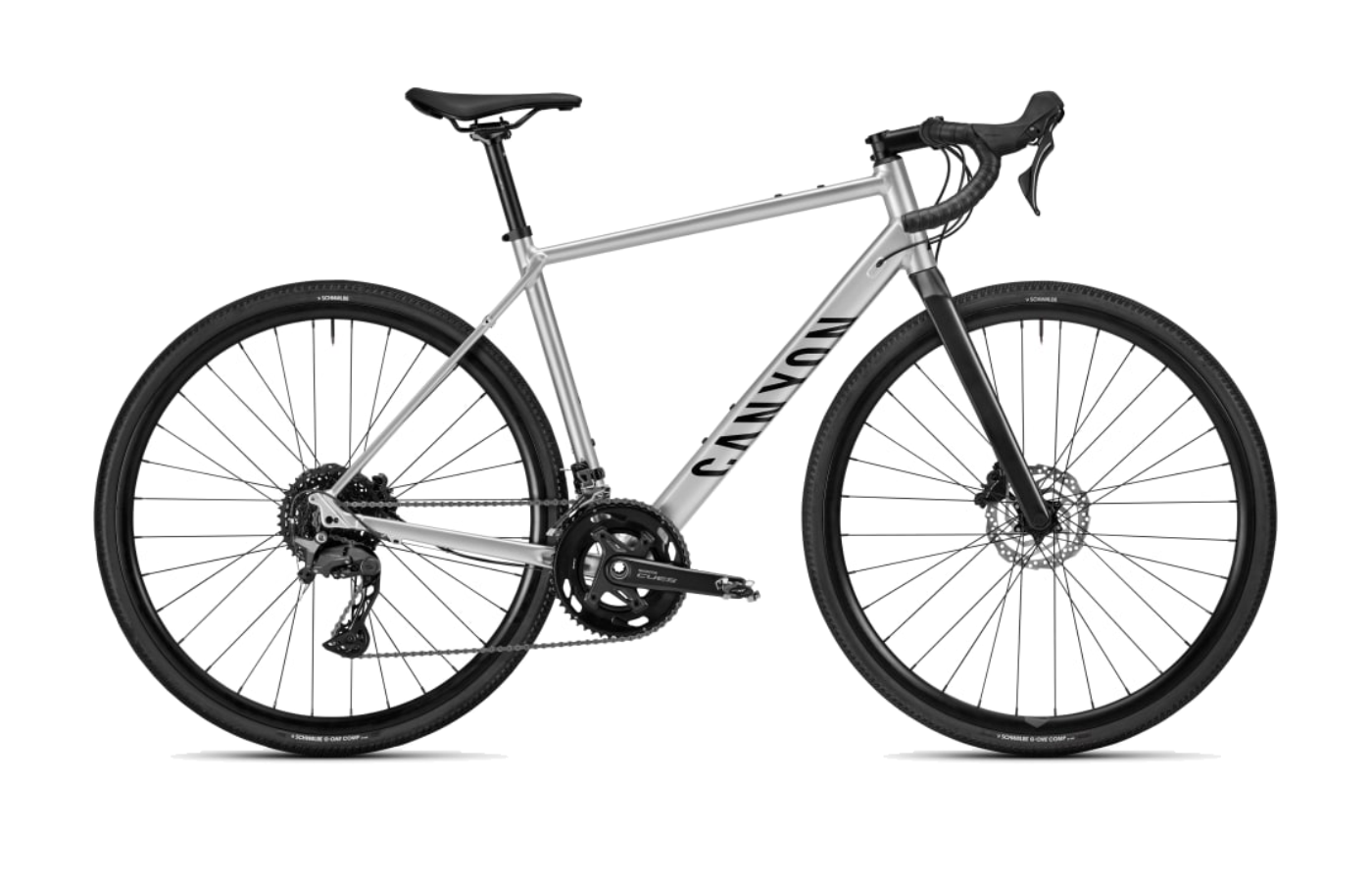
Endurace
Direct-to-consumer pricing puts the Endurace roughly 25-30% below the Roubaix at equivalent spec — the catch is no local dealer, no demos, and you'd better know your fit before you click buy.
Compare →