Chameleon
vsChisel
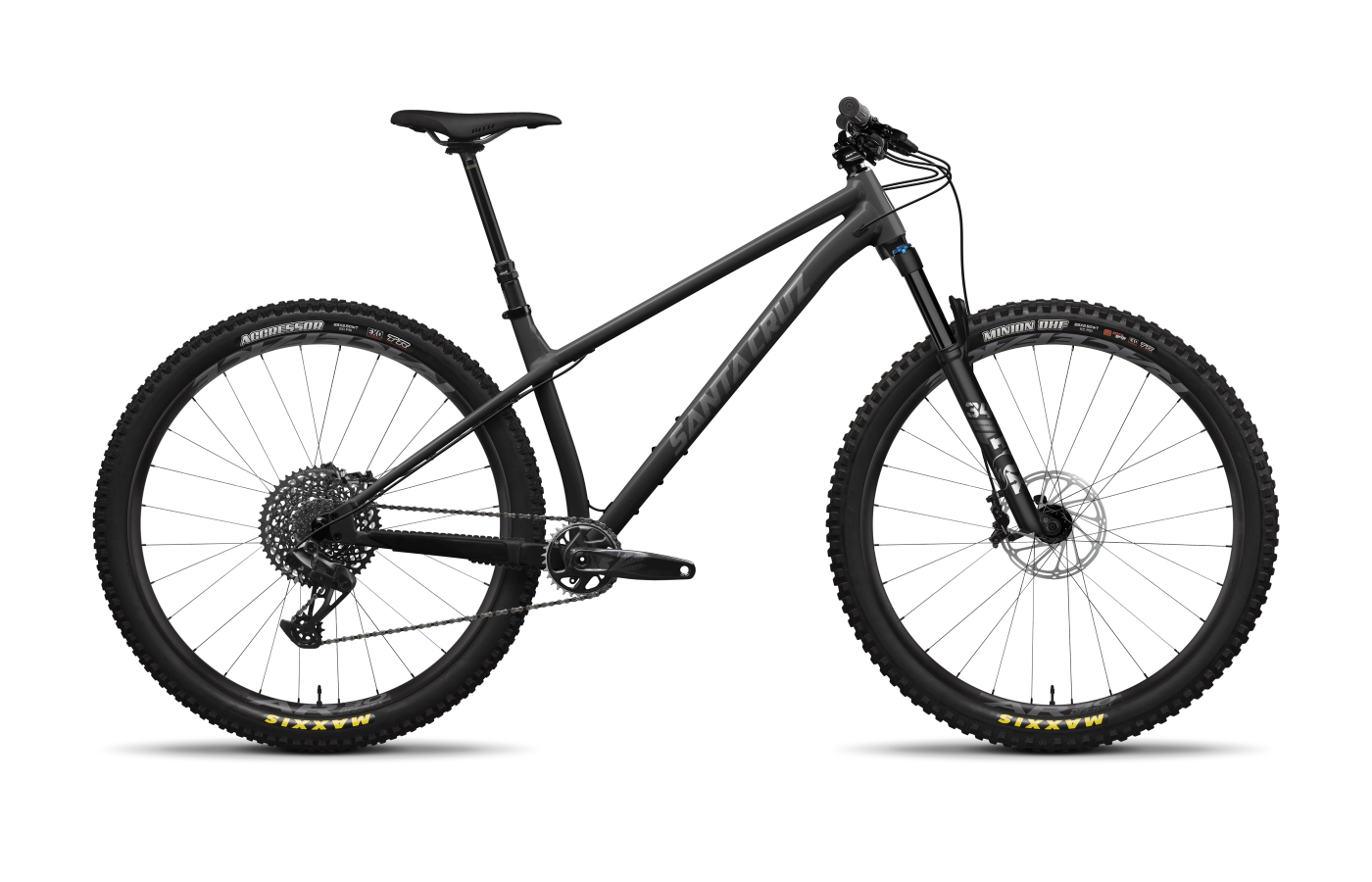
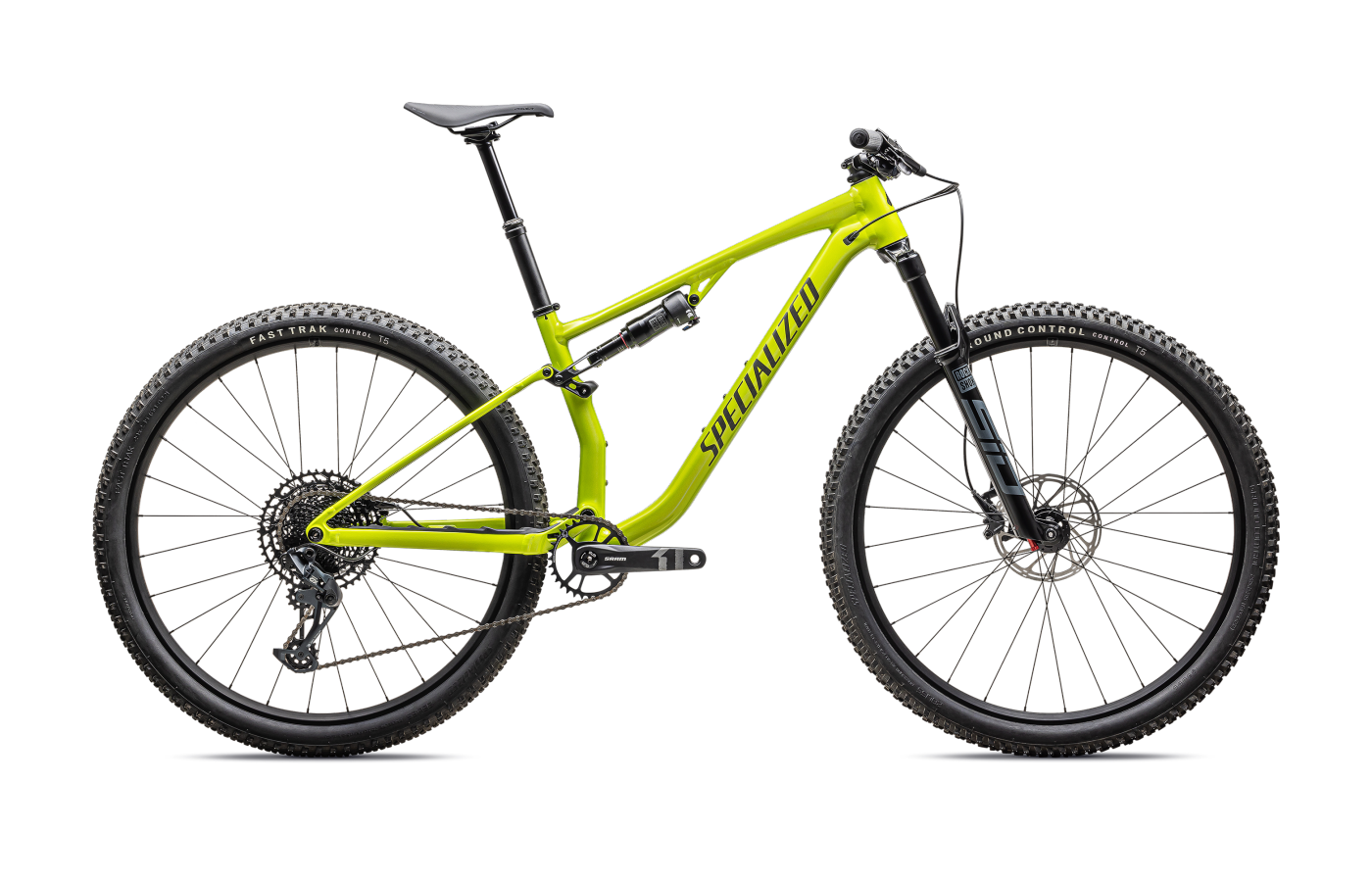
A trail hardtail meets an XC full-suspension.
The Chameleon is a slack, do-it-all alloy hardtail built for hooliganism. The Chisel is a Smartweld XC full-suspension chasing the Epic 8 for thousands less.
Chameleon
- Adjustable rear end — sliding dropouts toggle 425–437 mm chainstays and accept 29er, MX, or single-speed setups.
- Aggressive geometry — 65-degree HTA and 130 mm fork descend like a much more expensive bike.
- Lifetime frame and bearings — Santa Cruz's 'Bike for Life' program backs the platform indefinitely.
- Stock 17-degree SRAM MTH hub engagement is a known weak point for technical climbing.
- Alloy frame is 'noticeably harsh' on chatter without 2.6" rubber to soften the rear.
Chisel
- Smartweld alloy frame at a claimed 2,720 g — within ~500 g of the carbon Epic 8's frame.
- Real XC suspension — 110 mm flex-stay rear pedals supportively without a remote lockout.
- Mechanic-friendly — threaded BSA bottom bracket, no headset cable routing, standard 30.9 mm seatpost.
- Stock wheels use Shimano HG freehub bodies, blocking SRAM/XD cassette upgrades without swapping the driver.
- Narrow 'sweet spot' for shock setup — get it wrong and the rear end feels harsh on chatter.
Editor’s analysis
Same material, opposite missions — one bike picks lines for fun, the other erases them with momentum.
Both the Santa Cruz Chameleon and Specialized Chisel are premium-aluminum platforms that refuse the carbon arms race, but they read the same brief in opposite directions. The Chameleon is a 130 mm-front hardtail with a 65-degree head angle and sliding dropouts that swap between 425 and 437 mm chainstays — a frame engineered to be a 'forever' bike that can run as a trail rig, a mullet, or a single-speed. The Chisel is a 110/120 mm full-suspension XC bike with Smartweld tube junctions, a flex-stay rear end, and a flip-chip that toggles between 66.5 and 67 degrees of head angle.
On the trail, that hardware spread shows up immediately. The Chameleon is a 'hooligan' descender for an aluminum hardtail — reviewers consistently use words like 'planted' and 'juggernaut' once it points downhill — but its rear end is 'noticeably harsh' on stutter without 2.6" tires for cushion. The Chisel's flex-stay 110 mm is the opposite trade: 'firm' and 'supportive' under power, lively in the corners, but it'll batter you in extended chunder and demands precise shock setup (one tester found 5 PSI was the difference between 'momentum-robbing' and traction-rich).
Climbing is where the bikes stop pretending to overlap. The Chisel is a 'momentum machine' — testers describe it 'tugging at the leash' on fire road and short-travel sprinting. It pedals well enough that most reviewers ride it with the shock open. The Chameleon's geometry leans the other way: a 65-degree head angle that's 'twitchy' on the steeps, a moderate 74.3-degree seat tube angle that's better for long-distance traversing than for hammering up technical pitches, and stock SRAM MTH hubs whose 17-degree engagement was repeatedly called a 'struggle-fest' on tech climbs.
Put another way: the Chisel is the bike you buy to go fast in cross-country lycra. The Chameleon is the bike you buy because you want one alloy frame that'll handle bikepacking on Saturday and the local jump line on Sunday — and you'd rather upgrade hubs than buy a second bike.
Where the builds differ.
Comparing our editor's-pick builds side-by-side. Winners highlighted row-by-row — lower price and weight, and the better-spec component, each mark a point.
Build variants & pricing
The Chameleon ranges $2,099–$2,999 across three hardtail builds. The Chisel covers $1,899–$3,599 spanning both hardtail and full-suspension variants.
Prices are current US MSRP. The Chisel lineup spans both hardtail and full-suspension frames at the same price points — the editor's pick here is the full-suspension Chisel Comp, which is what most reviewers tested and the build Specialized markets as the 'sweet spot.'
How they fit, how they steer.
Both at size M — the fit-picked size for a 5'8" rider on each bike. The Chameleon sits 23 mm taller in stack (629 vs 606 mm) at identical 445 mm reach, with a 2-degree slacker head angle and a slacker seat tube (74.3° vs 75.5°). The Chisel's geometry is centered and XC-efficient; the Chameleon's is upright and trail-aggressive.
Which size should I buy?
Size recommendations based on stack, reach, and effective top tube. The Chisel's range extends one size smaller (XS), while the Chameleon caps at L.
→These are starting points. Flexibility, riding style, and preferred position all shift the answer — if you’re between sizes, a professional fit beats a chart.
What the magazines said.
Published reviews from trusted cycling outlets. Click through for the full write-up.
Which one should you buy?
If you want one alloy bike that handles trails, jumps, and bikepacking, get the Chameleon. If you want XC-race speed without a carbon price tag, get the Chisel.
Chameleon
If your weekends bounce between janky descents, pump tracks, and bikepacking, this is the alloy hardtail to buy. The sliding dropouts make it three bikes in one frame, and the lifetime warranty means you'll still own it when your riding style shifts.
Chisel
If you race or train at XC pace and don't want to spend Epic 8 money to do it, the Chisel delivers most of the carbon experience in alloy. It rewards forceful pedaling, climbs without a lockout, and leaves room to upgrade as parts wear.
Questions buyers actually ask.
Short answers to the things we get emailed about most often.
01Hardtail vs full-suspension — is this even a fair fight?
It's a fair fight on price and material — both are premium-alloy platforms in the $2k–$3.5k range — but they're built for different days on the trail.
The Chameleon is a hardtail. There is no rear suspension, just a 130 mm fork and 2.5–2.6" tires for cushion. The Chisel (in Comp trim and up) has 110 mm of rear travel and a 120 mm fork. On rough descents and chunder, the Chisel is meaningfully more comfortable and faster. On smooth flow, climbs, and pump-track laps, the gap closes — and the Chameleon is the more playful tool.
02Which climbs better?
The Chisel, by a wide margin. Reviewers describe it as 'tugging at the leash' on climbs, with anti-squat tuned high enough that most testers ride it with the shock fully open. The Smartweld frame keeps weight low (~2,720 g claimed for the frame), and the 75.5-degree seat tube angle puts you in an efficient pedaling position.
The Chameleon is heavier (12.99 kg / 28.6 lb on the S build), runs a slacker 74.3-degree seat tube angle, and ships with a 17-degree-engagement SRAM MTH rear hub that multiple reviewers called a 'struggle-fest' on technical climbs. It pedals well enough on smooth fire road, but it's not an XC bike.
03Which descends better?
The Chameleon is more confidence-inspiring on steep, technical descents thanks to its 65-degree head tube angle and 130 mm fork — slacker than the Chisel's 67-degree HTA and longer-travel up front.
The Chisel is more comfortable on rough sustained descents because of its 110 mm of rear travel — the Chameleon's hardtail rear gets 'noticeably harsh' in chatter without 2.6" tires. The honest answer: Chameleon is sketchier-but-more-fun on real descents; Chisel is faster on XC-grade rough.
04What tire clearance do they have?
Chameleon: clears up to roughly 2.8" rubber (the database measures 71 mm of rear-end clearance). Most riders run 2.5" up front and 2.5" or 2.6" rear — the high-volume tires double as the rear suspension on a hardtail.
Chisel: clears up to about 2.35" — meaningfully tighter (the DB measures 60 mm). Stock builds ship with 29x2.35" Ground Control / Fast Trak tires, which is what XC geometry expects.
05Can I race the Chameleon?
You can, but you'll be giving up speed. The Chameleon is built for trail and 'all-rounder' duty, not cross-country racing — it weighs ~13 kg in the S build vs the Chisel's ~12.8 kg in Comp trim, and its slacker 65-degree head angle and 74.3-degree seat tube make it slower on climbs and on the flat.
For enduro or downhill-oriented riding, the Chameleon's 130 mm fork and slack front end are much closer to the right tool than the Chisel.
06Can I bikepack the Chisel?
Yes — Specialized routes cables externally on the down tube, the front triangle is large enough for two big bottles, and the threaded BSA bottom bracket is friendly to long-term ownership. Bikepacking.com explicitly tested the Chisel as a bikepacking platform and praised the frame.
That said, the Chameleon is the more obvious bikepacking choice: it has a triple-bolt cargo cage mount under the down tube, a hardtail rear that sheds rear-shock service intervals on long trips, and longer-travel suspension up front to soak up loaded riding.
07What about wheels and freehub upgrades?
Both bikes have spec quirks worth knowing. The Chameleon's stock SRAM MTH rear hub has a 17-degree engagement window — reviewers consistently flagged this as the first upgrade. Plan to budget for a higher-engagement hub (Industry Nine, Project 321, or similar) if you ride technical terrain.
The Chisel's stock wheels use Shimano HG-style freehub bodies, which means you can't swap to a SRAM XD cassette without changing the freehub or rebuilding the wheel. Not a deal-breaker, but worth knowing if you plan to upgrade the drivetrain.
08What warranty do they come with?
Both brands offer lifetime frame warranties to the original owner. Santa Cruz also includes lifetime bearing replacement under their 'Bike for Life' program — uniquely generous in the alloy category, and one of the recurring reasons reviewers justify the price premium over cheaper hardtails like Ragley or Nukeproof.
Similar bikes
If your priorities don’t map cleanly onto either of these, one of these adjacent bikes probably fits better.
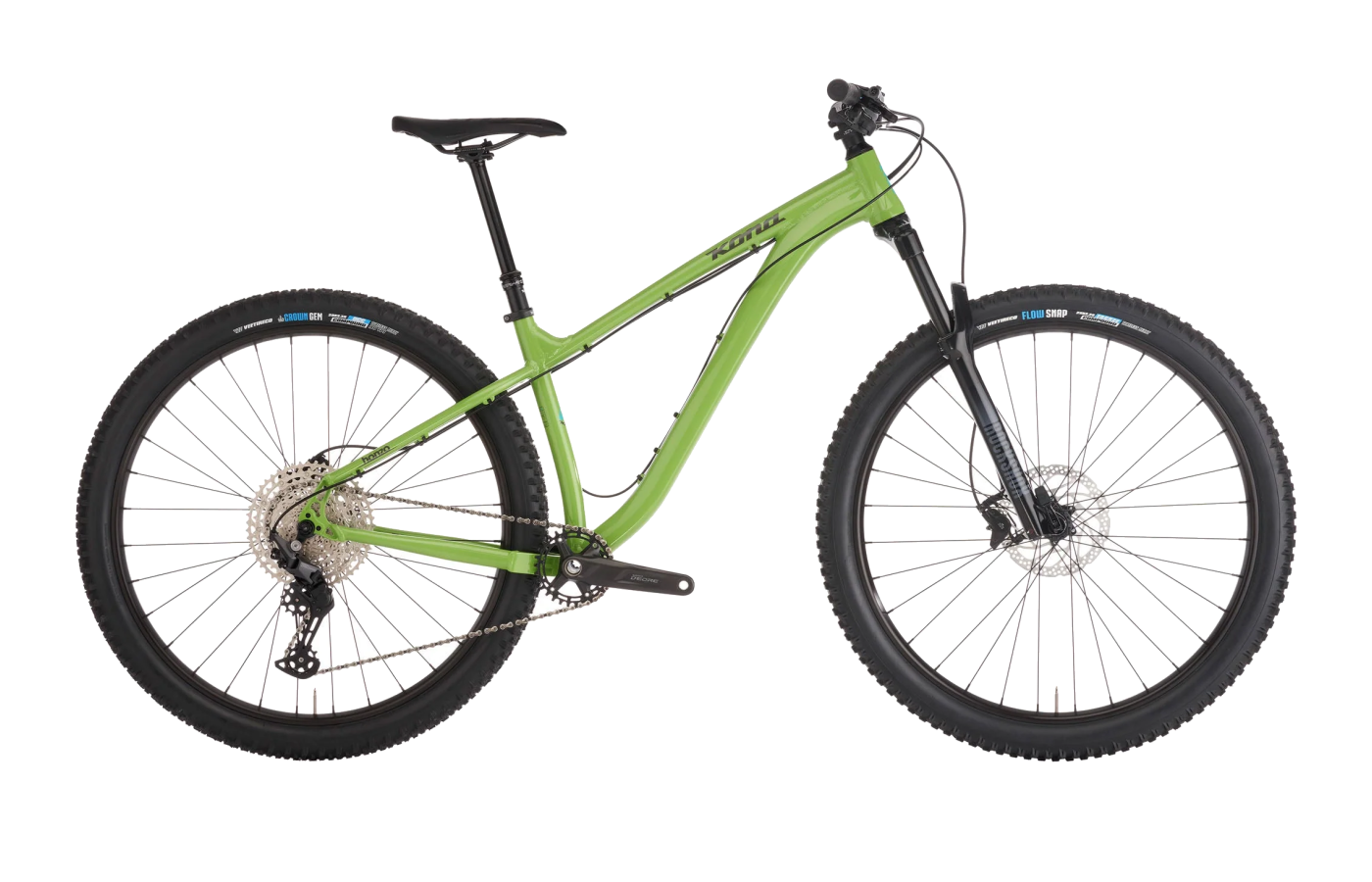
Honzo
Kona's aggressive alloy hardtail — same 'party bike' brief as the Chameleon, often with a more competitive build kit at the same price. Worth a look if you want the Chameleon's vibe without the Santa Cruz tax.
Compare →Spearfish
One of the few other short-travel alloy full-suspension bikes that targets the Chisel's downcountry sweet spot. Less race-honed, more bikepacking-friendly — the bridge between these two bikes' philosophies.
Compare →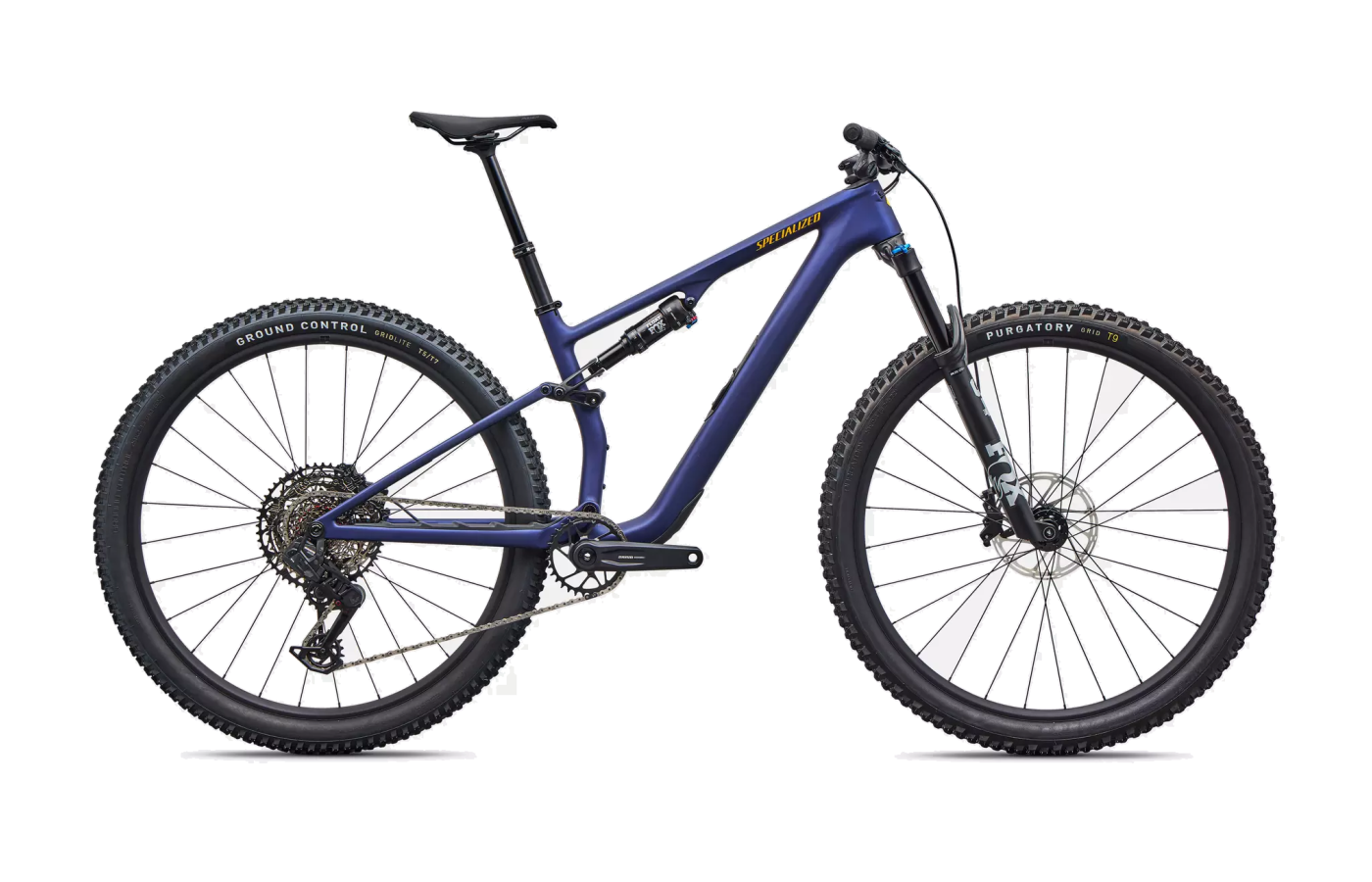
Epic Evo
The carbon platform the Chisel is reverse-engineered from. More travel, lower weight, much higher price — the upgrade path if the Chisel proves the geometry but you want the carbon.
Compare →