Santa Cruz HighballvsSpecialized Epic Hardtail

Stop choosing between a back-breaking race machine and a heavy trail bike. These carbon hardtails take the sting out of the trail without the weight penalty of a rear shock. If you want a bike that climbs like a roadie but won't buck you off when the descent gets chossy, look no further.

Santa Cruz Highball
Image pending

Overview

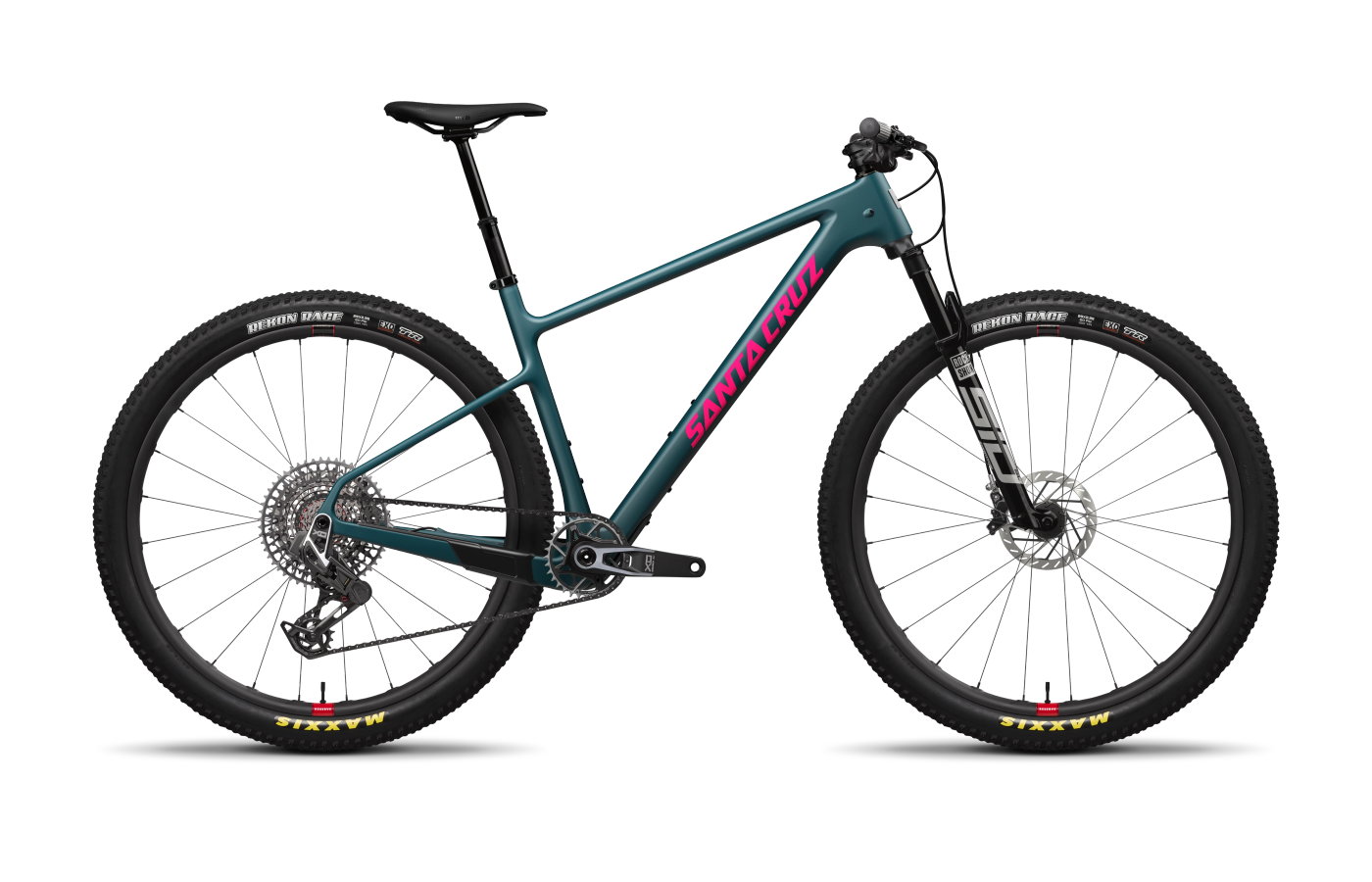
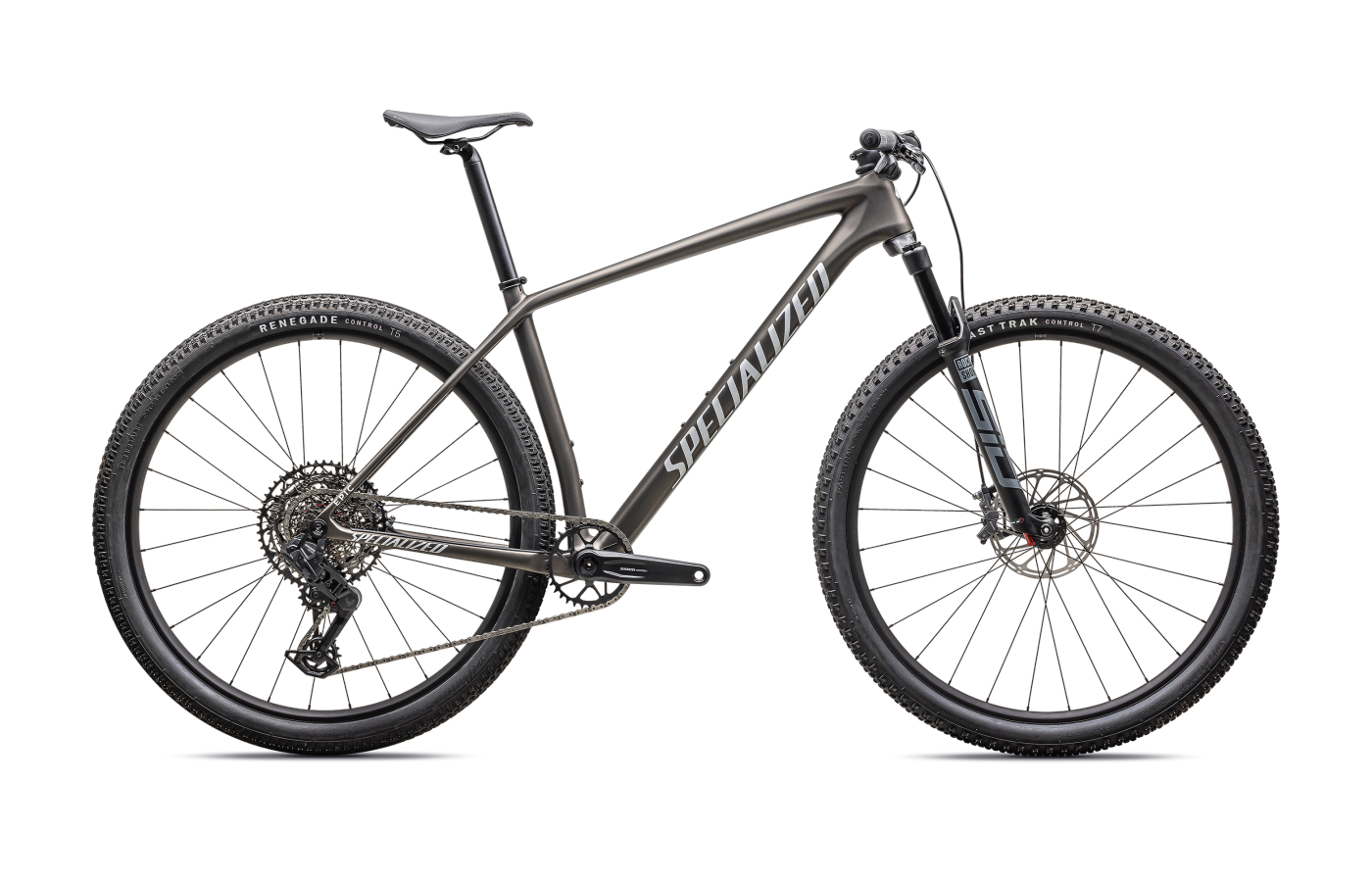
The Santa Cruz Highball and Specialized Epic Hardtail arrive at comfort through two different engineering paths. Santa Cruz relies on a specific rear triangle layout where the seatstays meet the seat tube two inches below the top tube junction, creating a leaf-spring effect. Specialized focused on the carbon layup itself and a curved seat tube to achieve compliance while chasing the title of lightest production frame on the market. Both brands finally killed off the press-fit bottom bracket in these generations, much to the relief of anyone who has ever owned a creaky bike. Specialized starts the Epic range with more budget-friendly entry points like the Carbon 29, though reviewers often grumble about the lacklustre parts kits on those base models. Santa Cruz keeps the Highball in a more premium bracket, starting higher but usually delivering a more refined suspension fork like the RockShox SID even on the R builds. These are not just weight-weenie projects; they are tools for riders who want to spend all day in the saddle without the fatigue of a traditional rigid rear end.

Ride and handling

Highball riders often describe a soft hardtail sensation that stays grounded when the trail gets choppy. It isn't a replacement for rear suspension, but it damps high-frequency vibration enough to make long-distance fire road climbs feel less like a chore. Handling stays stable for a bike in this class, largely thanks to a 67-degree head angle that keeps things from getting twitchy when speeds pick up. It's a bike for the marathon racer who wants to finish a fifty-miler without feeling like they've been in a boxing match. Specialized takes a more aggressive, race-tuned stance. The Epic HT sprints like a scorched feline, offering immediate forward propulsion the moment you stomp the pedals. On high-end builds, the Brain-equipped SID fork creates a platform that stays firm for sprints but opens up for hits, though some find the hard stop of the platform engagement a bit abrupt. It feels lighter underfoot than the Highball—almost road bike light—which makes it a deadly weapon on steep, punchy climbs. While both bikes use high-volume 2.3-inch tires to add a layer of cushion, they handle technical descents with different temperaments. The Highball’s slacker front end makes it feel more trail-adjacent, whereas the Epic HT relies on its sharp, nippy steering to slice through singletrack. Even with its sub-800g frame, the Specialized manages to avoid the old-school organ-jarring ride, but it still demands a more active pilot when the terrain gets technical. The short 426mm chainstays on the Highball help it rotate through tight corners, partially offsetting the stability of its long 1169mm wheelbase.

Specifications

Specialized offers a wider range of price points, but the components on the entry-level Epic builds can feel like a compromise. A RockShox Judy Gold fork and heavy SRAM SX/NX drivetrains on a carbon bike at this price point can be a tough pill to swallow when competitors offer XT or GX kits. If you go for the top-tier S-Works, you get the full treatment with wireless AXS and a Quarq power meter, but the price gap between the hardtail and the full-suspension Epic FSR shrinks until the weight savings are the only reason to skip the rear shock. Santa Cruz takes a more consistent approach to parts. Even the base R build comes with a RockShox SID SL and a 1x12 drivetrain that feels race-ready out of the box. On the flagship X0 AXS RSV build, you're looking at Reserve carbon wheels and a factory-installed dropper post. The Highball’s use of a 27.2mm seatpost limits your dropper options compared to the Epic’s more modern 30.9mm standard, though Santa Cruz tries to compensate by speccing reliable OneUp units in their high-end builds. Wheels are a major differentiator in how these bikes accelerate. The Reserve 28|XC rims on the high-end Highball provide a damped, resilient feel that complements the frame’s compliance. Specialized often uses Roval Control wheels which are famously light, contributing to that flighty feel uphill. If you’re looking at mid-range builds, keep an eye on the hubs; Specialized often sticks to basic house-brand internals while Santa Cruz frequently opts for DT Swiss 370 or 350 hubs which offer better long-term reliability.

HighballHardtail
FRAMESET
FrameSanta Cruz Highball R frame, Carbon CSpecialized FACT 11m, Progressive XC Geometry, Rider-First Engineered™, threaded BB, UDH, 12x148mm rear spacing, internal cable routing
ForkRockShox SID SL Base, 100mm, w/ 2-Position RemoteRockshox SID SL, Rush RL Damper, Debon Air, 15x110mm, 44mm offset, S-XL: 110mm Travel, XS: 90mm Travel
Rear shock
GROUPSET
Shift leversSRAM NX Eagle, 12-speed (right) w/ SRAM OneLoc remote (fork lockout)Sram AXS POD Controller
Front derailleur
Rear derailleurSRAM NX Eagle, 12-speedSRAM S-1000 Eagle Transmission
CassetteSRAM PG-1230, 12-speed, 11-50TSRAM XS 1270 Transmission, 10-52t
ChainSRAM NX Eagle, 12-speedSRAM GX Transmission
CranksetSRAM Stylo 148 DUB, 34TSRAM S1000 Eagle, DUB, 165/170/175mm, 34T
Bottom bracketSRAM DUB 68/73mm Threaded BB (73mm shell)SRAM DUB Threaded Wide
Front brakeSRAM G2 RSRAM Level Bronze 2-piston, Stealth
Rear brakeSRAM G2 RSRAM Level Bronze 2-piston, Stealth
WHEELSET
Front wheelSpecialized 29, 27mm inner width, 28h, tubeless ready; Specialized alloy, sealed cartridge bearings, 6-bolt, 15x110mm thru-axle, 28h; DT Swiss Industry
Rear wheelSpecialized 29, 27mm inner width, 28h, tubeless ready; Specialized alloy, sealed cartridge bearings, 6-bolt, 12x148mm thru-axle, 28h; DT Swiss Industry
Front tireSpecialized Fast Trak, Control Casing, T7 Compound, 29x2.35
Rear tireSpecialized Renegade, Control Casing, T5 Compound, 29x2.35
COCKPIT
StemRaceFace Ride, 60mmSpecialized, 3D-forged alloy, 4-bolt, 7-degree rise
HandlebarsRaceFace RideSpecialized Alloy Minirise, 10mm rise, 750mm, 31.8mm clamp
SaddleFizik Monte or SDG Bel-Air V3 (steel rails)Body Geometry Power Sport, steel rails
SeatpostRaceFace Ride, 27.2mmSpecialized Alloy, Single Bolt, 30.9mm
Grips/TapeESI Chunky GripsSpecialized Trail Grips

Geometry and fit comparison

Reach numbers define the fit difference. A Large Highball stretches out to a 460mm reach, whereas the Epic HT stops at 455mm. This 5mm difference, combined with Santa Cruz's 614mm stack versus Specialized's slightly higher 622mm, creates a cockpit that feels longer and lower. If you have a shorter torso, the Highball might feel like a stretch, potentially requiring a stem swap to find a comfortable pedaling position. The head tube angles mark a clear philosophical split. At 67 degrees, the Highball is significantly slacker than the 68.5-degree Epic HT. This gives the Santa Cruz a calmer demeanor on steep descents and reduces the over-the-bars anxiety that used to plague XC bikes. Specialized compensates for its steeper angle by using a reduced 42mm fork offset to increase trail to 101mm, aiming for a stable yet sharp feel. It works well for carving berms, but the Highball still feels more composed when you're bombing down a straight, rocky chute. Chainstay lengths are nearly identical—426mm on the Highball and 430mm on the Epic—keeping both bikes agile when navigating uphill switchbacks. The real-world difference in wheelbase makes the Santa Cruz feel like a longer, more stable platform. The Epic’s shorter wheelbase keeps it feeling more agile and nippy in tight woods, rewarding a rider who likes to flick the bike around rather than just plow through. Both bikes benefit from a threaded bottom bracket, making them easier to live with for home mechanics.

vs
FIT GEOHighballHardtail
Stack614
Reach460
Top tube642
Headtube length115
Standover height739
Seat tube length470
HANDLINGHighballHardtail
Headtube angle67
Seat tube angle73.5
BB height313
BB drop60
Trail
Offset
Front center743
Wheelbase1169
Chainstay length426

Who each one is for

Santa Cruz Highball

This bike belongs on the start line of a marathon XC race or under a rider who views fire roads as a means to reach remote, technical peaks. If you regularly tackle five-hour rides where comfort is just as important as speed, the soft hardtail compliance of the Highball frame will save your lower back. It’s a tool for the endurance athlete who wants the efficiency of a hardtail but refuses to suffer through a jarring, old-school ride.

Specialized Epic Hardtail

This is a pure climbing weapon for the rider who lives for the Strava uphill leaderboard. If your local trails are a mix of smooth singletrack and punchy, steep rises where every gram of weight feels like an anchor, the Epic’s sub-800g frame is a game-changer. It is the right choice for the privateer racer who needs a lightning-fast chassis to build upon and doesn't mind a slightly more active handling experience.

Other bikes to consider