Allez
vsRoubaix
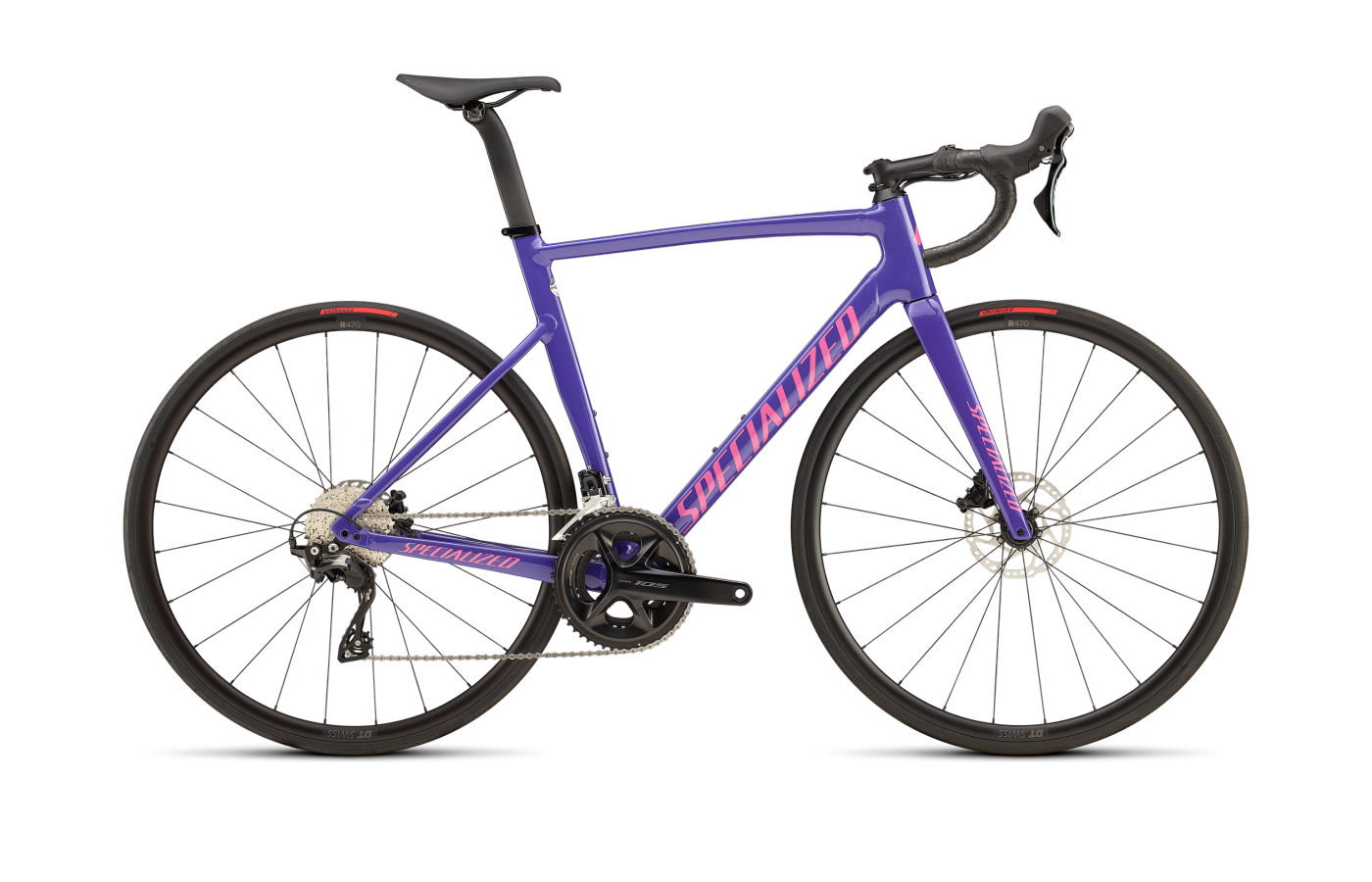
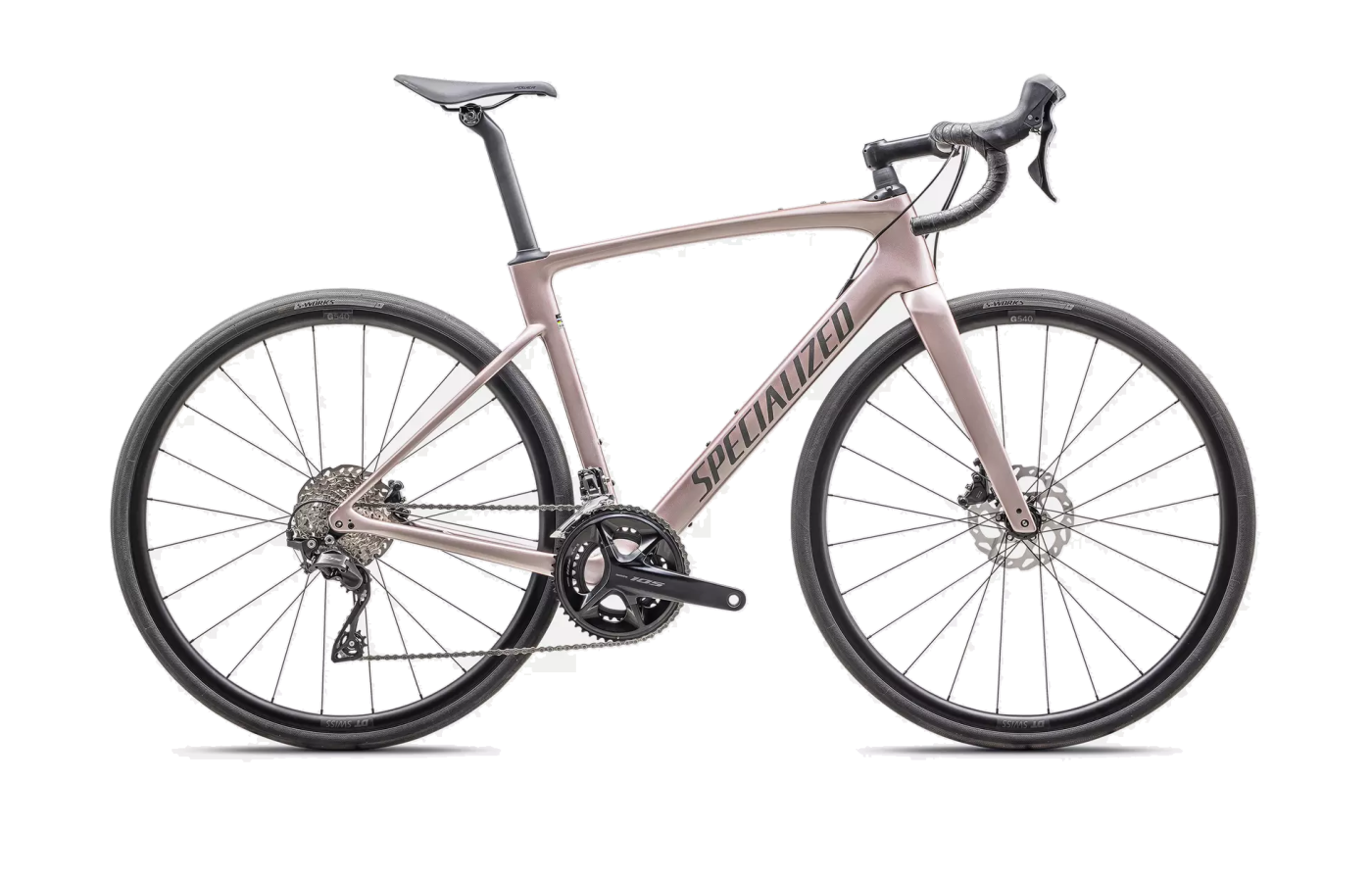
Same brand, same geometry philosophy — different engineering budgets.
The Allez is Specialized's alloy starter platform. The Roubaix is its carbon endurance flagship with front suspension. Both lean comfort-first.
Allez
- Cheapest way in — builds start at $1,199 and the top-spec Sprint Comp is still under $2,600.
- Service-friendly design — threaded BB, external cable routing, standard 27.2 mm seatpost, 3D-forged alloy cockpit.
- Rack and fender mounts plus 35 mm tire clearance make it a legit commuter and winter trainer.
- Heavier — the Comp is 9.09 kg, the entry build pushes 10 kg.
- Stock Axis Sport wheels and Roadsport tires are universally called the weak link.
Roubaix
- Future Shock suspension — 20 mm of axial travel that reviewers consistently call "game-changing" on rough roads and cobbles.
- 40 mm tire clearance — the widest in any Specialized drop-bar road bike, opens up genuine light gravel.
- Carbon everything — FACT 10r/12r frame, optional carbon wheels, proven Paris-Roubaix pedigree.
- Starts at $2,799 — more than the priciest Allez.
- Proprietary Future Shock cartridge and hidden seatpost expander add maintenance complexity.
Editor’s analysis
This isn't a race-versus-endurance fight. Both bikes have the same relaxed intent — the question is how much engineering you want solving the same problem.
On geometry alone, the Specialized Allez and Specialized Roubaix are remarkably close cousins. The Allez openly borrows its "Endurance Road Geometry" from the Roubaix — taller stack, slacker head tube, longer wheelbase, room for wide rubber. Both platforms are dialed for an upright, confidence-inspiring posture rather than aggressive race fit.
The divergence is the frame and the tech on top. The Specialized Allez is E5 Premium Aluminum with a full FACT carbon fork, priced $1,199 to $2,599, clearance for 35 mm tires, external cable routing, threaded BB, standard 27.2 mm seatpost. Specialized's own pitch is that it's cheap to own, easy to service, and engineered to be upgraded rather than replaced. The stock wheels and Roadsport tires are a known weak link — reviewers universally call them "dead" and recommend them as the first upgrade.
The Specialized Roubaix is a different animal. FACT 10r or 12r carbon, a claimed 950 g frame, 20 mm of axial front travel via Future Shock 3.1/3.2/3.3, a flex-tuned Pavé seatpost with a dropped clamp, and 40 mm of measured tire clearance. Prices run $2,799 to $12,499. The Future Shock genuinely changes the ride character — multiple reviewers describe it as "vacuumed to the asphalt" on rough descents, with the ability to rack up 200 km days "free of aches and pains."
Put another way: the Specialized Allez is the bike you buy to ride year-round, upgrade over time, and never feel precious about locking up at the coffee shop. The Specialized Roubaix is the bike you buy when you want the road to disappear underneath you on a five-hour ride over broken chip-seal and want the quickest carbon-fiber answer to that problem.
Where the builds differ.
Comparing our editor's-pick builds side-by-side. Winners highlighted row-by-row — lower price and weight, and the better-spec component, each mark a point.
Build variants & pricing
Editor's picks are both Shimano 105 mechanical — the highest drivetrain tier the Allez offers, and the Roubaix's equivalent mechanical build.
The two sides don't overlap cleanly on spec: the Allez tops out at 105 mechanical ($2,599), while the Roubaix starts at Tiagra ($2,799) and scales to Dura-Ace Di2 at $12,499. The price gap between the picks ($900) is real platform asymmetry, not a spec mismatch.
How they fit, how they steer.
Fit-picked sizes for a 5'8" rider. The Roubaix 54 runs 33 mm taller in stack and 17 mm longer in reach than the Allez 52 — it seats you slightly more stretched but substantially higher, with Future Shock adding another 20 mm of effective bar height on top.
Which size should I buy?
Size recommendations based on stack, reach, and effective top tube. The Allez offers more size granularity at the small end (44, 49, 52, 54, 56, 58, 61); the Roubaix matches it one-for-one.
→These are starting points. Flexibility, riding style, and preferred position all shift the answer — if you’re between sizes, a professional fit beats a chart.
What the magazines said.
Published reviews from trusted cycling outlets. Click through for the full write-up.
Which one should you buy?
If you want a tough, upgrade-friendly alloy bike that covers everything from commuting to Sunday group rides, get the Allez. If your rides are long, rough, and you want the road filtered out, get the Roubaix.
Allez
If you're new to drop-bar riding, commuting on broken city pavement, or looking for a four-season workhorse you can upgrade into over time, this is still the benchmark. Rack mounts, fender eyelets, 35 mm tire room, and a frame reviewers consistently call "worthy of upgrades."
Roubaix
If you log centuries on rough chip-seal, chase cobbled spring classics on your local loops, or want a carbon bike that shrugs off gravel shortcuts without changing tires — the Future Shock and 40 mm clearance are genuinely differentiated, not a gimmick.
Questions buyers actually ask.
Short answers to the things we get emailed about most often.
01Is the Roubaix just a more expensive Allez?
No — the geometry philosophy overlaps, but the engineering underneath is completely different.
The Allez is E5 Premium Aluminum with a claimed 1,375 g (size 56) frame, a FACT carbon fork, no suspension, and 35 mm tire clearance. The Roubaix is FACT 10r or 12r carbon with a claimed 950 g frame, 20 mm of Future Shock front travel, a flex-tuned Pavé seatpost, and 40 mm clearance.
Shared DNA: upright position, long wheelbase, slack-for-a-road-bike head angle, wide rubber. Different execution: the Allez gets there with tire volume and frame compliance; the Roubaix gets there with active suspension and premium carbon layup.
02Do I actually need the Future Shock?
Depends on where you ride.
On smooth pavement, Future Shock is a subtle refinement — you'll feel less hand fatigue on three-hour-plus rides, but it's not night-and-day. On broken chip-seal, frost-heaved roads, or cobbles, reviewers describe it as "game-changing." Multiple testers logged 200 km rides and reported being "free of aches and pains" afterward.
The trade-off: it adds ~200 g, introduces a proprietary cartridge with its own service interval, and slightly limits how low you can stack the bars. For a fit, racy rider on clean tarmac, the simpler Allez frame is the sharper tool. For long-distance and rough roads, the Roubaix earns its price.
03What's the real tire clearance difference?
Allez: up to 35 mm official (32 mm with mudguards). Ships with 700x30 Roadsport tires on most builds, 700x26 on the Sprint Comp.
Roubaix: up to 40 mm measured (Specialized officially rates it 38 mm, but reviewers measure more). Ships with 700x32 S-Works Mondo tires on most builds.
That 5–8 mm is the difference between "all-road" and "light gravel." The Roubaix handles hard-pack, fire roads, and short gravel connectors without swapping tires. The Allez handles chip-seal and mild dirt — anything rougher and you're on the wrong tire.
04Which has better resale and upgrade potential?
The Allez is universally praised as an "upgrade platform." Reviewers explicitly call out swapping the stock Axis Sport wheels and Roadsport tires as the single most impactful change — Bicycling noted that Roval Alpinist SLX wheels made it feel "like a bike that should cost double its price." Standard 27.2 mm seatpost, threaded BB, and 3D-forged alloy cockpit mean nothing is proprietary.
The Roubaix depreciates faster in absolute dollars (simple math — more to lose), but the carbon frame and Future Shock hold value better percentage-wise. Specialized offers the Future Shock 3.3 cartridge as a $400 aftermarket upgrade for owners of the 3.1/3.2.
05Can the Allez handle long rides, or is the Roubaix the only option?
The Allez is perfectly capable of 100+ km rides. Reviewers specifically noted being "comfortable after a 3–4 hour ride," and Specialized's own endurance geometry puts you in the same upright posture as the Roubaix. The frame compliance is genuinely good for aluminum.
The Roubaix separates itself on rough-surface long rides. On smooth century rides, the gap is smaller than the price suggests. On Paris-Roubaix-style broken pavement or a five-hour ride over chip-seal, the Future Shock and wider tires meaningfully reduce fatigue.
06How does maintenance compare?
The Allez wins decisively. Threaded BSA bottom bracket, largely external cable routing, standard 27.2 mm round seatpost, standard 31.8 mm clamp bar and stem — nothing proprietary. A cable replacement runs around $25 in labor versus $200 on fully integrated bikes (per Bicycling).
The Roubaix also uses a threaded BSA BB and mostly external routing (partly to accommodate the Future Shock), but the Future Shock cartridge has its own service interval and a proprietary tool requirement. The hidden seatpost expander bolt is a recurring complaint in reviews — several testers reported it falling down the seat tube during saddle adjustments.
07Which has a wider size range for smaller or larger riders?
Both bikes offer identical size labels — 44, 49, 52, 54, 56, 58, and 61 cm — so coverage is matched at both ends.
The Roubaix's size labels run a touch roomier than the Allez's: at comparable numerical sizes, the Roubaix posts a noticeably taller stack and longer reach (e.g., Roubaix 54 is 585 mm stack / 381 mm reach vs. Allez 54 at 569 mm / 370 mm). Riders straddling two sizes often end up one size down on the Roubaix versus the Allez. Toe overlap has been reported on the smaller Allez frames with wide tires fitted.
08Are both compatible with electronic shifting?
The Roubaix is offered with electronic shifting from the SL8 Comp ($4,499, 105 Di2) upward, including Ultegra Di2, Dura-Ace Di2, Force AXS, Rival AXS, and Red AXS builds.
The Allez currently tops out at Shimano 105 mechanical 12-speed on the Sprint Comp. There is no factory electronic build. The frame is routed for mechanical shifting — retrofitting Di2 is possible but fiddly, and wireless groupsets like SRAM Rival/Force AXS are the easier aftermarket path.
Similar bikes
If your priorities don’t map cleanly onto either of these, one of these adjacent bikes probably fits better.
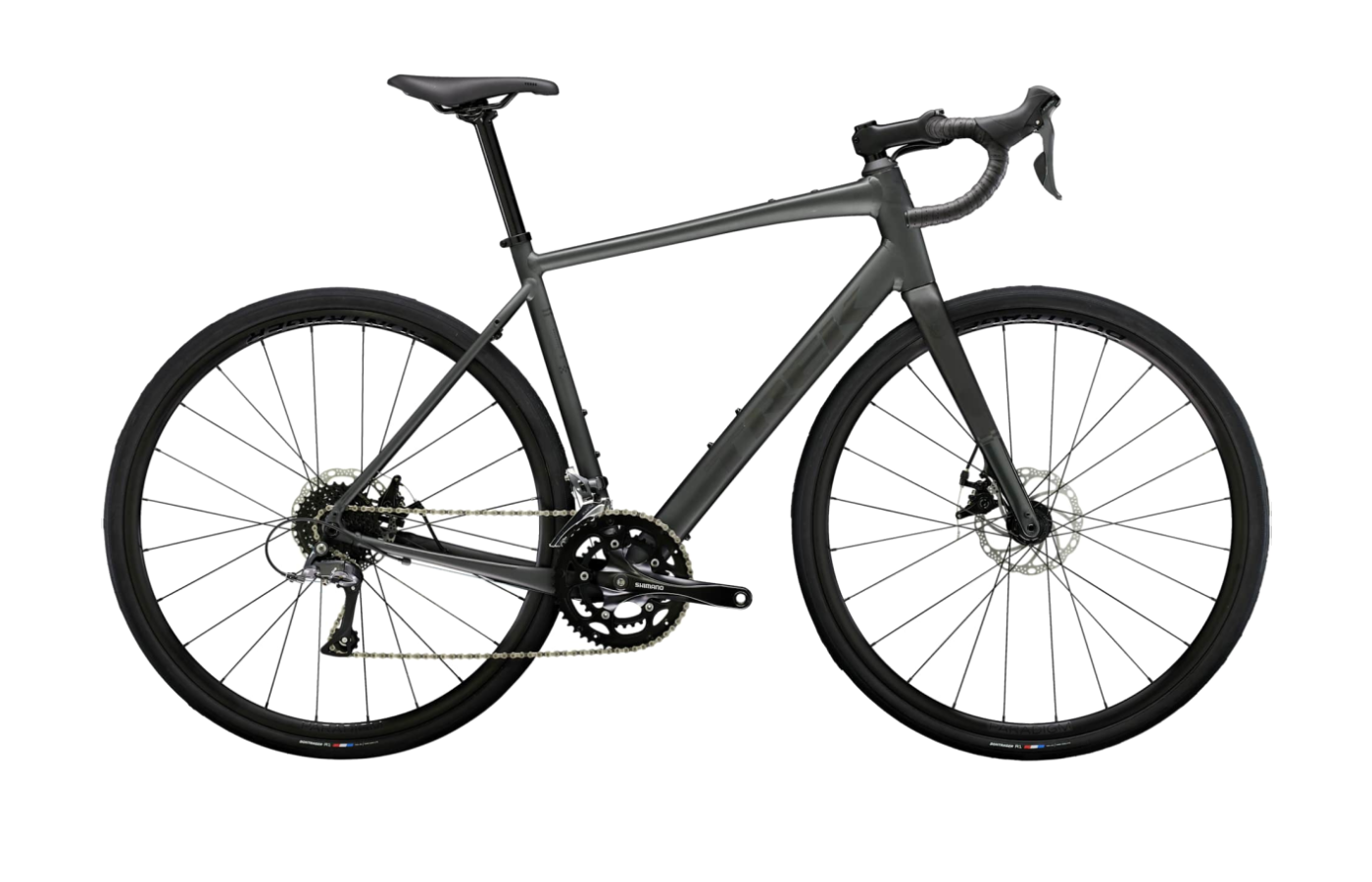
Domane
Trek's direct answer to the Roubaix — IsoSpeed rear compliance instead of front suspension, similar 38 mm tire clearance, and an endurance geometry that's arguably the closest cross-brand comparison. Pick it if you want the Roubaix's mission without Specialized's proprietary Future Shock.
Compare →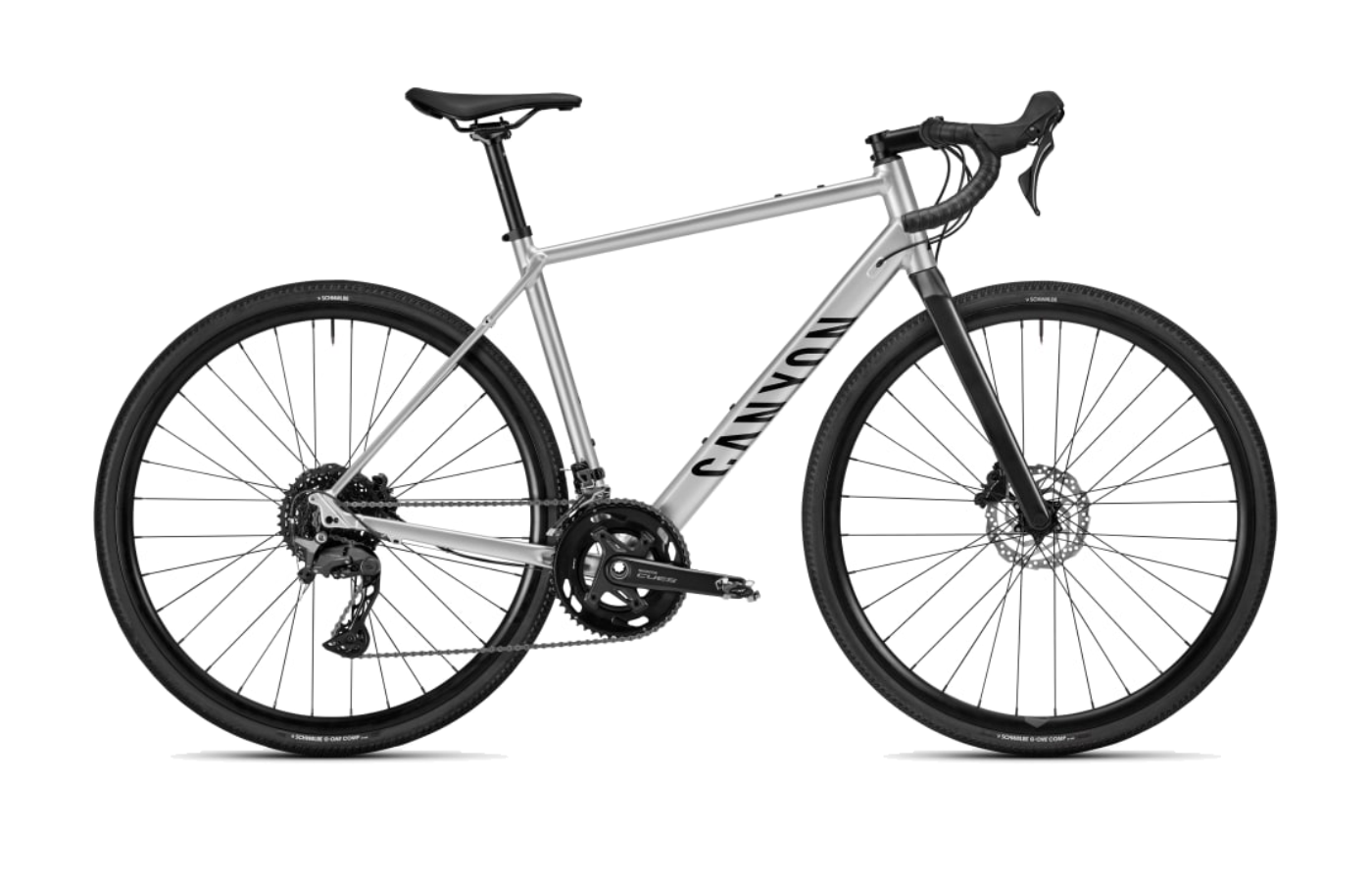
Endurace
The Canyon Endurace gets you into carbon endurance geometry at direct-to-consumer prices — typically $1,000+ cheaper than a comparably-specced Roubaix. No active suspension, and no local dealer if things go wrong — but the value is hard to argue with if you know your fit.
Compare →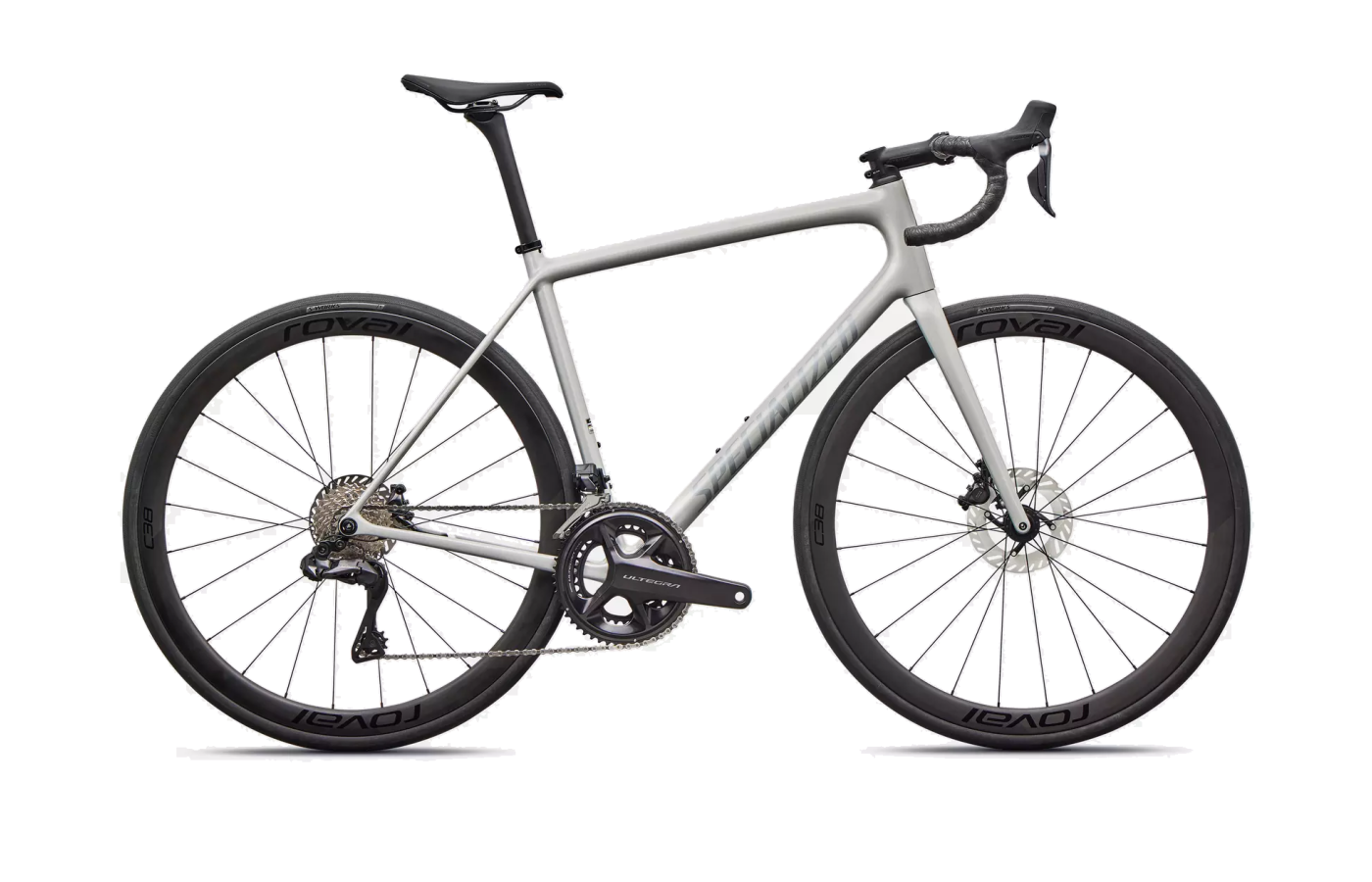
Aethos
The Specialized Aethos is the anti-Roubaix from within the same brand — a featherweight carbon climber with round tubes, zero integration, and no suspension. Pick it if comfort on rough roads isn't your problem but weight on long climbs is.
Compare →