Chisel
vsRockhopper
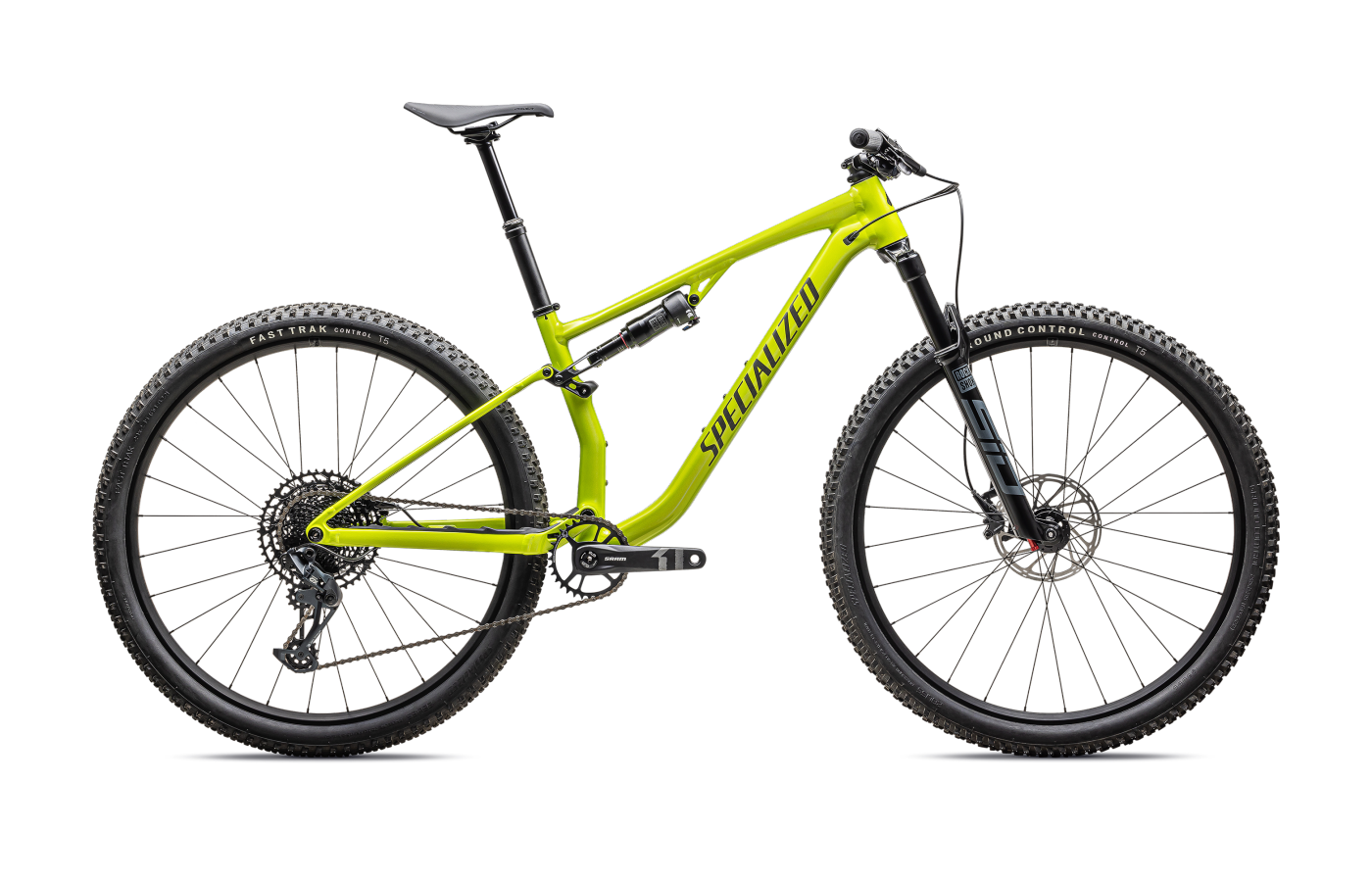
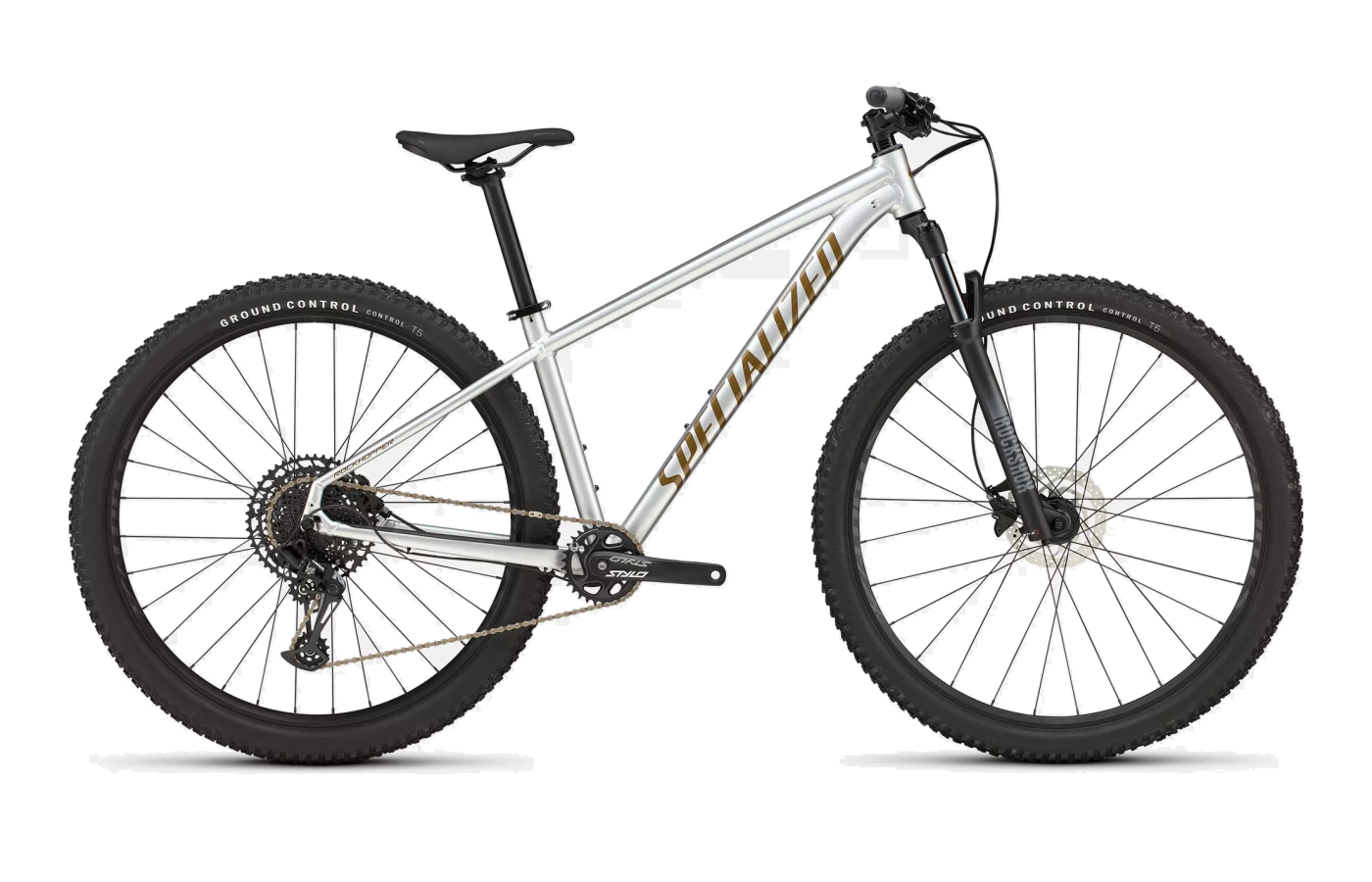
Same brand, two completely different bikes.
The Chisel is a 110 mm full-suspension XC racer in alloy. The Rockhopper is the entry hardtail Specialized has built for 40 years.
Chisel
- Modern XC geometry — 67° HTA, 445 mm reach, 1,177 mm wheelbase in M; calm at speed, sharp in corners.
- Smartweld alloy frame claimed at 2,720 g — within 500–750 g of the carbon Epic 8 and far stiffer than typical budget aluminum.
- Real XC suspension — RockShox SID fork and Deluxe Select+ shock on the Comp build deliver carbon-bike efficiency for thousands less.
- Heavy stock wheelset and HG freehub limit drivetrain upgrades without a wheel swap.
- Firm rear tune has a narrow setup window — reviewers report a 5 PSI sweet spot between harsh and sloppy.
Rockhopper
- Best-in-class brakes — Shimano MT200 hydraulics that reviewers say work "like new" after months of neglect.
- Genuinely lightweight for the money — ~13.1 kg in size M; one of the lightest hardtails in the sub-$1,300 bracket.
- RxTune size-specific tuning — fork travel and frame geometry shift across XS through XXL so smaller and larger riders aren't compromised.
- Straight 1-1/8" head tube and 9 mm QR axles rule out most modern fork and wheel upgrades.
- Judy fork on the Expert is the platform's ceiling — reviewers call it "agricultural" once trails get rough.
Editor’s analysis
These bikes share a logo and a head-badge — and almost nothing else. One is a speed-metal race bike. The other is the way most people start mountain biking.
On paper this looks like a price comparison: a $3,499 Chisel Comp against a $1,299 Rockhopper Expert. In practice it's a category jump. The Chisel is a 110 mm-rear, 120 mm-front full-suspension XC bike built around Specialized's D'Aluisio Smartweld alloy frame — the same chassis philosophy as the carbon Epic 8, just hydroformed in metal. The Rockhopper is a rigid-rear hardtail with a coil or air fork, A1 alloy tubing, and a 9 mm quick-release rear axle that hasn't moved in a decade.
Geometry tells the same story. The Chisel runs a 67° head angle, 445 mm reach in size M, and a 1,177 mm wheelbase — modern, stable, willing to be pushed. The Rockhopper sits at 68.5°, 425 mm reach in size L, and a 1,128 mm wheelbase. Multiple reviewers describe the Rockhopper as feeling "twitchy" or "nervous" as soon as the speedometer climbs; the Chisel gets called a "momentum machine" and a "hot hatch." Same brand, two different design eras.
Suspension is where the gap really opens. The Chisel Comp ships with a RockShox SID — 35 mm stanchions, air spring, modern damping — over a Deluxe Select+ rear shock with a flex-stay linkage tuned for pedaling efficiency. Reviewers consistently call it the "sweet spot" of the Chisel range. The Rockhopper Expert runs a RockShox Judy with a Solo Air spring, which is a real upgrade over the coil Suntour forks on the cheaper trims, but BikeRadar and Off.road.cc both flag it as "agricultural" and prone to getting overwhelmed by repeated hits.
The right way to think about this: the Rockhopper is the bike you buy to find out whether you like mountain biking. The Chisel is the bike you buy when you already know — and you want to race, ride long, and chase your friends on actual XC trails without spending Epic money.
Where the builds differ.
Comparing our editor's-pick builds side-by-side. Winners highlighted row-by-row — lower price and weight, and the better-spec component, each mark a point.
Build variants & pricing
The Chisel runs $1,899–$3,599 across hardtail and full-suspension trims. The Rockhopper runs $649–$1,299 — entirely hardtail.
These platforms barely overlap on price. The cheapest full-suspension Chisel costs $600 more than the priciest Rockhopper, and the editor's-pick Chisel Comp at $3,499 sits closer to four Rockhopper Sports than to the Rockhopper Expert. Use this comparison to decide whether you want full-suspension XC at all — not to pick between equivalent builds.
How they fit, how they steer.
The fit-picked sizes for a 5'8" rider land on Chisel size M and Rockhopper size L-29. The Chisel runs 1.5° slacker up front (67° vs 68.5°), 16 mm more trail (113 vs 97), and a 49 mm longer wheelbase — all of it pointed at high-speed stability on real trails.
Which size should I buy?
Both ranges cover XS through XL/XXL, but the Rockhopper splits sizes between 27.5" and 29" wheels at the small end while the Chisel is 29" only.
→These are starting points. Flexibility, riding style, and preferred position all shift the answer — if you’re between sizes, a professional fit beats a chart.
What the magazines said.
Published reviews from trusted cycling outlets. Click through for the full write-up.
Which one should you buy?
If you're getting into mountain biking and want a reliable bike for greenways, fire roads, and easy singletrack, get the Rockhopper. If you already ride and want a real XC race platform without paying Epic money, get the Chisel.
Chisel
If you're already riding XC trails, doing NICA races, or chasing an ultra-endurance event, the Chisel gives you 90% of the carbon Epic for roughly half the money. Modern geometry, real suspension, and a frame that rewards hard pedaling.
Rockhopper
If you're buying your first real mountain bike, riding mostly groomed trails, or splitting time between commuting and weekend dirt, the Rockhopper Expert gets you in the door with brakes and a drivetrain that won't embarrass themselves. Just don't expect it to grow with you onto rougher terrain.
Questions buyers actually ask.
Short answers to the things we get emailed about most often.
01Is the Chisel actually faster than the Rockhopper?
On real XC trails, yes — by a wide margin. The Chisel has 110 mm of rear travel, a 120 mm fork, and modern XC geometry that lets you carry speed through rough sections the Rockhopper has to slow down for. On a smooth fire-road climb the Rockhopper's 13.1 kg weight and lockout-equipped fork actually keep it close, but anywhere that demands traction or descent control, the Chisel pulls away.
Reviewers across Bikepacking.com, Bicycling, and Nminus1bikes describe the Chisel as a "momentum machine" — it rewards aggressive pedaling in a way the Rockhopper's rigid rear end cannot.
02Why is there such a big price gap?
Different categories. The Chisel is a full-suspension XC race bike with a Smartweld alloy frame, a rear shock, modern boost spacing, and tier-appropriate suspension components — Specialized's pitch is that it's a "convincing facsimile" of the $4,500+ carbon Epic 8.
The Rockhopper is a hardtail that starts at $649 and tops out at $1,299. It uses simpler tubing, a 9 mm QR rear axle, and entry-level forks. Even at the top of its range, it's solving a different problem — getting people onto dirt at the lowest possible cost.
03Can I upgrade the Rockhopper later to get closer to the Chisel?
Not really, and this is one of the Rockhopper's real weaknesses. The frame uses a straight 1-1/8" head tube and 9 mm quick-release axles front and rear — both standards that modern aftermarket forks and wheelsets have left behind. Bike Perfect and Off.road.cc both flagged this as a hard ceiling on upgrades.
The Chisel, by contrast, uses a tapered head tube, 15x110 mm and 12x148 mm thru-axles, a threaded BSA bottom bracket, and a 30.9 mm dropper-compatible seat tube — every standard you'd want for incremental upgrades.
04Which one handles technical descents better?
The Chisel, decisively. Reviewers describe the Rockhopper as feeling "twitchy" and "pitched forward" on steep descents because of its 68.5° head angle and 425 mm reach in size L. The Chisel runs a 67° head angle, 445 mm reach in size M, and 16 mm more trail — it's noticeably more stable when the trail points down.
Add 110 mm of rear suspension on top of that and the difference is dramatic. The Rockhopper makes you absorb every hit with your body; the Chisel's flex-stay rear end takes the edge off so you can keep your eyes up.
05Is the Chisel Comp the right Chisel to buy?
For most riders, yes. The Radavist called the base Chisel's RockShox Recon Silver fork a "deal-breaker" and argued the $800 jump to the Comp — which adds the RockShox SID with 35 mm stanchions and the Deluxe Select+ rear shock — is the necessary investment.
If you want to ride more aggressively, the Chisel Comp Evo at $3,599 swaps in a 130 mm Fox 34 fork and stickier Purgatory T9 tires; reviewers describe it as a "radical little short-travel rally bike." If you want pure XC efficiency, the standard Comp with the SID is the pick.
06Is the Rockhopper Expert worth the jump from the Comp?
Yes, mostly because of the fork. The Comp models use SR Suntour or basic Judy coil forks that reviewers consistently describe as "sticky" and "pogo-stick" feeling. The Expert at $1,299 ships with the RockShox Judy Solo Air — air-sprung, tunable to rider weight, and a meaningful upgrade in compliance.
If you can't stretch to the Expert, the Comp at $999 with the Shimano Deore 12-speed and air Judy is the next-best value — it shares the same fork as the Expert but trades the SRAM 12-speed for Deore.
07Do either of these come with a dropper post?
Neither, in stock form. Both frames are dropper-compatible (the Chisel takes a 30.9 mm post, the Rockhopper has internal dropper routing on the Expert), but Specialized ships them with rigid posts to hit price.
For the Chisel, a dropper is close to mandatory once you're riding real XC terrain — budget another $150–$300. For the Rockhopper, a dropper is a nice-to-have rather than a need-to-have given the trails it's designed for.
08What's the warranty on these frames?
Both Chisel and Rockhopper frames carry Specialized's lifetime frame warranty to the original owner against manufacturing defects. Specialized also offers crash-replacement pricing on damaged frames, typically at a steep discount off retail. The Chisel's rear suspension linkage and pivots are not covered under the lifetime warranty — they fall under a separate (shorter) wear-component warranty, which is industry standard.
Similar bikes
If your priorities don’t map cleanly onto either of these, one of these adjacent bikes probably fits better.
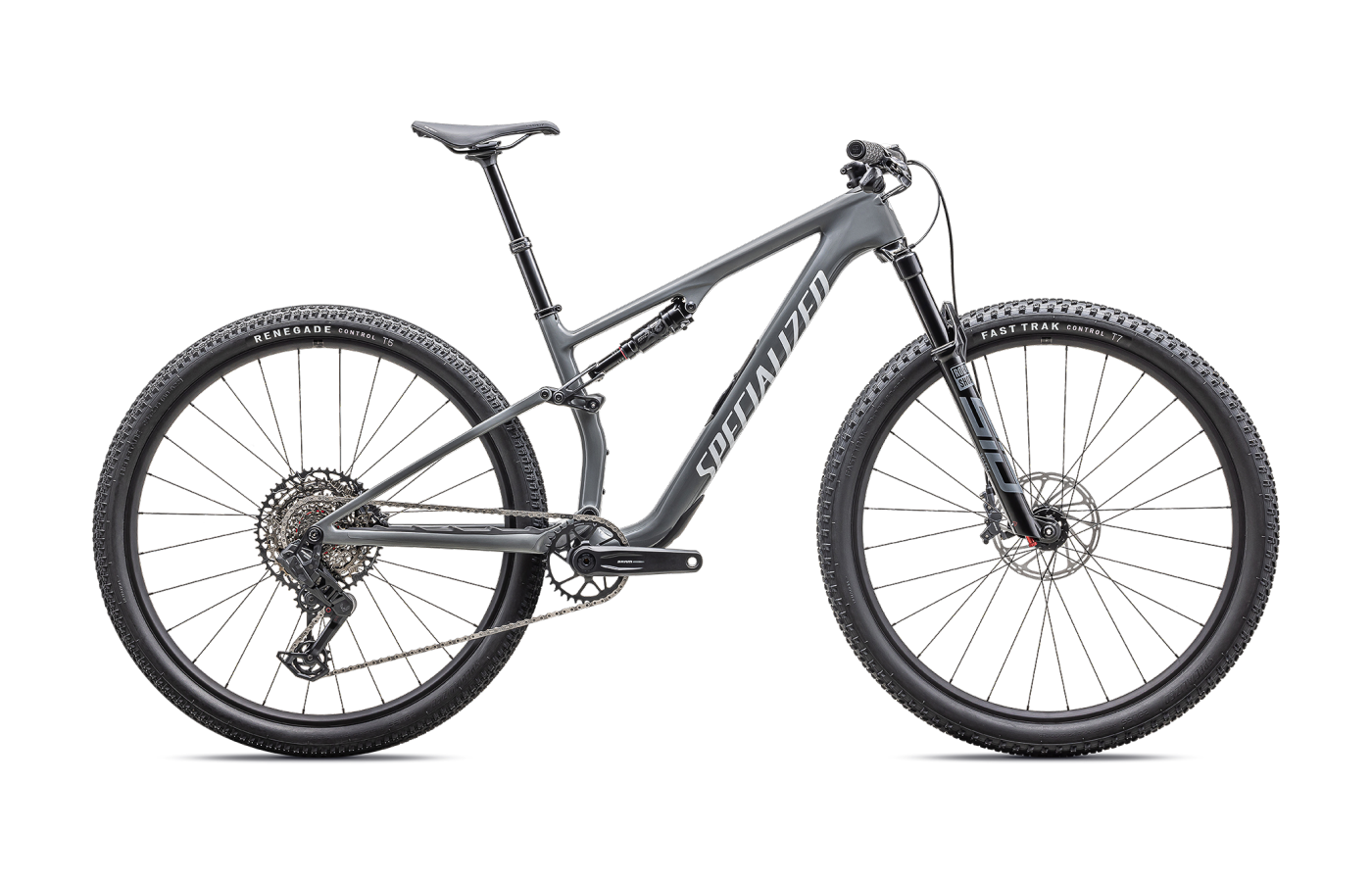
Epic
The carbon sibling to the Chisel — same flex-stay platform, 120 mm rear travel instead of 110, and roughly 500–750 g lighter. Costs about twice as much. The choice when you want the same ride character without the alloy weight penalty.
Compare →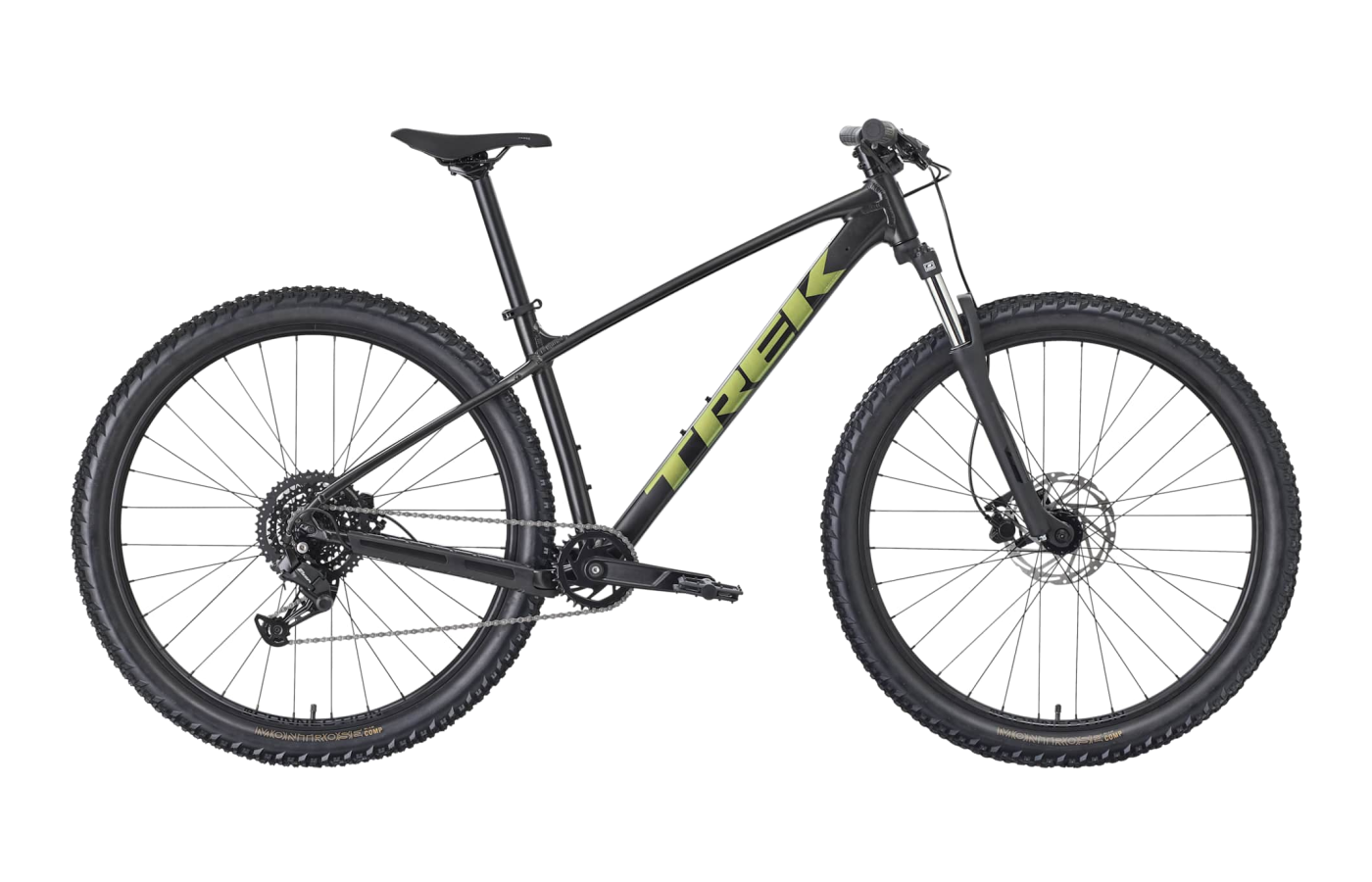
Marlin
Trek's direct rival to the Rockhopper at the same price points and intent — a beginner-friendly hardtail with a wide build range. Modern thru-axle on the higher trims means it future-proofs better than the Rockhopper's QR rear end.
Compare →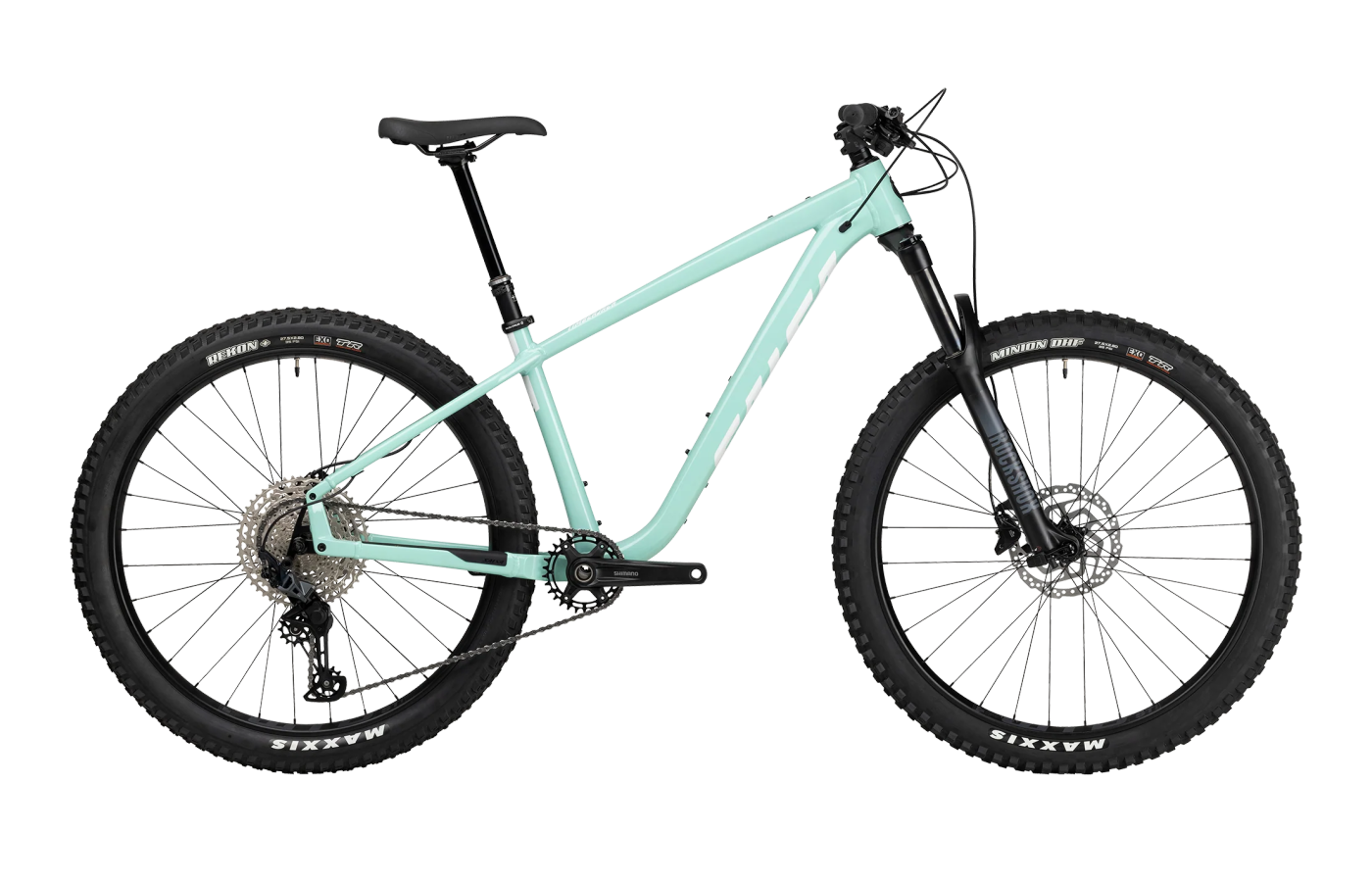
Timberjack
Salsa's rowdier alloy hardtail — slacker geometry, plus-tire clearance, and a hard-trail attitude. The pick if the Rockhopper feels too XC and you want a hardtail that can handle the kind of trail the Chisel was built for.
Compare →