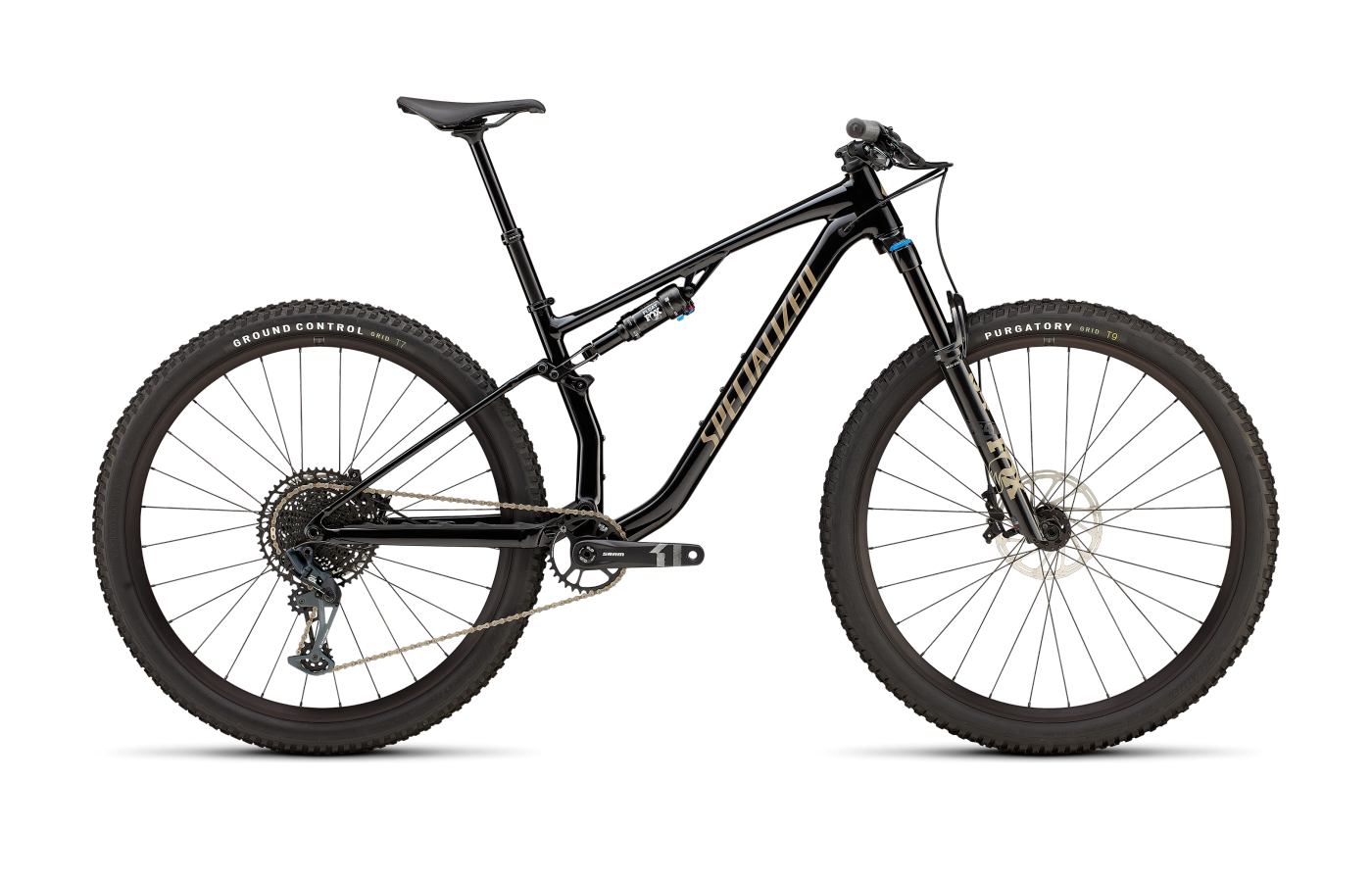
Specialized ChiselvsTrek Roscoe
Climbing a steep, root-infested switchback on the Chisel feels like you’ve been given a shot of adrenaline, as the elastic frame translates every pedal stroke into immediate forward motion. Drop the seat on the Roscoe and point it down a technical rock garden, and you’ll find that its massive 150mm fork and slack geometry allow for a rowdiness that the short-travel Specialized simply can't match.

Overview
Specialized and Trek take clashing paths with aluminum here. The Chisel acts as a budget-conscious clone of the flagship carbon Epic 8, using advanced Smartweld technology to create a frame that weighs just 2.7kg—lighter than many carbon competitors. It serves the cross-country racer or distance-hungry bikepacker who wants to maintain momentum on rolling terrain without a massive price tag. It isn't trying to be a plush cruiser; it’s a high-performance efficiency machine for pilots who stay active on the bike. Trek’s Roscoe Gen 4 moves away from its plus-tire roots to become a genuine hardcore hardtail. It uses the high-end Alpha Platinum alloy usually reserved for Trek’s full-suspension enduro rigs to handle the stress of a long 150mm fork. If the Chisel is about surgical precision and speed, the Roscoe is about surviving technical chaos. It trades rear suspension for massive tire clearance and stability, making it a rugged alternative for those who prefer the simplicity and feedback of a hardtail on technical trails.
Ride and handling
Riding the Chisel feels like driving a hot hatch—agile, firm, and communicative. The 110mm of rear travel focuses on pedaling support and doesn't wallow or dive when you’re out of the saddle. However, it’s a momentum machine with a narrow sweet spot; reviewers found that dropping just 5 PSI in the shock could transform the bike from harsh to compliant. On high-frequency chatter or continual trauma sections, the rear end can feel clattery, requiring the rider to pick lines with surgical care. The Roscoe 8, by contrast, feels like a tank with a hair trigger. That 150mm Fox 36 fork combined with 2.5-inch tires creates a front end that eats trail debris, providing confidence usually reserved for full-suspension rigs. Handling is dominated by the massive 200mm dropper post. On the Chisel, you might feel like you're just hanging on in chunky rock gardens, but the Roscoe allows you to drop the seat entirely and use your legs as deep-travel suspension. It’s remarkably stable at high speeds, though the rear axle remains a blunt reminder that you are on a hardtail. Engagement matters in the slow stuff too; the Roscoe’s 108-point Rapid Drive hub provides near-instant response when ratcheting through technical climbs—a feature the Chisel’s more basic Shimano hubs can't match. The Specialized is a scalpel for the racecourse, while the Trek is a sledgehammer for the woods.
Specifications
Specialized makes some frustrating choices on the Chisel builds to hit price targets. Most models use a Shimano HG-style freehub, creating a bottleneck for future upgrades because you can't install a high-end 10-tooth cassette without replacing the entire rear hub or wheel. While the Chisel Comp builds offer a solid RockShox SID with 35mm stanchions, the base versions use the heavy Recon Silver fork. It’s a frame that clearly outclasses its budget components, particularly the narrow 760mm bars and relatively short droppers on larger sizes. Trek equips the Roscoe 8 with heavy-duty parts that match its aggressive intentions. The Fox Rhythm 36 fork is a highlight, offering a level of front-end stiffness and composure that the Chisel’s lighter XC forks lack. You also get massive 4-piston brakes and a 203mm front rotor, providing stopping power that makes the Chisel’s 2-piston Level T brakes feel wimpy and under-gunned. Both bikes use the reliable Shimano Deore 1x12 drivetrain as a workhorse, but the Trek includes stickier tires and higher-rise bars that emphasize its trail-ready nature right out of the box. The value gap is visible in the frame features as well; the Roscoe includes ISCG 05 mounts for bash guards and a proprietary frame bag system, while the Chisel prioritizes weight, omitting internal storage to keep the frame as light as possible.
| Chisel | Roscoe | |
|---|---|---|
| FRAMESET | ||
| Frame | Specialized D'Aluisio Smartweld M5 Alloy, hydroformed tubes, Progressive XC Geometry, internal cable routing, BSA threaded BB, 12x148mm spacing, 30.9mm dropper compatible | — |
| Fork | RockShox Judy Silver, TurnKey damper, Solo Air, 42mm offset, 15x110mm thru-axle, 100mm travel (XS: 80mm) | — |
| Rear shock | — | — |
| GROUPSET | ||
| Shift levers | SRAM SX Eagle trigger, 12-speed | — |
| Front derailleur | — | — |
| Rear derailleur | SRAM NX Eagle, 12-speed | — |
| Cassette | SRAM PG-1210 Eagle, 12-speed, 11-50T | — |
| Chain | SRAM SX Eagle, 12-speed | — |
| Crankset | SRAM SX Eagle, Powerspline, 32T chainring | — |
| Bottom bracket | SRAM Powerspline | — |
| Front brake | SRAM Level T hydraulic disc, 2-piston | — |
| Rear brake | SRAM Level T hydraulic disc, 2-piston | — |
| WHEELSET | ||
| Front wheel | Specialized 29 rim, 27mm internal width, 28h, tubeless ready; Alloy front hub, sealed cartridge bearings, 6-bolt, 15x110mm thru-axle, 28h; Stainless spokes, 14g | — |
| Rear wheel | Specialized 29 rim, 27mm internal width, 28h, tubeless ready; Alloy rear hub, sealed cartridge bearings, 12x148mm thru-axle, 6-bolt, 28h; Stainless spokes, 14g | — |
| Front tire | Specialized Fast Trak, Control casing, T7 compound, 29x2.35 | — |
| Rear tire | Specialized Fast Trak, Control casing, T5 compound, 29x2.35 | — |
| COCKPIT | ||
| Stem | Specialized 3D-forged alloy stem, 4-bolt, 7° rise | — |
| Handlebars | Specialized Alloy XC minirise handlebar, double-butted alloy, 31.8mm clamp, 8° backsweep, 6° upsweep, 10mm rise | — |
| Saddle | Body Geometry Power Sport saddle, steel rails | — |
| Seatpost | Alloy seatpost, 2-bolt clamp, 30.9mm | — |
| Grips/Tape | Specialized Trail Grips | — |
Geometry and fit comparison
The Chisel uses mezzo geometry, a balanced approach that sits between traditional XC twitchiness and modern trail poise. A 66.5-degree head tube angle in the low setting combined with a 75.5-degree seat tube angle provides a centered position that excels on steep climbs. With a 445mm reach on the medium, it feels reasonably stretched but snappy enough for tight switchbacks. It’s a progression-minded layout that can be adjusted via a flip-chip or even over-forked to 130mm for more of a downcountry feel. Trek pushes the Roscoe into aggressive territory with a slack 65-degree head tube angle. This makes the front wheel feel much more stable on steep descents than the Chisel. The 76-degree seat tube angle keeps the rider forward for climbing, but the overall wheelbase is longer, making the bike feel composed at high speeds and less likely to pitch the rider forward. Fit differences are notable in the cockpit height. The Roscoe’s 40mm rise bars and 150mm fork result in a very upright, commanding position that is comfortable for long days but lacks the racy feel of the Chisel. The Chisel’s lower stack and 60mm stem encourage a forward-leaning posture. If you prefer a bike that sits you in the frame for stability, the Roscoe is the choice. If you want a bike that feels agile and responds instantly to weight shifts, the Chisel’s compact dimensions are superior.
| FIT GEO | Chisel | Roscoe | |
|---|---|---|---|
| Stack | 620 | — | — |
| Reach | 470 | — | — |
| Top tube | 634 | — | — |
| Headtube length | 125 | — | — |
| Standover height | 787 | — | — |
| Seat tube length | 450 | — | — |
| HANDLING | Chisel | Roscoe | |
|---|---|---|---|
| Headtube angle | 67 | — | — |
| Seat tube angle | 75.5 | — | — |
| BB height | 342 | — | — |
| BB drop | 36 | — | — |
| Trail | 113 | — | — |
| Offset | 44 | — | — |
| Front center | 773 | — | — |
| Wheelbase | 1208 | — | — |
| Chainstay length | 437 | — | — |
Who each one is for
Specialized Chisel
If your idea of a perfect Saturday is 40 miles of undulating singletrack with 4,000 feet of climbing, the Chisel is the right weapon. It fits riders who value efficiency and want a bike that rewards every watt of effort on the climbs, even if it requires picking more careful lines on technical descents. It’s an ideal choice for a NICA student-athlete who needs a competitive race platform without a carbon price tag, or a bikepacker who wants a light, stable full-suspension rig with enough room for a massive custom frame bag.
Trek Roscoe
For the rider who thinks rear shocks are just extra maintenance and enjoys the direct, unfiltered feedback of a hardtail on rowdy terrain, the Roscoe 8 is a standout. It’s built for the person who wants to session the jump line or chase enduro-riding friends down rocky chutes but wants the reliability of a threaded bottom bracket and a bombproof aluminum frame. If you're more concerned with cleaning a technical descent than winning a cross-country sprint, the Roscoe’s massive dropper and heavy-duty front end are the right tools.