Crux
vsADHX 45
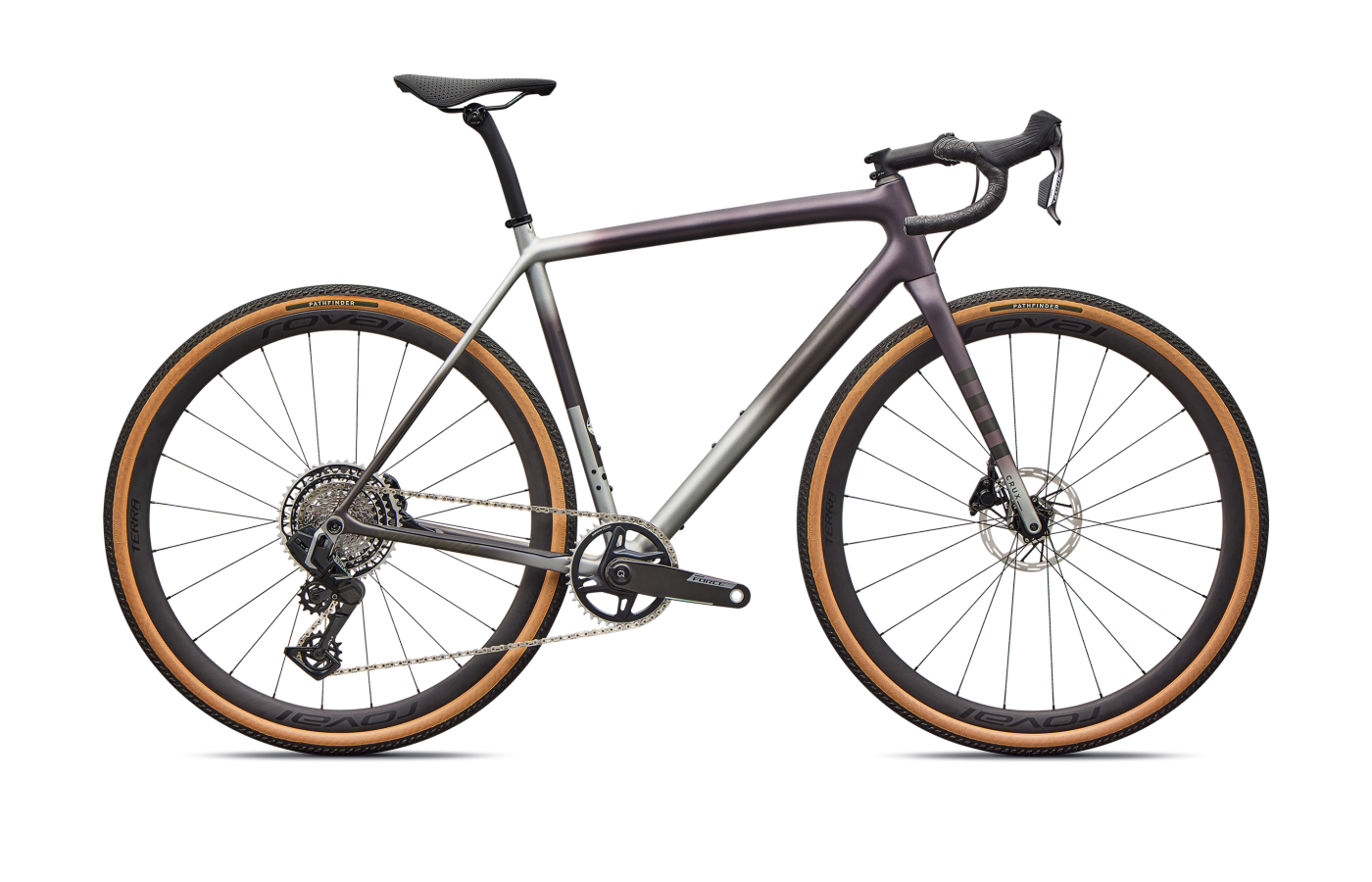
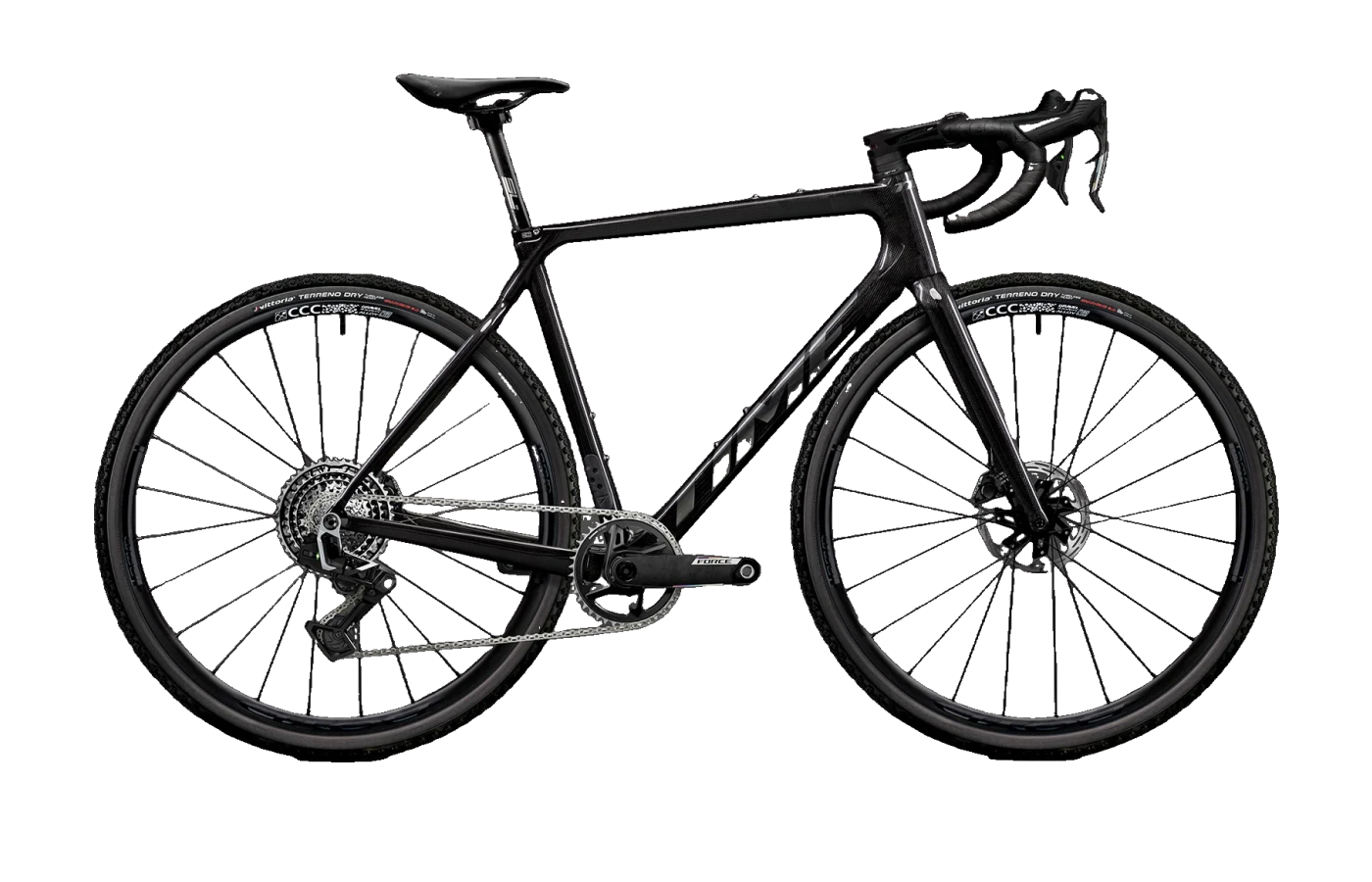
Featherweight minimalism vs woven boutique craft.
The Crux is the lightest gravel race bike on the market. The ADHX 45 is a Dyneema-woven French frame built to outlast and out-damp it.
Crux
- Class-leading weight — 725 g S-Works frame, 7.64 kg complete Pro build. No other gravel race bike comes close.
- Broadest build range in the segment — from a $2,799 Smartweld alloy DSW Comp up to a $11,999 S-Works.
- Refreshingly simple standards — threaded BB, round 27.2 mm seatpost, two-piece cockpit. Mechanics love it.
- Race-stiff front end gets harsh on chunky gravel; several testers call it "under-biked" on rough terrain.
- No mechanical 2x option — the frame isn't routed for a front derailleur cable.
ADHX 45
- Dyneema-infused BCS frame — continuous-fiber weave with Kevlar-reinforced steerer and forged carbon dropouts claimed to have 20x the fatigue life of steel.
- Genuinely damp ride quality — reviewers consistently describe it as "sublime" on chunky terrain without the weight of mechanical suspension.
- More tire clearance than the Crux (50 mm vs 47 mm) and 2x mechanical GRX still on offer for climbing specialists.
- $6,290 entry point — no sub-$6k builds, no alloy version, no cheap way in.
- FSA ACR integrated cockpit routes hoses through the headset — "may piss off your mechanic" on bleed or bearing service.
Editor’s analysis
This isn't lightweight vs heavy. It's two completely different answers to the question how do you build a fast gravel bike?
The Specialized Crux and the Time ADHX 45 are both carbon race-gravel frames in the $6-8k range, both clear big tires, both spec SRAM Force AXS at the tier we'd pick. That's where the similarities end. The Crux is a stripped-down Aethos with knobbies — a 725 g S-Works frame, traditional round tubes, threaded BB, two-piece cockpit, 47 mm clearance. The ADHX 45 is a lugged, Dyneema-reinforced, Resin-Transfer-Molded frame made in France with 50 mm clearance and a lifetime warranty. One chases grams. The other chases refinement.
The Specialized Crux wins the scale every time. Complete FACT 10r builds land around 7.6–8 kg; the S-Works dips to 6.94 kg. Reviewers universally call it the lightest gravel bike they've ridden, and it shows — Cycling News and BikeRadar describe accelerations as "snappy," climbs as "effortless," the whole bike as "lighter than many road bikes." The tradeoff: a race-stiff front end that Cycling Weekly and BikeRadar flag as harsh on chunkier gravel, and an "under-biked" feel when the ground gets rough.
The Time ADHX 45 answers differently. Time weaves continuous Dyneema and Kevlar fibers into the high-stress junctions through their BCS and RTM process — no pre-preg sheets, no overlap air pockets. Reviewers describe the result as "uncommonly durable," "damp," and "sturdy." Where the Crux pings off rocks, the ADHX absorbs them. The frame doesn't try to be the lightest; it tries to be the bike that still feels planted after a seven-hour ride on chunky logging roads. It's also more capable off-road thanks to 50 mm clearance, 430 mm chainstays, and a 15 mm longer wheelbase than the original ADHX.
Put another way: the Specialized Crux is the bike you buy to win a gravel race on champagne gravel or smash a cyclocross course. The Time ADHX 45 is the bike you buy to still want to ride at hour six on a chunky 130-mile day — and to still own a decade from now.
Where the builds differ.
Comparing our editor's-pick builds side-by-side. Winners highlighted row-by-row — lower price and weight, and the better-spec component, each mark a point.
Build variants & pricing
The Crux lineup spans almost $10k — alloy on the floor, S-Works at the ceiling. The ADHX 45 only comes in four boutique-priced builds.
Prices are current US MSRP. Time offers no entry-tier build; if sub-$5k matters, the Crux (or its Smartweld alloy DSW Comp at $2,799) is the only option here. Both editor's picks run SRAM Force AXS — deliberately, so the spec table compares frame character, not drivetrain tier.
How they fit, how they steer.
Crux 54 vs ADHX 45 M at the fit-picked size for each bike. The Specialized Crux is longer-and-lower (7 mm more reach, 4 mm less stack) with a slacker 71.5° head angle and 67 mm of trail. The Time is steeper up front at 72.3° with a tight 59 mm trail — but 5 mm longer chainstays and a longer wheelbase keep it planted.
Which size should I buy?
Size recommendations use stack, reach, and effective top tube. The Crux offers six sizes (49–61) with a lower small-end floor; the ADHX 45 covers XS–XL.
→These are starting points. Flexibility, riding style, and preferred position all shift the answer — if you’re between sizes, a professional fit beats a chart.
What the magazines said.
Published reviews from trusted cycling outlets. Click through for the full write-up.
Which one should you buy?
If you want to win races and chase every gram, get the Crux. If you want a forever frame that still feels good at hour six, get the ADHX 45.
Crux
If your calendar is Unbound training, CX season, and local gravel races where grams and watts matter, this is the benchmark. It's the lightest bike in the segment by a meaningful margin, and the range means you can buy into it at $2,799 or $11,999.
ADHX 45
If you ride chunky logging roads, 100-mile adventure days, and want a bike that still feels planted after six hours of buzz — the Dyneema-woven frame does something no monocoque carbon can. The lifetime warranty and French-made craft are real. So is the $6,290 entry price.
Questions buyers actually ask.
Short answers to the things we get emailed about most often.
01Which is lighter?
The Specialized Crux, by a wide margin. Claimed S-Works frame weight is 725 g; the Pro/Expert/Comp FACT 10r frame is about 825 g. Complete-bike comparison: Crux Pro 2026 at 7.64 kg, Crux Expert around 7.95 kg, S-Works at 6.94 kg. A comparable ADHX 45 build in high-end trim weighs roughly 8.4 kg per long-term reviews.
On a sustained climb, ~800 g is real — worth about 10 seconds per 30-minute climb for a 70 kg rider. If you do a lot of climbing, the Crux's weight advantage is felt, not imagined.
02Which has more tire clearance?
The Time ADHX 45 at 50 mm, officially — 3 mm more than the Crux's 47 mm. Both ship with 700c wheels; the ADHX 45 mounts 45c Vittoria T50 stock, the Crux comes with 38–40c Specialized Pathfinders.
In practice, either will swallow any gravel tire you'd want on a fast-rolling race bike. If you're fitting 2.1" 650b knobbies for technical singletrack, the Crux is rated for it too.
03Can I run a 2x mechanical drivetrain?
Crux: no. The frame isn't routed for a front derailleur cable — 1x mechanical or 2x electronic only.
ADHX 45: yes. Time sells a Shimano GRX Mechanical 2x 12sp build at $6,290, and the frame accepts a front derailleur. For climbers who want tight gear steps without going electronic, this is a real point of difference.
04What's the deal with Time's Dyneema and BCS construction?
Time builds frames using Resin Transfer Molding (RTM) and Braided Carbon Structure (BCS) rather than the pre-preg sheet layup nearly every other carbon brand uses. Continuous fibers — including Dyneema, which Time claims is 15x stronger than steel — are woven into the high-stress lug junctions. The steerer tube is reinforced with Kevlar; the dropouts are forged carbon with a claimed 20x the fatigue life of steel.
Reviewers (Gravel Cyclist, The Link) describe the ride as "damp" and "uncommonly durable." The tradeoff is cost — this process is slower and more expensive than monocoque layup, which is why there's no cheap ADHX 45.
05How serviceable is the cockpit on each?
The Crux uses a conventional two-piece alloy stem with a round 27.2 mm seatpost and external seat clamp. Cables route partially externally. Reviewers repeatedly call this setup "refreshingly hassle-free" — swapping stem length or bar width is a normal shop job, and headset service doesn't require pulling the cockpit.
The ADHX 45 uses the FSA ACR integrated system — hydraulic hoses run through the bar, stem, and headset bearings. It looks immaculate ("not a cable to be seen") but headset-bearing replacement means pulling the entire cockpit. One reviewer described it as something that "may piss off your mechanic."
06Which has better geometry for racing?
Depends on the race. The Crux at 54 is longer and lower with a slacker 71.5° head angle and 67 mm trail — aggressive, low-stack, CX-bred. Chainstays are a tight 425 mm, which reviewers call "snappy" out of corners but demanding on rough descents.
The ADHX 45 at M is steeper at 72.3° with 59 mm of trail (on paper, twitchy) — but 430 mm chainstays and a 15 mm longer wheelbase than the original ADHX calm the whole thing down. Reviewers consistently describe it as "stable" and "planted" without feeling slow. For champagne-gravel racing, either works. For CX, the Crux. For a chunky 200-mile adventure race, the ADHX.
07What's the warranty on each?
Both brands offer a lifetime frame warranty to the original owner against manufacturing defects. Time emphasizes theirs more prominently in marketing — probably because the boutique, made-in-France story leans on longevity. Specialized offers crash-replacement pricing (typically 40–60% off) for riders who damage a frame in a crash; Time handles crash damage on a case-by-case basis.
08Who should buy which?
Buy the Crux if: you race gravel or cyclocross, you want the broadest build range in the segment (alloy at $2,799 all the way to S-Works at $11,999), you value low weight above all else, and you like simple, serviceable standards.
Buy the ADHX 45 if: you want a lifetime-warranty boutique frame, you value ride comfort on long chunky days over peak lightness, you want 2x mechanical as an option, and you appreciate unique manufacturing processes (BCS, RTM, Dyneema) enough to pay for them. No sub-$6k entry — this bike is for buyers who've decided what they want.
Similar bikes
If your priorities don’t map cleanly onto either of these, one of these adjacent bikes probably fits better.
Aspero-5
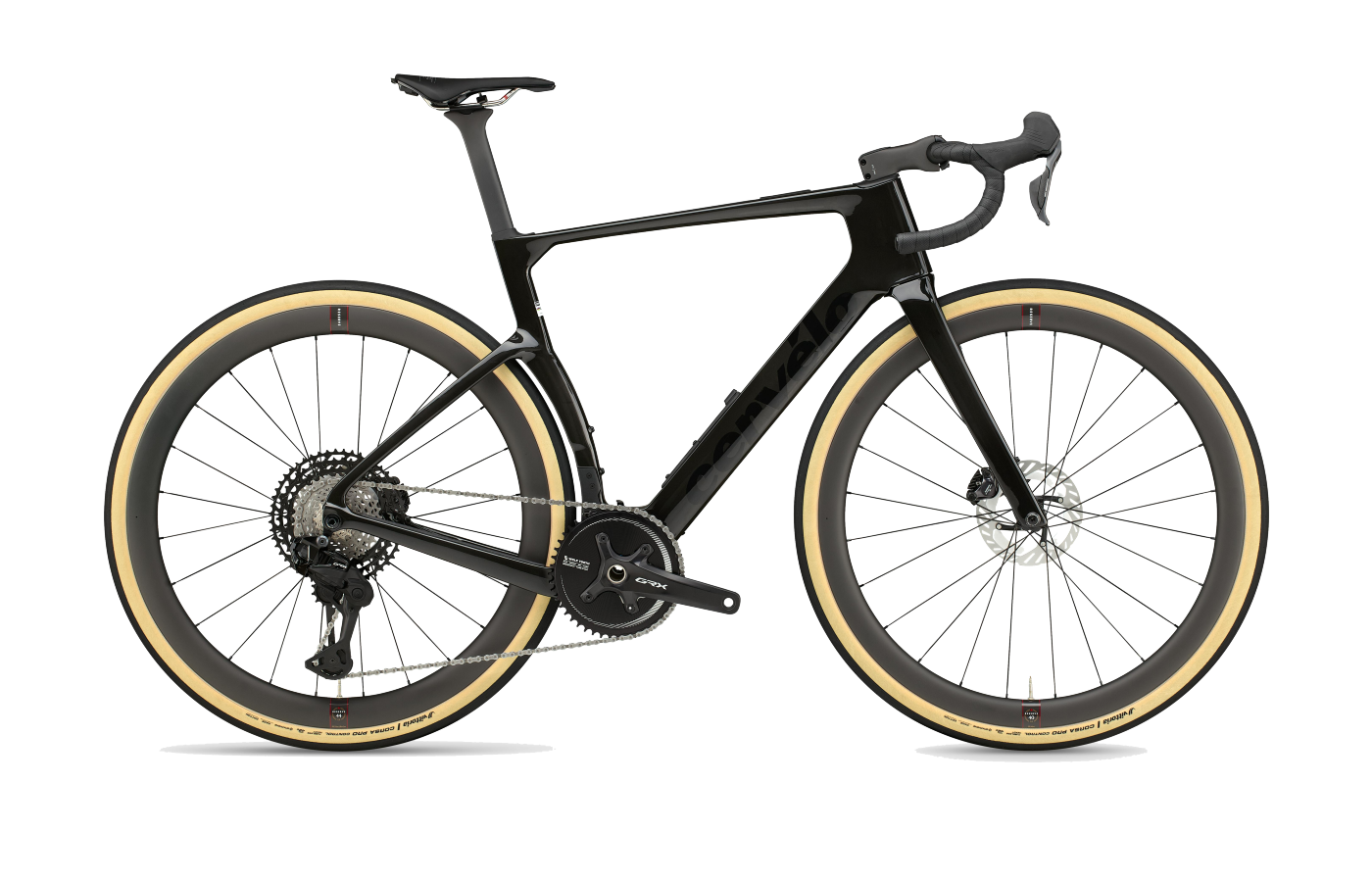
The aero-gravel cousin to the Crux — same race-first minimalism, but with aero tube shapes and an integrated cockpit tuned for flat-out speed on open gravel. The pick if you'd rather shave watts than grams.
Compare →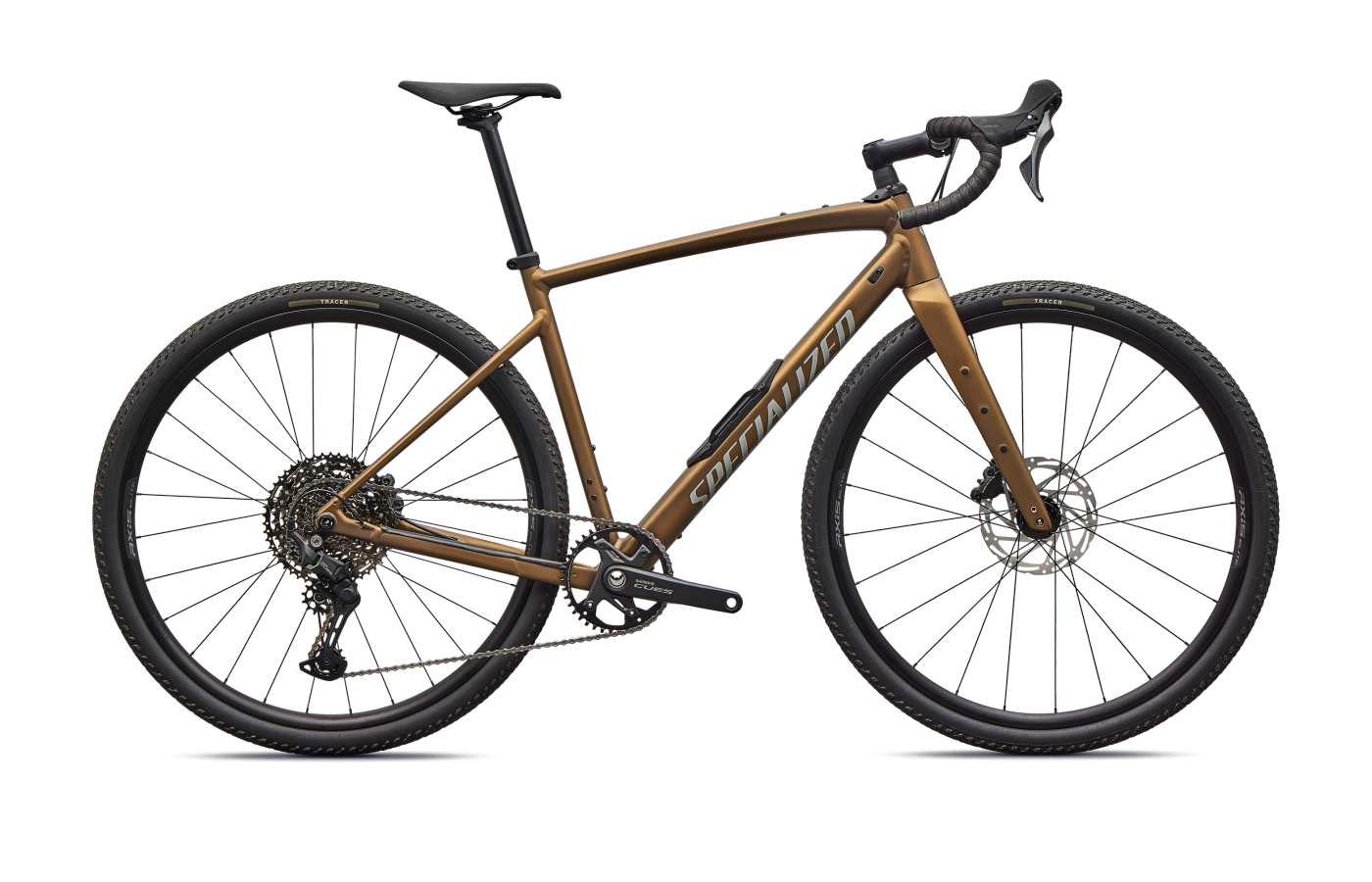
Diverge
Specialized's own answer if the Crux feels too harsh — Future Shock head-tube suspension, more relaxed geometry, and real adventure mounts. Gives up the Crux's featherlight feel for all-day comfort.
Compare →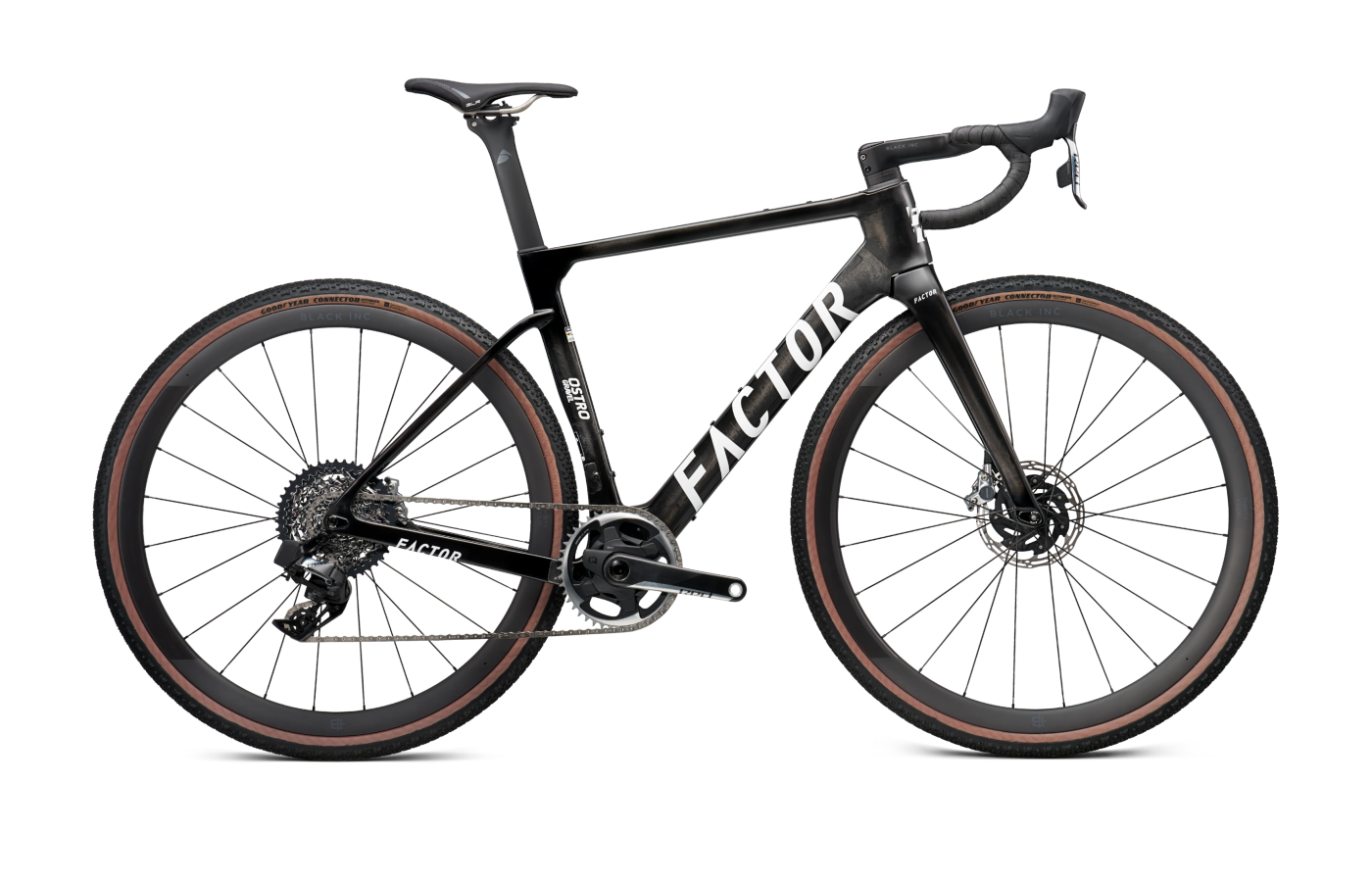
Ostro Gravel
For the rider who wants Crux-tier low weight AND aero-road efficiency in a single gravel frame. Factor's unlock is a light, fast platform with WorldTour-road DNA under the knobbies.
Compare →