Scout
vsSpur
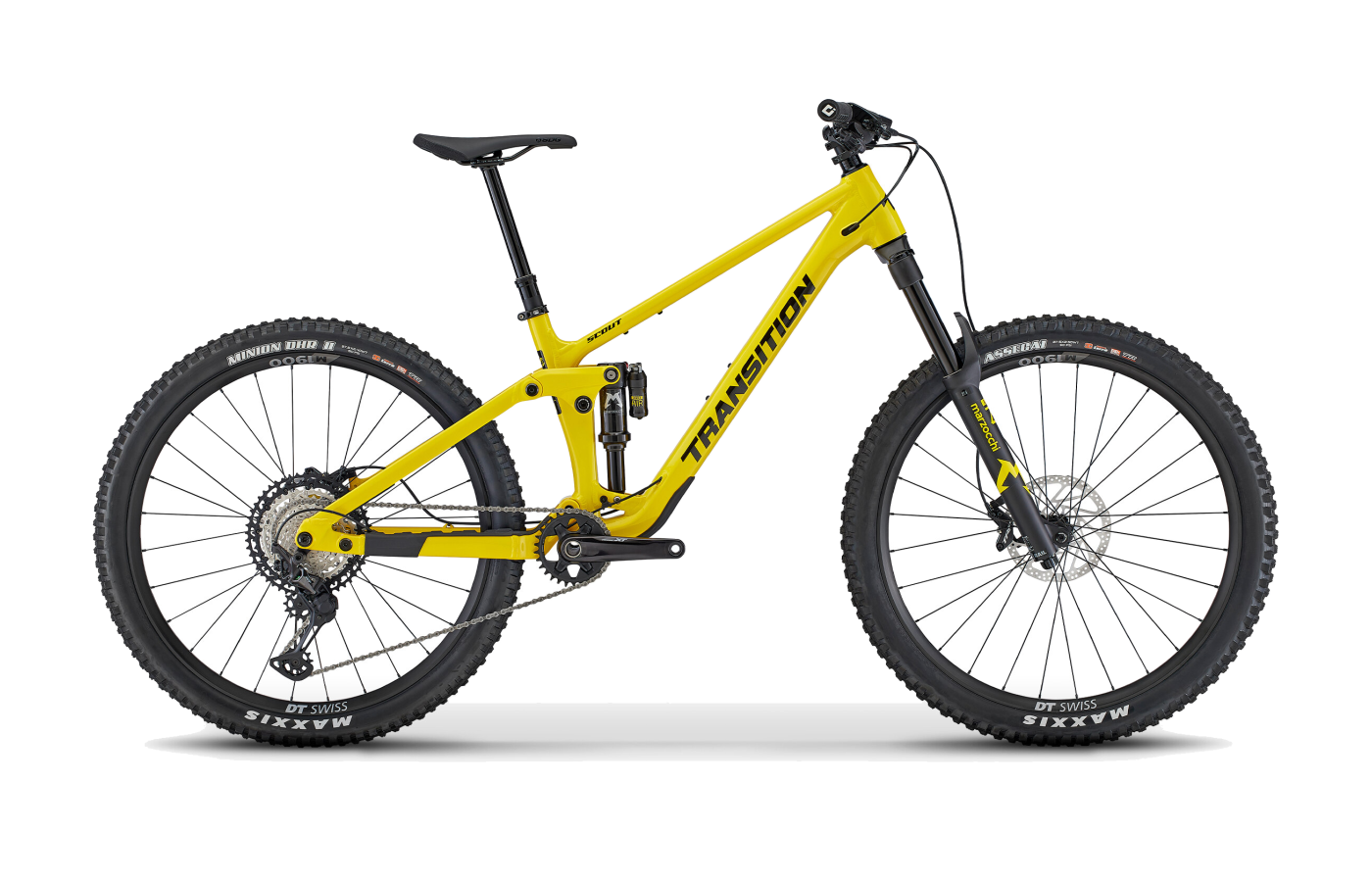
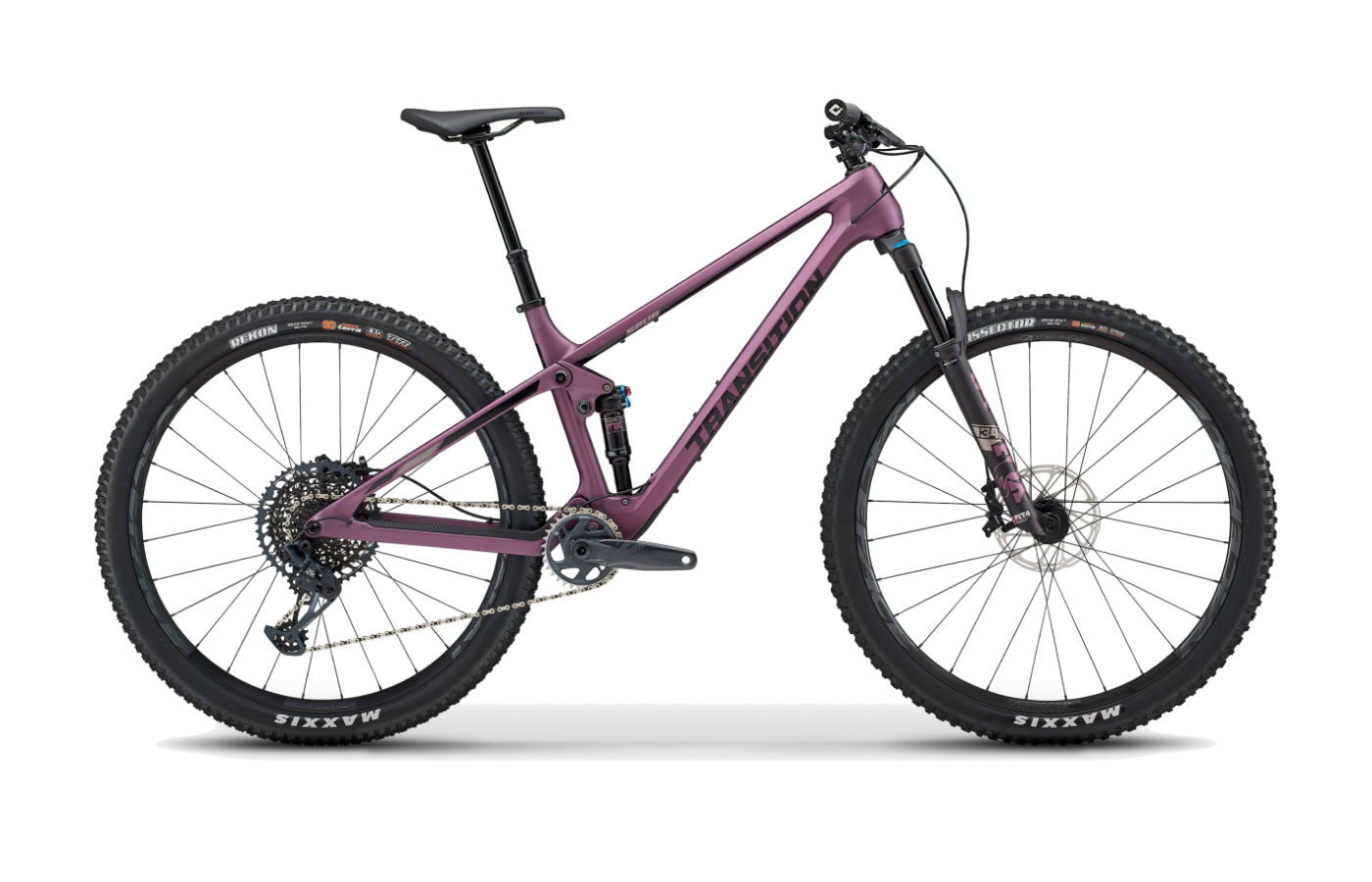
Two Transitions, two opposite ideas of fun.
The Scout is a 27.5-inch alloy bruiser built around 150 mm of travel. The Spur is a carbon downcountry rocket with 120 mm and 29-inch wheels.
Scout
- Slack 64° head angle and 150 mm of travel give it descending composure normally reserved for enduro bikes.
- TRP DH-R EVO brakes with adjustable lever reach — DH-grade stopping power that fits smaller hands.
- Built to survive abuse — alloy frame, EXO+ casings, no-frills Marzocchi suspension that takes setup mistakes in stride.
- Heavy for its travel class — 15.46 kg (34.08 lb) on the XT build makes long climbs a chore.
- 27.5-inch wheels and aggressive tires roll noticeably slower than the Spur on flat or rolling terrain.
Spur
- Featherweight chassis — roughly 12.3 kg (27.1 lb) on the XO AXS build; the flex-stay rear triangle is the lightest in the segment.
- Speed-Balanced Geometry — a 66° head angle and 480 mm of reach (Large) give downcountry-defining stability at speed.
- Genuine all-day range — efficient enough for 100 km epics, capable enough to follow longer-travel bikes down black-diamond runs.
- Carbon-only frame and a $4,799 starting price put it well above the Scout's entry point.
- 120 mm of travel runs out before the geometry does — push it too hard and the frame can wind up audibly under load.
Editor’s analysis
Same brand, same head badge, opposite trails — one bike chases airtime, the other chases the clock.
Both bikes use Transition's Giddy Up suspension layout, but that is roughly where the similarity ends. The Scout runs 150 mm front and rear on a 27.5-inch alloy frame with a 64-degree head tube angle — the geometry of a small enduro bike. The Spur runs 120 mm at both ends on a carbon flex-stay frame with a 66-degree head tube angle and 29-inch wheels — built to set XC PRs and still survive the descent.
The Scout is unapologetically heavy. The XT build comes in at 15.46 kg (34.08 lb), with Marzocchi Z1 / Bomber Air suspension chosen for ruggedness, TRP DH-R EVO brakes with adjustable lever reach for smaller hands, and Maxxis Assegai 2.5 / Minion DHR II 2.4 EXO+ rubber. The travel and the slack head angle make it confident on big drops and bike-park laps; the alloy frame and EXO+ casings let it survive the inevitable casing of jumps. It is the bike for the rider who values surviving hits over saving grams.
The Spur trades all of that for speed. The Carbon Eagle 90 build at $6,499 weighs roughly 7 lb less than the Scout XT, runs Fox Float 34 Performance Elite GRIP X up front and a Float DPS shock out back, and rolls on faster Maxxis Dissector / Rekon EXO tires. The flex-stay rear triangle saves around 200 g and several pivots' worth of bearings. The penalty is hard-edge limit: at full speed in chunky terrain, the frame can wind up and spring back, and the suspension runs out of travel before the geometry runs out of confidence.
Put simply: the Transition Scout is the bike you buy for a 13-year-old grom who is starting to hit doubles, or for a 5'8" adult who wants a flickable park-and-jump platform. The Transition Spur is the bike you buy when you want one machine for 40-mile backcountry epics that still rallies a black-diamond descent on the way home.
Where the builds differ.
Comparing our editor's-pick builds side-by-side. Winners highlighted row-by-row — lower price and weight, and the better-spec component, each mark a point.
Build variants & pricing
The Scout has two alloy builds; the Spur spans three carbon builds across a wider price range. There's no carbon Scout and no alloy Spur.
Prices are current US MSRP. The Spur's entry-level Carbon Deore at $4,799 sits above the Scout's top-end Alloy XT at $4,299 — these platforms only meaningfully overlap in the mid-$4k bracket.
How they fit, how they steer.
Both at size MD. The Scout is 6 mm taller in stack (604 vs 610), 5 mm longer in reach (460 vs 455), 2 degrees slacker at the head (64° vs 66°), and 5 mm shorter in chainstay (430 vs 435) — its wheelbase still runs longer at 1217 mm vs 1190 mm because of the slack front end.
Which size should I buy?
Size recommendations based on stack, reach, and effective top tube. The Scout tops out at MD; the Spur scales up through XL.
→These are starting points. Flexibility, riding style, and preferred position all shift the answer — if you’re between sizes, a professional fit beats a chart.
What the magazines said.
Published reviews from trusted cycling outlets. Click through for the full write-up.
Which one should you buy?
If most of your ride happens going down or sideways through the air, get the Scout. If most of it happens going up and across the country, get the Spur.
Scout
If your typical ride is bike-park laps, jump lines, or progression sessions on local doubles — and you want a bike that can take a casing without complaint — the Scout is the right tool. The 27.5-inch wheels keep it flickable, and the 150 mm of travel and 64° head angle give it a real safety margin when things get vertical.
Spur
If you want one bike for everything from 100 km marathons to weekend black-diamond rides, the Spur is one of the most versatile machines on the market. It pedals like an XC bike, descends like a short-travel trail bike, and only really gives up ground in the steepest, chunkiest terrain.
Questions buyers actually ask.
Short answers to the things we get emailed about most often.
01Which is faster on the climbs?
The Spur, by a wide margin. The Carbon XO AXS build comes in at roughly 12.3 kg (27.1 lb) versus 15.46 kg (34.08 lb) for the Scout Alloy XT — about 3 kg, or 7 lb. The Spur also runs a steeper 76.2° seat tube angle and faster-rolling Maxxis Dissector / Rekon EXO tires, where the Scout pairs a 77.2° STA with heavy Assegai / Minion DHR II EXO+ rubber.
Reviewers consistently describe the Spur as a 'speed-generating machine' that 'pedals circles' around 150 mm trail bikes. The Scout climbs willingly enough on the XT drivetrain, but it never lets you forget it weighs 15 kg.
02Which is faster — and more confident — on the descents?
It depends on what kind of descent. On steep, rough, hard-hitting terrain — drops, big jumps, sustained chunk — the Scout has the geometry and the travel to feel calmer. A 64° head tube angle, 150 mm of front and rear travel, and EXO+ casings give it a real safety margin.
On flowy, rolling, or intermediate trails the Spur is genuinely faster. Its low weight, supportive 30%-progression suspension, and Speed-Balanced Geometry make it 'pump' speed out of the trail. Reviewers note the Spur is 'on rails' through corners but that the 120 mm of travel becomes the bottleneck once the trail turns truly rowdy.
03Why does the Scout only come in alloy?
Transition pitches the 2025 Scout as a workhorse aimed at smaller and younger riders who are 'casing doubles at the local park.' Alloy is cheaper, more impact-tolerant, and easier to repair than carbon — the right call for a bike that will absorb a lot of beginner-pilot mistakes. The trade-off is weight: the Alloy XT comes in at 15.46 kg.
There is no carbon Scout in the lineup. If you want carbon and shorter travel, that's the Spur. If you want carbon and longer travel, that's the Smuggler or Patrol.
04What's the maximum tire clearance?
Scout: roughly 66 mm officially, in 27.5 inches — comfortably more than the 2.5 in Maxxis Assegai it ships with.
Spur: roughly 61 mm officially, in 29 inches — enough for the 2.4 in Maxxis Dissector stock, with a little room for a slightly wider rear tire if you want extra grip.
05Which size MD am I looking at on each bike?
Both Mediums are the fit-picked size for a 5'8" rider. They are close on reach (Scout 460 mm, Spur 455 mm) and effective top tube (Scout 593 mm, Spur 602 mm), but the rest of the geometry diverges sharply.
The Scout sits 6 mm lower in stack (604 vs 610), runs a 2-degree slacker head tube angle (64° vs 66°), and has 5 mm shorter chainstays (430 vs 435). Its wheelbase is actually longer (1217 vs 1190 mm) because the slack head angle pushes the front wheel out. The Spur is the more upright, neutral fit; the Scout is the more aggressive, descent-biased one.
06What about the editor's-pick builds — XT vs Eagle 90?
We've picked the Scout Alloy XT at $4,299 and the Spur Carbon Eagle 90 at $6,499 as the editor's-pick builds for direct comparison. Both run mid-tier mechanical drivetrains (Shimano XT 12-speed and SRAM Eagle 90 respectively) and DT Swiss M 1900 Spline 30 alloy wheels — about as apples-to-apples as the two platforms get.
There is no equivalent carbon Scout to match the Spur's frame, and no alloy Spur to match the Scout's price. The $2,200 gap between the two builds is real and reflects the platform-level material difference.
07How do the suspension platforms differ?
Both use Transition's Giddy Up four-bar layout, but they are tuned for very different jobs. The Scout runs 150 mm of travel front and rear with revised rocker links specifically tuned for lighter riders — Marzocchi Z1 fork and Bomber Air shock on the XT build. Setup is deliberately simple and the platform is more 'pop' than 'plush.'
The Spur runs 120 mm at both ends with a flex-stay rear triangle that drops the chainstay pivot entirely. The Eagle 90 build pairs a Fox Float 34 Performance Elite GRIP X fork with a Fox DPS Performance Elite shock. Reviewers consistently praise its supportive mid-stroke and 30 percent progression, with the caveat that the lightweight chassis can flex audibly under heavy load.
08Which one is more upgradeable over time?
Both frames have UDH (Universal Derailleur Hanger) and 12x148 Boost spacing, which means they're both ready for SRAM Transmission upgrades and modern wheel and drivetrain standards.
The Spur has slightly more headroom: there's a real ceiling build in the lineup (Carbon XO AXS at $8,199), and the Eagle 90 mechanical drivetrain can be swapped to a T-Type wireless setup down the road. The Scout tops out at the XT build — there is no carbon frame option to graduate into without changing platforms entirely.
Similar bikes
If your priorities don’t map cleanly onto either of these, one of these adjacent bikes probably fits better.
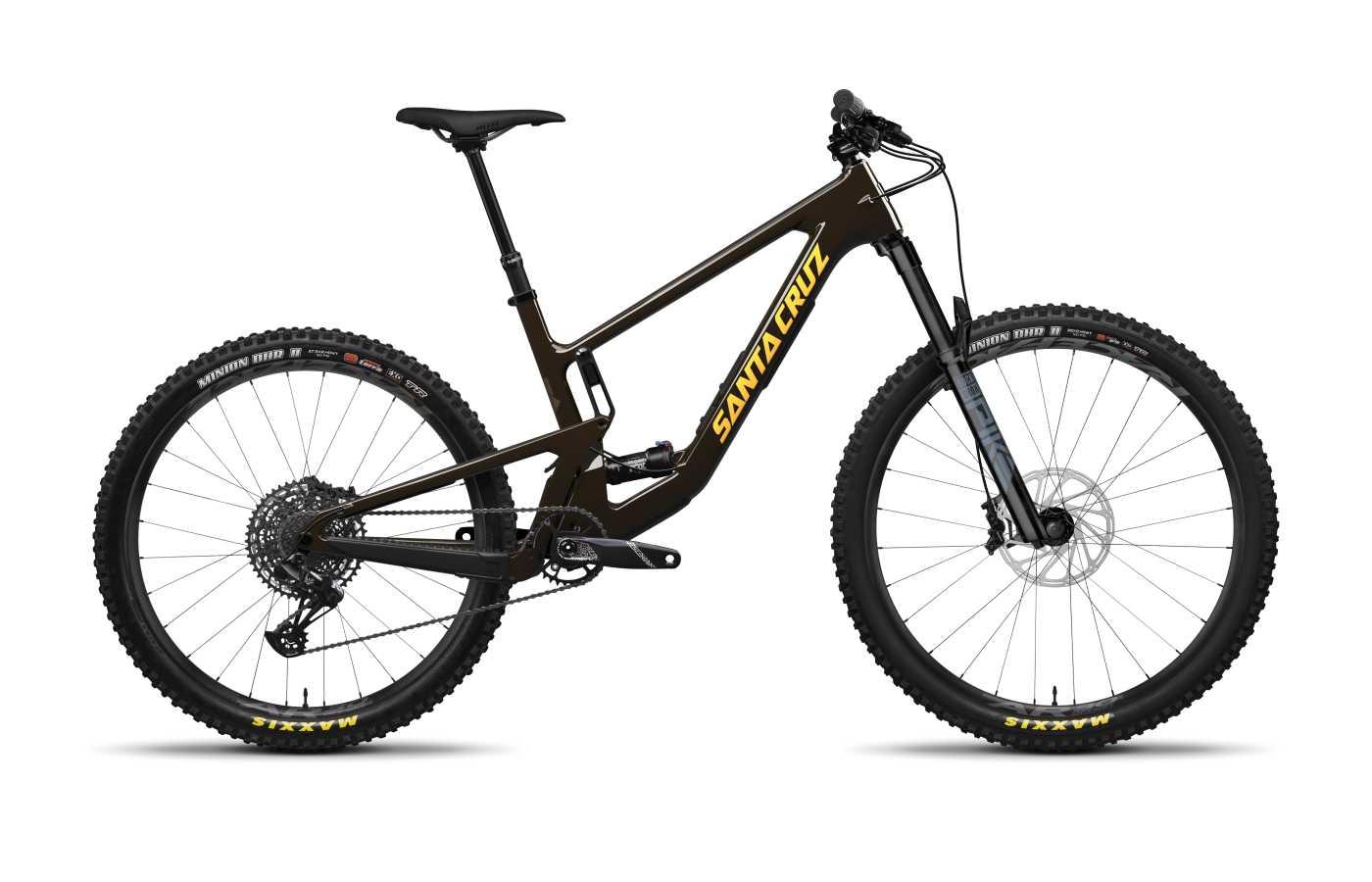
5010
The natural 27.5-inch alternative to the Scout if you want a carbon frame and a more sophisticated suspension feel — Santa Cruz's VPP layout trades some of the Scout's no-frills toughness for plushness.
Compare →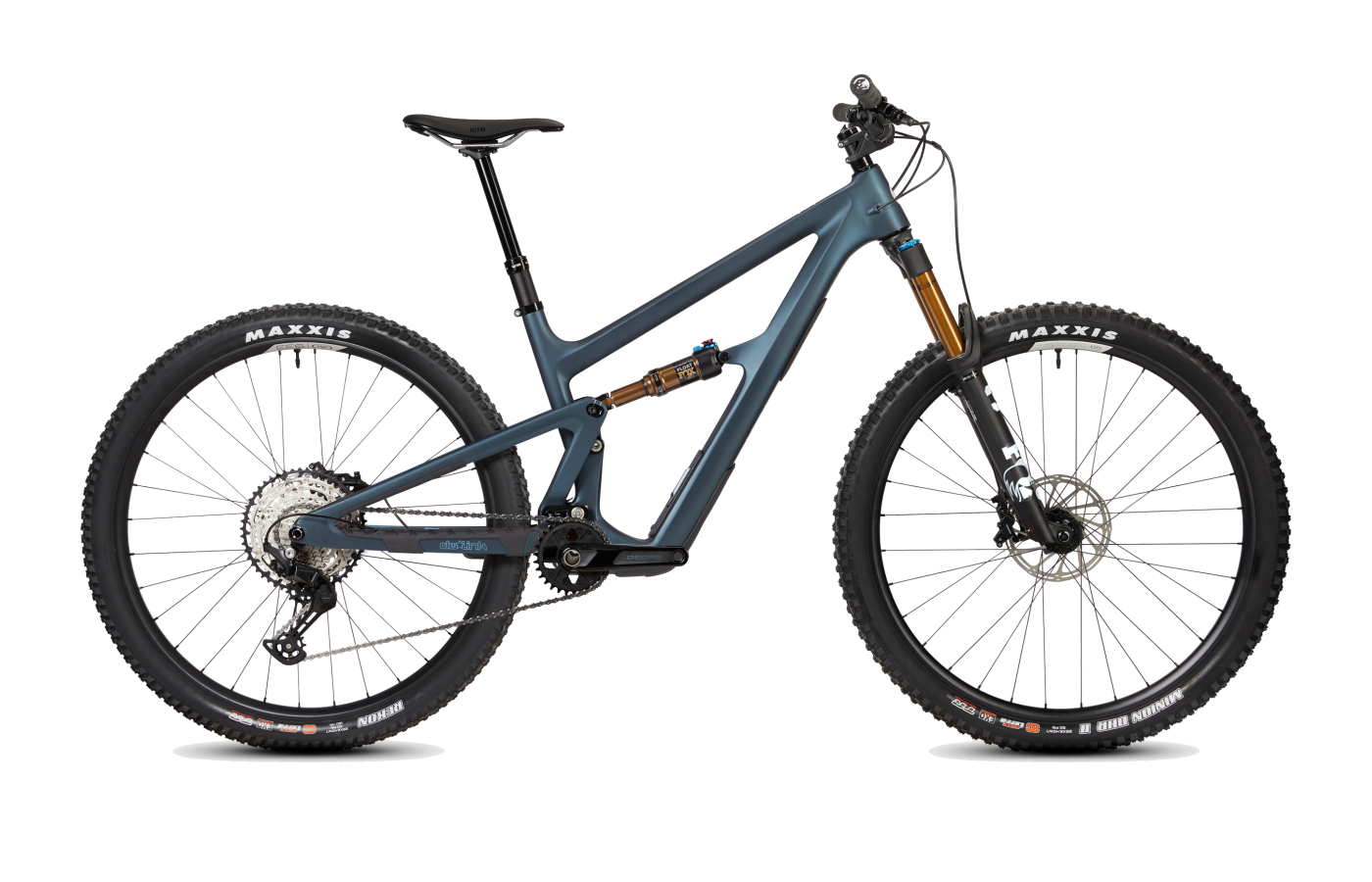
Ripley
The Spur's primary rival. The Ripley climbs with more mountain-goat agility, but reviewers consistently find the Spur more stable when the trail turns rowdy.
Compare →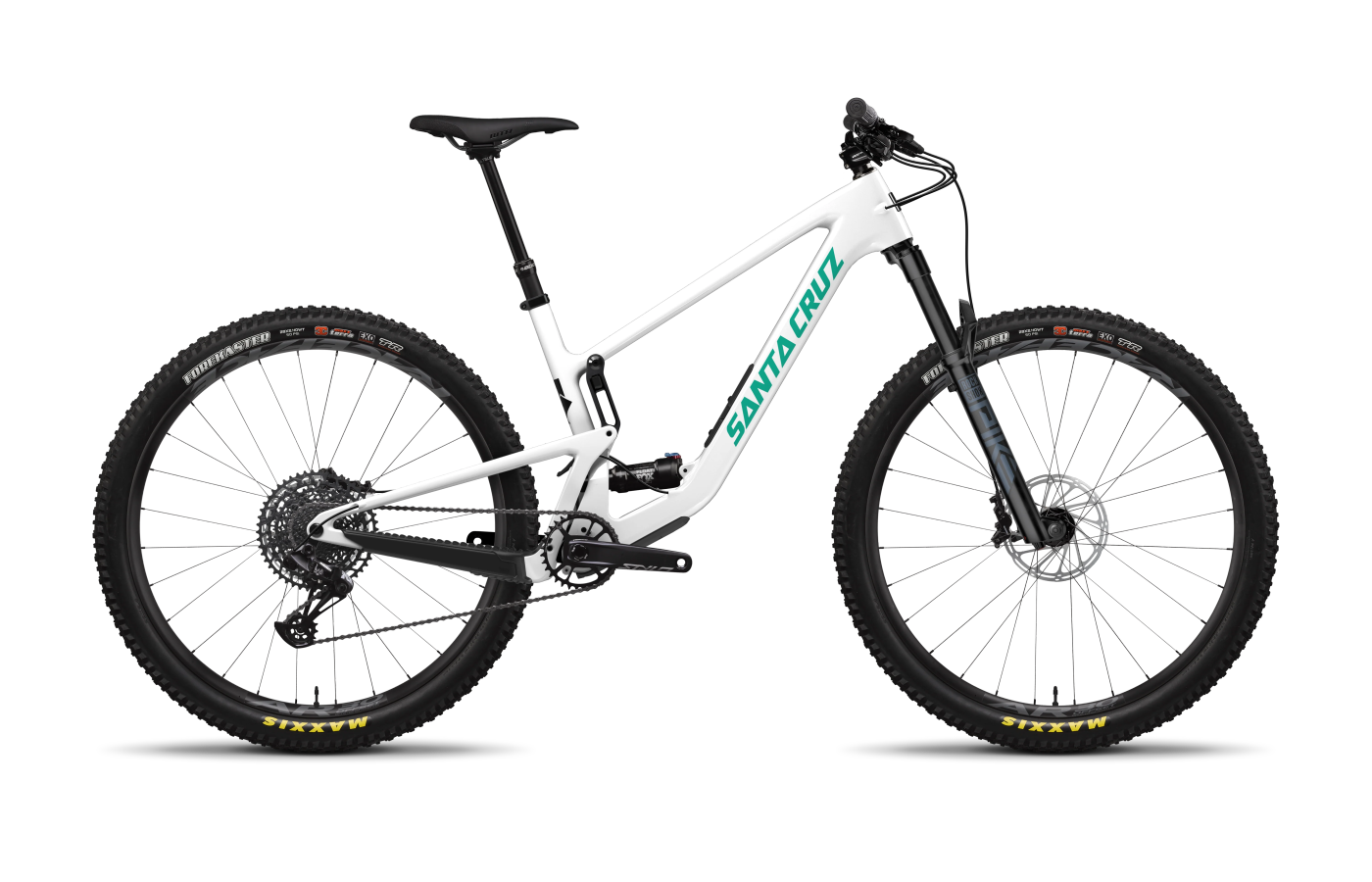
Tallboy
A heavier, stouter alternative to the Spur that trades some climbing speed for a bottomless suspension feel on the descents — the right call if you push a downcountry bike into mini-enduro territory.
Compare →