Spur
vsTop Fuel
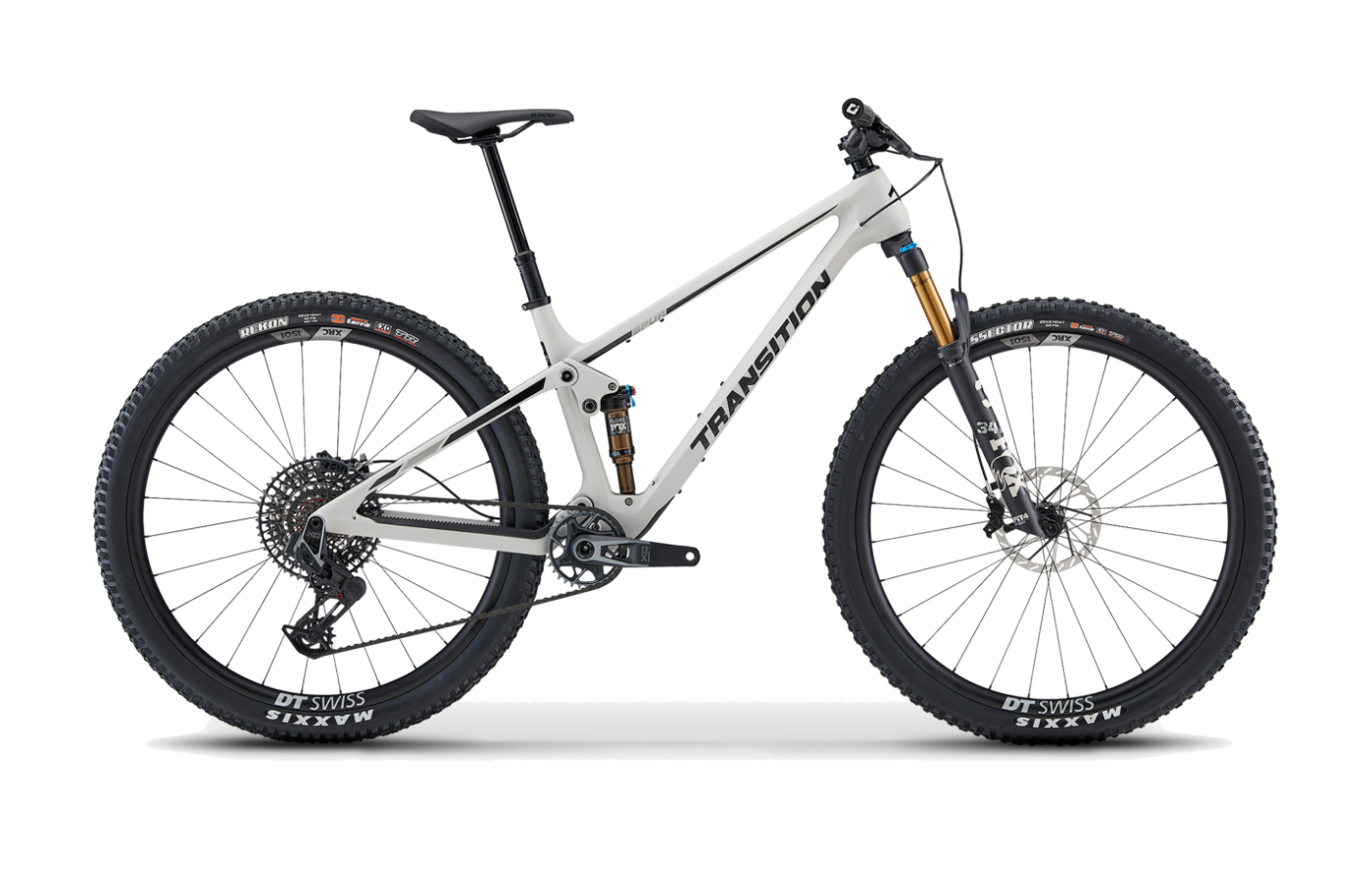
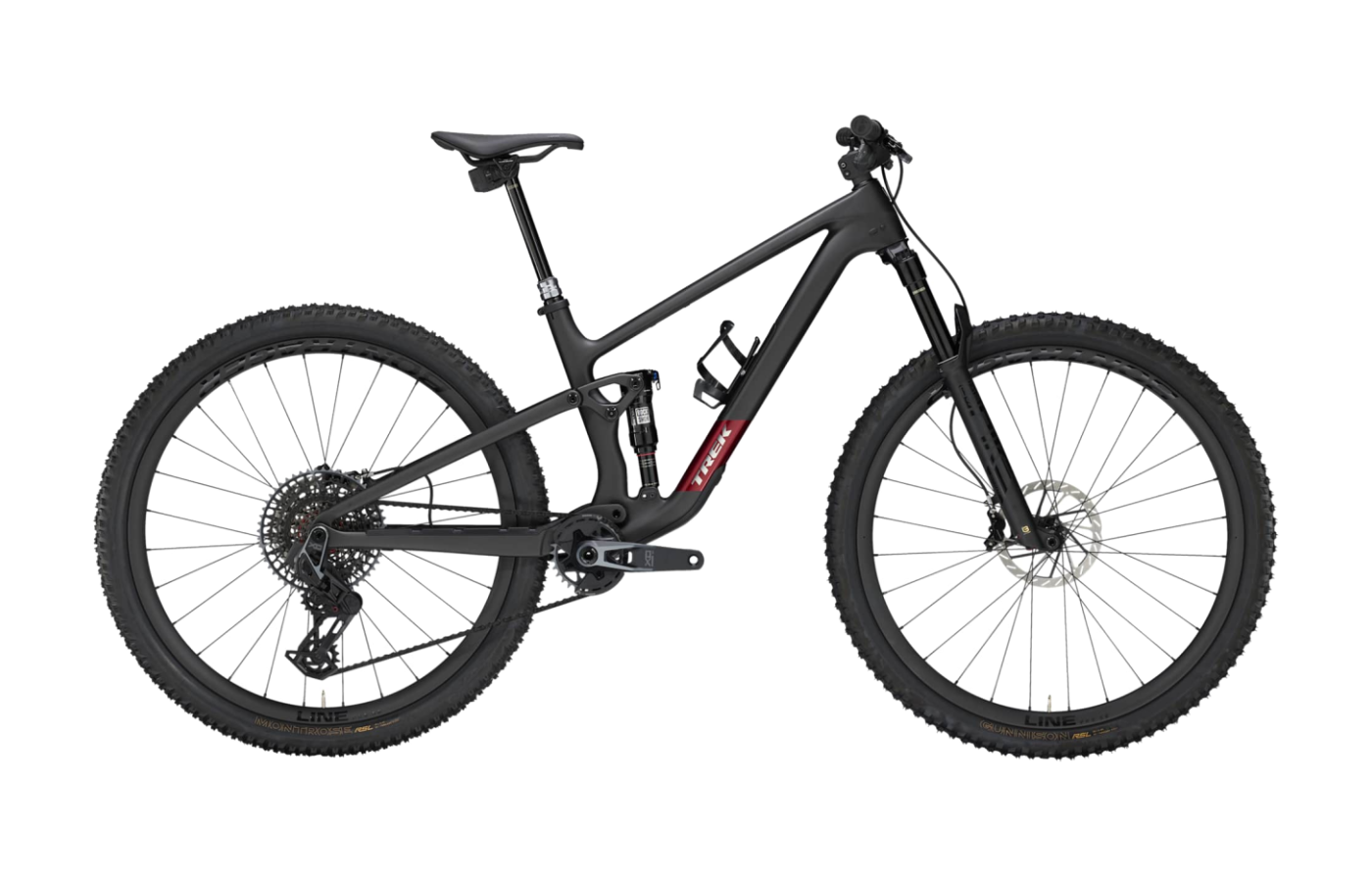
Two takes on the 120 mm trail bike.
The Spur is a flex-stay specialist built around weight and snap. The Top Fuel is a four-bar shape-shifter that morphs from XC racer to 140/130 mm shred sled.
Spur
- Lightest in its class — top builds land at 24.5–27.5 lbs, multiple pounds under a comparably specced Tallboy or Top Fuel.
- Aggressive geometry baked in — 66° HTA and 480 mm reach (LG) without needing a flip chip to get there.
- Mechanically simple — pivot-less flex-stay rear means fewer bearings to service and less weight in the back end.
- Carbon-only lineup starts at $4,799 — no aluminum entry point.
- Frame can feel "springy" for heavier riders pushing the chassis past its 120 mm depth.
Top Fuel
- Adjustable in three dimensions — 4-position Mino Link tunes geometry and progression independently, plus 130 mm rear / 140 mm fork mode.
- Wider build range — from a $4,199 alloy build up to a $10,499 RSL flagship; entry to the platform is $600 cheaper than the Spur.
- Real trail-bike conveniences — in-frame BITS storage, mixed-wheel compatibility, and size-specific chainstays the Spur skips.
- Heavier than the Spur — alloy builds push 32 lbs, carbon midrange around 29 lbs.
- Stock SRAM Level brakes are widely panned as underpowered for the chassis's descending capability.
Editor’s analysis
Same travel, same wheel size, same broad mission — and almost nothing else in common.
Both bikes run 120 mm rear / 130 mm front in stock trim, both weigh 28 lbs in the build we picked, and both use a steep ~76° seat tube angle to keep the front wheel planted on technical climbs. From there the engineering philosophies fork hard. The Transition Spur strips out the rear pivot entirely and lets the carbon seat stays flex — saving roughly 200 g and reducing the parts list. The Trek Top Fuel keeps a full Active Braking Pivot four-bar linkage, accepting the weight penalty to get a rear end that stays active under heavy braking.
The Spur is the lighter, more visceral one. Reviewers consistently call it a "speed-generating machine" with a 30% progression rate that snaps off rollers and lips — one tester compared it to a Jack Russell terrier. Its 66° head tube angle and 480 mm reach (size LG) push it well past traditional XC, and it carries speed through undulating singletrack better than almost anything in the class. The catch: at 200 lb+ or in 25 mph chunder, the flex-stay frame can wind up and spring back unpredictably, and the 120 mm of travel runs out of tickets if you keep cashing them.
The Top Fuel is the more composed, more configurable one. The 4-position Mino Link lets you swap between 14% and 19% rear progression and tweak head angle between 65.5° and 66.4° — and the frame is shock-spacer-eligible for 130 mm rear / 140 mm fork "long-travel" mode. Reviewers describe stock geometry as "true as an arrow" at speed, with ABP keeping the rear wheel tracking under braking in a way the Spur's flex-stays can't match. It also brings real trail-bike conveniences the Spur skips: in-frame BITS storage, mixed-wheel compatibility, size-specific chainstays (435 mm on M, 445 mm on XL).
Put another way: the Transition Spur is the bike you buy when you want one specific personality dialed in — light, snappy, aggressive XC. The Trek Top Fuel is the bike you buy when you want one chassis that can be three different bikes depending on the weekend.
Where the builds differ.
Comparing our editor's-pick builds side-by-side. Winners highlighted row-by-row — lower price and weight, and the better-spec component, each mark a point.
Build variants & pricing
Three Spur builds, all carbon. Six Top Fuels, spanning alloy to RSL flagship. Our editor's picks pair the Spur Carbon XO AXS against the Top Fuel 9.9 X0 AXS — both wireless SRAM Transmission, both carbon, $700 apart.
Prices are current US MSRP. The Spur is carbon-only — if a sub-$4k aluminum build matters to you, the Top Fuel 8 at $4,199 is the only side of this comparison that gets you there.
How they fit, how they steer.
Spur MD vs Top Fuel M (Low setting): reach is within 3 mm (455 vs 452), but the Spur sits 11 mm taller at the stack and shares a 435 mm chainstay. The Top Fuel runs a half-degree slacker head angle (65.9° vs 66°) and gets a 4-position flip chip the Spur doesn't have.
Which size should I buy?
Both ranges overlap closely in the middle. The Spur uses four sizes (SM–XL) with a 435 mm chainstay across the board; the Top Fuel uses five (S–XL) with size-specific chainstays from 434 mm (M) up to 445 mm (XL).
→These are starting points. Flexibility, riding style, and preferred position all shift the answer — if you’re between sizes, a professional fit beats a chart.
What the magazines said.
Published reviews from trusted cycling outlets. Click through for the full write-up.
Which one should you buy?
If you want the lightest, snappiest 120 mm bike with one fixed personality, get the Spur. If you want one chassis that can be three bikes depending on the day, get the Top Fuel.
Spur
If your weekly rides are an hour of climbing followed by a descent you actually want to attack — and you'd rather pump and pop than plow — the Spur is the lighter, more visceral tool. It rewards an active pilot and turns mellow terrain into a pump track.
Top Fuel
If you want one chassis that races marathon XC in July and morphs into a 140/130 mm trail bike for a Whistler trip in August, the Top Fuel's Mino Link and convertible travel make it the more flexible choice. It's also the more refined-feeling bike on truly chattery terrain.
Questions buyers actually ask.
Short answers to the things we get emailed about most often.
01Which is lighter?
The Transition Spur, by a meaningful margin. Top-end Spur builds land between 24.5 and 27.5 lbs depending on size and spec — our pick (Carbon XO AXS, MD) is 27.1 lbs / 12.29 kg. The equivalently specced Top Fuel 9.9 X0 AXS is 28.89 lbs / 13.10 kg in size M. The flagship RSL build trims that to 26.42 lbs / 11.98 kg, but you pay $10,499 for the privilege.
The weight gap mostly comes from architecture: the Spur's pivot-less flex-stay rear saves roughly 200 g of pivot hardware, and Transition skips the in-frame storage that adds material to the Top Fuel's downtube.
02Which is more capable on rough descents?
The Top Fuel, in stock trim. Reviewers consistently note that ABP keeps the rear wheel tracking under heavy braking better than the Spur's flex-stays, and Trek's stock 65.5° head angle (Low setting) is a half-degree slacker than the Spur's 66°.
The Spur's geometry will convince you to take enduro-level lines, but its lighter SID-class suspension and flex-stay frame eventually become the limit on truly chunky terrain — multiple testers reported "audible screams" from the suspension when bottoming out. The Top Fuel can also be reconfigured to 130 mm rear / 140 mm fork without a new frame, which the Spur can't match.
03Which climbs more efficiently?
It's close, with a slight edge to the Spur for pure pedaling and the Top Fuel for technical climbing traction.
The Spur is lighter and snappier off the line — reviewers describe it as accelerating like "Usain Bolt out of the blocks." The 30% rear progression keeps the bike from wallowing under power. But the flex-stays can hang up on square-edged ledges, and a few reviewers noted some pedal bob with the shock fully open.
The Top Fuel sits at just under 100% anti-squat at sag and is praised by Blister and Pinkbike for clawing traction on loose, technical climbs that the Spur can spin out on. The 4-position Mino Link also lets you firm up the platform via the less-progressive setting if you want a more sprightly fire-road feel.
04Can the Top Fuel really be set up as a 140/130 mm trail bike?
Yes — and it's a meaningful upgrade in capability. The frame is rated for forks from 120 mm up to 140 mm, and removing a spacer in the rear shock unlocks 130 mm of rear travel. Multiple testers (Flow, MBR) ran this configuration and described it as a "go-fast hooligan" with a richer mid-stroke that opens up steeper terrain.
The trade-offs: weight goes up, the stock SRAM Level brakes become even more outmatched, and you're effectively buying additional fork and shock spacers to make the change. There's no equivalent "long-travel mode" on the Spur — its frame is locked at 120 mm rear.
05What's the maximum tire clearance?
Spur: 61 mm (~2.4") at the chainstays. Stock builds run a Maxxis Dissector 2.4" front, Rekon 2.4" rear.
Top Fuel: 63.5 mm (~2.5"). Stock builds run Bontrager Gunnison/Montrose 2.4" or Pirelli Scorpion XC RC 2.4" depending on trim.
Neither is an enduro bike — for anything bigger than a true 2.5", look at a Stumpjumper, Fuel EX, or Sentinel.
06How serviceable are the rear suspensions?
The Spur is the simpler bike to live with. The pivot-less flex-stay design means fewer bearings to service, and reviewers report the GiddyUp linkage "needs very little attention beyond occasional Loctite." External rear brake routing also makes hose service trivial.
The Top Fuel has more pivots (full ABP four-bar) but Trek has invested in maintenance-friendly details: torque values etched on bolt heads, an expanding-collet main pivot accessible without removing the cranks, and internal guide tubes that make routing a new brake hose a "cinch." One specific gotcha — the non-drive-side rear axle pivot needs a cassette tool to torque, which most multi-tools don't carry.
07Are the stock brakes good enough?
Neither, frankly. Both bikes carry the most consistent criticism in their respective reviews on this exact point.
The Spur historically shipped with SRAM G2 brakes and a 160 mm rear rotor that MBR reported "cooked and discolored within two days" of steep riding. Transition has since moved to 180 mm rotors front and rear on current builds, which helps.
The Top Fuel ships with SRAM Level Bronze brakes that nearly every reviewer (Pinkbike, NSMB, Bicycling, Loam Wolf) calls underpowered for the chassis. Plan on a four-piston upgrade if you ride steep, sustained descents.
08Which has better build value mid-range?
The Top Fuel 9.8 GX AXS at $6,199 is the consensus value pick from reviewers — it gets you SRAM's wireless GX Transmission, the OCLV carbon frame, and the in-frame storage at $300 less than the Spur's mid-tier Carbon Eagle 90 ($6,499).
The Spur Carbon Eagle 90 counters with a lighter overall package and Fox Performance Elite suspension, but the drivetrain is one tier down (Eagle 90 vs GX AXS) and you don't get in-frame storage. Reviewers split on which represents better value — it largely depends on whether weight or feature-richness is the priority.
Similar bikes
If your priorities don’t map cleanly onto either of these, one of these adjacent bikes probably fits better.
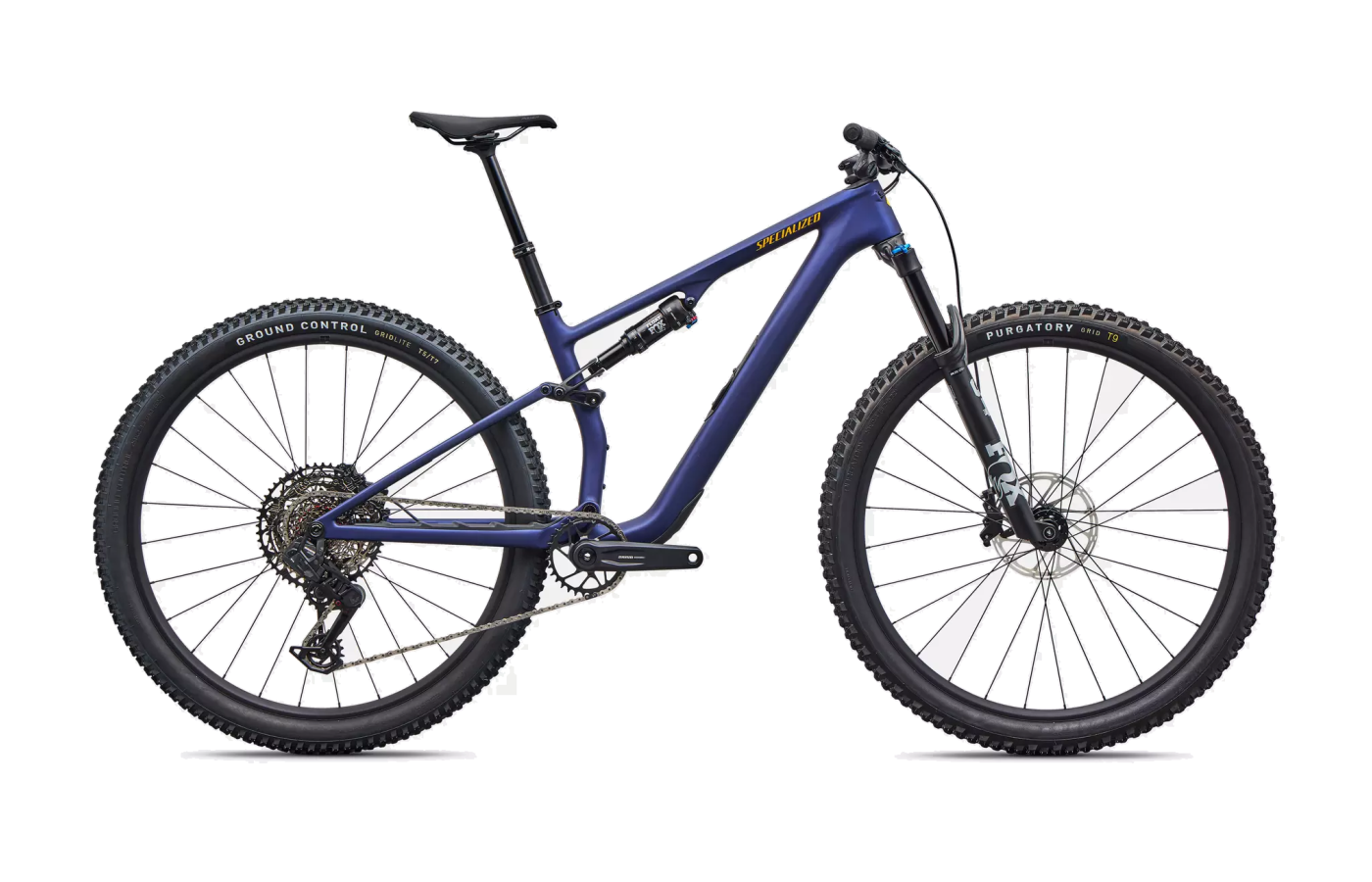
Epic Evo
The closest rival to the Spur on the spec sheet — race-derived, trail-ified, and built around a similarly lightweight flex-stay platform. If the Spur's geometry feels a touch too aggressive, the Epic Evo plays it slightly more conservative.
Compare →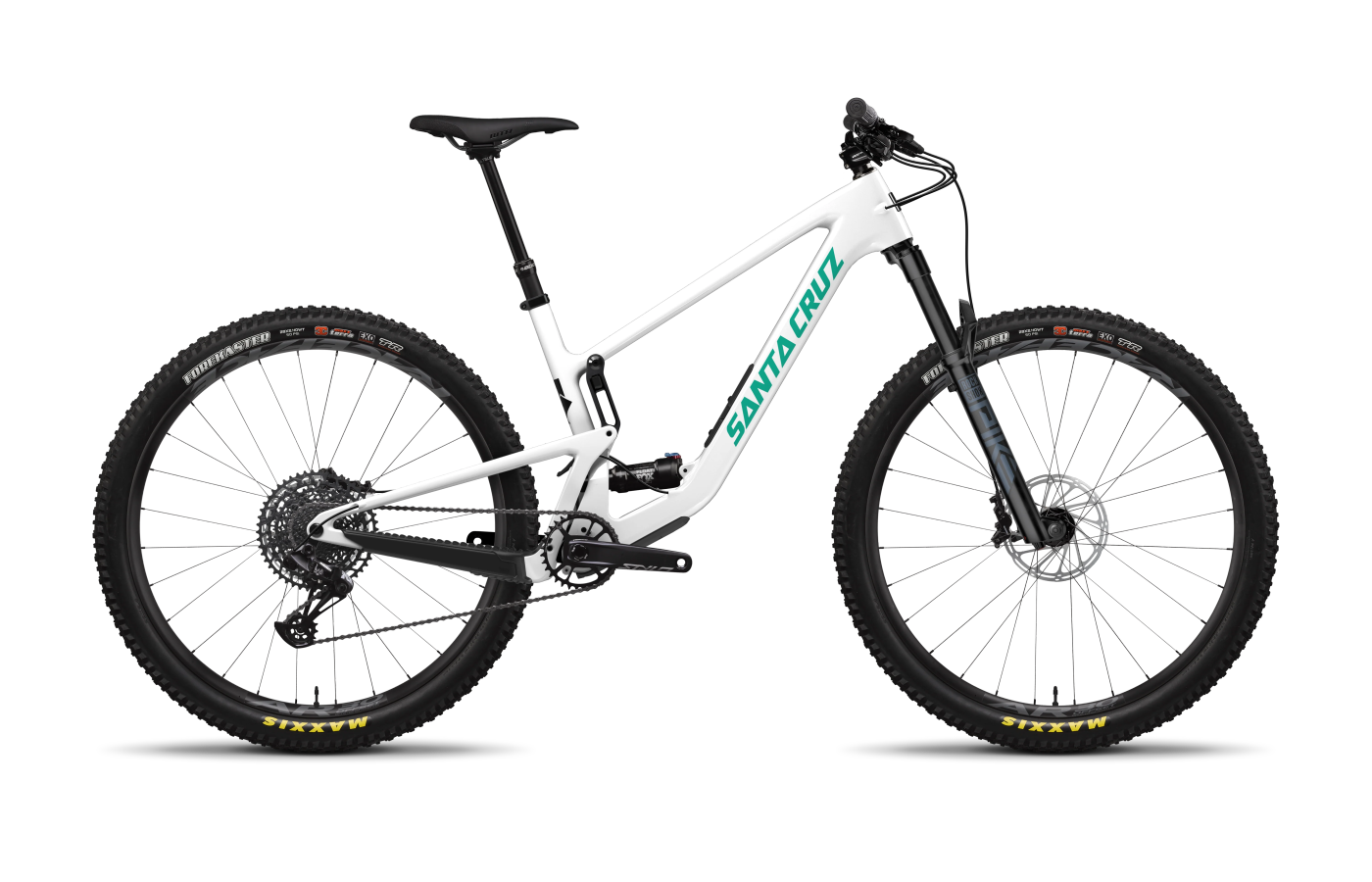
Tallboy
For the rider who finds the Top Fuel too "cohesive" and wants more bite. The Tallboy's stiffer chassis and VPP suspension lean harder toward descending capability, at the cost of a few more pounds.
Compare →
Ripley
The technical-climbing pick. The Ripley's DW-Link delivers a level of rear-wheel traction on loose, ledgy climbs that neither the Spur's flex-stays nor the Top Fuel's ABP quite match — at the cost of less aggressive stock geometry.
Compare →