Checkmate
vsMadone
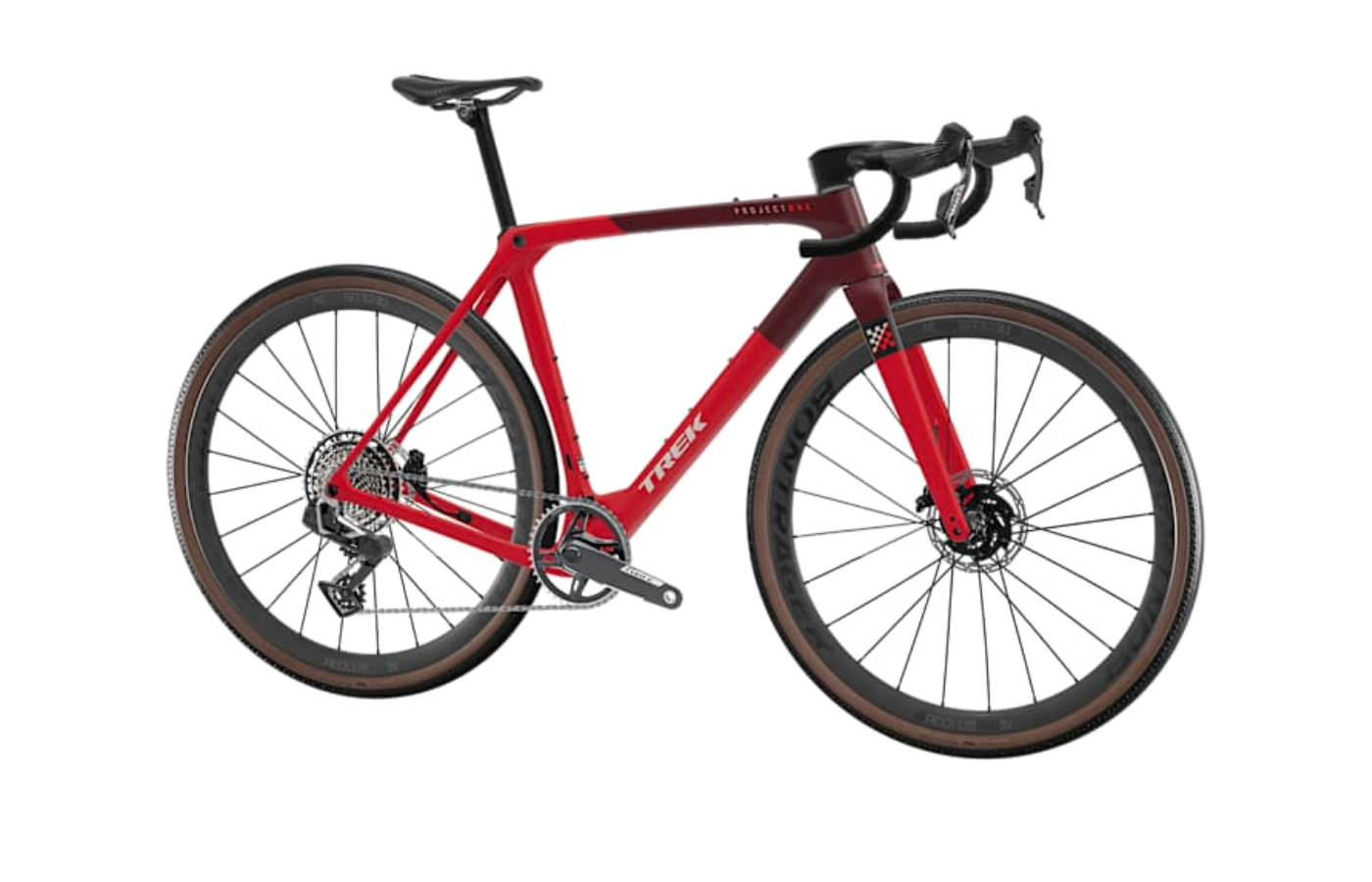
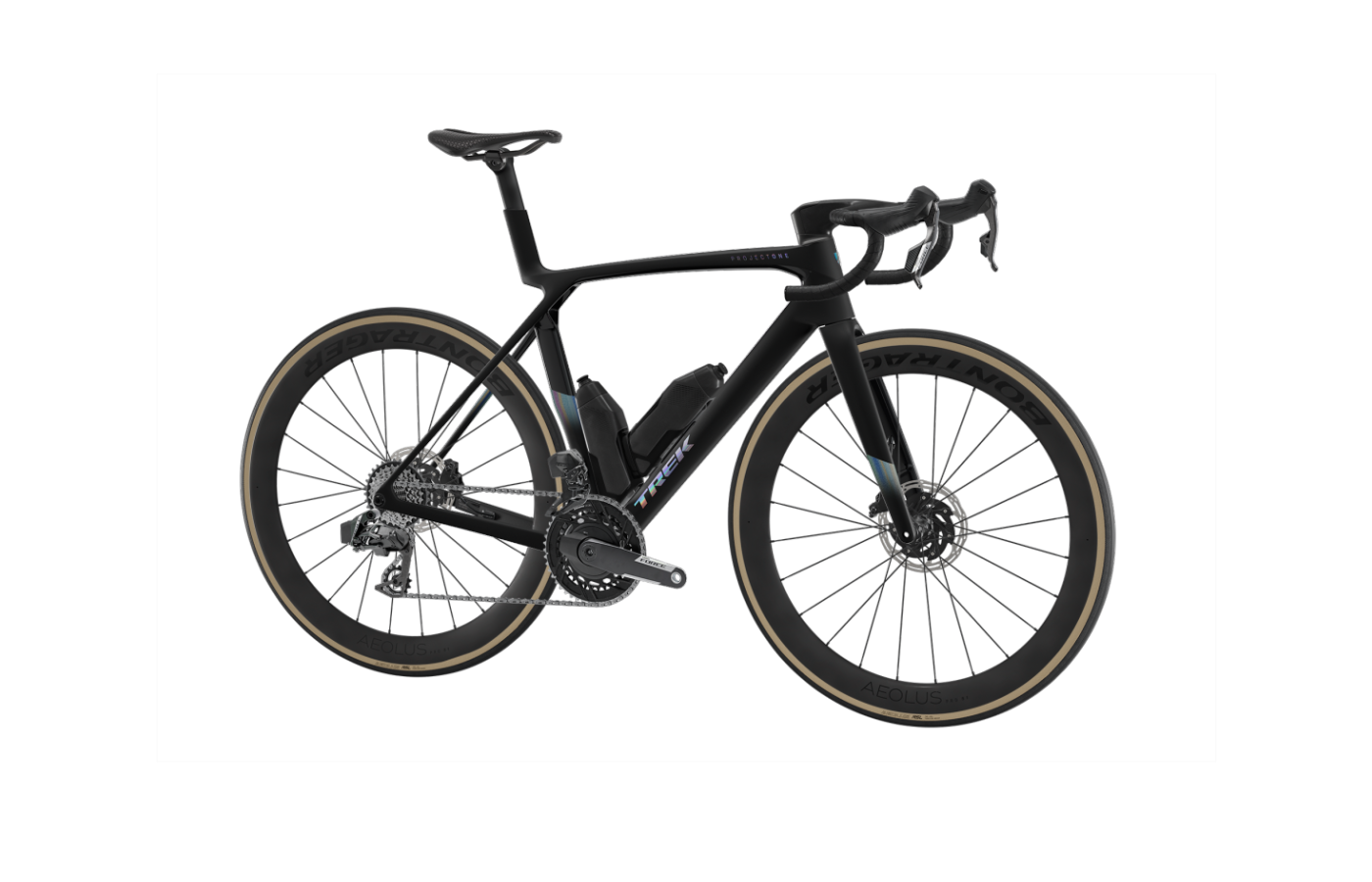
Two Treks, two terrains, one aero playbook.
The Checkmate is a gravel race bike that thinks it's a road bike. The Madone Gen 8 is the road bike that inspired it.
Checkmate
- 45 mm tire clearance with IsoSpeed rear compliance — the most road-bike-feeling gravel racer on the market.
- Frame bag and fender mounts hidden in the top tube and fork — unusual generosity for a self-described race bike.
- Planted high-speed geometry — 80 mm BB drop and 1022 mm wheelbase keep it composed on fast, rolling gravel.
- Only two builds ($8.2k and $12k) — no sub-$8k path onto the platform.
- Stiff integrated Aero RSL cockpit is unforgiving when the terrain gets chunky.
Madone
- Climbs and sprints equally — the Gen 8 SLR frame hits 765 g, within 40 grams of the outgoing Émonda.
- IsoFlow rear compliance Trek claims 80% more vertical give than the Gen 7 — the smoothest Madone ever.
- Nine builds from $3,499 to $13,499 — the Checkmate's build range fits inside the Madone's.
- 32 mm tire clearance — don't plan your gravel escape on it.
- Integrated Aero RSL cockpit is expensive to swap if your fit is off.
Editor’s analysis
Same engineering team, same Aero RSL cockpit, same 'Full System Foil' tube shapes — but one bike clears 45 mm gravel tires and the other stops at 32 mm.
Trek pulled the Madone Gen 8's DNA into the gravel category and called it the Checkmate. The shared parts list is unusually long: the one-piece Aero RSL integrated bar/stem, the aero-profiled downtube, the 800/900 Series OCLV construction, the T47 threaded BB, the UDH rear end. If you squint at a tube-shape photo, you'd struggle to tell them apart. Trek's own press materials call the Checkmate the 'Madone-ification' of gravel, and reviewers picked up the phrase verbatim.
The split happens at the contact patches. The Madone runs 28 mm Pirellis on deep Aeolus 51 wheels and tops out at 32 mm. The Checkmate ships with 38 mm Bontrager Girona RSL gravel tires on shallower 37 mm Aeolus rims and clears 45 mm — reviewers who tried 50 mm Ramblers reported rubbing the chainstays and were warned off by Trek. The Checkmate also adds an IsoSpeed decoupler at the seat tube for rear-end compliance on washboard; the Madone uses its less-travelled IsoFlow cutout instead, tuned for road buzz, not impact absorption.
Geometry tells the same story in numbers. At size M, the Madone sits 14 mm shorter in stack (546 vs 560) and 8 mm shorter in reach (384 vs 392), with a 1.4-degree steeper head tube (72.9 vs 71.5) and 10 mm less trail (58 vs 68). Chainstays are 16 mm shorter (410 vs 426), wheelbase 41 mm shorter (981 vs 1022). Translation: the Madone steers like a scalpel; the Checkmate steers like a gravel race bike that knows it'll occasionally hit a rut and wants the wheelbase to bail it out.
Put another way: the Checkmate is the bike you buy when your home terrain is 'champagne gravel' — hardpack, fire roads, the occasional bit of singletrack — and you want to race Unbound-style marathons without giving up road-bike efficiency. The Madone is the bike you buy when your rides are paved and you want one machine that climbs, sprints, and holds 40 km/h into a headwind without complaining. Different tools; neither one tries to be the other.
Where the builds differ.
Comparing our editor's-pick builds side-by-side. Winners highlighted row-by-row — lower price and weight, and the better-spec component, each mark a point.
Build variants & pricing
The Madone spans $10k of range; the Checkmate offers just two top-shelf builds. Cross-shop the editor's picks — both Force AXS — for the cleanest apples-to-apples read.
Prices are current US MSRP. The Checkmate has no entry-level build; if your budget is under $8k, a mid-tier Madone SL or a different gravel platform entirely are your options.
How they fit, how they steer.
Both at size M, fit-picked for a 5'8" rider. The Madone sits 14 mm lower in stack with an 8 mm shorter reach, a 1.4-degree steeper head tube, and 41 mm shorter wheelbase — everything about it is tighter and quicker.
Which size should I buy?
Size recommendations based on stack, reach, and effective top tube. The Checkmate's size range uses the same XS–XL labels but runs taller and longer at every tier.
→These are starting points. Flexibility, riding style, and preferred position all shift the answer — if you’re between sizes, a professional fit beats a chart.
What the magazines said.
Published reviews from trusted cycling outlets. Click through for the full write-up.
Which one should you buy?
If you're racing gravel and want a road-bike feel, get the Checkmate. If you're racing road and want one bike to do all of it, get the Madone.
Checkmate
If your local scene is hardpack, fire roads, and gravel marathons — and you miss how a road bike feels — the Checkmate turns a gravel course into a road race. Bring 42 mm or 45 mm rubber when the surface gets rough.
Madone
If your rides are paved and you want a flagship that climbs with Émonda-like lightness while still holding 40 km/h on flats, the Gen 8 is Trek's answer to the aero-vs-climber dilemma. The SL tier even opens a $3,499 entry point.
Questions buyers actually ask.
Short answers to the things we get emailed about most often.
01Are these really comparable bikes, or is one gravel and one road?
One is gravel, one is road — but the comparison is fair because the Checkmate is explicitly Trek's attempt to bring Madone DNA to the dirt. They share the Aero RSL one-piece cockpit, 'Full System Foil' tube shapes, T47 bottom bracket, and UDH rear end.
The ride feels far more alike than the tire widths suggest. Reviewers of the Checkmate routinely described it as 'the best endurance road bike there ever was,' and the Madone gained 32 mm tire clearance in Gen 8, up from 28 mm. The gap narrowed from both sides.
02What's the real tire clearance on each?
Checkmate SLR: 45 mm officially. Reviewers who tried 50 mm Maxxis Ramblers and 2.1" Thunderbirds reported rubbing the chainstays — Trek's limit is strict, not conservative. Most testers settled on 42 mm as a practical sweet spot.
Madone Gen 8: 32 mm officially. Some reviewers have squeezed 35 mm all-road tires in, but the aero bottle cages and deep rims weren't engineered for it. Neither bike is a bikepacking platform.
03Which is lighter?
The Madone by a clear margin. Our editor's-pick Madone SLR 7 AXS Gen 8 is 7.22 kg for a size ML; the comparable Checkmate SLR 7 AXS is 8.47 kg at the same size. That's 1.25 kg — nearly three pounds.
The gap comes from frame material (Madone's 900 Series OCLV vs. Checkmate's 800 Series), wheel depth (shallower 3V gravel wheels vs deeper Aeolus Pro 51), and tire weight (38 mm Girona RSL vs 28 mm Pirelli P Zero). On a climb, you'll feel all of it.
04Can I use the Checkmate as a fast road bike?
Yes — arguably better than the Madone can serve as a gravel bike. Multiple reviewers noted the Checkmate 'rips on pavement,' and at least one called it 'the best endurance road bike there ever was' because of the 80 mm bottom bracket drop and IsoSpeed compliance. Throw a set of 30 mm road tires on it and it's a credible all-road bike.
The caveat is weight. You're still lugging an 8.5 kg frame-and-wheel system up climbs that the 7.2 kg Madone would dispatch more efficiently.
05What's different about IsoSpeed vs. IsoFlow?
IsoSpeed (Checkmate, at the seat tube) is a mechanical decoupler that lets the seat tube flex independently from the top tube. It's tuned for impact absorption on gravel — washboard, embedded rocks, loose surfaces — and reviewers reported it 'softens the ride without a bounce feel.'
IsoFlow (Madone, at the seat tube) is a cutout in the seat tube that turns the exposed seatpost into a leaf spring. Trek claims 80% more vertical compliance than the Gen 7. It's tuned for road buzz and potholes, not trail-grade impacts. Both systems only engage when you stay seated.
06Why does the Checkmate only have two builds?
It's a first-generation race-specific platform targeted at a narrow audience — gravel racers willing to pay $8k+ for speed. Trek kept the lineup simple: SLR 7 AXS at $8,199 and SLR 9 AXS at $11,999, both with SRAM Force or Red XPLR.
No 105, no Rival, no aluminum trim. If you want a Trek gravel bike under $8k, the Checkpoint SL is the sibling platform — cheaper, more versatile, heavier.
07Which one climbs better?
The Madone, decisively. At 7.22 kg (SLR 7 AXS) vs. the Checkmate's 8.47 kg (SLR 7 AXS), the Madone carries roughly 1.25 kg less mass at equivalent build tier. On a 30-minute climb, that's meaningful time.
The Madone also runs a 2x drivetrain (48/35 front, 10–36 rear) vs. the Checkmate's 1x13 XPLR setup (42T front, 10–46 rear). The Madone's closer gear steps let you hold a steadier cadence on sustained climbs; the Checkmate trades that for broader range.
08What warranty do they come with?
Both frames carry Trek's lifetime frame warranty to the original owner against manufacturing defects. Bontrager carbon wheels are also covered for life. Reviewers have cited actual claim experiences — one tester had a cracked Gen 6 Madone swapped for a new Gen 8 frame under warranty.
Trek also runs a Project One customization program on both platforms, letting you spec crank length, bar width, and stem length at purchase to avoid expensive post-sale swaps on the one-piece Aero RSL cockpit.
Similar bikes
If your priorities don’t map cleanly onto either of these, one of these adjacent bikes probably fits better.
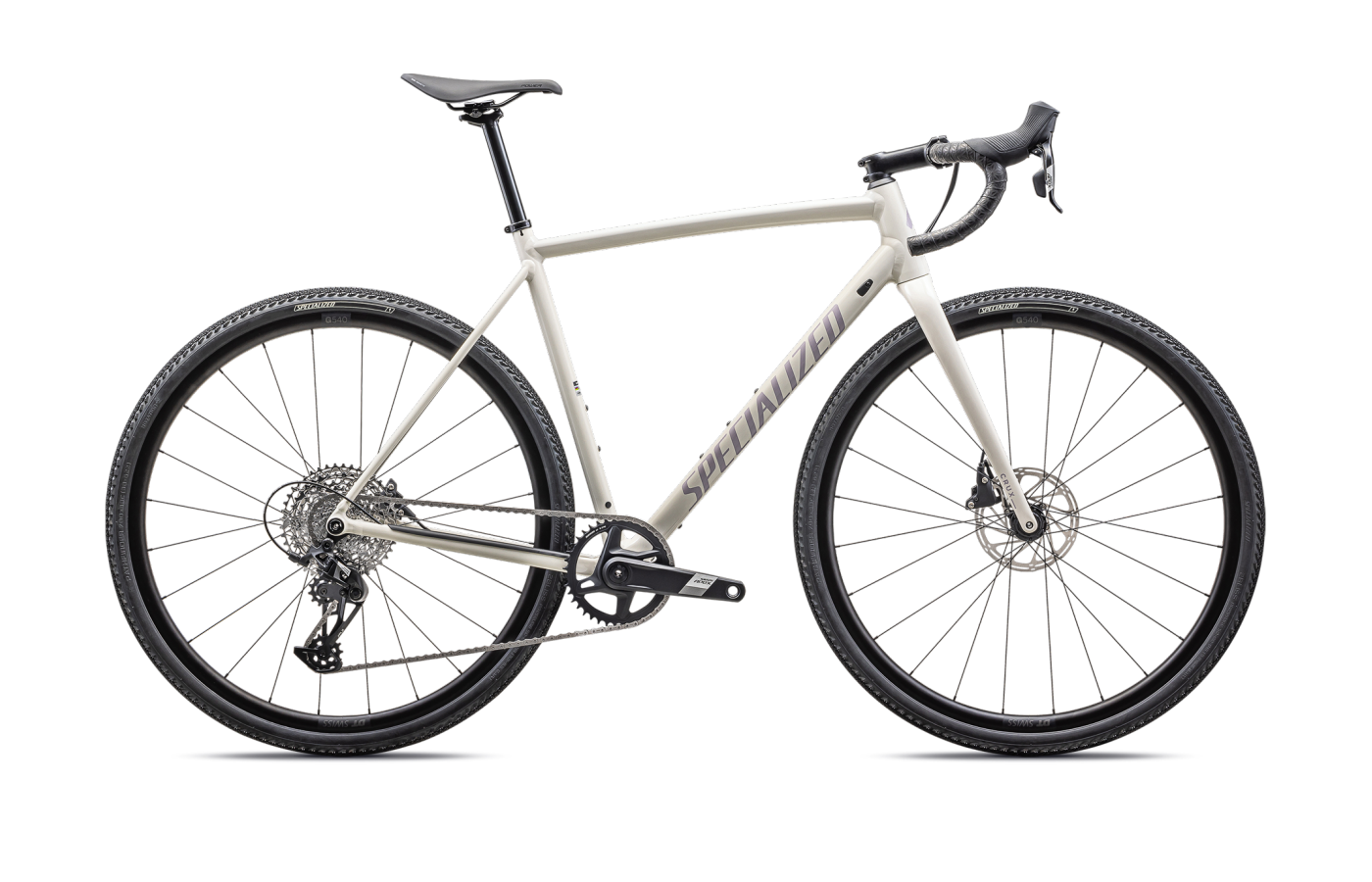
Crux
The anti-aero gravel play — Specialized's Crux is the ultra-light climber of the gravel race segment, prioritizing weight over wind-cheating tube shapes. If your home terrain is steep dirt more than rolling fire roads, the Crux rewards it.
Compare →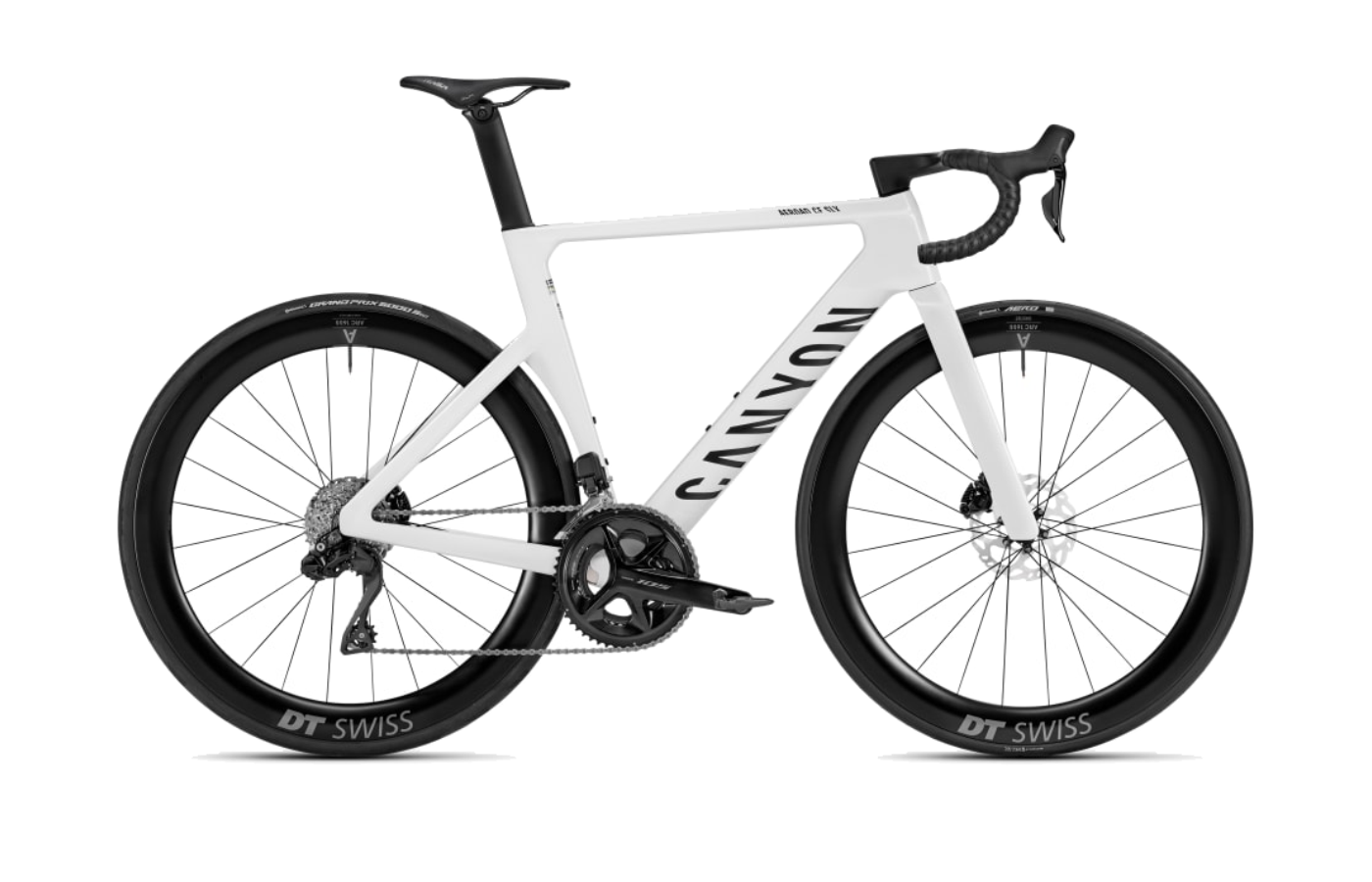
Aeroad
Canyon's direct-to-consumer aero flagship, targeting the same pavement segment as the Madone for roughly 30% less money. No local dealer, no demos — best if you already know your fit.
Compare →
Domane
Trek's own endurance road bike — the Madone's calmer, more compliant sibling with clearance for wider tires. A real option for riders who split time between road and smoother gravel and don't need race geometry.
Compare →