Grizl
vsCutthroat
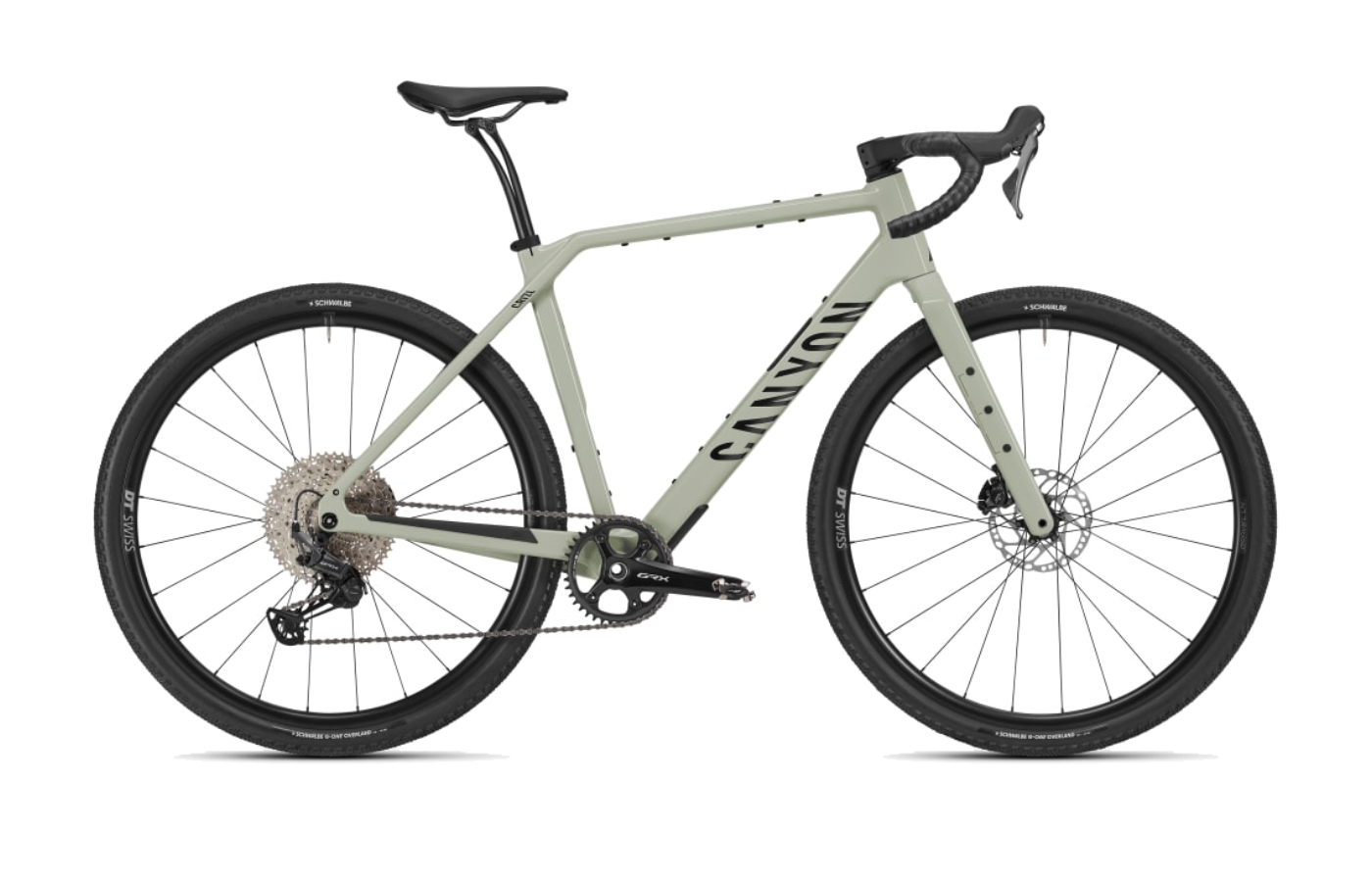
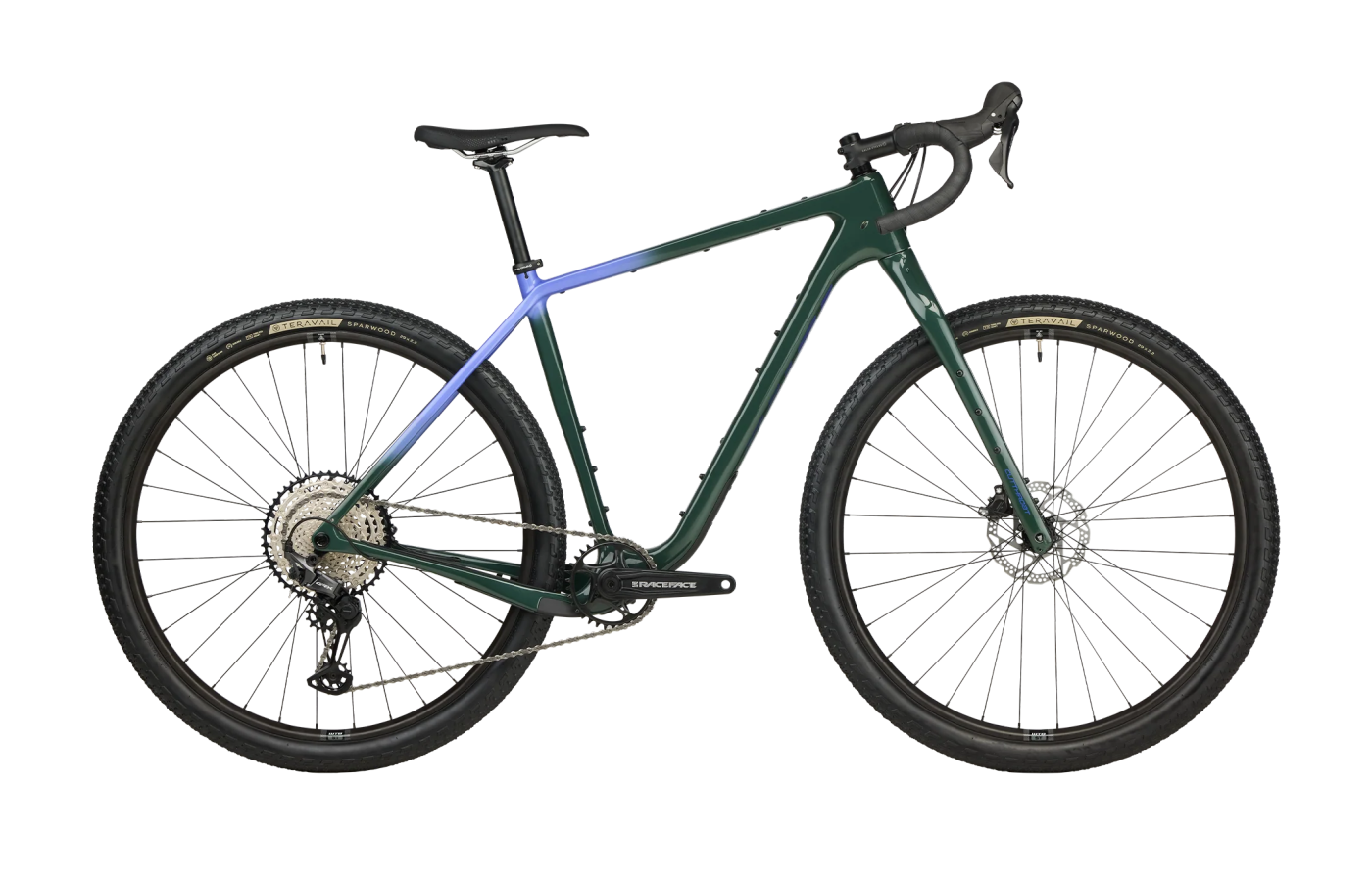
A bulked-up gravel bike vs. a refined mountain bike.
The Canyon Grizl is the do-everything adventure rig with a budget door in. The Salsa Cutthroat is a Tour Divide specialist that wears drop bars.
Grizl
- DTC entry point at $1,799 — the cheapest legitimate way into a modern adventure-gravel platform.
- VCLS 2.0 leaf-spring seatpost is the consensus best-in-class for killing chatter without giving up pedaling efficiency.
- ECLIPS integration on the top Escape build bundles a SON dynamo, 3,500 mAh battery, and Lupine lights — Canyon claims it'd cost ~$1,200 aftermarket.
- 1x-only carbon lineup — no 2x option for riders who want tighter gear steps on road sections.
- DTC means no demos, no local dealer, and reviewers cite uneven post-purchase support.
Cutthroat
- Genuinely massive tire clearance — 29 x 2.4 inch officially, with reviewers noting the V2 fork swallows up to 2.8 inch.
- Suspension-corrected geometry — the 483 mm axle-to-crown fork accepts a 100 mm travel 29er suspension fork without breaking the handling.
- 20+ frame mounts and the direct-mount frame pack make this the most cargo-ready drop-bar platform on the market.
- Price floor of $3,499 — no entry-level door in.
- Slow steering and a 1090 mm wheelbase make it feel like a boat in tight, low-speed corners.
Editor’s analysis
Both wear drop bars and dirt tires. After that, almost everything about how they want to be ridden — and what they want to be ridden — diverges.
On paper they share a category. Both are carbon adventure-gravel platforms, both clear genuinely huge rubber, both lean on a compliant fork and frame to keep the rider fresh after eight hours of washboard. But the Canyon Grizl is a gravel bike that grew up — bulked frame, 54 mm clearance, 700c wheels, Canyon-DTC pricing that opens the door at $1,799. The Salsa Cutthroat is a mountain bike that learned manners — 29 x 2.4-inch clearance, 110/148 mm boost spacing, suspension-corrected fork, $3,499 floor.
The Cutthroat geometry sits a full grade slacker and longer. At its fit-picked 56 cm vs. the Grizl's S, the Cutthroat is 63 mm taller in the stack, 12 mm shorter in reach, 1.25 degrees slacker at the head tube, and rolls a 46 mm longer wheelbase. The result is a bike that wants to be pointed at the horizon and pedaled — composed at speed, predictable when loaded, slow to change direction in tight singletrack. The Grizl is a sharper tool around town and on rolling gravel; the Cutthroat is the one you point at a 4,000 km dirt road and trust.
Component philosophy splits, too. The Canyon Grizl is 1x-only across its entire carbon range, with the integrated ECLIPS dynamo system on the top Escape build replacing the cobbled-together USB-charging rigs bikepackers usually duct-tape on. The Salsa Cutthroat is built around mountain-bike standards — 148 mm boost rear, Eagle Transmission on the upper builds, an interface that swallows a 100 mm travel suspension fork without changing the geometry. One bike maximizes integration; the other maximizes the upgrade path.
Put another way: the Canyon Grizl is the bike you buy when you want one drop-bar bike that does everything from the commute to the overnighter. The Salsa Cutthroat is the bike you buy when your idea of a good weekend is two days alone in the desert with frame bags.
Where the builds differ.
Comparing our editor's-pick builds side-by-side. Winners highlighted row-by-row — lower price and weight, and the better-spec component, each mark a point.
Build variants & pricing
Both lineups span roughly $3k of range. The Grizl starts $1,700 lower in alloy; the Cutthroat tops out $3,300 higher with full SRAM Force / X0 AXS Transmission.
Prices are current US MSRP. The Canyon Grizl is direct-to-consumer only — no local dealer, plus shipping. Cutthroat builds are sold through Salsa's IBD network.
How they fit, how they steer.
Grizl S vs. Cutthroat 56 cm — the fit-picked sizes for a 5'8" rider on each. The Cutthroat sits 63 mm taller in the stack, 12 mm shorter in reach, runs a 1.25-degree slacker head tube, and stretches the wheelbase 46 mm longer. It's a different bike from the waist up.
Which size should I buy?
Size recommendations based on stack, reach, and effective top tube. The Grizl runs eight sizes from 3XS to 2XL; the Cutthroat runs five from 52 to 60 cm — best-suited to riders 5'4" and taller.
→These are starting points. Flexibility, riding style, and preferred position all shift the answer — if you’re between sizes, a professional fit beats a chart.
What the magazines said.
Published reviews from trusted cycling outlets. Click through for the full write-up.
Which one should you buy?
If you want one drop-bar bike for everything from commuting to weekend bikepacking, get the Grizl. If you're planning the Tour Divide, get the Cutthroat.
Grizl
If you want one bike that handles the weekday commute, the Sunday gravel century, and the occasional overnighter — and you'd rather not spend more than $3,500 to get there — the Grizl is hard to argue with. The S15 VCLS seatpost and 54 mm clearance let you turn it into a real adventure rig when you want; the road manners stay intact when you don't.
Cutthroat
If your calendar has the Tour Divide, the Atlas Mountain Race, or the Eastern Divide Trail on it, the Cutthroat earns every penny. Suspension-corrected geometry, mountain-boost spacing, 20-plus mounts, and a frame designed to swallow chatter for twelve hours straight — this is the specialist tool, not the Swiss Army knife.
Questions buyers actually ask.
Short answers to the things we get emailed about most often.
01Which has more tire clearance?
Salsa Cutthroat: 29 x 2.4 inch (~61 mm) officially, with multiple reviewers reporting the V2 fork can fit up to 2.8 inch. The bike rolls 29" mountain wheels with 110/148 mm boost spacing.
Canyon Grizl: 54 mm (~2.1 inch) on both the carbon and alloy frames, on standard 700c x 12 mm thru-axle gravel hubs.
If the priority is the biggest rubber you can fit, the Cutthroat wins by a meaningful margin — and crucially, it's built around mountain-bike wheel and tire ecosystems.
02Can I add a suspension fork to either one?
The Cutthroat is designed for it. Its 483 mm axle-to-crown rigid fork is suspension-corrected for a 100 mm travel 29er fork — bolt one on and the geometry stays right.
The Grizl is not suspension-corrected for a full mountain fork. Canyon does sell select Rift builds with a 40 mm travel DT Swiss F132 One gravel-specific fork — useful for chatter, but not the same upgrade path as a real MTB fork. If you suspect you'll eventually want suspension, the Cutthroat is the only one with a clean path.
03Which one climbs better?
Both climb well for adventure-class bikes, with different strengths. Reviewers consistently report the Grizl 'doesn't feel sluggish while pedaling uphill' (The Radavist) and pegs around 9.2-10.6 kg depending on build. The Cutthroat is praised as 'one of the most efficient bikes on test once you're up to speed' (Granfondo) thanks to its steep 74.25-degree seat tube angle, with the GX AXS build coming in at 23 lb 13 oz (10.7 kg).
Neither is a climber's bike. If lap-record KOMs are the goal, look elsewhere — the Stigmata or a Crux.
04Which is more comfortable on long rides?
Both are designed around long-distance comfort, with different solutions. The Grizl leans on the Canyon S15 VCLS 2.0 leaf-spring seatpost (~20 mm of vertical compliance) plus 45 mm tires to dampen chatter. The Cutthroat uses Salsa's Class 5 Vibration Reduction System — outward-curving seatstays plus a redesigned fork claiming 32% more compliance than V1 — and ships on 29 x 2.2 inch tires.
For truly rough terrain over many hours, reviewers give the edge to the Cutthroat thanks to bigger rubber and more inherent frame compliance. For mixed-surface days that include road sections, the Grizl's lighter weight and quicker geometry feel less like work.
05Is the Cutthroat's press-fit bottom bracket a real problem?
It's the most-debated component on the bike. The BB92 press-fit interface has a reputation for creaking, which several reviewers flag (GearJunkie, Bicycling, Road.cc). Salsa defends it as the only way to get the tire clearance, chainstay length, and pedaling stiffness they wanted.
In practice, Bikepacking.com reports zero issues across V1 and V2 testing, and most reviewers in long-term tests didn't experience creaking. The Canyon Grizl uses press-fit too — and Canyon defends it for the same reasons. Modern manufacturing tolerances appear to have largely solved the problem on both bikes, but if you're a creak-hater, factor in a possible BB service down the road on either platform.
06What's ECLIPS and is it worth it?
ECLIPS (Endless Charge and Lighting Integrated Power System) is Canyon's integrated dynamo lighting and charging package on the top Grizl Escape build. It bundles a SON dynamo hub, a 3,500 mAh Lupine Smartcore battery, integrated Lupine lights, and a USB-C charging port — all wired through the frame.
Bikepacking.com calls it a 'love letter to bikepacking' and estimates the components alone would cost over $1,200 USD if assembled aftermarket. For unsupported multi-day rides where you'd otherwise duct-tape a USB power bank to your bars, it's a meaningful upgrade. For weekend rides where you charge at the trailhead, it's mostly weight you don't need.
07Are both 1x or do they offer 2x options?
The carbon Grizl lineup is 1x only. Canyon points to the 54 mm tire clearance as the reason — fitting a front derailleur eats clearance. Only the alloy Grizl (the $1,799 and $2,099 builds) offers 2x with Shimano GRX RX610.
The Cutthroat offers both. The C GRX 810 2x ($3,499) ships with a 46/30T Race Face crank and 2x GRX 810; the rest of the lineup is 1x. If you want the tighter gear steps of 2x for road sections of mixed-surface days and you prefer carbon, the Cutthroat is the only path.
08Which holds up better for full self-supported bikepacking?
Both are credible, but they're optimized for different ends of the spectrum. The Cutthroat was purpose-built for the Tour Divide — 20+ mounts, the direct-mount frame pack, mountain-boost spacing for wheel strength under load, and a frame Bicycling describes as making 'pedaling for hours or days on end... the easy part.' For multi-week, fully-loaded, remote rides, it's the safer pick.
The Grizl is excellent for shorter overnighters and weekend bikepacking, with copious mounts and an integrated rack system. ECLIPS gives it a real edge for unsupported multi-day power. But the more days, the more remote, the more loaded — the more the Cutthroat's mountain-bike DNA pays off.
Similar bikes
If your priorities don’t map cleanly onto either of these, one of these adjacent bikes probably fits better.
Diverge
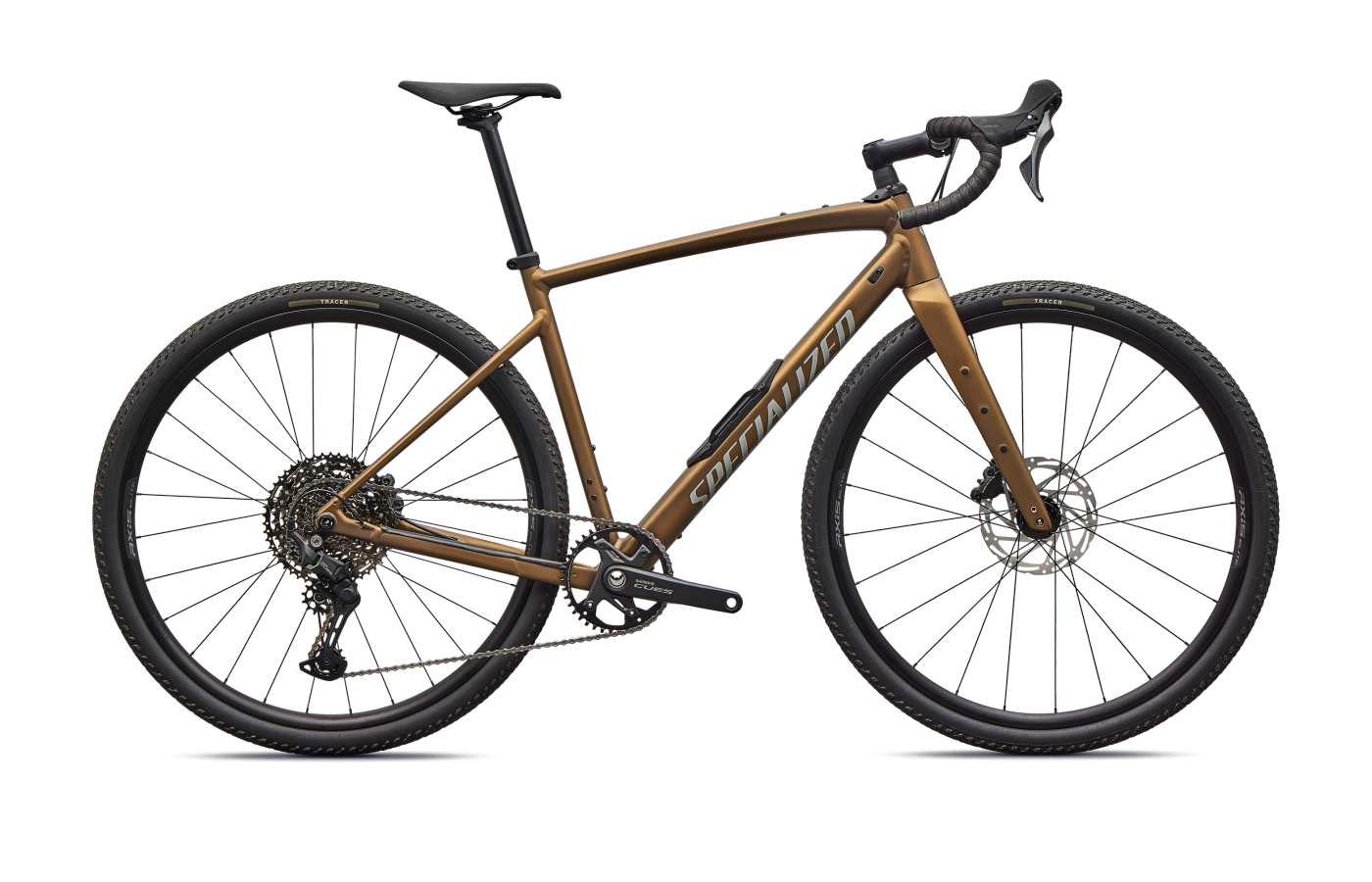
The Diverge takes a third path — Future Shock head-tube suspension absorbs front-end chatter without the Cutthroat's wheelbase or the Grizl's flexy seatpost. Best if you want active front-end compliance without committing to MTB-spec geometry.
Compare →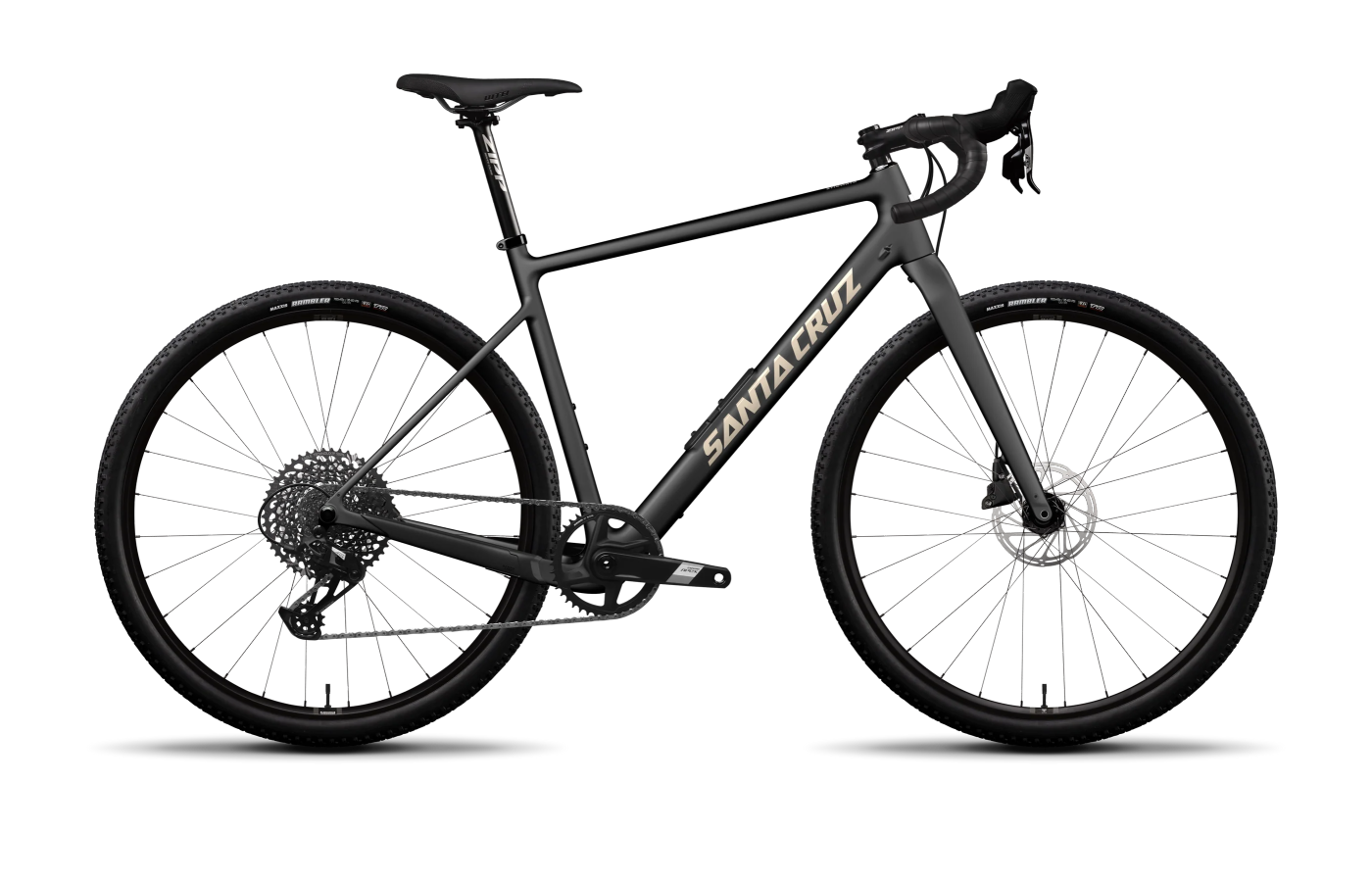
Stigmata
If both of these feel too 'boaty,' the Stigmata is the race-bred alternative — sharper geometry, lighter, still enough clearance (45 mm) for real adventure tires. For riders who'd rather race their gravel bike than load it.
Compare →
Fargo
Salsa's other Tour Divide bike — steel, even more upright, mountain-bar friendly, slower than the Cutthroat but more comfortable on truly endless days. The choice for riders who'd take a week to do what the Cutthroat does in three days.
Compare →