Spartan
vsSlash
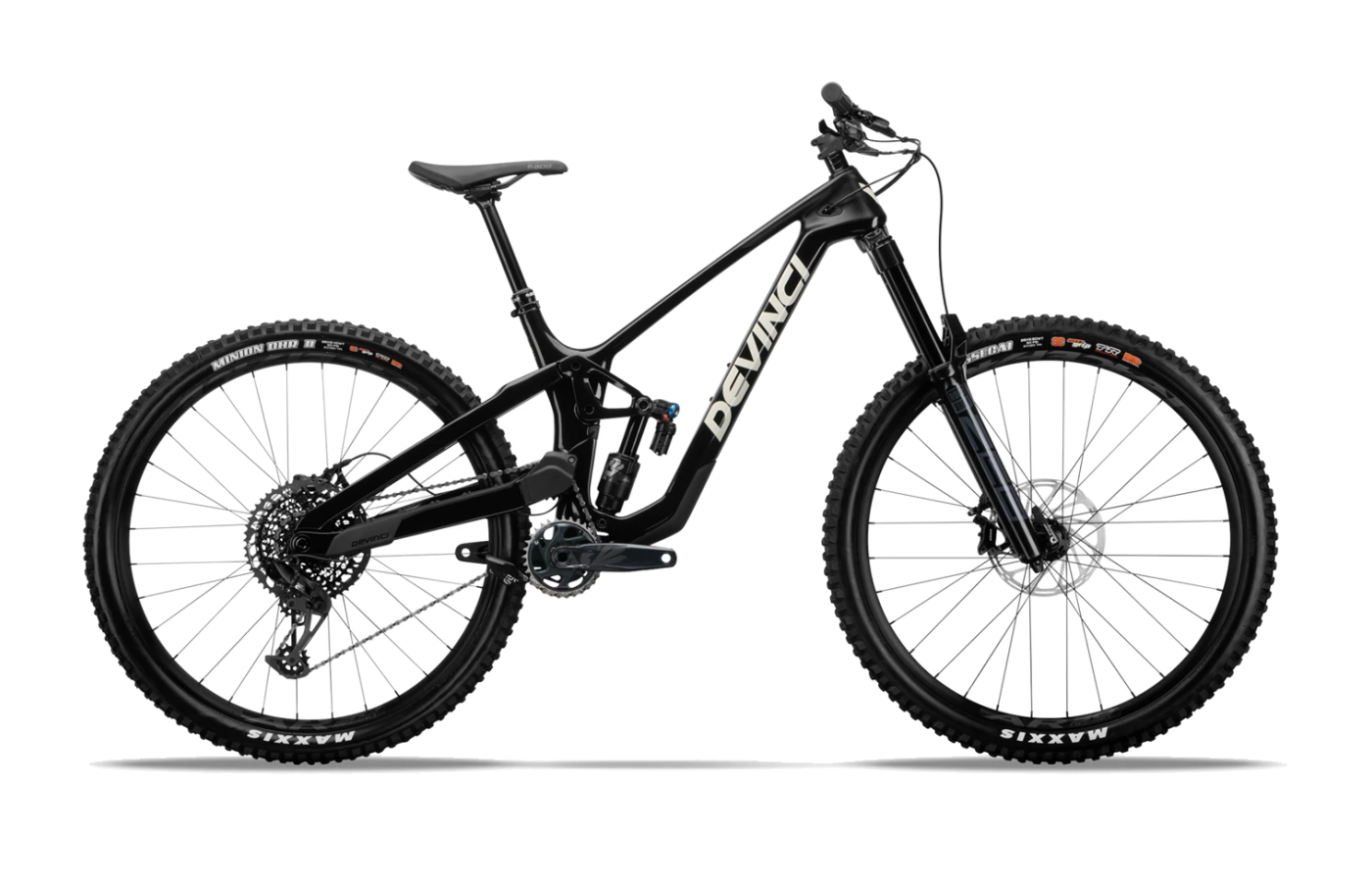
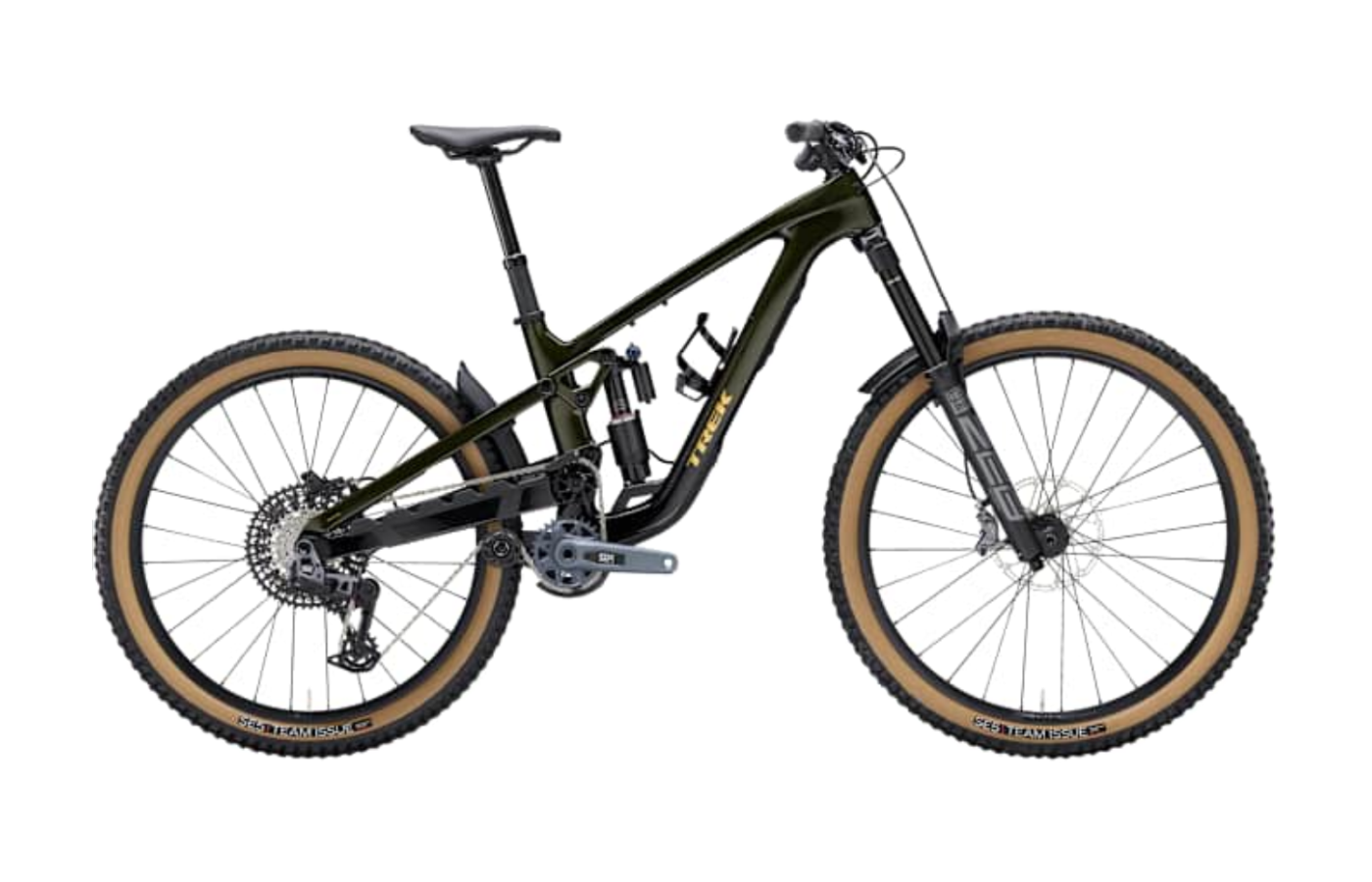
Two high-pivot bruisers, two different missions.
The Devinci Spartan is a focused single-idler enduro racer. The Trek Slash is a modular, dual-idler mini-DH bike with a flip-chip menu.
Spartan
- Race-ready tires stock — Maxxis Assegai/DHR II in DoubleDown MaxxGrip across the lineup. No immediate $150 tire swap.
- Simpler high-pivot system — a single idler with a protective cover; quieter and easier to maintain than dual-idler setups.
- 25-year frame warranty — one of the longest in the industry, signaling Devinci's confidence in the carbon chassis.
- SuperBoost 157 rear hub spacing limits aftermarket wheel and hub choice.
- Effective seat angle slackens noticeably at sag — taller riders feel stretched on steep technical climbs.
Slash
- Most adjustable enduro frame on the market — angle-adjust headset cups (1.5° range), leverage flip chip, and an optional 29" rear conversion.
- Coil-like suspension feel from the RockShox Vivid Ultimate — reviewers call it the smoothest air shock they've ridden.
- Wide price range — alloy from $4,399 puts the high-pivot platform in reach below the Spartan's entry point.
- Stock Bontrager SE5/SE6 tires panned by nearly every reviewer as too flimsy for a 170 mm bike.
- Dual-idler drivetrain demands meticulous maintenance and is sensitive to spacer alignment — early chain-drop issues have a service bulletin fix.
Editor’s analysis
Both bikes use rearward axle paths to scalp square-edged hits — but one is a race tool, the other is a gravity Swiss Army knife.
The Devinci Spartan and Trek Slash sit in the same 160–170 mm enduro bracket and share the same headline trick — a high main pivot with an idler pulley that decouples the rear wheel from chain growth. Both run 29" wheels (the Slash on a mullet, with a 27.5" rear), both come in carbon-flagship trim, and both have been pummeled by reviewers in the same Pacific-Northwest-style chunk. The numbers diverge from there, and so does the personality.
The Devinci Spartan is the simpler animal. 160 mm rear / 170 mm front, a single idler, a 64.5° head angle, SuperBoost 157 rear spacing, and a Split Pivot rear end built around the Fox Float X2. It comes in three builds, all carbon, $6,199–$8,399, and it ships with proper Maxxis DoubleDown MaxxGrip tires on every model — the kind of spec choice that tells you Devinci expects you to race it. Reviewers describe it as "glued to the ground" on landings, with a surprising amount of agility for a bike of its travel.
The Trek Slash is more bike for more reasons. 170 mm front and rear, a dual idler (upper 19-tooth, plus a lower guide), Boost 148 rear, modular angle-adjust headset cups (1.5° range), a flip chip for leverage rate, and an optional 29" rear shock mount sold separately. The Slash spans $4,399–$8,699 across alloy and carbon, with a 63.3° head angle and a 27.5" rear wheel that injects pop the high-pivot otherwise saps. Reviewers call it a "mini-DH bike," a "bruiser," a "security blanket" — and also a maintenance project if the idler stack isn't shimmed correctly.
Put it this way: the Devinci Spartan is what you buy when you want to show up to enduro race day with one bike, ride it fast, and not think about it. The Trek Slash is what you buy when your weekends are bike park laps and your idea of fun is a 4 ft drop into a rock garden — and you're willing to accept the weight, the noise, and the spacer-fiddling that comes with it.
Where the builds differ.
Comparing our editor's-pick builds side-by-side. Winners highlighted row-by-row — lower price and weight, and the better-spec component, each mark a point.
Build variants & pricing
The Spartan is carbon-only across three builds; the Slash spans alloy and carbon across seven. The mid-tier GX builds are the natural apples-to-apples comparison.
Prices are current US MSRP. Devinci does not sell an alloy Spartan — if your budget tops out below $6k, the Slash 8 ($4,399) and Slash 9 ($5,799) alloy builds are the only way into a 170 mm high-pivot platform at this price.
How they fit, how they steer.
The Spartan in size S vs. the Slash in size ML — both fit-picked for a 5'8" rider, though Trek's denser size run (S/M/ML/L/XL) lets it land closer to ideal reach. The Slash sits 11 mm lower in stack, runs a 1.2° slacker head angle, and stretches the wheelbase 46 mm longer.
Which size should I buy?
Trek offers an extra ML size between M and L; Devinci runs a tighter four-size range. Pick by reach and effective top tube — both brands publish full charts.
→These are starting points. Flexibility, riding style, and preferred position all shift the answer — if you’re between sizes, a professional fit beats a chart.
What the magazines said.
Published reviews from trusted cycling outlets. Click through for the full write-up.
Which one should you buy?
If you race enduro and want one bike that just works, get the Spartan. If your weekends are bike park laps and you love tinkering with geometry, get the Slash.
Spartan
If you want a focused, race-ready high-pivot enduro bike with proper tires from the factory and a simple, quiet single-idler drivetrain — this is it. Carbon-only, three builds, three years of warranty per decade.
Slash
If your home trails are steep, rocky, and lift-served — and you want a bike you can dial in with flip chips, headset cups, and a swappable rear wheel size — the Slash is the most adjustable 170 mm platform in the segment. Just budget for tires.
Questions buyers actually ask.
Short answers to the things we get emailed about most often.
01Which is faster downhill on rough terrain?
It's close. The Slash has a slight edge on the gnarliest, fastest stuff — 170 mm rear vs. 160 mm on the Spartan, a 1.2° slacker head angle (63.3° vs. 64.5°), and the RockShox Vivid Ultimate that reviewers describe as the most coil-like air shock on the market.
The Spartan is no slouch. Reviewers consistently call it "glued to the ground" on landings and praise its plow-through-anything composure. On a Pacific-Northwest-style chunky descent, you wouldn't lose much time on either.
02Which climbs better?
Neither is a climbing specialist — both weigh in around 16+ kg in their mid-tier carbon builds. But the Slash edges out the Spartan on technical climbs thanks to a steeper 73.8° seat tube angle (vs. ~76.5–77° static on the Spartan, which slackens significantly at sag — reviewers measured an effective ~69° for taller riders).
On fire roads, both are content to grind. Trek's design targets ~100% anti-squat, and reviewers report you can ignore the climb switch on most ascents.
03What's the deal with the dual idler on the Slash?
The Slash uses two pulleys — a large 19-tooth upper idler that the chain runs over to enable the high-pivot kinematics, plus a lower guide that keeps the chain seated. Trek issued a service bulletin clarifying the lower-guide spacing (7 mm: one 5 mm + two 1 mm spacers between the ISCG tabs and the guide) to align with SRAM's 55 mm chainline.
When properly set up and clean, it's quiet. When dirty, reviewers report audible drag and a perceived ~10% efficiency loss. The Spartan's single-idler setup is simpler and quieter out of the box.
04What about tire clearance?
Trek Slash: 63.5 mm of measured clearance, comfortably accommodating the stock 29x2.5" tires with room for wider DH casings.
Devinci Spartan: Devinci doesn't publish an exact clearance figure, but the stock spec is a Maxxis Assegai 29x2.5" front and Minion DHR II 29x2.4" rear in DoubleDown casing — the heaviest enduro casing Maxxis makes. Both bikes are designed around 29x2.5" maximum.
05Why does the Slash use SuperBoost on the Spartan but not on Trek?
It's the other way around: the Devinci Spartan uses SuperBoost 157 mm rear-axle spacing for added rear-triangle stiffness with the 29" wheel. The Trek Slash uses standard Boost 148 mm.
SuperBoost gives a stiffer wheel build, but it limits aftermarket hub and wheel options — most boutique wheel brands prioritize Boost 148. If you plan to upgrade wheels often, Boost 148 is the more flexible standard.
06Can I run a coil shock on either?
Yes on both. The Spartan is explicitly designed for coil compatibility — Devinci calls this out as a feature, and reviewers note the Float X2 trunnion mount (205x65 mm) accommodates common coil swaps.
The Slash ships with the RockShox Vivid Ultimate (230x65 mm) air shock and accepts a coil in the same mount. Several reviewers tried Super Deluxe Coil swaps without issue.
07How adjustable is the geometry on each?
The Slash is the most adjustable 170 mm bike on the market. Modular angle-adjust headset cups give a 1.5° head angle range, a flip chip changes leverage rate, and a separate (sold-separately) shock mount converts the rear to a full 29" wheel.
The Spartan has a flip chip that toggles between 64.5° and 65° head angle (and 426/430 mm chainstay on size L), but no headset adjustability and no full-29" conversion option.
08What about long-term reliability?
Both frames carry strong warranties — Devinci's 25-year frame warranty is one of the longest in the industry; Trek offers a lifetime frame warranty plus a 2-year crash replacement on Bontrager carbon wheels.
The Slash's dual-idler system has had documented teething issues — chain drops traced to spacer setup, uneven idler wear in wet conditions — but Trek has been proactive with updated parts and service bulletins. The Spartan's single-idler design is mechanically simpler with fewer documented failure modes.
Similar bikes
If your priorities don’t map cleanly onto either of these, one of these adjacent bikes probably fits better.
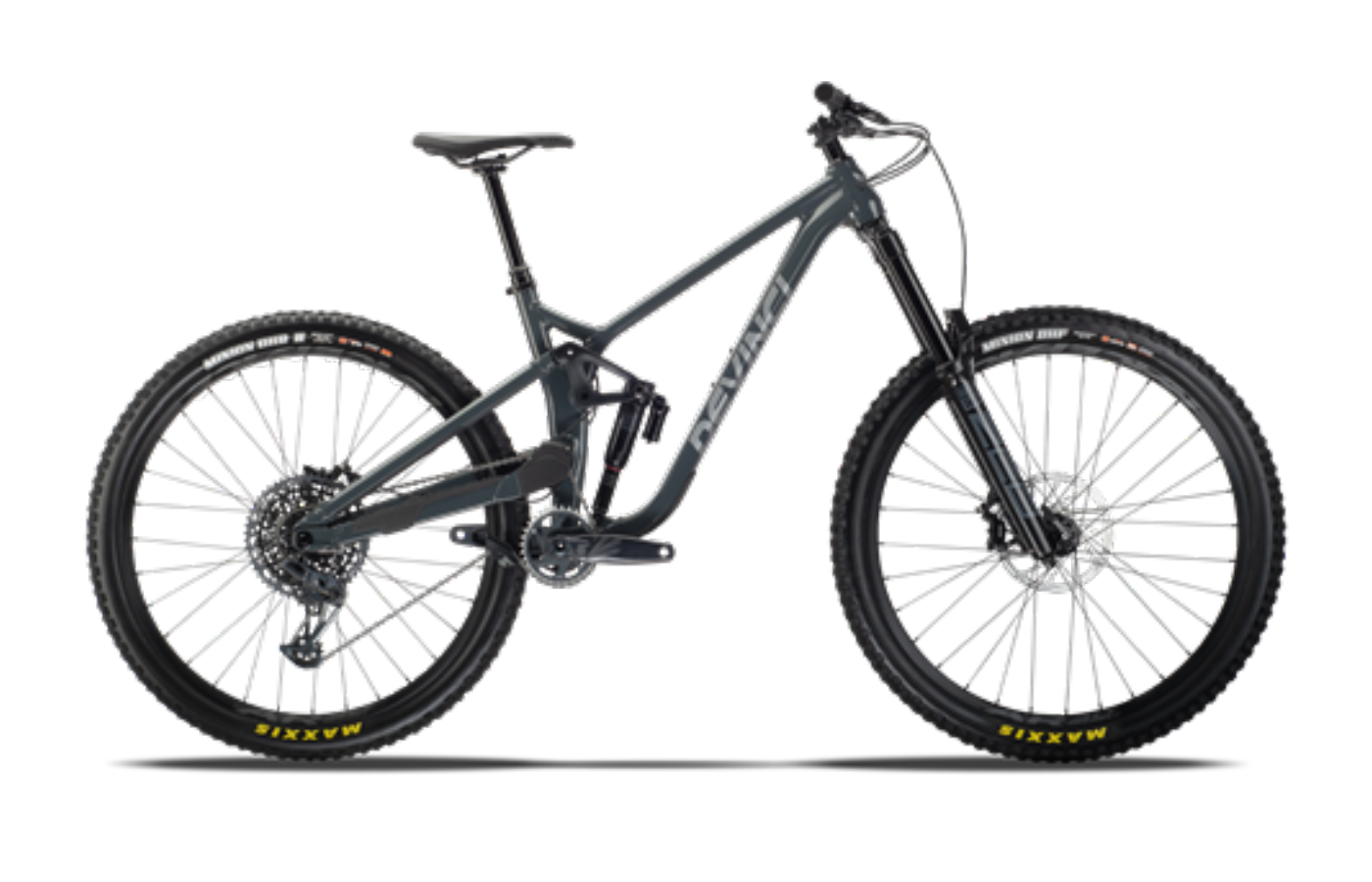
Chainsaw
Same Devinci high-pivot DNA as the Spartan but in alloy — heavier, cheaper, more bike-park-focused. The pick if you want the Spartan ride character without the carbon premium.
Compare →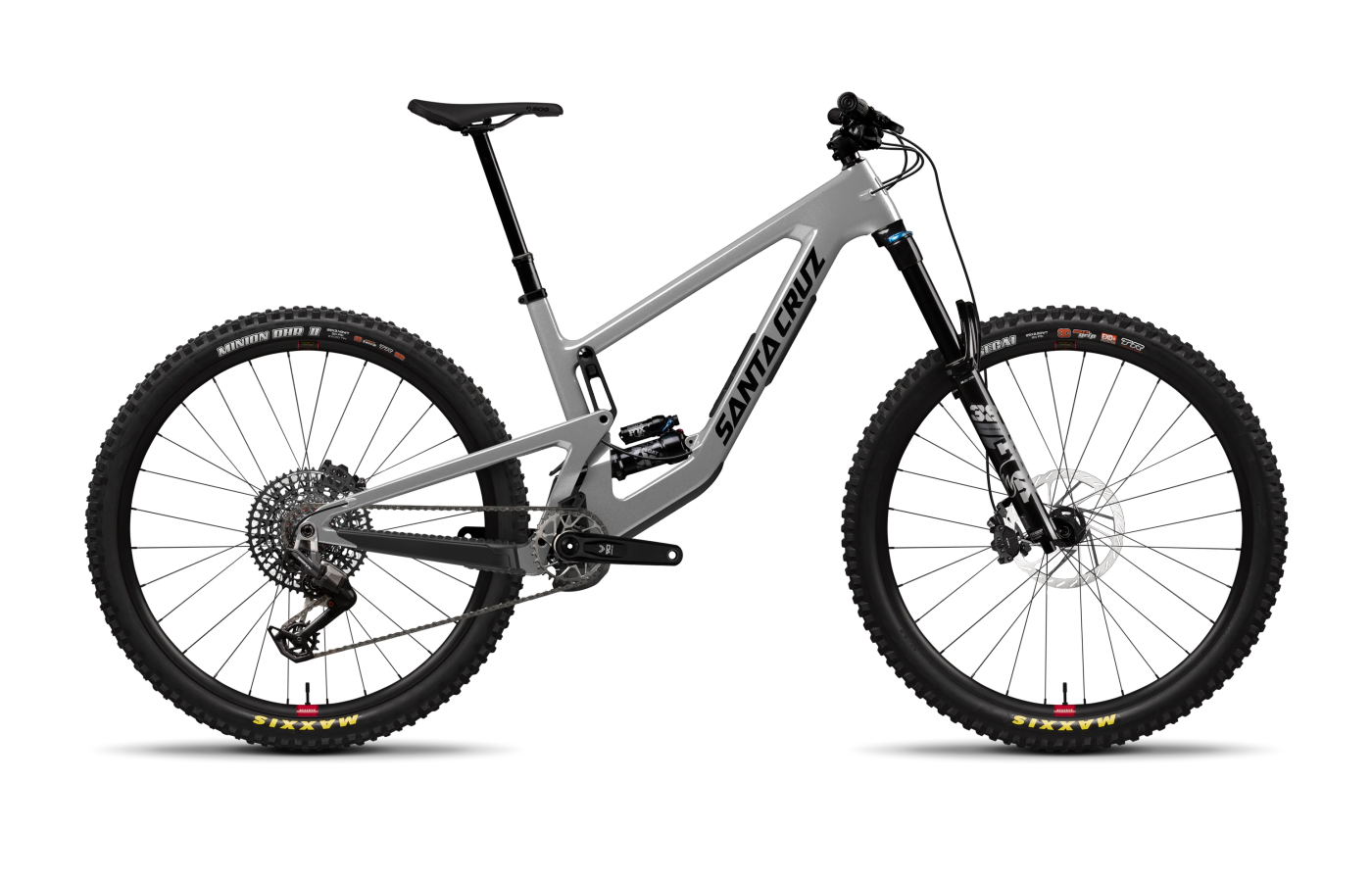
Megatower
Santa Cruz's non-high-pivot answer at the same travel — VPP linkage, no idler noise, sharper low-speed agility. Best for riders who'd rather not deal with idler maintenance at all.
Compare →Spire
Transition's take on a 170 mm bruiser — same smashability as the Slash but with a simpler four-bar layout that home mechanics can actually service. Cheaper, less adjustable, equally aggressive.
Compare →