Altitude
vsSlash
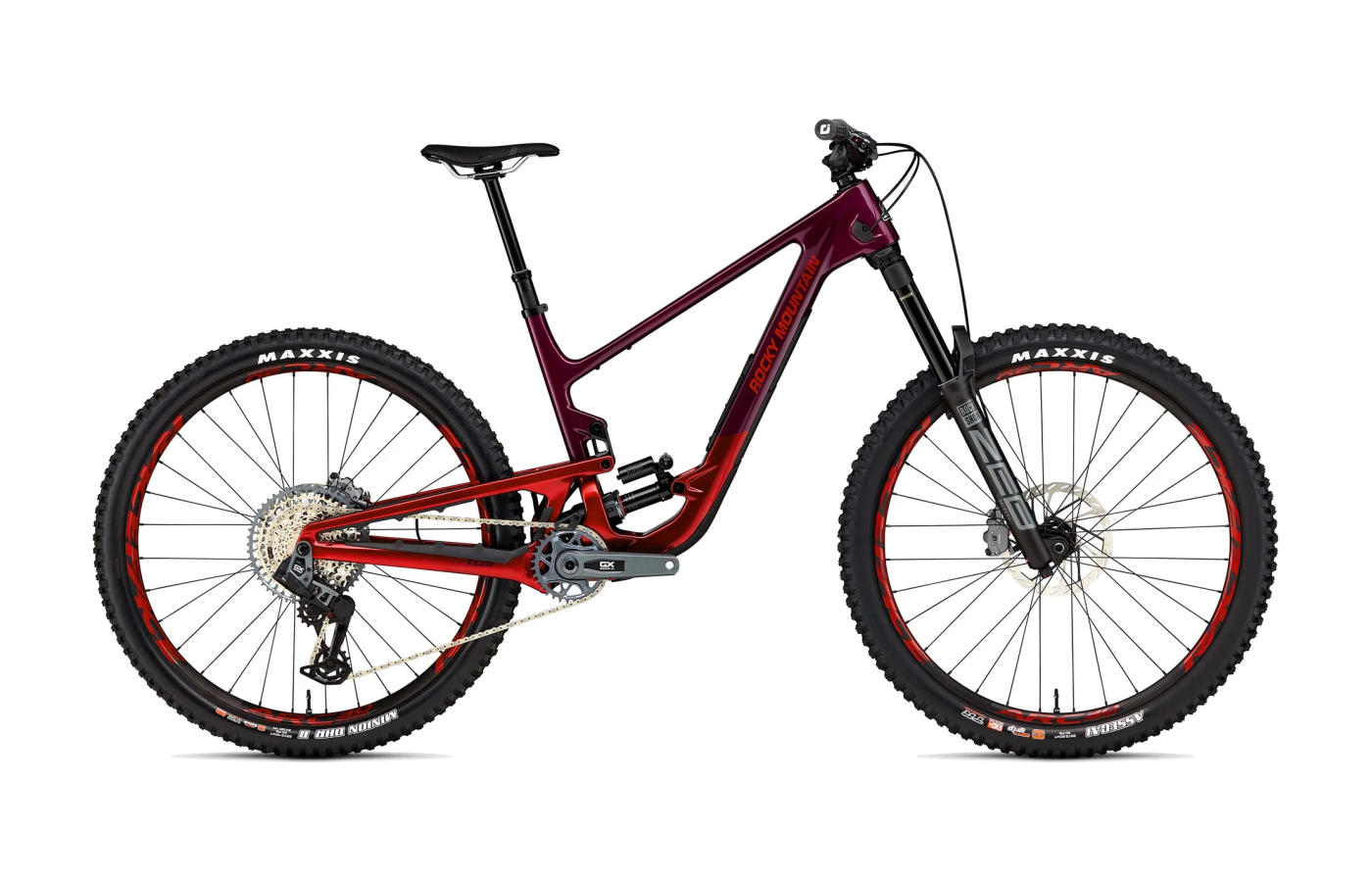
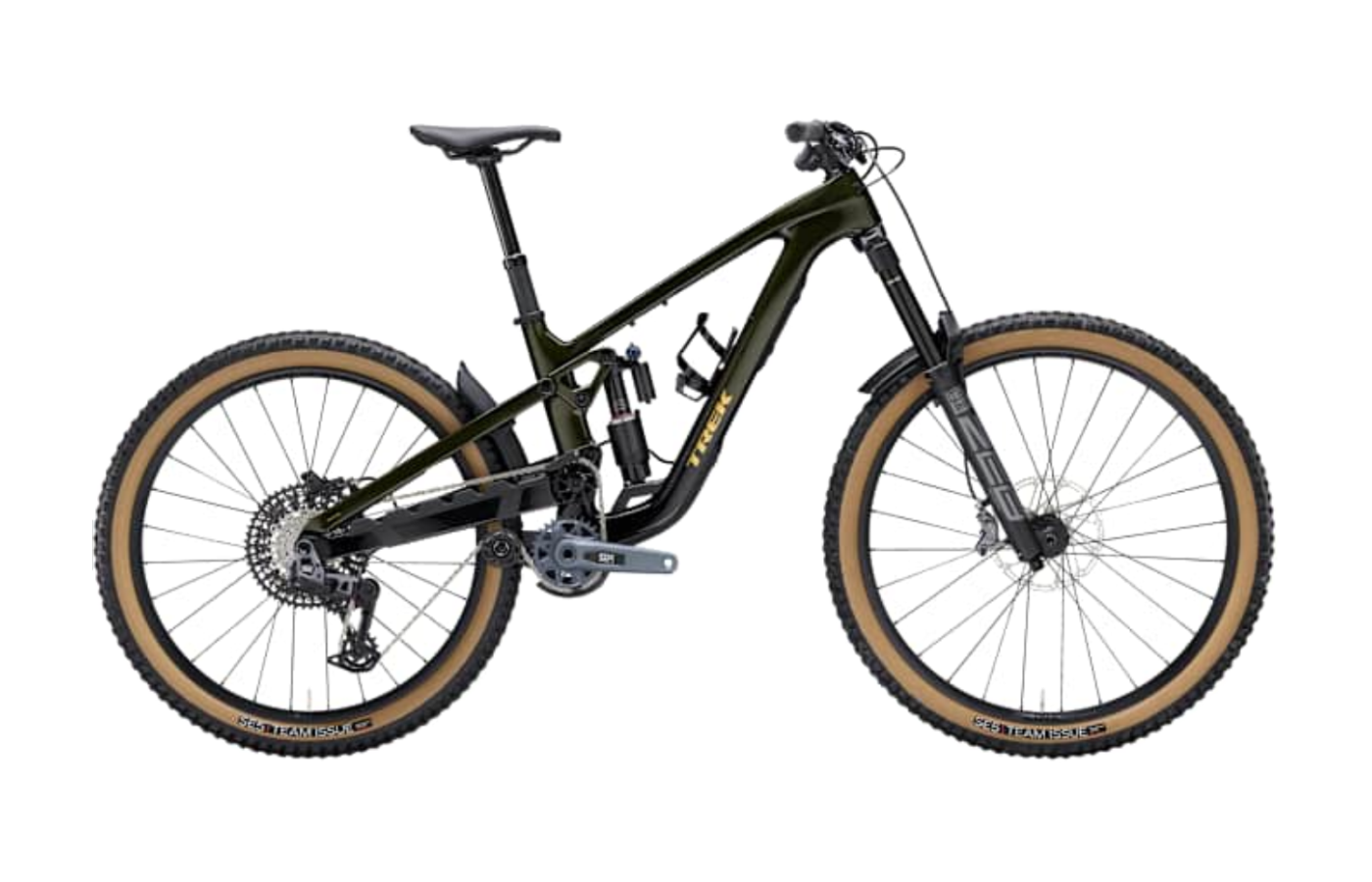
Two enduro race bikes, two suspension philosophies.
The Altitude bets on a low-slung dual-link platform and adjustability. The Slash Gen 6 goes high-pivot with an idler — a mini-DH bike for the descents.
Altitude
- Magic-eraser composure — the LC2R's low CoG and progressive 36% leverage make rough, fast descents disappear underneath you.
- Race-ready out of the box — Maxxis Assegai/DHR II in MaxxGrip+EXO+/MaxxTerra DD with CushCore Trail inserts pre-installed, saving hundreds in upgrades.
- 24-position adjustability — Ride-4 flip chip plus +/-5 mm reach-adjust headset cups dial it from very slack to a touch quicker for tight terrain.
- Less poppy than the previous Altitude — "prefers wider radiuses" and feels less lively when trails mellow.
- Early-build niggles documented across reviewers: main pivot bolt loosening (Loctite fix) and dropper-post rattle in carbon frames.
Slash
- High-pivot bump-eating — the rearward axle path scalps square-edge hits in a way no dual-link in the segment matches.
- Surprisingly efficient — ~100% anti-squat across the travel keeps the rear shock "spookily still" while seated, climbing better than its 35–39 lb weight suggests.
- Mullet agility — 27.5" rear wheel and 165 mm cranks counter the high-pivot "glued" sensation, keeping it nimble in tight corners.
- Idler-system maintenance is real: chain-drop service bulletin, ~10% perceived drag when dirty (per Loam Wolf), pulley wear in wet conditions.
- Stock Bontrager SE5/SE6 tires are widely panned as too flimsy for a 170 mm bike — plan on $100–150 in immediate tire upgrades.
Editor’s analysis
Both target the same EWS podium. They get there by opposite routes — one tunes a planted dual-link to your trail, the other reroutes the chain so the rear wheel can move backward through the hits.
On the spec sheet they look like twins: 170 mm forks, 160–170 mm rear, 63°-ish head angles, MX-capable, $4–9k price ladders. Spend a ride on each and they feel like different machines. The Rocky Mountain Altitude leans on a brand-new LC2R dual-link layout — shock and links tucked low near the BB for a low center of gravity — and a Ride-4 flip chip plus reach-adjust headset that gives 24 usable geometry combinations. The Trek Slash Gen 6 ditches dual-link entirely, going high-pivot with a 19-tooth idler so the rear axle traces backward as it compresses. Both ideas chase the same goal — composure at speed — but you feel the means.
The Altitude is the planted, tunable race tool. Reviewers across PinkBike, Blister, NSMB, and Mountain Bike Action describe it as a "magic eraser" and a "full-blast straight-line monster" once it's up to speed. The trade-off is that it's not the popping, snappy Altitude of old — testers note it's "less lively when the trail mellows out" and "prefers wider radiuses" in tight corners. Climbing is surprisingly capable thanks to a 77° effective seat angle and active LC2R traction, but it isn't snappy out of the saddle.
The Trek Slash is a more single-minded weapon. The high-pivot rearward axle path lets it "scalp" square-edge hits in a way the Altitude simply can't match — Bike Perfect, Flow MTB, and The Loam Wolf all describe the rear end as feeling "coil-like" through chunky rock gardens, even on the air-sprung Vivid Ultimate. Trek tuned anti-squat near 100% to keep it efficient seated, and the 165 mm cranks paired with a low 351 mm BB are a nice gravity-spec touch. The cost: a heavier system (alloy Slash 9 weighs 39 lb stock), idler maintenance, and a "stalling" sensation on chunky low-speed climbs as the wheel moves backward over obstacles.
Geometry tells the same story. At our compared sizes — Altitude in size MD, Slash in ML for a 5'8" rider — the Slash sits 18 mm longer in reach (468 vs 450) and 0.4° steeper at the head (63.3° vs 62.9°), with 6 mm shorter chainstays (434 vs 440). The Slash is the more agile cockpit on paper; the Altitude the longer, slacker, more planted one. If you want a bike that lets you tune toward whatever your trails demand, the Altitude. If you want the most composed plow on rough, fast, repeat descents and you'll do the maintenance, the Slash.
Where the builds differ.
Comparing our editor's-pick builds side-by-side. Winners highlighted row-by-row — lower price and weight, and the better-spec component, each mark a point.
Build variants & pricing
The Altitude lineup runs $4.0k–$5.8k; the Slash spans $4.4k–$8.7k. Both editor's picks are the GX AXS Transmission carbon build — apples-to-apples.
Prices are current US MSRP. Note the Slash carbon ladder runs significantly higher: equivalent X0 AXS trim is $8,699 on the Slash vs. $5,799 for the Altitude Carbon 70, even though both run the same drivetrain tier. Some of that gap is Bontrager carbon wheels and the high-pivot frame complexity; some of it is brand pricing.
How they fit, how they steer.
Altitude MD vs. Slash ML — the fit-picked sizes for a 5'8" rider on each. The Slash sits 18 mm longer in reach (468 vs 450) and 0.4° steeper at the head (63.3° vs 62.9°), with 6 mm shorter chainstays. The Altitude is shorter and slacker — a more compact, more planted cockpit.
Which size should I buy?
Size recommendations driven by stack, reach, and effective top tube. The Slash's M/ML split gives finer granularity in the middle of the range; the Altitude jumps from MD to LG.
→These are starting points. Flexibility, riding style, and preferred position all shift the answer — if you’re between sizes, a professional fit beats a chart.
What the magazines said.
Published reviews from trusted cycling outlets. Click through for the full write-up.
Which one should you buy?
If you want a tunable, planted race tool with race-ready spec out of the box, get the Altitude. If you want the most composed plow on rough, fast descents and you'll keep the idler clean, get the Slash.
Altitude
If your trails range from flowy to fast-and-chunky, and you like dialing geometry to suit the day, the Altitude is built for you. The CushCore-and-Maxxis stock spec means it's race-ready the moment it leaves the shop.
Slash
If most of your riding is steep, rough, and fast — bike park days, EWS-style stages, repeat shuttle laps — the high-pivot is a cheat code. Just budget for tires and accept the idler-maintenance tax.
Questions buyers actually ask.
Short answers to the things we get emailed about most often.
01Which descends faster on truly rough terrain?
The Trek Slash, at the limit. The high-pivot's rearward axle path lets the rear wheel move with square-edge hits instead of getting hung up — Flow MTB, Bike Perfect, and The Loam Wolf all describe it as "scalping" chop the way no conventional layout in the segment can.
The Altitude isn't far behind: the LC2R is widely called a "magic eraser" and the bike a "straight-line monster." But on the very nastiest braking-bump and rock-garden sections, the high-pivot's geometry advantage is real.
02Which climbs better?
It depends on the climb. On smooth fire-road grinds, both sit at a comfortable ~77° effective seat angle and pedal efficiently — the Slash actually impressed reviewers with how "spookily still" the rear stays thanks to ~100% anti-squat.
On chunky technical climbs, the Altitude has the edge. The LC2R's active suspension delivers what Pinkbike called "essentially an endless amount of traction." The Slash's rearward axle path can cause the rear wheel to stall on square-edge obstacles at low speed, sucking momentum.
On weight, the Altitude wins — though neither is light. Carbon Altitudes sit around 34 lb; alloy Slash 9 stock weighs 39 lb.
03How much maintenance does the Slash's idler system actually need?
More than a normal drivetrain — that's the honest answer. Cycling Magazine and Bike Perfect both reported the system gets noticeably louder and less efficient when the chain or idlers are dirty; The Loam Wolf estimated real-world drag at closer to 10% when fatigued, vs. Trek's claimed 3%.
There was also a documented chain-drop issue on early Gen 6 frames. Trek issued a service bulletin (correct spacer config: 5 mm + two 1 mm spacers) and an updated upper idler with a longer tooth profile, shipped to dealers at no cost.
Long-term riders report the upper idler can need replacement after a wet season. The Altitude has its own quirks — reviewers consistently flagged the main pivot bolt loosening on early frames (fix: Loctite, 25 Nm) — but no idler to clean.
04What's the geometry difference at the size I'd ride?
For our default 5'8" rider, the fit-picked sizes are Altitude MD and Slash ML. The Slash sits 18 mm longer in reach (468 vs 450), 2 mm taller in stack (632 vs 630), and 0.4° steeper at the head tube (63.3° vs 62.9°).
Chainstays are 6 mm shorter on the Slash (434 vs 440), and overall wheelbase is 10 mm longer (1253 vs 1243). Net read: the Altitude is shorter and slacker — more planted; the Slash is longer-cockpit and slightly quicker-steering, with the mullet rear adding agility back.
05Can both run mixed wheel (mullet)?
Yes, both. The Trek Slash ships mullet stock from M-ML-L-XL — 29" front, 27.5" rear — and reviewers consistently credit that small rear wheel for offsetting the high-pivot "glued" sensation in tight corners.
The Rocky Mountain Altitude is mullet-compatible on MD-LG-XL frames via its Ride-4 flip-chip system. Reviewers report it makes "the back end quicker to step out" and feel "snappier and more playful." Both also support full 29" if you prefer max stability.
06How do the stock builds compare on tires and wheels?
Big difference, and it's where the Altitude wins on out-of-the-box value.
Rocky Mountain ships the Altitude Carbon 70 with Maxxis Assegai (MaxxGrip, EXO+) front and Minion DHR II (MaxxTerra, DD-casing) rear, plus CushCore Trail inserts pre-installed. Cycling Magazine called this spec a savings of "several hundred dollars in re-fitting your bike to race-mode."
The Slash 9.8 GX AXS ships Bontrager SE5 Team Issue tires that nearly every reviewer panned — "too flimsy," "perilously slick," multiple punctures in testing. Plan on $100–150 for tire upgrades immediately. Wheelset is Bontrager Line Comp 30 alloy on this trim (carbon Line Pro 30 only on the 9.9 X0).
07Which has more in-frame storage?
Both have it on carbon frames, and both are well-executed. The Altitude's Penalty Box 2.0 (carbon models only) is praised by Pinkbike and Vital MTB as "best in class," with a clever AirTag holder mount inside.
The Slash's BITS storage compartment is smaller — Flow MTB called it "on the small side" — but well-protected with the tube-in-tube cable routing that prevents internal rattling. Both fit a tube, levers, and a multi-tool; the Altitude fits noticeably more bulk.
08What about warranty?
Rocky Mountain offers a 5-year transferable frame warranty — Blister specifically called this out as "great to see," and it's a meaningful boost on resale.
Trek offers a lifetime frame warranty to the original owner, plus a 2-year crash-replacement on Bontrager carbon wheels. Both brands have shown active engagement with the documented issues on these frames (Rocky Mountain's product manager in review comment threads, Trek shipping updated idlers free).
Similar bikes
If your priorities don’t map cleanly onto either of these, one of these adjacent bikes probably fits better.
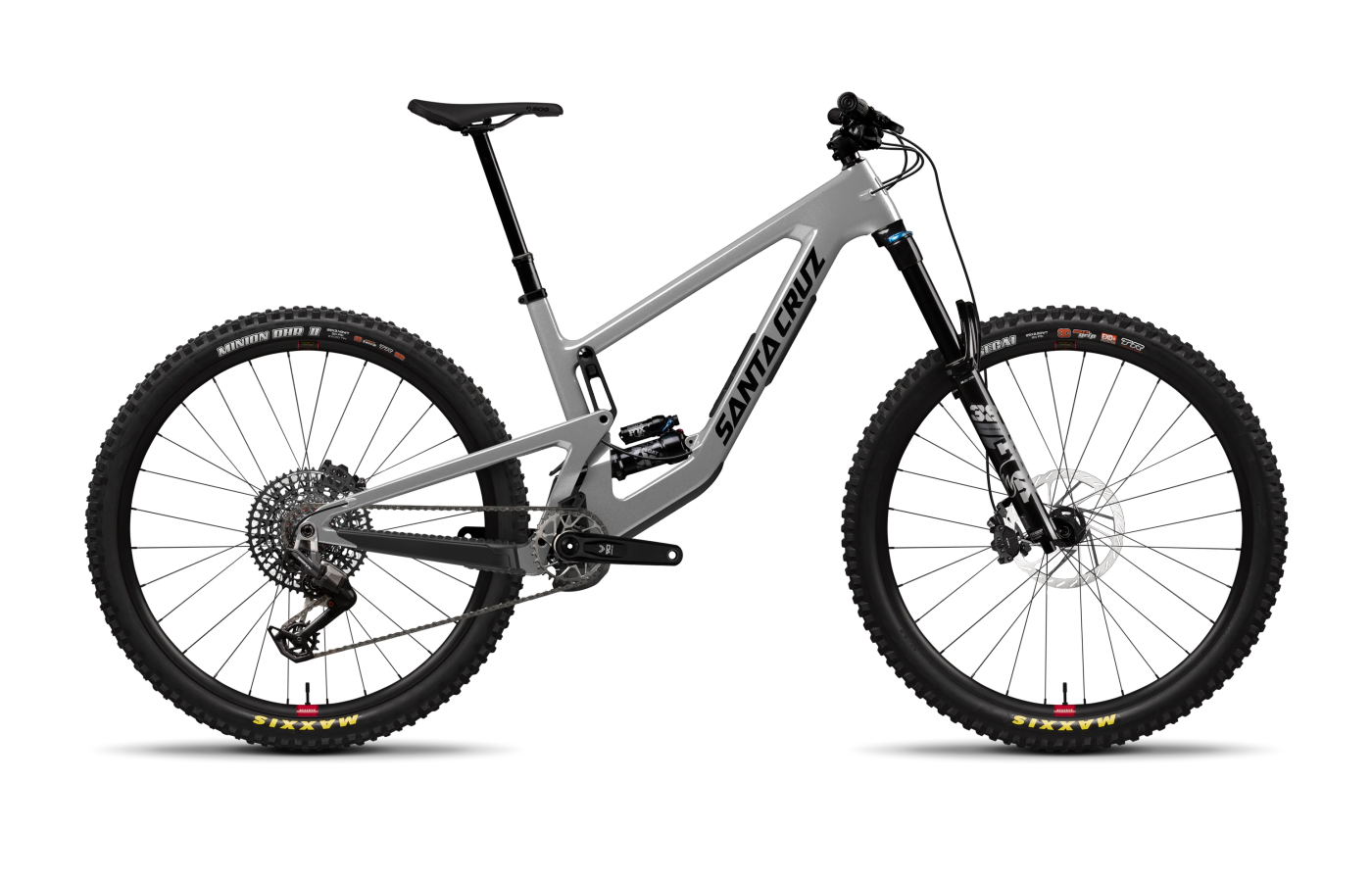
Megatower
Santa Cruz's gravity flagship — a VPP-platform 170/160 mm 29er widely cross-shopped with the Altitude. Similarly planted at speed, lighter than the Slash, with Santa Cruz's lifetime bearing warranty as a long-term value play.
Compare →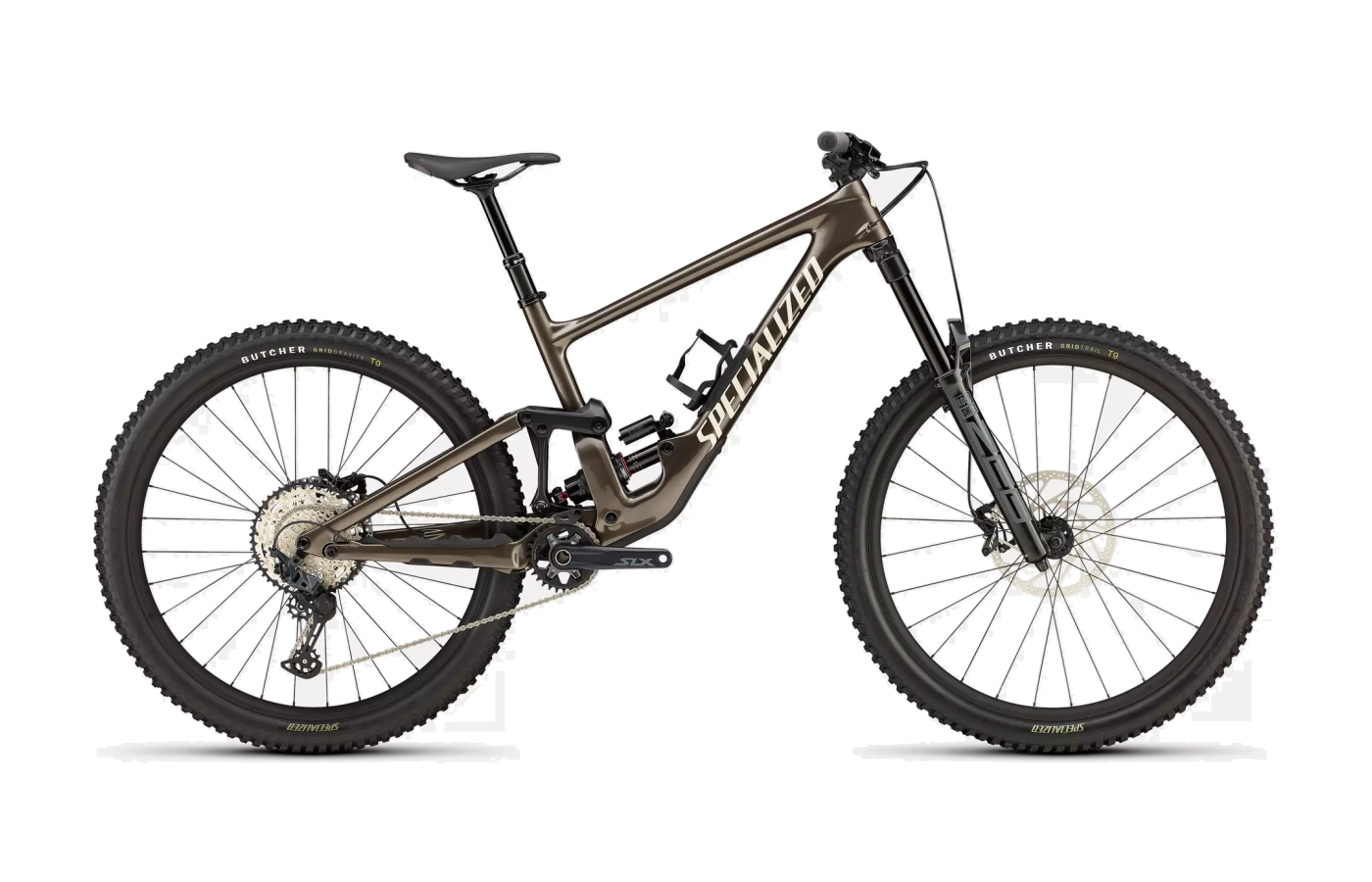
Enduro
The original 170 mm 29er bruiser. Renowned for descending poise and ability to handle rough terrain at speed — a more conventional dual-link alternative to the Slash's high-pivot if you want similar plow without idler maintenance.
Compare →Capra
YT's direct-to-consumer enduro weapon — typically 170 mm front and rear, often available mullet, and priced well below either bike here. The catch is no dealer network: best if you know your fit and can wrench at home.
Compare →