Cutthroat
vsFargo
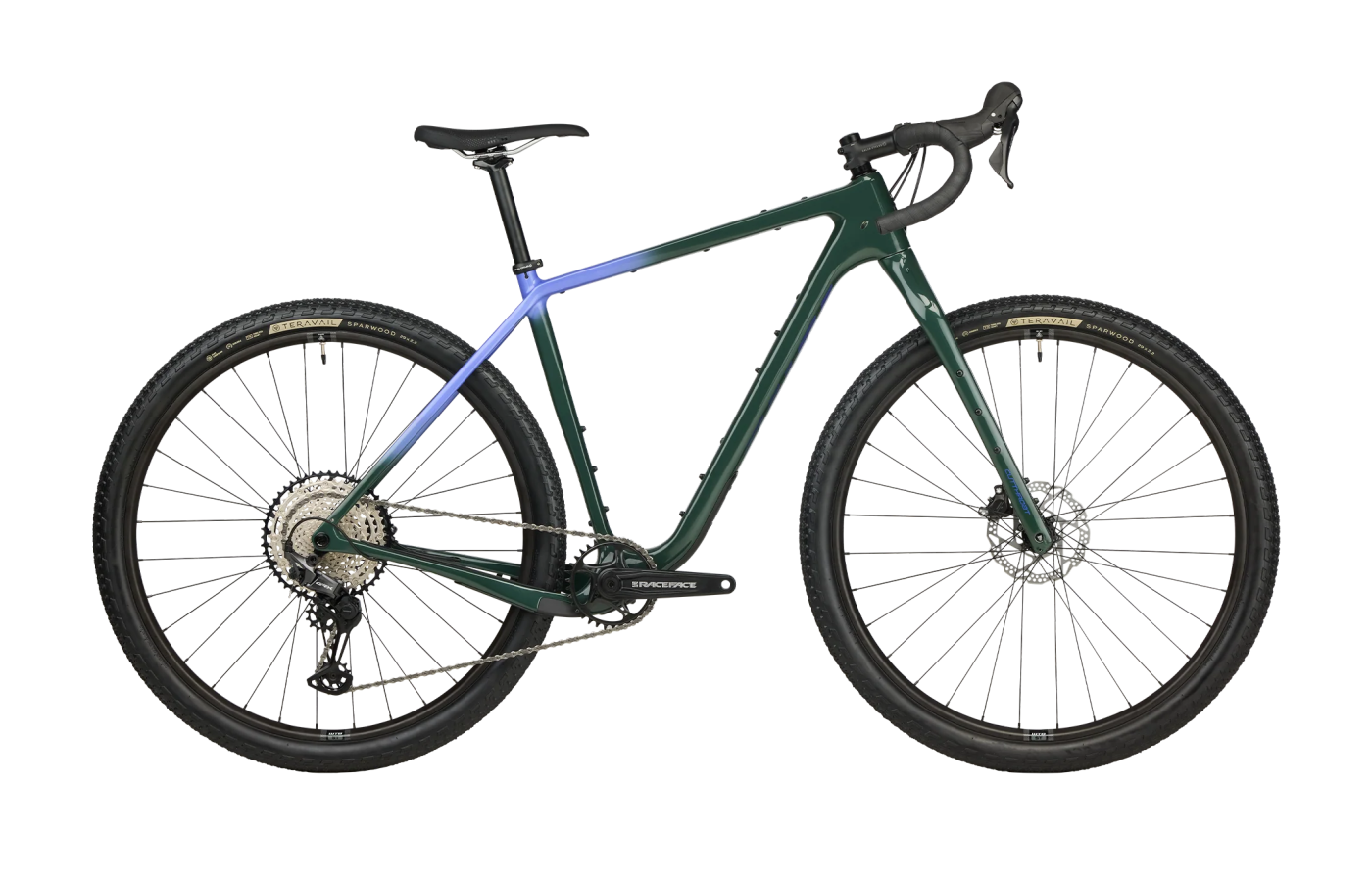
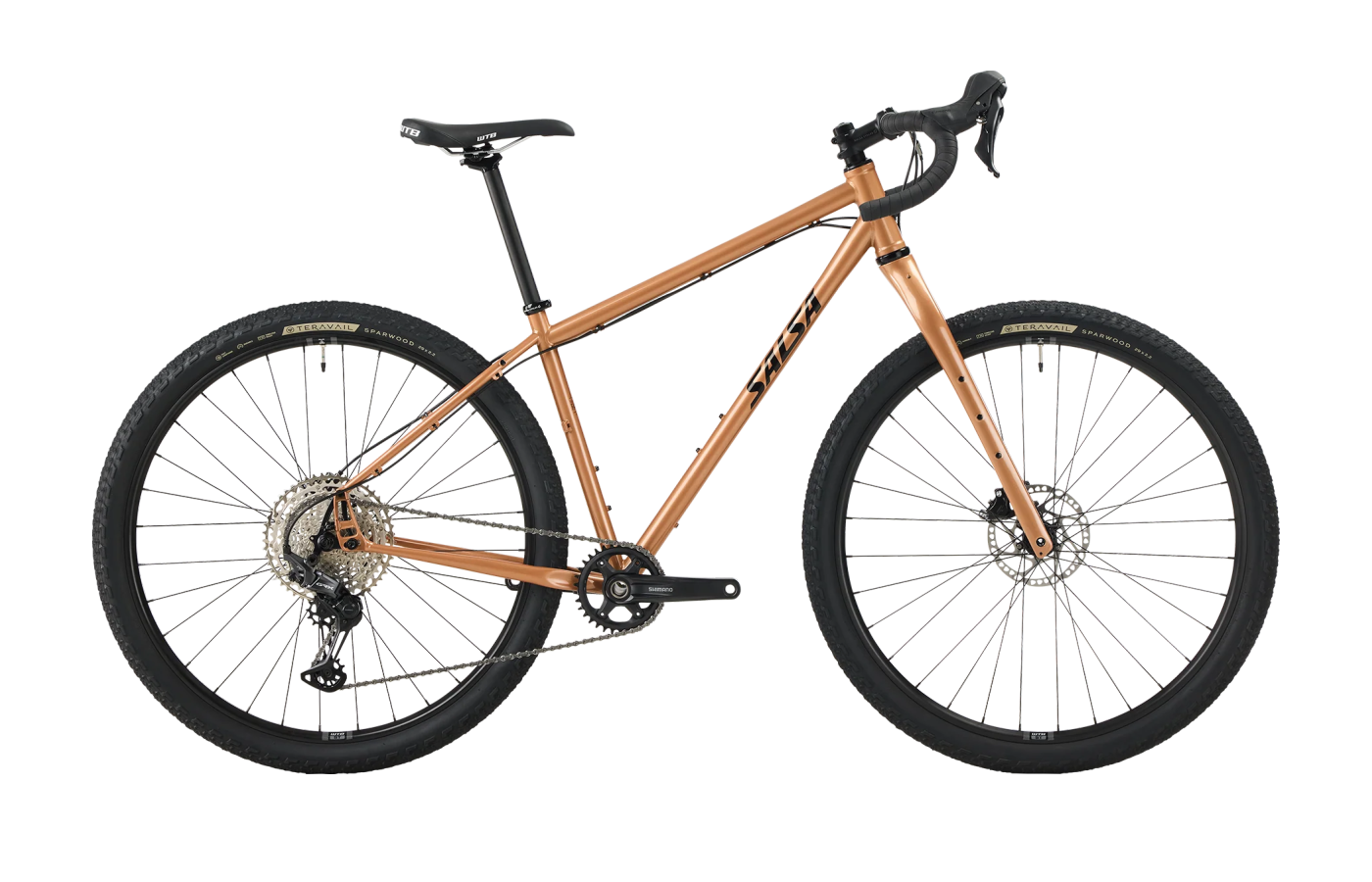
Two Tour Divide bikes, two materials.
The Cutthroat is the carbon evolution built to race the Great Divide. The Fargo is the steel original — slower, simpler, and ready for anywhere.
Cutthroat
- Lighter carbon frame with Class 5 VRS — the GX AXS build hits 23 lb 13 oz, near-XC-hardtail territory.
- More aggressive geometry — steeper 74.25-degree seat tube and longer 385 mm reach reward seated power on long days.
- Suspension-corrected for a 100 mm 29er fork — a real upgrade path if your routes turn into singletrack.
- Starts at $3,499 — there is no entry-level Cutthroat.
- Press-fit BB92 bottom bracket carries the usual creak-and-service reputation, even if Salsa's tolerances usually hold up.
Fargo
- Steel frame — compliant, weldable anywhere, and the reason long-haul tourers keep coming back to it.
- Wider tire clearance (76 mm / 3.0") versus the Cutthroat's 61 mm — true MTB rubber is on the table.
- Lower price floor — $2,599 for the Apex 1 build, $3,299 for the GRX 610 1x.
- Heavier — the GRX 610 1x lists 27.75 lb in size Medium, roughly four pounds over an equivalent Cutthroat.
- More upright, less aggressive geometry — fine for touring, slow for racing.
Editor’s analysis
Same parent, same handlebar, same 29x2.2 tires — but one is bred to win the Tour Divide and the other is bred to finish it.
Salsa designed the Cutthroat in 2015 as the carbon, race-ready evolution of the Fargo. A decade later both bikes are still in the line, sharing a 69-degree head tube angle, 445 mm chainstays, the Cowchipper flared bar, and the same Teravail Sparwood 29x2.2 tires. The frame material, the geometry numbers around it, and the price floor are where they split.
The Cutthroat is the lighter, more aggressive bike. Carbon frame with Salsa's Class 5 VRS leaf-spring seatstays, a steeper 74.25-degree seat tube angle, longer 385 mm reach, and a lower 619 mm stack at size 56. Reviewers describe it as 'the mountain biker's road bike' — stable enough to bomb chunky descents, efficient enough to hum along pavement at 37 mph. It runs from $3,499 up to $7,999 and is the bike Salsa actually points at the Tour Divide podium.
The Fargo is the durable workhorse. Triple-butted CroMoly steel, slacker 73-degree seat tube, shorter 368 mm reach, and a much taller 643 mm stack at Medium — a noticeably more upright, relaxed posture. It clears even wider tires (76 mm vs the Cutthroat's 61 mm), lives between $2,599 and $3,299, and is built around the rider who wants to repair a frame in a Mongolian truck stop, not chase an FKT.
Put another way: the Cutthroat is the bike you buy when 'long' means a 14-day race against the clock. The Fargo is the bike you buy when 'long' means six months and you don't know the route yet.
Where the builds differ.
Comparing our editor's-pick builds side-by-side. Winners highlighted row-by-row — lower price and weight, and the better-spec component, each mark a point.
Build variants & pricing
We picked both at the GRX 610 1x build — same Shimano gravel groupset, same wheels, same cockpit. The platforms diverge on frame material, weight, and ceiling.
Prices are current US MSRP. The Cutthroat scales up to a $7,999 carbon flagship with SRAM Force/X0 AXS Transmission; the Fargo tops out at this $3,299 GRX 610 build. Cross-shop only at this tier — above it, only the Cutthroat exists.
How they fit, how they steer.
Cutthroat at 56cm, Fargo at Medium. Same 69-degree head tube angle and 445 mm chainstays, but the Fargo sits 23 mm taller in stack and 17 mm shorter in reach — a far more upright cockpit. The Cutthroat's 74.25-degree seat tube also pushes the rider further forward over the cranks; the Fargo's 73-degree angle drops them back.
Which size should I buy?
Size picks based on stack, reach, and effective top tube. The two ranges overlap closely in the middle but use different conventions — numeric (52-60cm) on the Cutthroat, T-shirt (XS-XL) on the Fargo.
→These are starting points. Flexibility, riding style, and preferred position all shift the answer — if you’re between sizes, a professional fit beats a chart.
What the magazines said.
Published reviews from trusted cycling outlets. Click through for the full write-up.
Which one should you buy?
If you're racing the Tour Divide, get the Cutthroat. If you're touring it for two months with full bags, get the Fargo.
Cutthroat
If your goal involves a stopwatch — a Tour Divide attempt, an FKT, a fast Grinduro-style gravel race — the Cutthroat is the platform. The carbon frame, steeper seat angle, and longer reach all push for sustained speed, and reviewers say it 'annihilates' rolling mixed terrain once you're up to pace.
Fargo
If you want one bike for multi-month tours, off-grid expeditions, gravel commuting, and the occasional bikepacking weekend — the Fargo's steel frame, upright fit, wider tire clearance, and lower price floor all line up. It's the bike for riders who measure trips in months, not days.
Questions buyers actually ask.
Short answers to the things we get emailed about most often.
01Which is faster on long mixed-terrain rides?
The Cutthroat, clearly. Its carbon frame saves about four pounds at equivalent build (the GX AXS Cutthroat is 23 lb 13 oz at size 56; the GRX 610 Fargo is 27.75 lb at size Medium), and its steeper 74.25-degree seat tube angle and longer 385 mm reach put the rider in a more efficient seated pedaling position.
Reviewers consistently describe the Cutthroat as 'one of the most efficient bikes on test once you're up to speed' and report rolling cruise speeds in the 37-38 mph range on pavement. The Fargo gets there too — it just takes more watts to do it.
02Which is more comfortable on multi-day tours?
Both are comfortable, but in different ways. The Fargo's triple-butted CroMoly steel frame provides natural compliance and a more upright cockpit (643 mm stack vs the Cutthroat's 619 mm, 17 mm shorter reach) — the position itself is less fatiguing for hour-after-hour cruising.
The Cutthroat uses Salsa's Class 5 Vibration Reduction System — thin, outward-curving carbon seatstays plus a fork claimed to be 32% more compliant than the previous generation. Reviewers describe 'unparalleled comfort' and the ability to 'barely feel a thing no matter how aggressive the gravel gets.' Different mechanism, similar result — the Cutthroat just makes you work in a sportier position to get it.
03What's the maximum tire clearance on each?
Cutthroat: officially 29x2.4" (61 mm), with some reviewers reporting the fork can swallow up to 2.8".
Fargo: officially 76 mm (about 3.0"), so true plus-size mountain bike tires are on the table. Both are designed around 29" wheels and ship with the same Teravail Sparwood 29x2.2 tires.
04Steel vs carbon — which lasts longer?
It depends on what 'lasts' means. Steel (Fargo) is more forgiving of impacts — a deep gouge or a bag-strap rub doesn't end the frame's life — and it can be welded back together by competent fabricators almost anywhere in the world. That's why long-haul tourers keep choosing it.
Carbon (Cutthroat) is more vulnerable to crash damage in hard-to-inspect ways, but Salsa's Class 5 VRS construction has a strong reliability record in reviews, and the Cutthroat ships with abrasion-resistant plates inside the fork legs to protect against tire and bag rub. For domestic riding and racing, both will outlast the components hung on them.
05Can I run a suspension fork on either?
Cutthroat: yes — the frame is suspension-corrected for a 100 mm travel 29er fork (the carbon fork's 483 mm axle-to-crown matches a 100 mm sus fork sagged), so swapping in something like a SID or 32 SC won't wreck the geometry. This is one of the bike's headline upgrade paths for riders whose routes get rougher.
Fargo: the steel frame's geometry is also suspension-corrected, but the 2025 update moved to flat-mount brakes on both frame and fork, which complicates fitting a typical post-mount sus fork. Doable with adapters, but less clean than the Cutthroat.
06Why is there a $4,500 gap at the top of the Cutthroat range and nothing equivalent on the Fargo?
Different platforms, different ceilings. The Cutthroat scales up to a $7,999 build with SRAM Force AXS shifters, X0 Eagle AXS Transmission rear derailleur, and WTB CZR Light Carbon wheels — a true race-ready setup. The Fargo stops at $3,299 because Salsa positions it as the durable, simpler, mid-range platform; if you want carbon, electronic shifting, and ultralight wheels in the family, that's what the Cutthroat is for.
A Fargo frameset is available for $1,199 if you want to build a higher-end Fargo yourself.
07Both use a press-fit BB92 bottom bracket — is that a real problem?
It's the most common complaint about both bikes in reviews. Press-fit BB92 has a reputation for creaking and finicky service, and several reviewers flag it as the single thing they'd change.
In practice, though, real-world reports are mixed-to-positive. Bikepacking.com reported no issues across thousands of miles on both V1 and V2 Cutthroats, and most reviewers in the meta-review didn't experience creaking during their test periods. Salsa argues the standard buys them better tire clearance, shorter chainstays, and pedaling stiffness — which, on a bike designed around stuffing 2.4"+ tires into a short rear end, is a defensible trade.
08If I'm only ever going to own one of these, which?
If most of your riding is day-long gravel, mixed-terrain weekend bikepacking, or any kind of timed event — the Cutthroat. The carbon frame, more aggressive fit, and clear upgrade path make it the more capable everyday rider.
If your interest in a drop-bar 29er starts at 'multi-week self-supported tour' and works inward — the Fargo. The steel frame's repairability, wider tire clearance, and lower price are the right priorities for that mission, and you won't miss the carbon.
Similar bikes
If your priorities don’t map cleanly onto either of these, one of these adjacent bikes probably fits better.
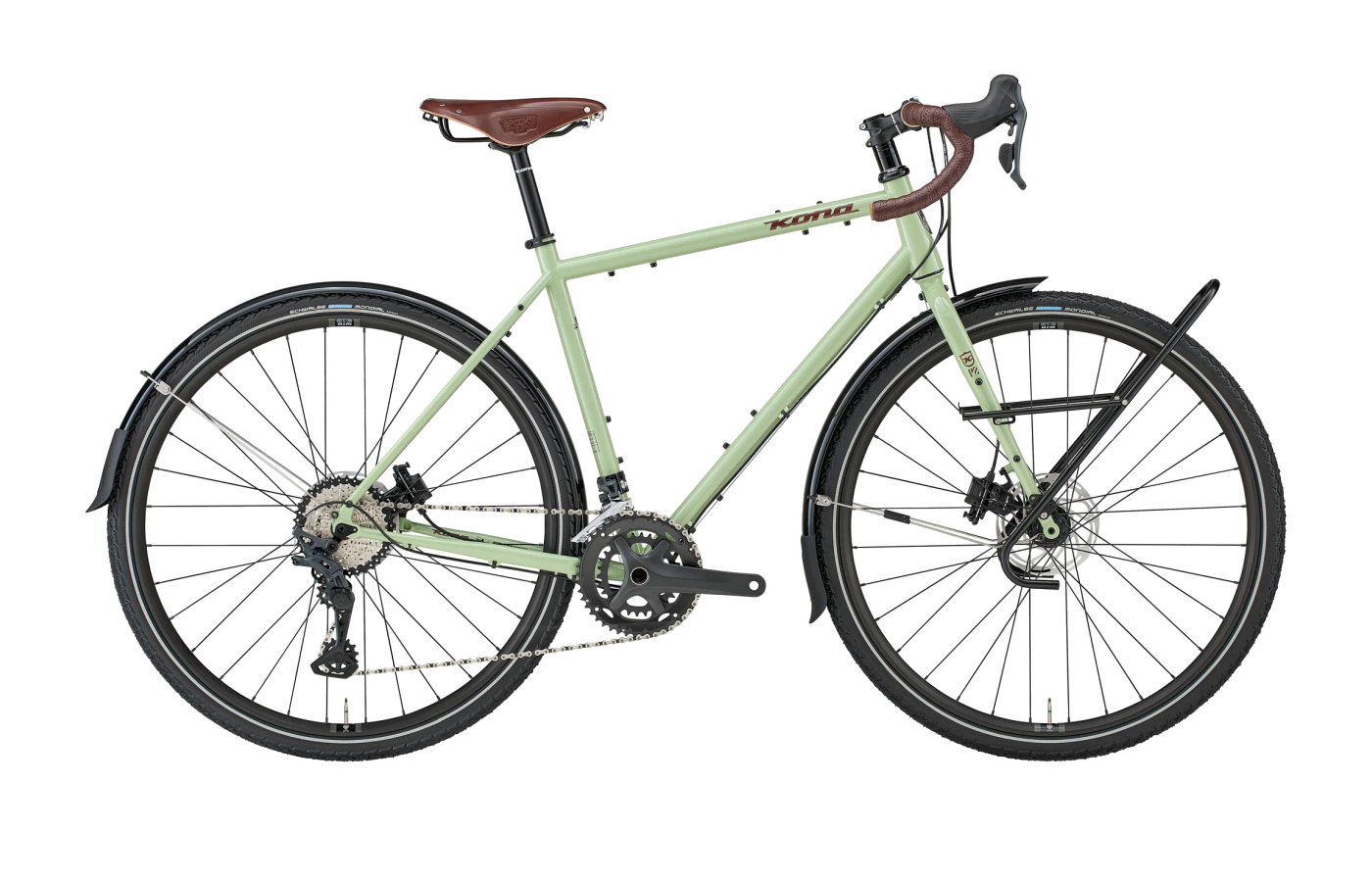
Sutra
Steel-framed drop-bar tourer with the same long-haul DNA as the Fargo, often at a friendlier price. The classic 'I want one bike for everything from commuting to a year-long tour' pick.
Compare →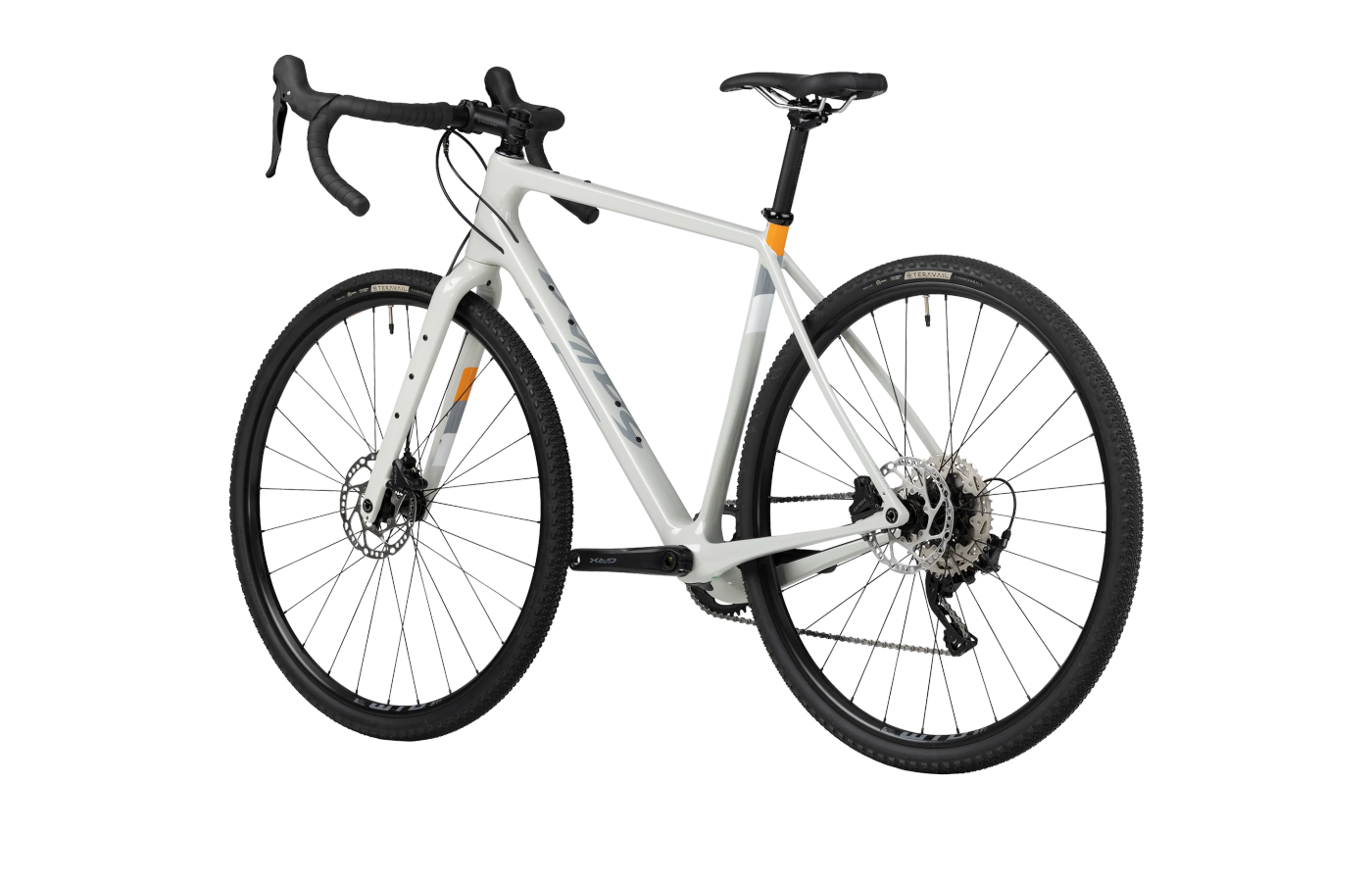
Warbird
Salsa's pure gravel race bike — carbon frame like the Cutthroat, but tuned for fast, less technical courses rather than full-bagged Tour Divide ambition. Lighter and quicker, with less mounting hardware.
Compare →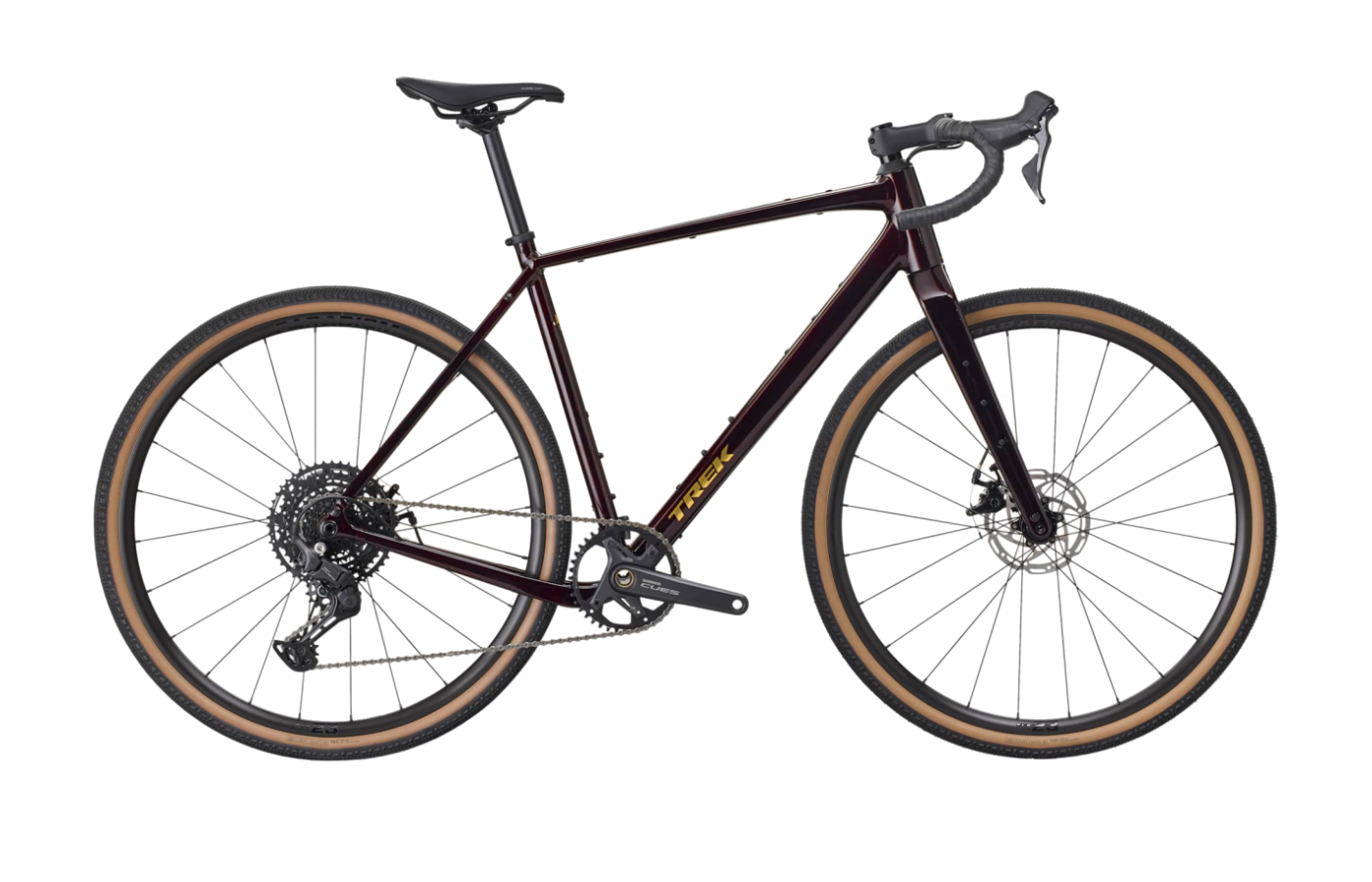
Checkpoint
Trek's all-around gravel platform in carbon and aluminum trims — more conventional gravel geometry than either Salsa, less mountain-bike-adjacent. The pick if the Cutthroat feels too extreme and the Fargo too utilitarian.
Compare →