Fargo
vsVaya
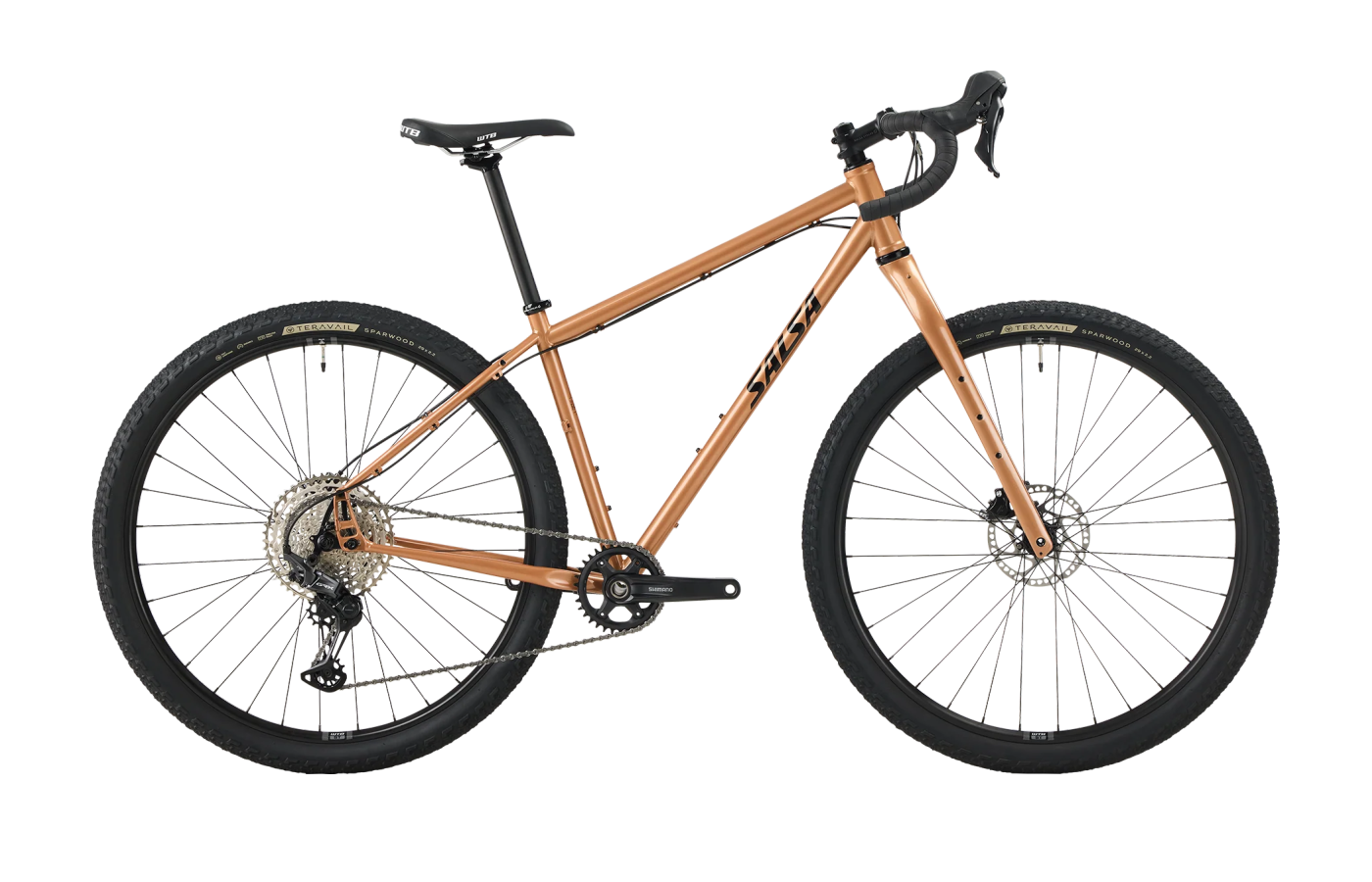
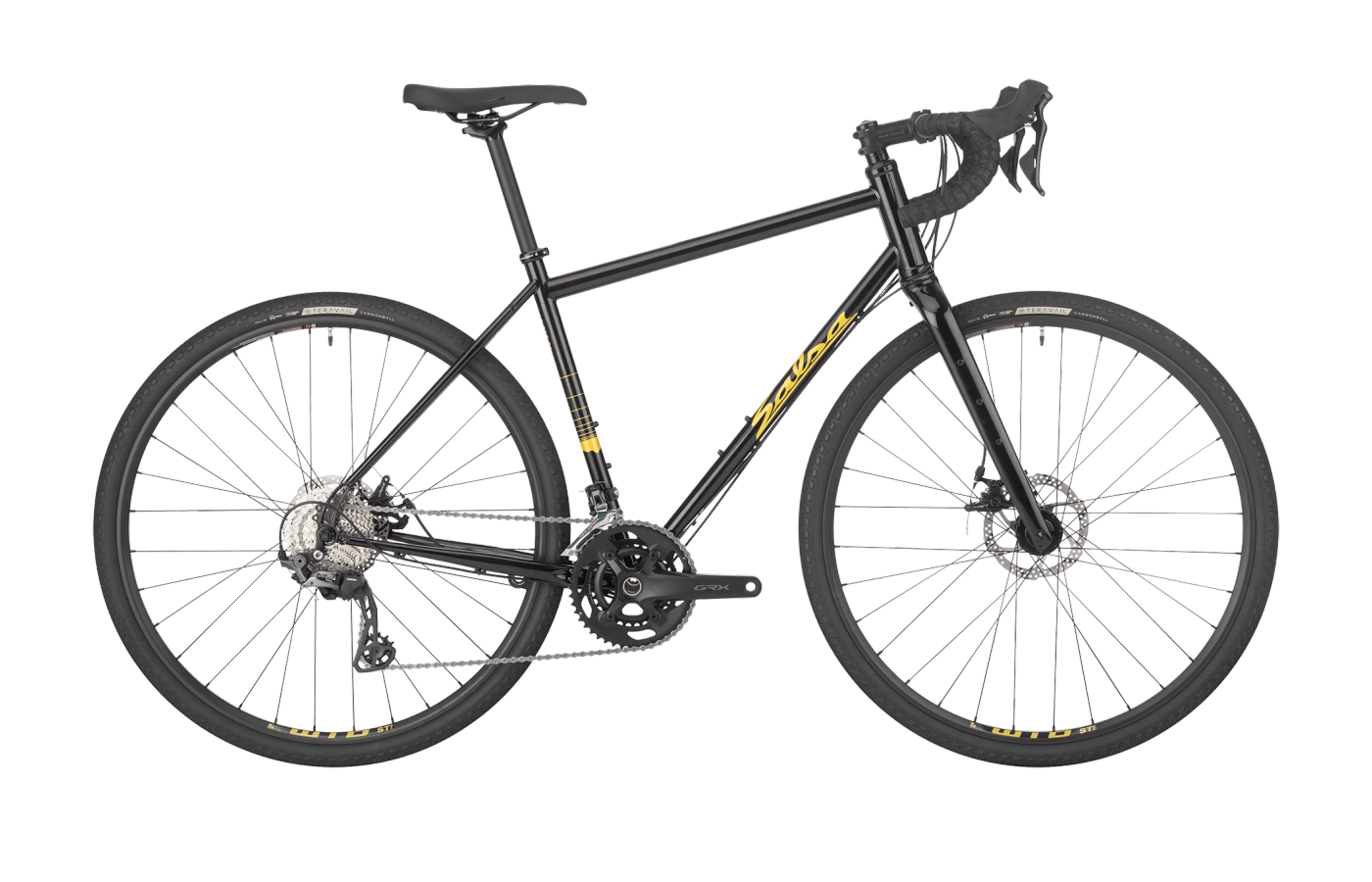
Two steel Salsas, two very different idea of adventure.
The Fargo is a drop-bar 29er built for loaded backcountry. The Vaya is a relaxed all-road tourer for gravel paths and the daily commute.
Fargo
- Massive tire clearance at 76 mm (3 inch) — true rigid-MTB territory, not just gravel.
- Wide-range 1x12 gearing — the 10-51t cassette and 34t chainring give a real bailout gear for loaded climbs.
- Hydraulic GRX brakes — less hand fatigue on long, loaded descents than the Vaya's mechanical setup.
- Heavier than expected at 27.75 lbs claimed (Medium) — the Cutthroat fork and hydraulic groupset add weight.
- Hydraulic brakes are harder to service in remote parts of the world if you're touring abroad.
Vaya
- Lighter and quicker-feeling at 25 lbs (size 55) — a relaxed road-tourer rather than a rigid MTB.
- 2x11 gearing with 105 shifters — tighter cadence steps for paved and rolling-gravel cruising.
- External cable routing — easier to inspect and replace on the road than internal.
- Tire clearance caps at 45 mm — fine for gravel, not for chunky singletrack.
- Mechanical TRP-style brakes lack the modulation of the Fargo's hydraulics on long descents.
Editor’s analysis
Same brand, same steel, same drop bars — but one is a rigid mountain bike in disguise and the other is a comfortable gravel cruiser.
Both the Salsa Fargo and Salsa Vaya are triple-butted CroMoly steel adventure bikes from the same catalog, and both ship with a Shimano GRX-class drivetrain in the build we picked for this comparison. That's where the overlap ends. The Fargo is built around 29x2.2 inch tires, a 76 mm clearance window, and geometry that's suspension-corrected for a future fork swap. The Vaya runs 700x38 mm tires, tops out at 45 mm of clearance, and has the steeper, shorter geometry of a road-touring bike.
The Salsa Fargo GRX 610 1x is the bikepacking specialist. Its 10-51t cassette paired to a 34t chainring delivers the bailout gear you actually need with 30 lbs of gear strapped on, and the new GRX RX410 hydraulic discs cut the hand fatigue that mechanical brakes inflict on long, loaded descents. At a claimed 27.75 lbs in size Medium it's no featherweight — Salsa added pounds with the Cutthroat carbon fork (alloy steerer) and the hydraulic groupset — but for the riders this bike is built for, that's the right trade.
The Salsa Vaya is the smoother, more civilized sibling. The 2x11 GRX 600 build (with Shimano 105 shifters and a 46/30T crank up front) gives tighter cadence steps for paved miles and lighter gravel, and the relaxed geometry — 71.5 degree head tube, 1053 mm wheelbase at size 57 — makes 50 mile days comfortable without feeling sluggish around town. One reviewer loaded 22 lbs of bikepacking gear onto it and reported the bike took it 'in stride.' That's the ceiling: a long weekend, not a transcontinental.
Put another way: the Salsa Fargo is what you buy if your routes have hike-a-bike sections and the nearest paved road is 60 miles away. The Salsa Vaya is what you buy if your routes start at the front door and might include a train station, a gravel rail-trail, and a brewery.
Where the builds differ.
Comparing our editor's-pick builds side-by-side. Winners highlighted row-by-row — lower price and weight, and the better-spec component, each mark a point.
Build variants & pricing
The Fargo offers two builds spanning $700; the Vaya is sold in a single GRX 600 spec.
Prices are current US MSRP. The Fargo's cheaper Apex 1 build keeps mechanical brakes for riders touring in places where a hydraulic bleed isn't easily found. Salsa also sells a Fargo frameset for around $1,199 if you'd rather build your own.
How they fit, how they steer.
Fit-picked sizes for a 173 cm rider. The Fargo (Medium) sits 15 mm taller in stack with 4 mm less reach than the Vaya (57cm), and runs a 2.5 degree slacker head tube and 30 mm longer wheelbase — a more stable, upright stance built for loaded off-road tracking.
Which size should I buy?
Size recommendations from stack, reach, and effective top tube. The Fargo runs from XS to XL; the Vaya offers six sizes from 49.5 cm to 59.5 cm.
→These are starting points. Flexibility, riding style, and preferred position all shift the answer — if you’re between sizes, a professional fit beats a chart.
What the magazines said.
Published reviews from trusted cycling outlets. Click through for the full write-up.
Which one should you buy?
If your routes leave the pavement for days at a time, get the Fargo. If they start and end at home with some gravel in between, get the Vaya.
Fargo
If you're heading deep into the backcountry with gear strapped to every braze-on — fire roads, doubletrack, the Great Divide — the Fargo's 76 mm tire clearance, suspension-corrected geometry, and 10-51t bailout gear are built for exactly that. It's heavier than the spec sheet led some reviewers to expect, but the toughness is the point.
Vaya
If you want one steel bike that handles a paved commute Monday, a gravel rail-trail Saturday, and a light overnight bikepacking trip occasionally — the Vaya is the easier, lighter, more familiar tool. The relaxed geometry and 2x gearing make long road miles painless, and the 38 mm tires are plenty for most well-graded gravel.
Questions buyers actually ask.
Short answers to the things we get emailed about most often.
01Which one should I buy if I've never bikepacked before?
The Salsa Vaya, almost certainly. Its 700x38 mm tires roll faster on the paved and graded-gravel surfaces most beginners actually ride, the 2x11 gearing gives cadence steps that feel familiar coming from a road bike, and the geometry is closer to a comfort-oriented endurance bike than to a mountain bike.
The Fargo is overbuilt for someone whose first overnight is a 30-mile out-and-back on a rail-trail. Buy the Fargo when you've outgrown what the Vaya can carry, or when the routes you want to ride start including chunky doubletrack.
02How much wider are the Fargo's tires than the Vaya's?
The Fargo ships with 29x2.2 inch (about 56 mm) Teravail Sparwood tires; the Vaya ships with 700x38 mm Teravail Cannonballs. That's roughly an 18 mm — almost half an inch — gap in stock width.
Clearance-wise the Fargo can fit up to 76 mm (3 inches) and the Vaya tops out at 45 mm. So even at maximum sizing the Vaya can't get close to what the Fargo runs out of the box.
03Why is the Fargo heavier than the older Apex 1 build?
The 2025 GRX 610 1x is listed at 27.75 lbs in size Medium, vs. 24 lbs 8 oz in size Large for the previous Apex 1 build — that's nearly three pounds added on a smaller frame. Two specific changes account for most of the difference: the new Cutthroat carbon fork has an alloy steerer (the older Firestarter was full carbon), and hydraulic brakes are heavier than mechanical ones.
For a bikepacking rig the trade is reasonable. The hydraulic stoppers cut hand fatigue on long descents, and the alloy steerer is more abuse-tolerant than full carbon.
04Which one is more comfortable on long road miles?
The Vaya, by design. Its 71.5 degree head tube and shorter 1053 mm wheelbase (size 57) deliver a more familiar road-bike feel, and one reviewer confirmed it stayed comfortable across a 50-mile ride. The 2x11 GRX 600 / 105 drivetrain also gives the tighter cadence steps that road riders are used to.
The Fargo is comfortable too — steel frames typically are — but its slacker 69 degree head tube and 1083 mm wheelbase are tuned for stability on rough ground, not snappy paved riding.
05Can I tour internationally on either of these?
Both work, but the Vaya is the more conservative choice for true around-the-world touring. Its TRP-style mechanical brakes can be field-serviced with a spare cable, the external cable routing makes inspection easy, and the 700c wheel size is widely available worldwide.
The Fargo is more capable but its hydraulic brakes are harder to bleed in places without modern bike shops — a concern even the Fargo's own long-time reviewers have flagged. If your tour is in North America or Europe, that's a non-issue. For Central Asia or remote Africa, mechanical is still the safer call — and the older Fargo Apex 1 build keeps mechanical brakes if you want the Fargo's tire clearance with old-school stoppers.
06Do they share any frame features?
Both use triple-butted CroMoly steel frames, both have full braze-on packages for racks and bottle cages, and both ship with Salsa's house-brand cockpit (Guide stem, Cowchipper or Cowbell bar). Beyond that they're different bikes — different wheel sizes, different tire clearance, different head tube angles, different chainstay lengths, and the Fargo is suspension-corrected while the Vaya is not.
07Is the Vaya fast enough for group road rides?
It depends on the group. The Vaya is not a race bike — the 25 lb weight, 38 mm tires, and relaxed geometry put it well behind a dedicated road bike on a fast group ride. But the Shimano 105 shifting is smooth, the 46/30T crank gives a sensible top gear, and a fit rider can hold a casual social pace without falling off the back.
For anything competitive, you want a different bike. For a Sunday coffee ride that mixes pavement and gravel, the Vaya is plenty quick.
08Which is the better long-term investment?
Both are steel frames designed to last decades — Salsa Fargo owners regularly report 5 to 10+ years of use across multiple component generations. The frame is the durable part; drivetrains and wheels get swapped along the way.
The Fargo frameset is sold separately for around $1,199 if you want maximum upgrade flexibility — start with the Apex 1 components and migrate to GRX or even XT mountain bike groups over time. The Vaya is sold complete-bike only, but its 2x road-style spec means parts are easy to find at any shop.
Similar bikes
If your priorities don’t map cleanly onto either of these, one of these adjacent bikes probably fits better.

Cutthroat
The carbon Fargo. Salsa's Cutthroat shares the same Cutthroat Deluxe fork but trades the steel frame for carbon — lighter, faster, the choice for ultra-endurance bikepacking races where every gram on a 2,700-mile route adds up.
Compare →
Journeyer
Salsa's budget gravel platform. The Journeyer covers most of what the Vaya does for less money, with multiple tire-size options (700c or 650b) — the move if you like the Vaya's mission but want to save a few hundred dollars.
Compare →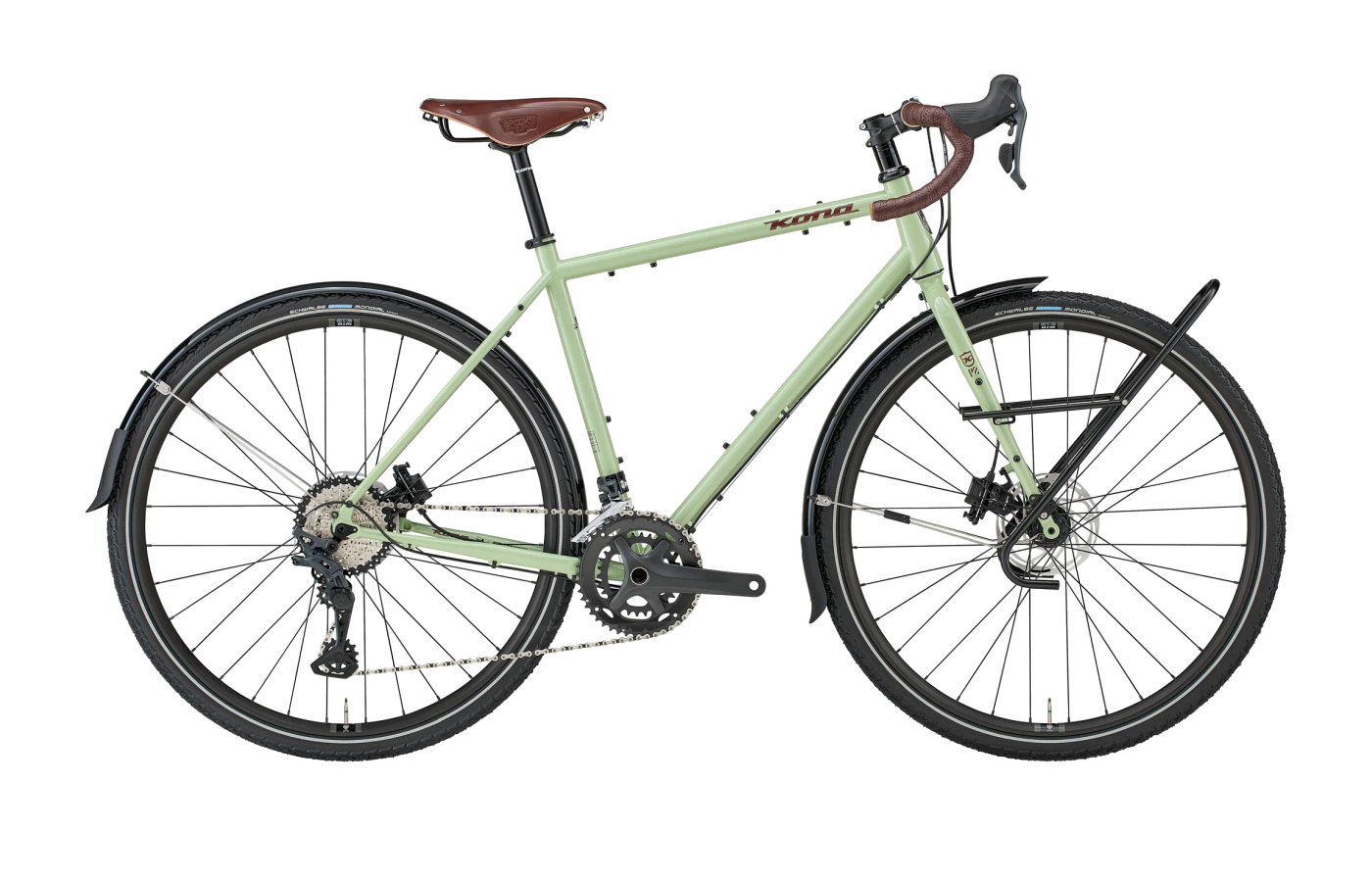
Sutra
Kona's classic steel tourer. The Sutra is the most direct cross-brand answer to the Fargo's loaded-touring brief — comparable braze-on package, similar steel-frame durability, traditional touring aesthetic and parts spec.
Compare →