Vaya
vsWarbird
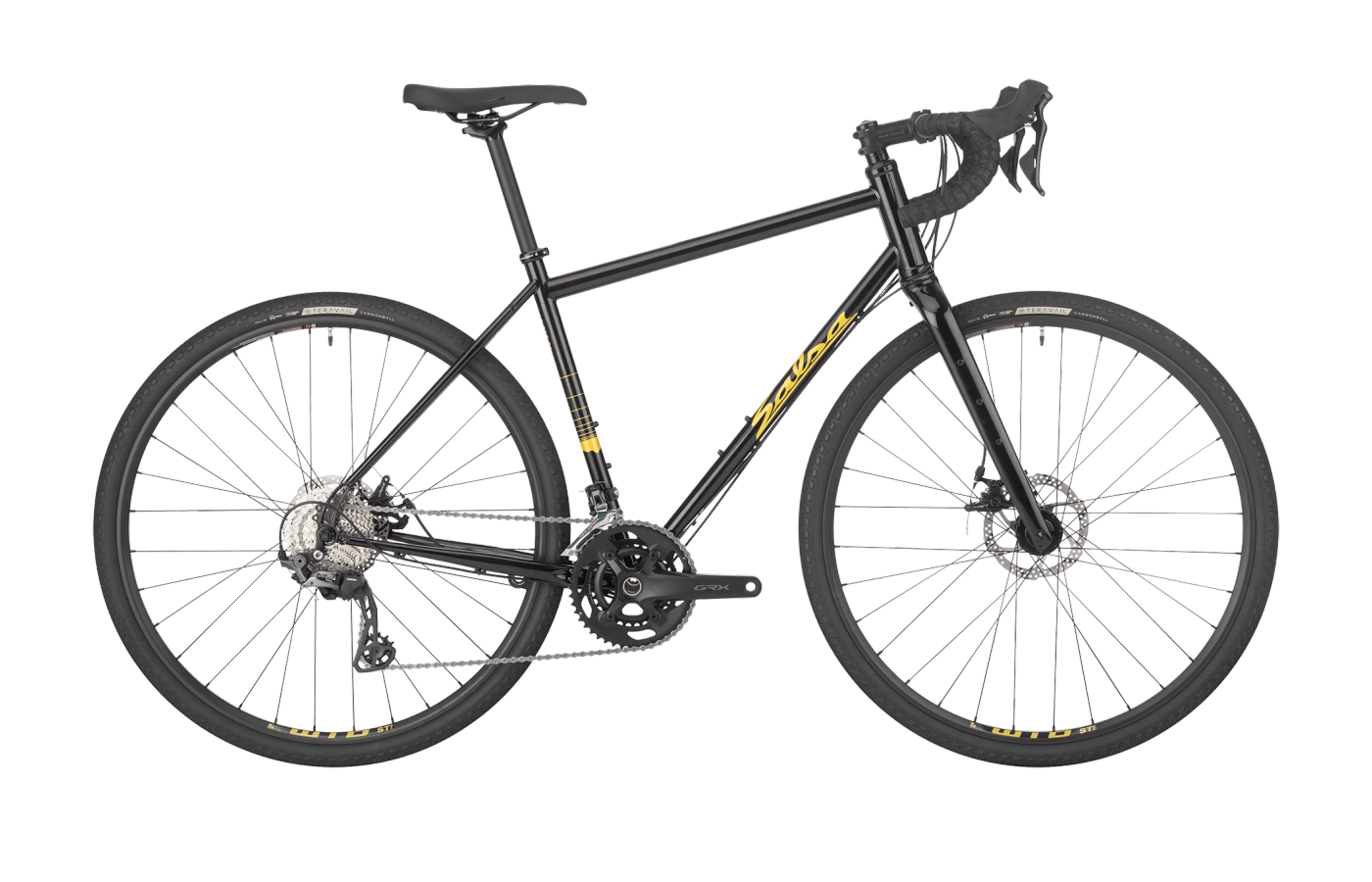
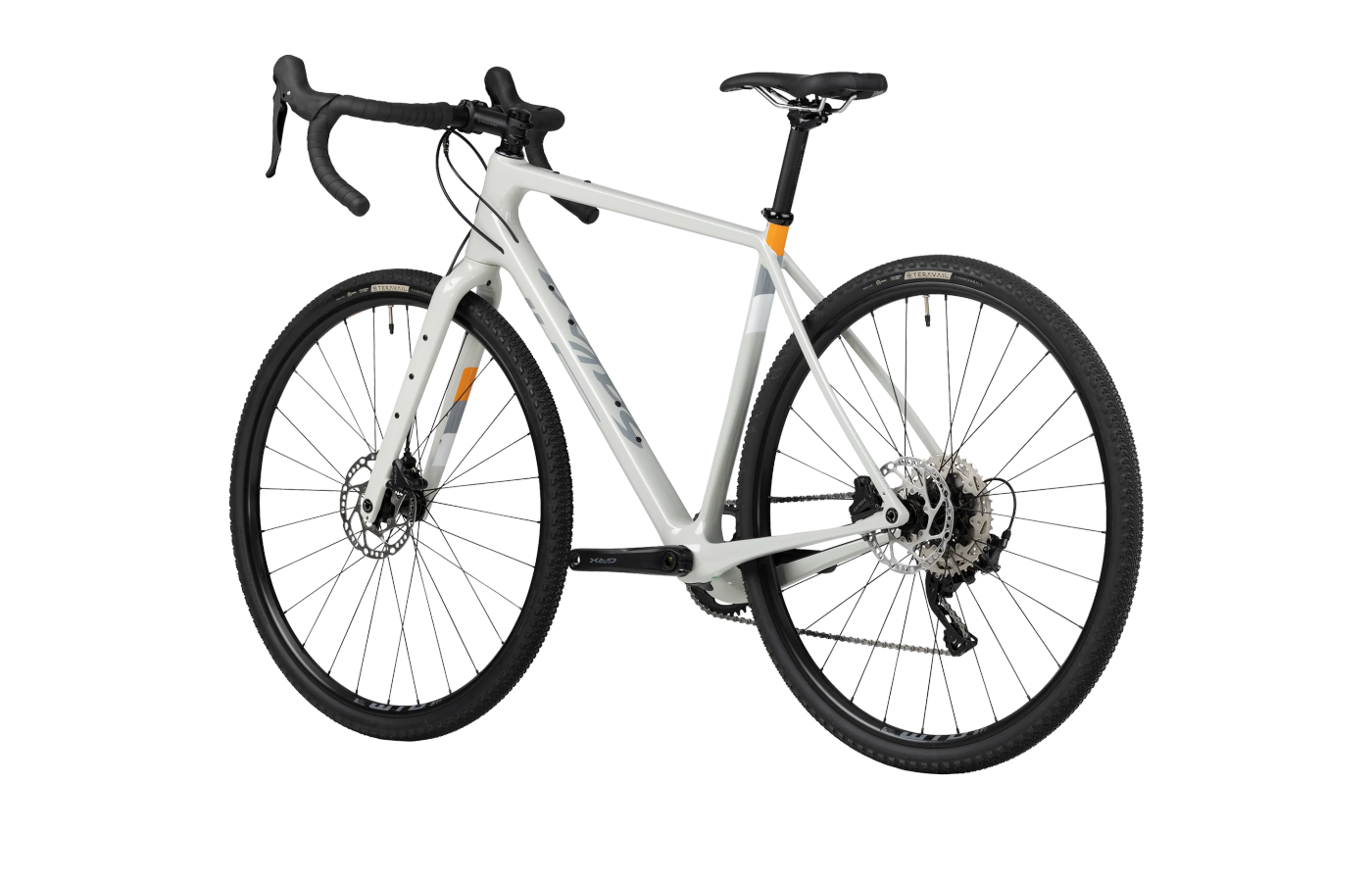
Same brand, opposite missions.
The Vaya is a steel touring-leaning gravel bike for comfort and loaded miles. The Warbird is a carbon race bike built to win Unbound.
Vaya
- Steel ride compliance — riders consistently describe the triple-butted CroMoly as "smooth and buttery" on chip-seal and broken pavement.
- Stable under load — the 450 mm chainstays and relaxed geometry handled a 22 lb bikepacking setup "in stride."
- One sensible spec — GRX 600 / 105 mix with a 48/32T sub-compact at $2,749, no upsell ladder to climb.
- Mechanical TRP Spyre disc brakes — solid but no hydraulic modulation.
- Heavier (25 lb in the 55 cm) and not a bike for snappy accelerations or race pace.
Warbird
- Genuine race weight — top builds drop to ~19 lb, and reviewers specifically called out climbing fatigue as "noticeably less" vs. heavier gravel bikes.
- VRS rear compliance — the bowed seat stays and flat chainstays measurably soften long gravel days without bleeding power.
- Wide build range — seven options from GRX 600 1x at $2,799 to Force AXS Wide at $6,999, plus a $2,199 frameset for custom builds.
- Top builds draw consistent value criticism — reviewers point out cheaper hubs and in-house cockpits at $6k+.
- Rigid carbon and a "languid" steering feel mean it's slower than a true MTB on technical singletrack.
Editor’s analysis
This is one brand serving two riders — the patient adventurer, and the racer chasing the next checkpoint.
Both bikes wear Salsa decals and clear 45 mm tires, but that's where the family resemblance stops. The Salsa Vaya is triple-butted CroMoly steel with relaxed touring geometry, sold in a single GRX 600 build for $2,749. The Salsa Warbird is high-modulus carbon with race-bred geometry and Salsa's Class 5 Vibration Reduction System, sold across seven builds from $2,799 up to $6,999. They share a brand, a tire-clearance number, and almost nothing else.
The Vaya is built around the steel ride and a long, settled wheelbase. Reviewers describe it as "smooth and buttery" — the frame eats road buzz, the 71.5-degree head angle and 450 mm chainstays keep it planted with a 22-pound bikepacking load, and the 48/32T sub-compact paired with an 11-speed cassette gives you bailout gears for steep ascents under weight. It is not quick off the line, and Salsa doesn't pretend it is.
The Warbird picks the other lane. Salsa's "Gravel Race Geometry" gives it a slacker 70.75-degree head angle, 20 mm shorter chainstays (430 mm), and a longer reach — the 56 cm hits 381 mm reach versus the Vaya 57's 372 mm. The VRS rear triangle flexes vertically to soften gravel chatter without bleeding power. Top builds break 19 lb. Reviewers consistently call it "lively and quick" on climbs and "fast, consistent and smooth" on the road.
Put simply: if your rides end at a campsite, the Salsa Vaya is the bike. If they end at a finish line, the Salsa Warbird is the bike. Salsa makes both because the same rider almost never wants both.
Where the builds differ.
Comparing our editor's-pick builds side-by-side. Winners highlighted row-by-row — lower price and weight, and the better-spec component, each mark a point.
Build variants & pricing
The Vaya is one-and-done at $2,749. The Warbird scales from $2,799 to $6,999 across seven builds.
Salsa offers no overlap at the upper end — the Vaya stops where the Warbird ladder begins. We've matched the editor's-pick column to Shimano GRX 600 on both sides for a fair comparison; if you want the carbon Warbird with electronic shifting or hydraulic SRAM, expect to spend $4k–$7k. Frame-only Warbird is $2,199 if you'd rather build it up to spec.
How they fit, how they steer.
Vaya 57 vs. Warbird 56 — fit-picked for a 5'8" rider on each. The Vaya sits 43 mm taller (628 mm stack vs. 585 mm) with a 9 mm shorter reach. Add 20 mm more chainstay (450 vs. 430) and a 0.75-degree steeper head angle on the Vaya — the Warbird trades touring stability for race-day quickness.
Which size should I buy?
Recommendations are based on stack, reach, and effective top tube — both ranges cover the same heights, but the Vaya's sizing is in centimeters while the Warbird uses round-number conventions.
→These are starting points. Flexibility, riding style, and preferred position all shift the answer — if you’re between sizes, a professional fit beats a chart.
What the magazines said.
Published reviews from trusted cycling outlets. Click through for the full write-up.
Which one should you buy?
If most rides involve loaded miles and rough surfaces, get the Vaya. If you're chasing finish lines on race-pace gravel, get the Warbird.
Vaya
If your rides end at a campsite or a coffee shop and you'd rather have a bike that absorbs everything than one that snaps off the line, the Vaya is built for you. The steel frame, relaxed geometry, and 48/32T gearing make it a steady partner for commutes, light touring, and gravel days that aren't about the clock.
Warbird
If you line up at gravel events or just like riding hard, the Warbird's carbon frame, race geometry, and VRS rear end will keep you fast and reasonably fresh over long days. Pick the build to fit your budget — the frame is the same across the line, and that frame is the right one for going fast on dirt.
Questions buyers actually ask.
Short answers to the things we get emailed about most often.
01Why is the editor's-pick comparison Warbird C GRX 600 1x and not a higher build?
The Salsa Vaya only ships in one build — Shimano GRX 600 — at $2,749. To compare apples to apples in the spec table, we picked the Warbird build at the same drivetrain tier: the C GRX 600 1x at $2,799.
If you're cross-shopping the carbon Warbird against other gravel race bikes, the upper builds (GRX 820, Rival AXS, Force AXS) are the more typical targets — but they're not what the Vaya competes with.
02Which is faster on gravel?
The Salsa Warbird, by a wide margin. The carbon frame is several pounds lighter (top builds hit ~19 lb vs. the Vaya's 25 lb in 55 cm), the geometry is racier, and the VRS rear absorbs chatter without slowing the bike down. Reviewers consistently call it "lively and quick" and one Cycling Weekly tester clocked himself "6 minutes faster to work" on the Warbird than his usual setup.
The Vaya is described as "not the most responsive bike out there" but "quick enough" — that gap is real and intentional.
03Which is more comfortable for long days?
Both are comfortable, but in different ways. The Vaya's triple-butted CroMoly steel and relaxed geometry deliver a passive smoothness — riders consistently describe it as "smooth and buttery," and one reported finishing a 50-mile ride without discomfort.
The Warbird counters with the Class 5 VRS rear triangle and a longer carbon seatpost, which Cycletraveloverload describes as "having your own personal suspension system." On a long, fast ride, the Warbird is arguably more comfortable because the frame moves where you need it to. On a slow, rough ride with a load, the Vaya's steel and longer chainstays win on stability.
04What's the maximum tire clearance on each?
Both clear 45 mm tires, per Salsa's official spec. Stock tire choice differs: the Vaya GRX 600 ships with 38 mm Teravail Cannonballs, the Warbird builds ship with 42 mm Teravail Cannonballs.
The Warbird is also designed to take 650b x 2.0–2.1" rubber if you want a plusher off-road setup — the Vaya stays in 700c only.
05Can I bikepack on either?
Yes — both have bikepacking pedigree, but they reward different trips.
The Vaya is the natural touring bike: a steel frame, relaxed geometry, 450 mm chainstays for stability under panniers or large frame bags, and a 48/32T sub-compact that gives you a bailout gear under load. One reviewer ran 22 lb of gear on a multi-day trip and reported the bike "took it in stride."
The Warbird is built for fast, light bikepacking — three bottle mounts on larger frames, top tube and fork mounts, internal routing for dropper posts. It's a better choice for race-style ultra events than for loaded touring.
06Which has better brakes?
The Warbird, on every build. Even the entry-level Warbird C GRX 600 1x ships with hydraulic disc brakes; every other Warbird build uses GRX or SRAM hydraulics.
The Vaya GRX 600 ships with TRP Spyre-C mechanical disc brakes. They work, but you don't get the modulation or one-finger power of hydraulics. If hydraulic brakes are a non-negotiable for you and you want steel, the Vaya isn't the bike.
07Is the Warbird's higher price justified?
Reviewers are split — and it depends on which build.
Most agree the frameset itself is excellent value: $2,199 for a high-modulus carbon frame with VRS, dropper-compatible internal routing, three bottle mounts, and full bikepacking braze-ons. Cycling Weekly's Josh Ross called it "very competitive" against the Trek Checkpoint and Ventum GS1 framesets.
Complete builds at the top end draw real criticism. At $6,999, the C Force AXS Wide includes a lower-end hub and an in-house cockpit — Cycling Weekly explicitly recommended buying the frameset and building it up. If you're looking at a $6k+ Warbird, do the math against a Cervélo Áspero or Specialized Crux at the same price.
08Which holds its value better?
Neither has a strong used-market signal yet — both are niche enough that resale data is thin. Steel touring bikes like the Vaya tend to hold value well in absolute terms (the platform doesn't go obsolete), while carbon race bikes like the Warbird depreciate faster as new generations arrive.
That said, the Warbird's design hasn't changed since 2019 — one reviewer called it "an absolute dinosaur," but it also means a 2020-vintage Warbird isn't visibly outdated next to a current one. Both are reasonable used buys if you find them.
Similar bikes
If your priorities don’t map cleanly onto either of these, one of these adjacent bikes probably fits better.
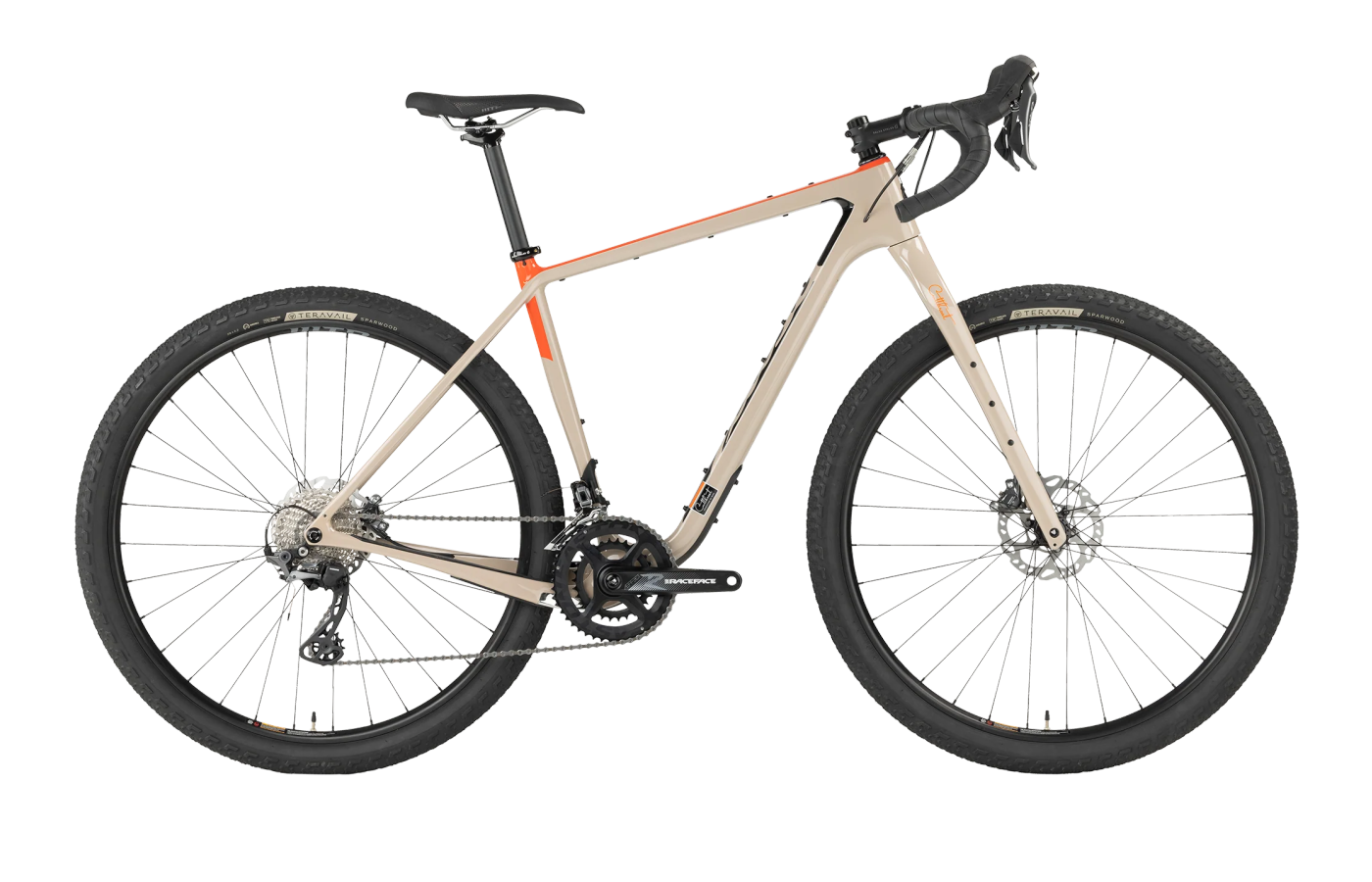
Cutthroat
If the Warbird is too roadie and the Vaya too mellow, the Salsa Cutthroat goes the other direction — a drop-bar 29er built for the Tour Divide, with massive tire clearance and genuine off-road geometry.
Compare →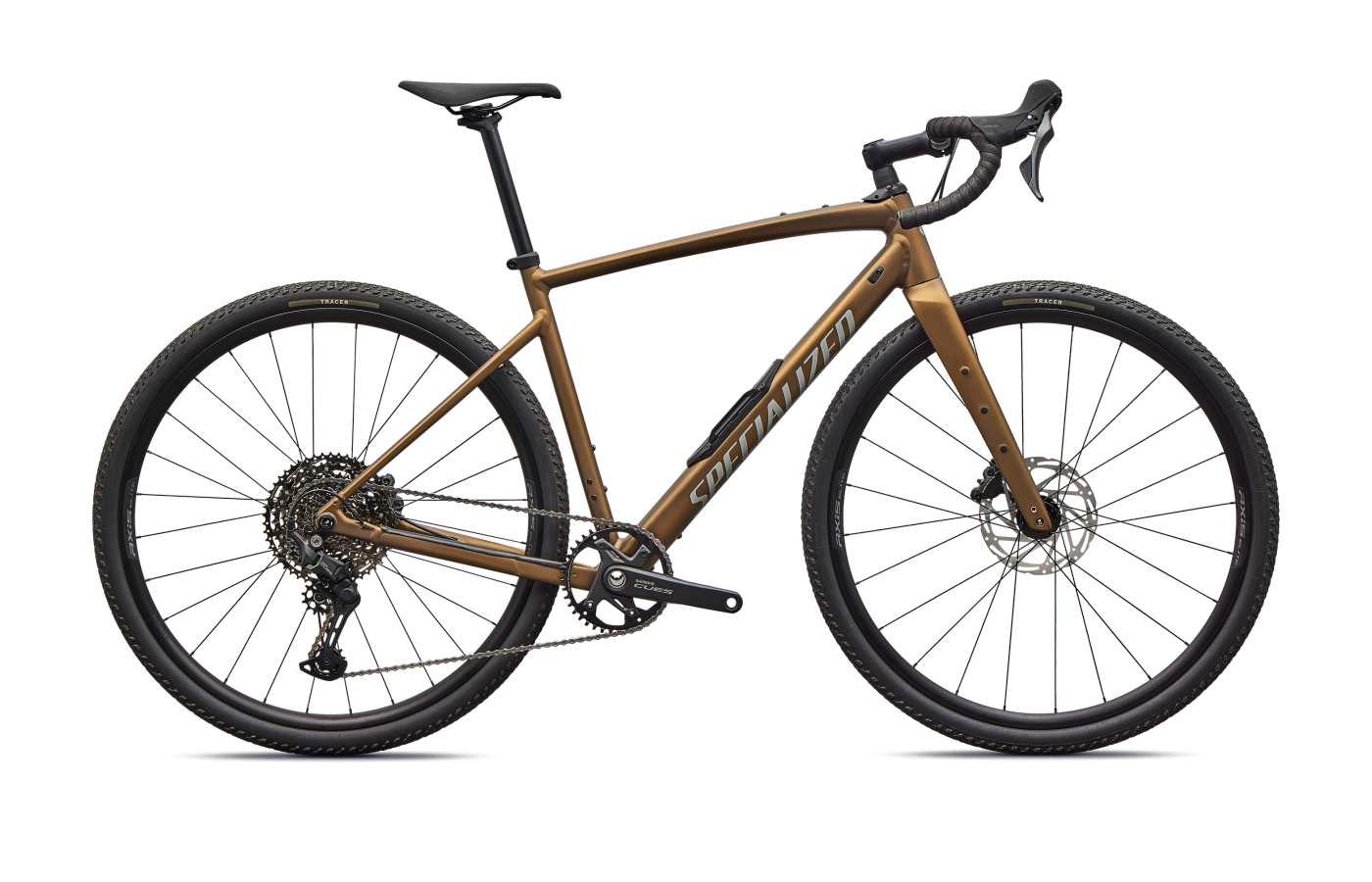
Diverge
The most direct cross-shop for the Warbird. The Specialized Diverge plays in the same carbon race-gravel bracket and adds Future Shock front-end compliance — a real differentiator if you do most of your riding on rough surfaces.
Compare →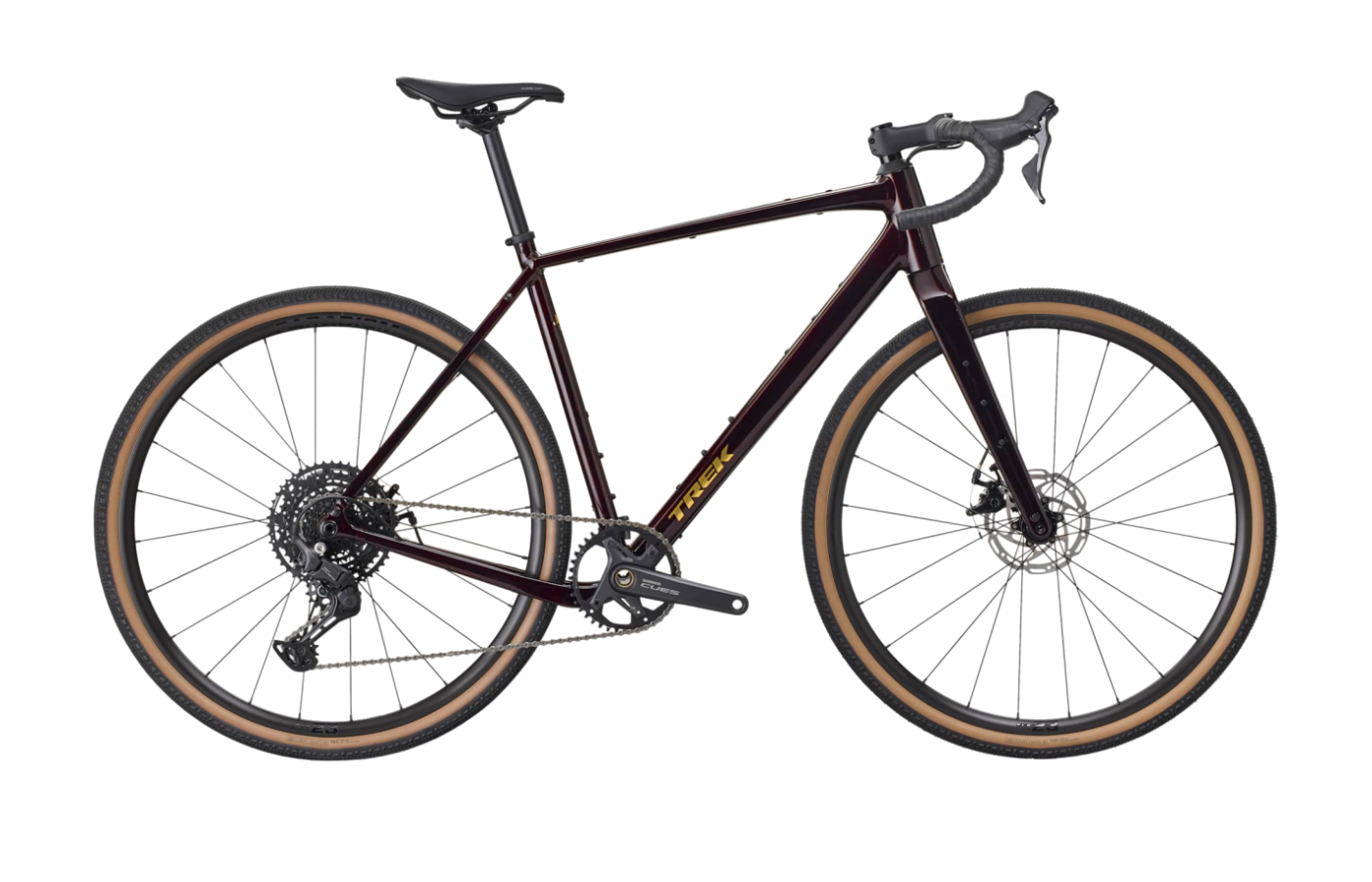
Checkpoint
Trek's answer to the Warbird, with the same race-gravel mission but added downtube storage and IsoSpeed compliance at the top tier. Often spec-richer than the Warbird at the same price — worth a side-by-side if you're at $5k+.
Compare →