Warbird
vsCrux
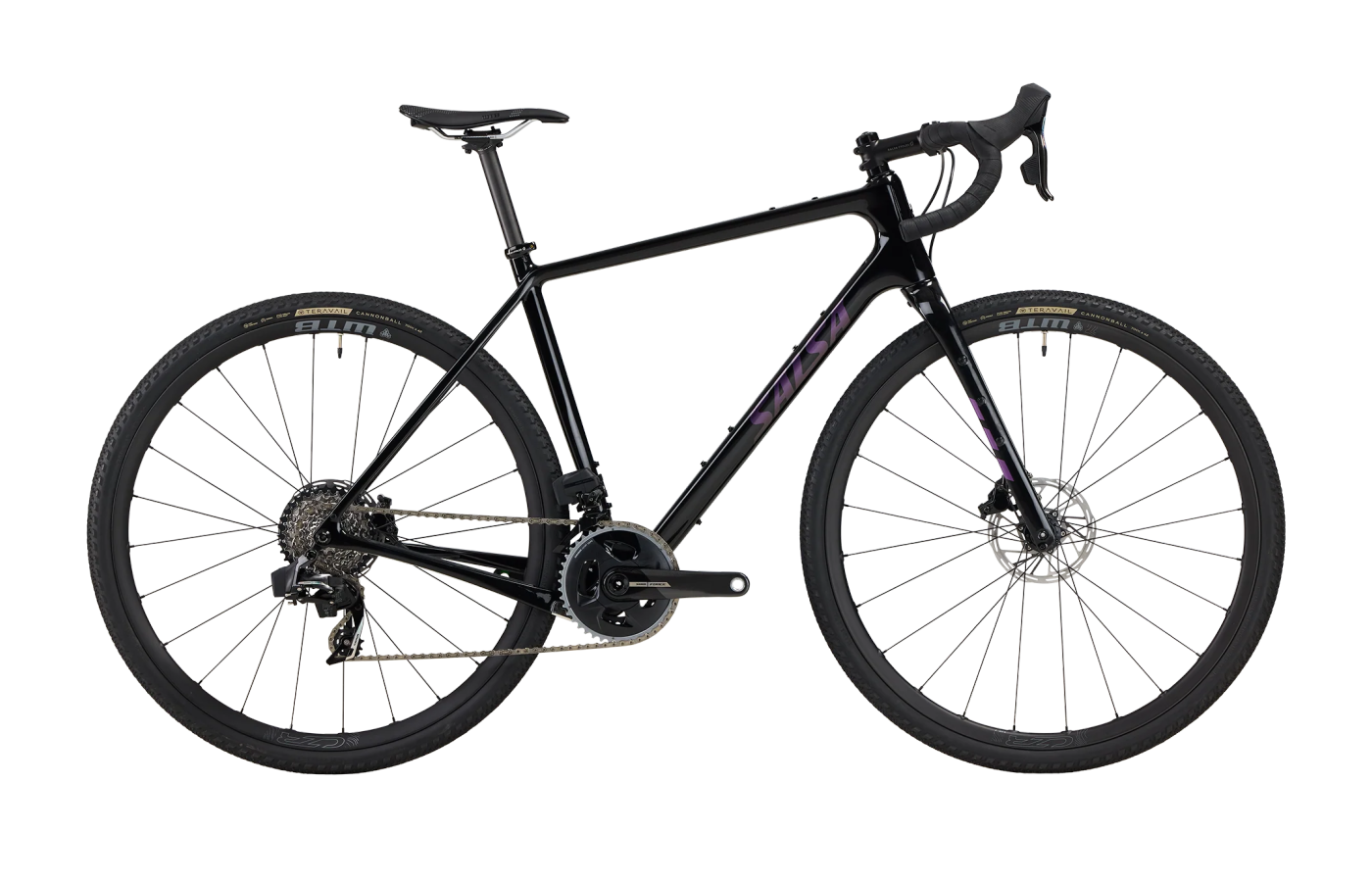
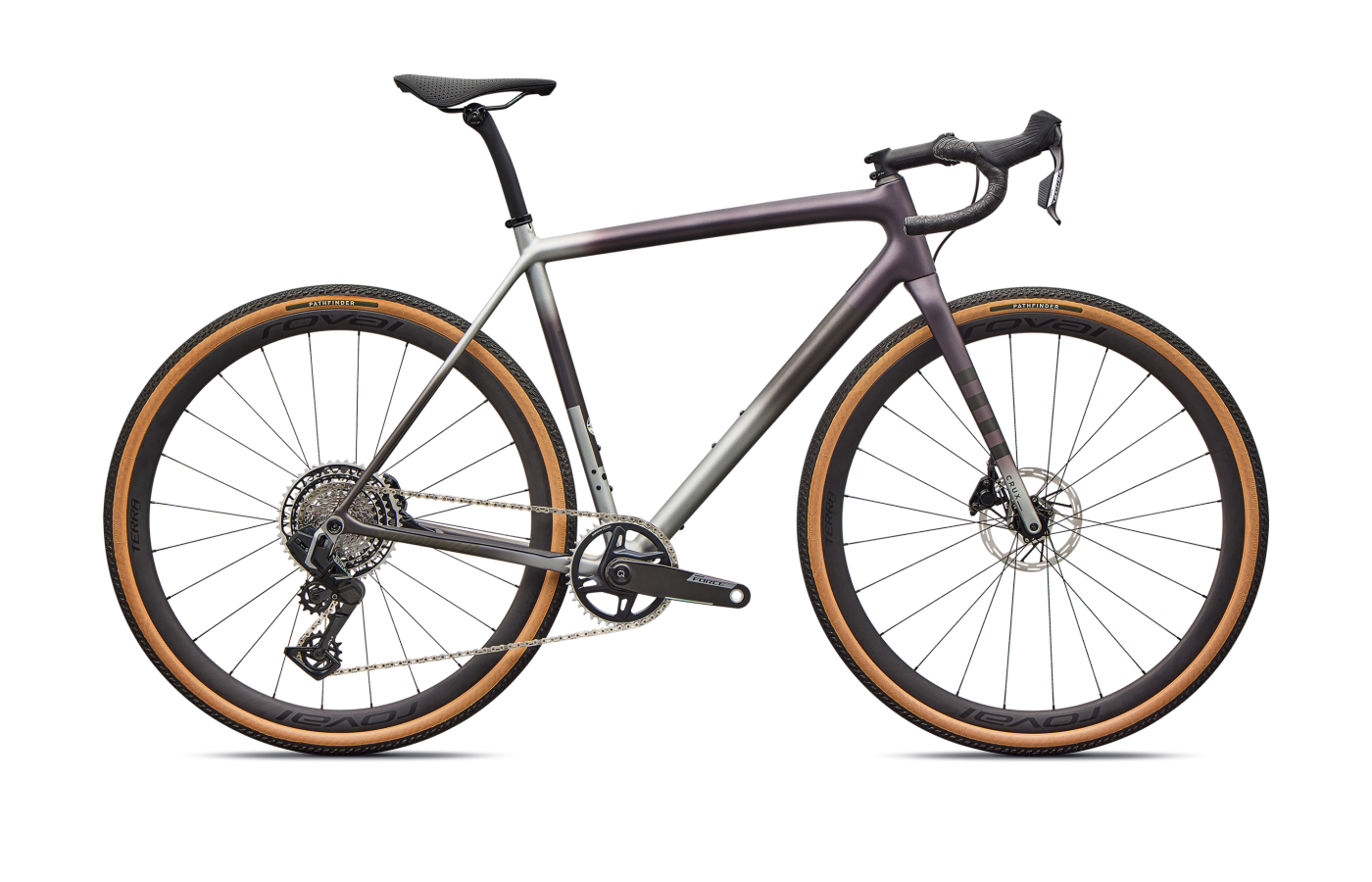
Two takes on what a gravel race bike should be.
The Salsa Warbird is the long-haul stability machine. The Specialized Crux is a featherweight road bike that happens to clear 47mm tires.
Warbird
- Long-haul comfort — the Class 5 VRS rear triangle and tall stack genuinely reduce fatigue on multi-hour days.
- Mounts everywhere — three bottle cages on 56cm+, top-tube mount, fork triple bosses, fender and rack compatibility.
- Stable at speed on rough — the slack 70.75-degree HTA and long wheelbase track straight where the Crux gets nervous.
- About a kilogram heavier than the Crux at the matched build tier — climbs feel more deliberate.
- Stock build value is consistently flagged by reviewers (in-house cockpits, mid-tier hubs) given the price.
Crux
- Feathery for gravel — a Pro at 7.64 kg climbs and accelerates like a road bike.
- 47mm tire clearance — the widest in the segment, and 2mm more than the Warbird's 45mm.
- Refreshingly standard — threaded BSA bottom bracket, 27.2mm round seatpost, two-piece cockpit. Service is trivial.
- Almost no mounts beyond the third bottle cage — bikepacking is a strap-on-bag affair.
- Race-bike firmness up front: reviewers report sore hands on rough terrain without wide, low-pressure tires.
Editor’s analysis
Same category on the website. Wildly different bikes once you swing a leg over.
The Salsa Warbird and Specialized Crux both market themselves as gravel race bikes, but they're chasing different definitions of fast. The Warbird is the original "American gravel" recipe — slacker geometry, long wheelbase, vibration-damping seat stays, and a frame designed to be glued to the dirt at hour eight. The Crux is what happens when you take the Aethos road bike's tube shapes, give them clearance for 47mm rubber, and call it a day.
The numbers tell the story. At fit-picked sizes (56cm Warbird, 54 Crux), the Warbird's head tube angle is 70.75 degrees with 430mm chainstays and a 1,038mm wheelbase — long, slack, and stable. The Crux runs 71.5 degrees up front with 425mm chainstays and a 1,023mm wheelbase. The Warbird sits 25mm taller in stack at the same reach (385 vs. 388). It's not a rounding error — it's a different riding posture entirely.
Weight is the other axis. A Crux Pro at $7,999 comes in at a claimed 7.64 kg. The closest Salsa Warbird build — the C Force AXS Wide at $6,999 — weighs 8.65 kg (19 lb 1 oz). That's a full kilogram, and it's all in the frame: Specialized's FACT 10r layup is one of the lightest in gravel, full stop. Reviewers consistently call the Crux "lighter than many road bikes" — that's not marketing, it's the scale.
Put another way: the Specialized Crux is the bike you buy when you want a road bike that can occasionally sneak onto fire roads. The Salsa Warbird is the bike you buy when most of your riding is on dirt and your longest day this year will be over 100 miles.
Where the builds differ.
Comparing our editor's-pick builds side-by-side. Winners highlighted row-by-row — lower price and weight, and the better-spec component, each mark a point.
Build variants & pricing
The Warbird's lineup runs $2,799–$6,999 across seven builds. The Crux climbs higher — $2,799 (alloy DSW) up to $11,999 for the S-Works.
Editor's picks are tier-matched at SRAM Force AXS — the Warbird C Force AXS Wide ($6,999, 2x with 43/30T) and the Crux Pro ($7,999, 1x with Quarq power meter). The $1,000 gap reflects the Crux's higher carbon-grade frame and integrated power meter, not a tier mismatch.
How they fit, how they steer.
At the fit-picked sizes, the Salsa Warbird sits 25mm taller in stack with 7mm less reach — a markedly more upright position. It's also 1.25 degrees slacker up front (70.75 vs. 71.5), with 5mm longer chainstays and a 15mm longer wheelbase. Stable and tall vs. low and quick.
Which size should I buy?
Size suggestions based on stack, reach, and effective top tube. The Warbird's range bottoms out smaller (49cm) and tops out longer; the Crux's middle sizes sit a touch lower.
→These are starting points. Flexibility, riding style, and preferred position all shift the answer — if you’re between sizes, a professional fit beats a chart.
What the magazines said.
Published reviews from trusted cycling outlets. Click through for the full write-up.
Which one should you buy?
If you ride long days on rough dirt with bags, get the Warbird. If you want one carbon bike that's quick on road and capable on gravel, get the Crux.
Warbird
If your gravel days regularly cross into double-digit hours, your routes carry bags, and you'd rather feel planted than darty — this is the bike. The Warbird's slack geometry and Class 5 VRS rear end were built for exactly that mission, and four generations of refinement have sharpened the recipe.
Crux
If your weekends are road group rides and Saturday gravel races, and you want one carbon bike that doesn't compromise on either, the Crux is the obvious pick. It's road-bike light, road-bike quick, and the 47mm clearance gives you real off-road capability when you want it.
Questions buyers actually ask.
Short answers to the things we get emailed about most often.
01Which is lighter?
The Specialized Crux, by a wide margin. A Crux Pro (Force AXS, FACT 10r frame) comes in at a claimed 7.64 kg. The closest Salsa Warbird build — the C Force AXS Wide — is 19 lb 1 oz, or about 8.65 kg. That's roughly 1 kg, and the gap holds across the lineup: even the Warbird's lightest builds sit a notable amount above comparable Crux trims.
The Crux's S-Works frame alone is a claimed 725 g. Specialized borrowed the Aethos road bike's design philosophy — round tube cross-sections, no aero compromises — and the result is a bike reviewers consistently call "lighter than many road bikes."
02Which has more tire clearance?
The Crux, at 47 mm officially (or 650b x 2.1"). The Warbird clears 45 mm (or 650b x 2.1" as well). Both ship with 700c tires in the high-30s to low-40s — the Crux Pro comes on 40mm Pathfinder Pros, the Warbird on 42mm Teravail Cannonballs.
For most gravel use cases the difference is academic. If you're running 650b setups for technical singletrack or the absolute widest 700c tires the market makes, the Crux wins on paper.
03Which is more comfortable on long rides?
The Warbird. Salsa's Class 5 Vibration Reduction System — bowed, vertically-flexing seat stays paired with flattened chainstays — is the headline feature, and reviewers consistently call out "incredible rear end compliance" and a "supple ride." The geometry helps too: a 56cm Warbird sits about 25mm taller in stack than a 54 Crux, encouraging an upright posture that lessens back strain on big days.
The Crux can be made comfortable with the right tires and pressures, but its inherent firmness — particularly through the front end — is documented across multiple reviews. "Sore hands" on long, rough rides is a recurring note.
04Which is faster?
Depends on the surface. On flat or rolling pavement and smooth dirt, the Crux wins decisively — it's lighter, stiffer, and the geometry is closer to a road bike. Reviewers describe it as "the most road-capable gravel bike" they've tested.
On long, rough gravel, the gap narrows. The Warbird's stability lets riders hold higher average speeds without fighting the bike, and the VRS reduces fatigue. One reviewer reported being meaningfully faster to work on the Warbird than on a heavier full-suspension comparison.
For a 40-mile gravel race on hardpack: Crux. For a 100-mile mixed-surface day: closer than the spec sheet suggests.
05Can I bikepack on either?
The Warbird is purpose-built for it. Three bottle mounts on 56cm and larger frames, top-tube bento mount, triple bosses on the Waxwing fork, fender mounts, and rack compatibility (with adapter). The 27.2mm round seatpost also accepts dropper posts via internal routing.
The Crux is not. Beyond a third bottle cage mount on most sizes, there are essentially no provisions for bags, racks, or fenders. Specialized made a deliberate choice to strip mounts in service of weight. You can run frame bags and seat packs with strap-on solutions, but it's a workaround, not the design intent.
06Are the editor's-pick builds really comparable?
Yes — both run SRAM Force AXS at the one-down-from-flagship tier. The Warbird C Force AXS Wide ($6,999) is a 2x setup with a 43/30T crank and 10-36 cassette. The Crux Pro ($7,999) is a 1x XPLR setup with a 40T chainring and 10-44 cassette, plus an integrated Quarq power meter.
The $1,000 price difference reflects two real things: the Crux Pro uses a higher-grade carbon layup (FACT 10r vs. Salsa's standard carbon) and includes a power meter that the Warbird build doesn't. Drivetrain tier itself is matched.
07Which holds up better long-term?
Both frames are well-regarded for durability. The Crux earns particular praise for its embrace of industry-standard parts: a threaded BSA bottom bracket, round 27.2mm seatpost, and a two-piece non-integrated cockpit. Maintenance is straightforward and there are no proprietary headaches.
The Warbird is similarly serviceable, with internal routing that protects cables from grime. One reviewer flagged paint sensitivity to bag straps — bikepackers should run frame protection tape. Both manufacturers offer crash-replacement programs.
08Which would a former cyclocross racer prefer?
The Crux, almost certainly. It's literally Specialized's reimagined cyclocross platform — the geometry retains the snappy, flickable character that cyclocross demands, with steeper head angles, shorter chainstays, and a low front end. The 47mm clearance even gives you mud-shedding room for actual CX races.
The Warbird's slacker, longer geometry was designed for long American gravel, not 60-minute CX laps. It would feel like a tank in barriers.
Similar bikes
If your priorities don’t map cleanly onto either of these, one of these adjacent bikes probably fits better.
Aspero
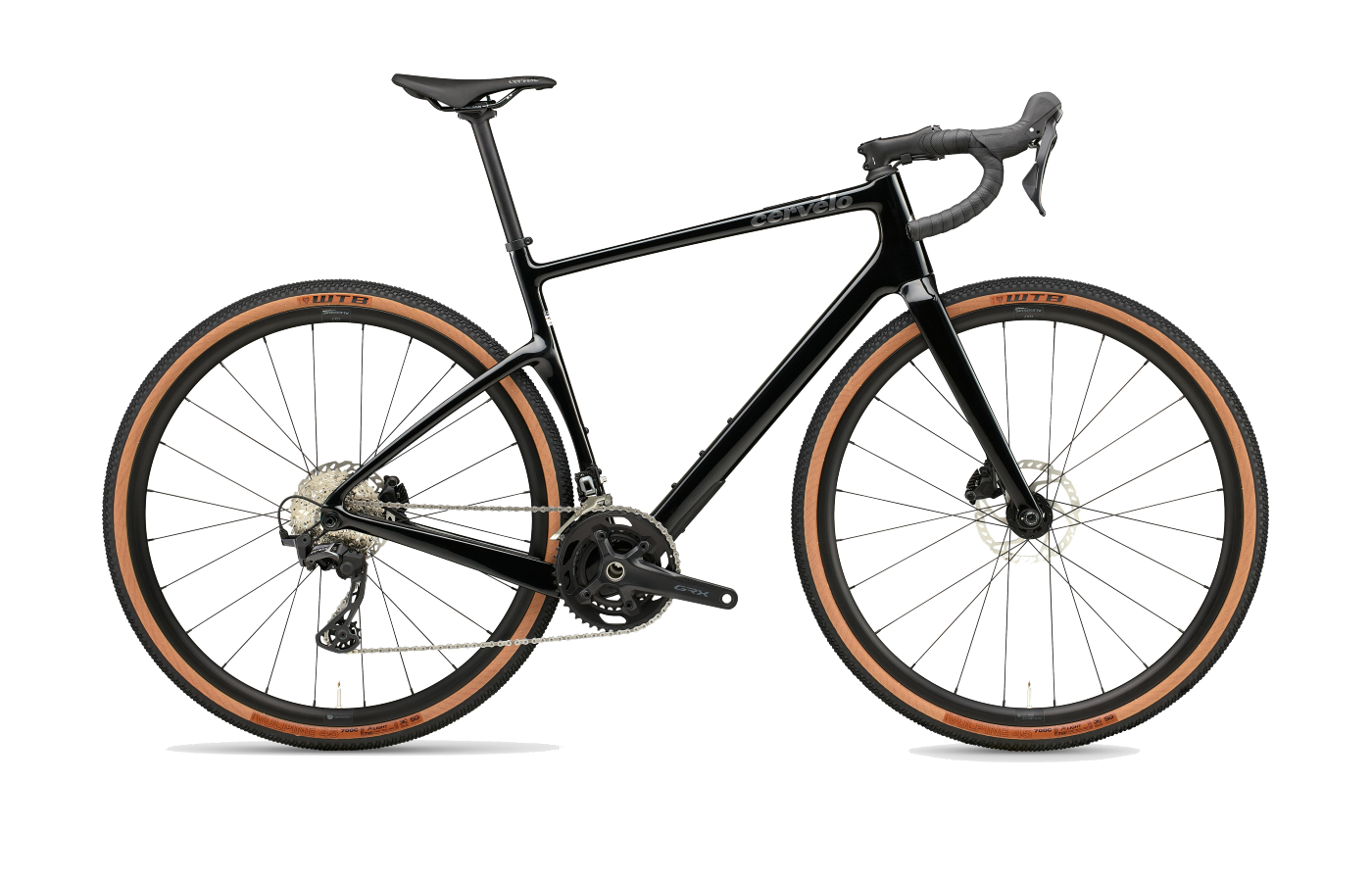
Cervélo's race-focused gravel bike — sharper aero focus than the Crux but with similar minimalist mounts. The pick for riders who want flat-out speed and like the wind-tunnel pedigree.
Compare →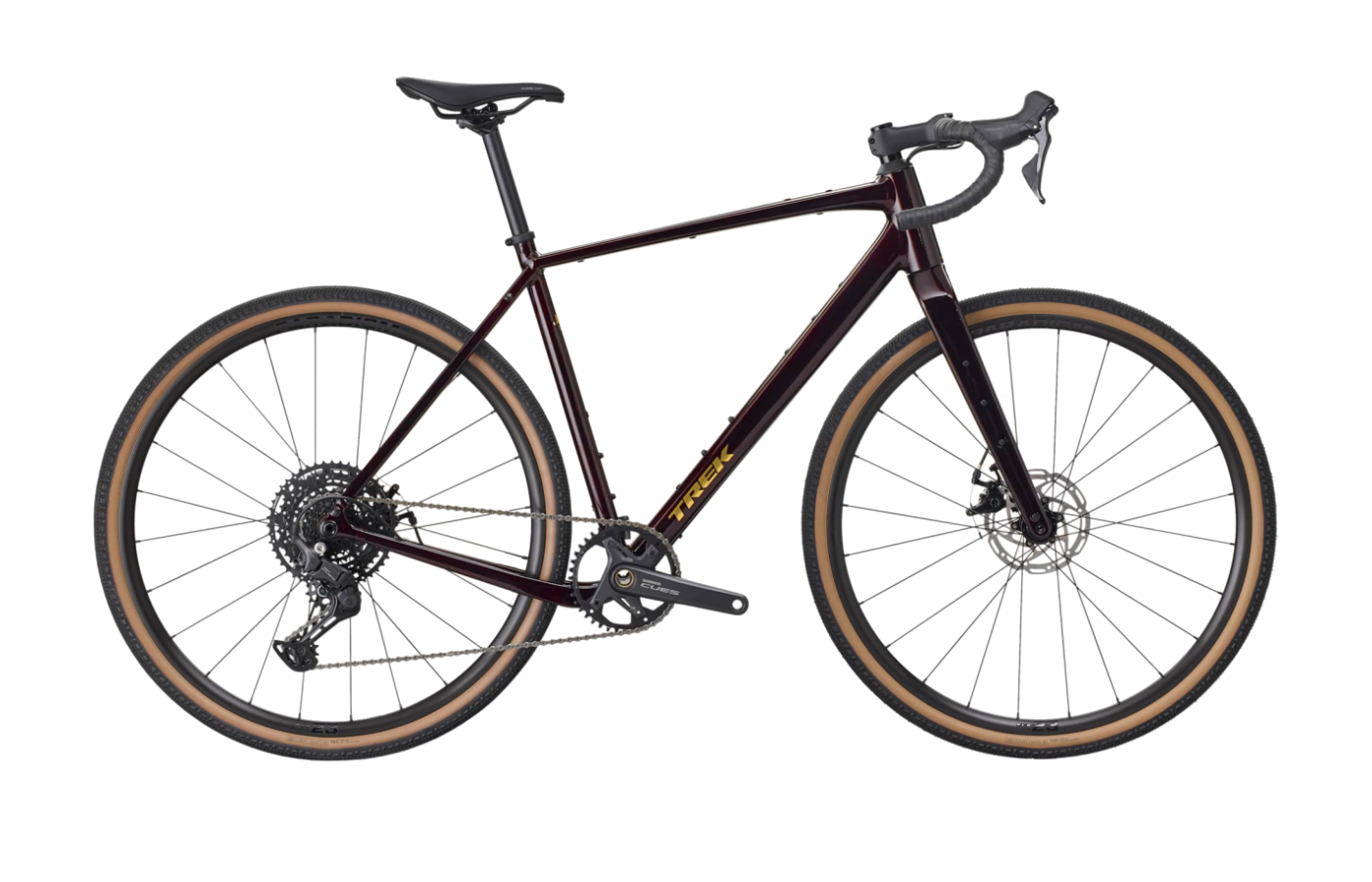
Checkpoint
Trek's all-rounder gravel platform with adjustable IsoSpeed compliance, Stranglehold dropouts, and a near-Warbird mount count. A direct-from-a-major-brand alternative to the long-haul Salsa.
Compare →
Grail
Canyon's direct-to-consumer gravel bike — typically thousands less than Specialized or Salsa for comparable specs. The catch is no dealer network: you fit yourself and you build it from a box.
Compare →