Highball
vsChisel
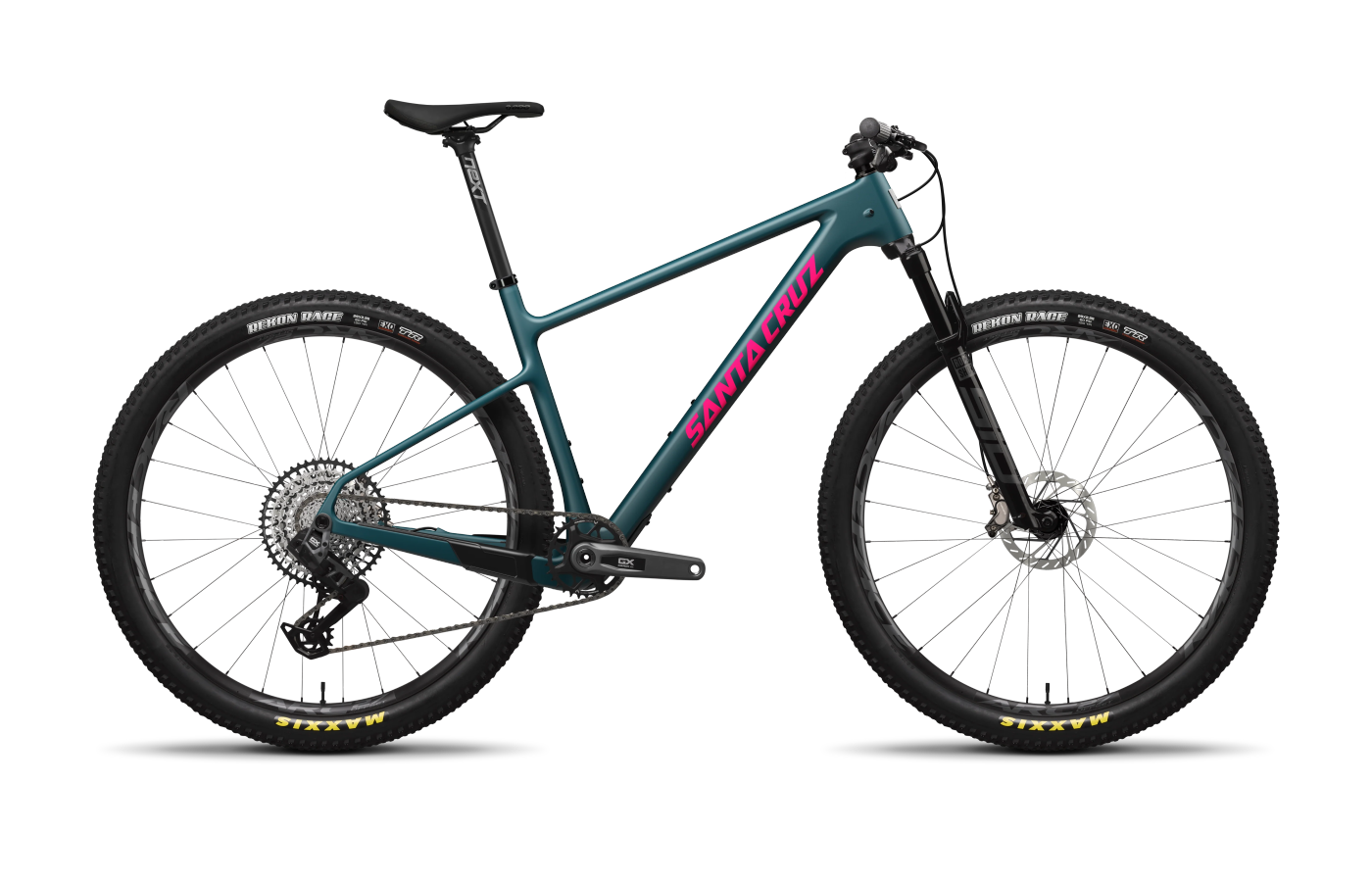
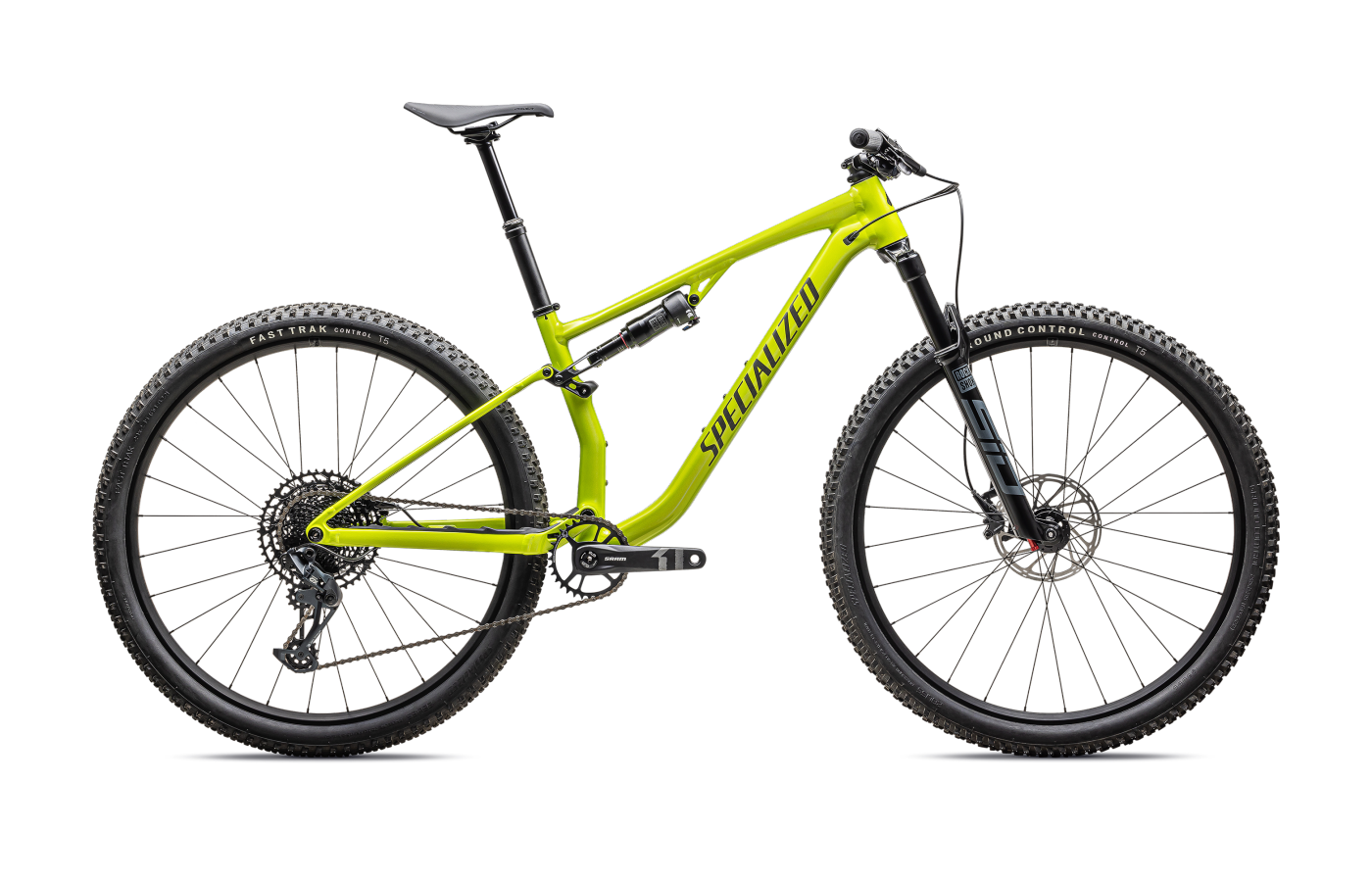
Carbon hardtail purity vs. alloy full-suspension value.
The Santa Cruz Highball chases grams and climbing snap on a rigid rear end. The Specialized Chisel uses Smartweld alloy and 110 mm of rear travel to undercut carbon XC by thousands.
Highball
- Lighter, quieter, simpler — a carbon hardtail with no rear pivots, bearings, or shock service. Top build is around 22.4 lbs / 10.15 kg.
- Engineered vertical compliance from the dropped seat-stay junction takes the worst sting out of trail chatter without compromising power transfer.
- Long reach, long wheelbase for the category — 440 mm reach and 1145 mm wheelbase at M deliver more descending stability than legacy XC hardtails.
- No rear suspension, period — chunky chatter and washboard sections still hit hard.
- Price floor of $3,299 even on the entry R build; getting into a wireless AXS Highball means $5k+.
Chisel
- 110 mm rear travel from a flex-stay single pivot lets the bike track over roots and small drops the Highball just bounces off.
- Modern XC geometry — 75.5-degree seat tube angle keeps you centered on steep climbs; 1177 mm wheelbase at M is composed at speed.
- Aggressive pricing starts at $1,899 for a hardtail build and tops out at $3,599 for the full-suspension Comp EVO with a Fox 34.
- Heavy stock wheelset and Shimano HG freehub limit easy cassette upgrades — reviewers call this the bike's first real ceiling.
- Aluminum frame plus firm rear tune means the ride is communicative rather than plush; high-frequency chatter can feel harsh.
Editor’s analysis
These two bikes share a category — modern XC race — and almost nothing else. Frame material, rear suspension, price floor, philosophy: every meaningful axis splits.
On paper, both the Santa Cruz Highball and the Specialized Chisel race the same start line. Both sit in the cross-country bracket on 29-inch wheels, both ship with 12-speed SRAM Eagle drivetrains, both use a 67-degree head tube angle. But the Highball is a $3,299–$7,899 carbon hardtail with 100 mm of front travel and zero out back, while the Chisel is a $1,899–$3,599 alloy bike whose top builds are full-suspension with 110 mm rear and a 120–130 mm fork. That is not the same fight.
The Highball's pitch is purity. Santa Cruz drops the seat stay/seat tube junction roughly two inches below the top tube to engineer a measured amount of vertical compliance into the carbon layup — reviewers call it a "soft" hardtail that, in CC trim, hovers around 22–25 lbs depending on build. There is no rear pivot, no shock, no linkage to service. Power goes in, forward motion comes out. Reviewers consistently describe it as a "climbing machine" that makes steep grades feel flatter, with stability borrowed from a longer reach and 1145 mm wheelbase at size M.
The Chisel takes the opposite route. Specialized's D'Aluisio Smartweld M5 alloy frame is built around a single-piece seat tube/bottom bracket subassembly and runs a single-pivot flex-stay rear that delivers 110 mm of travel for around 2,720 g claimed. The geometry mirrors the carbon Epic 8 — a 75.5-degree seat tube angle, 437 mm chainstays, 1177 mm wheelbase at M — and the rear shock is tuned firm for pedaling efficiency, not plush descending. Reviewers describe a "momentum machine" that's deceptively quick under power and stable when the trail gets technical, with a narrow suspension sweet spot that punishes lazy setup.
The decision really comes down to three questions. Do you want the lowest possible system weight and zero rear-suspension maintenance, or do you want a back wheel that tracks the ground in the rough? Are you comfortable spending $5k+ to get into a competitive Highball, or do you need to be out the door for under $3,500? And on your local trails, is the limiting factor your power output (favoring the Highball's efficiency) or your willingness to keep the rear wheel hooked up (favoring the Chisel's travel)? Most riders will know their answer before reading the spec sheets.
Where the builds differ.
Comparing our editor's-pick builds side-by-side. Winners highlighted row-by-row — lower price and weight, and the better-spec component, each mark a point.
Build variants & pricing
The two ranges barely overlap. The Highball runs $3,299–$7,899; the Chisel runs $1,899–$3,599. Within that, the Chisel splits between hardtail and full-suspension variants.
Editor's picks are tier-matched at SRAM GX (wireless AXS on the Highball, mechanical on the Chisel — Specialized doesn't currently sell a wireless build of the Chisel). Prices are current US MSRP.
How they fit, how they steer.
Both at size M. The Chisel sits 1 mm taller in stack with 5 mm more reach, but the bigger story is the seat tube angle: 75.5° on the Chisel vs 73.5° on the Highball, plus 11 mm longer chainstays and a 32 mm longer wheelbase.
Which size should I buy?
Both lineups cover S–XL. The Chisel adds an XS, which makes it the friendlier pick for riders under about 5'5".
→These are starting points. Flexibility, riding style, and preferred position all shift the answer — if you’re between sizes, a professional fit beats a chart.
What the magazines said.
Published reviews from trusted cycling outlets. Click through for the full write-up.
Which one should you buy?
If you want the lightest, quietest XC race bike and don't mind a hardtail, get the Highball. If you want full-suspension capability and a price under $3,600, get the Chisel.
Highball
If your local trails are climb-heavy and your descents are mostly flowy rather than chunky, the Highball's weight savings and engineered compliance are hard to beat. It rewards riders who pick clean lines, value mechanical simplicity, and don't mind paying carbon prices for a carbon ride.
Chisel
If you want the geometry and rear-wheel traction of a modern XC race bike but don't want to spend more than $3,600, the Chisel is the cleanest answer on the market right now. Especially strong for NICA racers, technical local trails, and riders who'd rather upgrade wheels later than pay carbon premiums up front.
Questions buyers actually ask.
Short answers to the things we get emailed about most often.
01Which is faster on climbs?
It depends on the climb. On smooth fire-road grinds and rolling singletrack, the Santa Cruz Highball has a real weight advantage — the GX AXS build is around 23.2 lbs / 10.5 kg, while the Chisel Comp lands around 28.2 lbs / 12.8 kg in size M. That's roughly a 5 lb gap, which on a 30-minute climb at threshold is a meaningful chunk of seconds.
On technical, root-and-rock climbs, the gap narrows. The Specialized Chisel's 75.5-degree seat tube angle keeps your weight centered better than the Highball's 73.5-degree seat tube angle, and the 110 mm of rear travel keeps the back wheel hooked up where the Highball can skip and lose traction. Reviewers consistently call the Chisel an "adept climber" that stays planted on steep, technical pitches.
02Which is faster on descents?
The Chisel, with margin. The 110 mm of rear travel, the 120 mm fork on the Comp build (130 mm on the EVO), and the 32 mm longer wheelbase at size M (1177 vs 1145) all push the same direction — more composure when the trail gets rough, more confidence to carry speed through chunder.
The Highball descends well for a hardtail — the long reach and stable wheelbase help — but reviewers were clear about the limits. In washboard chop or repeated chatter, the rigid rear end loses traction the Chisel keeps.
03Hardtail or full-suspension — which makes more sense for me?
Honest answer: it depends on your trails and your tolerance for getting beat up.
Go hardtail (Highball) if your riding is mostly fire roads, flowy singletrack, and long endurance days where weight and pedaling efficiency dominate. Hardtails are also dramatically simpler to maintain — no rear pivots, no shock service, no linkage bearings.
Go full-suspension (Chisel Comp/EVO) if your local trails have meaningful technical sections, root carpets, or repeated drops. The 110 mm out back is not a lot of travel by trail-bike standards, but compared to zero it's transformative for traction and rider fatigue.
04Why is the Chisel so much cheaper?
Two reasons. First, alloy versus carbon: the Chisel uses Specialized's D'Aluisio Smartweld M5 aluminum, which is much cheaper to manufacture than the Highball's Carbon C layup. Specialized's pitch is that Smartweld closes most of the weight gap (claimed frame weight ~2,720 g) while keeping costs down.
Second, stock components. Reviewers consistently flagged the Chisel's heavy stock wheels, basic Shimano HG freehubs, and entry-level brakes as the obvious cost-cutting points. The frame is praised as having "good bones"; the parts kit is clearly built to hit the price.
05Can I run a dropper post on either?
Yes, both are designed for them. The Chisel is explicitly built around a 30.9 mm dropper across all builds and most ship with a dropper installed. The Highball also accepts a dropper — the X0 AXS RSV ships with one — though some lower builds come rigid and you'll add the post yourself.
06What tires fit each frame?
Highball: clearance for tires up to about 61 mm wide (roughly 2.4"). Stock tires across the range are Maxxis Rekon Race 29x2.35 — fast-rolling XC race rubber.
Chisel: clearance for tires up to about 59.7 mm wide (roughly 2.35"). Stock tires depend on the build: the standard Comp ships Fast Trak / Ground Control 2.35, while the Comp EVO bumps up to a Specialized Purgatory 2.4 front for more aggressive rubber.
07How does the geometry actually compare at size M?
Reach is close — 440 mm on the Highball M, 445 mm on the Chisel M. Stack is essentially identical (605 vs 606). Head tube angle matches at 67°.
The meaningful differences are downstream of those numbers: the Chisel's 75.5° seat tube angle is two full degrees steeper than the Highball's 73.5° (much better for steep seated climbing), the Chisel's 437 mm chainstays are 11 mm longer than the Highball's 426 mm (more stability, less snap), and the Chisel's 1177 mm wheelbase is 32 mm longer at M (more composure at speed).
08Long-term, which holds up better?
Both are designed for the long haul, but the failure modes differ.
The Highball has fewer wear items — no rear pivots or bearings to service, no rear shock to rebuild. Carbon frames are more sensitive to impact damage but, absent a crash, will outlast aluminum on a fatigue-life basis. Santa Cruz offers a lifetime frame warranty.
The Chisel trades that simplicity for full-suspension capability, which means rear pivots and shock service on a regular basis. Specialized also offers a lifetime frame warranty. Reviewers flagged the entry-level Shimano MT410 hub and "Control"-casing tires as the most likely durability weak points on the lower builds — neither is a frame issue.
Similar bikes
If your priorities don’t map cleanly onto either of these, one of these adjacent bikes probably fits better.
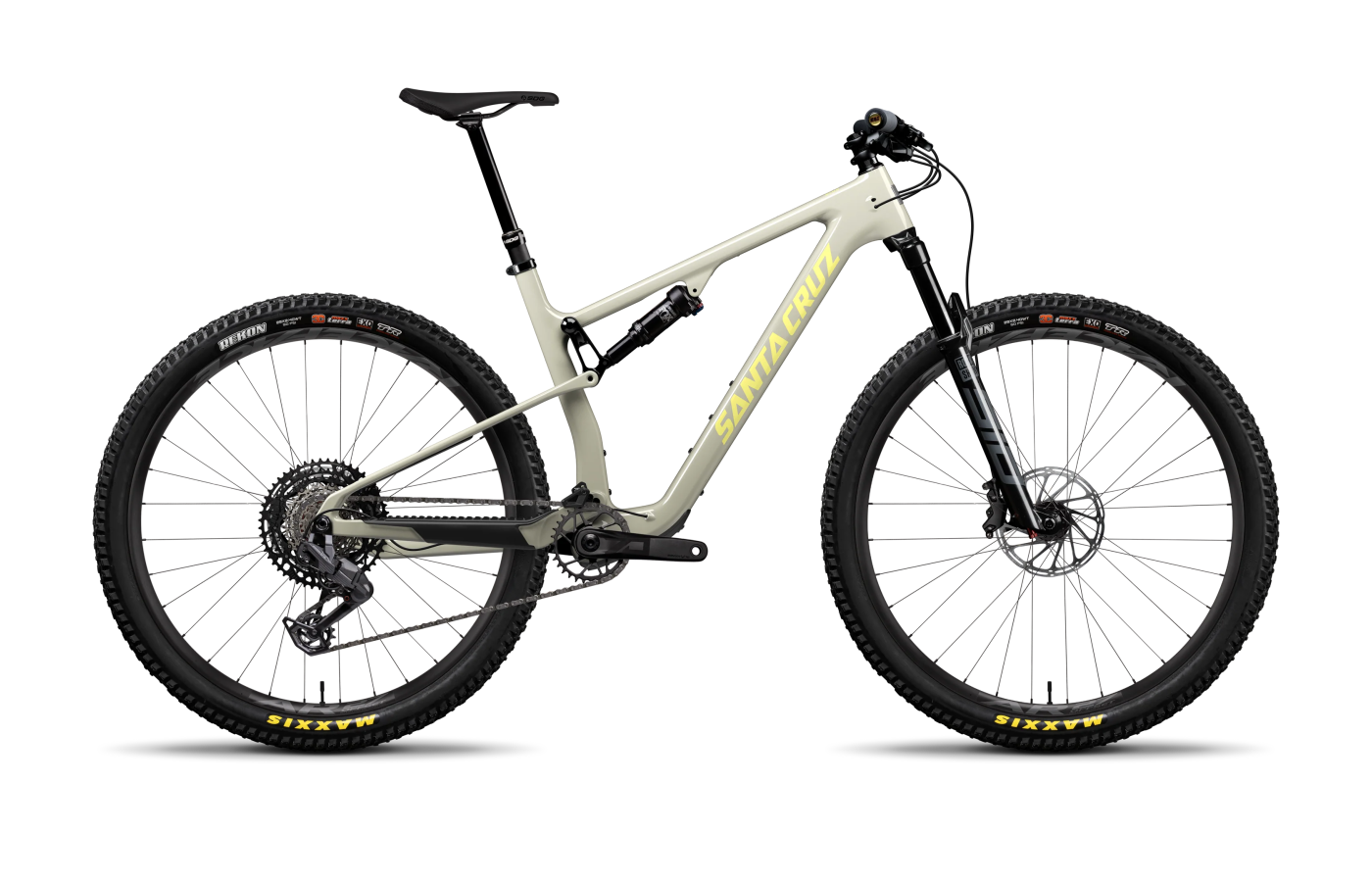
Blur
Santa Cruz's own short-travel full-suspension XC bike. Same brand DNA as the Highball, but with 100–115 mm of rear travel — the option for riders who want Santa Cruz refinement without the hardtail commitment.
Compare →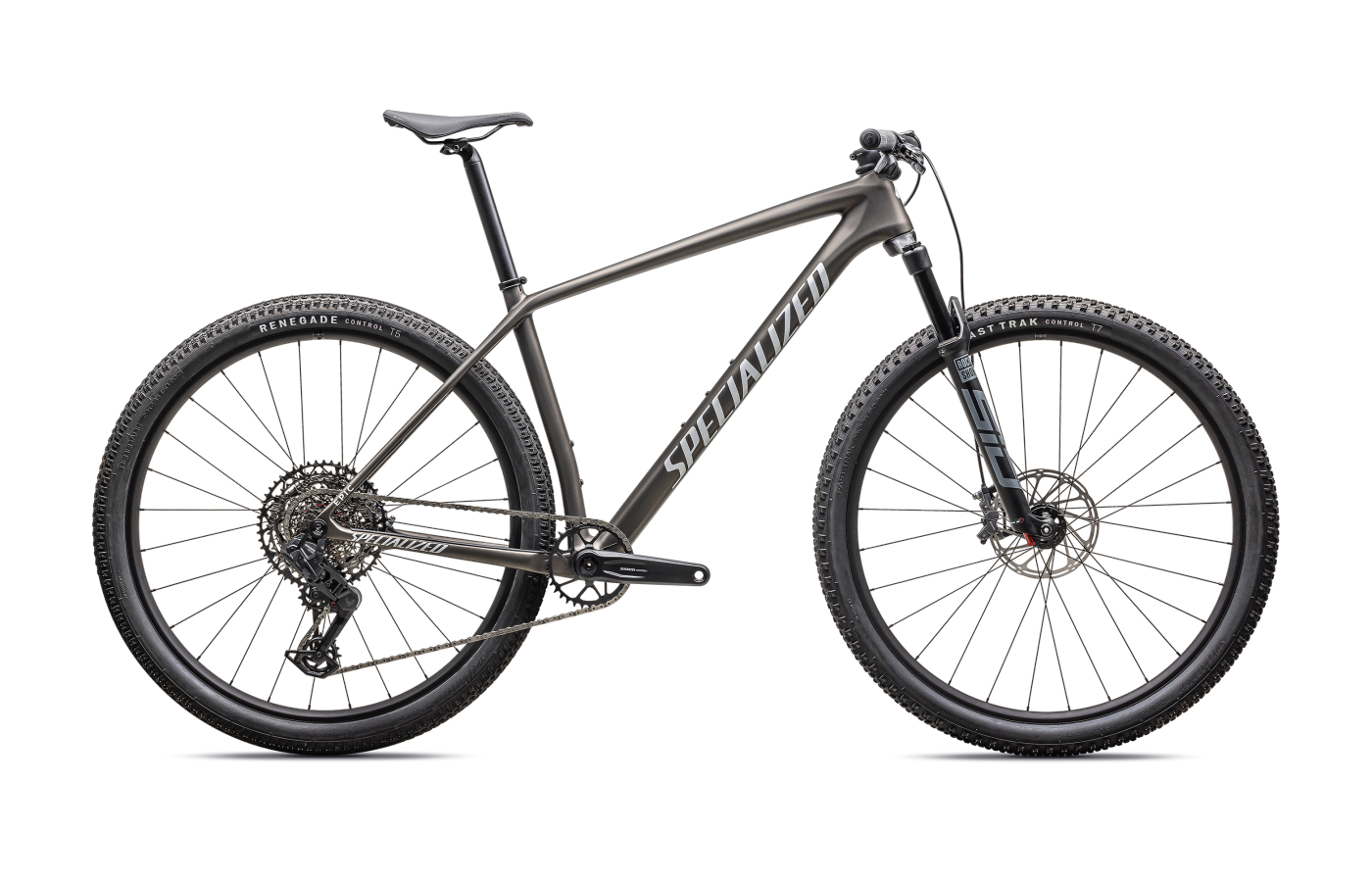
Epic Hardtail
The direct carbon-hardtail rival to the Highball, with race-leaning geometry and a frame focused on shaving every gram. Worth a look if you're set on a carbon hardtail but want to cross-shop within the XC race bracket.
Compare →DV9
Ibis's affordable carbon hardtail splits the difference — slightly more downcountry-leaning geometry than a pure XC racer, at a price point that lands between the Highball and the Chisel.
Compare →