Specialized ChiselvsEpic Hardtail
Can a sub-800-gram carbon frame really outrun a complex aluminum linkage when the trail turns into a rock-strewn mess? This is the fundamental trade-off between the Specialized Chisel and the Epic Hardtail, where one bets on extreme lightness while the other relies on modern 'downcountry' suspension logic to carry its momentum.

Overview
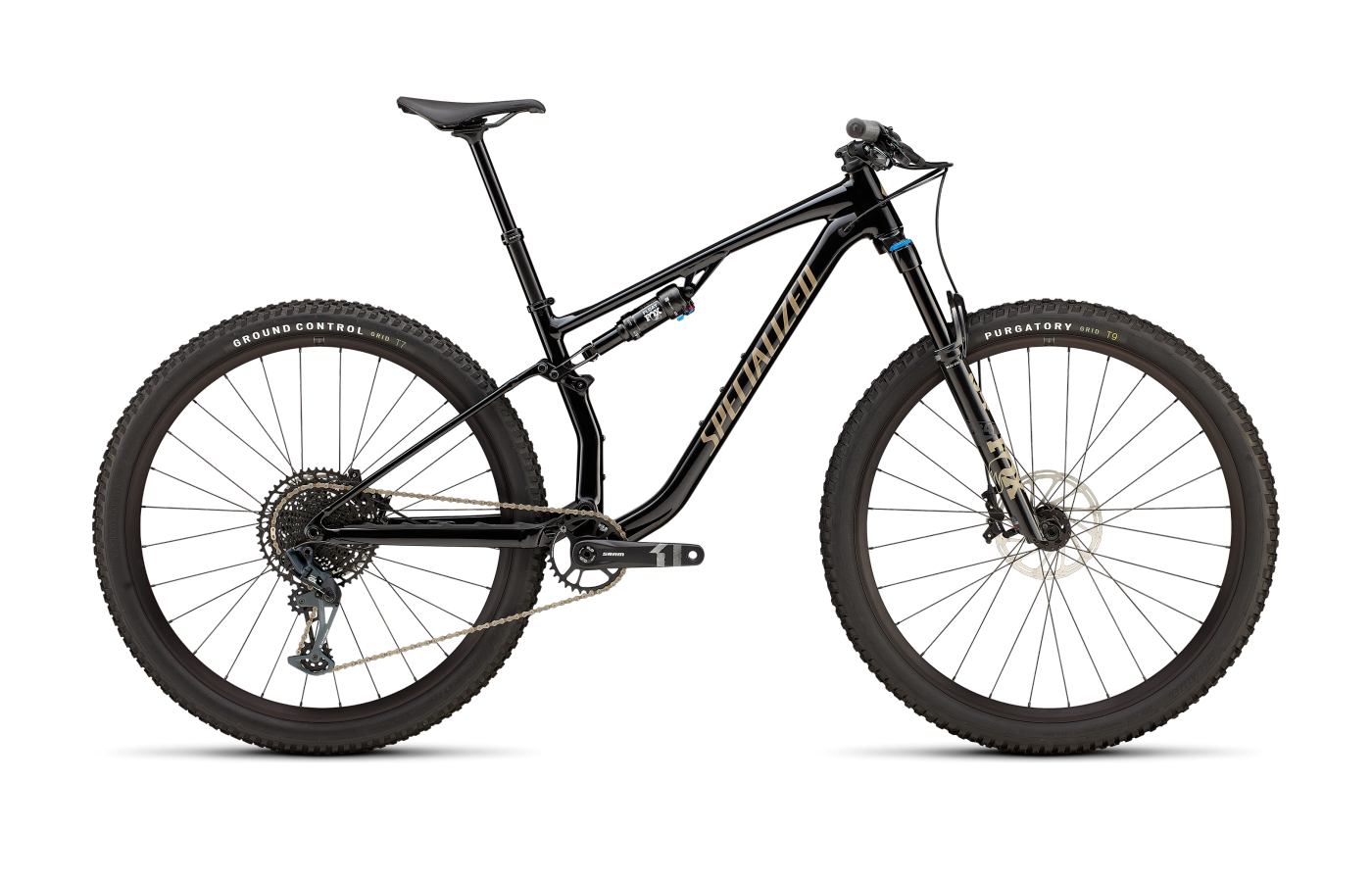
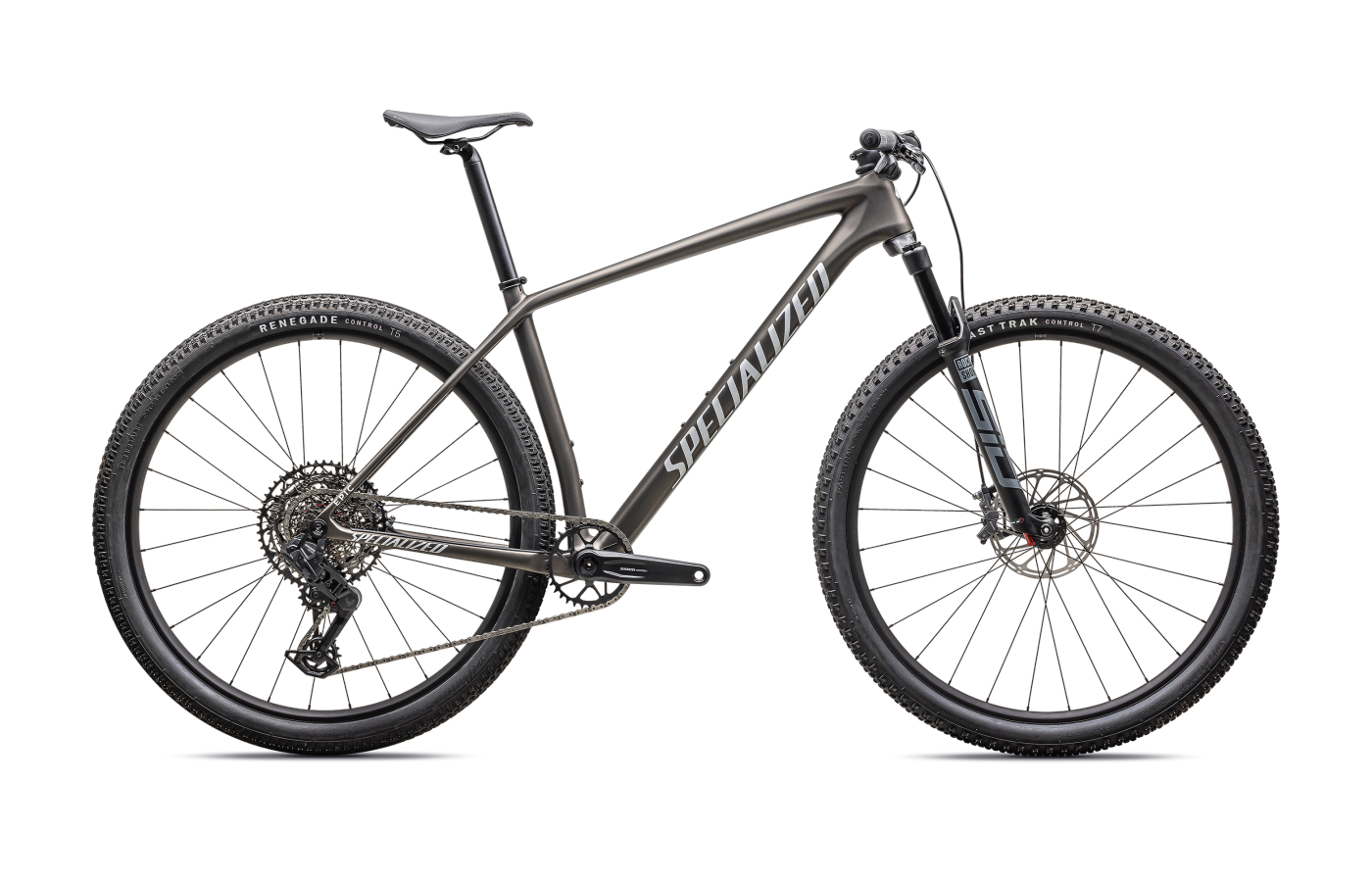
The Epic Hardtail is a pure climbing tool, famously known for being the lightest mass-produced frame on the market during its tenure. It is a scalpel designed for the racer who views every extra gram as a personal insult. In contrast, the 2025 Chisel is an 'alloy anarchist' that brings the 110mm rear-travel logic of the carbon Epic 8 into a more affordable and durable M5 aluminum package. While the Epic Hardtail focuses on pure efficiency and a 'scorched feline' sprint, the Chisel FS targets a broader spectrum of riding, functioning as a 'hot hatch' for those who want to race on Saturday and ride technical singletrack on Sunday. Positioned as the budget-friendly alternative to the flagship Epic 8, the Chisel uses 'Smartweld' technology to mimic the organic lines and high-performance feel of carbon without the eye-watering price tag. The Epic Hardtail remains a specialist's choice, particularly in its S-Works trim where it tips the scales at less than 9kg. The Chisel, however, represents a shift in philosophy toward 'modern XC,' which acknowledges that races are often won or lost on increasingly technical descents rather than just the climbs. Choosing between them is a matter of deciding if you prefer the visceral, direct feedback of a featherweight hardtail or the 'momentum machine' character of a 110mm full-suspension rig.
Ride and handling
Reviewers describe the Chisel as a bike that 'tugs at the leash like a Weimaraner puppy,' maintaining speed over roots and rocks that would stall out a rigid rear end. Its 110mm of travel is tuned for support rather than plushness, using a single-pivot flex-stay design that keeps the bike 'pert' and efficient under power. On technical ascents, the Chisel handily spins through chatter where the Epic Hardtail requires significantly more 'body English' to maintain traction. The Chisel's 'mezzo geometry' provides a balanced middle ground that feels assured at speed, whereas the Hardtail can feel 'twitchy' or 'nervous' when the terrain gets technical. The Epic Hardtail is the definitive 'climbing machine,' providing an immediate forward surge that even the most efficient full-suspension bike cannot fully replicate. Specialized engineered a curved seat tube and slimmed-down seatstays to dampen the ride, but it remains a firm, communicative experience that can be 'organ-jarring' on long, choppy descents. While the Hardtail 'sprints like a scorched feline' on smooth fire roads, the Chisel's suspension provides a 'velocity vibe' that allows the rider to stay fresher for longer efforts. The Chisel 'handily spins through roots,' while the Hardtail demands a more precise line choice and higher rider skill to avoid being bounced off-line. In high-speed corners, the Chisel's slacker front end and longer wheelbase provide a 'flowing yet accurate' feel that rewards aggressive leaning. The Epic Hardtail, with its steeper head angle, is sharper and 'nippier' in tight switchbacks but requires constant attention to keep the front wheel planted. The Chisel behaves like a 'momentum machine,' soaking up small bumps that would otherwise rob a hardtail of speed. For riders who enjoy jumping and 'flicking' the bike out of corners, the Chisel's active rear end makes it a 'total hoot,' while the Epic Hardtail remains focused on the most efficient path between two points.
Specifications
Spec levels vary wildly across these two platforms, with the Epic Hardtail starting as a 'frame-first' investment that often sees entry-level builds hampered by heavy 'Judy' forks and SX drivetrains. The Chisel lineup is more tiered toward performance, particularly the 'Comp' and 'EVO' builds. The Comp EVO build tested here stands out with a 130mm Fox 34 Performance Elite fork and meaty Purgatory tires, a setup that would be completely foreign to the weight-obsessed Epic Hardtail world. The Chisel EVO is described as a 'proper little hooligan,' trading raw rolling speed for 'highly supportive rally' performance that can survive real mountains. Lower-tier builds on both bikes use Shimano HG-style freehub bodies, which acts as a 'value hurdle' because it complicates future cassette upgrades. The Epic Hardtail frequently uses Specialized’s proprietary 'Brain' technology in its forks to automate lockouts, whereas the Chisel uses simple, supportive kinematics and manual toggles. Reviewers noted that the Brain fork on the Epic can have an 'abrupt' hard stop when the platform engages, while the SID fork on the Chisel Comp is praised for its predictable 35mm stanchion stiffness. Braking also sees a shift: the Chisel Comp EVO uses four-piston G2 RS brakes to match its trail ambitions, while most Epic Hardtails stick to lighter two-piston Level calipers. Component quality on the Epic Hardtail is often 'lacklustre' at the entry level to offset the cost of its sub-kilo carbon frame. You might find a 11.5kg hardtail for $2,100, which feels a bit heavy for a race bike. The Chisel Comp, even in alloy, often feels like a 'sweet spot' for value, offering better dampers and more reliable shifting for a similar price. The move to a 30.9mm seatpost on the 2020 Epic Hardtail was a vital upgrade, finally allowing the use of modern dropper posts that are standard on the Chisel.
| Chisel | Hardtail | |
|---|---|---|
| FRAMESET | ||
| Frame | Specialized D'Aluisio Smartweld M5 Alloy, hydroformed tubes, Progressive XC Geometry, internal cable routing, BSA threaded BB, 12x148mm spacing, 30.9mm dropper compatible | Specialized FACT 11m, Progressive XC Geometry, Rider-First Engineered™, threaded BB, UDH, 12x148mm rear spacing, internal cable routing |
| Fork | RockShox Judy Silver, TurnKey damper, Solo Air, 42mm offset, 15x110mm thru-axle, 100mm travel (XS: 80mm) | Rockshox SID SL, Rush RL Damper, Debon Air, 15x110mm, 44mm offset, S-XL: 110mm Travel, XS: 90mm Travel |
| Rear shock | — | |
| GROUPSET | ||
| Shift levers | SRAM SX Eagle trigger, 12-speed | Sram AXS POD Controller |
| Front derailleur | — | |
| Rear derailleur | SRAM NX Eagle, 12-speed | SRAM S-1000 Eagle Transmission |
| Cassette | SRAM PG-1210 Eagle, 12-speed, 11-50T | SRAM XS 1270 Transmission, 10-52t |
| Chain | SRAM SX Eagle, 12-speed | SRAM GX Transmission |
| Crankset | SRAM SX Eagle, Powerspline, 32T chainring | SRAM S1000 Eagle, DUB, 165/170/175mm, 34T |
| Bottom bracket | SRAM Powerspline | SRAM DUB Threaded Wide |
| Front brake | SRAM Level T hydraulic disc, 2-piston | SRAM Level Bronze 2-piston, Stealth |
| Rear brake | SRAM Level T hydraulic disc, 2-piston | SRAM Level Bronze 2-piston, Stealth |
| WHEELSET | ||
| Front wheel | Specialized 29 rim, 27mm internal width, 28h, tubeless ready; Alloy front hub, sealed cartridge bearings, 6-bolt, 15x110mm thru-axle, 28h; Stainless spokes, 14g | Specialized 29, 27mm inner width, 28h, tubeless ready; Specialized alloy, sealed cartridge bearings, 6-bolt, 15x110mm thru-axle, 28h; DT Swiss Industry |
| Rear wheel | Specialized 29 rim, 27mm internal width, 28h, tubeless ready; Alloy rear hub, sealed cartridge bearings, 12x148mm thru-axle, 6-bolt, 28h; Stainless spokes, 14g | Specialized 29, 27mm inner width, 28h, tubeless ready; Specialized alloy, sealed cartridge bearings, 6-bolt, 12x148mm thru-axle, 28h; DT Swiss Industry |
| Front tire | Specialized Fast Trak, Control casing, T7 compound, 29x2.35 | Specialized Fast Trak, Control Casing, T7 Compound, 29x2.35 |
| Rear tire | Specialized Fast Trak, Control casing, T5 compound, 29x2.35 | Specialized Renegade, Control Casing, T5 Compound, 29x2.35 |
| COCKPIT | ||
| Stem | Specialized 3D-forged alloy stem, 4-bolt, 7° rise | Specialized, 3D-forged alloy, 4-bolt, 7-degree rise |
| Handlebars | Specialized Alloy XC minirise handlebar, double-butted alloy, 31.8mm clamp, 8° backsweep, 6° upsweep, 10mm rise | Specialized Alloy Minirise, 10mm rise, 750mm, 31.8mm clamp |
| Saddle | Body Geometry Power Sport saddle, steel rails | Body Geometry Power Sport, steel rails |
| Seatpost | Alloy seatpost, 2-bolt clamp, 30.9mm | Specialized Alloy, Single Bolt, 30.9mm |
| Grips/Tape | Specialized Trail Grips | Specialized Trail Grips |
Geometry and fit comparison
The geometry delta reveals how Specialized's view of 'fast' has changed since 2020. The Chisel's 66.5-degree head tube angle is a full two degrees slacker than the Epic Hardtail's 68.5-degree front end. On the trail, this 2.0-degree difference is the line between 'fearing for your life' on technical drops and feeling 'calm and predictable.' The Chisel's 445mm reach (Size Medium) and 1177mm wheelbase provide a stability that the more compact Epic Hardtail lacks, making the Chisel much less 'twitchy' at high speeds. Climbing geometry remains aggressive on both, with a 75.5-degree seat tube angle that puts the rider in a powerful, centered position. However, the Epic Hardtail's 430mm chainstays are slightly shorter than the Chisel's 437mm rear end, contributing to its 'nippy' and agile feel in tight uphill switchbacks. The Chisel's geometry finds a 'mezzo' middle ground that works well for riders with varying flexibility levels, while the Epic Hardtail still leans toward a 'stretched out' racing stance. For riders who want to 'over-fork' their bike, the Chisel frame is rated for a 130mm fork, which further slackens the angles for a more 'downcountry' vibe. In practice, the Epic Hardtail's geometry suits the 'traditional' racer who thrives on quick reactions and 'slicing and dicing' through technical courses. The Chisel is geared toward 'progression-minded' riders who want a bike that won't punish them for a slightly sloppy line choice. With a 36mm bottom bracket drop, both bikes sit low and planted, though the Chisel's suspension keeps the pedals from striking as often in chunky terrain. The Chisel's flip-chip adds a layer of versatility the hardtail can't match, allowing for a 0.5-degree adjustment to suit pure XC racing or rowdier trails.
| FIT GEO | Chisel | Hardtail | |
|---|---|---|---|
| Stack | 620 | — | — |
| Reach | 470 | — | — |
| Top tube | 634 | — | — |
| Headtube length | 125 | — | — |
| Standover height | 787 | — | — |
| Seat tube length | 450 | — | — |
| HANDLING | Chisel | Hardtail | |
|---|---|---|---|
| Headtube angle | 67 | — | — |
| Seat tube angle | 75.5 | — | — |
| BB height | 342 | — | — |
| BB drop | 36 | — | — |
| Trail | 113 | — | — |
| Offset | 44 | — | — |
| Front center | 773 | — | — |
| Wheelbase | 1208 | — | — |
| Chainstay length | 437 | — | — |
Who each one is for
Specialized Chisel
The Chisel is for the NICA racer or privateer athlete who needs one bike to do everything without the 'prohibitive expense' of carbon. It is the ideal choice for a rider who spends their weekends tackling rocky, technical loops and wants a 'momentum machine' that stays glued to the ground on steep, shelfy climbs. If you value durability and want a frame with 'good bones' that can be upgraded as your skills progress from fire roads to technical rock gardens, this alloy rig is the smart play.
Specialized Epic Hardtail
The Epic Hardtail is for the 'weight-weenie' specialist who views a rear shock as a parasitic weight penalty and spends most of their time on smooth, flowing singletrack or gravel fire roads. It is the right tool for the hill-climb enthusiast who wants a 'climbing machine' that feels 'road bike light' underneath them. If your local terrain is defined by thousands of feet of elevation gain on relatively smooth dirt, the sub-800g frame provides a visceral, explosive response that no full-suspension bike can match.