Roubaix
vsTarmac
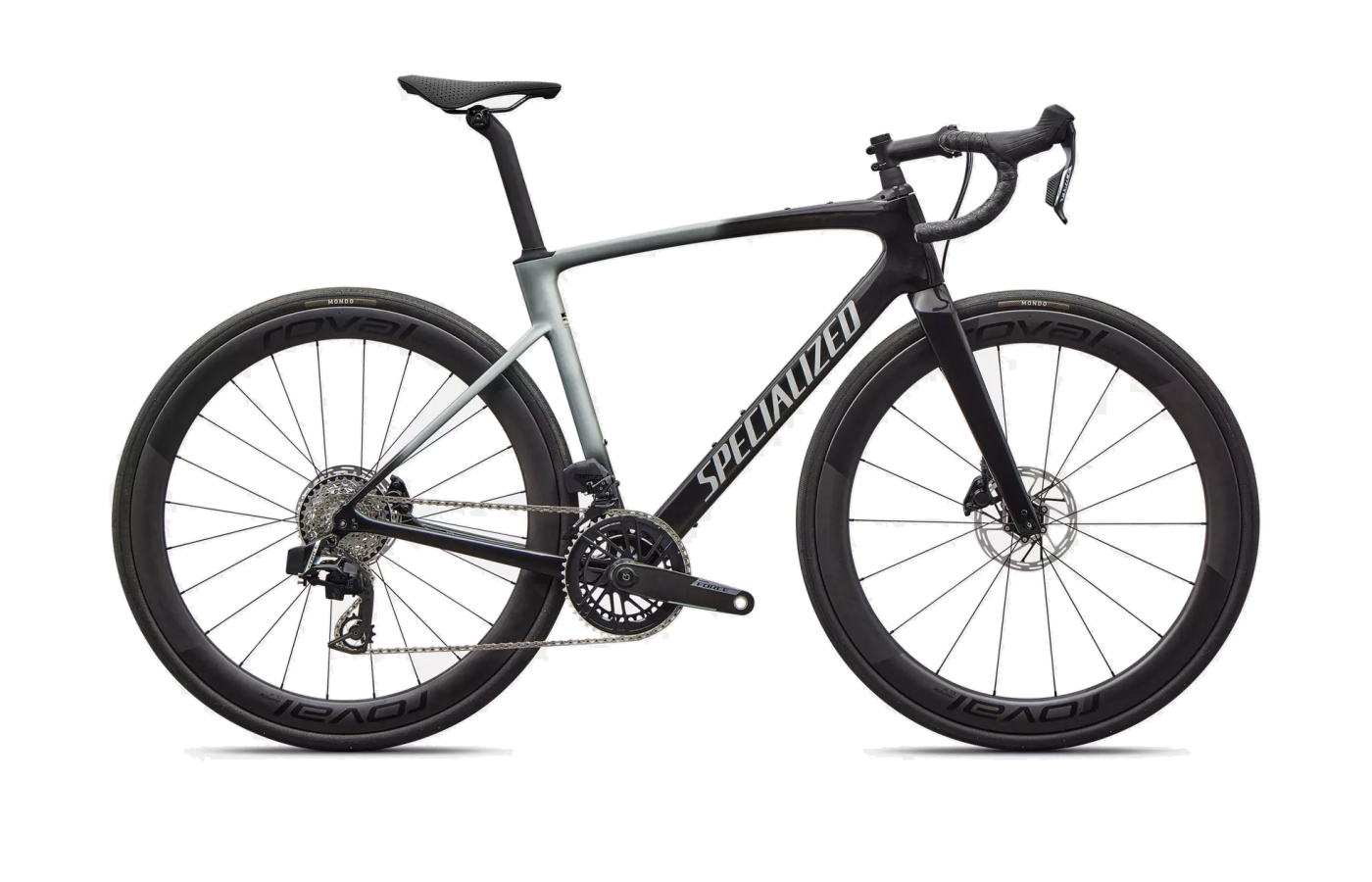
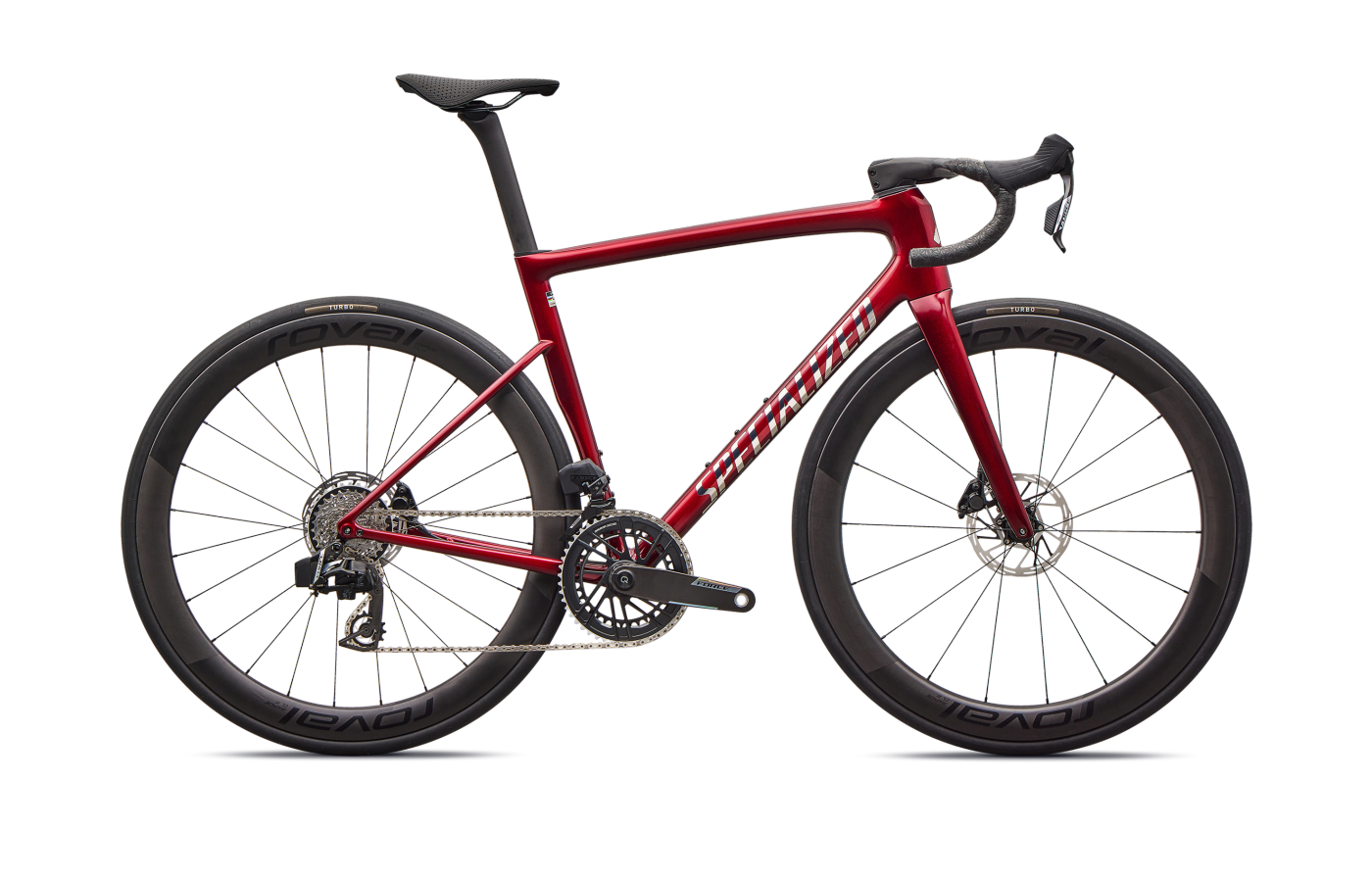
Same brand, same factory, two completely different bikes.
The Roubaix erases bad pavement with a sprung front end. The Tarmac chases podiums with telepathic steering.
Roubaix
- Future Shock 3.0 front end — 20 mm of axial travel that erases road buzz without bobbing under seated power.
- 38 mm tire clearance — enough to genuinely double as a light-gravel bike, with extra mounts for fenders and a top-tube bag.
- Wide build range from $2,799 — the cheapest way into a modern endurance carbon platform with electronic shifting available three tiers up.
- Tall stack (585 mm at size 54) limits how low you can get in the wind even with the stem slammed.
- Future Shock and Pave seatpost add roughly 200 g over a comparable rigid frame.
Tarmac
- Sharper handling — 73-degree head angle, 410 mm chainstays, and the shorter wheelbase deliver the 'telepathic immediacy' reviewers keep using.
- Lighter at every tier — S-Works lands around 6.67 kg in size 56; Pro tier hits 7.25 kg, ~620 g under the equivalent Roubaix.
- Aero-bike fast on flats — Specialized claims 16.6 seconds saved over 40 km vs the SL7, with wind-tunnel numbers within a few watts of dedicated aero rivals.
- Stock 26 mm S-Works Turbo tires are universally panned — budget for a 28–30 mm upgrade.
- 32 mm tire clearance closes the door on anything beyond chip-seal.
Editor’s analysis
This isn't endurance vs. race — it's fatigue management vs. attack mode.
Specialized builds both of these on FACT 10r/12r carbon out of the same playbook, but the chassis decisions diverge almost immediately. The Specialized Roubaix runs a 20 mm-travel Future Shock cartridge above the steerer, a flexing D-shaped Pave seatpost at the back, and clearance for 38 mm tires. The Specialized Tarmac strips all of that out, drops the stack, sharpens the head angle, and locks the front end down. They share a paint shop and almost nothing else.
Geometry tells the story at a glance. At size 54, the Roubaix sits 41 mm taller in the stack (585 vs 544 mm), runs a 0.7-degree slacker head tube (72.3 vs 73), 10 mm longer chainstays, and a 34 mm longer wheelbase. That's not a tweak. That's a different bike under your hands. The Roubaix wants to be calm at speed on broken pavement; the Tarmac wants to change direction the instant you think about it.
Power delivery is closer than the spec sheet suggests. Both frames get the same threaded BSA bottom bracket and the same stiff-front-end-meets-shaped-rear-triangle design language Specialized has been refining since the Aethos. The Tarmac is the more reactive bike out of corners and the more obvious climber — a Pro-tier build comes in at 7.25 kg vs the Roubaix Pro's 7.87 kg, a real 620 g — but the Roubaix is no diesel. Reviewers consistently call the bottom bracket area stiff and the chassis responsive under power.
Net: if your favorite roads are smooth and you race them, the Tarmac is the right tool. If your favorite roads are long, beat-up, or both, the Roubaix is faster because you'll still be fresh at hour five. Don't pick the wrong one because the marketing photos look similar.
Where the builds differ.
Comparing our editor's-pick builds side-by-side. Winners highlighted row-by-row — lower price and weight, and the better-spec component, each mark a point.
Build variants & pricing
Both lineups span FACT 10r and FACT 12r carbon. The Roubaix opens nearly $2k lower; the Tarmac tops out higher.
Prices are current US MSRP. Editor's pick on each side is the SL8 Pro on Force AXS — same drivetrain tier, same FACT 10r frame, same Roval Rapide CL III wheels — to make the spec comparison apples-to-apples instead of letting a tier mismatch decide the table.
How they fit, how they steer.
Both at size 54 — the fit-picked size for a 5'8" rider on each bike. The Roubaix's 585 mm stack is 41 mm taller than the Tarmac's 544 mm; the wheelbase is 34 mm longer (1012 vs 978) and the chainstays add 10 mm. It's a different posture and a different turn-in.
Which size should I buy?
Size recommendations driven by stack, reach, and effective top tube. Both ranges run 44 through 61, but the Roubaix carries far more stack at every size.
→These are starting points. Flexibility, riding style, and preferred position all shift the answer — if you’re between sizes, a professional fit beats a chart.
What the magazines said.
Published reviews from trusted cycling outlets. Click through for the full write-up.
Which one should you buy?
If your roads are rough and your rides are long, get the Roubaix. If your roads are smooth and you race them, get the Tarmac.
Roubaix
If your weekends are 100-mile loops on neglected county roads, gravel detours that show up unannounced, or just an honest preference for finishing fresh, the Roubaix is the right answer. The Future Shock is genuinely fatigue-reducing, not a gimmick — and the 38 mm clearance means one bike covers far more terrain than a pure road frame.
Tarmac
If you pin numbers, chase Strava segments, or just want the bike that turns the instant you ask it to, the Tarmac is still the benchmark do-everything race chassis. Lighter, sharper, faster on flats, and at the Pro tier it's only ~$200 more than the equivalent Roubaix.
Questions buyers actually ask.
Short answers to the things we get emailed about most often.
01How much smoother is the Roubaix, really?
Specialized cites a 53% reduction in impacts vs key competitors, but the better way to think about it is: the Future Shock 3.0 gives you 20 mm of axial travel before the rest of the bike has to deal with the bump. Reviewers describe it as 'erasing' road chatter rather than damping it.
On smooth tarmac you barely notice the system. On busted pavement, broken chip-seal, or light gravel, the difference is huge — riders consistently report finishing 100+ km rides without the wrist and shoulder fatigue they'd feel on a rigid race bike.
02How much faster is the Tarmac on flat roads?
Specialized claims the Tarmac SL8 saves 16.6 seconds over 40 km at 45 km/h vs the previous SL7, with wind-tunnel numbers landing only a few watts behind dedicated aero bikes like the Cervelo S5. Against the Roubaix specifically the gap is bigger — the Roubaix carries a taller, less aero front end and external cable routing dictated by the Future Shock cartridge.
At social-ride speeds below 30 km/h you won't feel it. At race pace and into a headwind, the Tarmac measurably pulls away.
03What's the maximum tire clearance?
Specialized Roubaix: 38 mm officially in our spec data; reviewers measuring real tires on the wide Roval Terra rims report fitting up to 40 mm. Either way, it's a genuine light-gravel ceiling.
Specialized Tarmac: 32 mm officially, with most riders finding a true 30 mm fits comfortably. Stock builds ship 26 or 28 mm — almost everyone immediately upgrades to 28 or 30 mm for grip and comfort.
If you spend serious time off-pavement, only one of these answers the question.
04Which one climbs better?
The Tarmac, by a real but not enormous margin. At the Pro tier, the Tarmac SL8 Pro comes in at 7.25 kg vs 7.87 kg for the equivalent Roubaix SL8 Pro — about 620 g, which translates to a handful of seconds on a 30-minute climb for a typical rider.
The Tarmac also feels more reactive out of the saddle thanks to its lower stack and stiffer front end. Heavier riders on the Roubaix may notice some Future Shock movement when standing — the 3.3 cartridge on S-Works and Pro models lets you firm it up on the fly; the 3.2 cartridge on Expert and Comp is fixed but tunable at home with different springs.
05Is the Roubaix's Future Shock reliable long-term?
Reviewers report Specialized has substantially improved the Future Shock 3.0's sealing — a new boot and additional cartridge seals to keep grit out — and the brand offers a separate two-year warranty on the cartridge itself plus a commitment to produce replacement units for five years after the platform ends.
Spring swaps now take a few minutes with the unit on the bike. The headset preload procedure has drawn some criticism for requiring a proprietary tool, and a few reviewers flagged a gap that can let debris into the headset bearing — worth knowing if you ride in wet, gritty conditions.
06Can I use the Roubaix as my only road bike for fast group rides?
Yes, with caveats. The Roubaix's bottom bracket area is genuinely stiff and reviewers consistently call it efficient under power — it's not a sluggish bike. What it isn't is a sharp-handling crit weapon. The longer wheelbase, slacker head tube, and tall front end make it slower to change direction.
If your fast group ride is rolling country roads, the Roubaix keeps up easily. If it's a hammer-fest of tight corners and surge-and-recover sprints, you'll want the Tarmac.
07Why pick the SL8 Pro on each side instead of the S-Works?
Spec parity. Both Pro builds run SRAM Force AXS, FACT 10r carbon, and Roval Rapide CL III wheels — so when you compare the spec rows side by side, you're seeing platform differences, not drivetrain-tier differences. The S-Works versions move to FACT 12r and Dura-Ace or Red AXS but cost roughly $4,000–$4,500 more on each side.
For most buyers, the Pro tier is the value sweet spot in both lineups. For pure performance-per-dollar, neither S-Works is dramatically faster than its Pro counterpart.
08What warranty do they come with?
Both frames carry Specialized's lifetime frame warranty to the original owner against manufacturing defects. The Future Shock cartridge on the Roubaix has a separate two-year warranty.
Specialized also runs a crash-replacement program — typically 40–60% off a new frame for owners who damage their bike in a crash — on both platforms.
Similar bikes
If your priorities don’t map cleanly onto either of these, one of these adjacent bikes probably fits better.
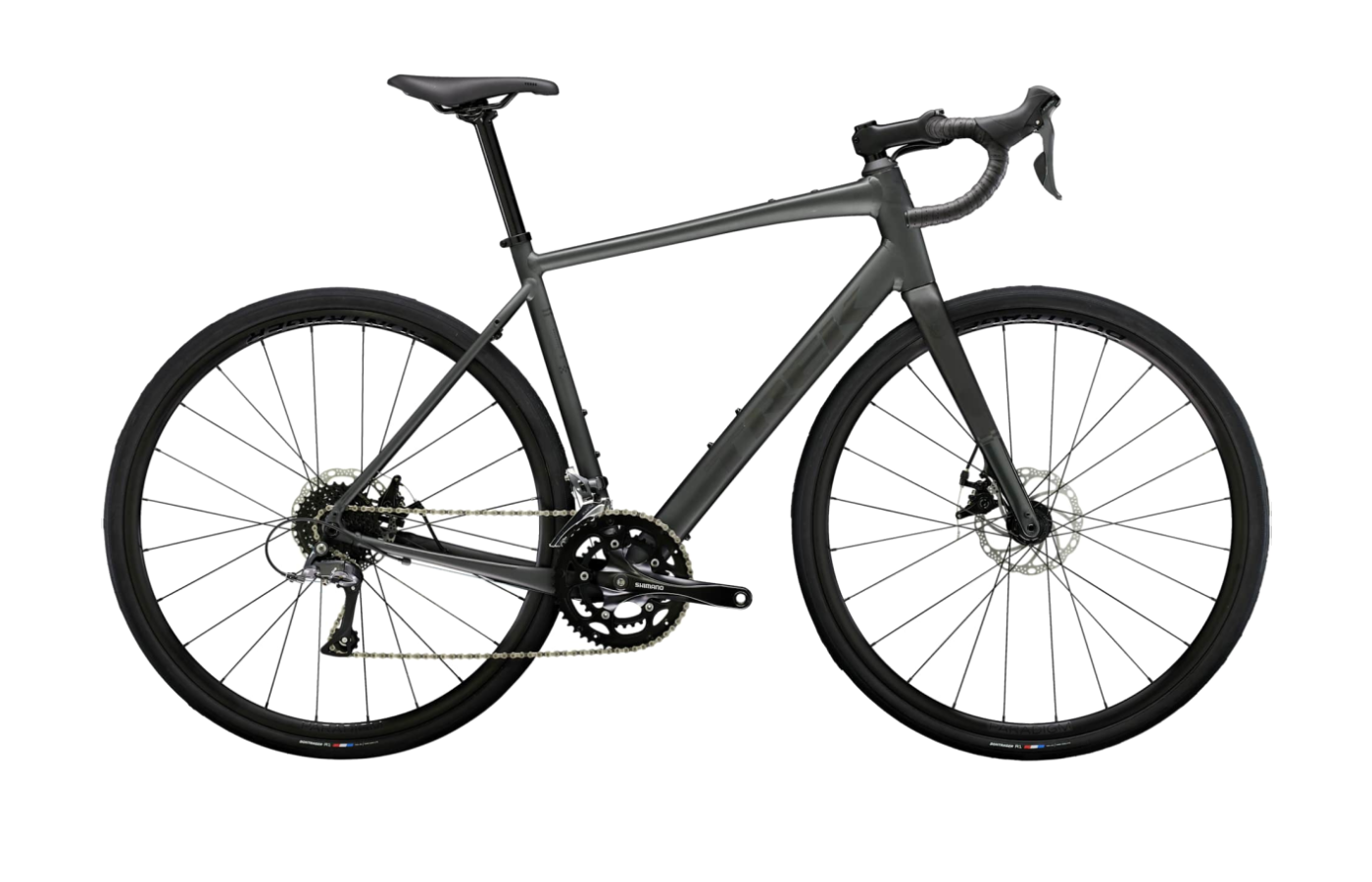
Domane
The most direct competitor to the Roubaix. Trek skips the active shock and uses an IsoSpeed decoupler at the seat tube — simpler, lighter, but less plush over big hits. Worth a look if you want endurance comfort without a serviceable cartridge.
Compare →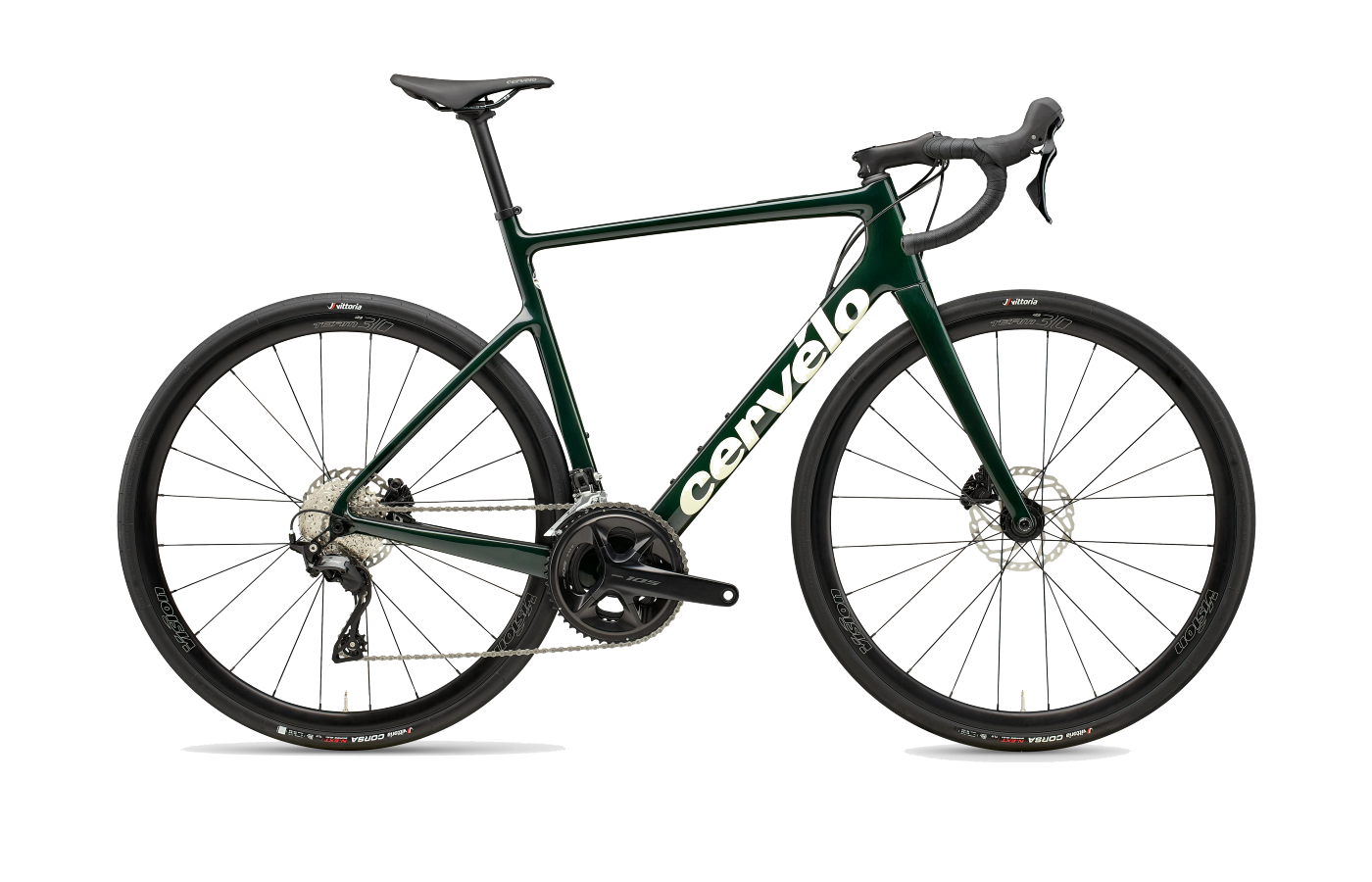
Caledonia
Cervelo's all-road bike threads the needle: roughly Tarmac-like geometry with Roubaix-grade tire clearance and zero suspension hardware. The right answer if you want one bike for fast roads and rougher days without the Future Shock complexity.
Compare →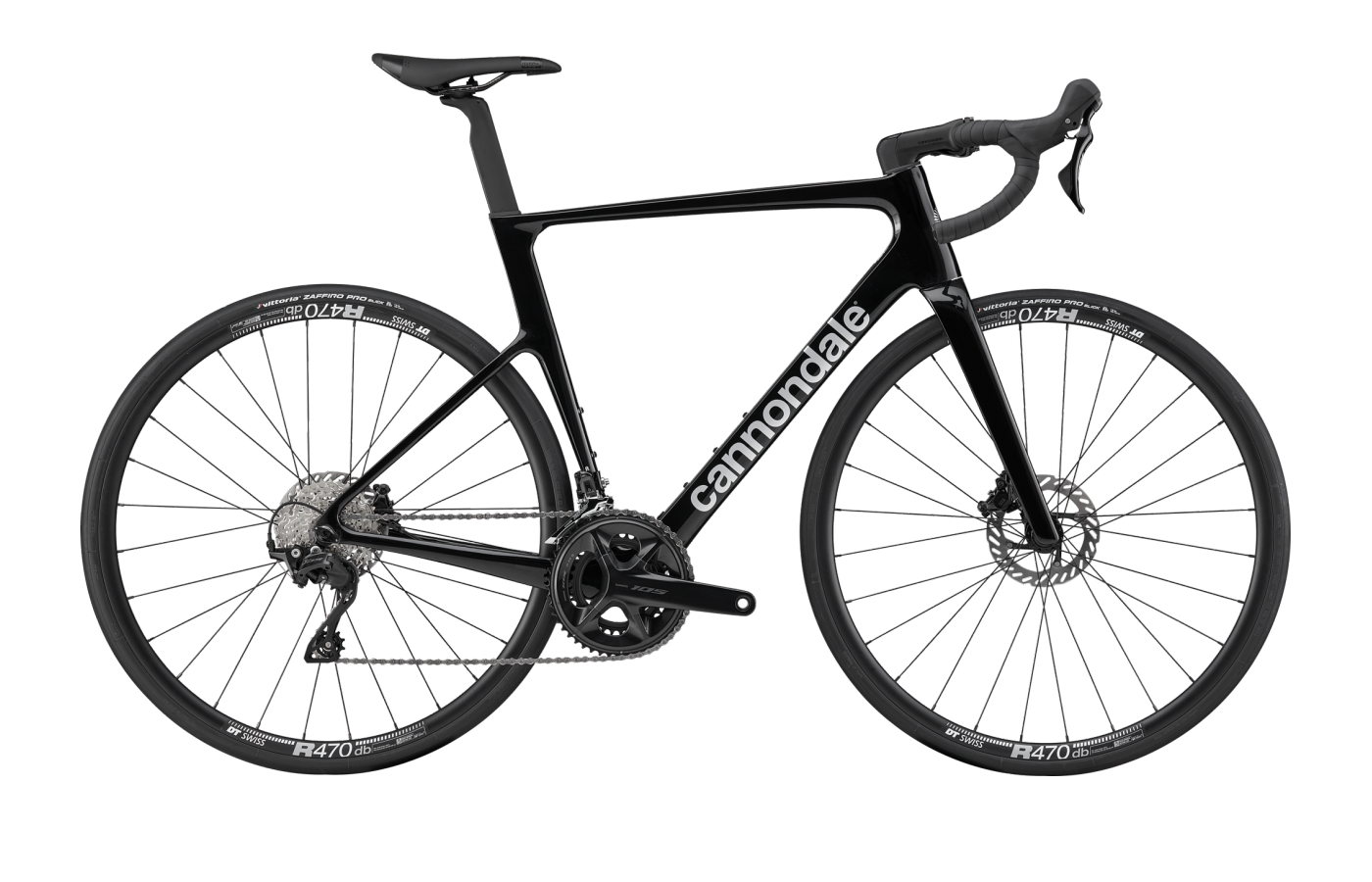
SuperSix EVO
Cannondale's race bike often undercuts the Tarmac on price for similar tier components and carries a slightly more balanced ride. Same do-everything race-bike philosophy, less expensive way in.
Compare →