Spire
vsSlash
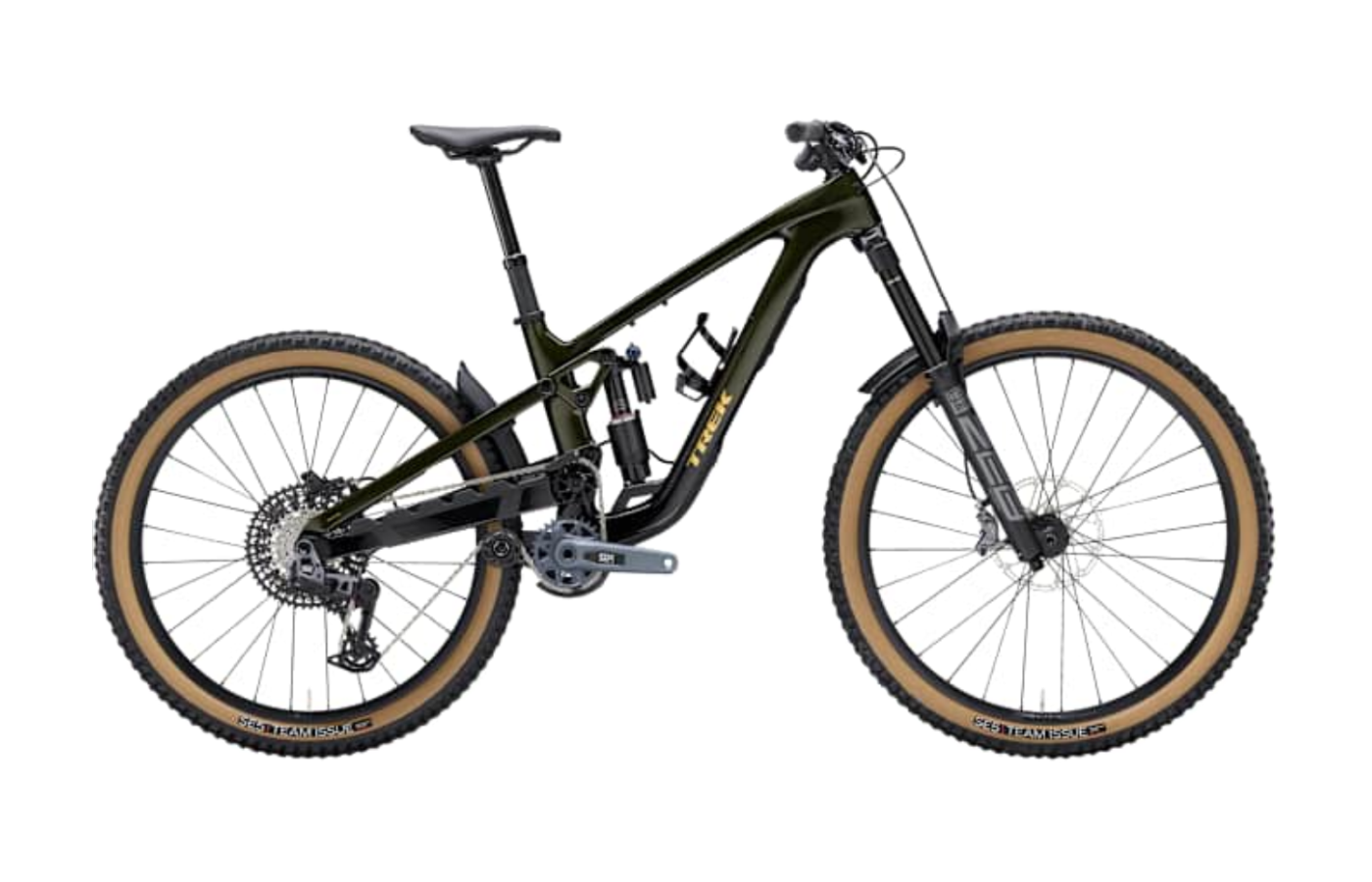
Two takes on the 170 mm bruiser.
The Spire is a four-bar 'nimble bruiser' that wants to leave the ground. The Slash is a high-pivot freight train that wants to flatten the ground.
Spire
- Quieter, simpler drivetrain — no idler, no extra chain links, no service-bulletin chain drops to track.
- Steep 78.8-degree seat angle (size MD) keeps the front wheel planted on heinous winch climbs.
- Lively, poppy character — wants to be unweighted off side hits instead of erasing them.
- Transmits more square-edge feedback than a high-pivot — long rock gardens are tiring.
- No electronic drivetrain option in the carbon lineup; top build is mechanical SRAM Eagle 90.
Slash
- High-pivot rear axle path — scalps square hits and braking bumps that would stall a four-bar.
- RockShox Vivid Ultimate shock delivers a 'coil-like' suppleness reviewers rate as best-in-class.
- Massive in-frame adjustability — angle-adjust headset, swappable shock mount for full 29er, mullet stock.
- Idler drivetrain demands meticulous maintenance — drag and noise climb fast when dirty.
- Stock Bontrager tires and integrated cockpit are widely panned as undersized for a 170 mm bruiser.
Editor’s analysis
Both bikes carry 170 mm of travel front and rear. After that, almost every engineering decision diverges.
On paper this is a clean enduro-vs-enduro pairing — 29-inch wheels, 170 mm travel, 63-degree-ish head angles, lifetime frame warranties. Pedal them back to back and the philosophies pull apart immediately. The Transition Spire is a classic four-bar with Transition's GiddyUp kinematics; the Trek Slash Gen 6 is a high-pivot with a 19-tooth idler and a rearward axle path. One bike is engineered to feel light and poppy. The other is engineered to feel calm and unstoppable.
The Transition Spire stays high in its travel and rewards an active rider. Reviewers describe a 'pitter-patter' initial stroke that handles small chatter, then mid-stroke support that keeps the bike from wallowing — Pinkbike's Henry Quinney called it the closest thing to an 'I'm Loic Bruni' feeling at speed. The trade-off is honesty about what it isn't: square-edged chunder transmits more feedback than a high-pivot, and BikeRadar specifically flagged frame stiffness as fatiguing in long rock gardens.
The Trek Slash takes the opposite bet. The high-pivot layout pulls the rear axle back as the wheel moves up, so the bike 'scalps' square hits instead of hanging up on them. Bike Perfect and The Loam Wolf both describe a 'coil-like' suppleness from the RockShox Vivid Ultimate, and the mullet (29/27.5) wheel setup keeps it from feeling like a total anchor in tight corners. The cost is mechanical: a 19-tooth idler that adds drag when dirty, plus extra chain wear, and a stock build (Bontrager SE5/SE6 tires, Line Pro carbon cockpit) that almost every reviewer wanted to swap.
Climbing is where the personalities really split. The Transition Spire's 78.8-degree effective seat angle (size MD) and standard drivetrain make it a quiet, efficient winch — heavy for its category but free of idler drag. The Trek Slash's 73.8-degree actual seat angle (the effective angle works out steeper) is comfortable seated, but reviewers consistently flag a 'stalling' sensation on technical climbs as the rear wheel moves backward to clear bumps. If you pedal a lot to your descents, the Spire is friendlier. If you take the lift or a shuttle, the Slash gives you back what it costs you on the way up.
Where the builds differ.
Comparing our editor's-pick builds side-by-side. Winners highlighted row-by-row — lower price and weight, and the better-spec component, each mark a point.
Build variants & pricing
Both lineups land in the $4.2k–$8.7k range. Trek has more rungs in the middle; Transition has only one carbon build.
Prices are current US MSRP. Note the lineup mismatch: Transition only offers carbon at one price ($7,699, mechanical Eagle 90), while Trek offers four carbon Slash builds spanning $6.7k to $8.7k including AXS Transmission. If electronic shifting is a hard requirement, the Slash is the only way to get it on a carbon frame in this matchup.
How they fit, how they steer.
Spire MD vs Slash ML — the fit-picked sizes for each. Reach is close (460 vs 468 mm) but the Slash sits 13 mm taller and runs a 73.8-degree actual seat angle vs the Spire's 78.8 — the Spire's steep effective angle is a deliberate climbing-position bias.
Which size should I buy?
Sizes shown are the fit-algorithm picks; both ranges overlap closely in the middle, but Transition uses S/MD/LG/XL/XXL labels while Trek uses S/M/ML/L/XL.
→These are starting points. Flexibility, riding style, and preferred position all shift the answer — if you’re between sizes, a professional fit beats a chart.
What the magazines said.
Published reviews from trusted cycling outlets. Click through for the full write-up.
Which one should you buy?
If you pedal to the top of every descent and want a bike that pops, get the Spire. If you take lifts, shuttles, or live in chunder, get the Slash.
Spire
If you earn most of your descents under your own legs and you like a bike that wants to be thrown around, the Spire is the better partner. The steep seat angle and idler-free drivetrain make long climbs less of a tax, and the four-bar suspension rewards an active rider who pumps and pops instead of plowing.
Slash
If your rides are bike park laps, shuttle days, or fall-line backcountry chunder, the Slash's high-pivot rear end pays for itself every descent. You'll trade some climbing pep and accept the idler maintenance, but in return you get one of the most composed 170 mm bikes on the market — a 'security blanket' that empowers questionable line choices.
Questions buyers actually ask.
Short answers to the things we get emailed about most often.
01Which one climbs better?
The Transition Spire, by a clear margin on technical climbs. Its 78.8-degree effective seat angle (size MD) sits the rider directly over the bottom bracket, and the standard four-bar drivetrain has no idler drag to fight. The Slash has a steep enough seat tube to be comfortable on smooth climbs, but reviewers consistently flag a 'stalling' sensation on chunky technical ascents — the high-pivot's rearward axle path means the rear wheel moves back before it moves up, which can suck momentum at low speed.
On fire-road and smooth singletrack climbs the gap shrinks; both have ~100% anti-squat and pedal cleanly. The Slash also weighs more in most builds (often 16+ kg) which compounds the deficit on long days.
02Which one descends harder?
The Trek Slash, particularly in chunky, square-edged terrain. The high-pivot layout combined with the RockShox Vivid Ultimate produces what Bike Perfect and The Loam Wolf both call a 'coil-like' suppleness, and the rearward axle path lets the rear wheel move with impacts instead of hanging up on them. On a true bike-park track or a steep, rooty fall-line, the Slash is calmer and faster.
The Spire is no slouch — its 63-degree head angle and 1257 mm MD wheelbase give it real high-speed stability — but it stays higher in its travel and transmits more square-edge feedback. On flowy or moderately chunky descents the Spire feels livelier; in genuine carnage the Slash pulls ahead.
03Is the Slash's idler system actually a problem?
It's a maintenance commitment, not a deal-breaker. The 19-tooth upper idler adds measurable drag — Trek claims about 3%, but reviewers like The Loam Wolf estimated closer to 10% in real-world dirty conditions. Cycling Magazine reported very uneven wear on the upper idler after five months of wet riding. Several outlets also reported chain drops on early units, which Trek addressed with a service bulletin specifying 7 mm of spacing on the lower MRP guide and an updated upper idler with a longer tooth profile.
If you keep the drivetrain clean and verify your spacer config, the system is generally trouble-free. If you're a 'set and forget' rider, the Spire's standard drivetrain is the easier life.
04How do the suspension platforms differ?
The Spire runs Transition's GiddyUp four-bar — a Horst-link layout tuned for support and 'pop.' It stays high in its travel and pumps trail features back at the rider, but transmits more feedback through repeated square hits.
The Slash Gen 6 runs a high-pivot four-bar with Trek's Active Braking Pivot and a 19-tooth idler pulley. The main pivot is moved up significantly so the rear axle moves rearward as it cycles — that's what 'scalps' square edges and decouples braking forces from the suspension. It's a smoother, more isolated ride at the cost of mechanical complexity.
05What's the rear shock spec on each?
Transition Spire Carbon Eagle 90 ($7,699): RockShox Vivid Ultimate, 205x65 mm. The cheaper Alloy Eagle 90 drops to a Super Deluxe Ultimate.
Trek Slash 9.8 GX AXS T-Type Gen 6 ($7,699): RockShox Vivid Select+, 230x65 mm. The flagship 9.9 X0 AXS Gen 6 ($8,699) upgrades to the Vivid Ultimate. So at the editor's-pick tier, the Spire actually ships the higher-grade Vivid — one of the spec wins for Transition at this price.
06Which has more geometry adjustment?
The Slash, by a wide margin. Trek's frame includes an angle-adjust headset (cups sold separately, ~$50–$70), an adjustable leverage rate via the rocker link, and a swappable shock mount that lets you convert from the stock mullet (27.5" rear) to a full 29er. Some adjustment parts ship separately, which several reviewers complained about given the bike's price.
The Spire has a flip chip that toggles between a 62.5-degree (low) and 63-degree (high) head tube angle, and is approved for mixed-wheel running with the chip in high. That's it — no angle-adjust headset, no leverage-rate adjustment.
07How wide of a tire fits each?
Trek Slash Gen 6: 63.5 mm clearance per Trek's published spec — that's well past any 29x2.6 trail tire and roomy enough for plus-sized rubber if you want it.
Transition Spire: Transition doesn't publish a clearance number, but stock builds ship with 2.5" tires (Schwalbe Magic Mary front / Albert rear on the Carbon Eagle 90, Maxxis Assegai/DHR II on the Alloy Eagle 70). Real-world owner reports suggest 2.6" fits comfortably; reviewers haven't tested wider.
08What about long-term durability?
Both come with lifetime frame warranties to the original owner. The Spire's known issues are paint thickness (heel rub wears through the chainstay paint quickly) and 'soft' alloy linkage bolts that can strip if over-torqued — minor but worth knowing. The Slash's main long-term concerns are the idler system (uneven idler wear and rare chain drops on early units, both addressed by Trek service bulletins) and stock Bontrager tires/wheels that several reviewers replaced early.
Transition is widely praised for customer service and parts availability; Trek's dealer network is larger and they ship updated idler parts at no cost to affected owners.
Similar bikes
If your priorities don’t map cleanly onto either of these, one of these adjacent bikes probably fits better.
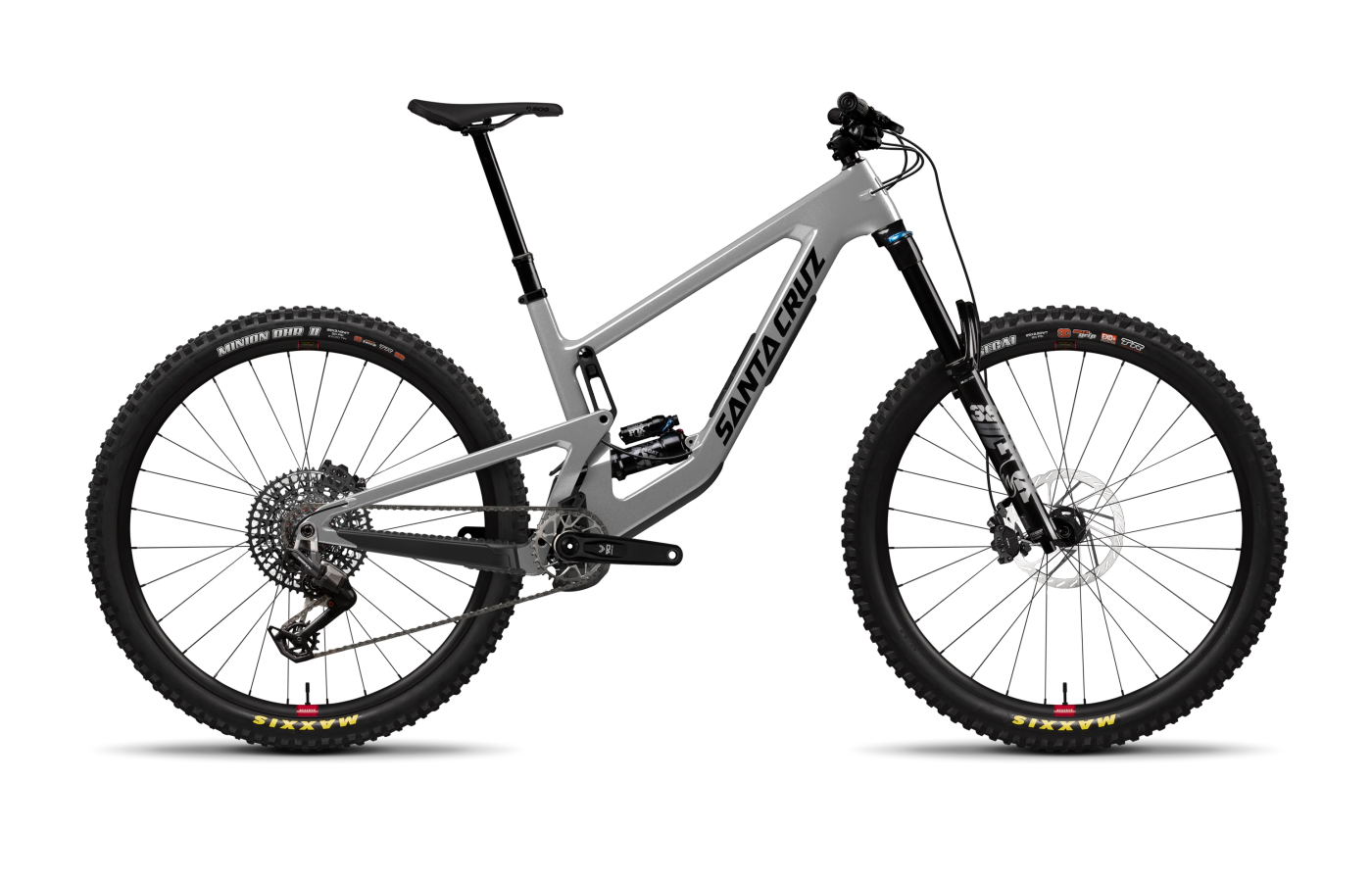
Megatower
The closest direct peer to the Spire — another 170 mm 29er, but with VPP suspension that gives it a slightly more supported, less 'pitter-patter' pedaling feel. Worth a look if you want the Spire's geometry with a bit more pedaling platform.
Compare →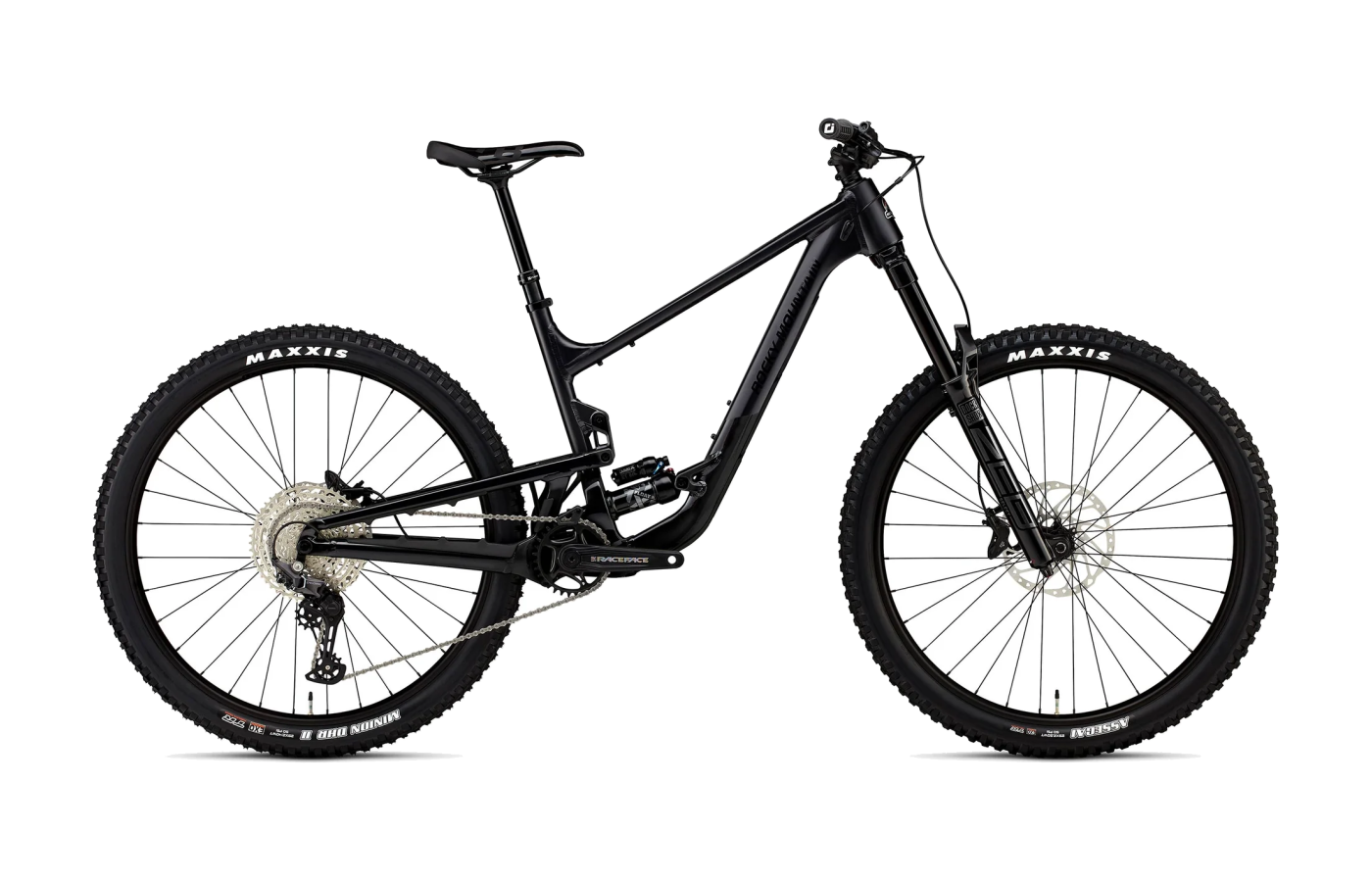
Altitude
A race-focused rival to the Slash with extensive geometry adjustability and a more traditional (non-high-pivot) suspension layout. The pick if you want lighter overall builds without sacrificing the modern enduro geometry.
Compare →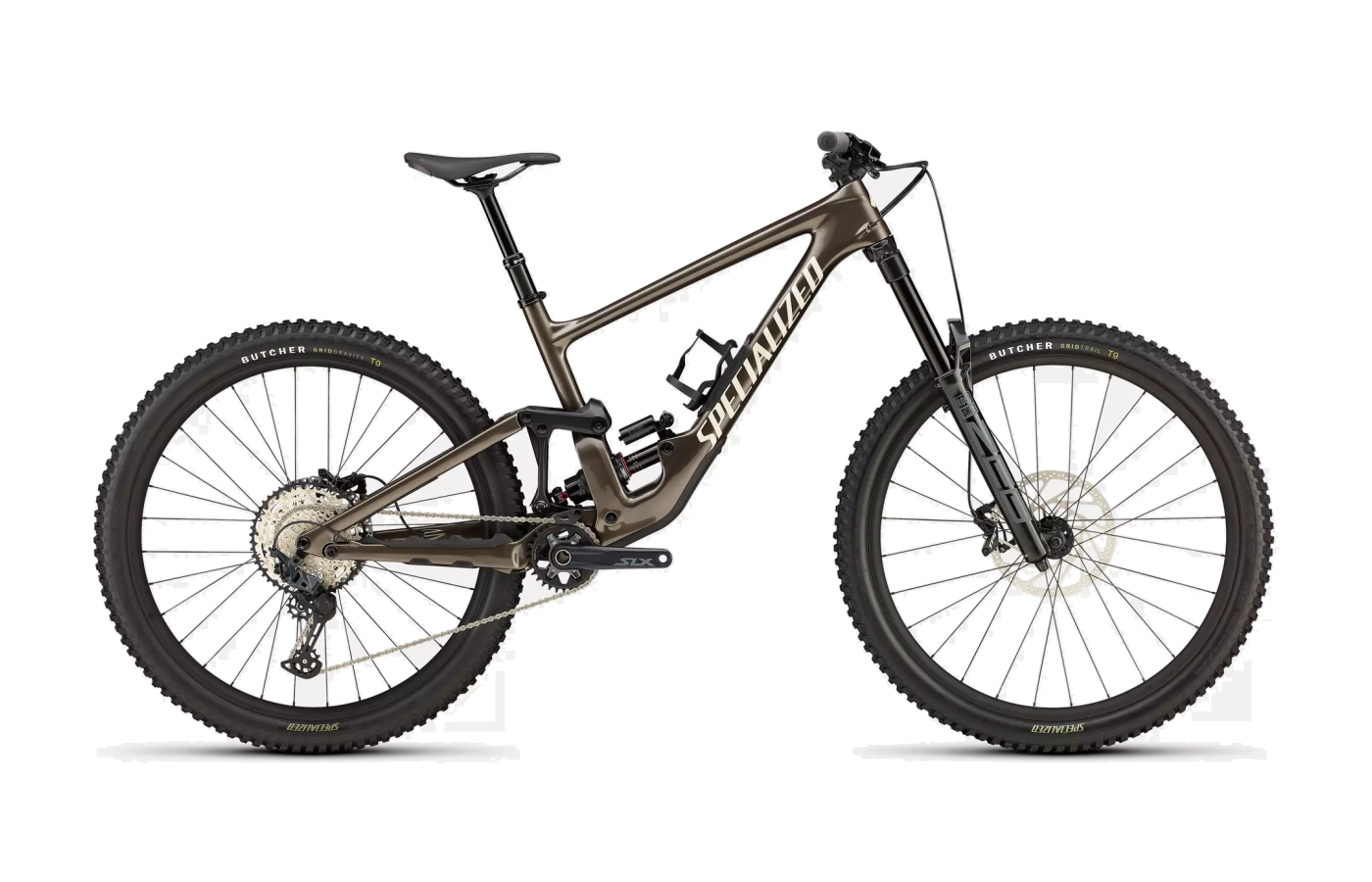
Enduro
The bike that arguably defined this category. Splits the middle between the Spire's poppiness and the Slash's plow-ability, and gets you Specialized's deep dealer and demo network.
Compare →