Slash
vsCapra
Two 170 mm enduro bikes, two completely different bets.
The Trek Slash bets on a high-pivot idler to delete square hits. The YT Capra bets on a refined four-bar plus a direct-to-consumer parts package.
Slash
- Class-leading downhill composure — the high-pivot rearward axle path 'devours' square-edge hits and braking bumps.
- RockShox Vivid rear shock delivers a coil-like feel that almost no air-sprung enduro bike matches.
- Deeply adjustable platform — angle-adjust headset, mullet/29 swap, and Mino Link-style geometry tweaks built in.
- Heavy and sluggish at low speed — the 9.8 GX AXS hits 15.83 kg / 34.9 lb (size M); the alloy 9 pushes 17.86 kg / 39.4 lb.
- Idler drivetrain demands meticulous maintenance and adds audible drag once dirty — Loam Wolf measured ~10% real-world efficiency loss.
Capra
- Direct-to-consumer value — $6,299 for the Core 4 CF buys Fox 38 Factory, DHX2 Factory coil, and Crankbrothers Synthesis Enduro 3 wheels.
- Lively, poppy ride — V4L sits high in its stroke, rewards active riders, and posted the fastest times in Pinkbike's Field Test.
- Lighter than the Slash — the Core 4 CF lands at 15.90 kg / 35.05 lb, with simpler four-bar drivetrain and no idler drag.
- Conservative reach numbers (464 mm on size L vs 488 mm on the Slash size L) — taller riders may want the XL.
- DTC service model — no local shop, and Pinkbike commenters report multi-month warranty waits when frames crack.
Editor’s analysis
This is a fight about how you want a 170 mm bike to feel — the high-pivot bruiser that lets you switch off, or the lively four-bar that rewards you for staying on.
The Trek Slash and YT Capra both run 170 mm front and rear, both run a mullet, both target the same enduro-and-bike-park rider. The frames could not feel more different. Trek went radical for Gen 6 — high main pivot, 19-tooth idler pulley, rearward axle path that grows the rear-center by roughly 17 mm under compression. The Capra Mk III stuck with YT's refined Virtual Four Link and spent its R&D budget on a 'Side Wing' frame that finally fits a water bottle and a stiffer Ultra Modulus carbon layup.
On price, it's a bloodbath. The Capra starts at $2,999 for the Core 1 alloy and tops out at $6,299 for the Core 4 CF flagship. The Slash starts at $4,399 for the alloy 8 and climbs to $8,699 for the 9.9 X0 AXS T-Type carbon. At the editor's-pick tier — both wearing SRAM GX Eagle Transmission on carbon frames — the YT Capra Core 4 CF undercuts the Trek Slash 9.8 GX AXS by $1,400 and ships with a Fox 38 Factory and DHX2 Factory coil shock instead of RockShox Select+ air. That's the direct-to-consumer math, and it's hard to argue with.
On the trail the philosophies separate cleanly. The Slash is what reviewers across Loam Wolf, Bike Perfect, and Flow Mountain Bike called a 'security blanket' — a bike that lets you switch off in chunder, with a coil-like Vivid rear shock that mutes braking bumps better than almost anything air-sprung. The trade is weight (the alloy Slash 9 hit 17.86 kg / 39.4 lb on Bike Magazine's scale), low-speed sluggishness, and audible idler drag once the chain gets dirty. The Capra is the Pinkbike Field Test bike that posted the fastest downhill times despite feeling 'firmer' and 'less forgiving' than its rivals — a bike that demands active input and pays you back with pop, agility, and Bike of the Year-winning corner exit speed.
Climbs split the same way. Both run ~100% anti-squat and steep effective seat tube angles (Trek ~77 deg at sag, YT 77.4 deg static on size L), so neither wallows. But the Slash's idler introduces real friction — Loam Wolf measured something closer to 10% drag in the real world versus Trek's claimed 3% — and the rearward axle path can stall on technical, square-edged climbs. The Capra is the more natural climber. Pick the Slash if your day is 70% descent and you want to switch your brain off; pick the Capra if your day is balanced and you want to stay engaged.
Where the builds differ.
Comparing our editor's-pick builds side-by-side. Winners highlighted row-by-row — lower price and weight, and the better-spec component, each mark a point.
Build variants & pricing
Both lineups are wireless GX Transmission at the editor's-pick tier — but the Capra Core 4 ships Fox Factory suspension for $1,400 less than the Slash 9.8 GX.
Prices are current US MSRP. The Slash spans $4,399–$8,699 across alloy and carbon; the Capra spans $2,999–$6,299 with no carbon flagship north of $7k. YT's listed price excludes shipping and customs duties — figure that into the comparison.
How they fit, how they steer.
Compared at Trek size ML (488 mm wheelbase: 1253 mm; 468 mm reach) vs YT size L (1243 mm wheelbase; 464 mm reach). The Slash is slacker (63.3 vs 64 deg HTA) and a touch lower at the BB; the Capra holds a steeper effective seat angle and tighter rear center.
Which size should I buy?
Size recommendations factor stack, reach, and effective top tube against rider height. Sizing is tight — the Capra's L and the Slash's ML map to similar rider heights despite the different labels.
→These are starting points. Flexibility, riding style, and preferred position all shift the answer — if you’re between sizes, a professional fit beats a chart.
What the magazines said.
Published reviews from trusted cycling outlets. Click through for the full write-up.
Which one should you buy?
If your day is 70% descent on chunky, steep terrain and you want a bike that lets you switch off, get the Slash. If you want one bike for everything from EWS-style racing to flowy bike park laps — at thousands less — get the Capra.
Slash
If you live for shuttle laps, bike park days, and steep PNW or Alps tech where square-edged roots eat traditional suspension, the Slash's high-pivot magic is the cheat code. You accept the weight, the idler drag, and the maintenance for a bike that 'absolutely devours hits of all sizes.'
Capra
If you want one bike for human-powered enduro loops, lift days, and the occasional race — without a five-figure invoice — the Capra Core 4 is the most-bike-for-the-money play in the segment. It demands more rider input than the Slash, and pays you back with pop and pace.
Questions buyers actually ask.
Short answers to the things we get emailed about most often.
01Which is faster downhill?
It depends on the rider and the trail. The Trek Slash is the calmer, more forgiving bike in chunder — the high-pivot rearward axle path lets it 'plow' through square-edged braking bumps and rock gardens that would hang up a four-bar. Reviewers across Loam Wolf, Bike Perfect, and Flow Mountain Bike repeatedly described it as a 'security blanket' that lets you switch off.
The YT Capra, despite feeling 'firmer' and 'less forgiving' on small chatter, posted the fastest downhill times in Pinkbike's Field Test against its peers. Its taut suspension lets you generate speed pumping through corners and rollers. So: Slash if you ride steep, ugly chunder; Capra if you ride fast flow.
02Which climbs better?
The YT Capra, in most cases. Both bikes run roughly 100% anti-squat and steep effective seat angles (~77 deg) for centered climbing posture, but the Slash's high-pivot idler introduces real friction. Trek claims 3% drag from the 19-tooth pulley; The Loam Wolf estimated closer to 10% in real-world riding once the chain and idler get dirty.
The Slash also has a 'stalling' tendency on technical, square-edged climbs where the rearward axle path momentarily sucks momentum. Capra's standard four-bar layout has none of this — it's a more natural climber, especially on long backcountry days.
03How much does the price gap actually matter?
A lot. At the editor's-pick tier — both running SRAM GX Eagle AXS Transmission on carbon frames — the Capra Core 4 CF is $6,299 vs the Slash 9.8 GX AXS at $7,699. That's a $1,400 swing, and the Capra ships with better suspension (Fox 38 Factory + DHX2 Factory coil vs RockShox Select+ air on both ends).
At the entry, the gap widens: the Capra Core 1 AL is $2,999 vs the Slash 8 alloy at $4,399. If raw spec-per-dollar is your priority, this isn't close. The Slash's premium goes into the high-pivot frame architecture, the deep adjustability, and Trek's dealer network.
04What's the deal with the Slash's idler — is the maintenance really that bad?
It's real but manageable. The 19-tooth upper idler and lower MRP guide add wear points and need to stay clean to run quietly. Cycling Magazine found 'very uneven wear' on the upper idler after five months of wet riding, and Bike Magazine had a top idler seize after a wet winter.
More notably, early Gen 6 Slashes had a chain-dropping issue traced to incorrect MRP guide spacing — Trek issued a service bulletin (7 mm of spacing between ISCG tabs and guide) and shipped an updated longer-tooth idler at no cost. If you're buying new, this is sorted. If you're buying used, verify the spacer config and idler generation.
05What suspension does each bike ship with at the editor's-pick tier?
Trek Slash 9.8 GX AXS Gen 6 ($7,699): RockShox ZEB Select+ fork (170 mm, Charger 3.1 RC2) and RockShox Vivid Select+ rear shock (230 x 65 mm). The Vivid is widely praised for its 'coil-like' feel even at the Select+ trim.
YT Capra 29 Core 4 CF ($6,299): Fox 38 Float Factory fork (170 mm, GRIP X2) and Fox DHX2 Factory coil rear shock (230 x 65 mm). Top-tier Kashima coating, factory-level damping, and a true coil out back.
The Capra's package is objectively higher tier at a lower price — that's the DTC dividend in action.
06Can I run a full 29er or stick to the mullet on each?
Slash: Ships mullet (29 front / 27.5 rear) on sizes M through XL. Trek sells a separate 29-inch rear shock mount (~$50–70) that lets you swap to a full 29er. Blister noted the full 29 conversion makes the bike feel more centered and stable, at the cost of mullet agility.
Capra: Sold as separate MX (mullet) and 29er complete bikes — the rear triangle and rocker link are wheel-size specific, not flip-chip swappable. So you choose at purchase. The full 29 Capra is the consensus pick for racing and stability; the MX is the playful park rat.
07How do I pick a size? The Slash labels are confusing.
Trek uses S / M / ML / L / XL sizing, which adds a 'mid-large' between M and L — useful for 5'9"–5'11" riders who fall between traditional sizes. YT uses standard S / M / L / XL / XXL.
For a 5'8" (173 cm) rider, the fit-picked sizes are Slash ML (468 mm reach, 1253 mm wheelbase) and Capra L (464 mm reach, 1243 mm wheelbase) — very close in actual fit despite the different labels. Taller riders should note the Capra runs conservative on reach: a 6'1"+ rider who'd be Slash XL might land on the Capra XXL.
08What about tires — are the stock specs as bad as reviewers say?
Both ship tires that reviewers consistently flagged as undersized for the bikes' intent.
The Slash runs Bontrager SE5/SE6 or Brevard RSL SE Team Issue casings. Reviewers across Bike Perfect, Mountain Bike Action, and Flow Mountain Bike called them 'too flimsy' and 'perilously slick' for a 170 mm bike — Flow reported seven punctures on a single rear before a blowout.
The Capra historically shipped Maxxis EXO+ casings that MBR argued 'have no place' on a 170 mm enduro bike. The current Mk III spec runs Continental Kryptotal-FR Super Soft (front) and Kryptotal-RE Soft (rear) in Enduro casing — better, but most aggressive riders still upgrade to DH-casing tires day one. Budget $100–$150 either way.
Similar bikes
If your priorities don’t map cleanly onto either of these, one of these adjacent bikes probably fits better.
Spire
The Transition Spire offers similar long-and-slack 'big bike' geometry to the Slash but runs a standard four-bar — so you get the high-speed stability without the idler drag or the chain-drop service bulletins.
Compare →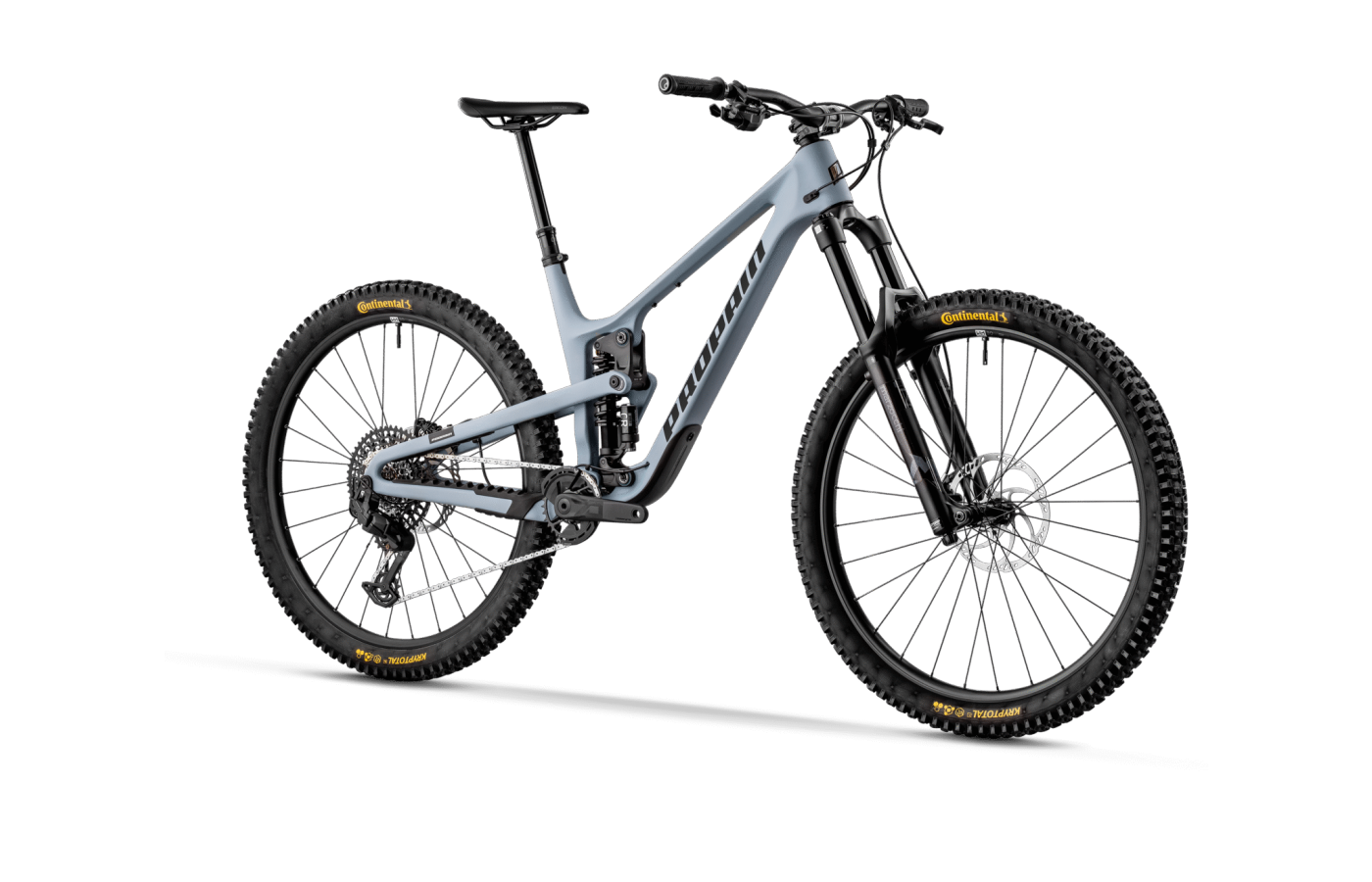
Tyee
Another direct-to-consumer rival to the Capra, the Propain Tyee plays in the same value pocket but with a PRO10 suspension layout that climbs even cleaner and stays remarkably composed on technical descents.
Compare →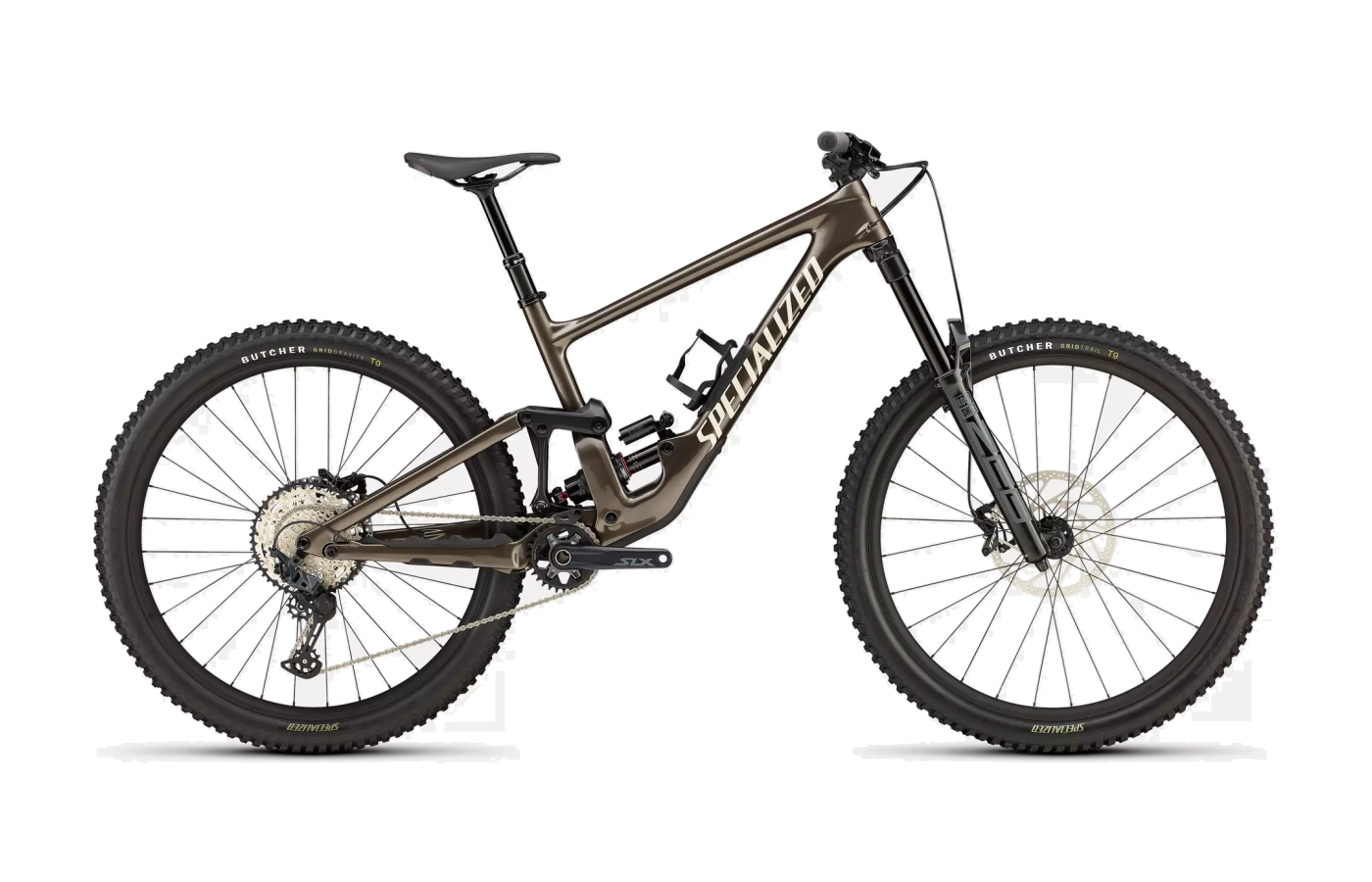
Enduro
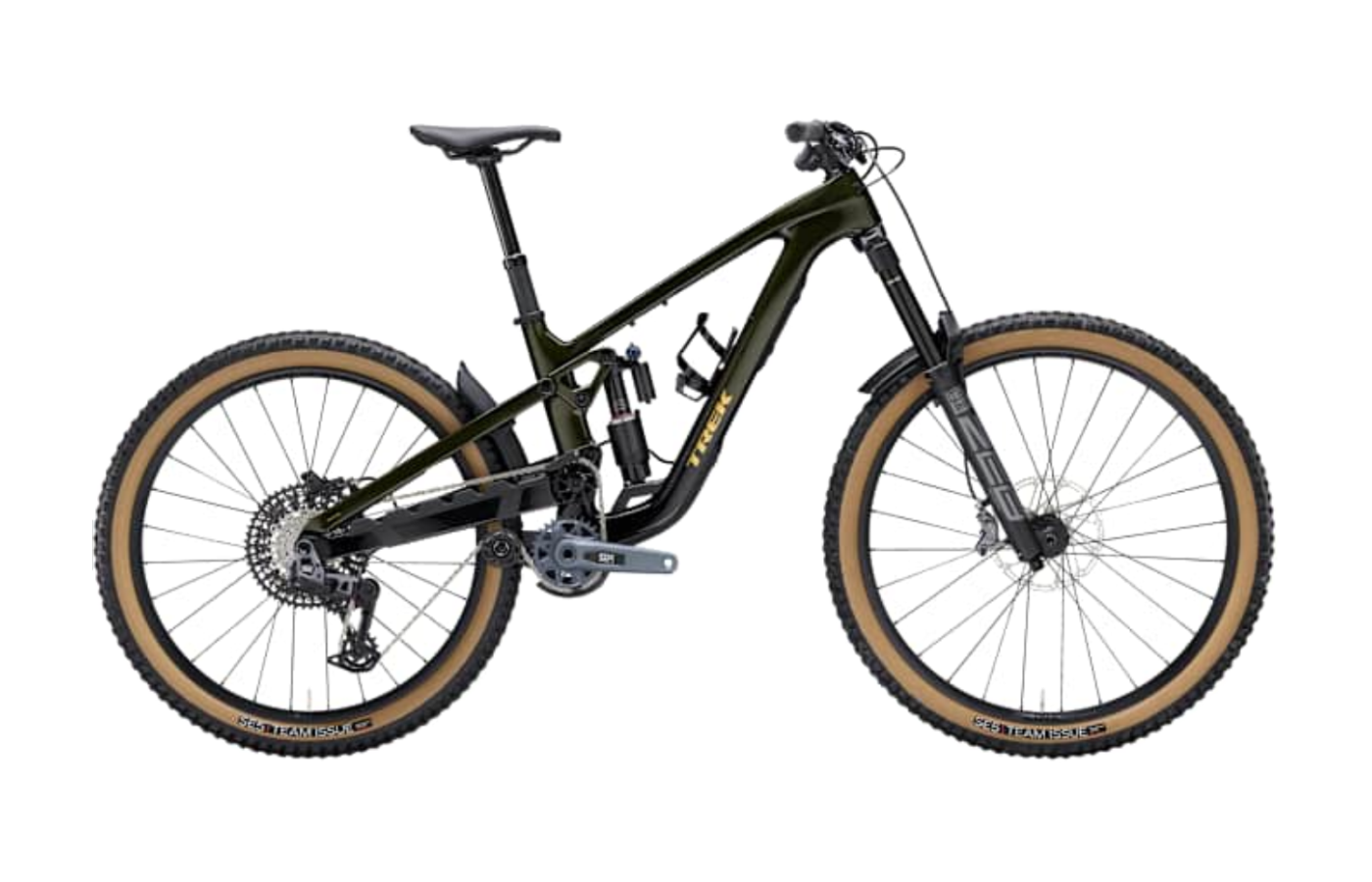
The Specialized Enduro is the do-it-all 29er racer that splits the difference — more 'plow' than the Capra's pop, less radical than the Slash's high-pivot, and backed by a global dealer network neither YT nor a high-pivot Trek can match.
Compare →