Sprint
vsSuperSix EVO
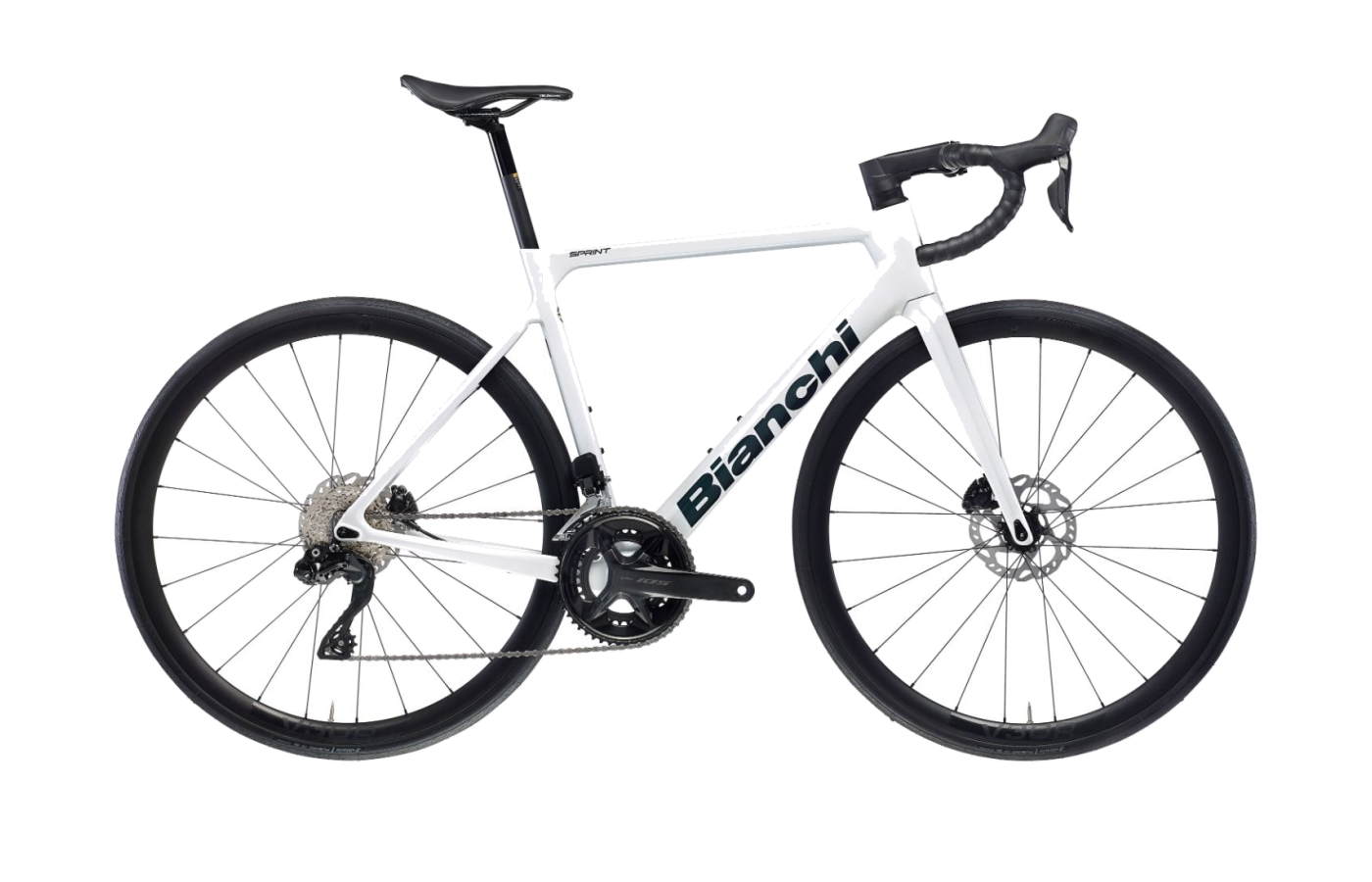
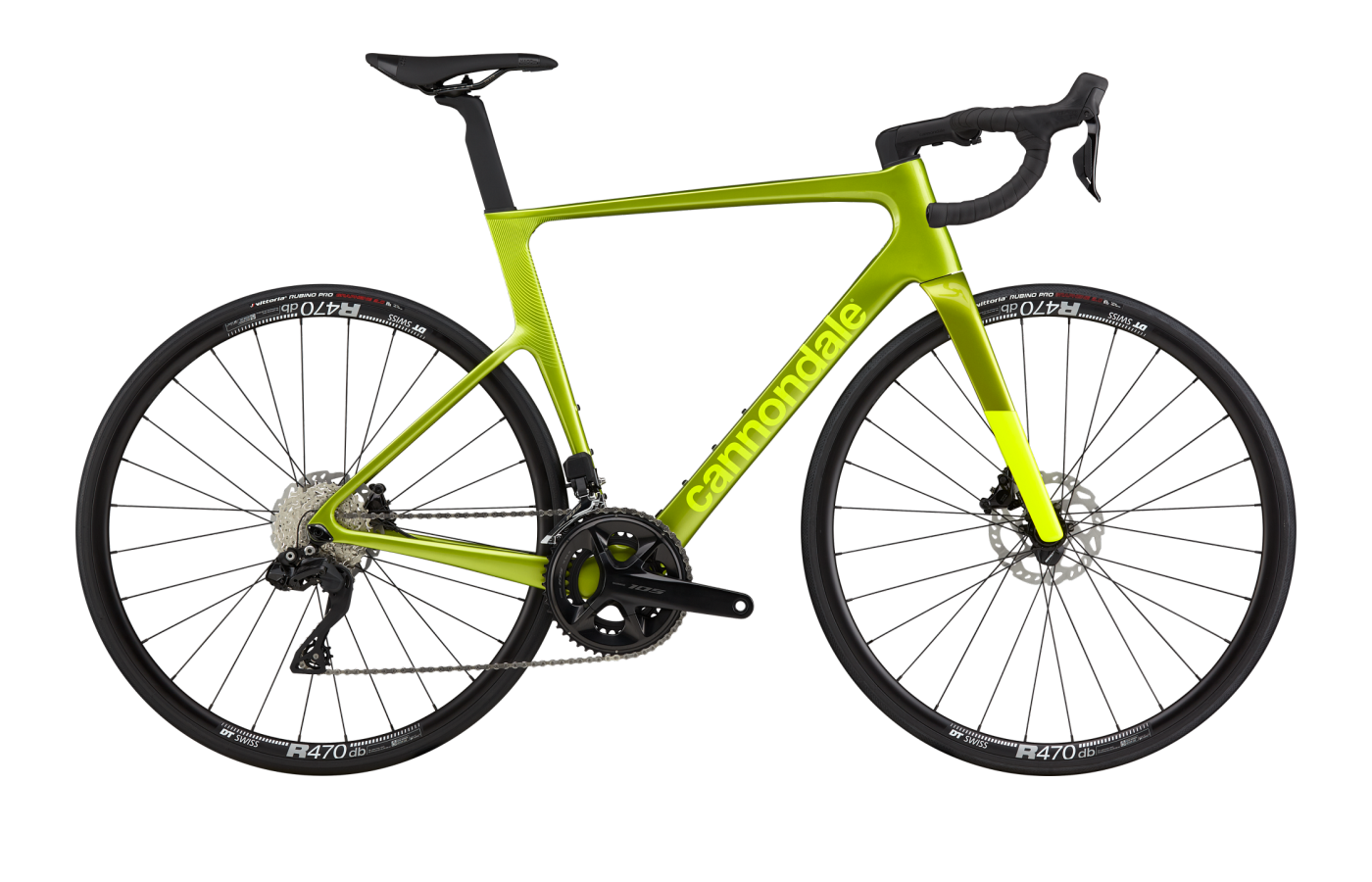
Affordable Italian heritage vs. the modern do-everything benchmark.
The Bianchi Sprint is a stiff, honest carbon racer that gets you on a Bianchi for under $4k. The SuperSix EVO is the integrated aero-lite platform that defines the category.
Sprint
- Cheapest carbon Bianchi with electronic shifting at $3,650 — the brand's most accessible Di2 entry point.
- Complete 105 groupset — full crank, rotors, and brakes, not the partial spec common at this price.
- Stiff, reactive front end — the "power box" head tube is consistently called out for zero flex under hard efforts.
- Velomann alloy wheels are heavy (around 2 kg) and beg to be upgraded.
- Stock 25 mm tires limit comfort; the frame clears 32 mm for those who swap up.
SuperSix EVO
- Genuine all-rounder — aero numbers near a dedicated aero bike, frame weight near a climbing bike.
- Threaded BSA bottom bracket — Cannondale finally killed the press-fit BB30, ending the creak complaints.
- Deep build range — nine variants from $2,999 (Build 6) to $14,999 (LAB71 Team).
- Aero seatpost rides slightly harsher than the previous generation; wider tires help.
- Integrated SystemBar cockpit and proprietary aero bottle cages are awkward to swap or replace.
Editor’s analysis
These bikes are nominally in the same race-road bracket, but they're really aimed at different buyers — the rider chasing a Celeste frame for the price of a 105 build, and the rider who wants the most-decorated all-rounder in the WorldTour.
On the surface this looks lopsided: the Bianchi Sprint tops out at $3,650 with 105 Di2, while the Cannondale SuperSix EVO scales from $2,999 all the way to $14,999 for the LAB71 Team. But ranges that wide hide what's actually being compared. At equivalent specs — both bikes in 105 Di2 trim — the Sprint is $3,650 and the EVO is $6,999. The frame, cockpit, and wheels are doing most of that work.
The Sprint's pitch is heritage and honesty. Bianchi kept the proven Sprint shape and added internal cable routing for 2024. The frame is praised for a stiff "power box" front end with "not a hint of front end flex," paired with mid-depth alloy Velomann wheels and 25 mm Vittoria Rubinos. The 73.0-degree head angle and 991 mm wheelbase (size 550) make for a punchy, reactive ride. There's no aero shaping to speak of, no integrated cockpit — just a clean carbon racer with a complete 105 groupset and room to upgrade.
The SuperSix EVO Gen 4 is the more technical bike. The frame uses integrated cable routing through a Delta steerer that still takes standard headset bearings, a threaded BSA bottom bracket (a long-overdue fix Cannondale made for this generation), and a deep aero seatpost. At size 54 it runs a 71.2-degree HTA with 55 mm fork rake to land at a 58 mm trail — slacker on paper than the Sprint, but tracking quicker than the geometry suggests. Reviewers describe it as feeling "on rails" through corners while staying stable past 70 km/h.
Put simply: the Sprint is the bike you buy when you want a real Bianchi and you'd rather spend the saved $3k on carbon wheels later. The EVO is the bike you buy when you want one race bike that does everything well, with the integration and refinement to match the price.
Where the builds differ.
Comparing our editor's-pick builds side-by-side. Winners highlighted row-by-row — lower price and weight, and the better-spec component, each mark a point.
Build variants & pricing
Two Sprint builds, both 105-tier; nine SuperSix EVO builds spanning 105 mechanical to LAB71 Dura-Ace and Red AXS.
Prices are current US MSRP. The compared builds here are both 105 Di2 — the closest tier match. The Cannondale costs roughly $3,300 more at that spec, with the bulk of the gap going to carbon wheels and the integrated front end on higher-tier EVOs (the Build 3 here uses the same alloy DT Swiss R470 wheelset as the entry EVO).
How they fit, how they steer.
Sprint at 550, EVO at 54 — fit-picked for the same rider. The Sprint sits 10 mm lower and 4 mm longer with a steeper 73.0-degree head angle; the EVO is taller, 19 mm longer in wheelbase, and uses a slacker 71.2-degree HTA balanced by extra fork rake to keep trail at a quick 58 mm.
Which size should I buy?
Both ranges cover similar territory; the Sprint goes one size smaller (470) and the EVO one size larger (61) at the extremes.
→These are starting points. Flexibility, riding style, and preferred position all shift the answer — if you’re between sizes, a professional fit beats a chart.
What the magazines said.
Published reviews from trusted cycling outlets. Click through for the full write-up.
Which one should you buy?
If you want a Bianchi for $3,650 and plan to upgrade wheels later, get the Sprint. If you want one race bike that does everything well out of the box, get the SuperSix EVO.
Sprint
If a Celeste frame and a complete 105 Di2 build for under $4k beats every aero feature and integration trick — and you're happy putting the saved budget toward carbon wheels in year two — this is the bike. It's a stiff, honest racer with proven geometry and clean lines.
SuperSix EVO
If you want a single race bike that climbs, sprints, descends, and handles long days with equal composure — and you're willing to pay for the integrated package — the EVO is the modern benchmark. Threaded BB, real aero numbers, and one of the most planted feels in the segment.
Questions buyers actually ask.
Short answers to the things we get emailed about most often.
01Which is the better value?
The Bianchi Sprint, by a wide margin on raw spec-per-dollar. At $3,650 you get a complete 105 Di2 build, full carbon frame and fork, and internal cable routing. The closest equivalent SuperSix EVO build (Build 3, also 105 Di2) is $6,999 — nearly double.
The EVO costs more because more of its design is in the frame and integration: aero shaping, Delta steerer, integrated cockpit options higher up the range. If those don't matter to you, the Sprint is the obvious value play.
02How do the geometries compare for fit?
At their fit-picked sizes (Sprint 550, EVO 54), the Bianchi sits 10 mm lower in stack (545 vs. 555 mm) and 4 mm longer in reach (388 vs. 384 mm). That's a more aggressive, racier position on the Bianchi.
The EVO uses a slacker 71.2-degree head angle versus the Sprint's 73.0-degree, but compensates with more fork rake to keep trail at 58 mm — so it steers quicker than the headtube angle suggests. The EVO's wheelbase is also 19 mm longer (1010 vs. 991 mm), which is a chunk of the EVO's added high-speed stability.
03Which has more tire clearance?
Both frames are spec'd at 32 mm maximum tire clearance. Neither is a gravel bike — for anything rougher than chip-seal, look elsewhere.
Note that some EVO reviews mention fitting 34 mm rubber unofficially; Cannondale officially rates the frame to 30 mm. We list 32 mm based on what's documented in the build specs. The Sprint ships with 25 mm Vittoria Rubinos and the EVO Build 3 with 25 mm Vittoria Rubino Pros — both bikes are immediate candidates for a 28 mm or 30 mm tire upgrade.
04Are the wheels worth upgrading?
On the Sprint, yes — and reviewers explicitly call this out. The stock Velomann alloy 30 mm wheels weigh roughly 2 kg the pair and are described as "remarkably stiff and fast for their considerable weight," with the recommendation that swapping in lighter carbon hoops makes the bike "literally take off."
On the EVO Build 3, the DT Swiss R470 DB wheels are similarly basic — fine for training, slow to spin up. Higher EVO builds (Hi-Mod 2 and up) come with HollowGram R-SL 50 carbon wheels with DT Swiss 240 internals, which are a different class entirely.
05Does the SuperSix EVO still have the press-fit bottom bracket?
No. Gen 4 (2023+) switched to a threaded BSA 68 mm shell. This is one of the most-praised changes in the generation — every reviewer cites it as a quality-of-life win for long-term ownership and shop service.
The Sprint uses a PressFit BB86.5x41 shell. It's well-regarded for its stiffness but is a press-fit standard, so it can develop the occasional creak that a threaded BB doesn't.
06Which is more comfortable on long rides?
Both are race bikes first and will feel firm with the stock 25 mm tires. Reviewers describe the Sprint as surprisingly composed for a stiff carbon racer, citing that it doesn't leave you feeling "beaten up after an hour" on rough tarmac, though they note the alloy seatpost is a comfort weak point worth upgrading.
The EVO Gen 4 uses a deep aero seatpost that some reviewers describe as a touch harsher than the Gen 3, but its slightly taller stack at the compared size and longer wheelbase tend to feel more settled at long-ride pace. Wider tires help on either bike — both will fit 32 mm.
07Can I race on the Bianchi Sprint?
Yes. The Sprint geometry is fundamentally race-oriented — 73.0-degree HTA, 991 mm wheelbase at size 550, aggressive 388 mm reach. Reviewers position it as suitable for everything from "weekly club ride or race" to "long distance sportive," and the frame's stiffness rewards aggressive efforts.
The practical limiter for racing isn't the frame, it's the wheels. The stock Velomann alloy hoops are functional but heavy; for crits or hilly road races, plan on a carbon wheel upgrade to keep up with the pack on accelerations.
08Is the SuperSix EVO worth the price jump over the Sprint?
It depends what you're paying for. At equivalent 105 Di2 trim, the gap is about $3,300. That money buys you: aero shaping (Cannondale claims 12 watts saved at 45 km/h vs. the previous EVO generation), a threaded bottom bracket, the Delta steerer integration, a proven race geometry with broader build options up the range, and a more polished out-of-the-box experience.
If you race regularly, ride a lot of long fast days, or value integration and refinement, the EVO earns the premium. If you want a stiff carbon Bianchi for the lowest possible buy-in and you're handy with upgrades over time, the Sprint is the smarter spend.
Similar bikes
If your priorities don’t map cleanly onto either of these, one of these adjacent bikes probably fits better.
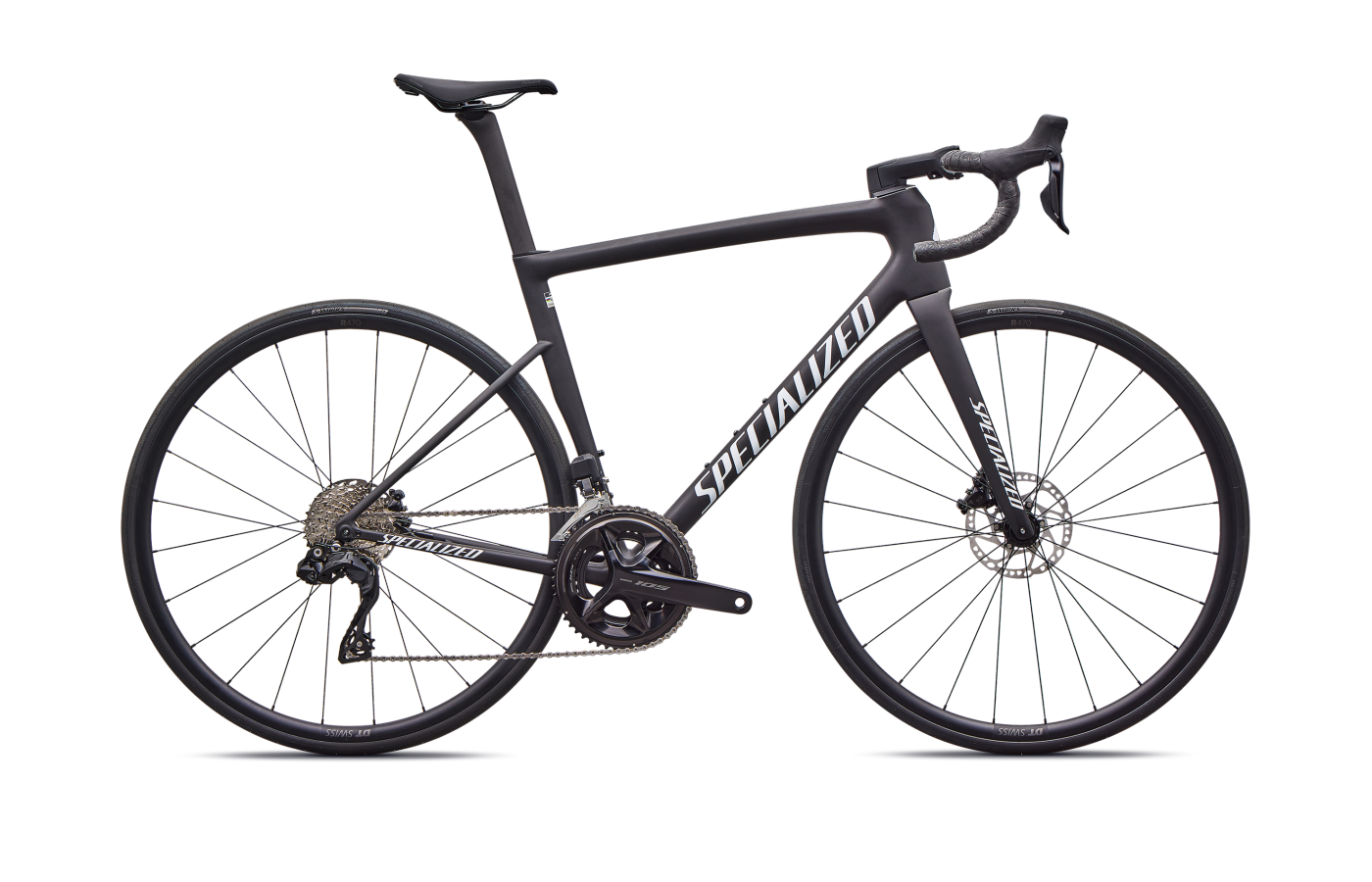
Tarmac
The do-everything race bike against which the EVO is most often measured — same all-rounder pitch with Specialized's deeper integration ecosystem and a wider build ladder.
Compare →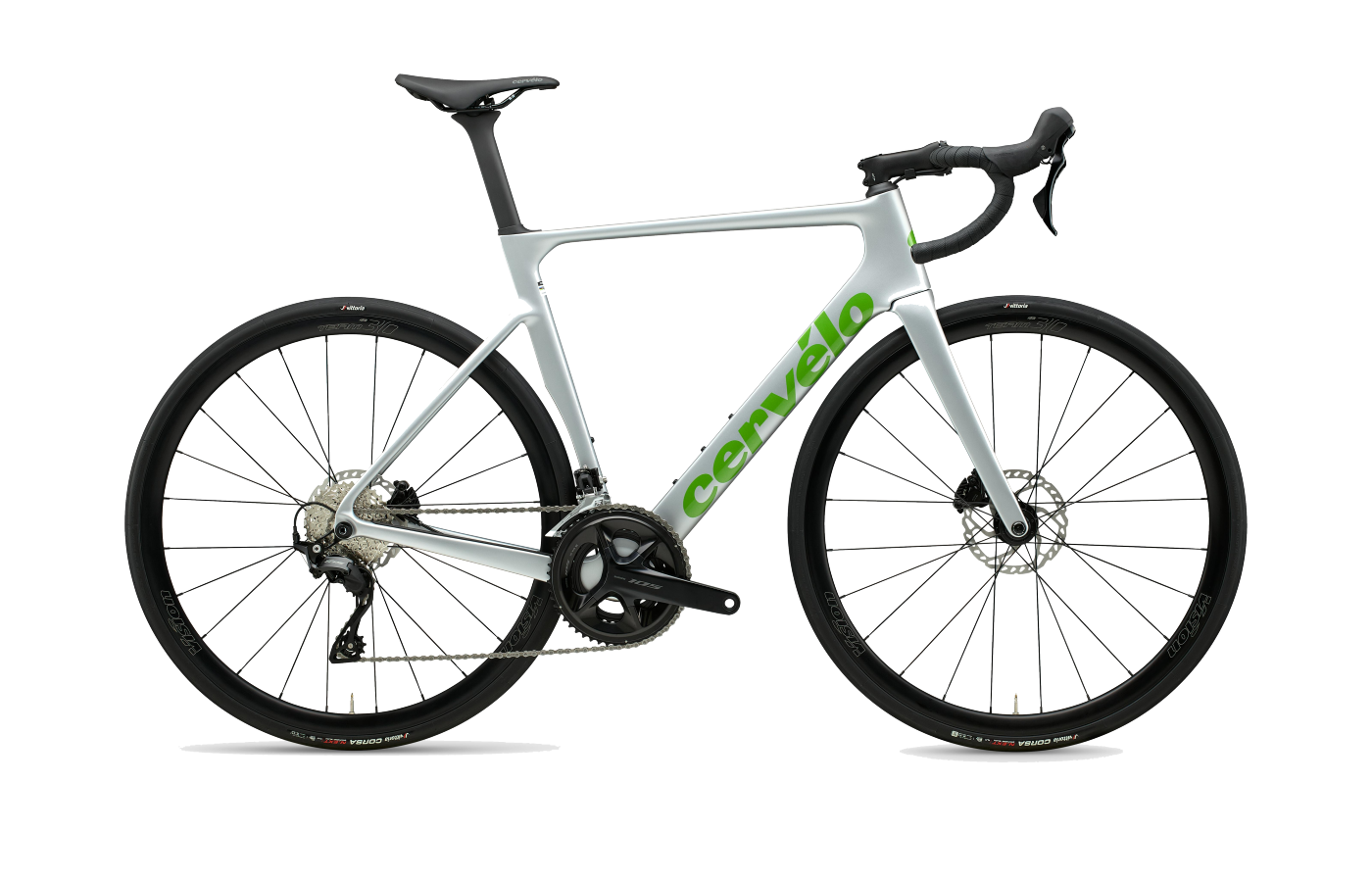
Soloist
Cervelo's Soloist hits the same mid-range race brief as the Sprint but with a more developed aero shape and integrated cockpit — a Cervelo for buyers who don't need the S5's flagship pricing.
Compare →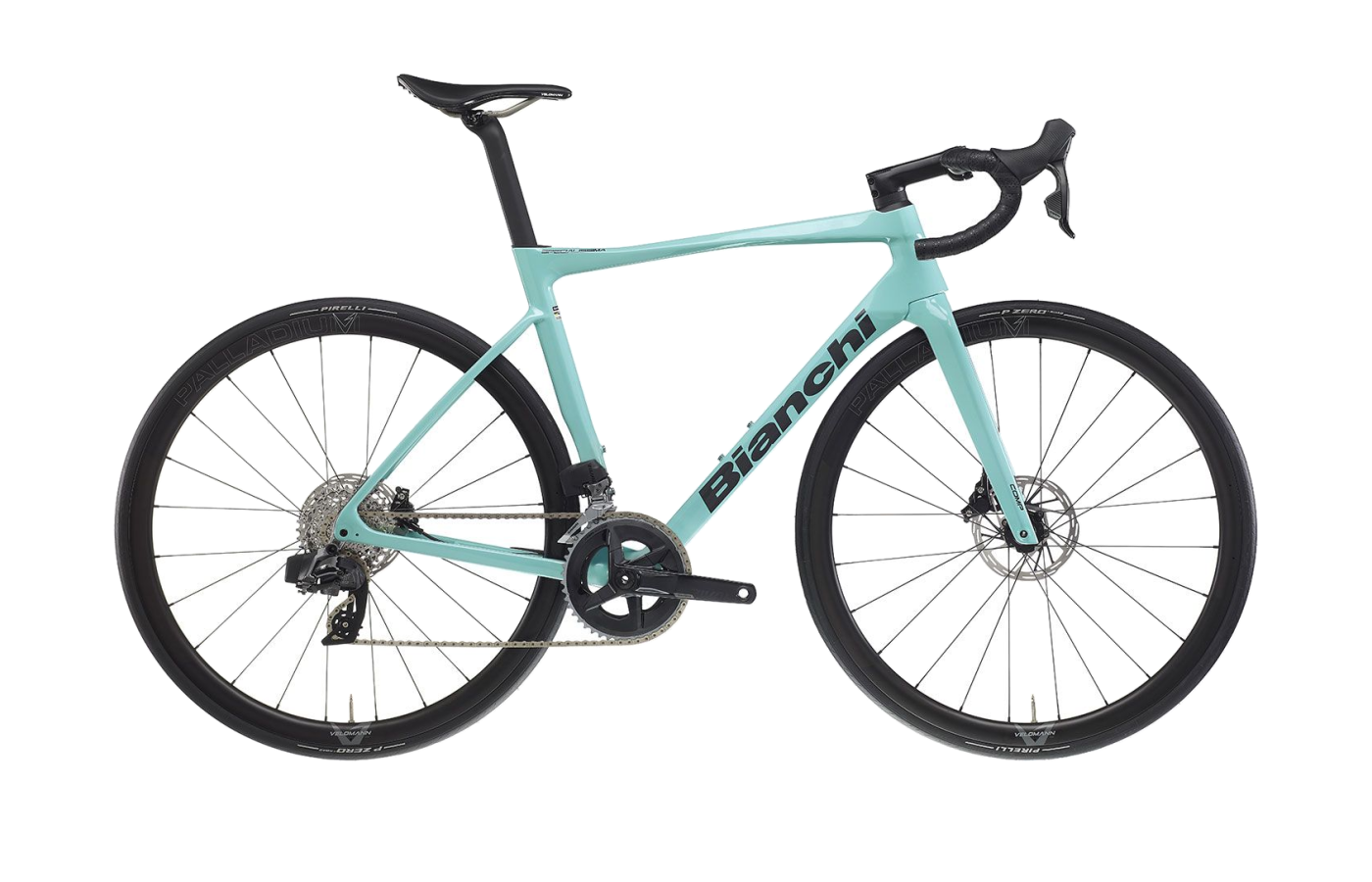
Specialissima
For Bianchi loyalists who want a true climbing specialist instead of an all-round racer — the Specialissima trades the Sprint's value pitch for a featherweight frame and pro-level pedigree.
Compare →