SuperSix EVO
vsV4Rs
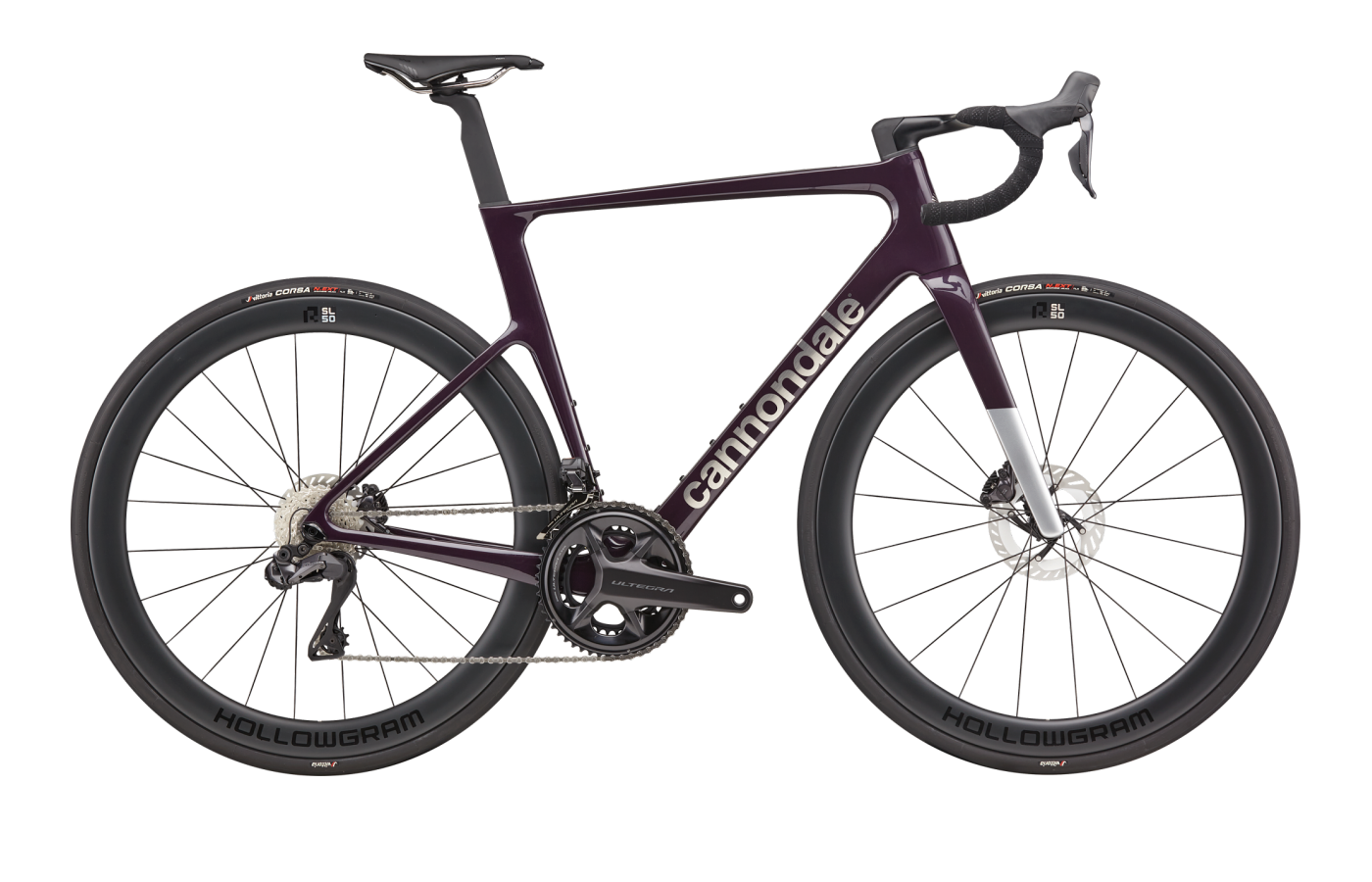
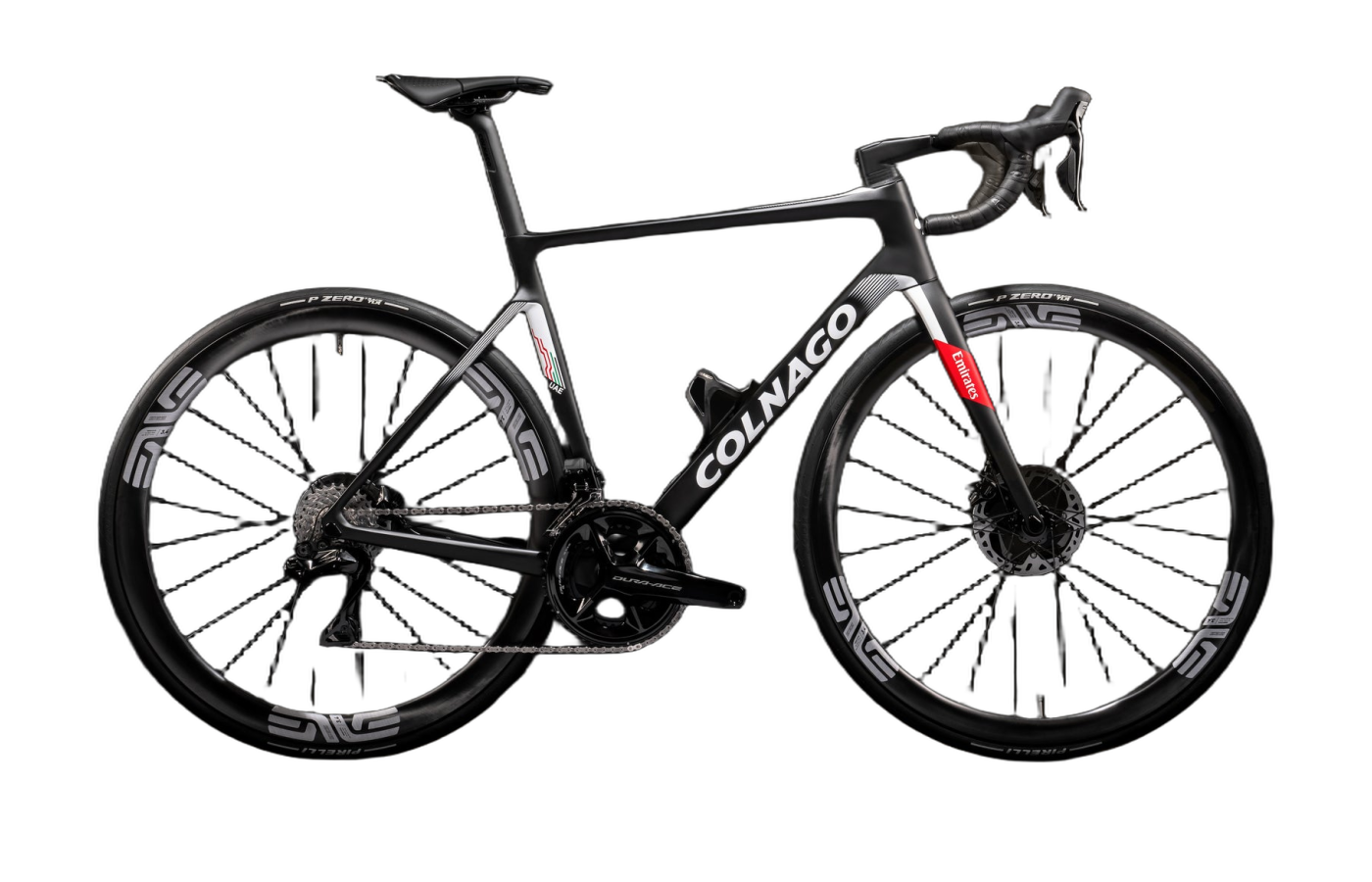
Two race bikes, two attitudes.
The SuperSix EVO is the do-it-all race bike that an amateur can actually live with. The V4Rs is Pogačar's tool — built for the people who can keep up with it.
SuperSix EVO
- Deepest build range — from $2,999 (105) to $14,999 (LAB71 Team Dura-Ace), including a sub-$10k Hi-MOD.
- Mechanic-friendly Gen 4 fixes — threaded BSA BB, Di2 battery moved to the downtube, standard headset bearings under the integrated cockpit.
- Truer all-rounder geometry — consistent ~58 mm trail across sizes, taller stack at the compared 54, 32 mm clearance that reviewers stretch to 34 mm.
- Front end is stouter than Gen 3 — Bicycling and Velo flag a slightly harsher ride feel that wider tubeless tires need to soften.
- Some reviewers note the Di2 battery's downtube port sits where water and grit collect — long-term sealing concern in wet climates.
V4Rs
- Pro-spec stiffness — Colnago claims 4% stiffer in the sprint and 5% stiffer seated than the V3Rs; Road.cc gives power transfer 9/10.
- Composed at speed — the slacker-than-most race-bike head tube and 408 mm chainstays make it "unerringly poised" on fast descents (BikeRadar).
- Built-in service wins — T47 threaded BB, CeramicSpeed SLT "lifetime" headset, integrated multi-tool in the steerer cap.
- No build under $7,000 and no carbon-grade ladder — the entry to the platform is steep and there's no value tier.
- Multiple reviewers describe handling as "slow" or "dulled" at sub-race speeds; the bike rewards aggression and underwhelms otherwise.
Editor’s analysis
Both win World Tour stages. Only one wants to be your only bike.
On paper, the Cannondale SuperSix EVO and Colnago V4Rs sit in the same WorldTour all-round race bracket. Both run Dura-Ace Di2, both ride for grand-tour-winning teams (EF Education-EasyPost and UAE Team Emirates), both pair a slack-ish head tube with deep tube shapes for aero plus stability. But the moment you cross-shop them, the differences in attitude become loud.
The Cannondale SuperSix EVO is the bike Cannondale built for ownership. Gen 4 finally moved to a threaded BSA bottom bracket, relocated the Di2 battery to the downtube, and ditched the steering-stop pin that wrecked Gen 3 downtubes in shipping. It taps out at $14,999 for the LAB71 Team but starts at $2,999 for a 105-equipped build — there's a SuperSix EVO for almost any budget. Reviewers consistently call out the front end's near-uniform 58 mm trail across sizes for predictable, sure-footed handling, and the 32 mm tire clearance (riders fit 34 mm in the wild) means you can actually run it on rough chip-seal.
The Colnago V4Rs picks one job and sharpens it. Davide Fumagalli's R&D team specifically beefed up the seatstays after watching V3Rs frames break under UAE Team Emirates abuse — a bike designed around pro-rider failure modes, not consumer ones. The geometry is longer and lower than the SuperSix in equivalent sizes (the 485 sits 16 mm shorter in stack than a SuperSix 54 with nearly identical reach), the chainstays are 2 mm shorter, the head tube is 0.3° steeper. The build floor is $7,000 — there is no budget V4Rs.
Reviewers across BikeRadar, Cycling News, and Cyclist all converge on the same caveat for the Colnago V4Rs: "unless you are going to ride it fast and hard, it's not going to be an overly rewarding experience." The Cannondale SuperSix EVO has no such caveat. That, more than the spec sheet, is the comparison.
Where the builds differ.
Comparing our editor's-pick builds side-by-side. Winners highlighted row-by-row — lower price and weight, and the better-spec component, each mark a point.
Build variants & pricing
Both editor's picks are Ultegra Di2 — apples-to-apples on drivetrain, with the SuperSix Hi-Mod 2 carrying Cannondale's high-grade Hi-MOD carbon.
Prices are current US MSRP. The SuperSix EVO ladder runs from $2,999 (Carbon 6, 105) to $14,999 (LAB71 Team); the V4Rs starts at $7,000 (Force AXS) and tops out at $12,500 (Super Record WRL). If your budget is below $7k, this isn't really a comparison — it's a SuperSix.
How they fit, how they steer.
SuperSix 54 vs V4Rs 485 — the fit-picked sizes for a 5'8" rider on each. The V4Rs sits 16 mm lower at the bars with nearly identical reach, runs a 0.3° steeper head tube and 2 mm shorter chainstays, and a 0.8° steeper seat tube — measurably more aggressive across the board.
Which size should I buy?
Size recommendations weight stack, reach, and effective top tube against rider proportions. Both ranges cover similar territory, but Colnago's odd numeric sizing (420–570) maps differently than Cannondale's even cm steps.
→These are starting points. Flexibility, riding style, and preferred position all shift the answer — if you’re between sizes, a professional fit beats a chart.
What the magazines said.
Published reviews from trusted cycling outlets. Click through for the full write-up.
Which one should you buy?
If you want one race bike for everything from crits to centuries — and to actually own it without a team mechanic — get the SuperSix. If you race hard and want Pogačar's frame, get the V4Rs.
SuperSix EVO
If you race the local crit series in spring, hit gran fondos in summer, and ride the same bike on Sunday club rides, the SuperSix EVO is the smarter buy. The Hi-Mod 2 at $9,999 lands an Ultegra Di2 build on Cannondale's Hi-MOD carbon — the same frame Pogačar's rivals at EF race on — without making you stretch for the flagship.
V4Rs
If you have the FTP to actually load the V4Rs's frame and you race more weekends than you don't, this is the sharper instrument. The composure on fast descents and the immediate response out of the saddle reward riders who can punch it; for everyone else, the bike will feel like it's waiting for you.
Questions buyers actually ask.
Short answers to the things we get emailed about most often.
01Which is faster on flat roads?
Roughly even at honest race speeds. Cannondale claims the Gen 4 SuperSix saves 12 watts at 45 km/h over the previous SuperSix. Colnago claims the V4Rs saves 27.7 watts at 50 km/h over the V3Rs (a 6% improvement), with 16% of that coming from the CC.01 integrated cockpit alone.
Real-world differences in steady-state aero between the two are within rider-position noise. If you're chasing the absolute fastest tube shapes, neither of these is a dedicated aero bike — Cannondale's own SystemSix and Colnago's Y1Rs sit in that lane.
02Which climbs better?
The SuperSix EVO, narrowly. A top-spec LAB71 with Dura-Ace hits the UCI 6.8 kg limit per Cannondale; the V4Rs in equivalent trim is reviewed at 7.15–7.24 kg per Cyclist and Just Ride Bikes — call it ~300–400 g of frame-and-build difference. That's roughly 0.5% of a 70 kg system, worth a few seconds on a 20-minute climb.
The SuperSix also sits taller at the bars in equivalent sizes (16 mm more stack at 54 vs 485), which most riders find more sustainable on long, seated grinders.
03What's the maximum tire clearance?
SuperSix EVO: Cannondale's official clearance is 32 mm, but reviewers consistently report fitting 34 mm tires on the wider HollowGram R-SL 50 wheels.
Colnago V4Rs: 30 mm officially. Some reviewers cite 32 mm; we go with the manufacturer figure.
Neither is a gravel-friendly platform. For chip-seal and broken pavement, the Cannondale's extra 2–4 mm of wiggle room is useful.
04Why is the SuperSix Hi-Mod 2 our editor's pick instead of the LAB71?
Two reasons. First, Ultegra Di2 — it's tier-matched to the V4Rs editor's pick, so the spec table compares drivetrains apples-to-apples. Second, Hi-MOD carbon is Cannondale's proper race-grade layup; the LAB71's Series 0 carbon is roughly 100 g lighter on the frame but costs ~$5,000 more.
For most buyers in this comparison, the Hi-Mod 2 at $9,999 is the smarter slot.
05How serviceable are the integrated cockpits?
The Cannondale SystemBar R-One is a one-piece carbon bar/stem with internal routing. Stem length or bar width changes mean a new unit. Cannondale's Delta Steerer uses standard headset bearings under the integrated front end — a meaningful service win versus proprietary headsets.
The Colnago CC.01 is also one-piece, but Colnago specs CeramicSpeed SLT 'lifetime' headset bearings explicitly to delay the painful disassembly that integrated routing usually requires. Neither is friendly for casual fit tweaks; both are designed assuming you'll set them once and leave them.
06How does the geometry actually compare at the compared sizes?
At the fit-picked sizes (SuperSix 54 vs V4Rs 485), reach is essentially identical (384 vs 383 mm). The differences are everywhere else.
The V4Rs 485 sits 16 mm lower in stack (539 vs 555), runs a 0.3° steeper head tube (71.5° vs 71.2°), 2 mm shorter chainstays (408 vs 410), and a 0.8° steeper seat tube (74.5° vs 73.7°). It's a more aggressive, more-forward position across the board — exactly what its 'pro-bike' reputation implies.
07What about budget — can I get into either bike for under $5k?
Only the SuperSix. Cannondale sells the SuperSix EVO Carbon 6 with Shimano 105 mechanical for $2,999 and the Carbon 4 with 105 mechanical for $5,499 — both on the same Carbon (not Hi-MOD) frame with identical geometry to the flagship.
The V4Rs has no entry below $7,000 and no aluminum or lower-grade carbon variant. If the badge matters but the budget doesn't stretch, look at the Colnago C68 (lugged Italian frame, smoother ride) or move on to the SuperSix.
08Which holds up better long-term?
Both are robust frames. Cannondale's Gen 4 fixes — threaded BSA BB, downtube Di2 battery port, no steering-stop pin — were direct responses to Gen 3 long-term issues, and reviewers welcomed all of them.
Colnago specifically reinforced the V4Rs's seatstays after seeing ~45% of UAE Team Emirates V3Rs failures occur there; they've since cut the rate to 10–12% per Davide Fumagalli. Both come with manufacturer warranty programs against defects, and both offer crash-replacement pricing — confirm specifics with your local dealer.
Similar bikes
If your priorities don’t map cleanly onto either of these, one of these adjacent bikes probably fits better.
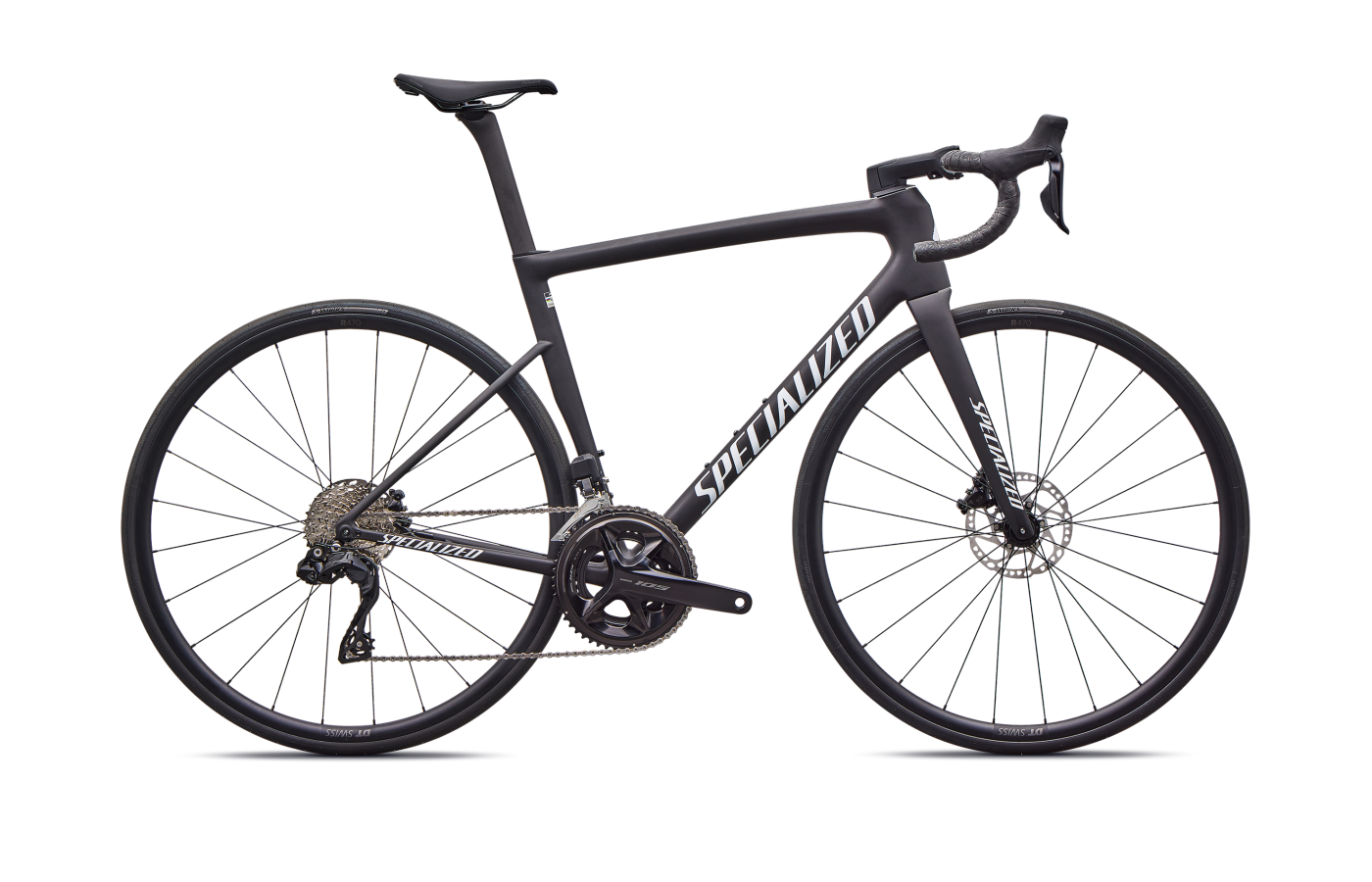
Tarmac
The default cross-shop for this category — Specialized's Tarmac SL8 sits between these two on weight, runs a similar all-rounder pitch to the SuperSix, and ships the deepest carbon grade (FACT 12r) on a frame that's lighter than either. The reference bike if you want a benchmark.
Compare →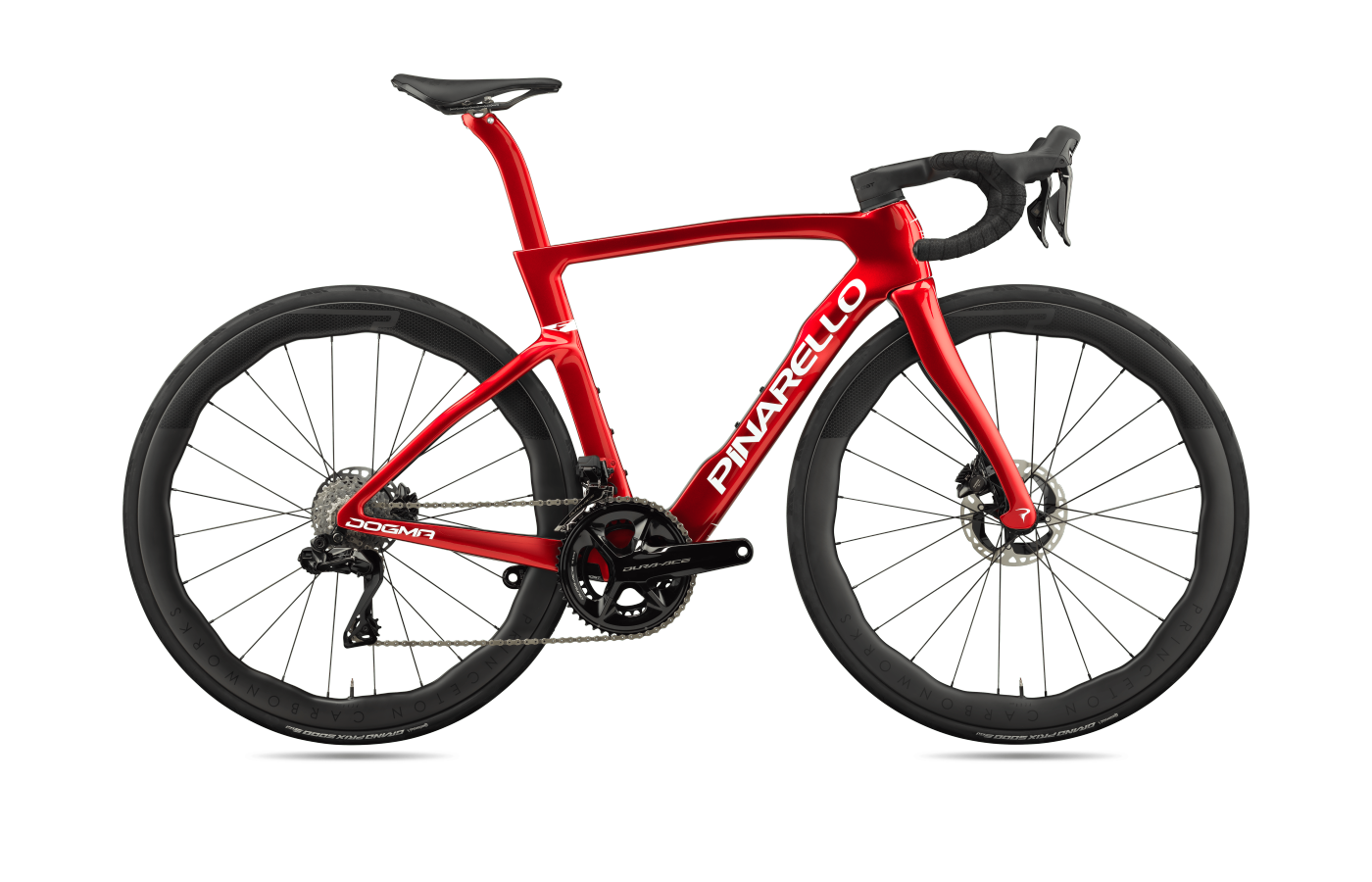
Dogma F
If you're cross-shopping the V4Rs because you want pro-tier Italian race pedigree, the Pinarello Dogma F is the other half of that conversation. Asymmetric chainstays, more dramatic styling, and arguably more grand-tour wins per kilo of frame than any bike on this page.
Compare →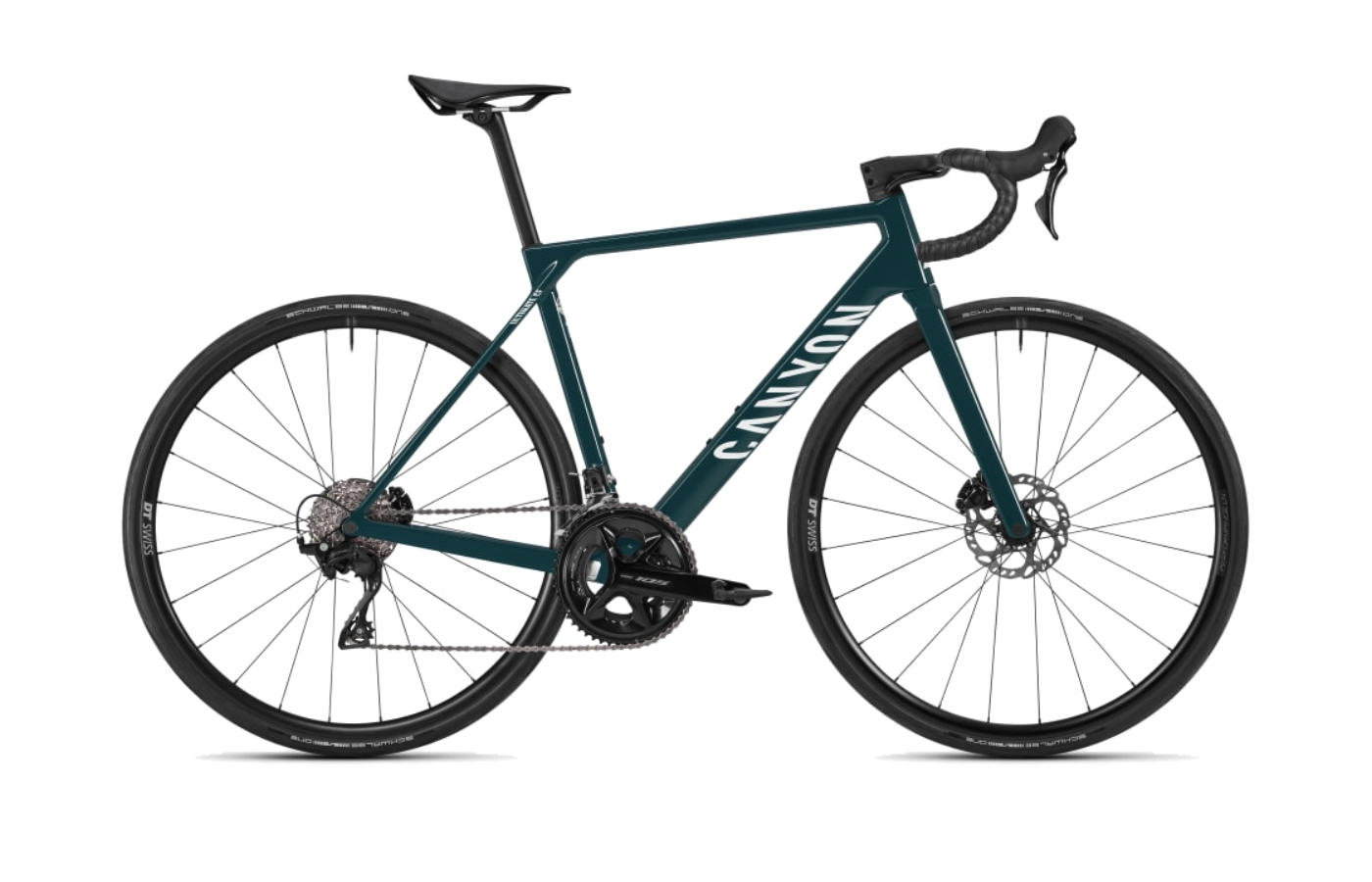
Ultimate
Same all-rounder math as the SuperSix at direct-to-consumer pricing — Canyon undercuts both bikes by 25–35% at every comparable build tier. The catch is no demos and no local dealer service. Best if you already know your fit.
Compare →