SuperSix EVO
vsSynapse
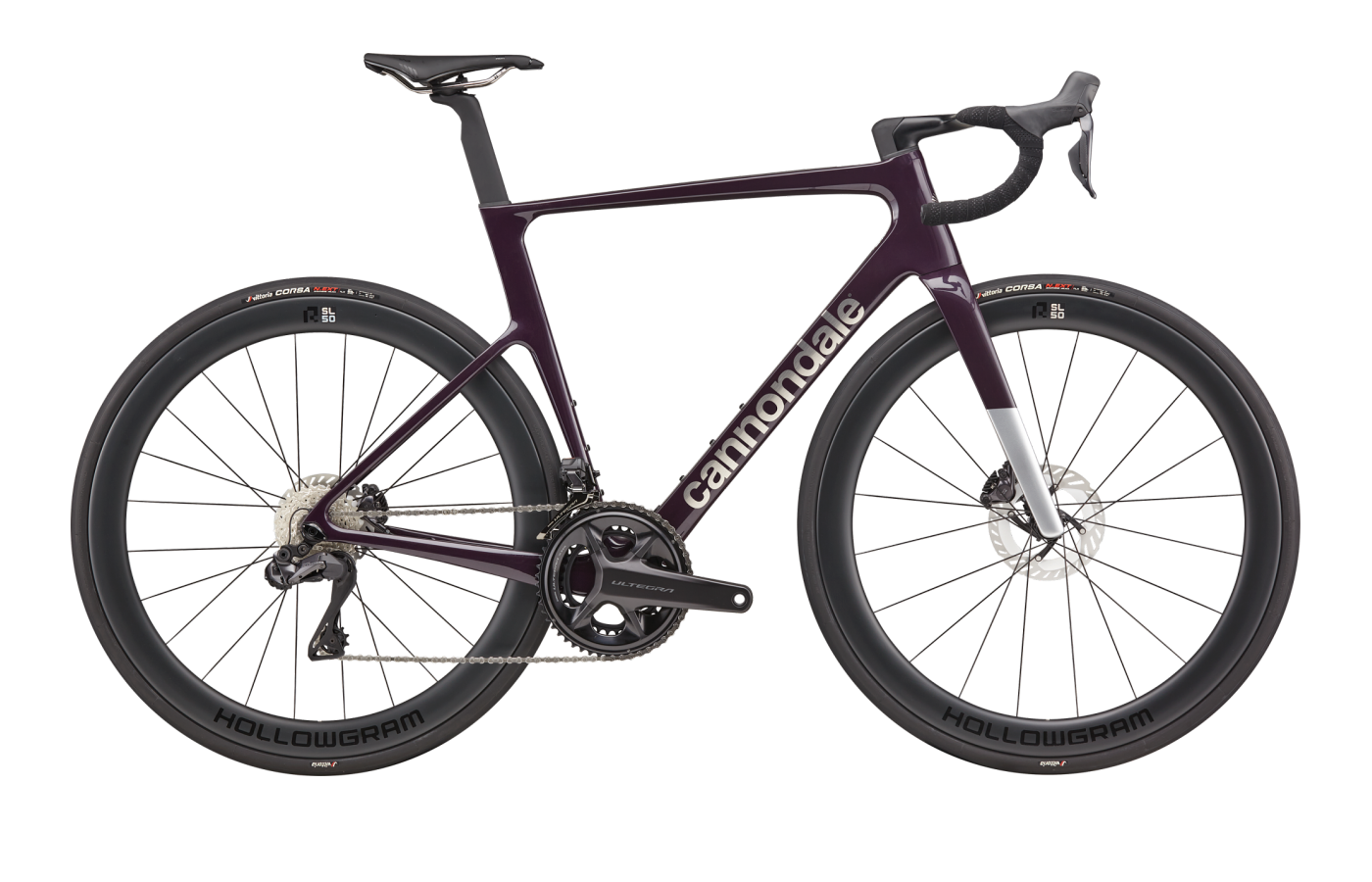
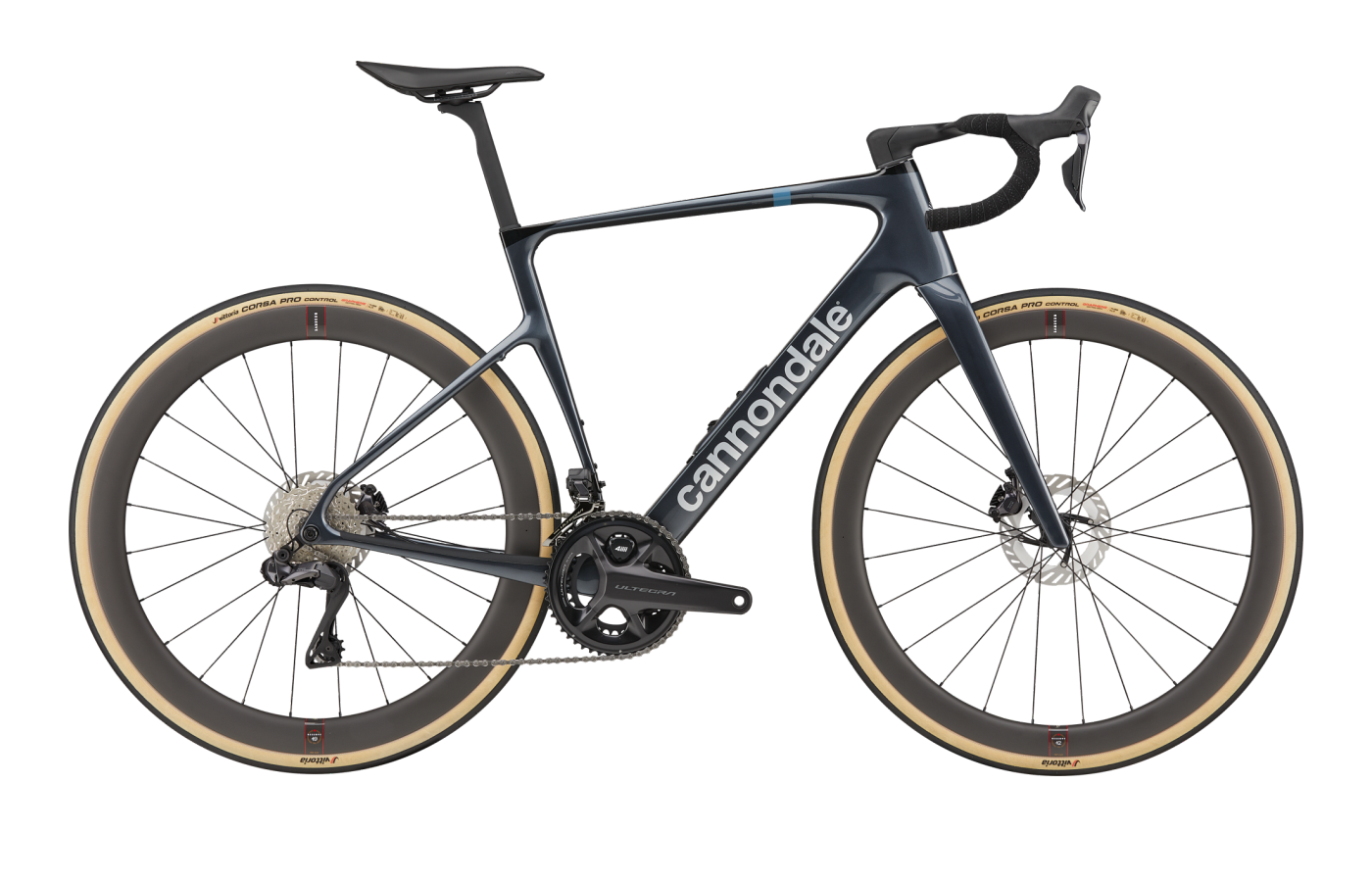
Same brand, two very different roads.
The SuperSix EVO is Cannondale's WorldTour race weapon. The new Synapse is the endurance bike that borrowed its aero tubes and its soul.
SuperSix EVO
- Race-honed handling — 58 mm trail and a 1010 mm wheelbase at 54 deliver the on-rails feel reviewers keep comparing to the old-school SuperSix soul.
- Aero-that-climbs frame — Cannondale claims 12 W saved at 45 km/h vs. the Gen 3, with a Dura-Ace LAB71 build on the UCI 6.8 kg limit.
- Serviceable from top to bottom — threaded BSA BB, Delta steerer on standard headset bearings, Syntace thru-axles; finally a Cannondale race bike your local shop doesn't fear.
- Tire clearance tops out at 32 mm — fine for chip-seal, thin for genuine rough.
- Deeper aero seatpost trades a bit of rear-end compliance vs. the Gen 3.
Synapse
- Endurance-segment-best tech — SmartSense 2.0 powers radar, lights, and AXS shifting off one downtube-hidden battery with USB-C charging.
- 42 mm tire clearance (48 mm in the fork) plus a StashPort downtube hatch for tools — it genuinely spans road and light gravel without a bike swap.
- SuperSix-adjacent speed — Cannondale's own drag numbers peg it at Gen 3 EVO aero levels, and multiple reviewers call it as fast in a straight line as their EVO.
- Lab71's SmartSense adds ~460 g — the flagship lands near 7.8 kg, heavier than a Hi-MOD EVO at similar money.
- Long 1026 mm wheelbase trades some agility for stability; one reviewer called the ride 'sedate.'
Editor’s analysis
Cannondale built two bikes on the same philosophy — fast everywhere — and then pulled them apart just far enough to matter.
The Gen 4 SuperSix EVO and the Gen 6 Synapse share more DNA than any other race-vs-endurance pair in the segment. Both run threaded BSA bottom brackets, Delta steerer tubes, integrated SystemBar R-One cockpits on the top builds, and HollowGram or Reserve carbon wheels. Cannondale's own engineers say the Synapse hits aero drag numbers on par with the Gen 3 EVO. This isn't a fast bike vs. a slow bike.
The Cannondale SuperSix EVO is the race scalpel. 58 mm of trail, a 1010 mm wheelbase at size 54, 410 mm chainstays, and 32 mm max tire clearance — it's a bike that rewards precision and punishes hesitation. Reviewers at BikeRadar, Bicycling and Road.cc use the same three phrases: on rails, carving, predictable at 70 km/h. It climbs like it did a decade ago (Cannondale has never made a heavy SuperSix) and now cheats the wind hard enough to make the SystemSix irrelevant.
The Cannondale Synapse is the long-game build. It shares the aero tube shapes but adds 15 mm of chainstay, 15 mm more stack at size 54, a 71.3° head tube angle, and 42 mm of rear tire clearance (48 mm up front). The D-shaped seatpost flexes visibly. Cannondale claims a 20% compliance gain over the previous Synapse. And on the SmartSense builds, a single in-frame battery powers the Garmin Varia radar, an 800-lumen front light, and the SRAM AXS drivetrain — integration no one else in the endurance segment matches.
Put simply: the SuperSix EVO is the bike you ride because every second counts. The Synapse is the bike you ride because every mile counts. Same brand, same aero shapes, different answers to what fast actually means.
Where the builds differ.
Comparing our editor's-pick builds side-by-side. Winners highlighted row-by-row — lower price and weight, and the better-spec component, each mark a point.
Build variants & pricing
Both lineups span roughly $12k of range and both start in the low-four-figures — rare parity for a race-vs-endurance pair.
Prices are current US MSRP. We pair the Hi-Mod 2 EVO ($9,999) with the Synapse Carbon 1 ($8,499) — both Hi-MOD carbon, both Ultegra Di2 — so the spec table compares the platforms, not the component tiers. The Synapse Carbon 1 adds a 4iiii power meter at this build.
How they fit, how they steer.
The SuperSix EVO is compared at 54, the Synapse at 51 — stack is nearly identical (555 vs. 550 mm) but the EVO runs 8 mm more reach and 15 mm shorter chainstays, putting the rider lower and longer with a tighter rear end.
Which size should I buy?
Sizes are picked by stack, reach and effective top tube. The Synapse's taller stack-to-reach ratio means most riders size down vs. their EVO.
→These are starting points. Flexibility, riding style, and preferred position all shift the answer — if you’re between sizes, a professional fit beats a chart.
What the magazines said.
Published reviews from trusted cycling outlets. Click through for the full write-up.
Which one should you buy?
If podium finishes and Saturday-morning attacks matter more than miles, get the SuperSix EVO. If miles matter more than minutes, get the Synapse.
SuperSix EVO
For the rider who treats the Saturday group ride like a local championship and wants a bike that rewards aggression. The SuperSix EVO is still a Cannondale race bike first — light, sharp, and proven across a decade of WorldTour wins — now fast enough in the wind that the aero penalty is gone.
Synapse
For the century rider and the self-supported weekend explorer who wants a premium carbon frame with the tech to match. SmartSense radar, 42 mm clearance and a StashPort for tools mean the Synapse handles century rides, rough backroads and occasional gravel without flinching — and still rides close to a race bike when you open it up.
Questions buyers actually ask.
Short answers to the things we get emailed about most often.
01Which is faster on flat roads?
The SuperSix EVO, but not by as much as you'd expect. Cannondale claims the Gen 4 EVO saves 12 W at 45 km/h over the Gen 3, and their own engineers put the new Synapse's drag numbers on par with that Gen 3 EVO. Multiple reviewers of the Synapse Lab71 said it felt as quick as their own SuperSix Evo in a straight line.
The EVO still wins on a stopwatch — tighter geometry, lighter frame, narrower tires stock — but the gap is a watts-level story, not a character-level one.
02Which climbs better?
The SuperSix EVO. A Dura-Ace LAB71 build hits the UCI 6.8 kg limit in a 56 cm; the Synapse Lab71 is around 7.8 kg in the same configuration, partly because SmartSense adds roughly 460 g for the battery, lights and radar.
The EVO's shorter wheelbase and stiffer front triangle also reward out-of-saddle attacks more directly. On a 30-minute climb for a 70 kg rider, the weight delta alone is worth 10-15 seconds.
03What's the maximum tire clearance?
SuperSix EVO Gen 4: 32 mm officially. Most reviewers report fitting a true 32 mm tire with usable clearance; some have squeezed 34 mm on narrower rims.
Synapse Gen 6: 42 mm in the rear, 48 mm in the fork. The stock 32 mm Vittoria Corsas measure closer to 35 mm on the 23 mm-internal Reserve rims.
The Synapse is comfortably the most versatile road bike Cannondale sells — it genuinely handles chip-seal, packed dirt and light gravel. The EVO is a road bike.
04How does SmartSense actually work?
SmartSense 2.0 is a single downtube-hidden battery that powers three things: an 800-lumen front light, a Garmin Varia rear radar/tail-light, and (on AXS builds) the SRAM wireless drivetrain itself. USB-C charges the whole stack on the bike or off. When the battery drops below 5%, lights dim first so shifting is preserved.
It's only on the Synapse. The SuperSix EVO has no equivalent — riders who want radar and lights run standard aftermarket units.
05Which has the more comfortable ride?
The Synapse, by a clear margin. Cannondale claims a 20% compliance increase over the previous Synapse, achieved through the D-shaped seatpost, revised seat-tube carbon layup, and 425-430 mm chainstays vs. the EVO's 410 mm. Reviewers consistently describe it as 'remarkably smooth' and say it stays oblivious to broken tarmac that would knock an EVO off-line.
The EVO is not uncomfortable — generous tire clearance and wide modern rims solve a lot of it — but Bicycling and Velo both noted the Gen 4's ride feels slightly harsher than the Gen 3 thanks to the deeper aero seatpost.
06Can I race the Synapse?
You can, and it's not slow. Reviewers point out its stack-to-reach is less aggressive than the EVO's (550 mm stack / 376 mm reach at 51 vs. 555 / 384 at 54 on the EVO), but Cannondale targeted race-bike handling deliberately and it shows.
For a Cat 4/5 rider doing local crits or gran fondos, the Synapse will be fine. For pointy-end road-race or crit work where every millimeter of reach and every degree of head tube angle counts, the EVO is the right tool.
07Are both frames compatible with mechanical shifting?
Yes — surprisingly, both of them. Cannondale explicitly kept mechanical shifter and derailleur routing on the Gen 4 SuperSix EVO (via the Delta steerer plus internal cable stops) and the Gen 6 Synapse. Escape Collective and Bicycling both flagged this as a deliberate user-friendliness choice. It's rare in 2025 aero bikes.
That said, every factory build on both platforms ships electronic (Shimano Di2 or SRAM AXS). Going mechanical is a frame-up build, not an off-the-shelf option.
08Which is the better value?
It depends on which build you look at. The SuperSix EVO 3 at $6,999 (105 Di2, carbon frame) is the cheapest modern aero race bike in its class from a major brand — very hard to beat.
On the Synapse side, the Carbon 4 at $4,199 (105 Di2, Hi-MOD-adjacent carbon) is the standout — a reviewer at Road.cc called it 'cheaper than its nearest rivals' (Canyon Endurace, Trek Domane) with more tire clearance and more features. If SmartSense matters to you, the Synapse is the only way to get it at any price.
Similar bikes
If your priorities don’t map cleanly onto either of these, one of these adjacent bikes probably fits better.
Tarmac
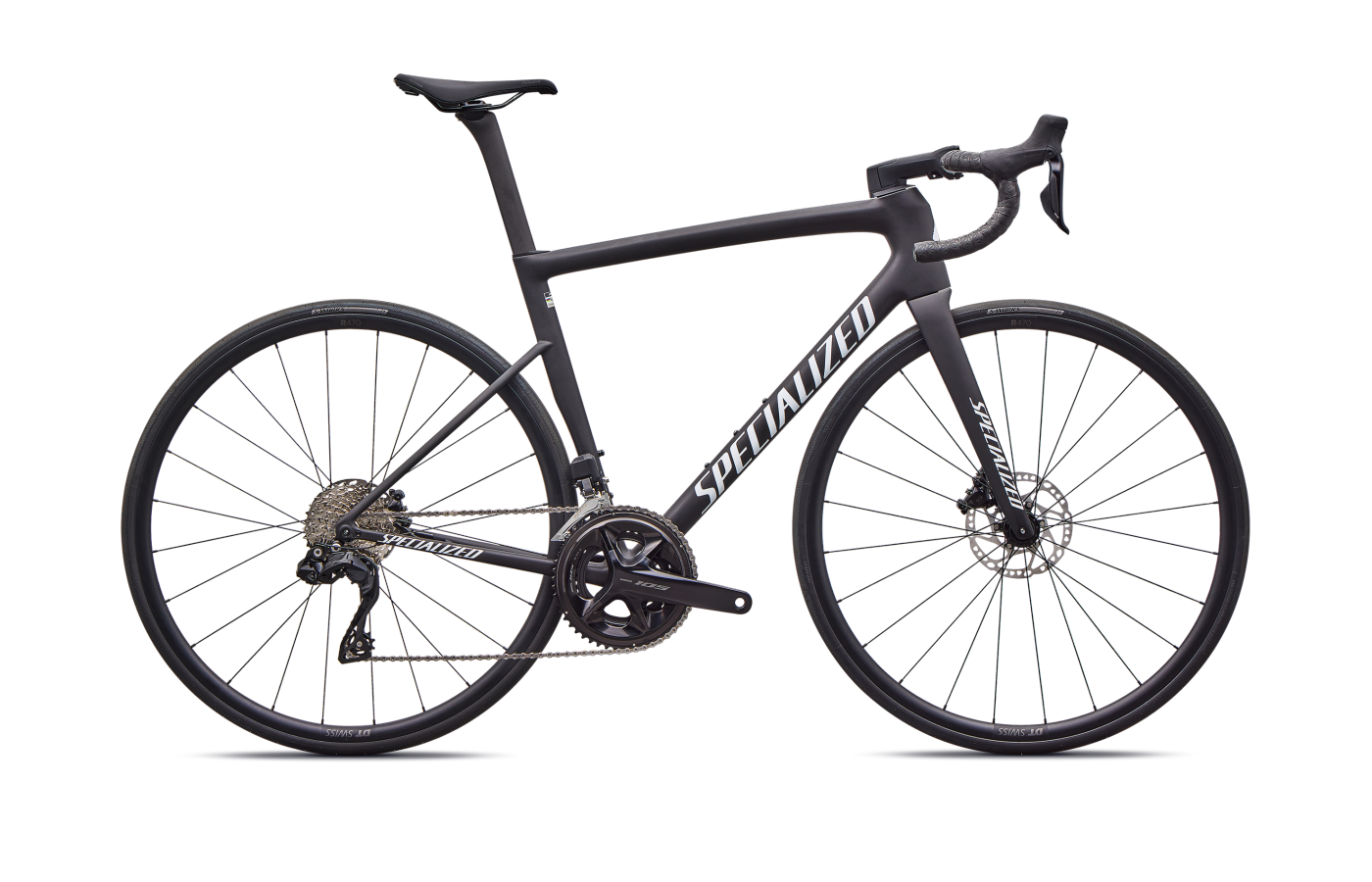
The Specialized Tarmac is the closest cross-shop to the SuperSix EVO — same aero-plus-lightweight recipe, same WorldTour pedigree, slightly more aggressive stack/reach. Pick it if the SystemBar R-One cockpit doesn't suit your fit.
Compare →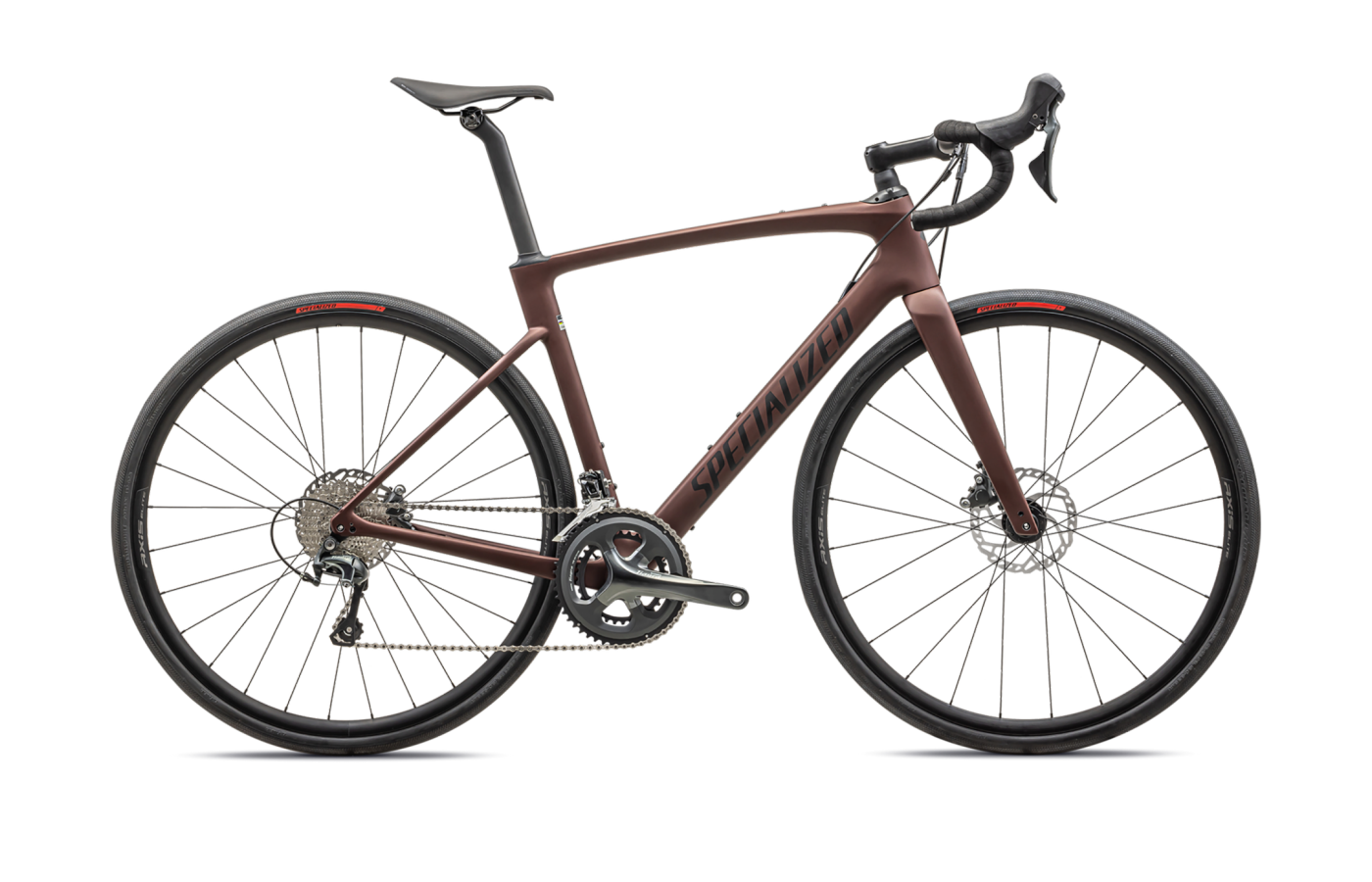
Roubaix
The Specialized Roubaix adds Future Shock — 20 mm of axial-travel suspension in the headset — making it the most front-end-compliant endurance bike on the market. Pick it if you still find the Synapse firm on bad roads.
Compare →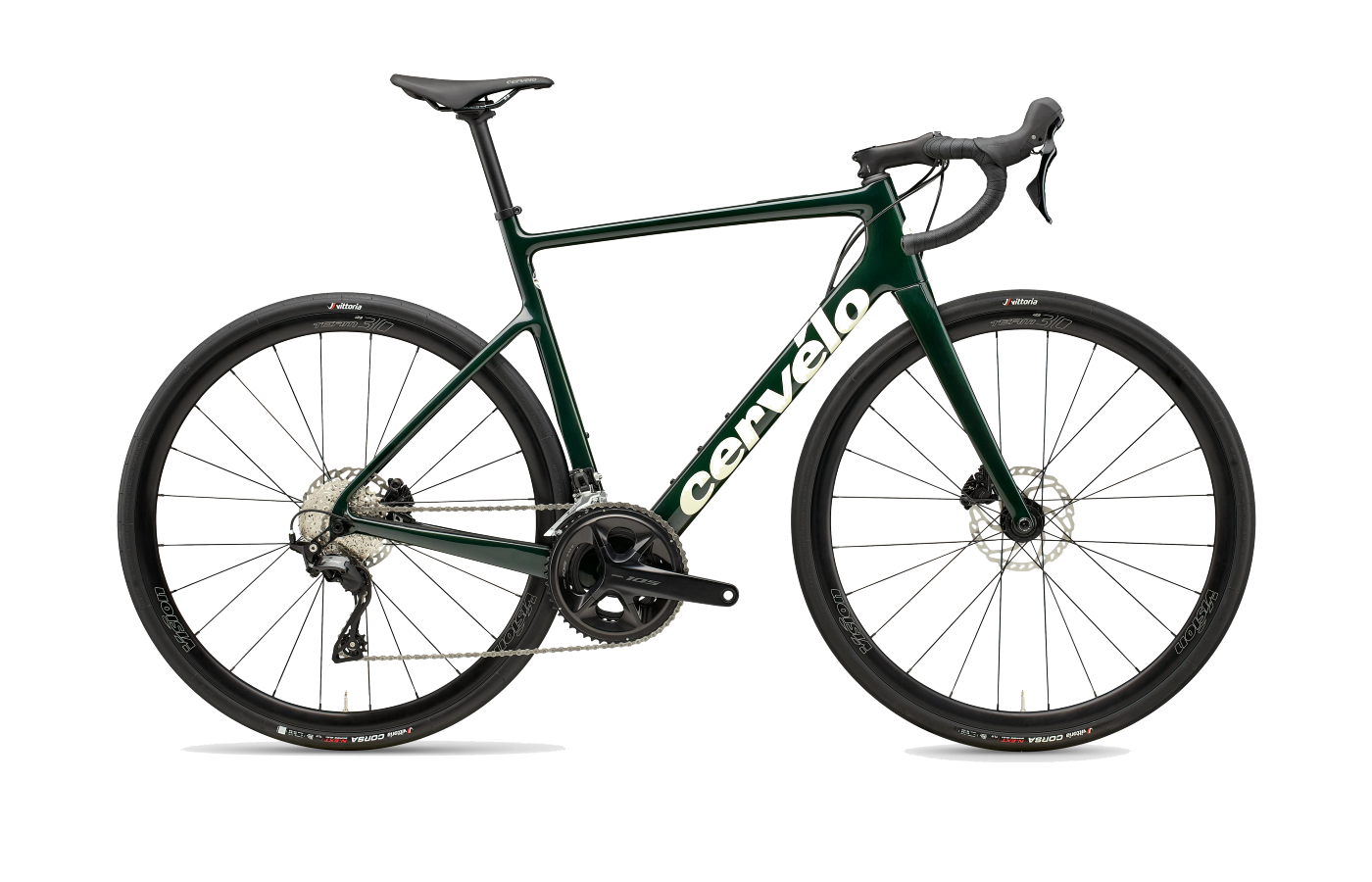
Caledonia
The Cervélo Caledonia sits almost exactly between these two — racier geometry than the Synapse, more stable and tire-friendly than the EVO. Worth a look if you want one bike that splits the difference rather than choosing a lane.
Compare →